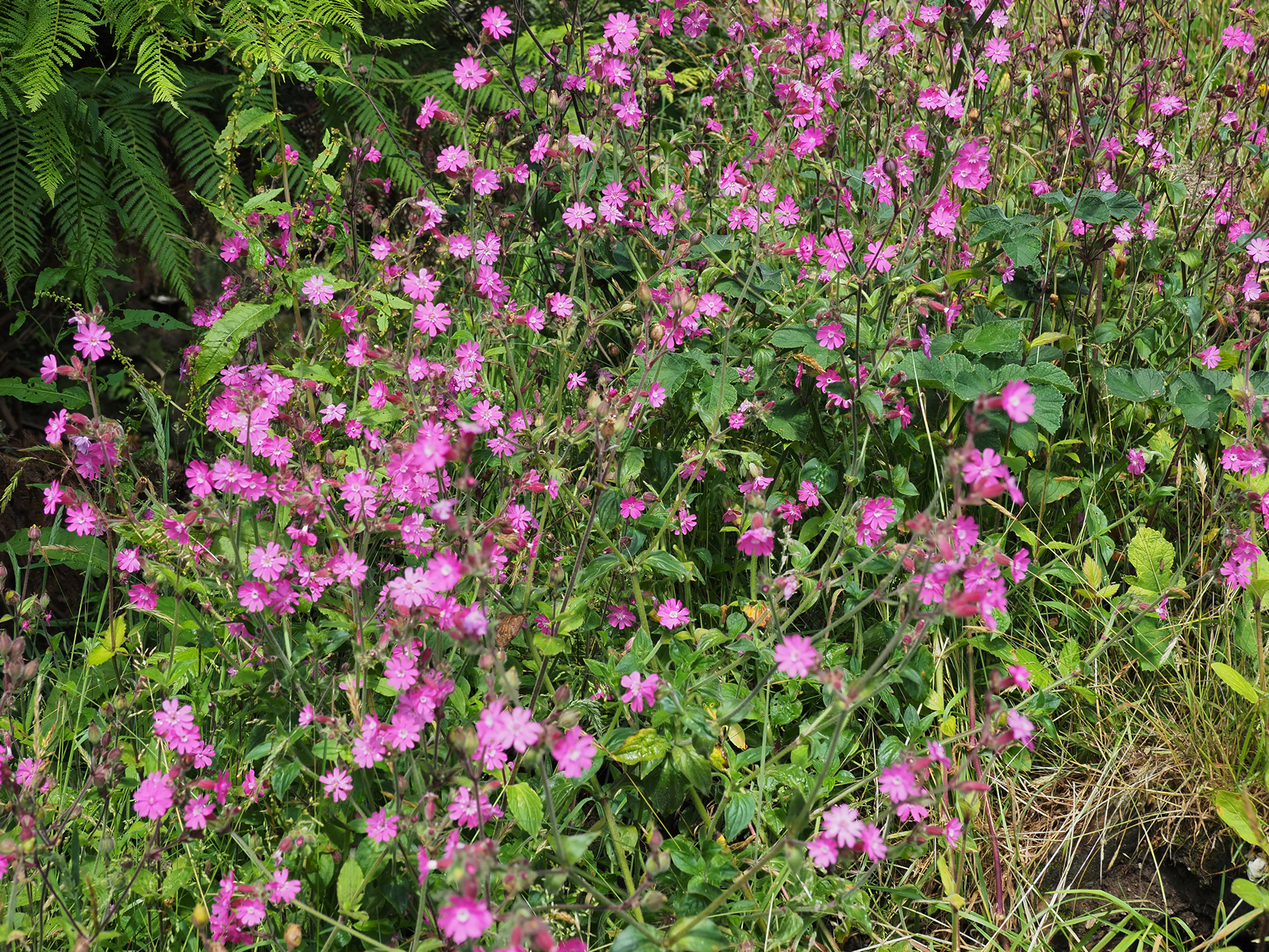
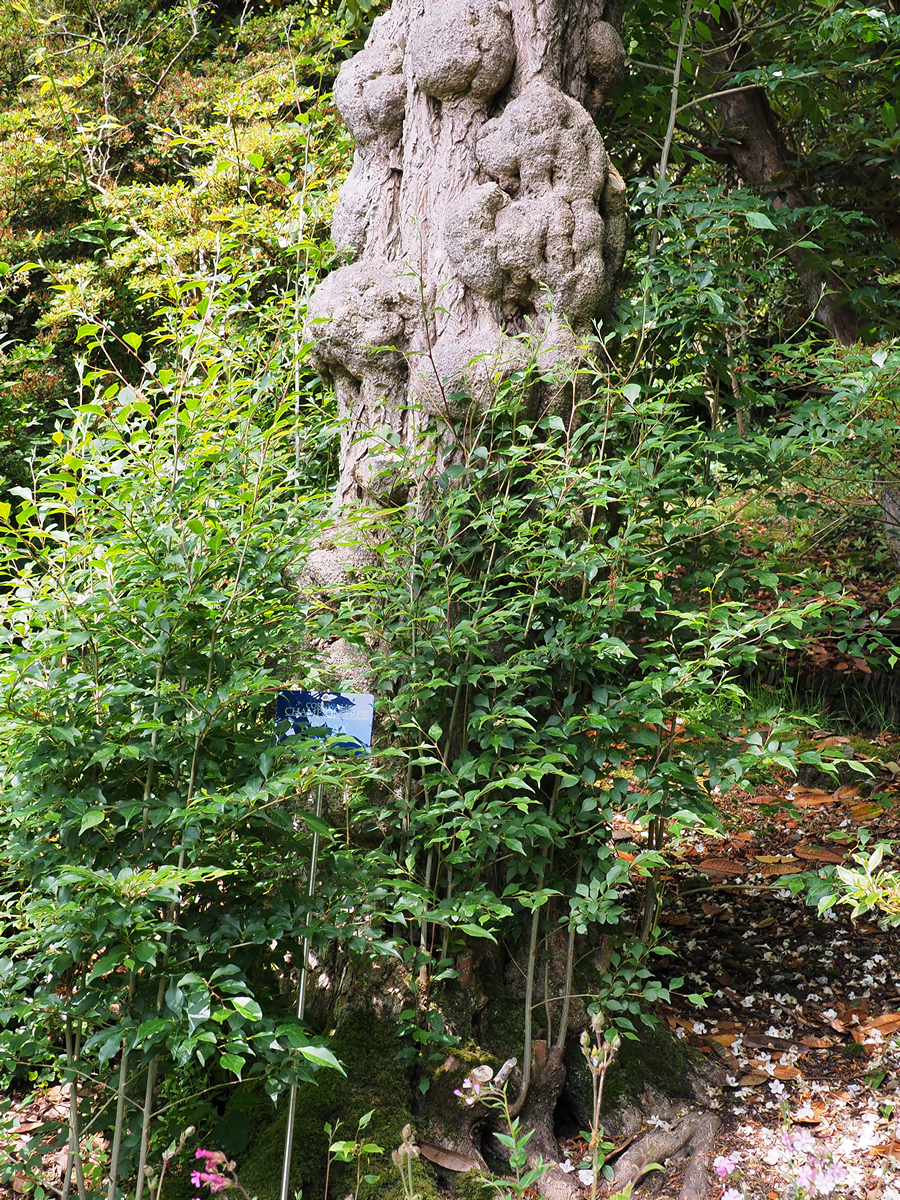
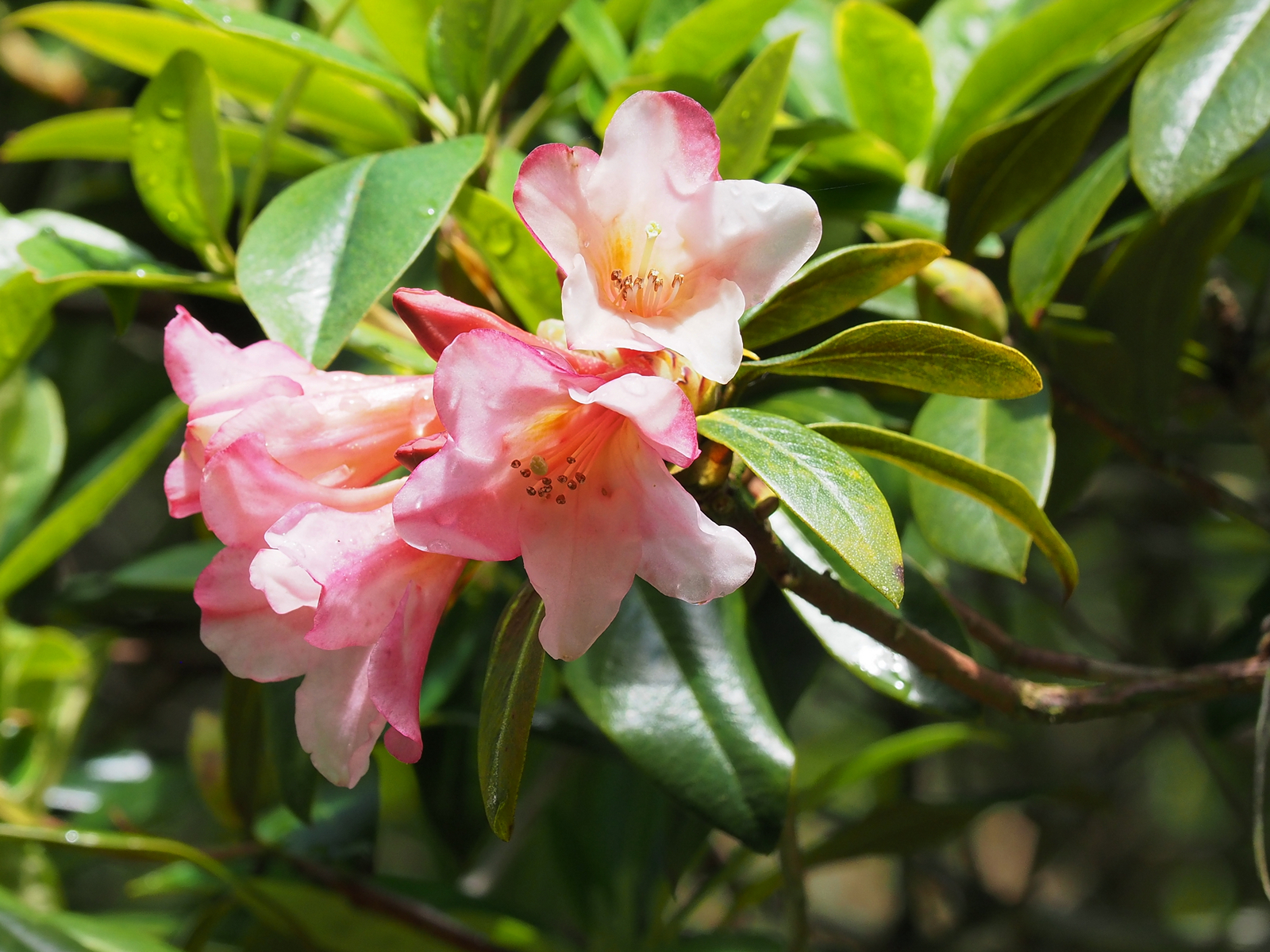
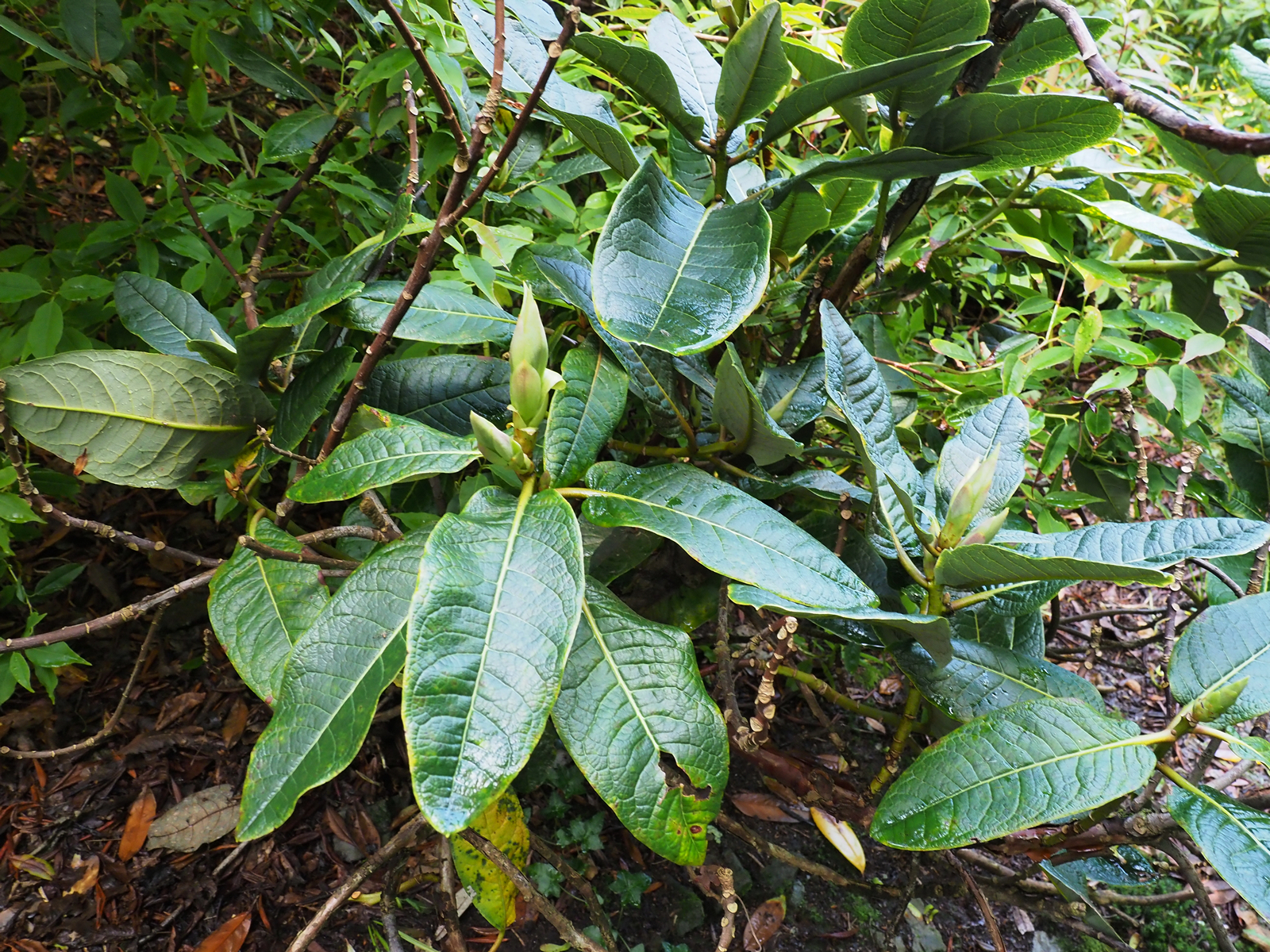
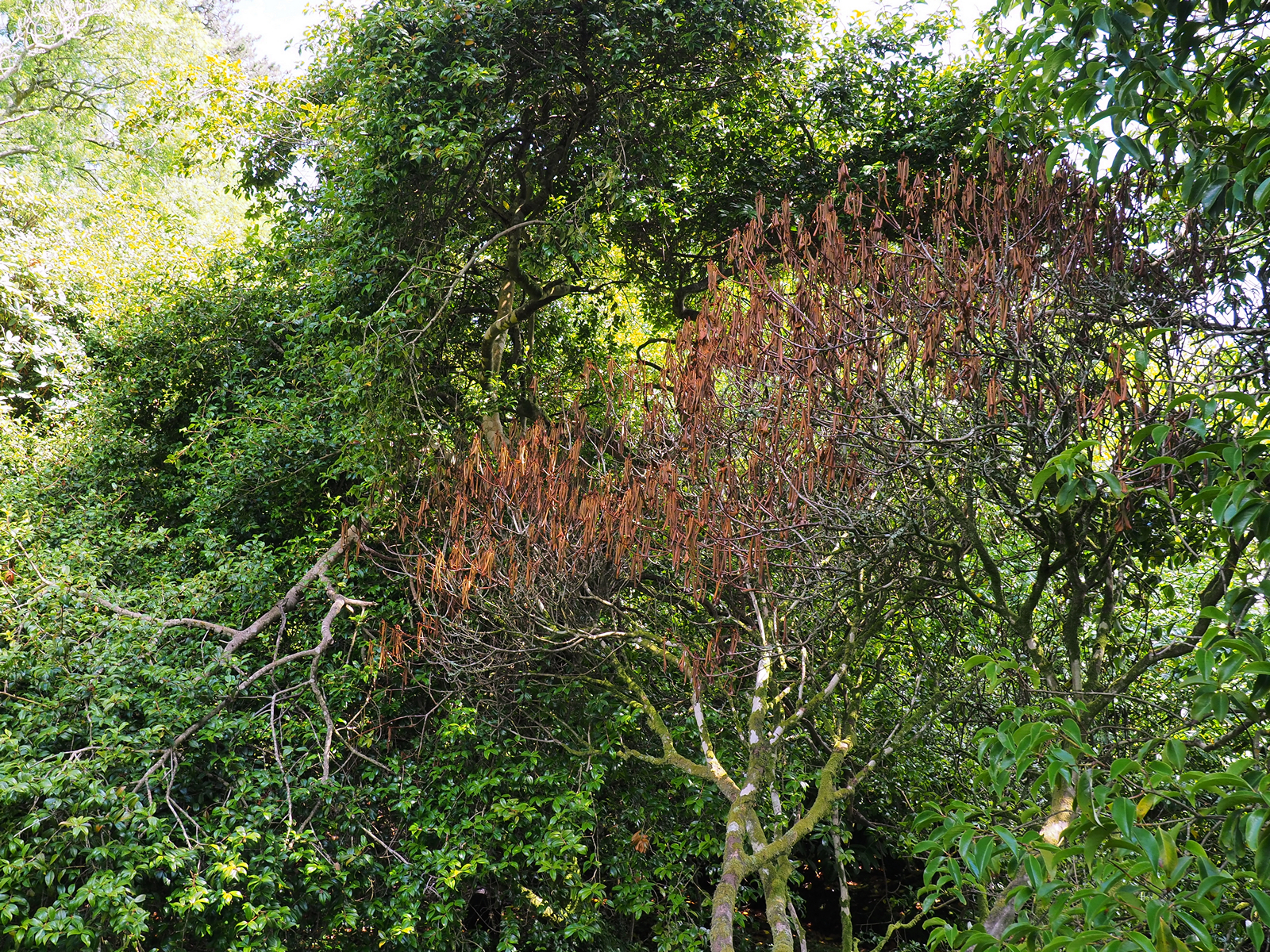
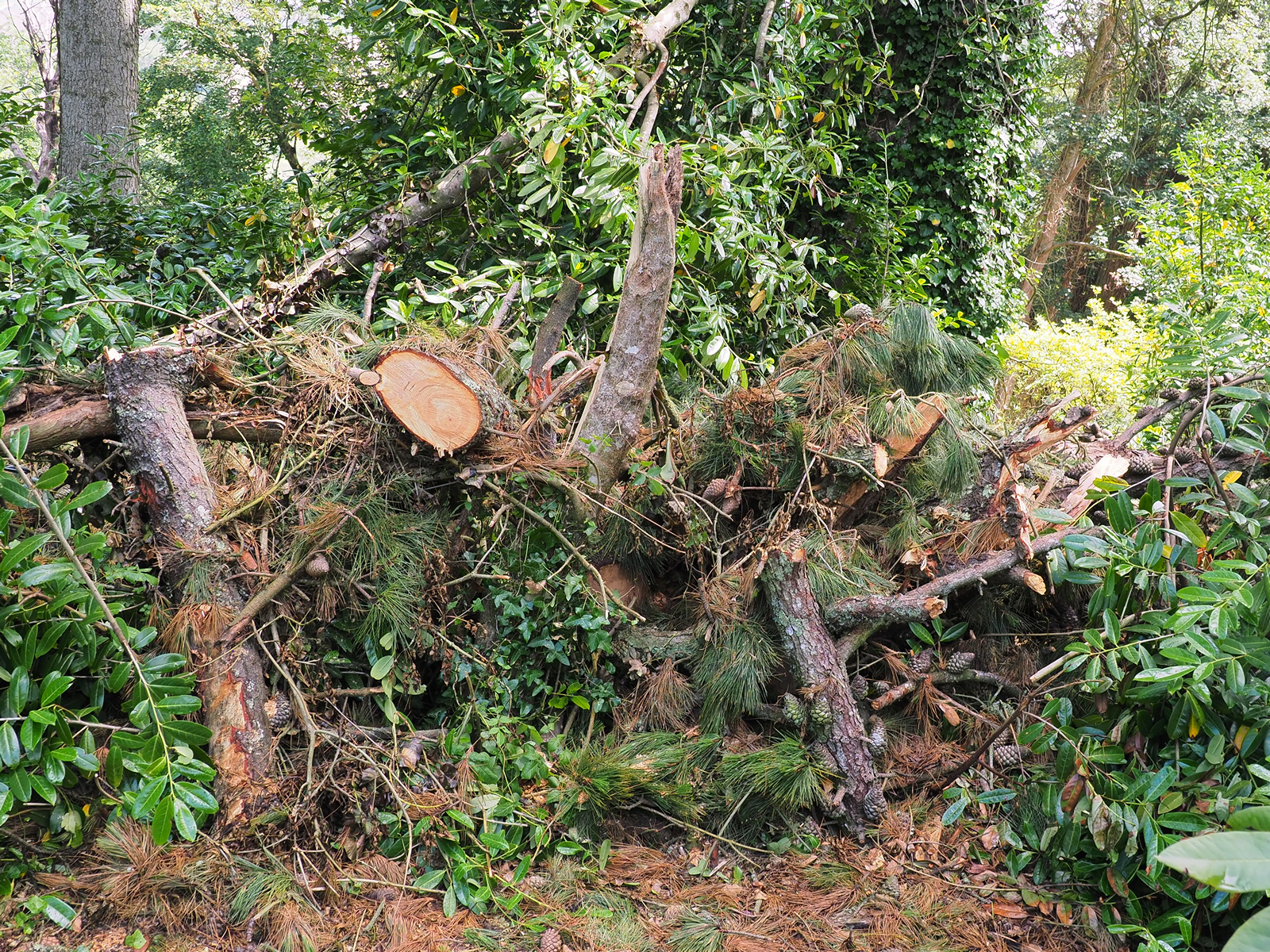
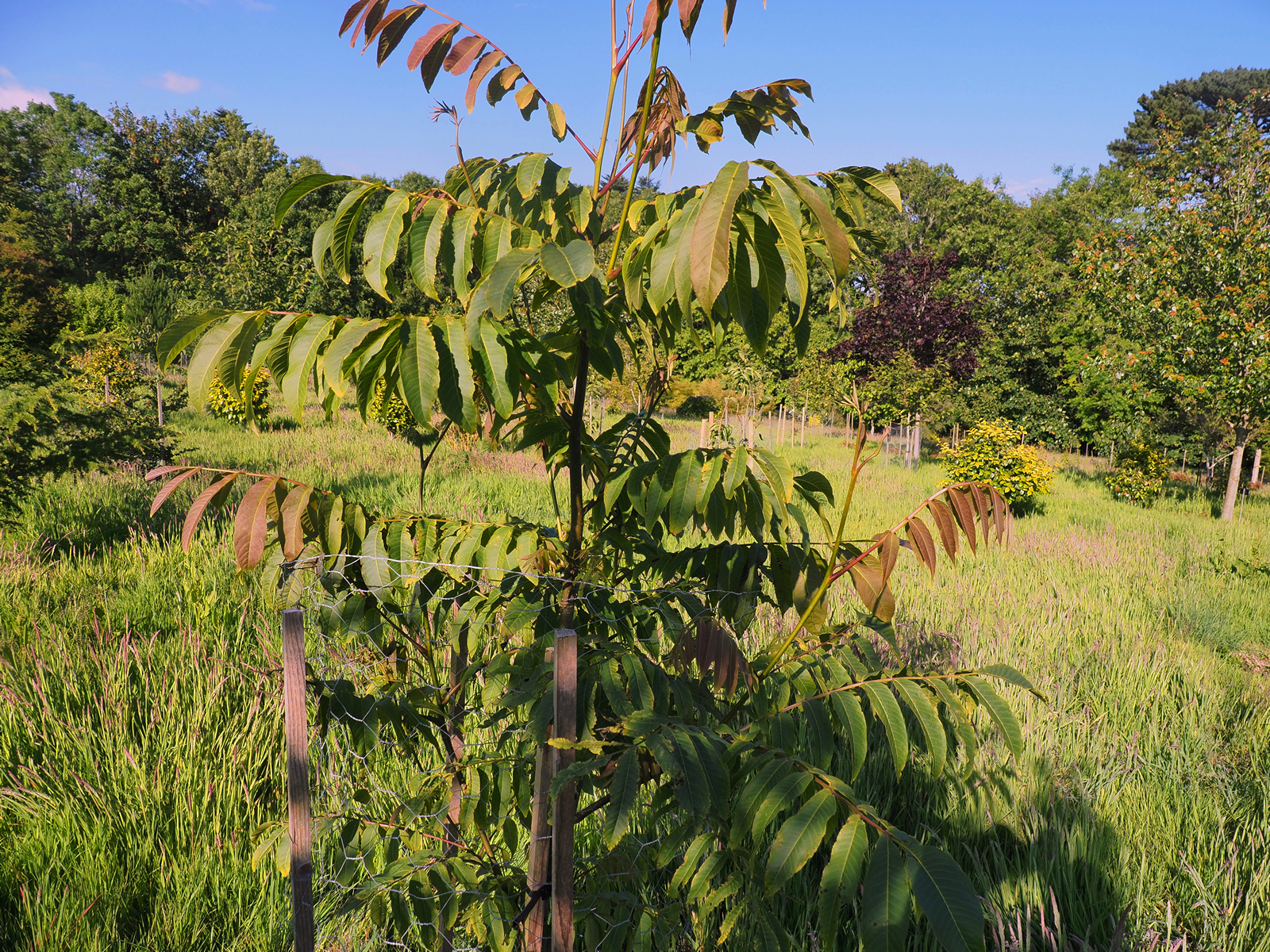
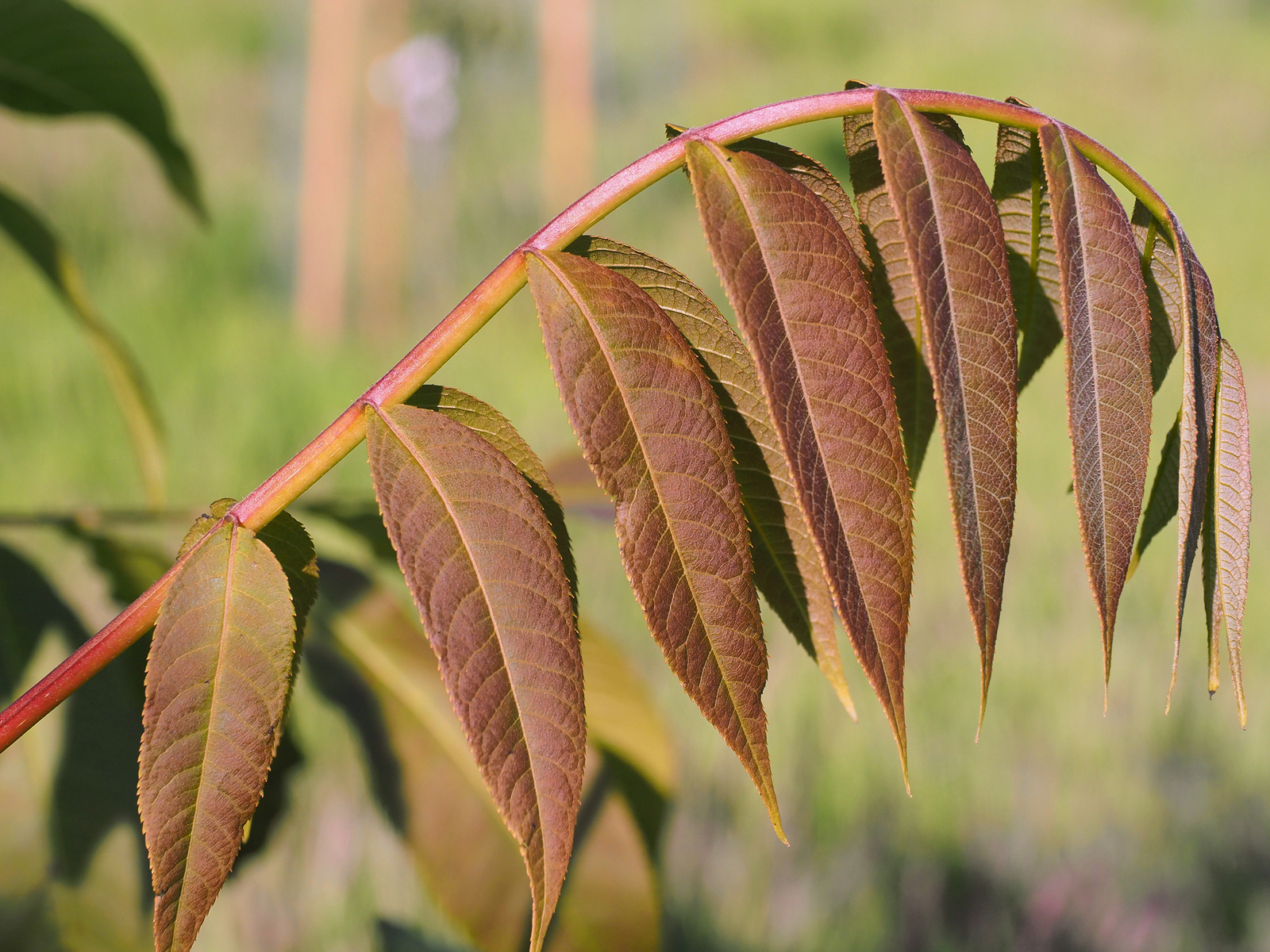
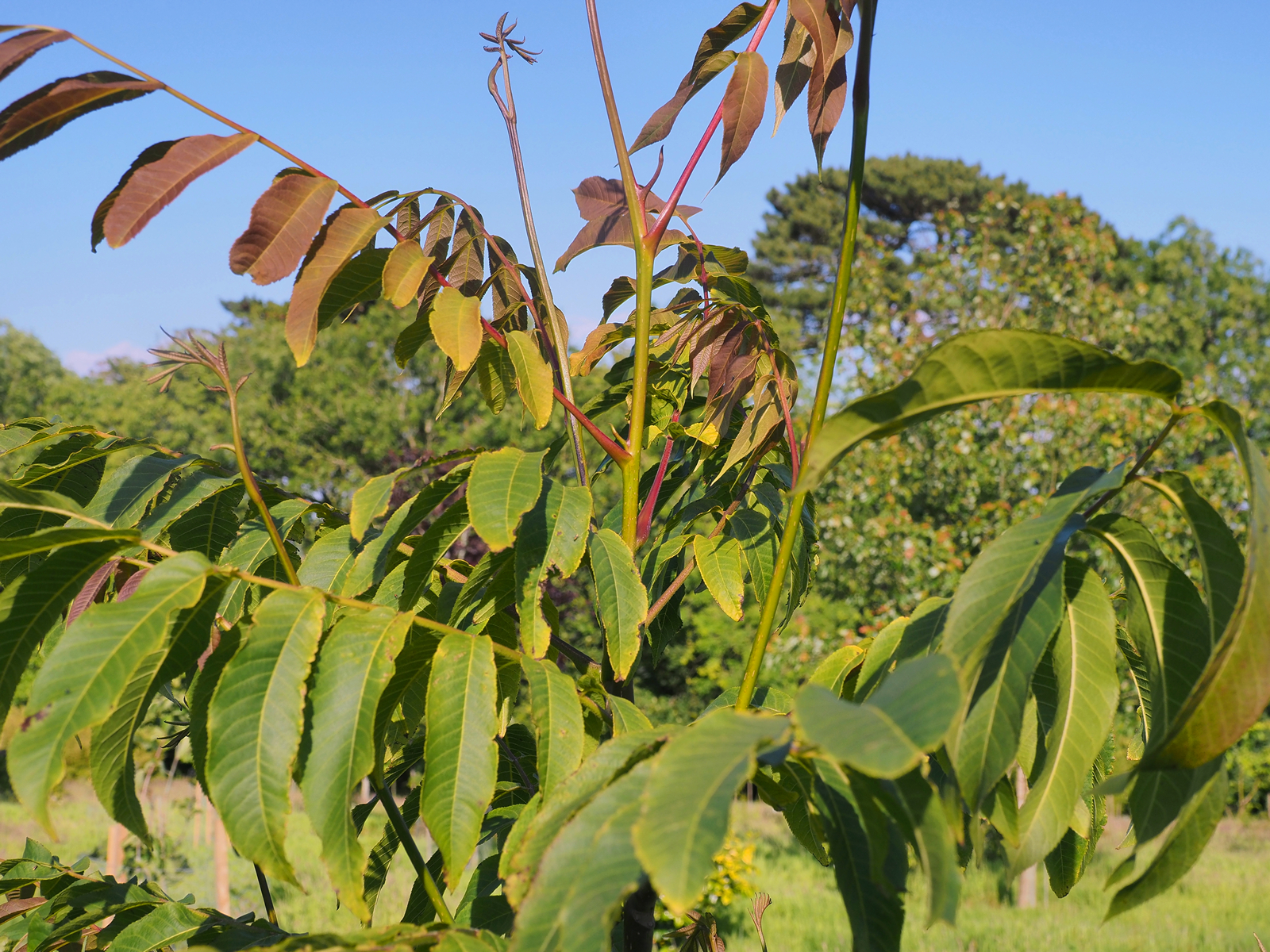
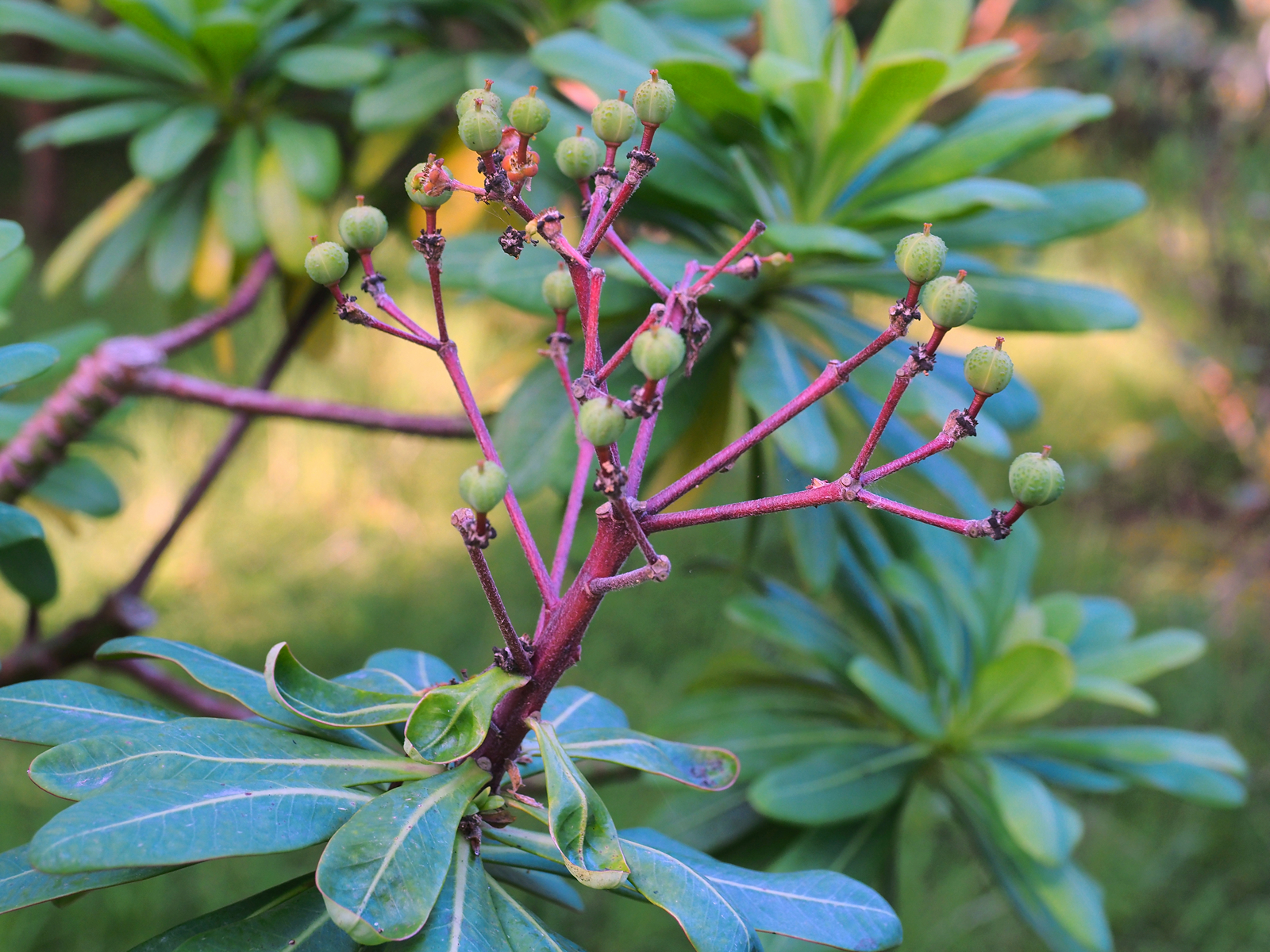
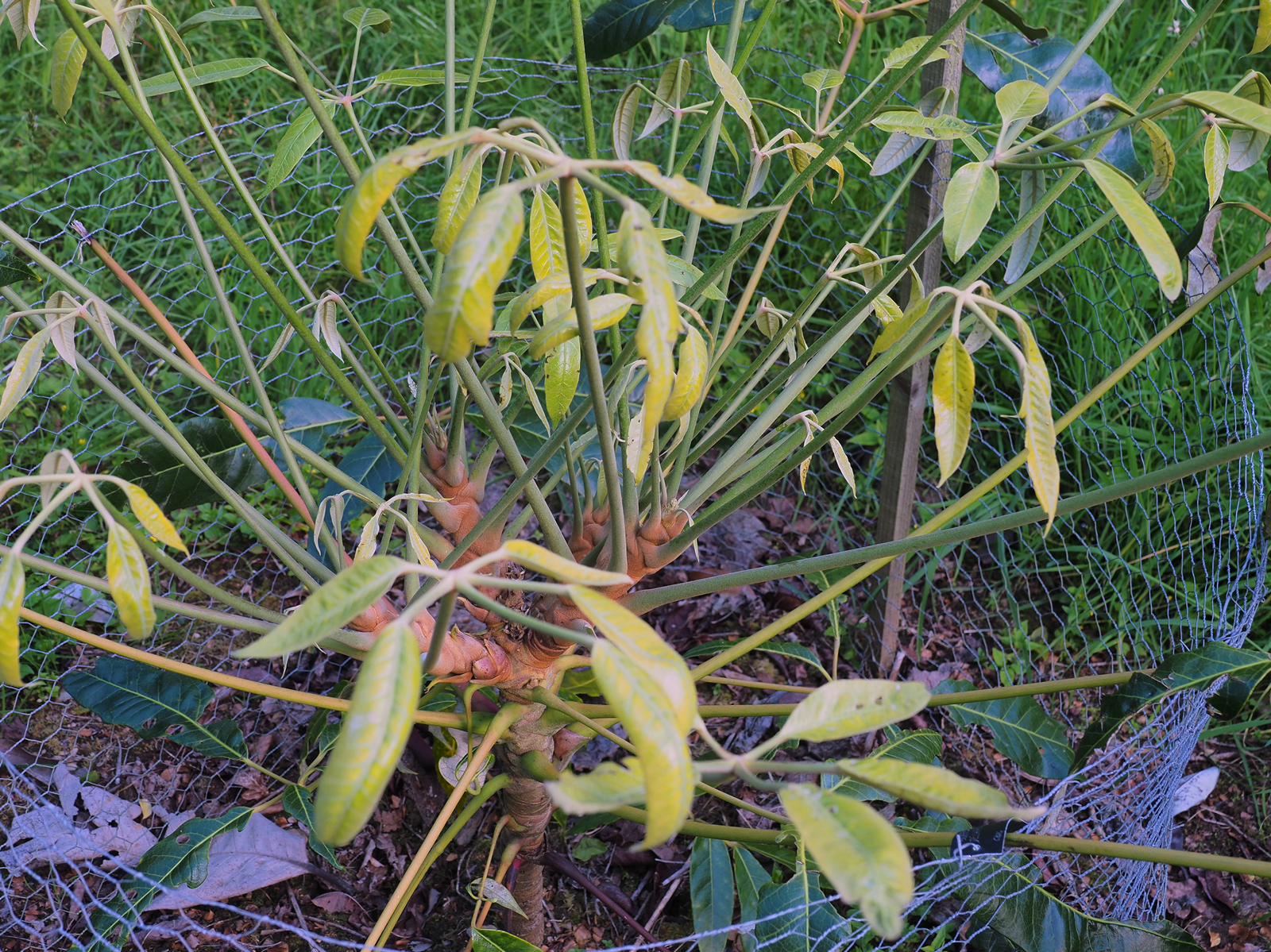
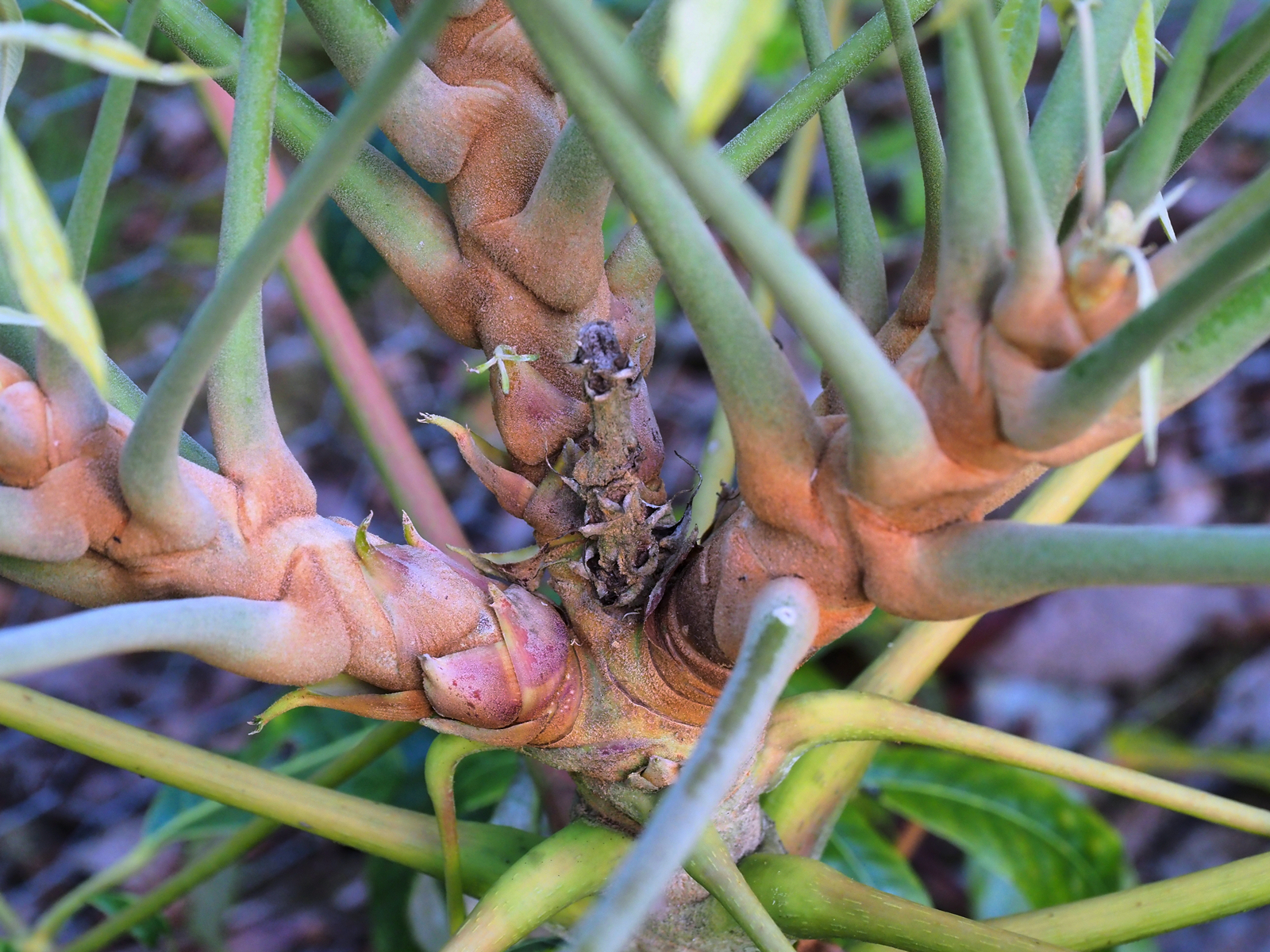
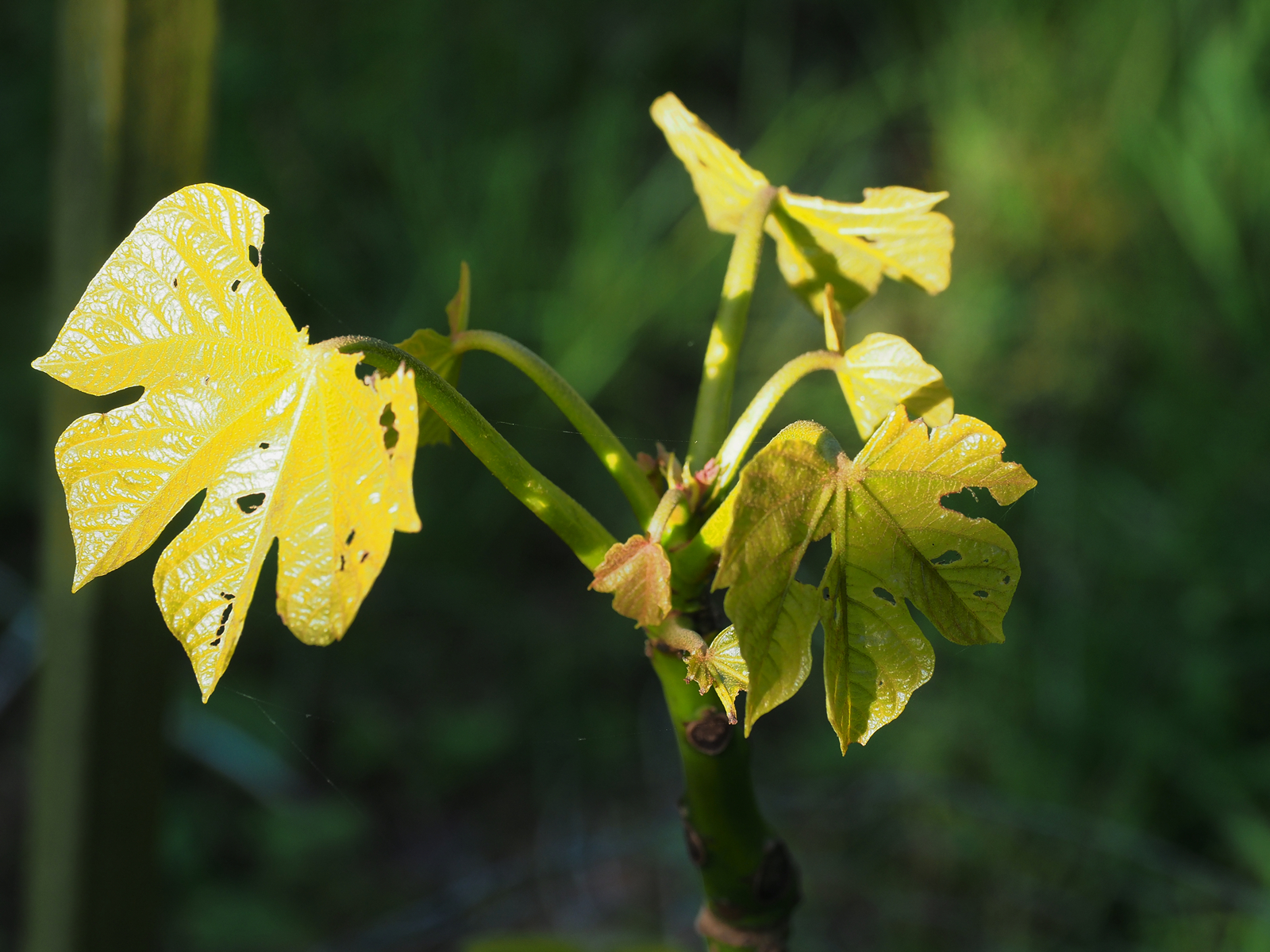
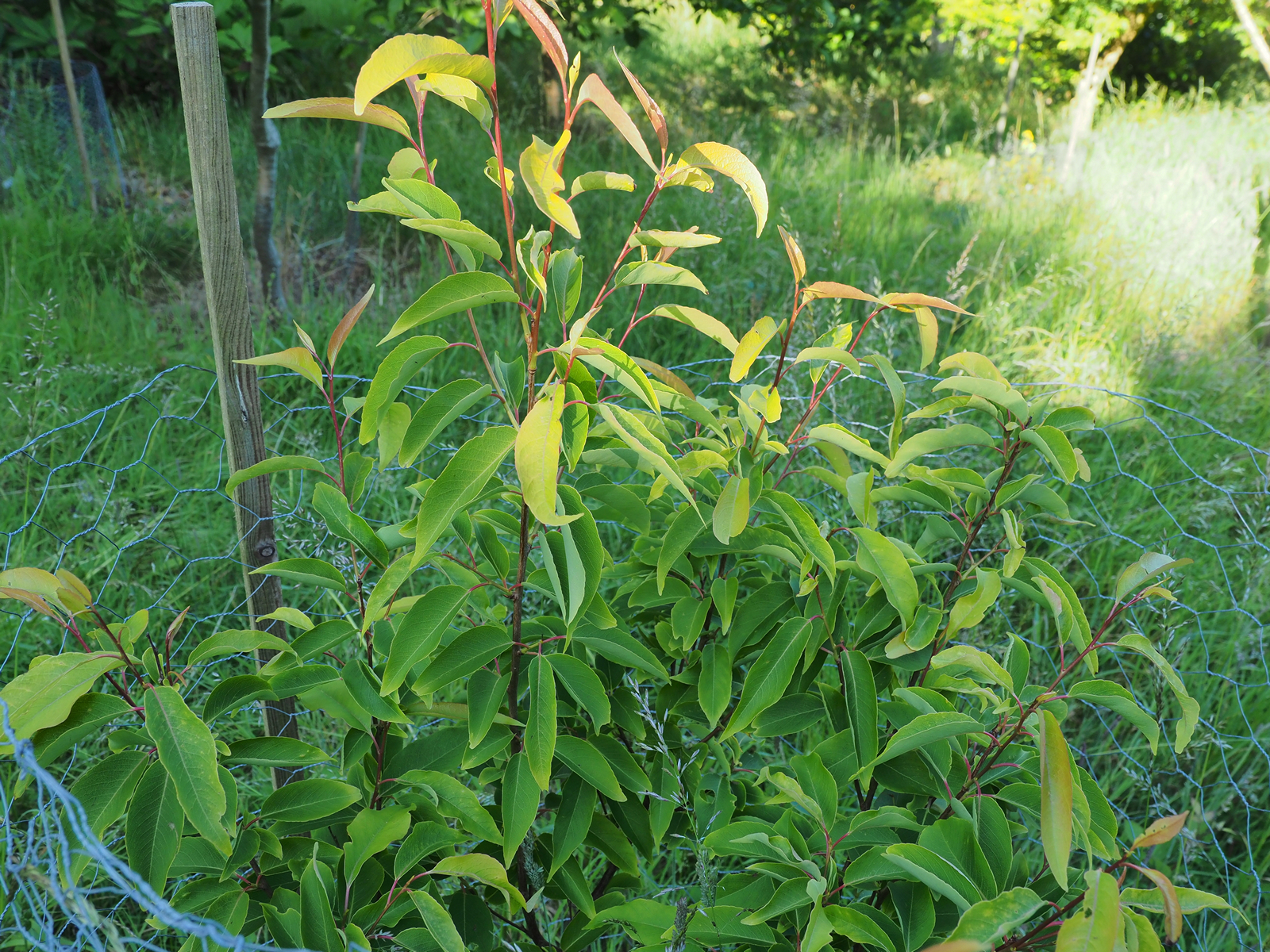
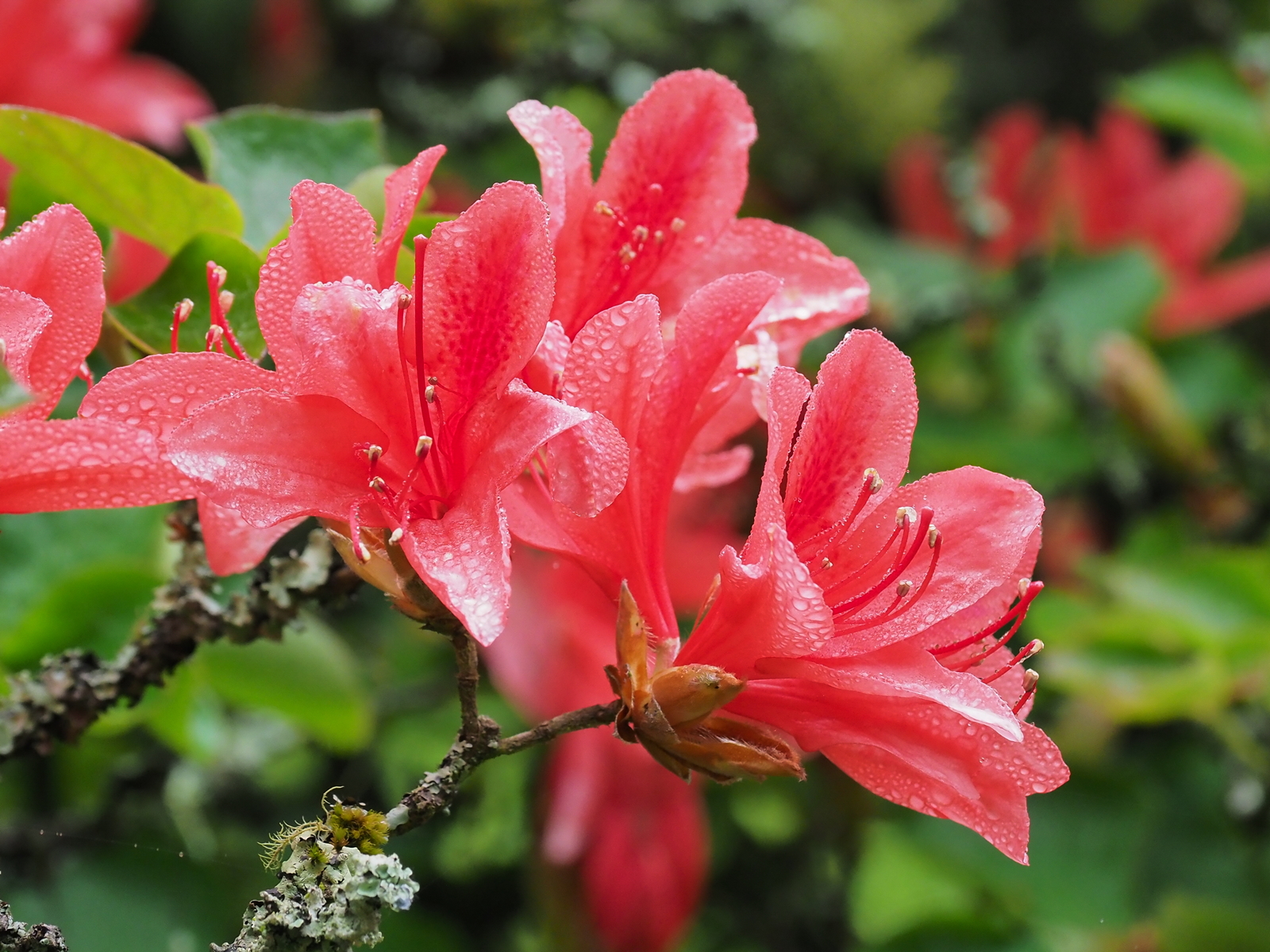
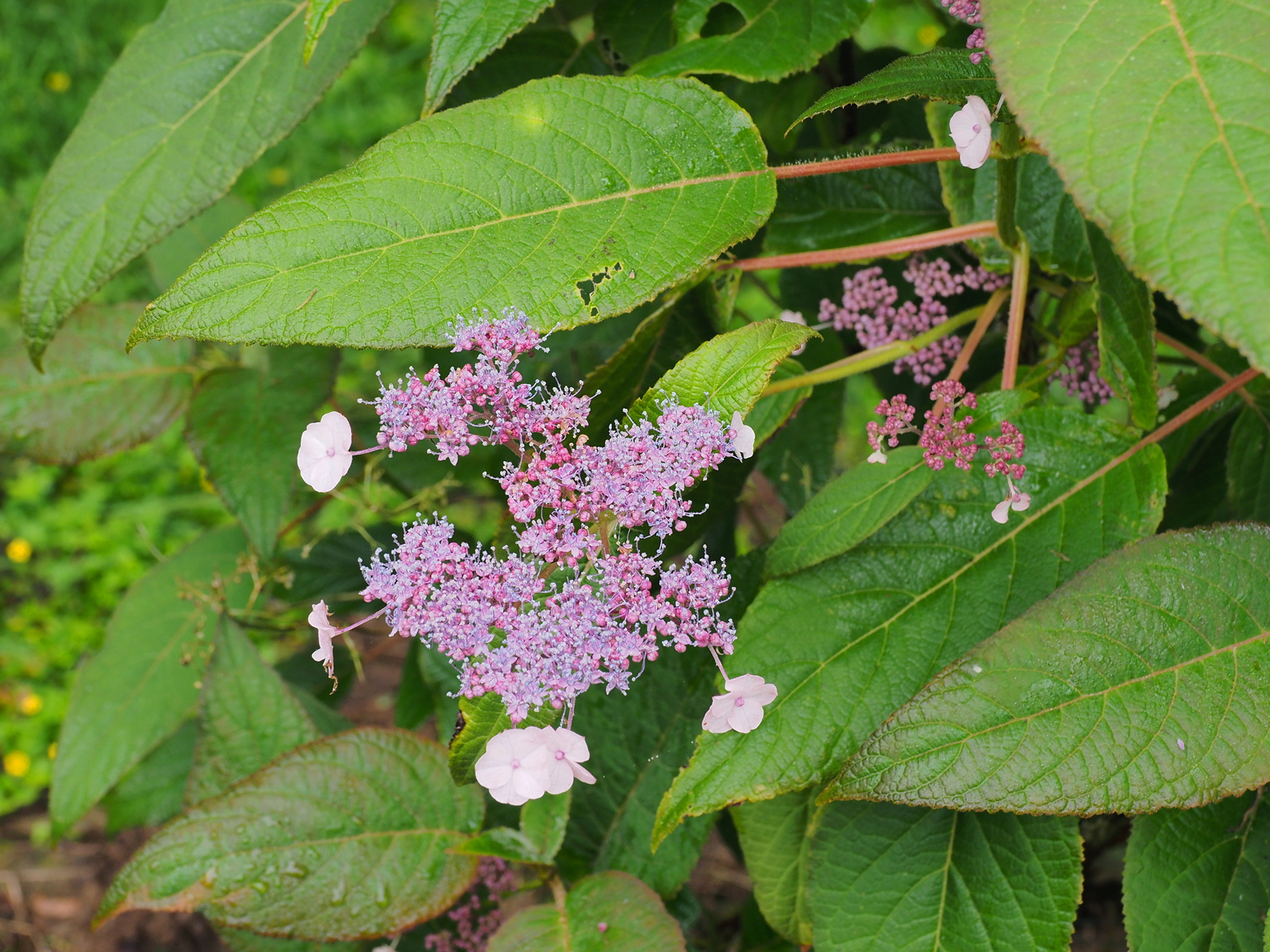
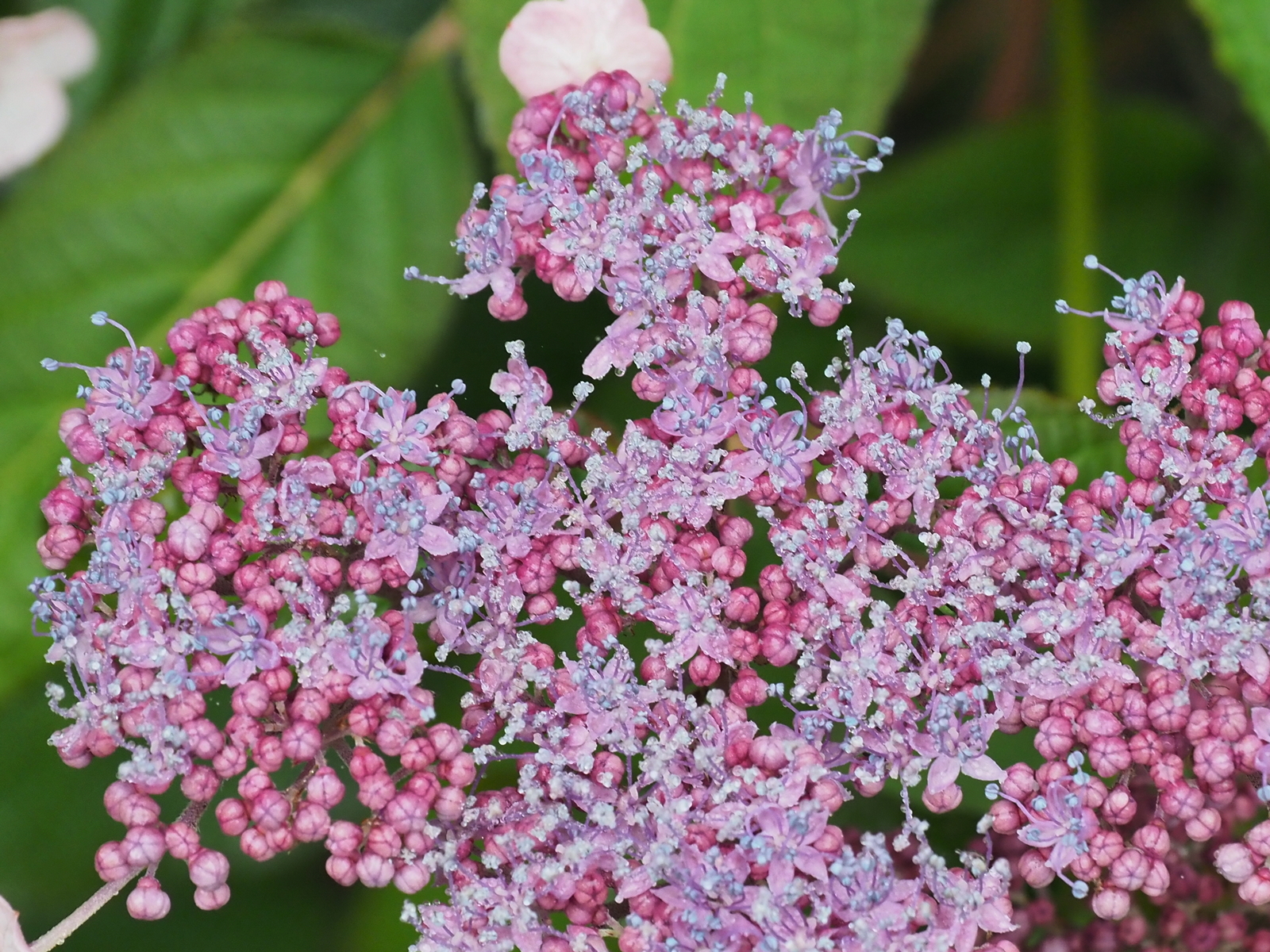
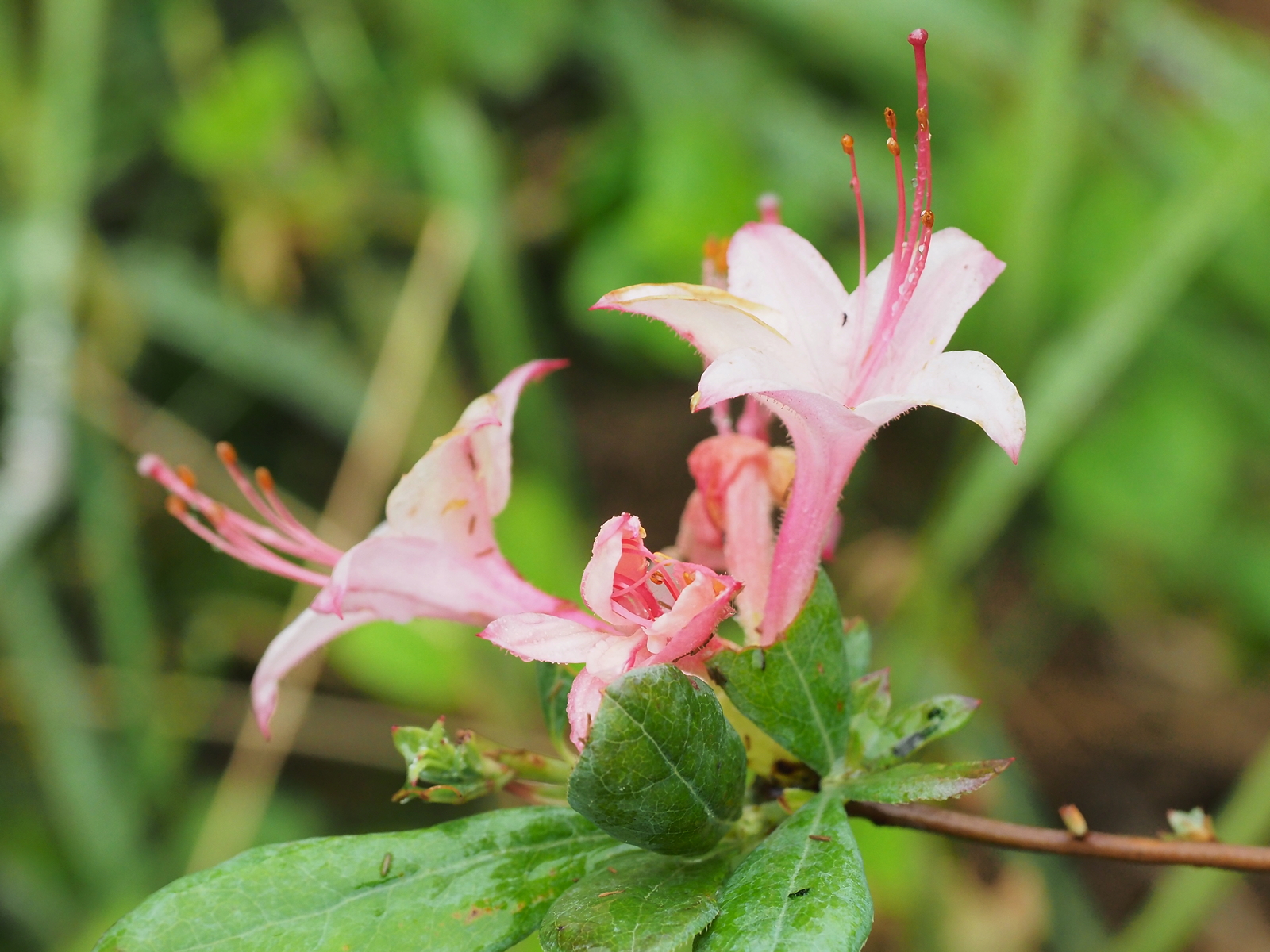
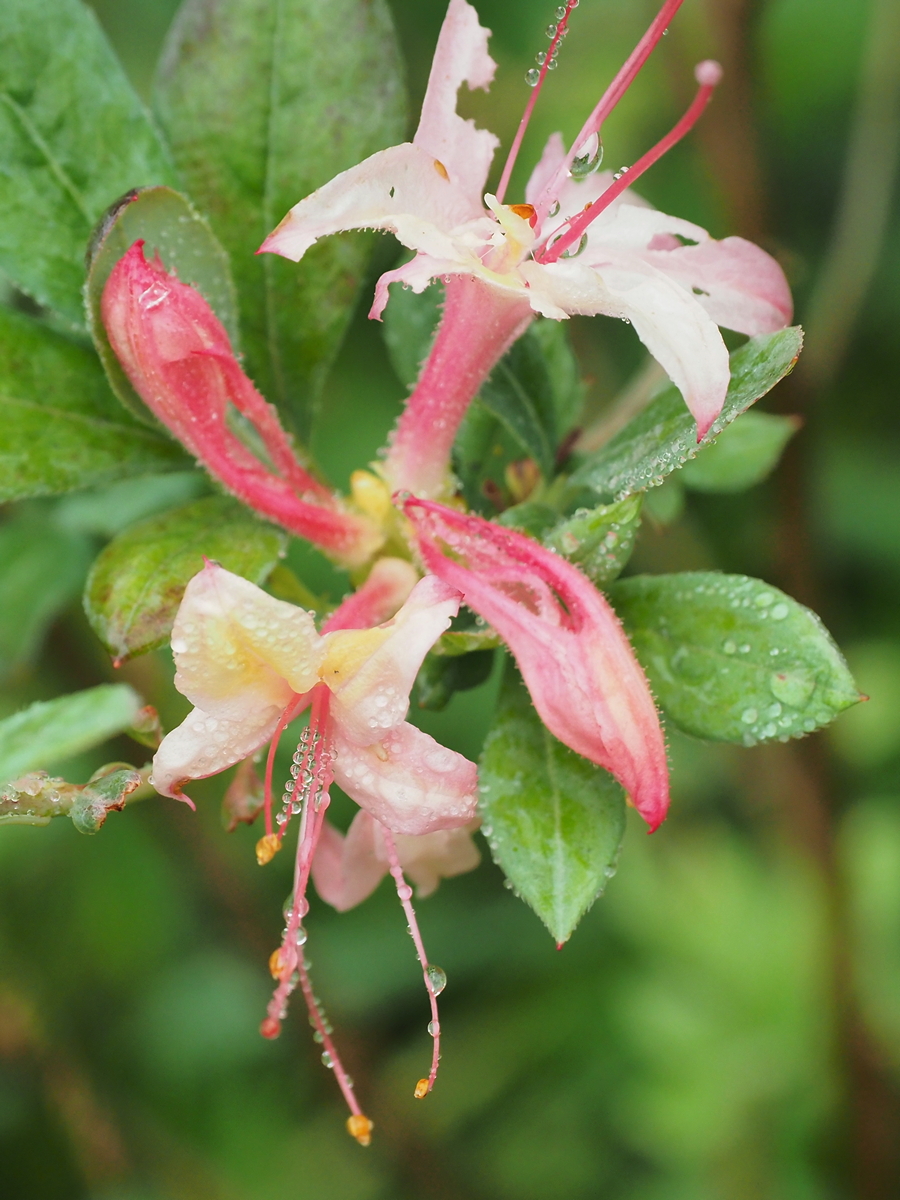
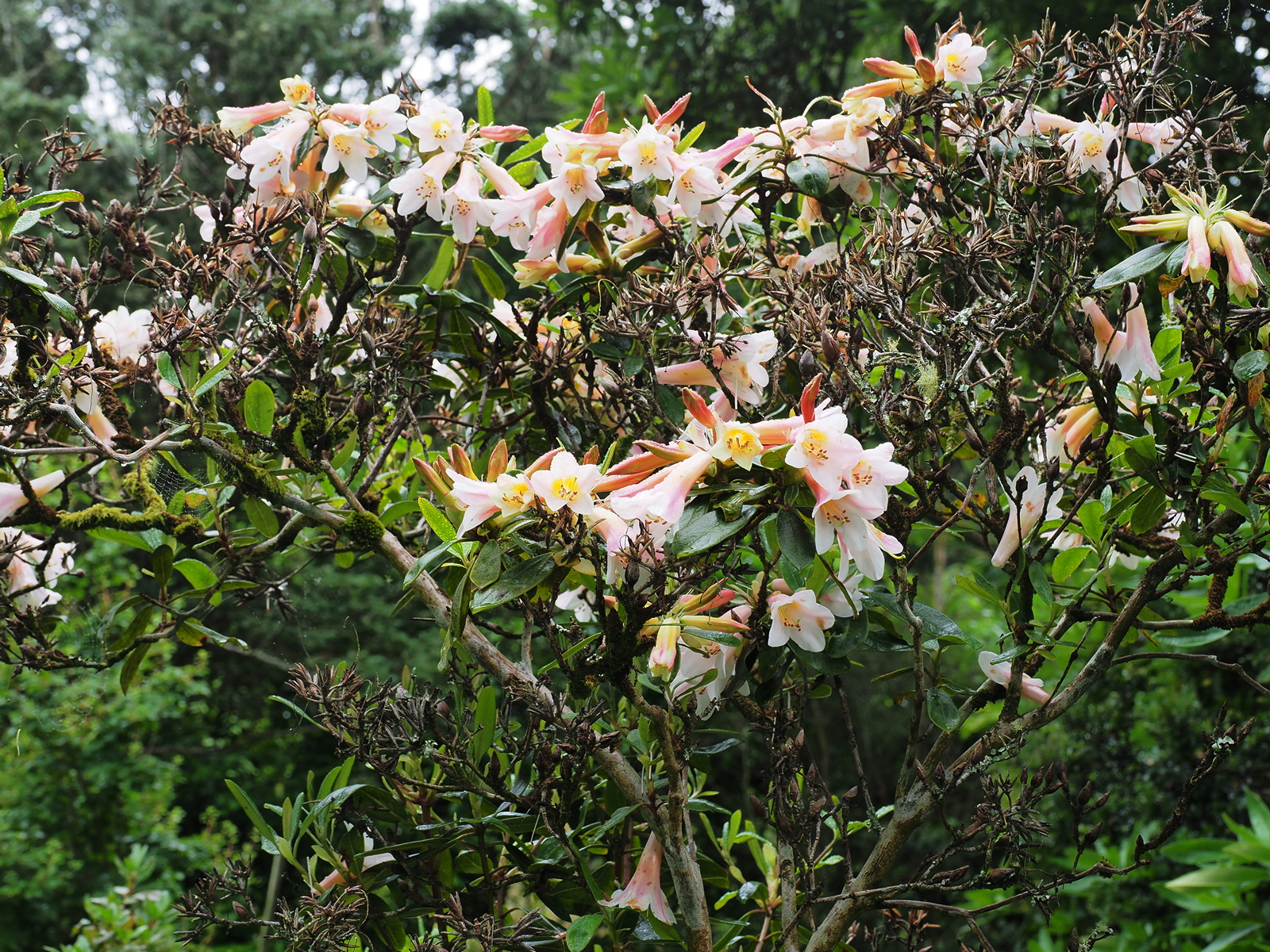
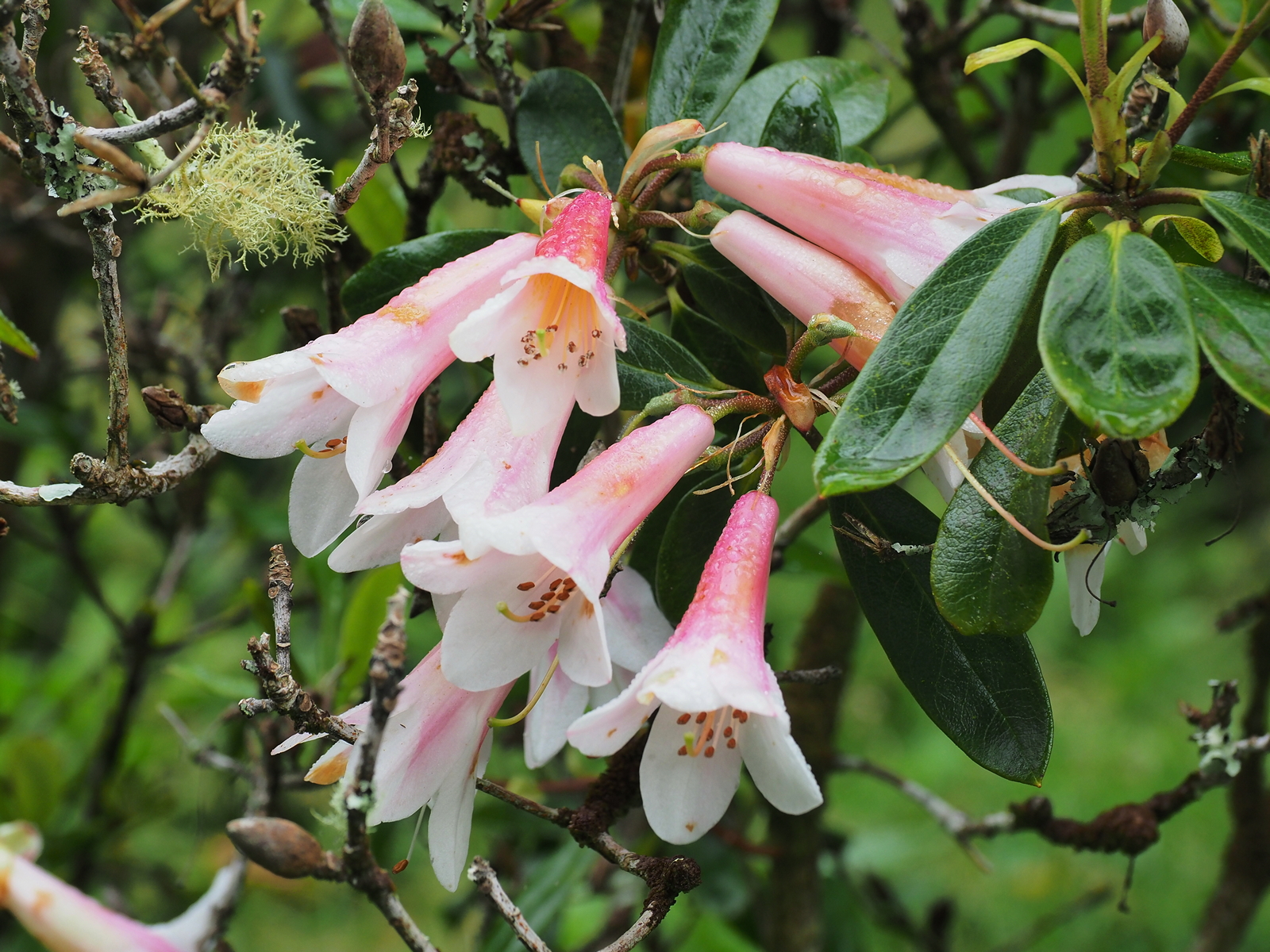
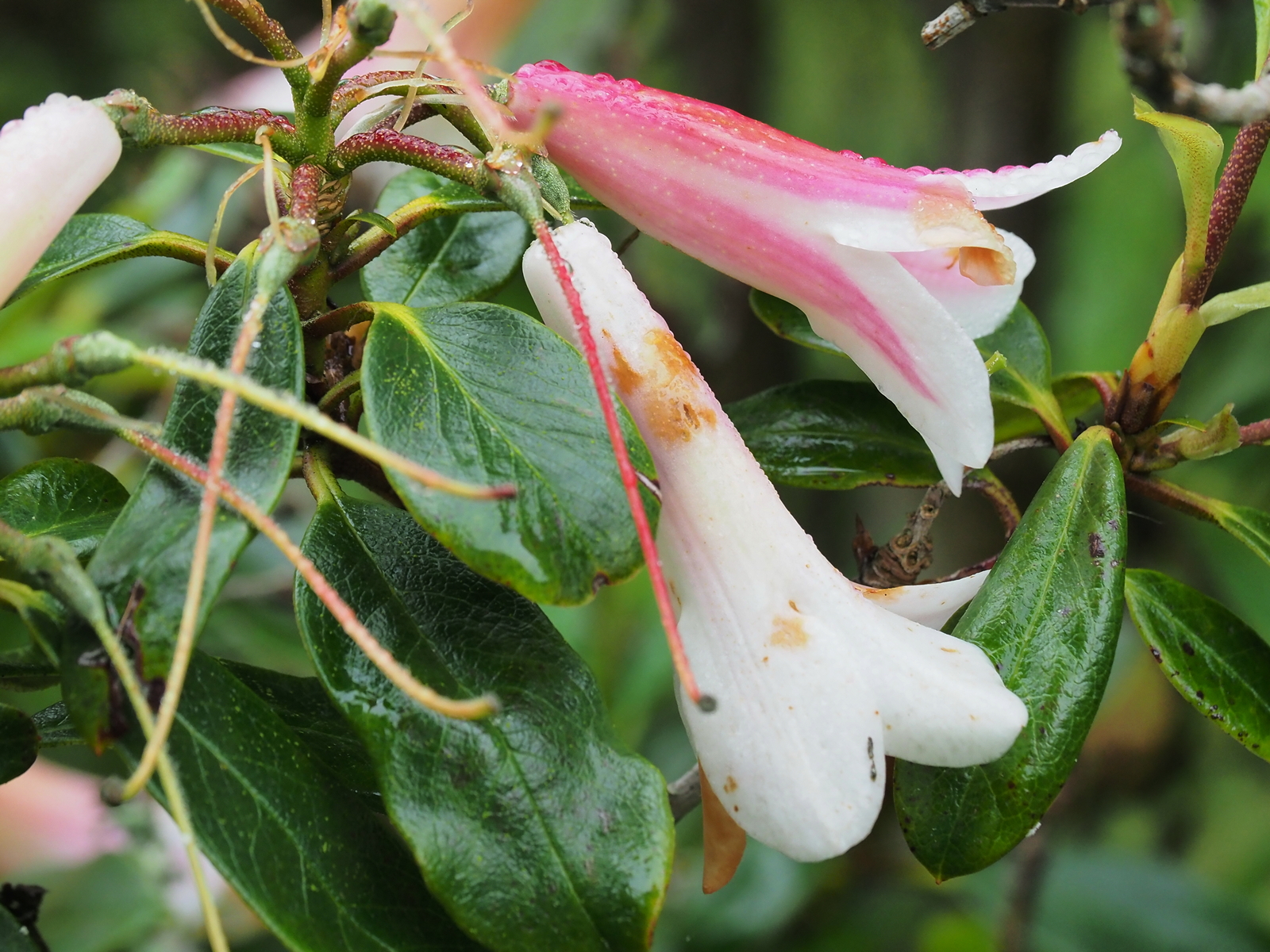
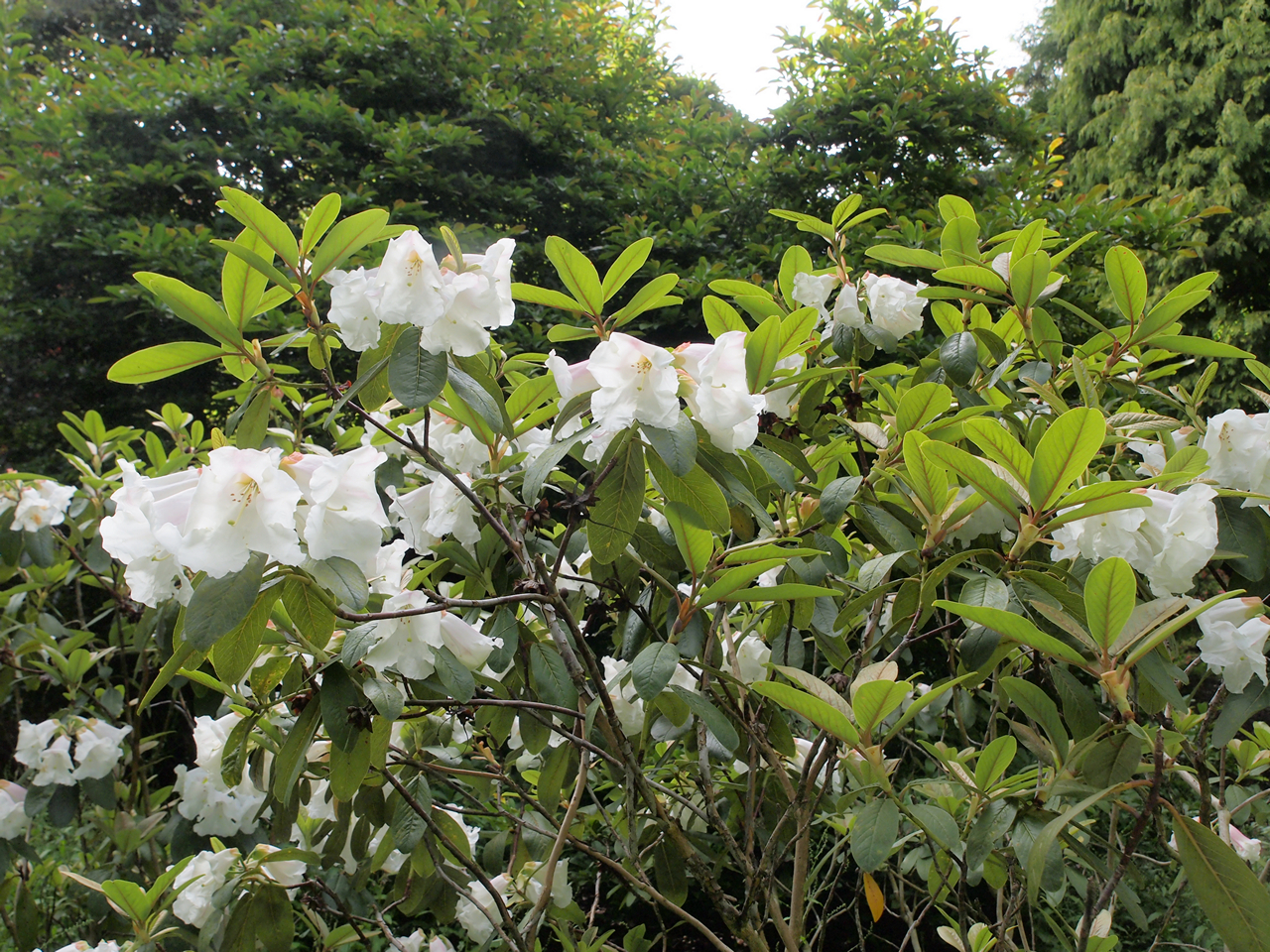
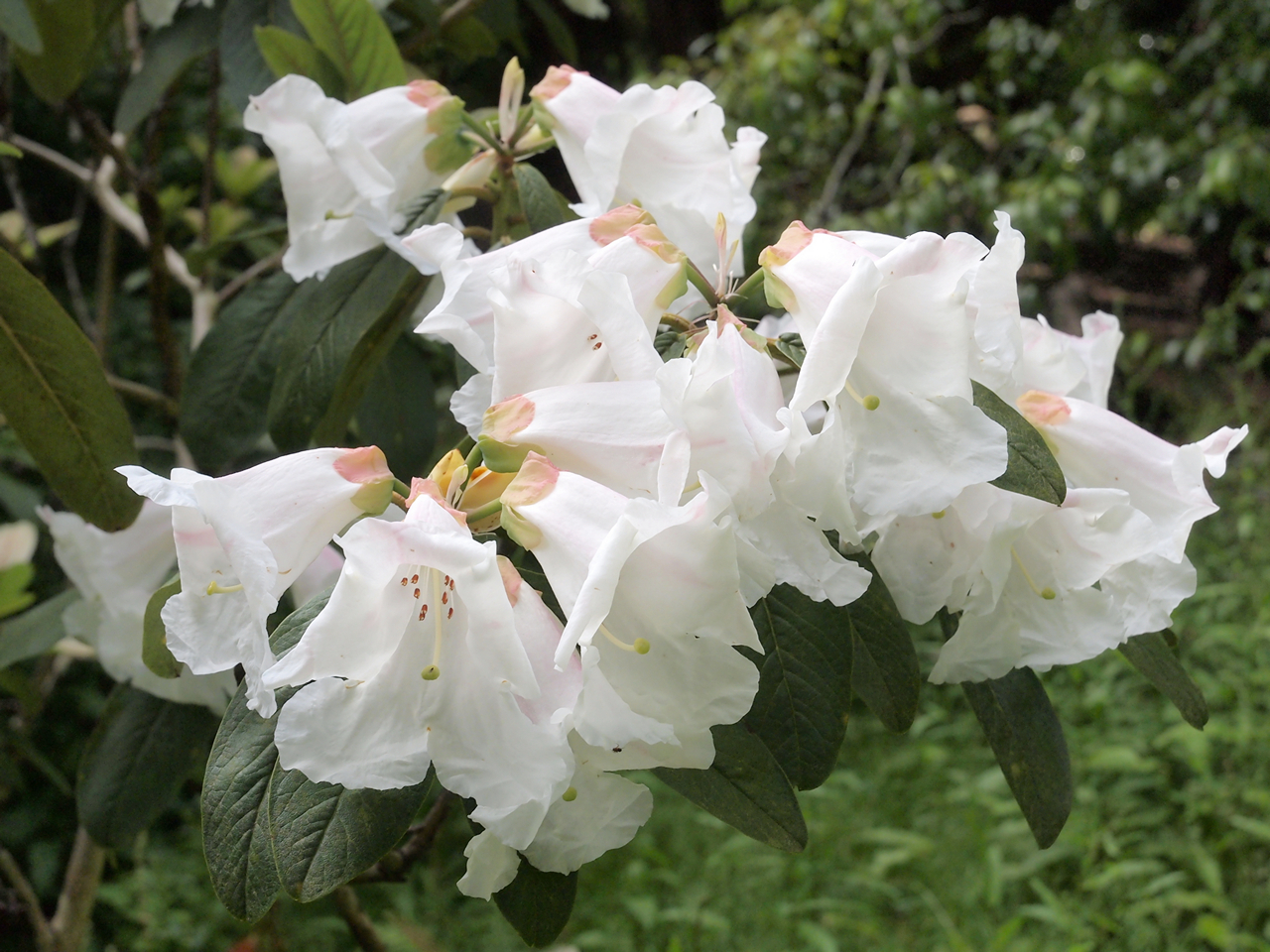
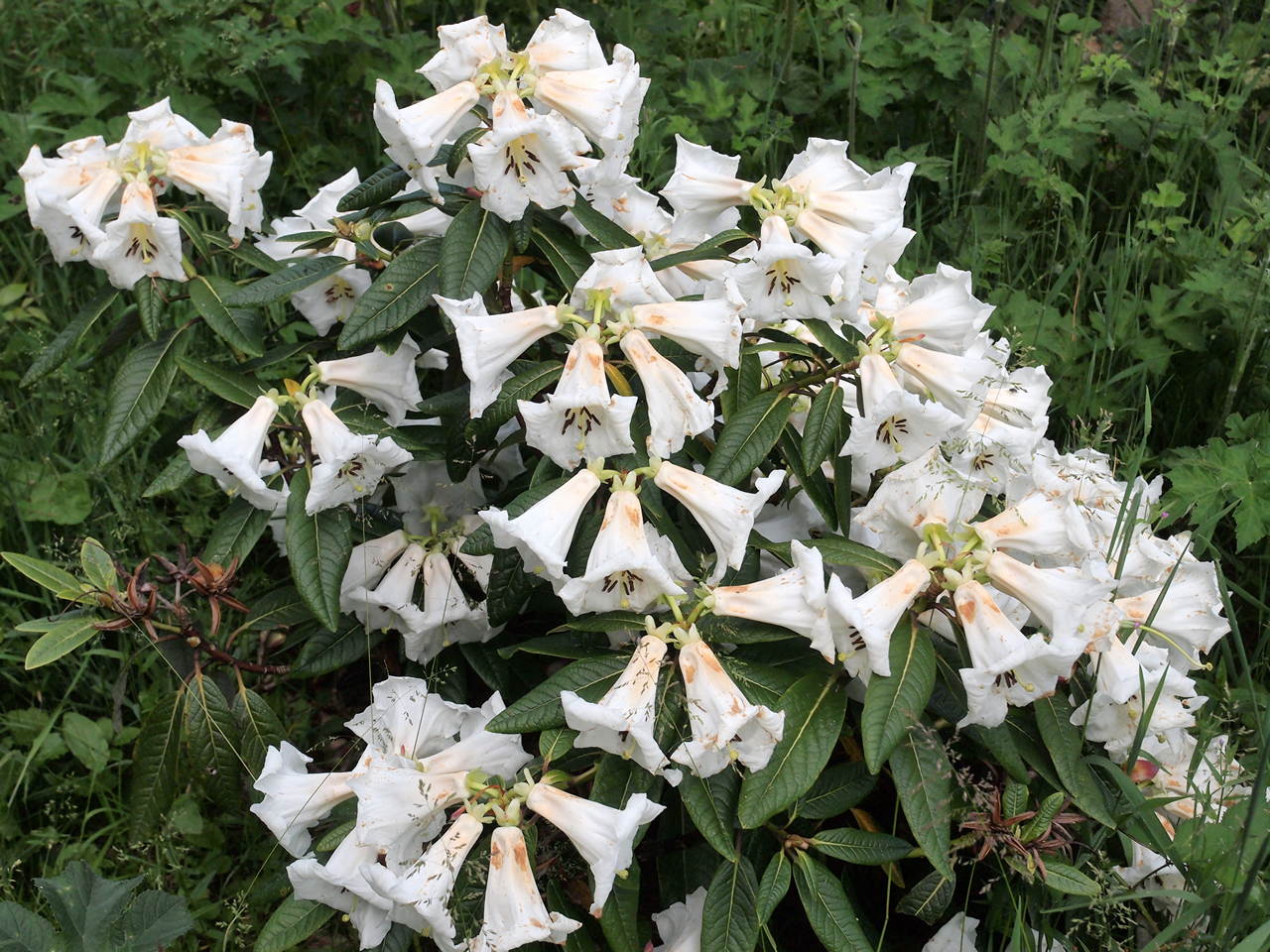
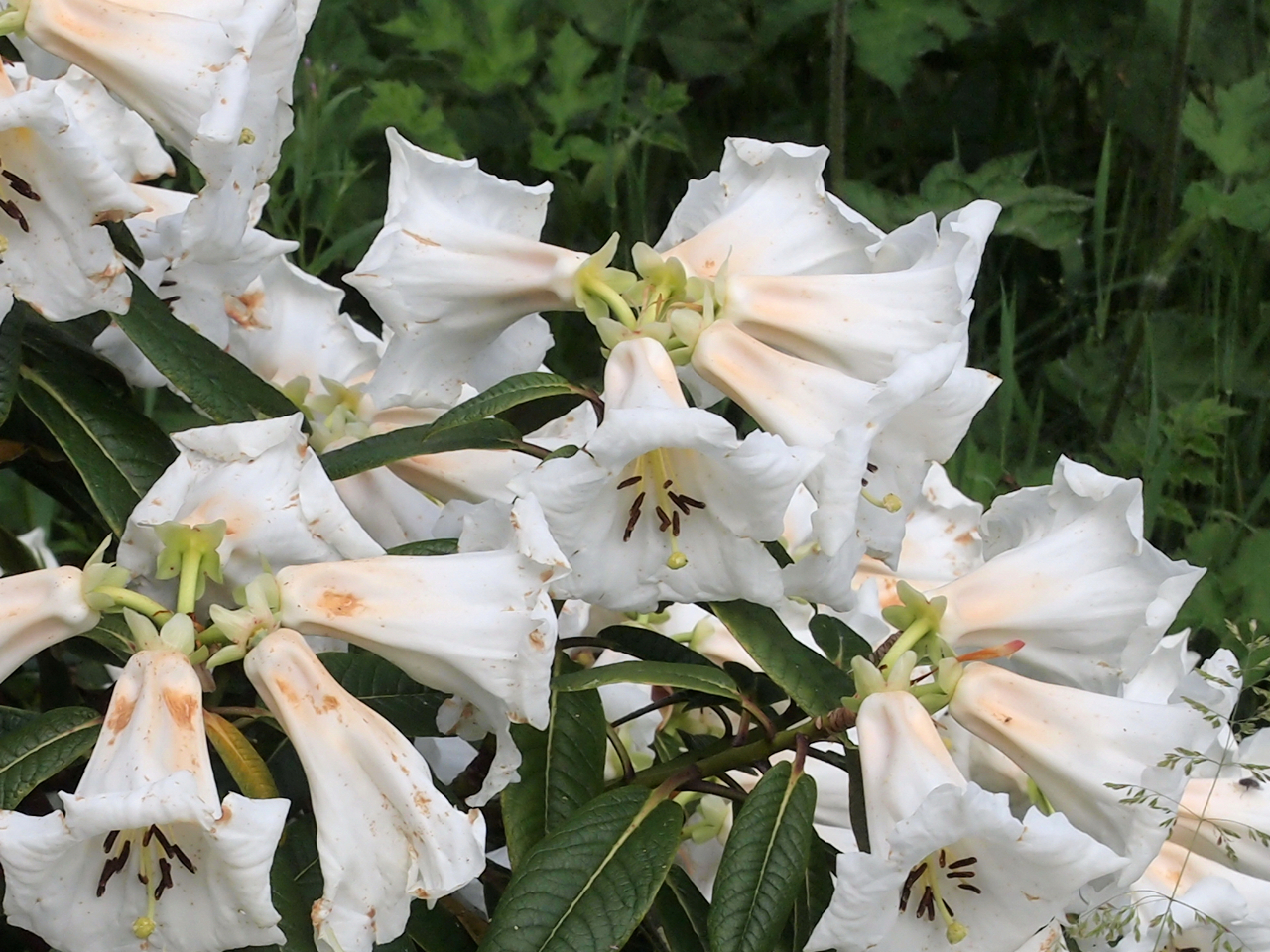
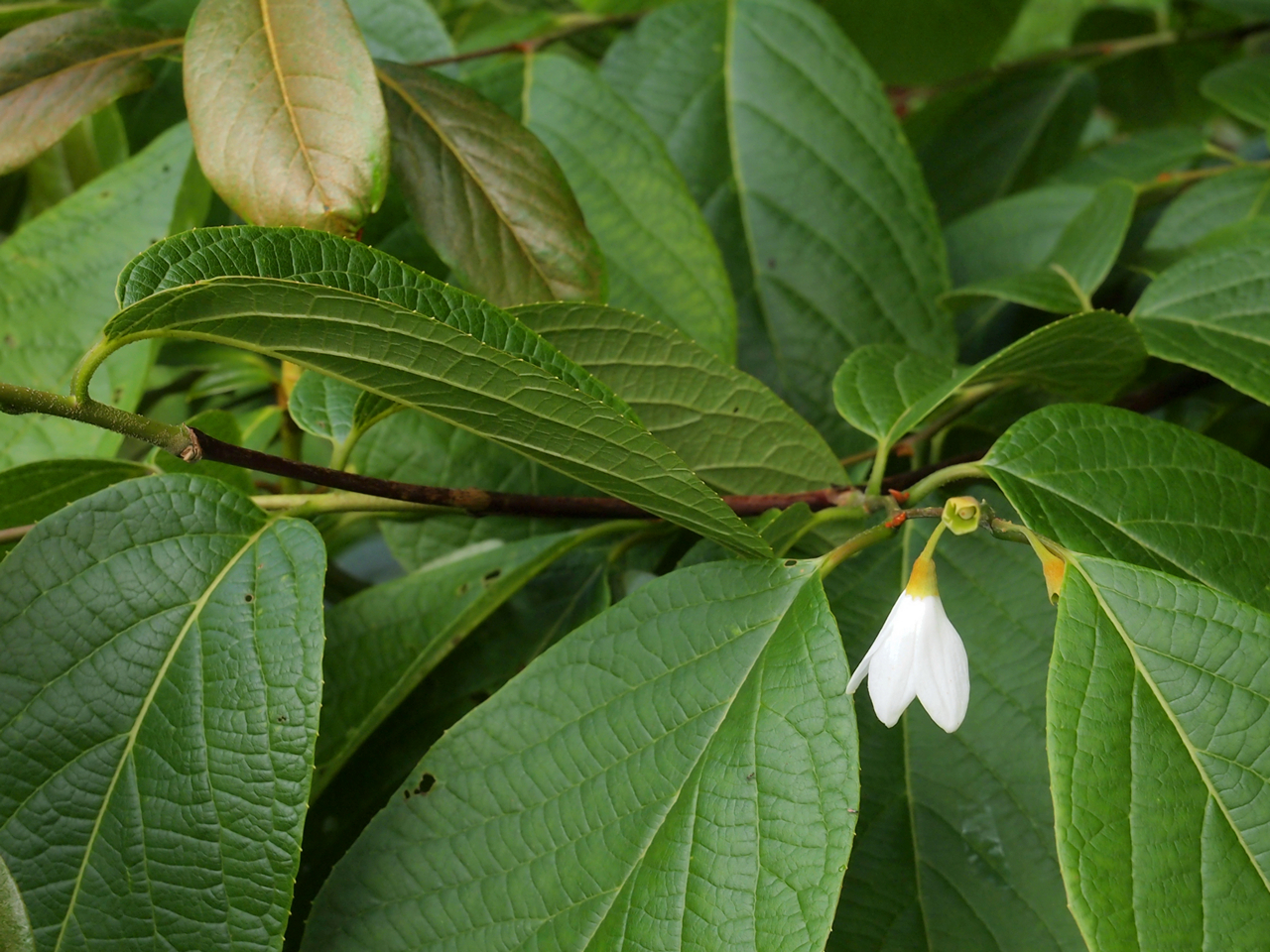
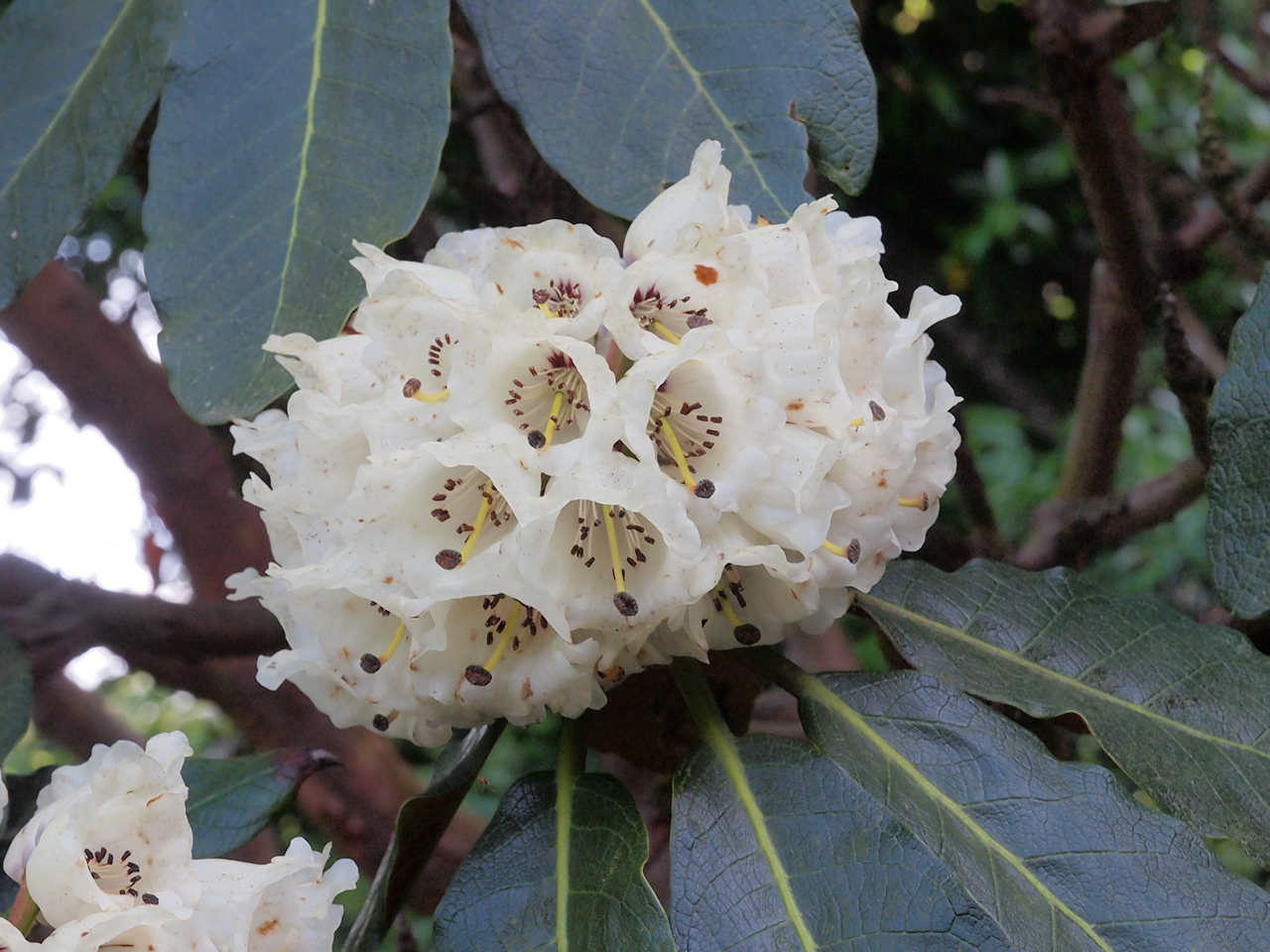
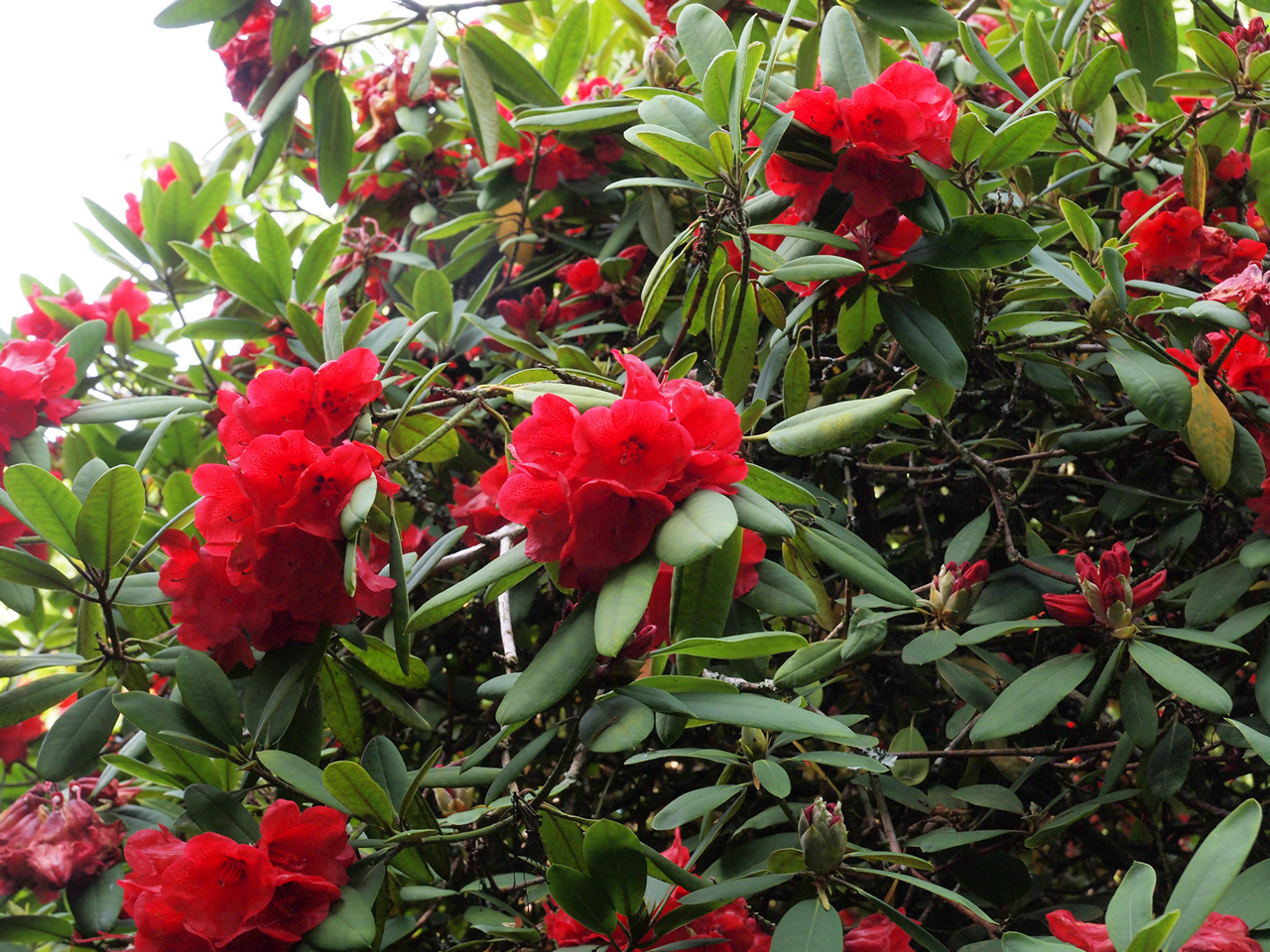
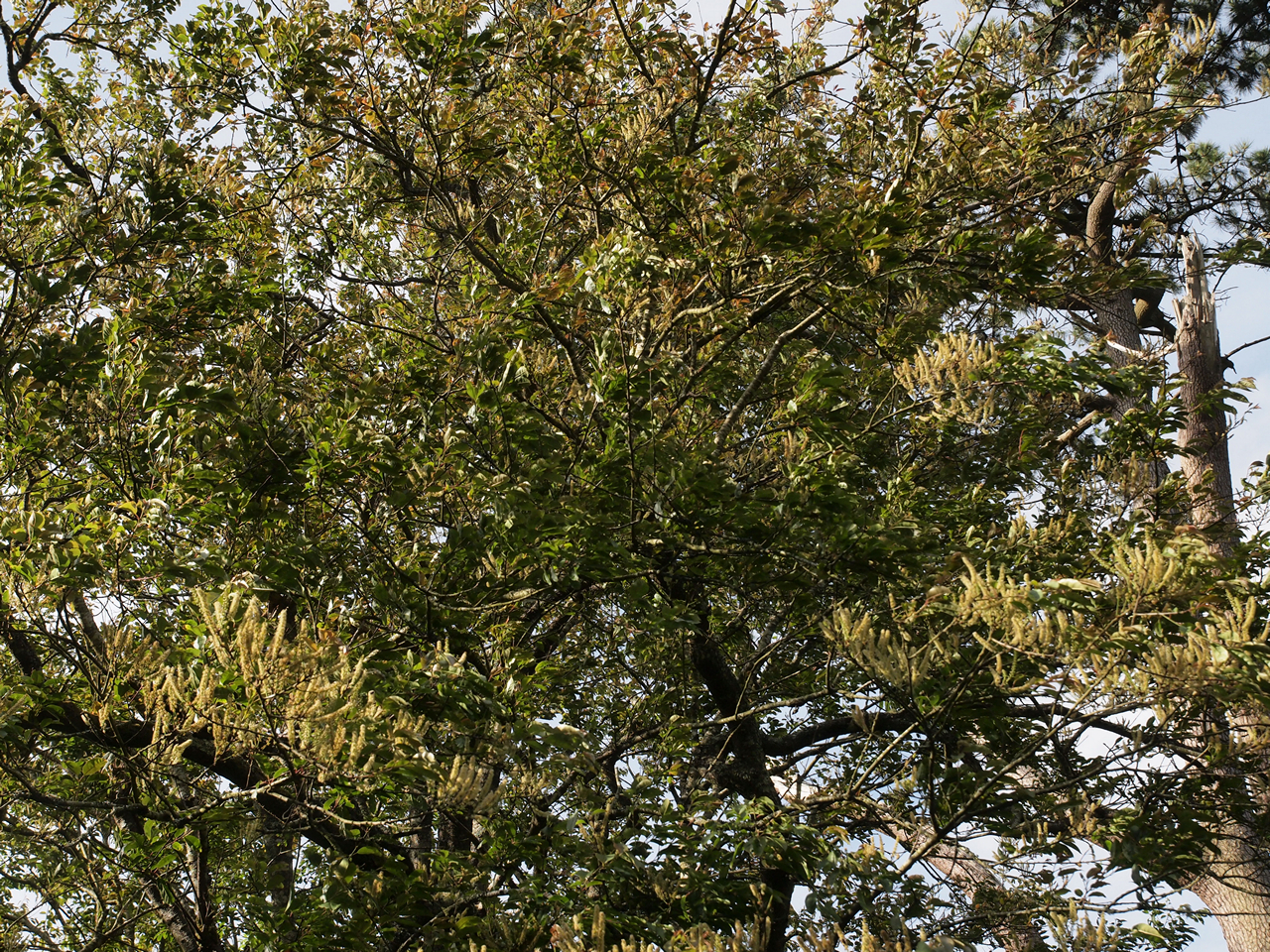
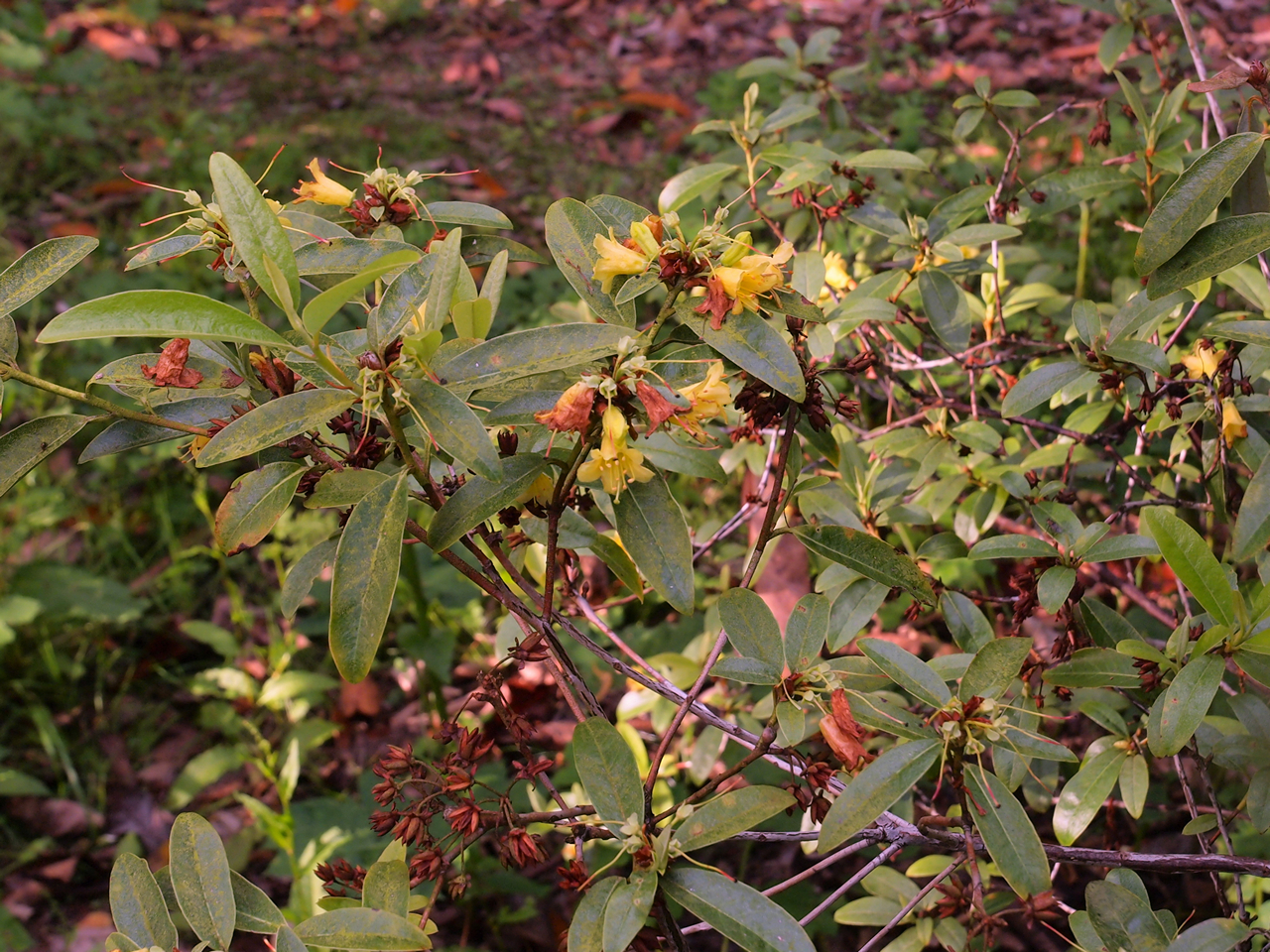
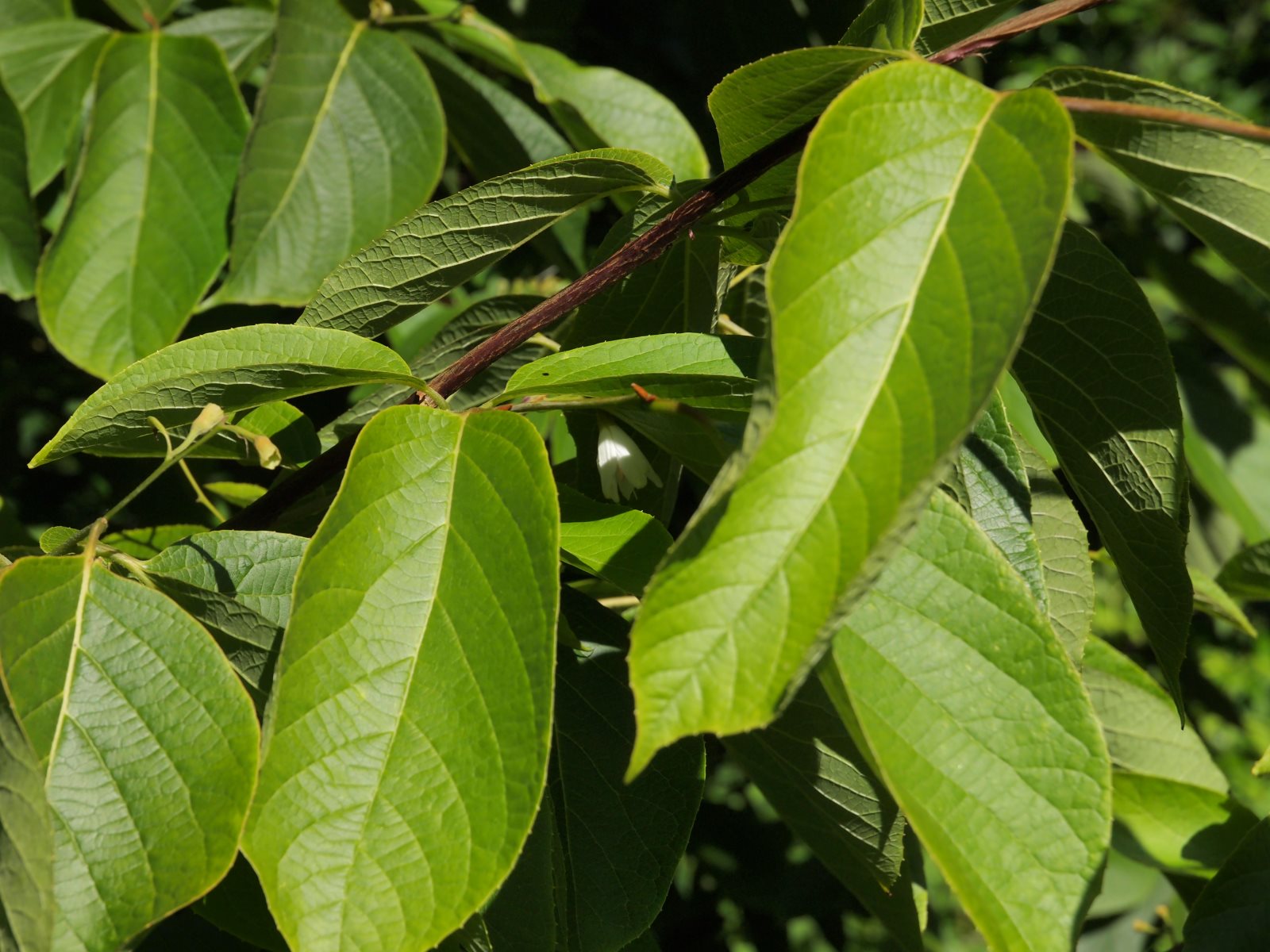
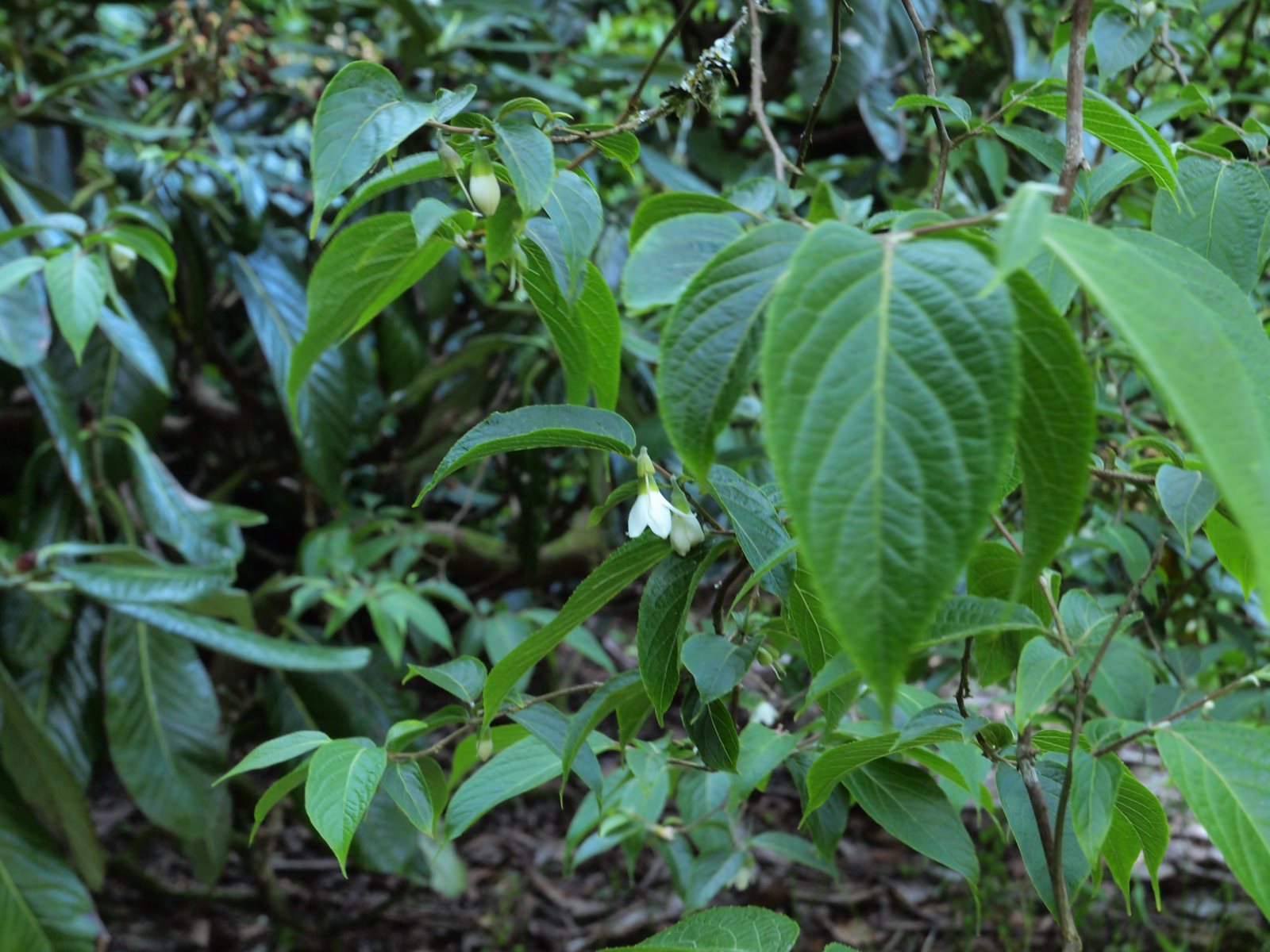
Clare notices what I thought was Salvia discolor a day or two ago. I was suspicious then but she is clearly right that it is not. We must remember not to put these pictures on the nursery website.Grass cutting and tidying in Penvergate today. The Crabiodendron yunnanense plants which we planted here are suckering as you can see. The original (and record) plant in the Auklandii Garden has never shown any inclination to sucker from the base but these young plants have. They have grown well in a windy place with salt sprays proving perhaps that this is a hardier (very rare) plant than we had thought.
Crabiodendron yunnanense
The campion on the Playhouse bank has (as usual) white and pink forms. I discover that red campion is Silene dioica and white campion is Silene alba. They readily cross with each other as here.
campioncampion
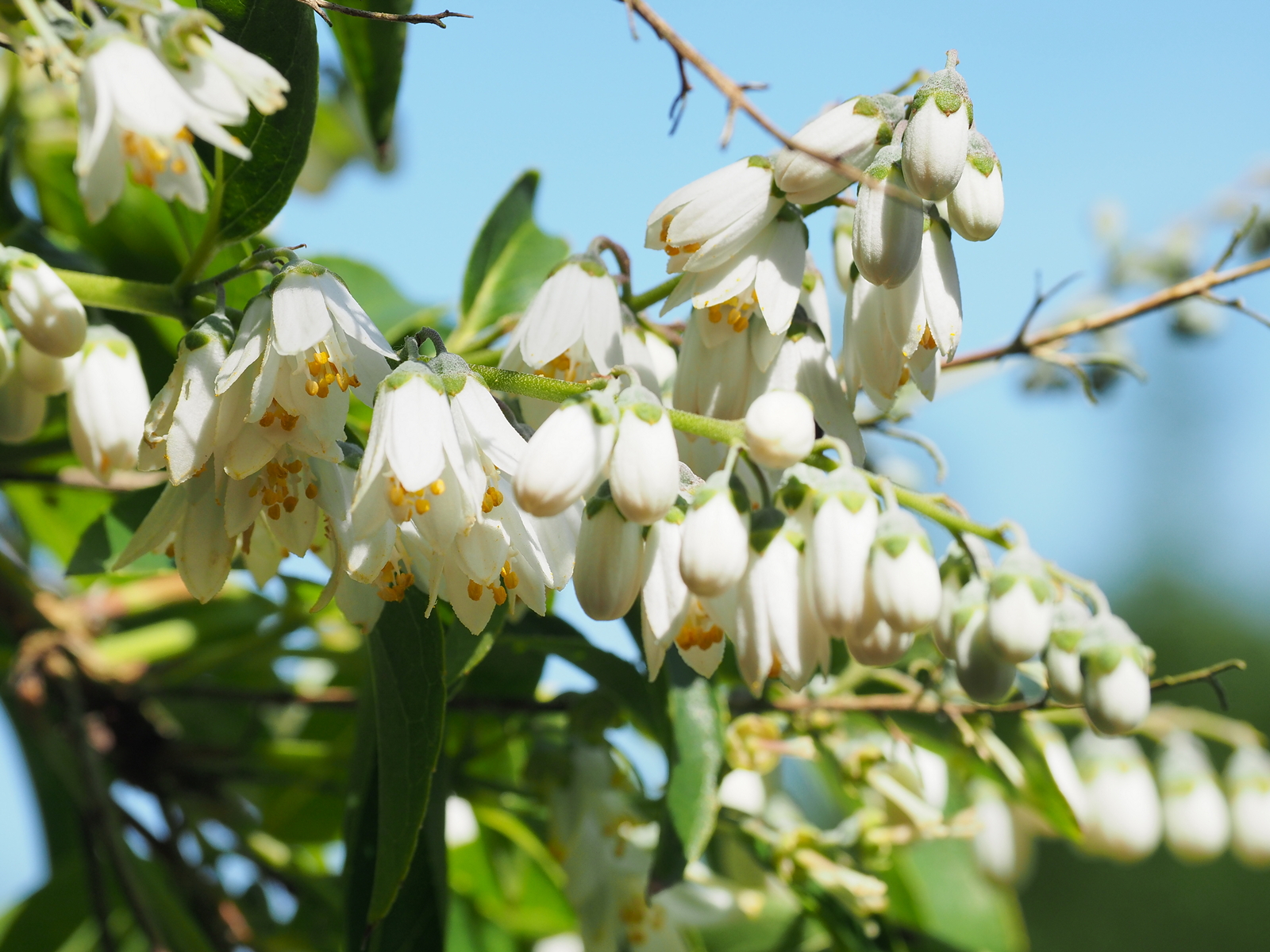
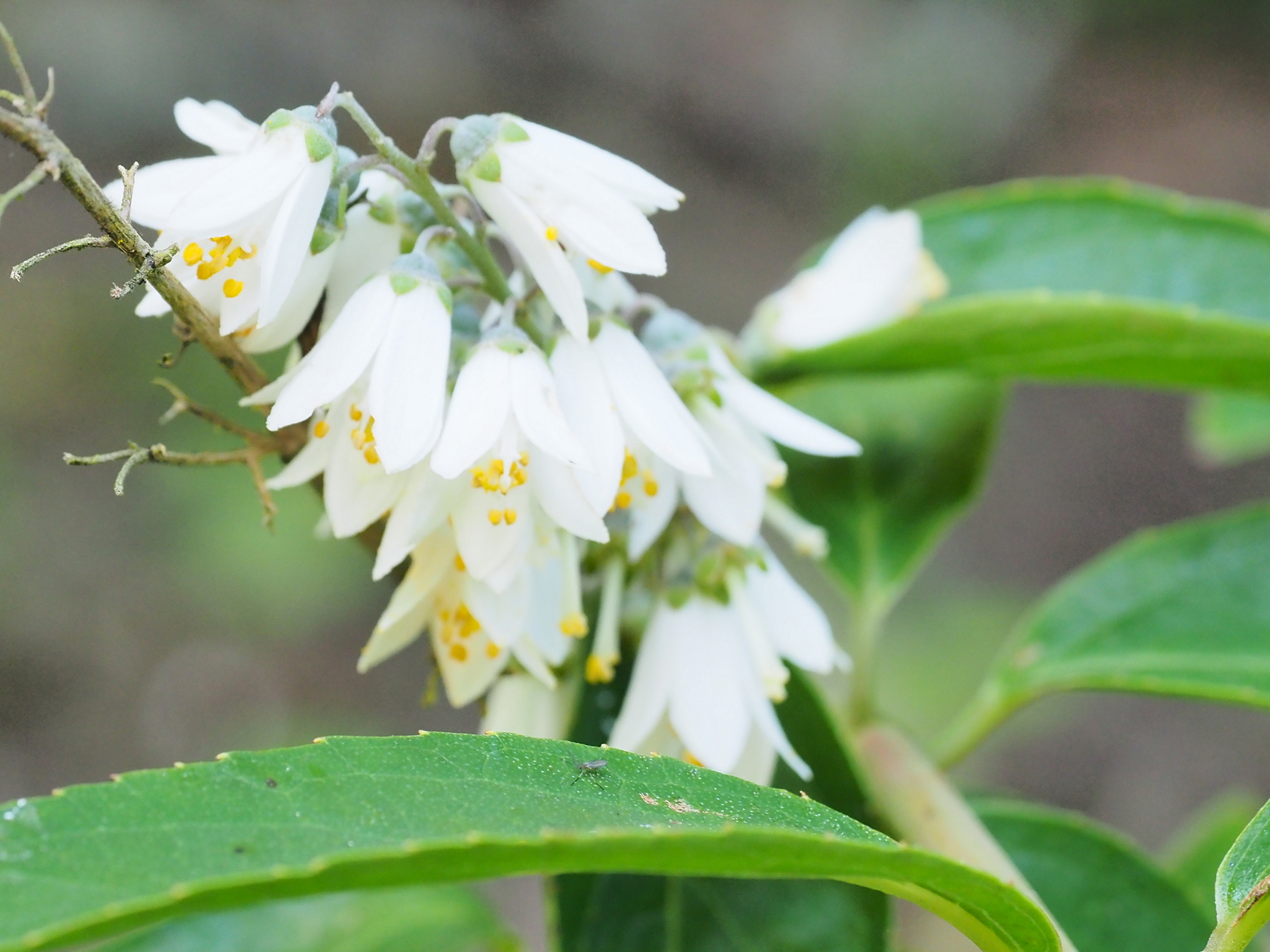
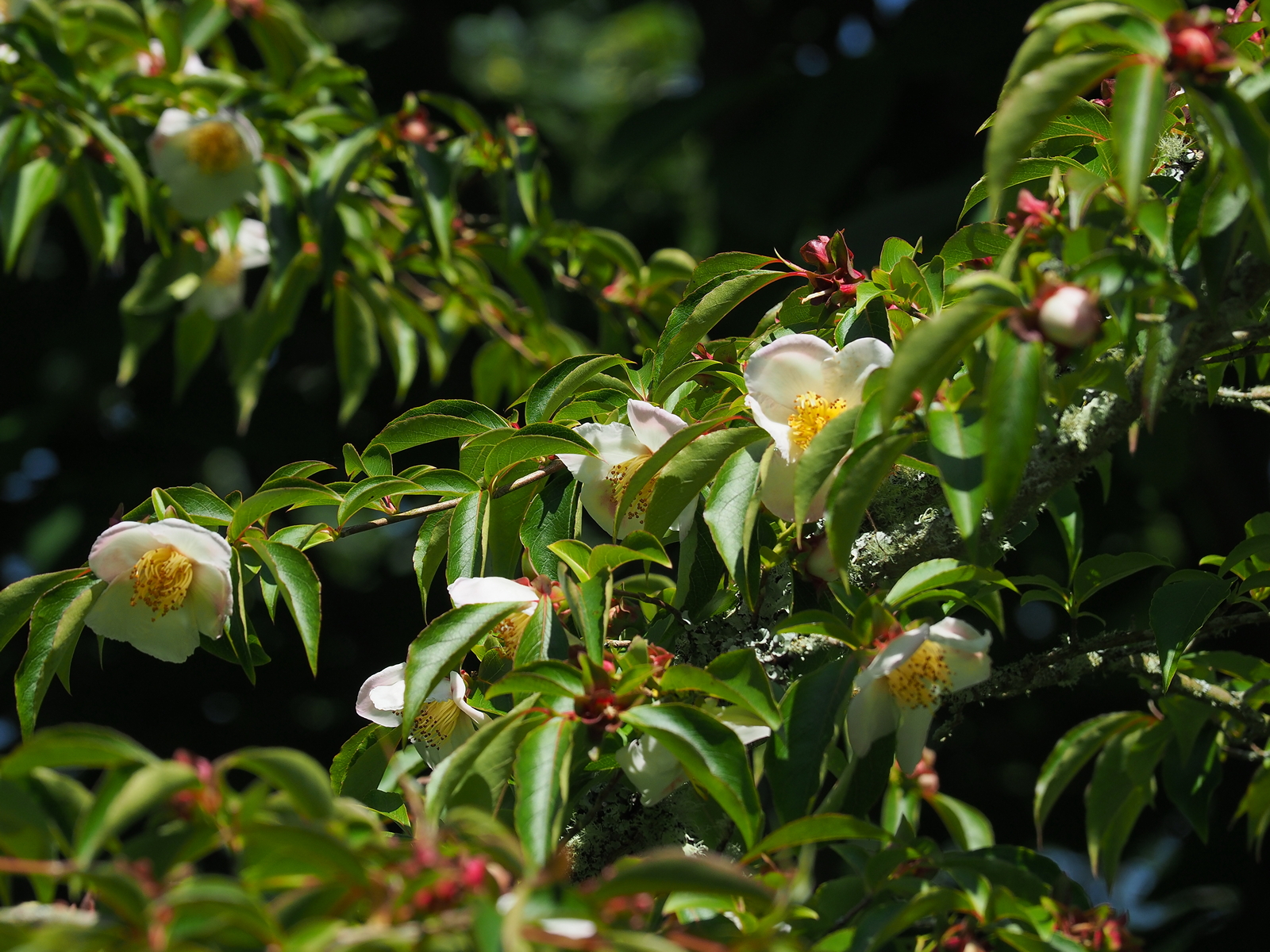
The record Styrax japonica is dying in its crown but still loaded with flower (and bees). As the top dies so the suckers multiply at the base of the trunk.
Styrax japonicaStyrax japonicaStyrax japonica
A third different form of the Rhododendron royallii Caerhays hybrids on Burns Bank is a very late flowerer and better than the apricot and yellowish forms elsewhere.
Rhododendron royalliiRhododendron royallii
This Rhododendron nuttallii by the main quarry has no flowers this year.
Rhododendron nuttallii
Another drought casualty in the quarry.
casualty
The question now is do we pollard back the original and huge Camellia x williamsii ‘November Pink’ in the quarry? A dead rhodo has fallen into it.
Camellia x williamsii ‘November Pink’
More branches blown off a Pinus insignis which did no damage.
Pinus insignisPinus insignis
2019 – CHW
A few rarities inspected today mainly in Kennel Close.Pterocarya macroptera var. insignis growing on nicely since planting in 2016 but we are unlikely to see its magnificent long flower tassels for some years. Introduced to the UK by Wilson in 1908 but not grown here until now. This species of Pterocarya does not sucker unlike the others (see Maurice Foster’s article in The Plantsman June 2019).
Pterocarya macroptera var. insignisPterocarya macroptera var. insignisPterocarya macroptera var. insignis
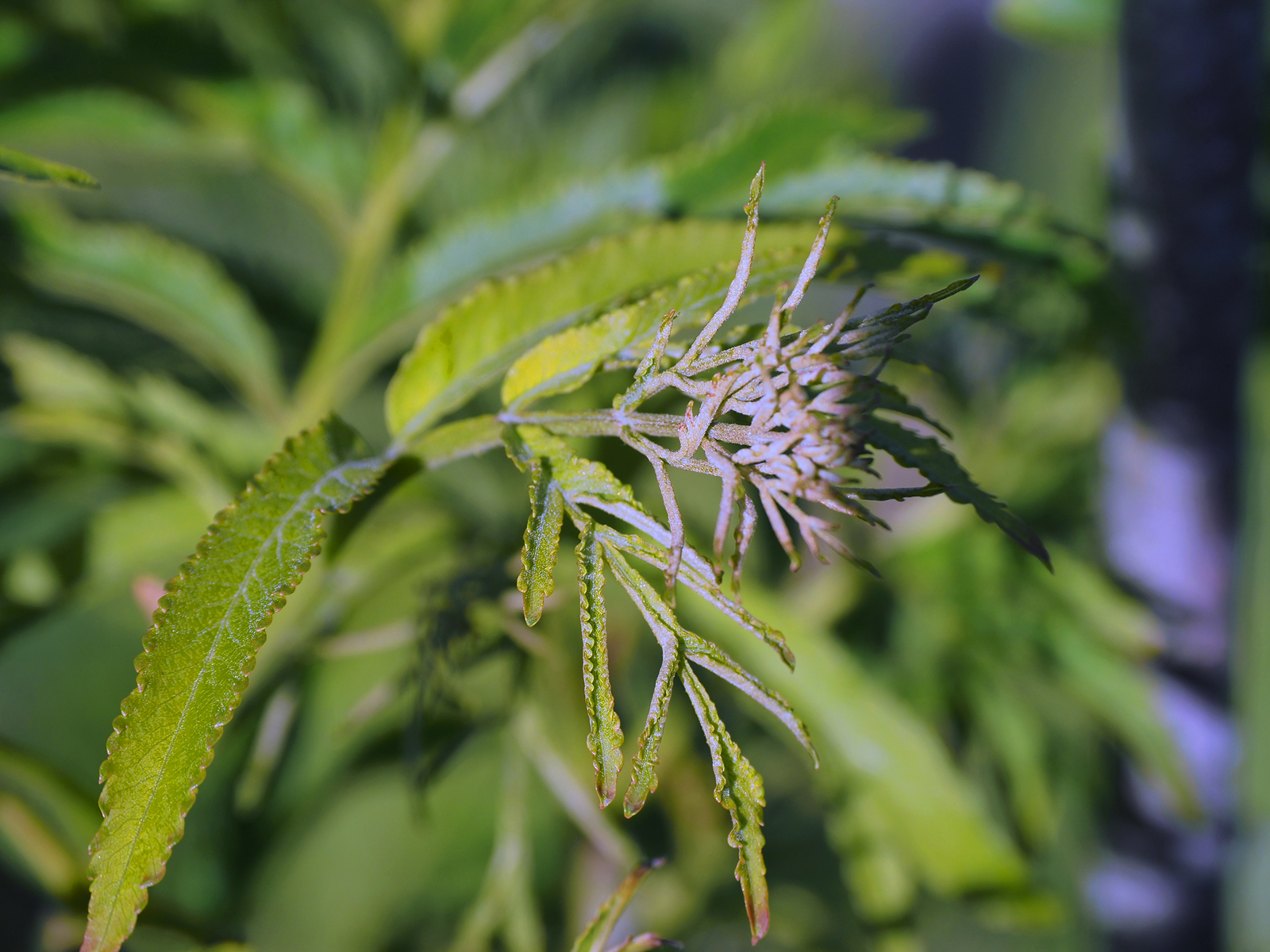
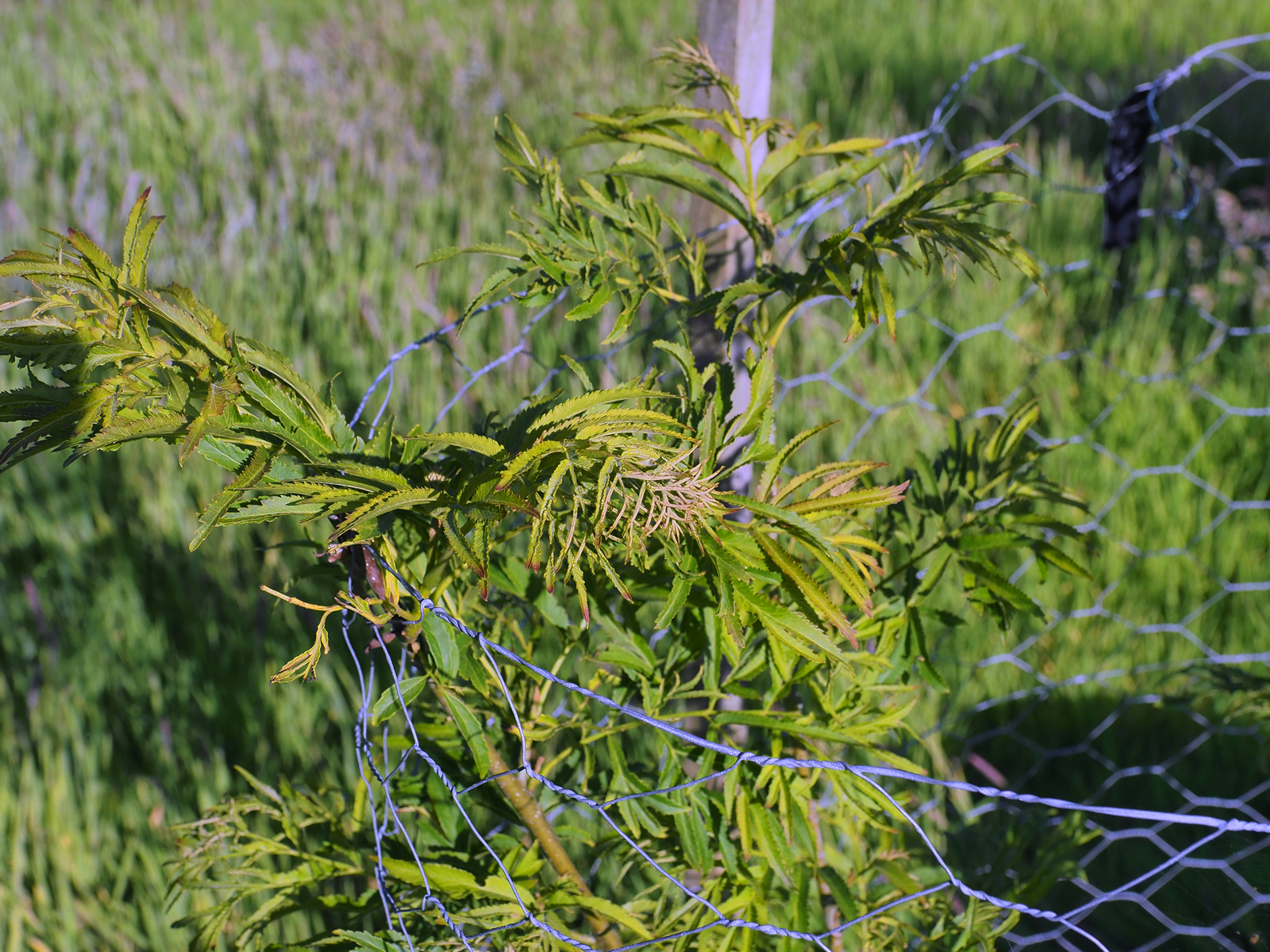
Pterocarya x rhederiana ‘Fern Leaf’ was planted only in 2017 but is doing nicely. The leaflets seem to end in a spiky clump of tiny fern-like leaflets.
Pterocarya x rhederiana ‘Fern Leaf’Pterocarya x rhederiana ‘Fern Leaf’
I have always wondered what Dipteronia sinensis looked like in flower. Several plants are older than this one but none are in full sun as this is. Attractive young new growth and multi stemmed. Some flowers in bud; others over. In the 1960s we had a mature tree here but I cannot recollect it.
Dipteronia sinensisDipteronia sinensis
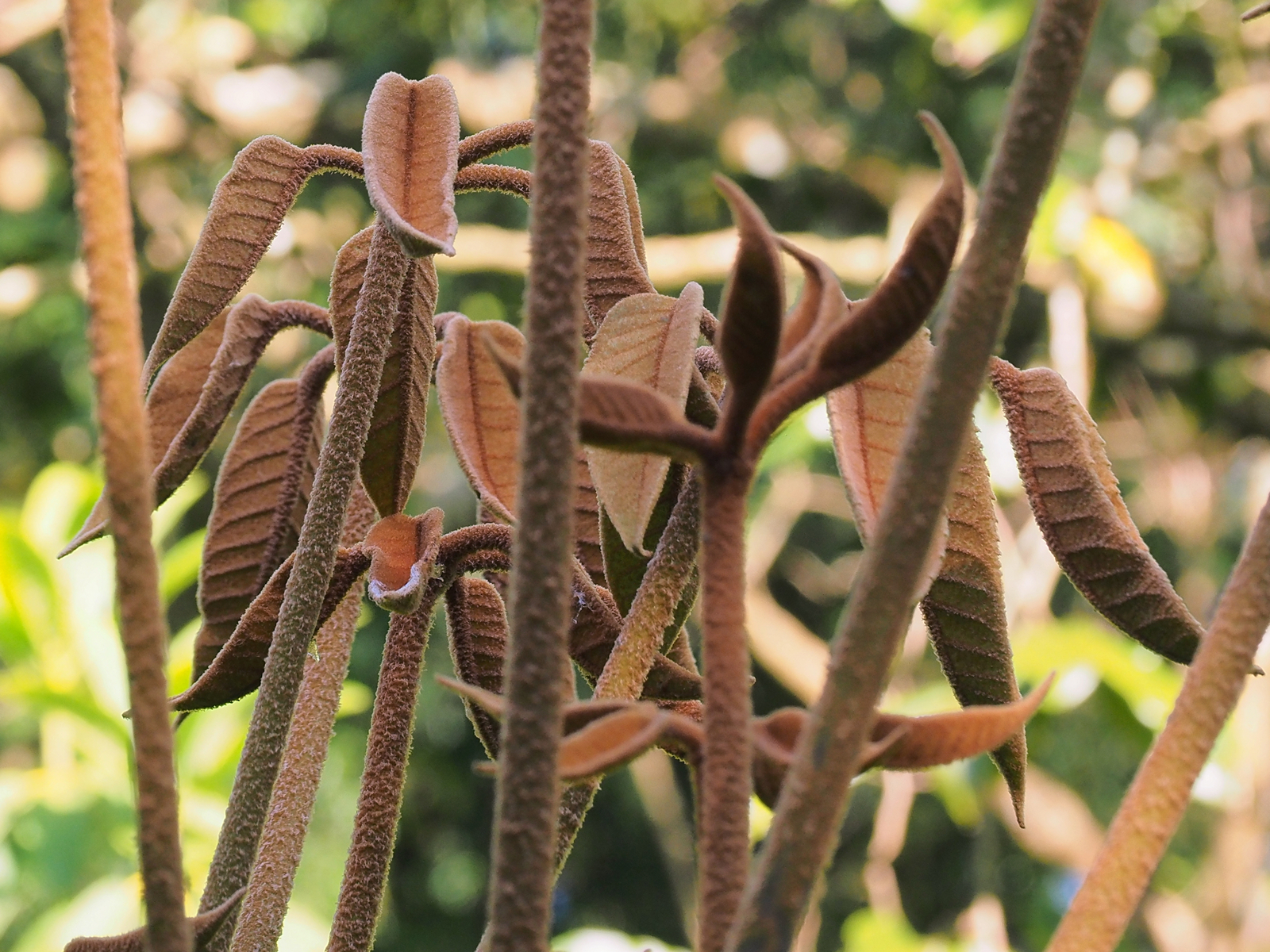
Schefflera macrophylla with brown indumentum covering its new growth. Staggeringly good!
Schefflera macrophyllaSchefflera macrophylla
Euphorbia stygiana with one seed head – its first ever here.
Euphorbia stygiana
Schefflera delavayi with extensive new growth. One leader last year on a small plant has quickly become three branched. Two feet plus of new leaf growth all over.
Schefflera delavayiSchefflera delavayi
Unlike Ventnor botanic gardens Firmiana simplex simply will not grow outside here. Struggling into leaf still here.
Firmiana simplex
Halesia macgregorii with a good set of new growth. Flowers in a year or two hopefully on this newly introduced species.
Halesia macgregorii
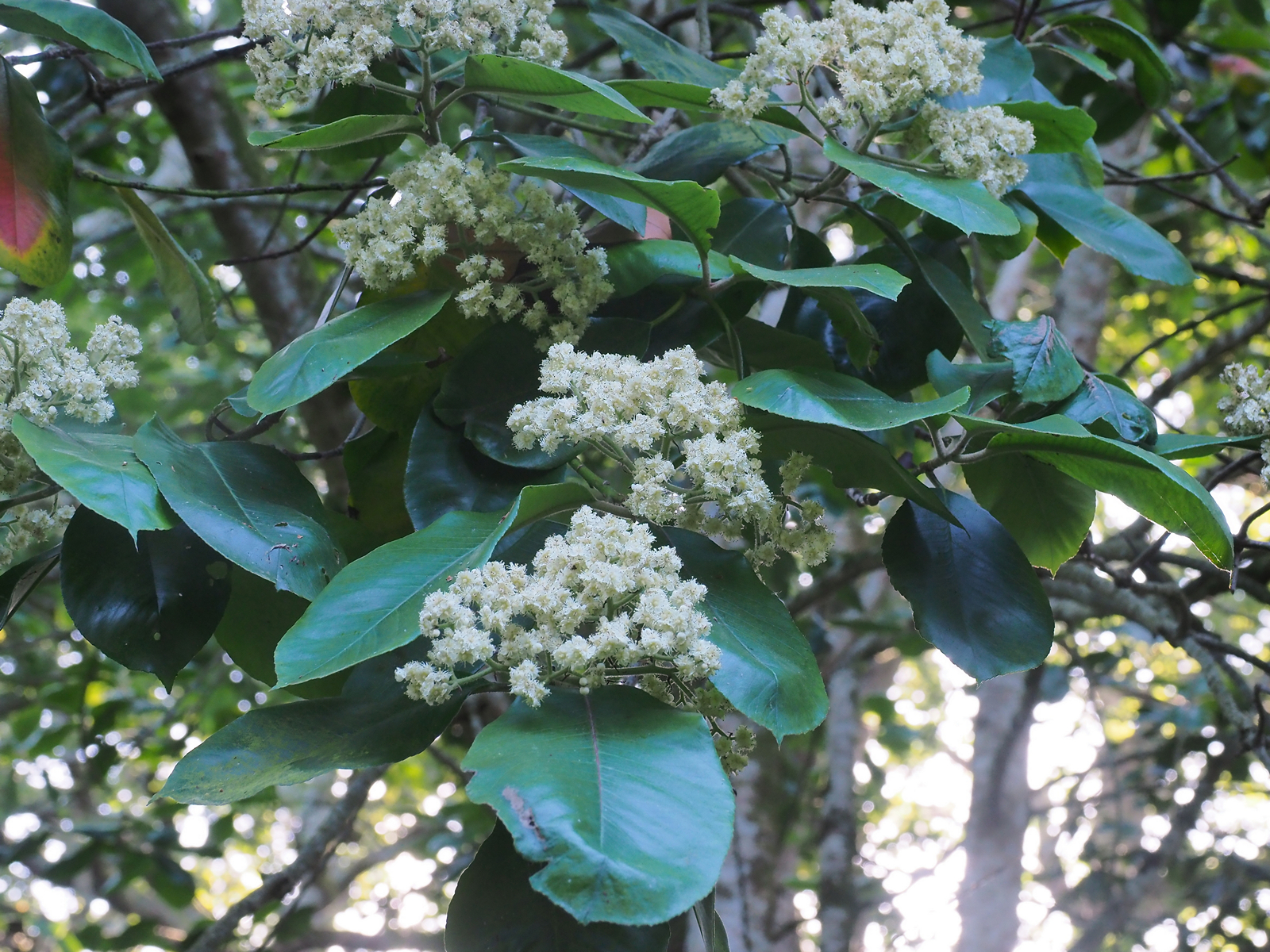
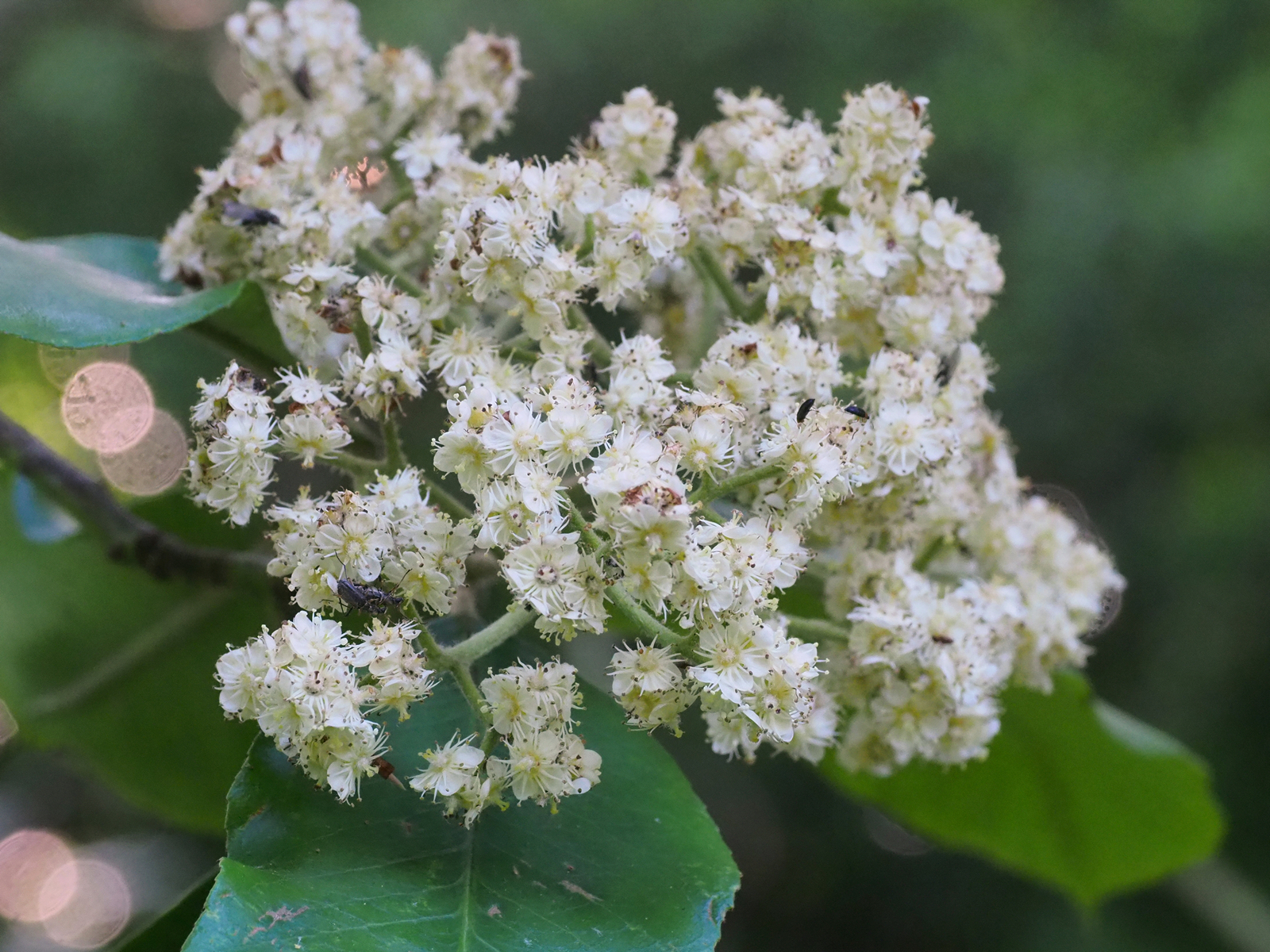
Photinia glomerata simply plastered in flower. I have never seen it as good as this. Hillier’s denies that this species exists or suggests it may be Photinia serratifolia. Roy Lancaster is happy that it is P. glomerata!
2017 – CHW
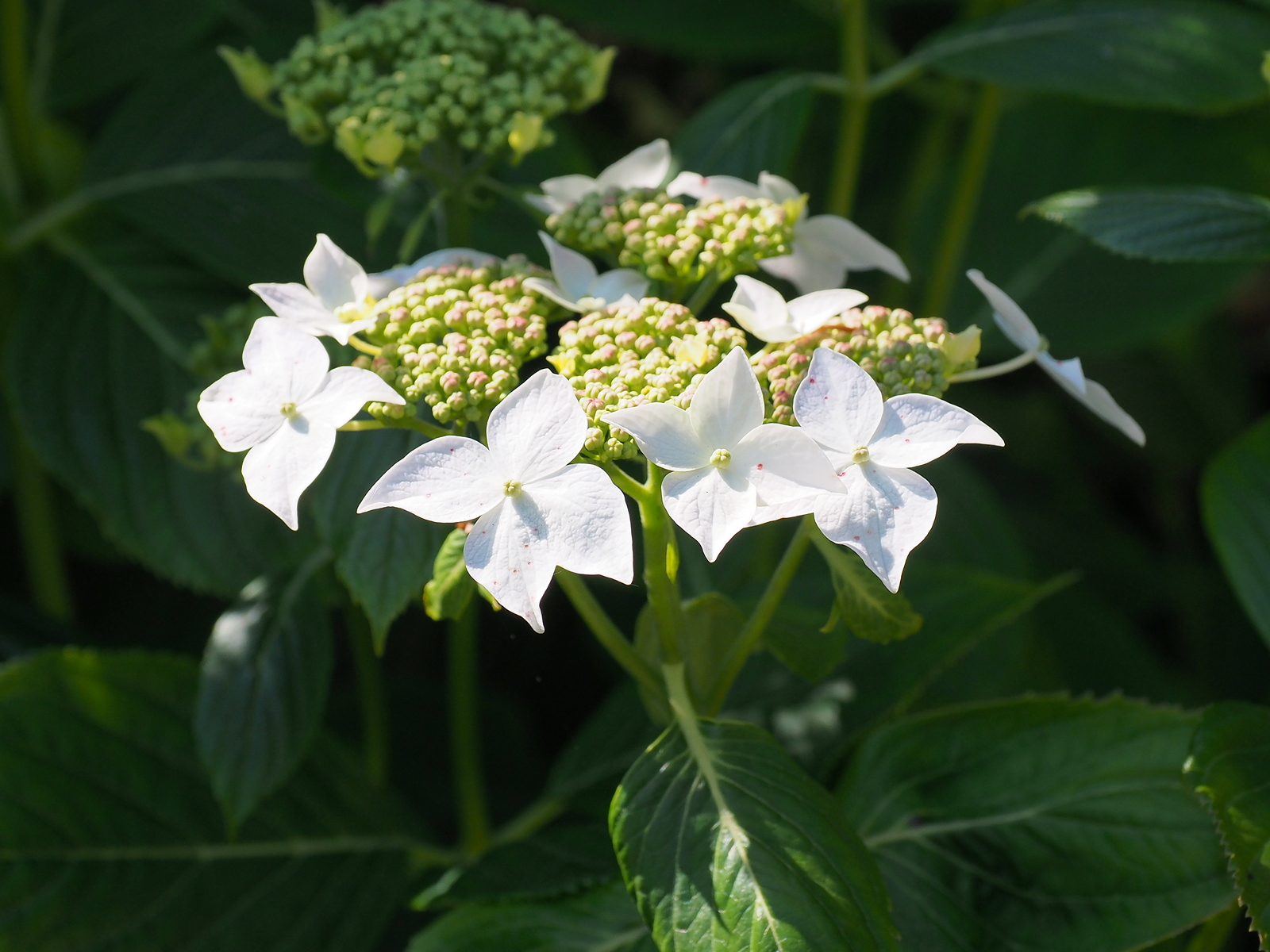
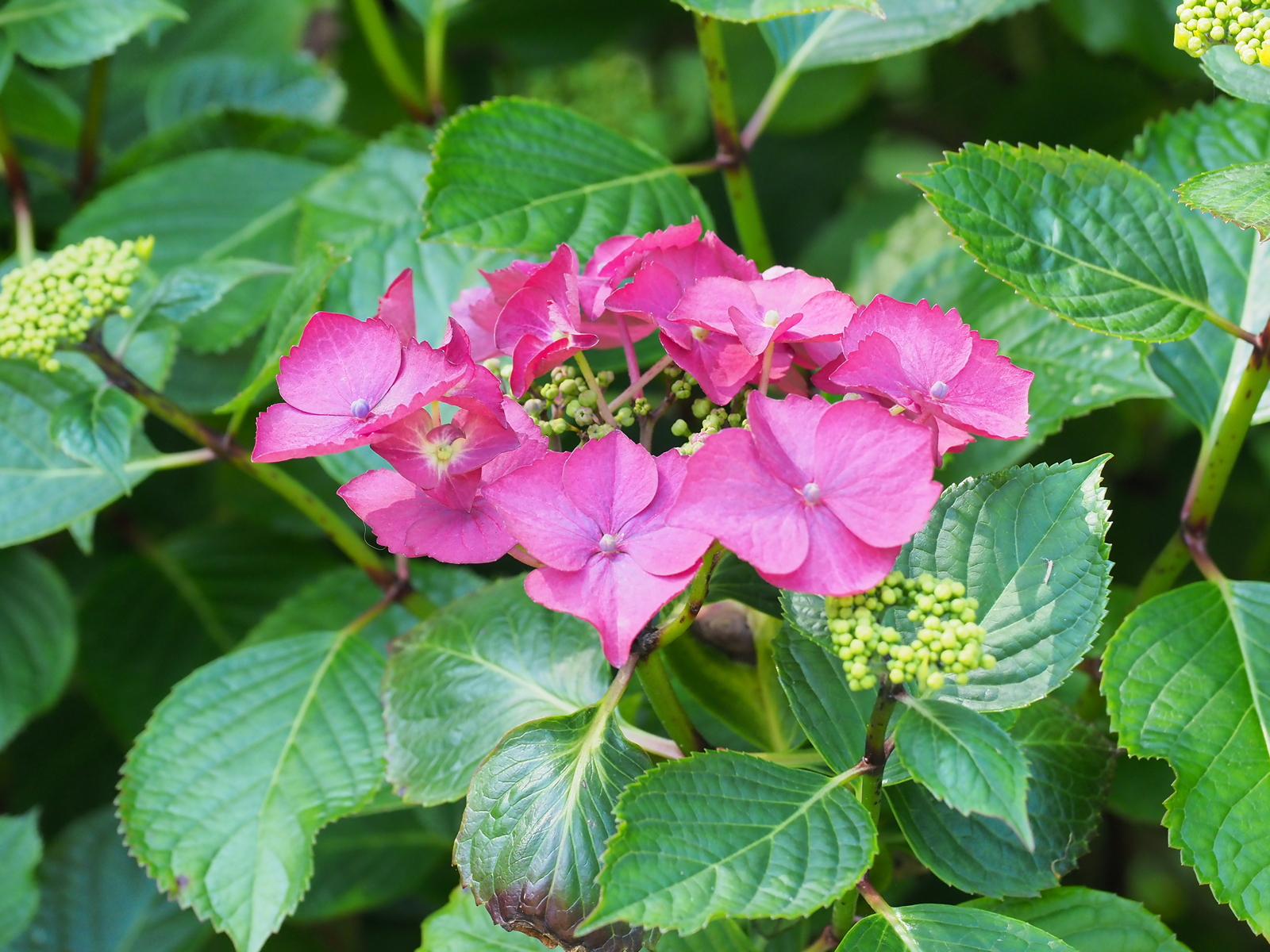
First flowers on Hydrangea ‘Lanarth’ and Hydrangea ‘Geoffrey Chadbund’, both lace-caps by the sales point.
Hydrangea ‘Lanarth’Hydrangea ‘Geoffrey Chadbund’
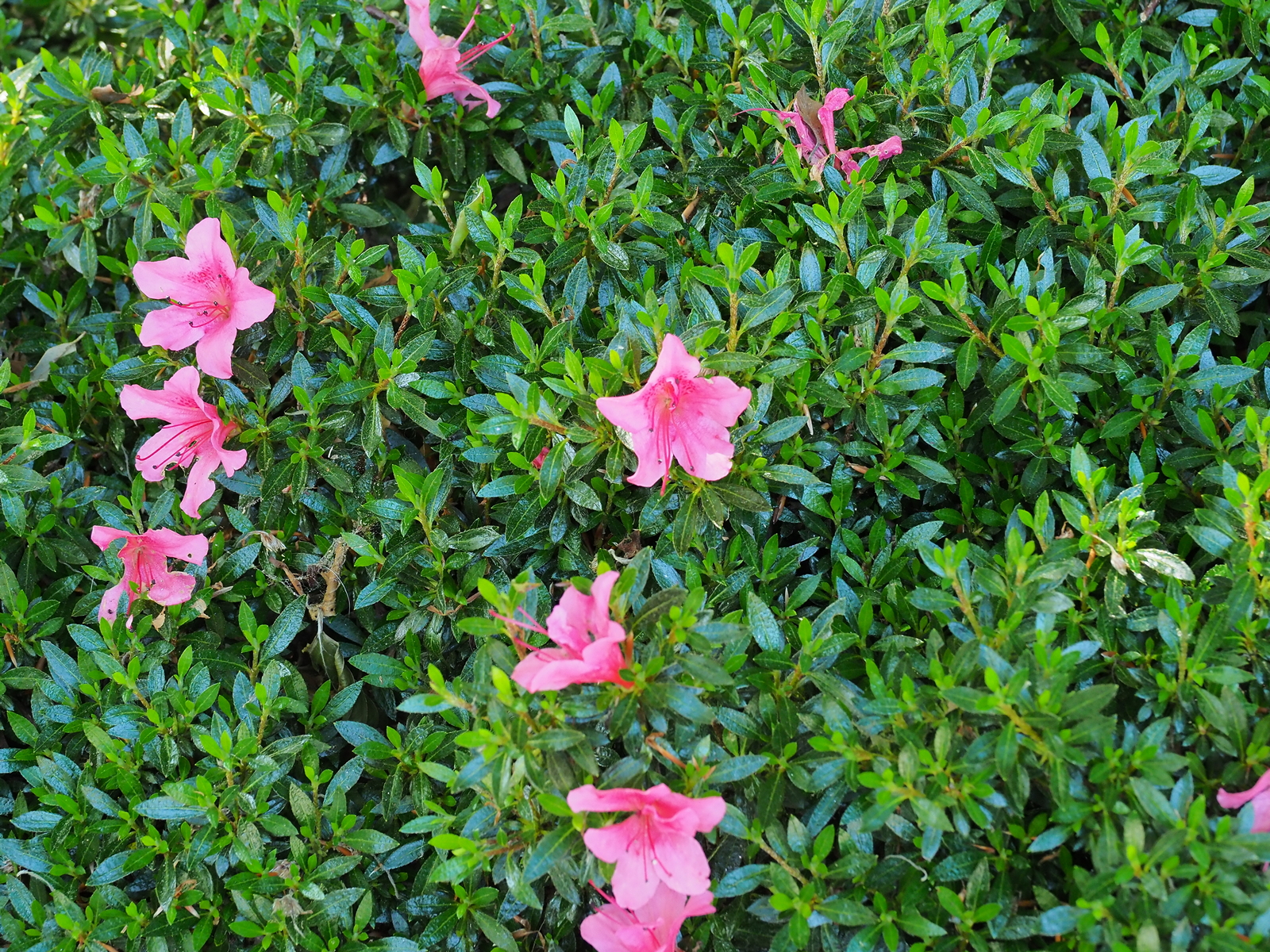
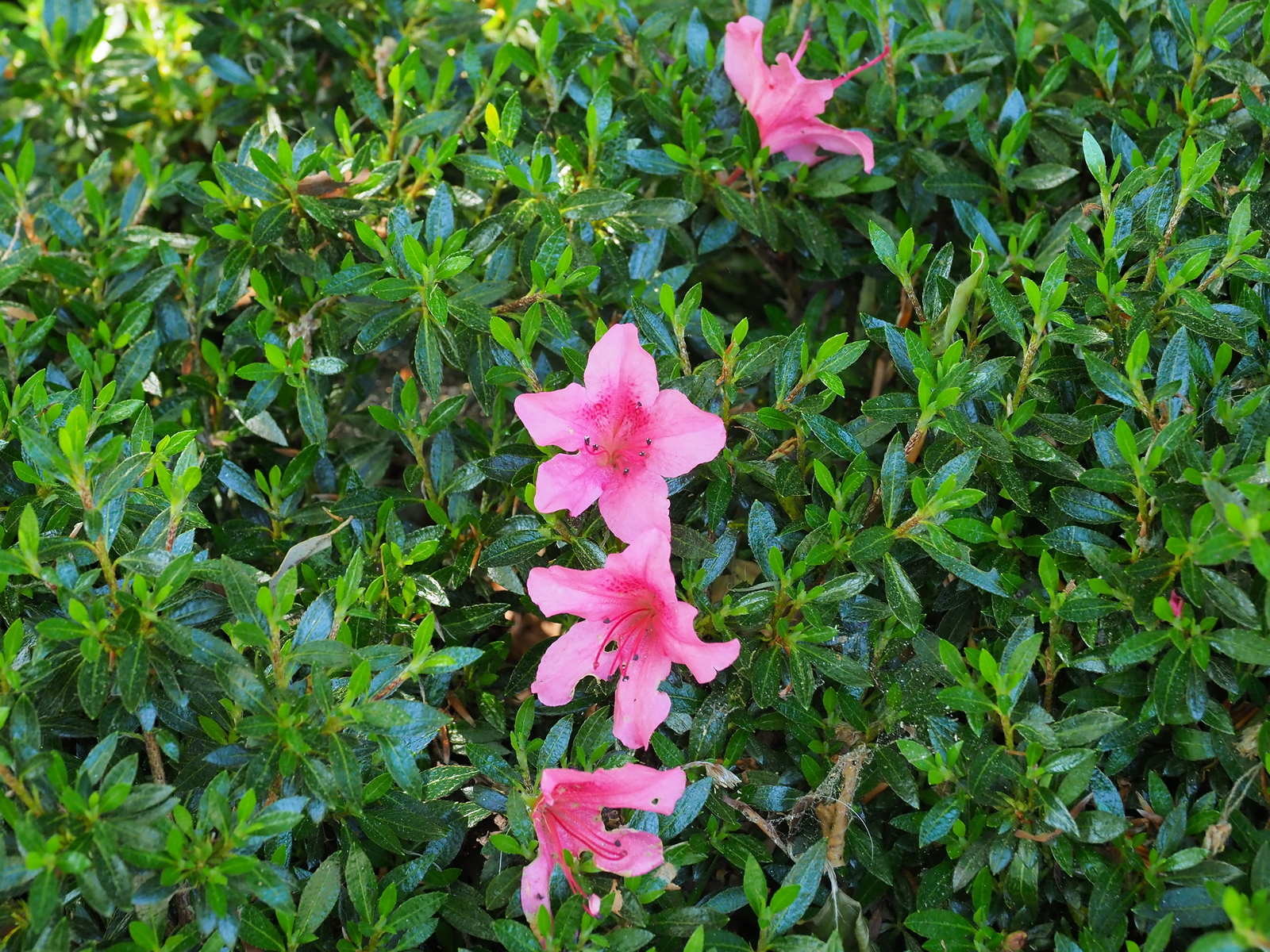
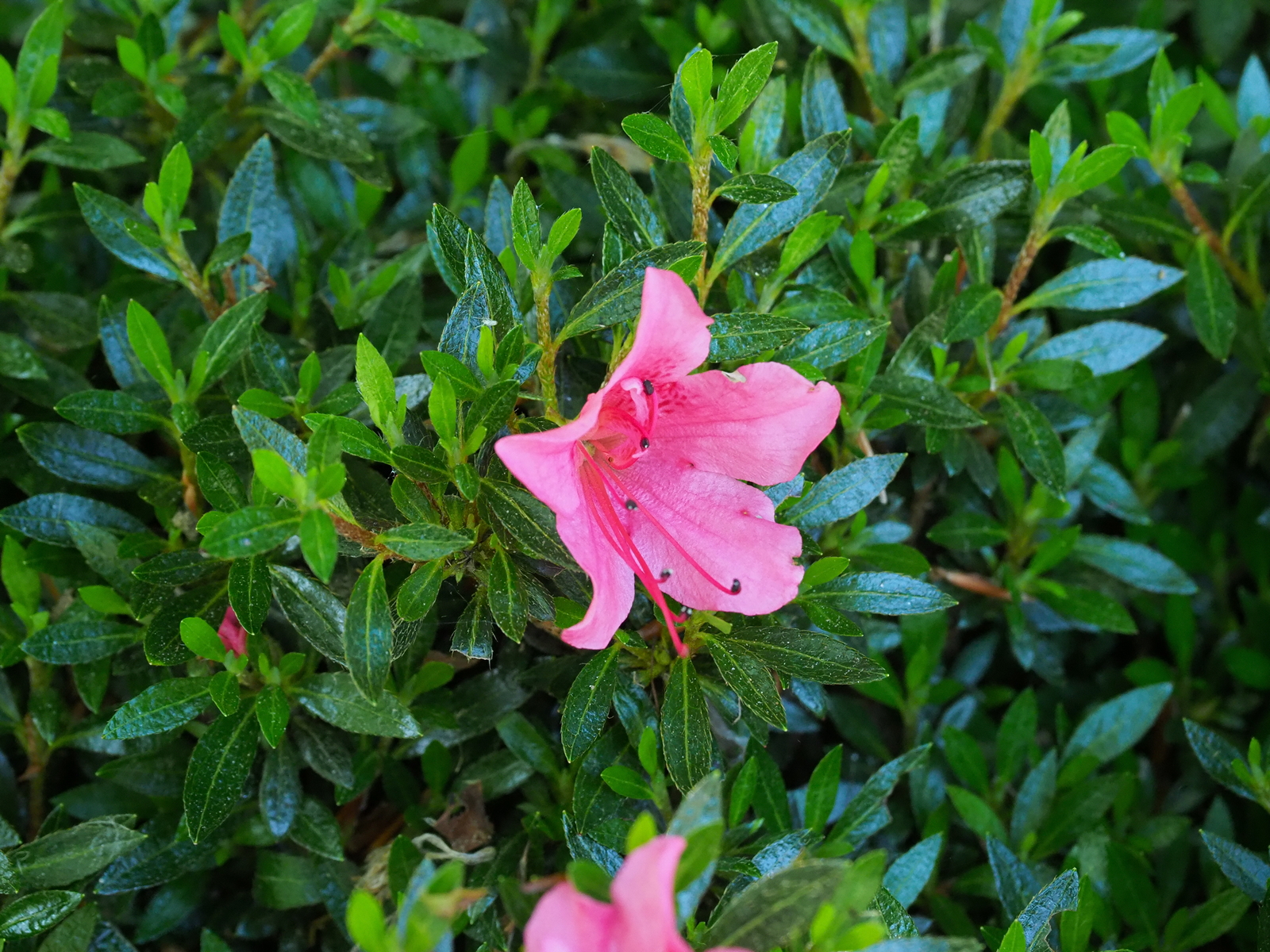
I am still unsure how you differentiate between Azalea indicum and Azalea nakaharae. These are, I think, the latter by the car park. Azalea ‘Pink Pancake’ probably?
Azalea nakaharaeAzalea nakaharae
Azalea nakaharaeAzalea nakaharae
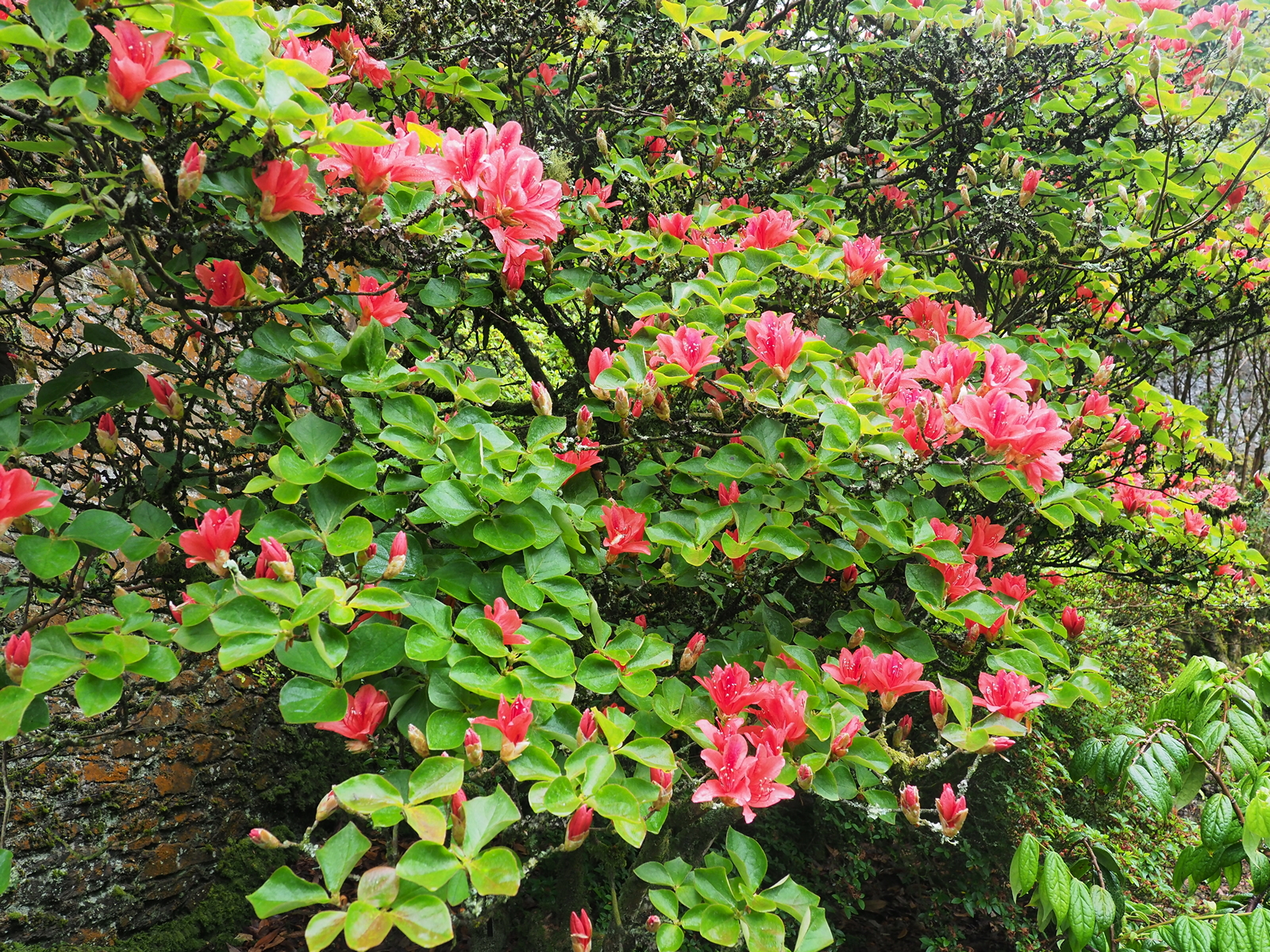
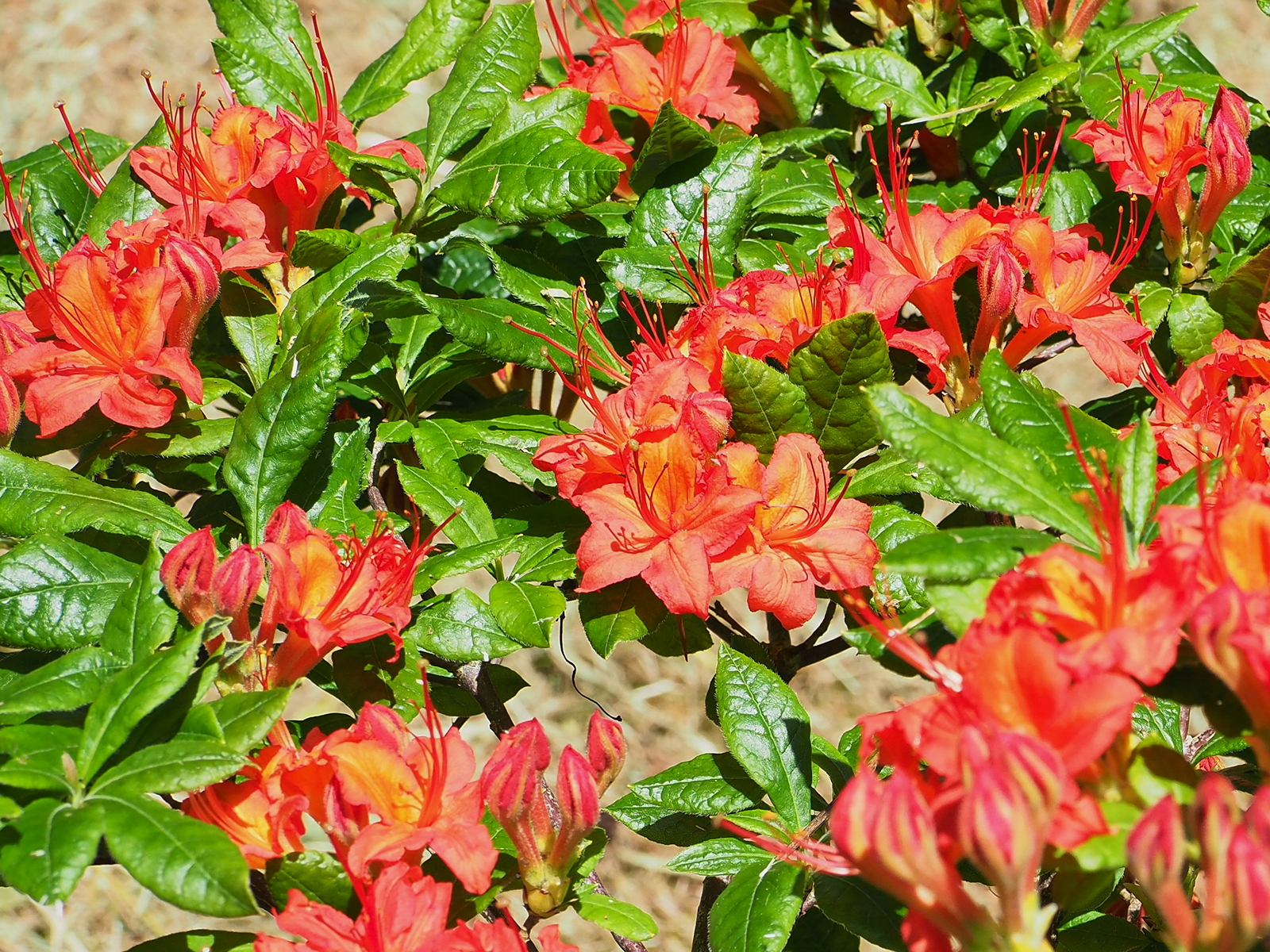
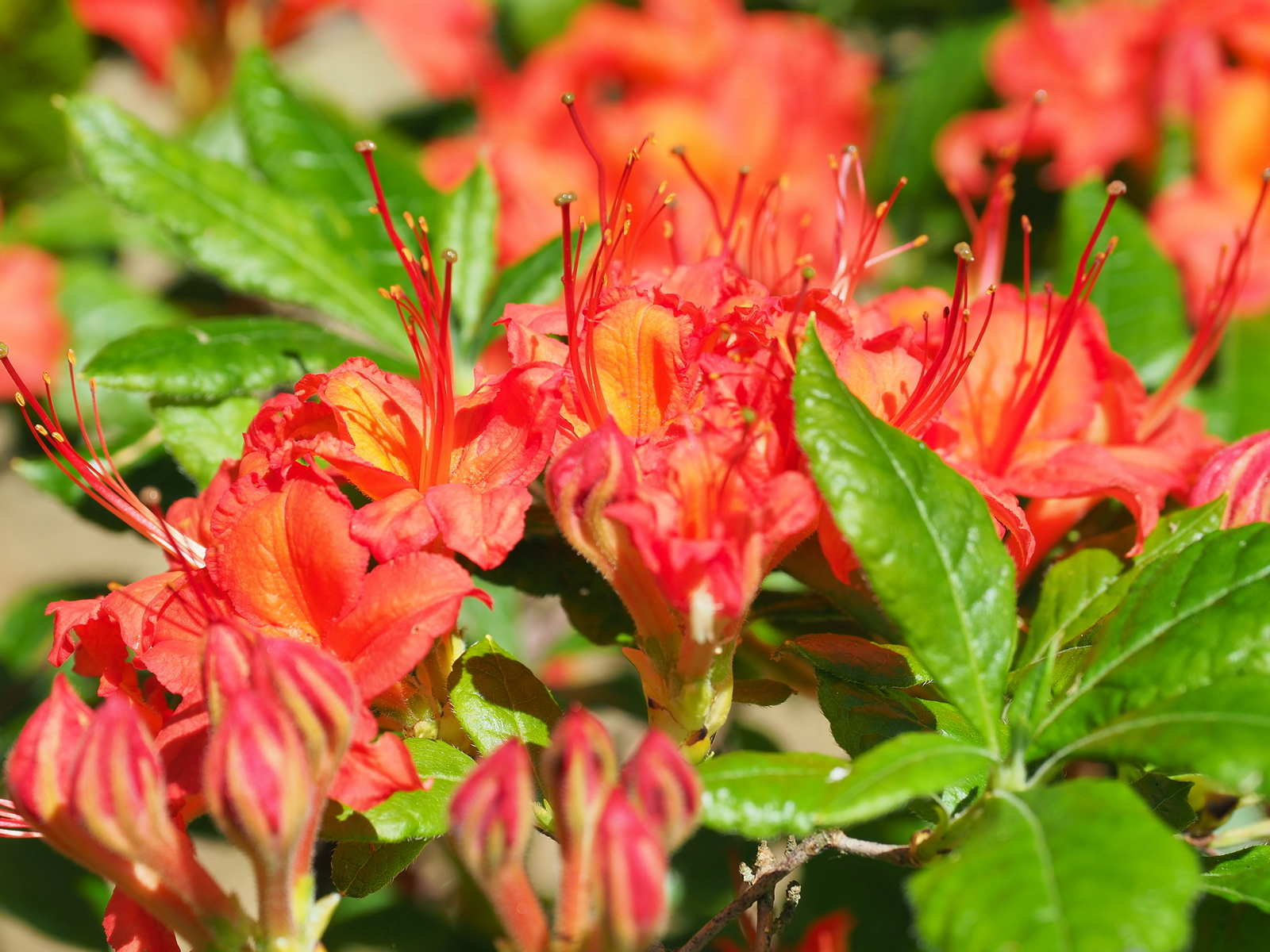
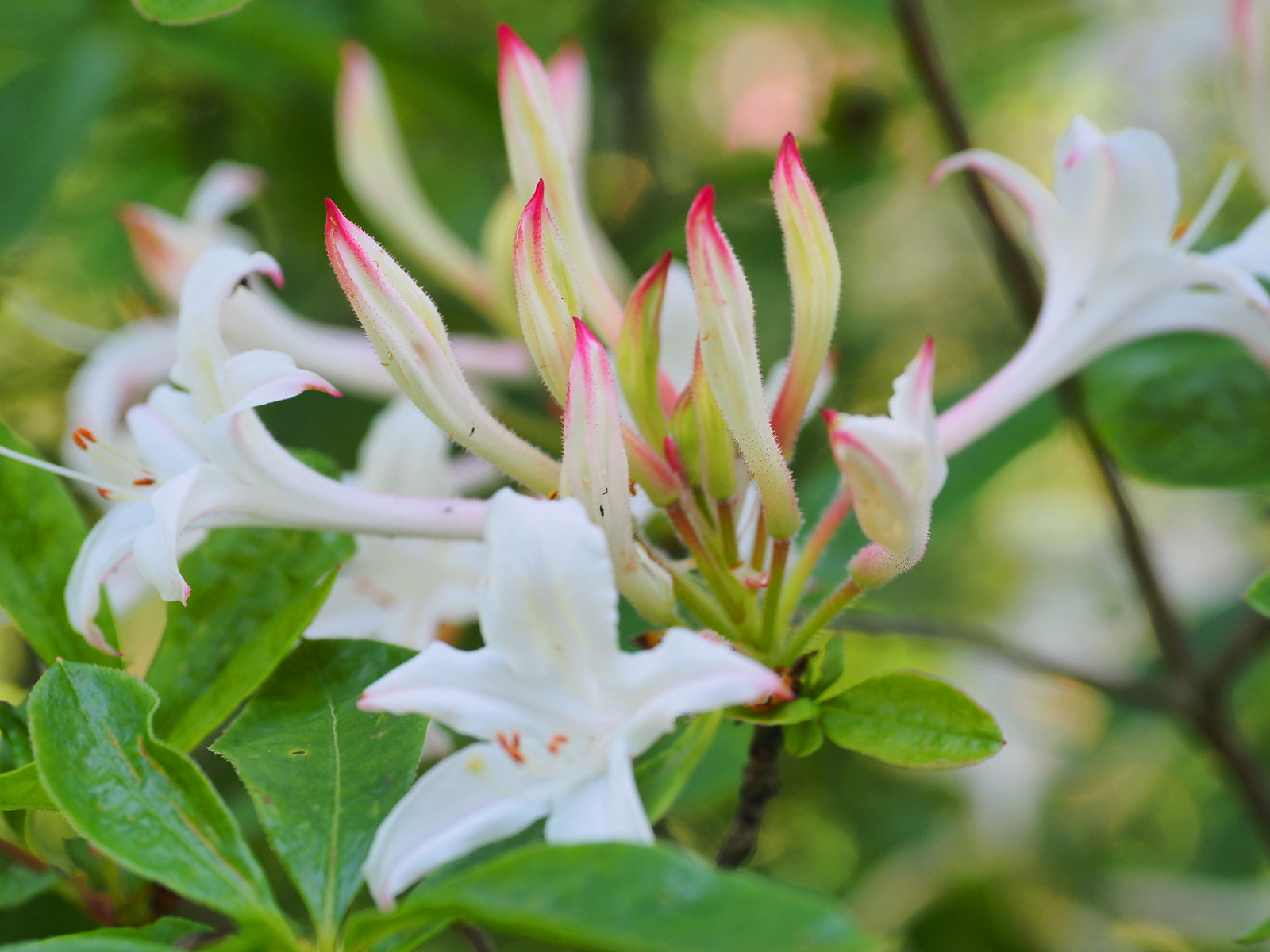
A more mature Azalea (Rhododendron) cumberlandense (bakeri) below the tower. A wonderful late show.
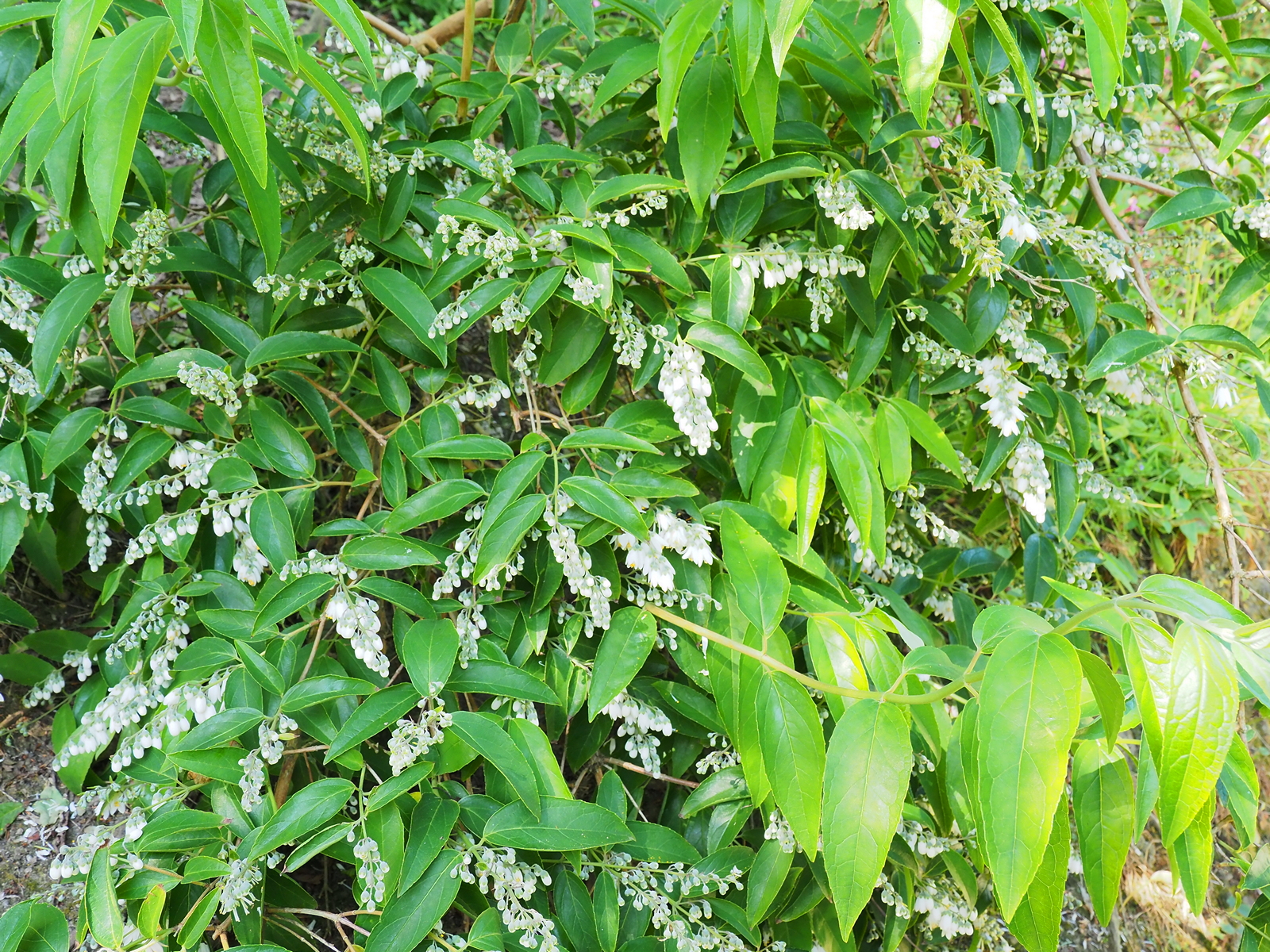
Deutzia pulchra – a gift from Roy Lancaster. I am testing out the new camera lens in full sun so some of these pictures may well be crap.
Deutzia pulchraDeutzia pulchraDeutzia pulchra
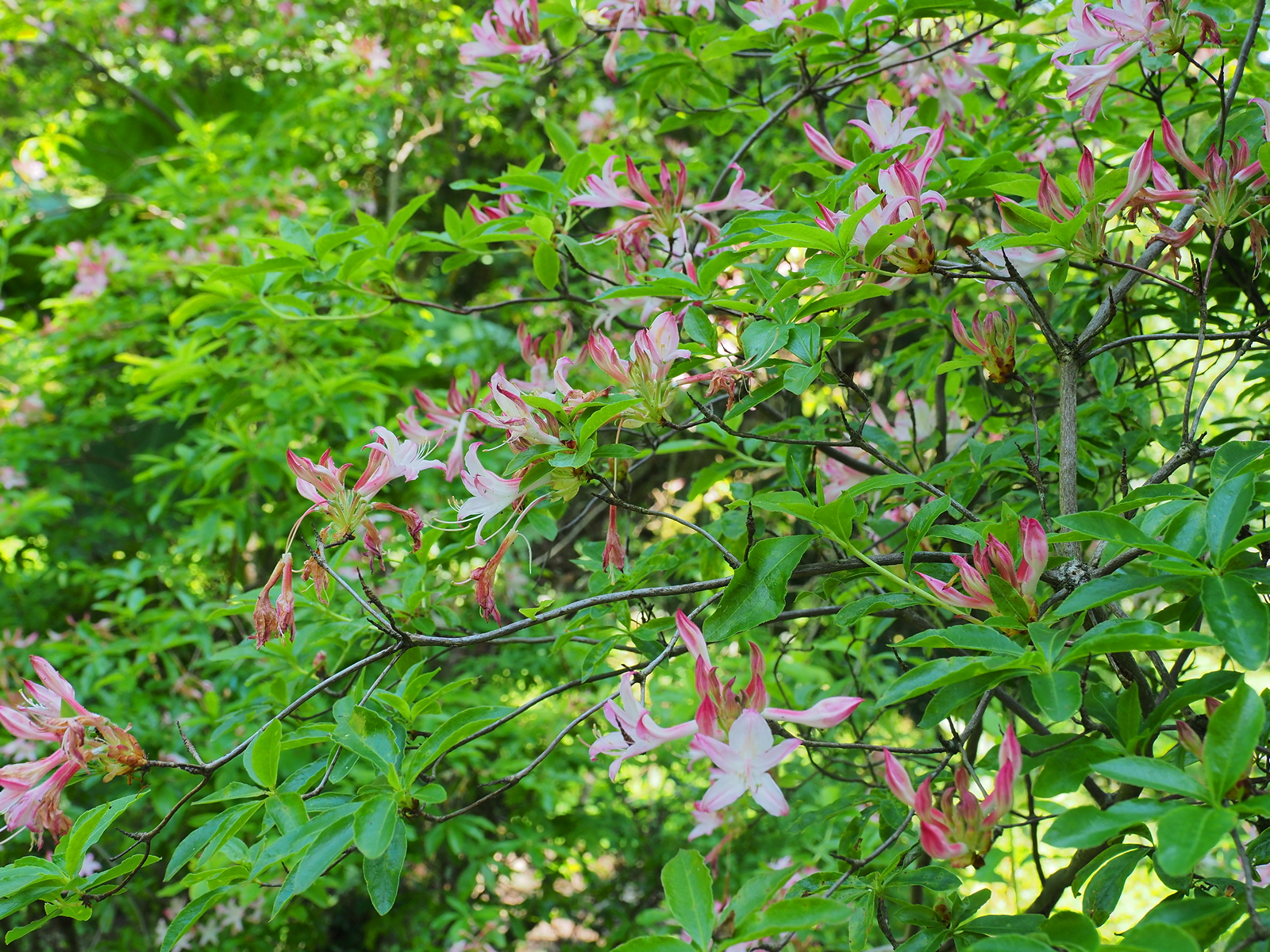
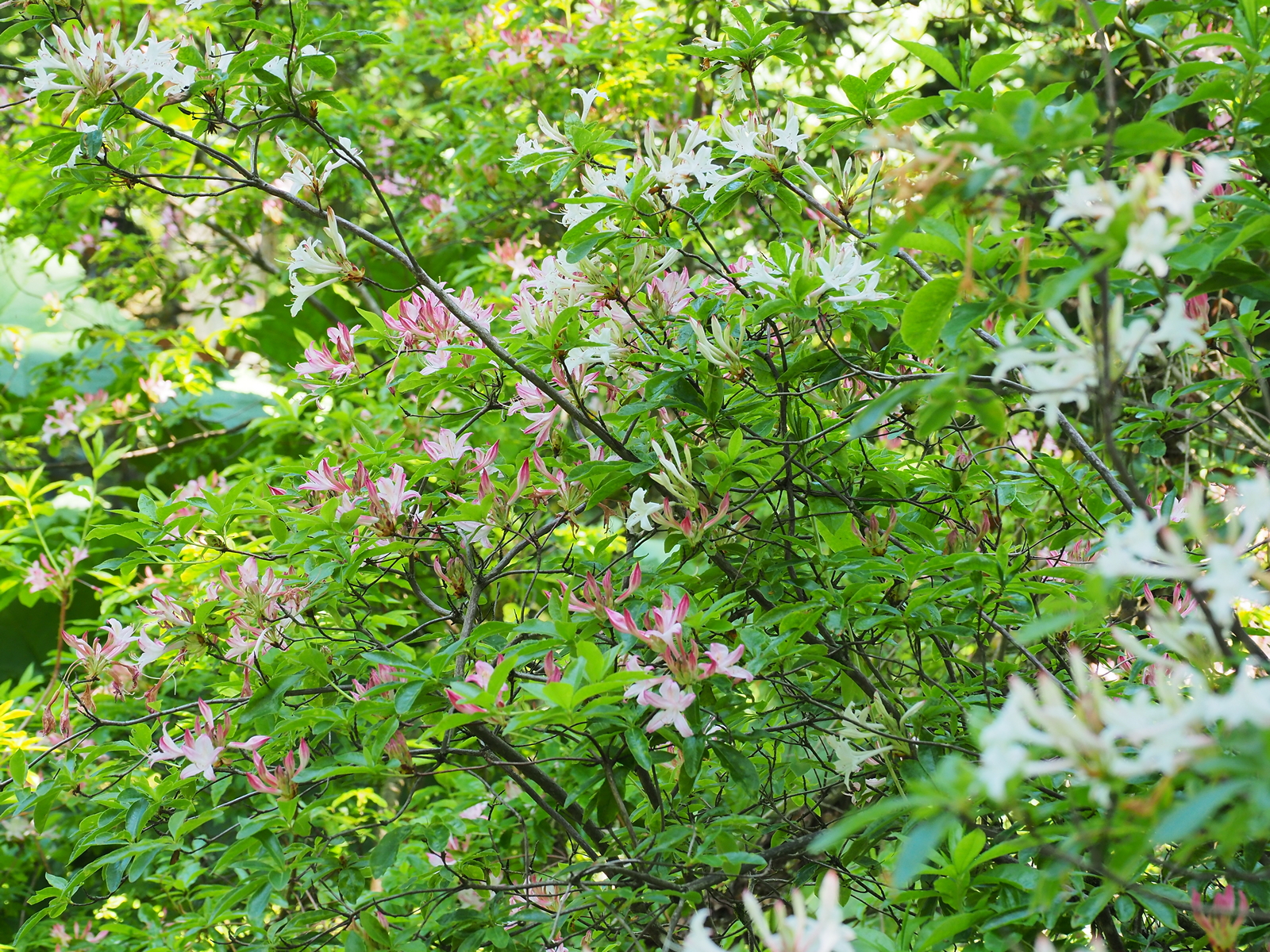
In Old Park a new discovery never seen by me before. A huge mature clump of Rhododendron viscosum on the Top Ride with both white and pink forms. Enormous scent and well worth the trip but the gardens are now closed of course as there is ‘nothing to see’!
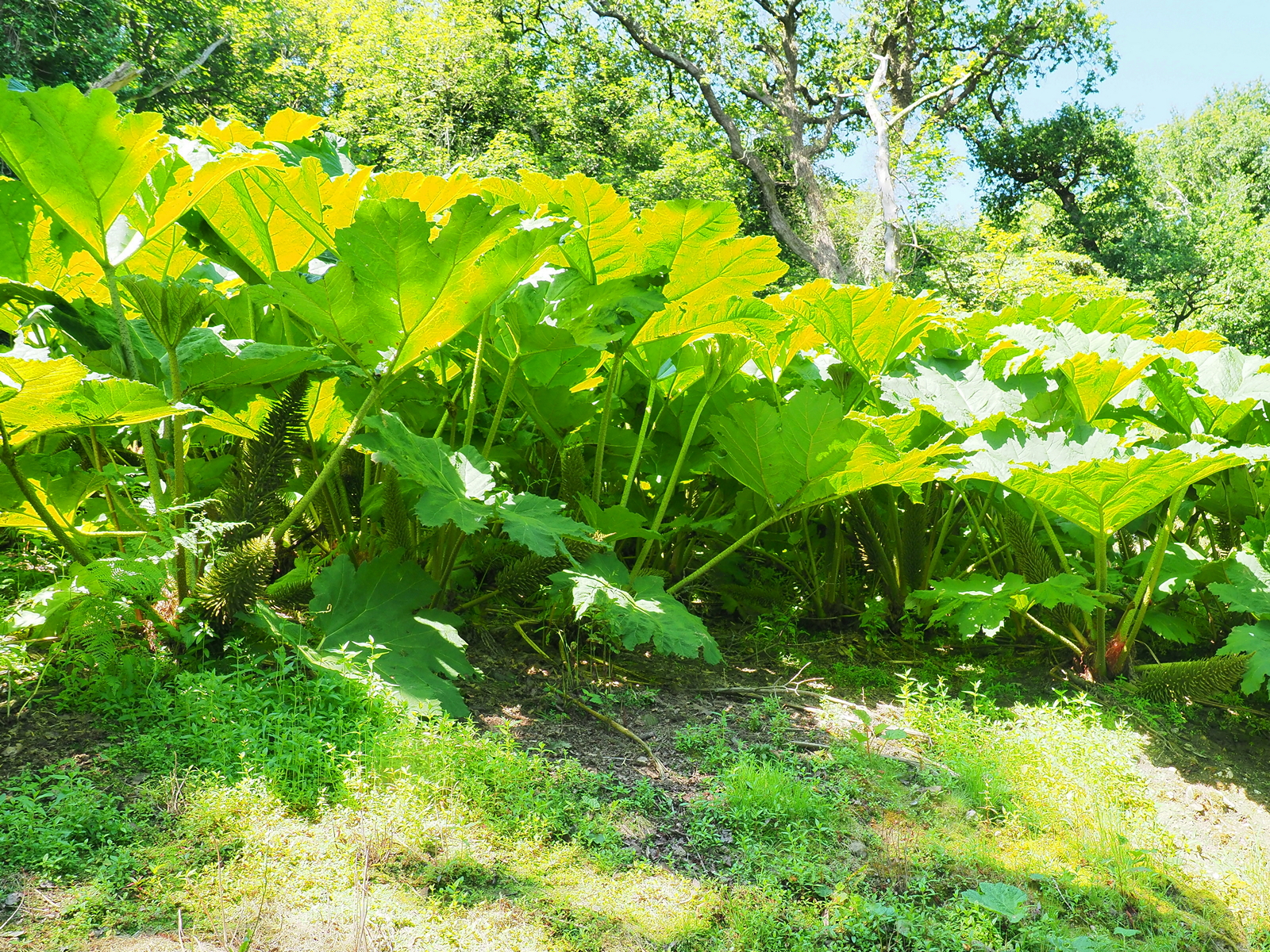
The much frosted Gunnera manicata clump above the viscosum looks absolutely fine now.
Gunnera manicata
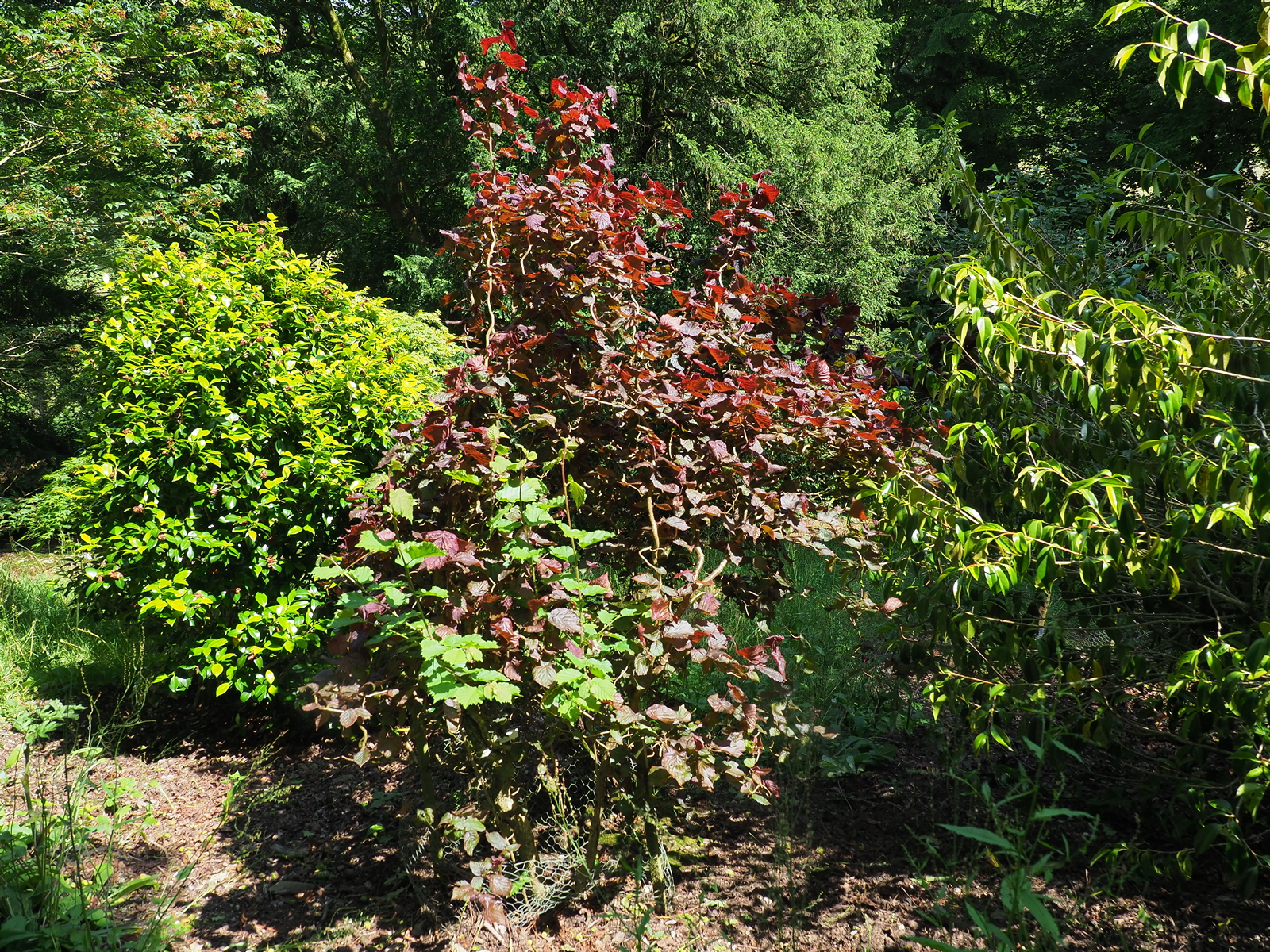
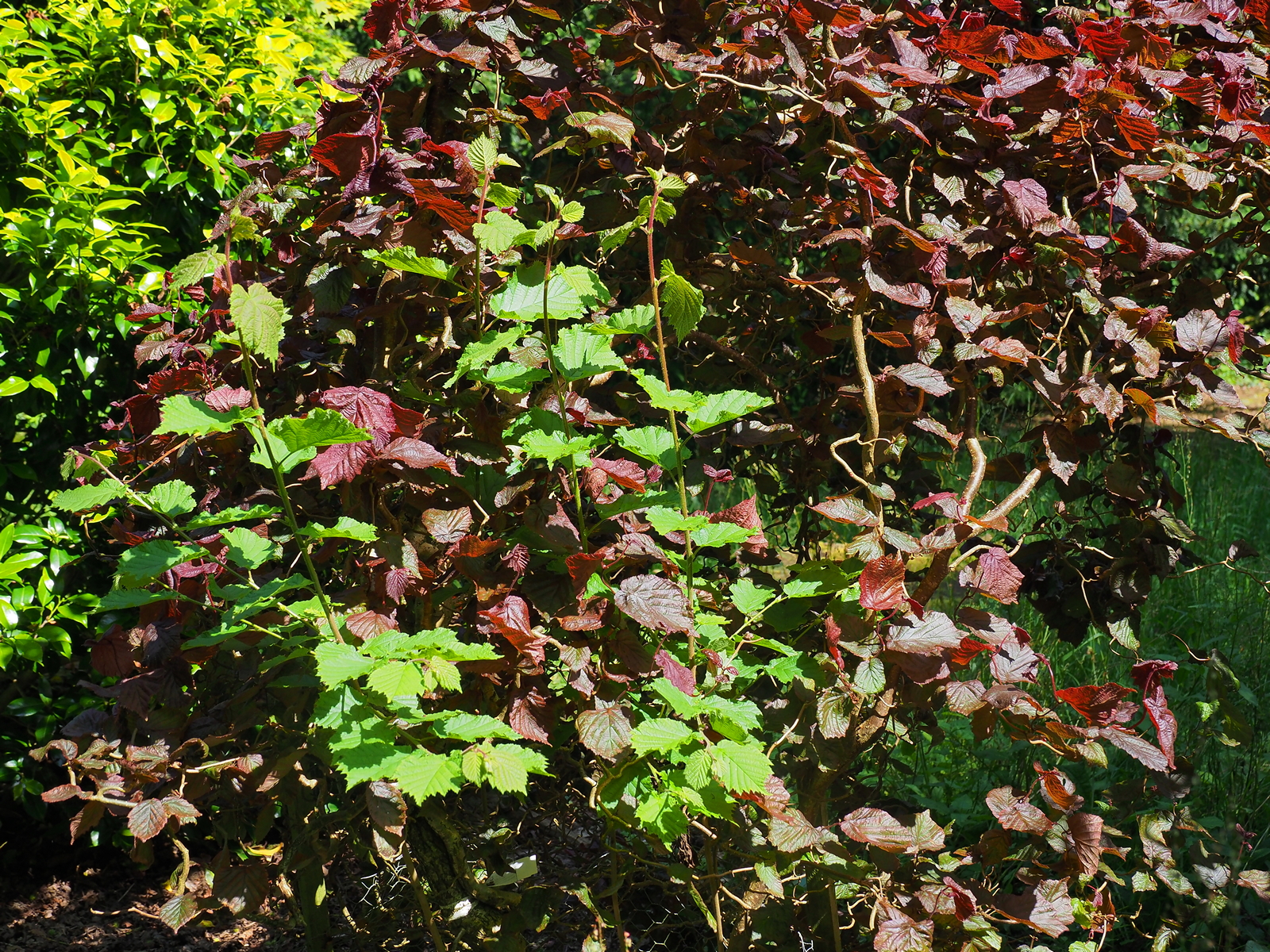
A Corylus avellana ‘Red Majestic’, with its contorted branches, is growing nicely but, from below the graft, some straight green leaved hazel stems to remove quickly.
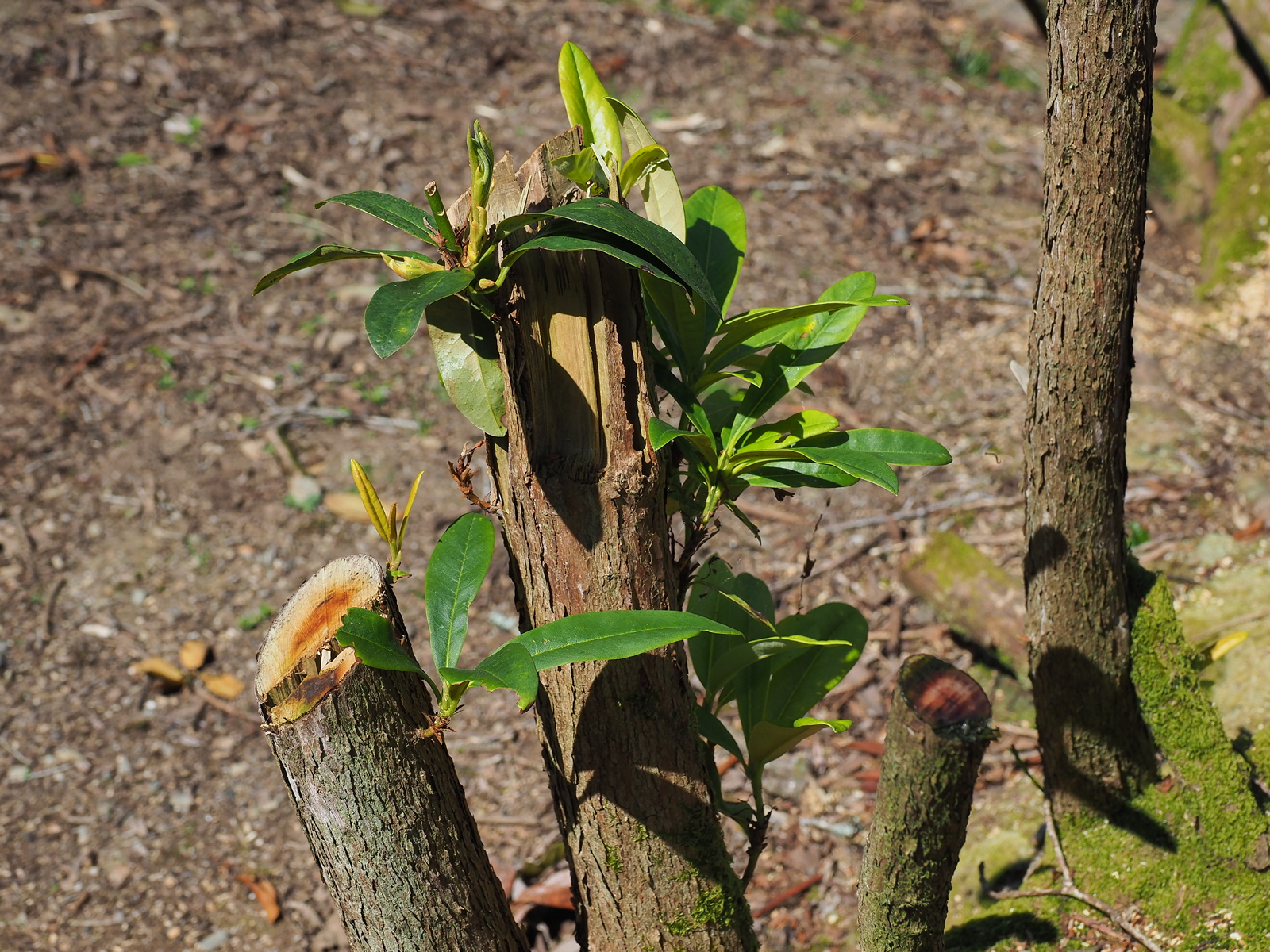
The Rhododendron nobleanum cut down six weeks ago on the drive is already shooting nicely. I am surprised this species has responded so positively.
Rhododendron nobleanum
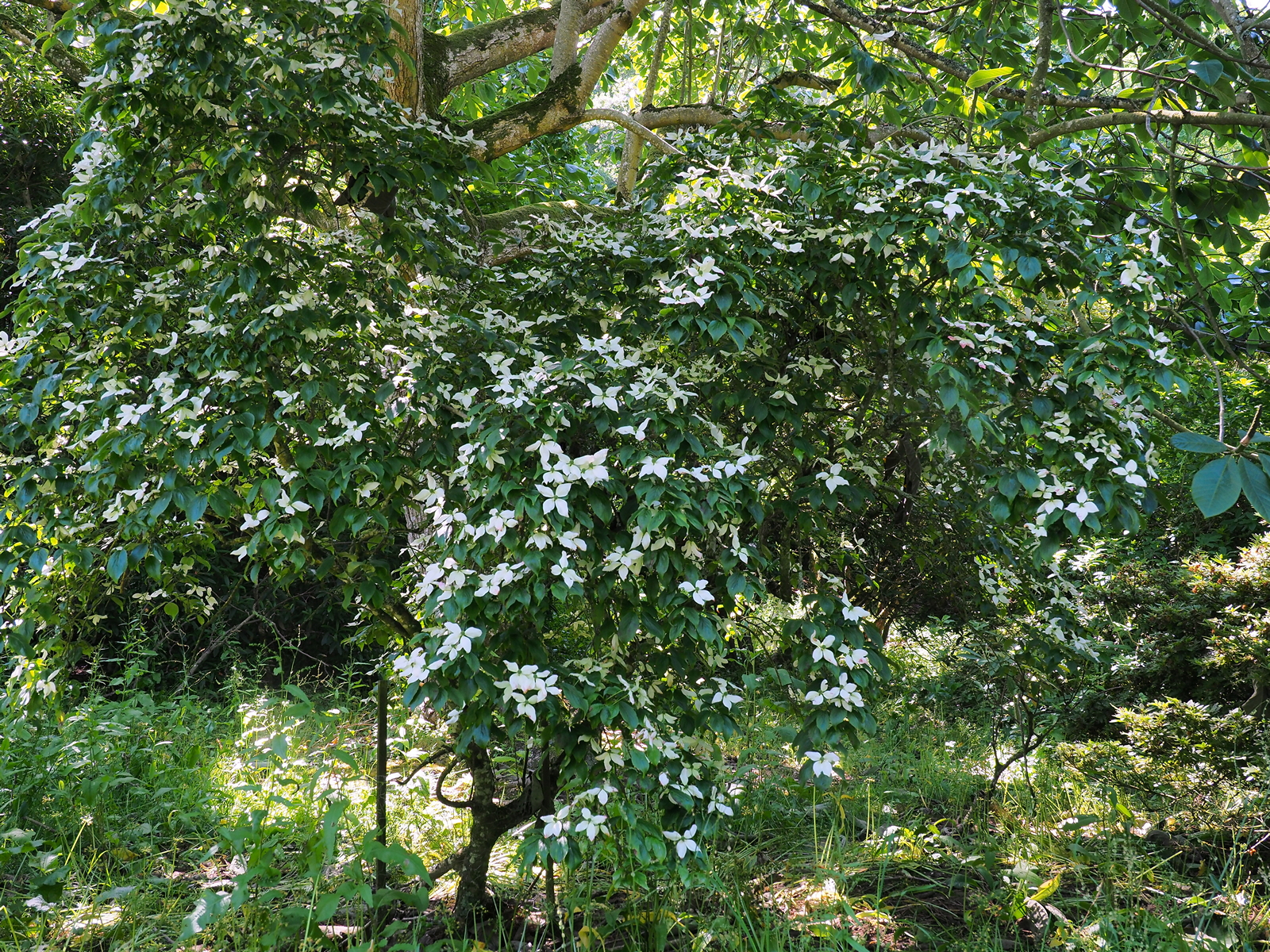
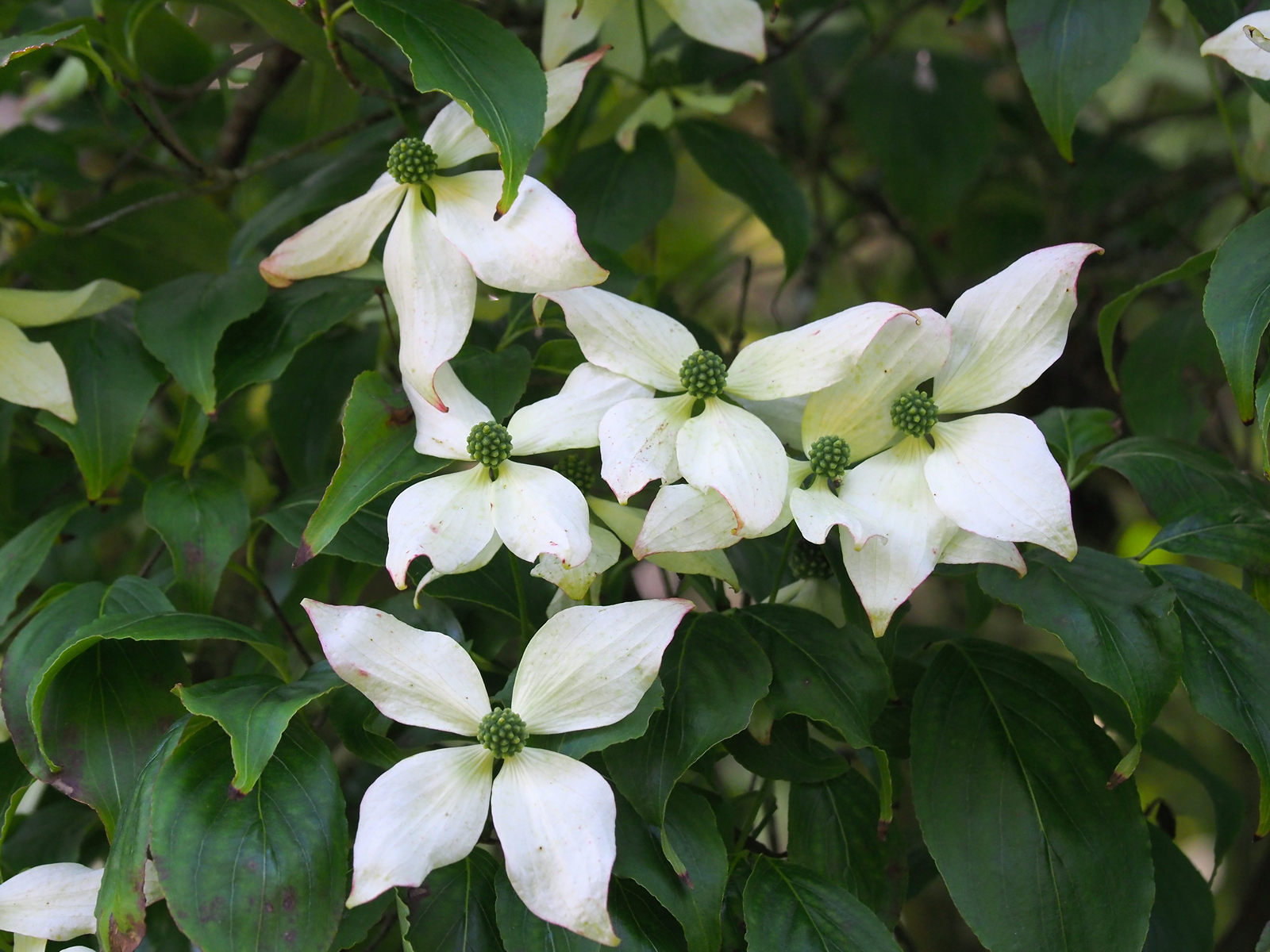
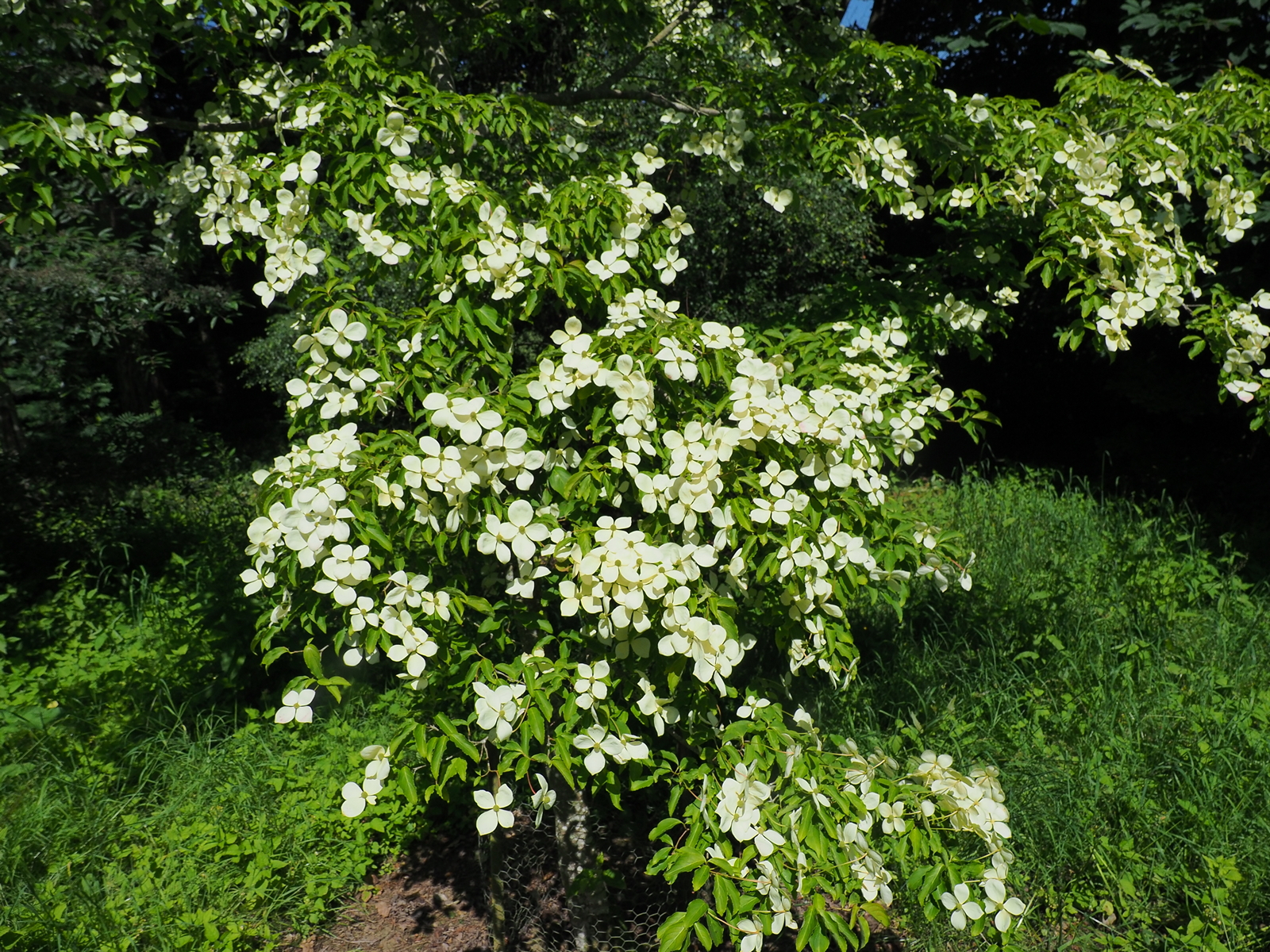
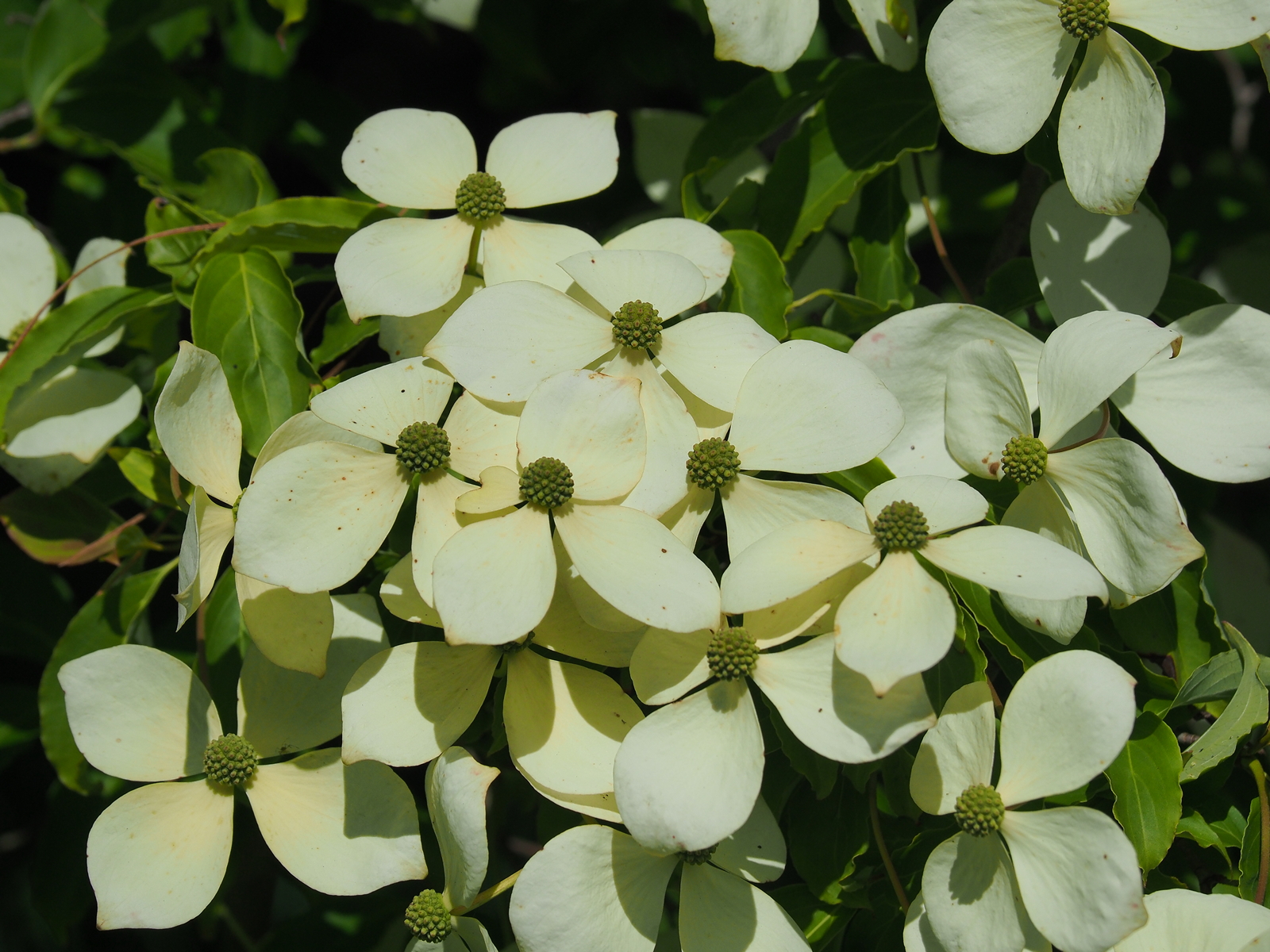
Cornus kousa ‘Gosia’ which has splendid fruits is just as good in flower.
Cornus kousa ‘Gosia’Cornus kousa ‘Gosia’
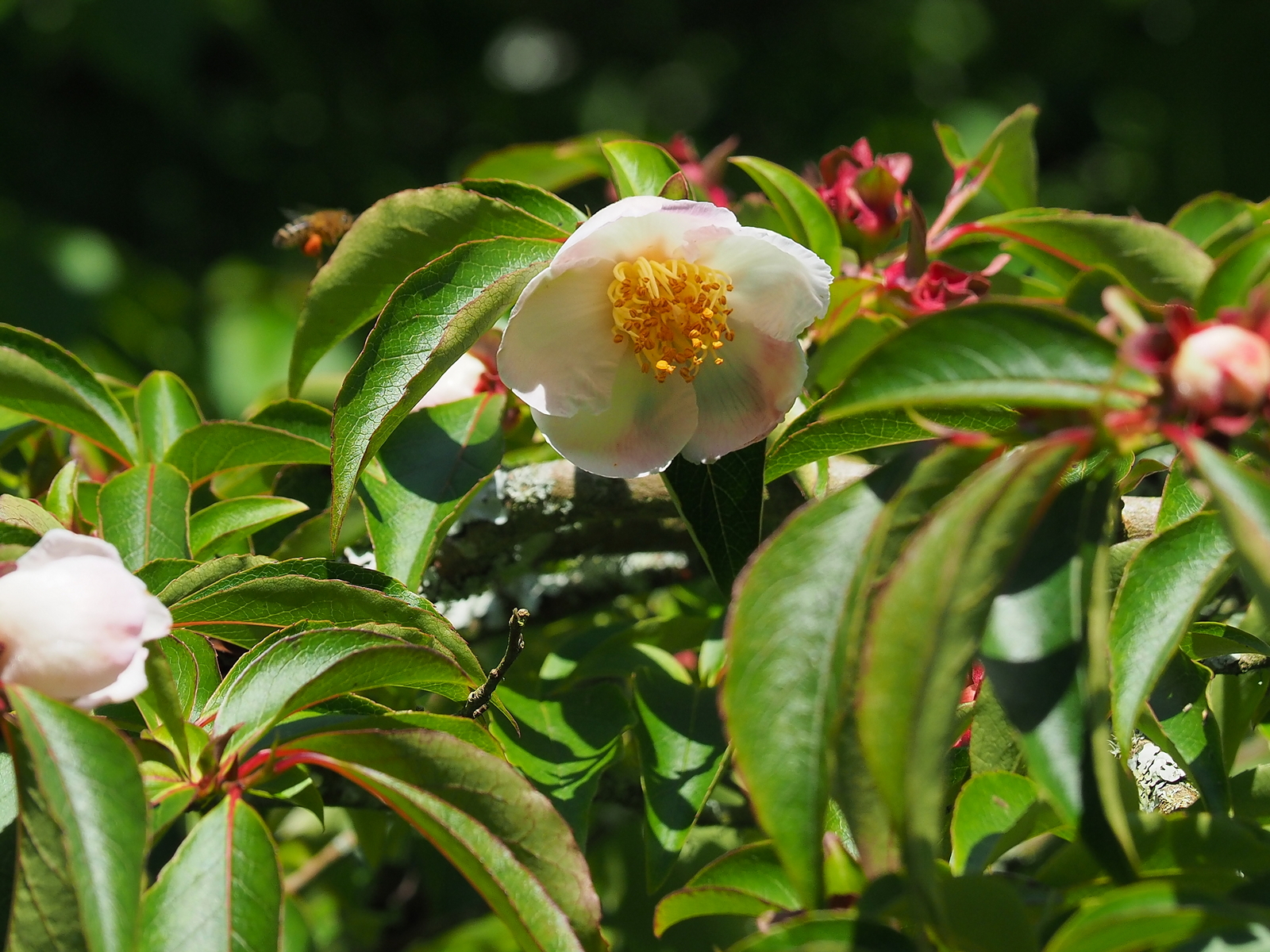
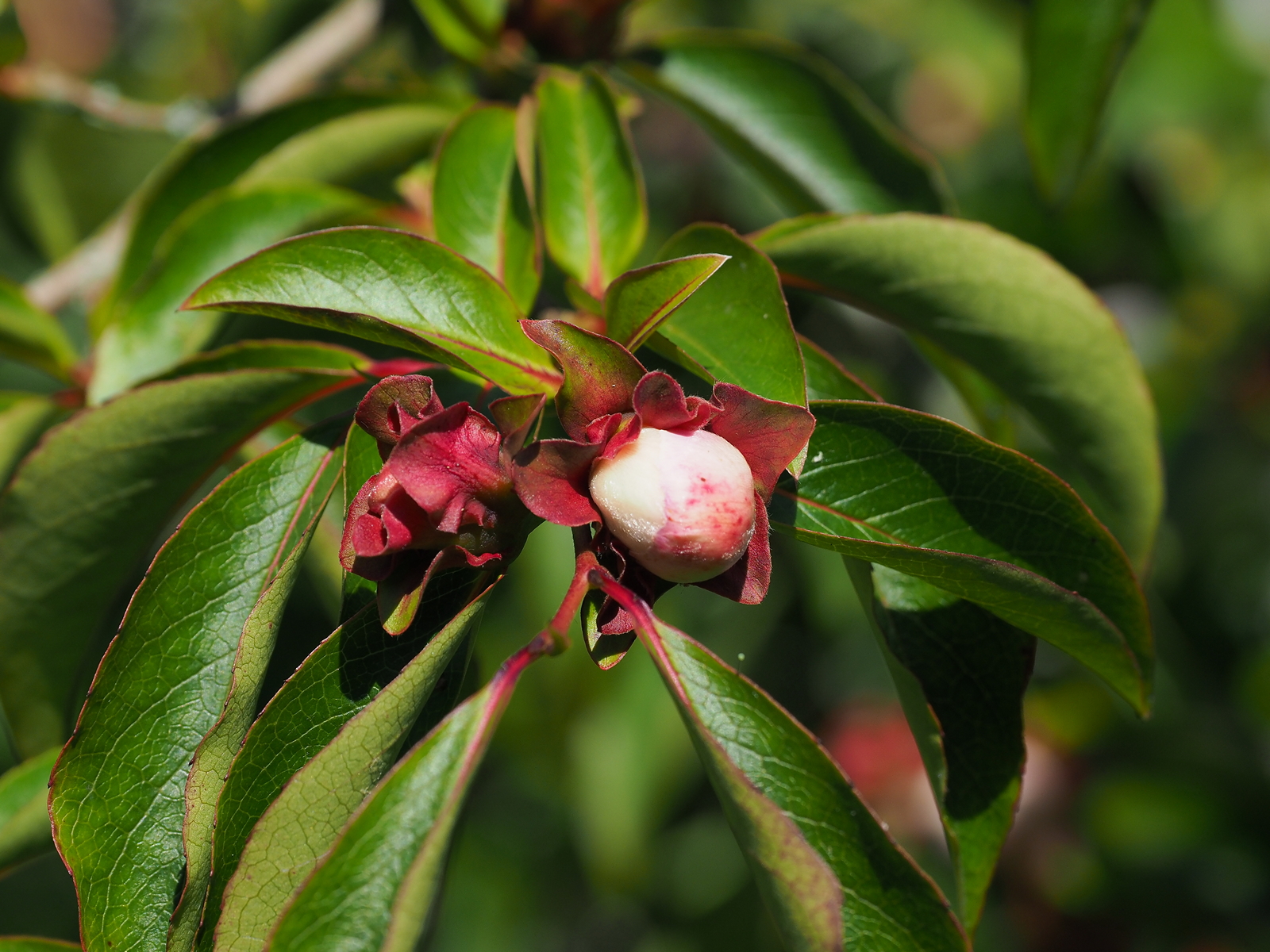
Stewartia rostrata is nearly full out on the drive. What a plant and this is only one of several performing today. The oldest in semi shade by Georges Hut is not as large as this one which relishes being in full sun. 20 to 25 years since planting.
Stewartia rostrataStewartia rostrata
Stewartia rostrataStewartia rostrata
This old oak tree snapped off last summer by the Hovel and, although the trunk has yet to be cut up, growing happily on it are two sorts of fern, a sycamore seedling and loads of flowering liverwort. This is a good advert for leaving dead decaying wood which other species can colonise in damper situations like this.
2016 – CHW
A rather more massive job at Caerhays to measure the 80 odd UK record trees and 280ish county record trees. Owen had not visited since 2006 so we spent three hours trawling around to find additions and then left him to it to re-measure for a few hours.On the way we found a few very nice things. Rhododendron megacalyx – three plants grown from our own seed of this very tender ‘smelly’ species.
Rhododendron megacalyxRhododendron megacalyx
Rhododendron sinonuttallii above the greenhouse was also performing nicely albeit almost over. We have several of these doing well now.
Styrax odoratissimus (or veitchiorum) above the greenhouse is nearly over.
Styrax odoratissimus
Rhododendron arizelum as full out as I have ever seen it.
Rhododendron arizelumRhododendron arizelum
Rhododendron ‘Tally Ho’ hidden away behind the tea camellias is a good thing which ought to be grown and propagated more.
Rhododendron ‘Tally Ho’
The record cherry tree, Prunus perulata, is flowering nicely when we go to inspect it. The flowers are definitely those of a ‘bird cherry’ and Owen persists in his view that this is a very rare plant indeed.
Prunus perulataPrunus perulata
Rhododendron ‘Saffron Queen’ still has a few flowers left on it six weeks after it first came out. This too was on the Chelsea stand.
Rhododendron ‘Saffron Queen’
2015 – CHW
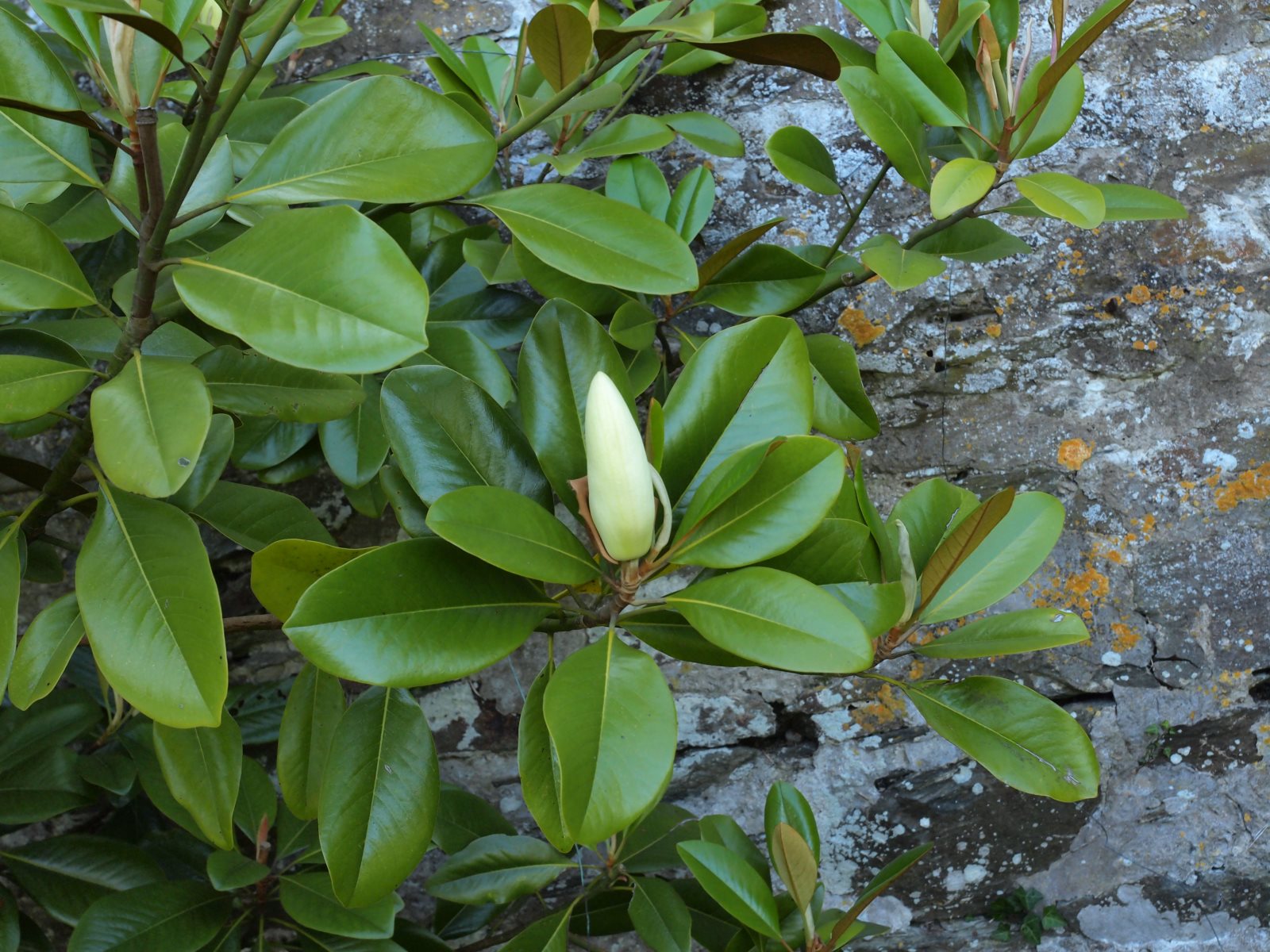
Magnolia grandiflora ‘Main Street’
A second Magnolia grandiflora flowering on the top wall in full sun and wind. This one is ‘Main Street’
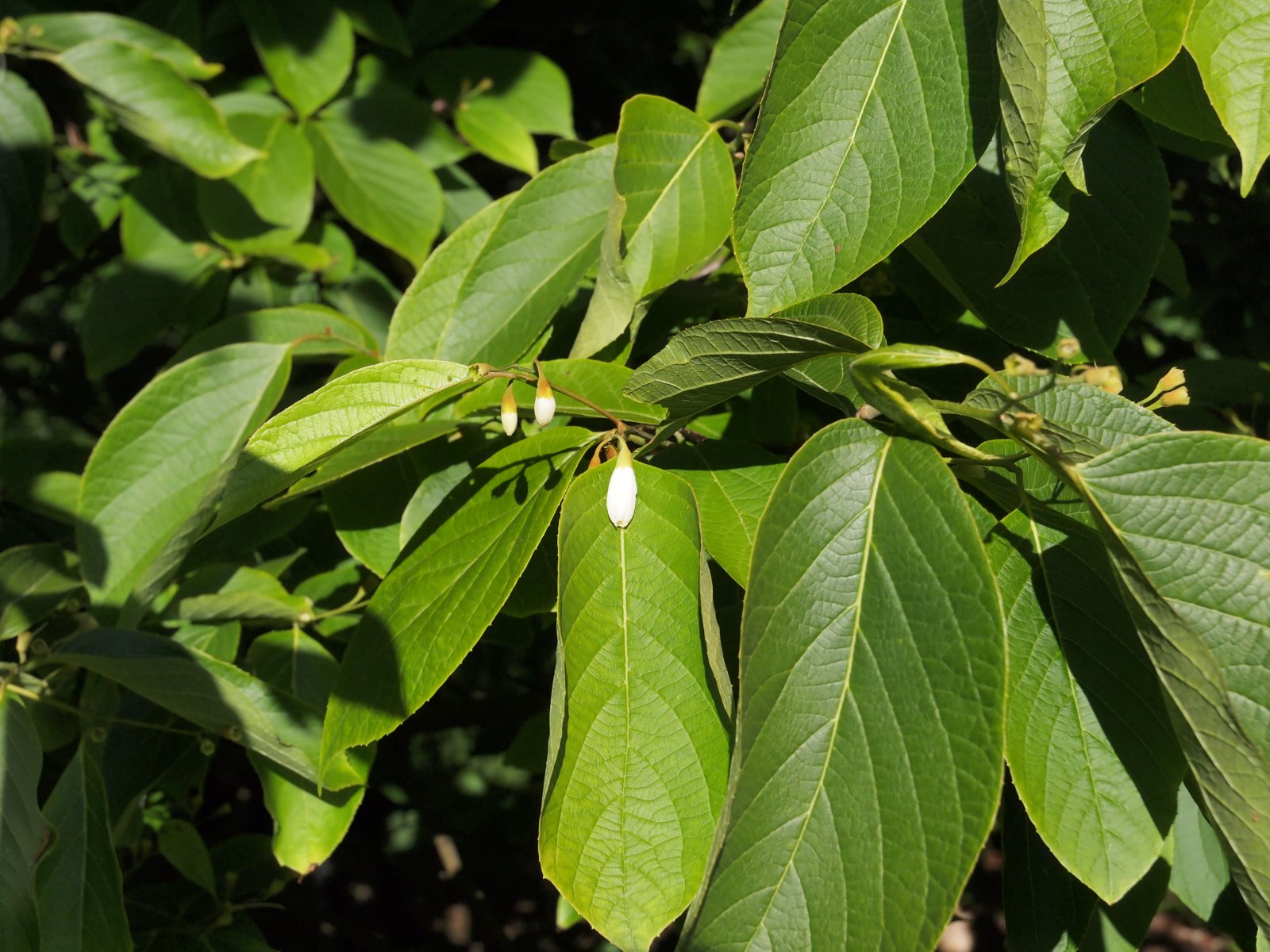
The styrax above the greenhouses was recorded in 1964/6 as being 30 feet tall and is listed again at this height in 1971 as Styrax hookeri.
Styrax hookeriStyrax hookeriStyrax hookeri
Michael Lear lists it as a Record Tree in 2010 and refers to it as being ‘propped up’. It has now shot from the base in a most vigorous fashion and is full of life although the flower is nearly over. Lear lists it as Styrax veitchiorum which Hillier’s now say is properly Styrax odoratissimus. The leaves are much larger and heart shaped than the Hillier’s description of Styrax odoratissimus which they say has ‘lanceolate’ leaves. So I tend to favour the original name remembered by my father and Philip Tregunna as Styrax hookeri. Bean lists Styrax veitchiorum and the description of the leaves is ‘lanceolate with a tapering point’ with the flowers at the point of the shoots which they are. Bean does not mention Styrax hookeri but Styrax veitchiorum is a Wilson introduction in 1900. Look at the pictures and make your own mind up.
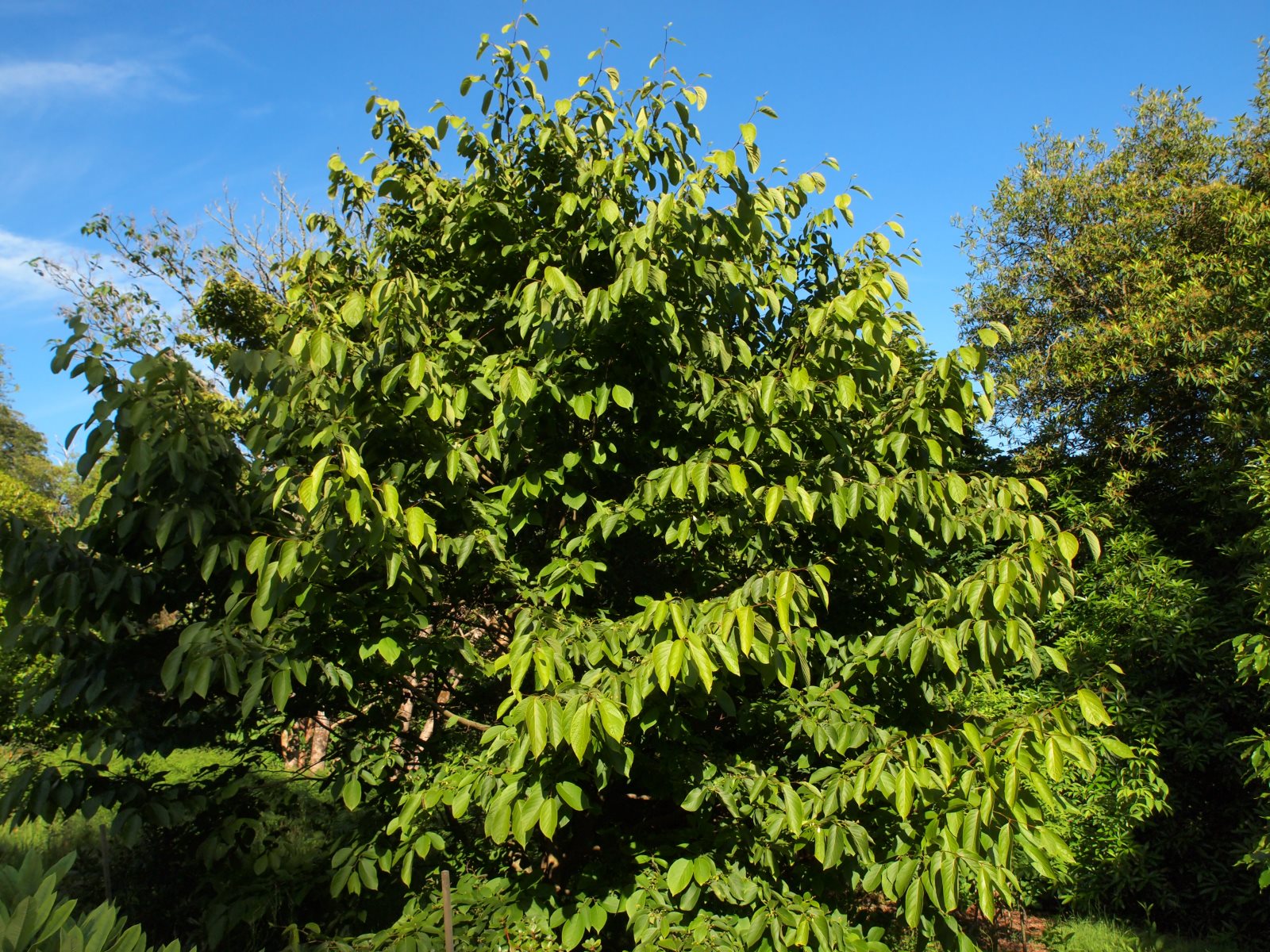
Styrax hemsleyanus
The very large trees of Styrax obassia and Styrax hemsleyanus measured in 1964/6 by Alan Mitchell are long dead. However today I have found a fourth well grown tree of Styrax hemsleyanus. This one is in the top of the Rookery and there is another below Slip Rail and two by Georges Hut. Probably more as I continue to try to locate Styrax wilsonii which I am certain we have planted out several of. Styrax hemsleyanus has a very distinct bark often with white lichen in patches and a distinct branch structure. Good to know the once record parent tree lives on in its children! That is what we have to continue to do here.
Bugger – the camera battery is again quickly flat so you will have to wait to see the developing seed clusters on Eurya japonica. When I was about 18 I was asked to write an article for the Cornwall Garden Society journal about rare trees at Caerhays (ie 40 years ago). I referred to the ‘Urea’ tree and got a resounding ticking off from the editor, Major Walter Magor of Lamellyn, who tried to look it up in case I was right. ‘Stupid boy’ indeed. It still makes me laugh but the joke is really in the small evergreen tree. Its tiny white racemens of flowers in March really do smell like urine and it is a good one for a bedroom vase for bedwetters. A new technique for evening photography now. Camera and shotgun and four dogs. The crows and rabbits are getting the hang of it! Female roe deer in Rockery. Saw it yesterday too at the Playhouse at midday. Both newly planted young Meliosma veitchiorum are now without leaves in their wire mesh rabbit guards. Only a deer could reach. Despite high seats and spring culling I suspect there are still at least half a dozen within half a mile of the front door. My dog ‘Rio’ found and ate mightily into one which was killed by a car in the Cutting about a fortnight ago.
1919 – JCW
Far behind 1918. Maddeni hybrids in the 40 Acres are good. A very late year for shrubs but the daffs are well over, even the maj min eye.
1918 – JCW
Maddeni hybrids are all over in the 40 Acres but there are a few blooms here. Mikado is open. Wilson’s Fortunei lot and other things injured badly by dry air and hot sun. L. tragophylla is good.
1916 – JCW
Maddeni hybrids are the best rhodo’s open. – Mikado just starting, later than last year. No Fortunei of Wilson’s open.
1915 – JCW
Rose beds good. Air too dry for the flowers of Fortunei. Escallonia langleyense ½ open. A Mikado is the best rhodo open with Forrest’s and the Indian forms of Maddeni. R moyesii is good now.
1914 – JCW
Came from Scotland, the three rose beds I have never really seen before, Chinese Fortunei lot are open, fair growth all round on Rhodo’s. Escallonia langleyense very very good.
This website uses cookies to improve your experience. We'll assume you're ok with this, but you can opt-out if you wish.AcceptRead More
Privacy & Cookies Policy
Privacy Overview
This website uses cookies to improve your experience while you navigate through the website. Out of these, the cookies that are categorized as necessary are stored on your browser as they are essential for the working of basic functionalities of the website. We also use third-party cookies that help us analyze and understand how you use this website. These cookies will be stored in your browser only with your consent. You also have the option to opt-out of these cookies. But opting out of some of these cookies may affect your browsing experience.
Necessary cookies are absolutely essential for the website to function properly. This category only includes cookies that ensures basic functionalities and security features of the website. These cookies do not store any personal information.
Any cookies that may not be particularly necessary for the website to function and is used specifically to collect user personal data via analytics, ads, other embedded contents are termed as non-necessary cookies. It is mandatory to procure user consent prior to running these cookies on your website.