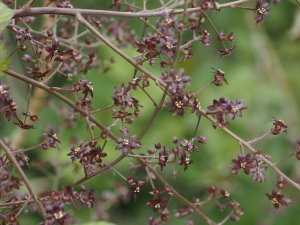
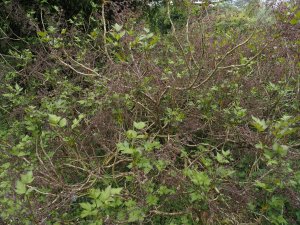
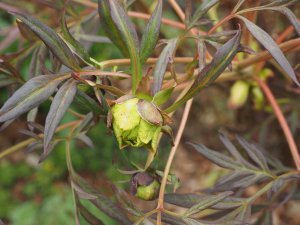
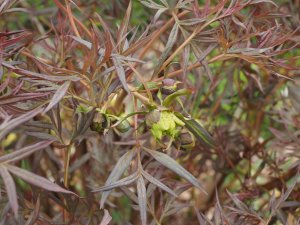
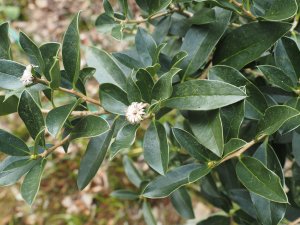
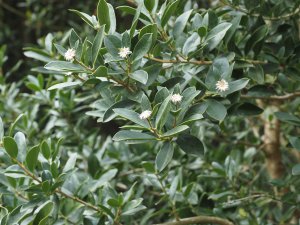
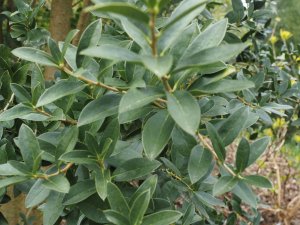
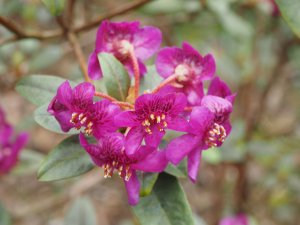
To Cally Garden which was created by Michael Wickendon and has been run for a decade or so by Kevin Hughes who was formerly at Spinners Nursery in Sussex which we visited last year. An 18th century walled garden and a once famous nursery. Kevin now believes in rewilding the garden so no round up etc. and black caps and warblers take precedence. He is succeeding massively in the rewilding but there are still good plants to see. Originally a wild collected herbaceous plant collection rather than a shrub garden although there were plenty of unusual summer flowering shrubs.
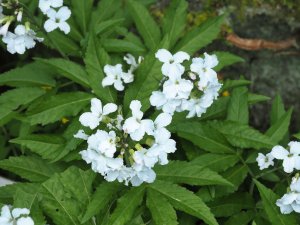
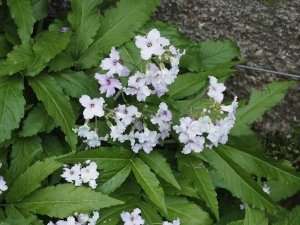
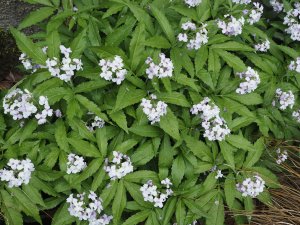
Cardamine heptaphylla – white and pinkish but a much taller growing then ours by the Trevanion holly (perhaps they did not survive the
hurricane?)
Cardamine heptaphylla
Cardamine heptaphyllaCardamine heptaphylla
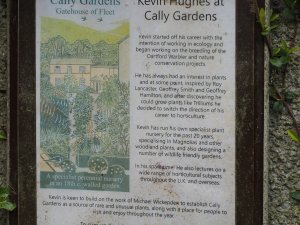
The rather odd entrance sign to the gardens.
rather odd entrance sign
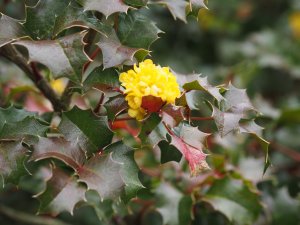
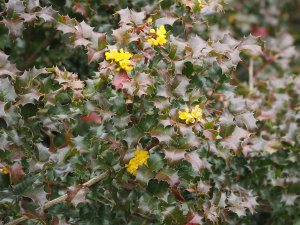
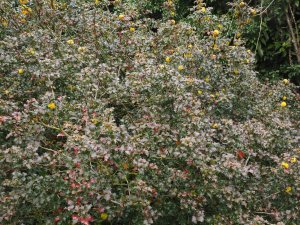
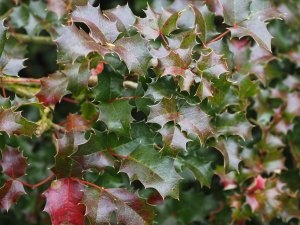
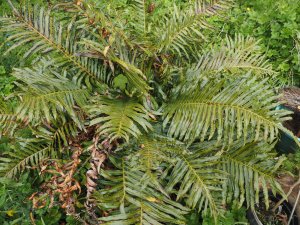
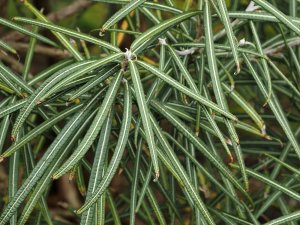
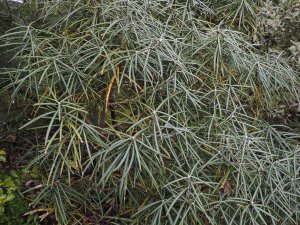
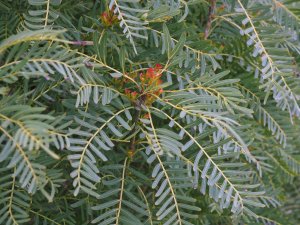
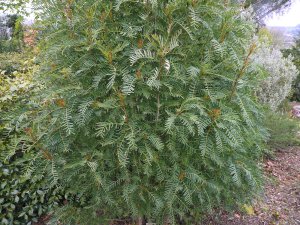
Mahonia trifoliolata from the USA and Mexico which is totally hardy at Cally.
Mahonia trifoliolataMahonia trifoliolata
Mahonia trifoliolataMahonia trifoliolata
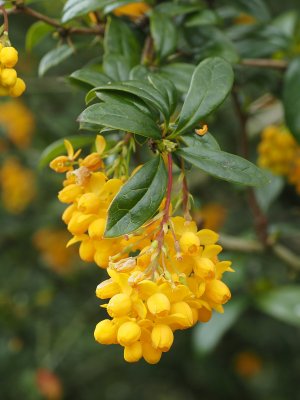
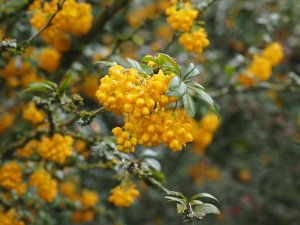
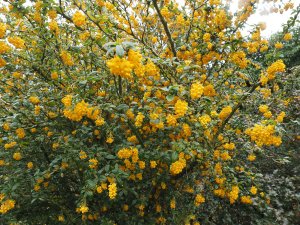
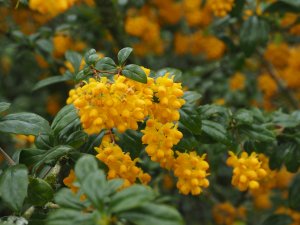
Mahoberberis ‘Cally Rose’ was superb and the best thing in the garden today.
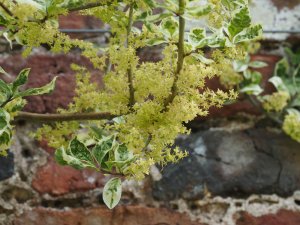
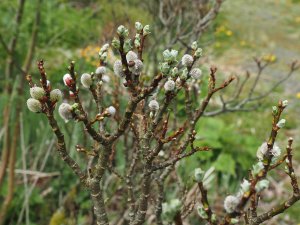
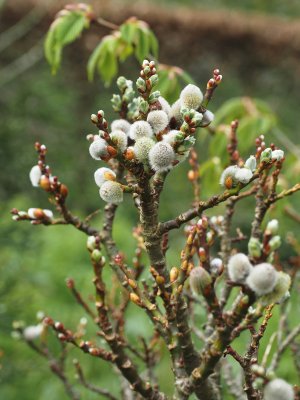
The dwarf Salix ‘Boydii’ in flower which I have only occasionally seen before. Scottish origin in the mountains near Angus. Very rare and the catkins (as here) are a rarity according to Hilliers.
Salix ‘Boydii’Salix ‘Boydii’
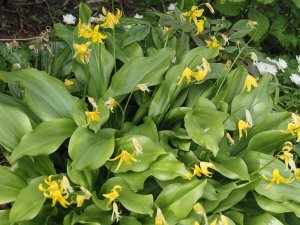
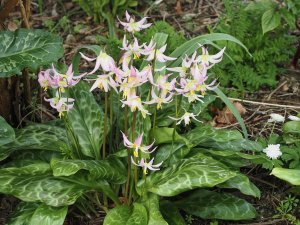
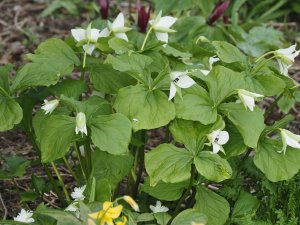
The best bit of the garden in a new bed beside the totally dilapidated and shambolic greenhouses. Trillium and Erythronium but not labelled.
Trillium and ErythroniumTrillium and ErythroniumTrillium and Erythronium
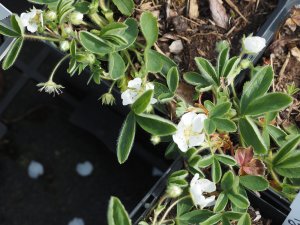
Potentilla alba – a rock plant which we saw spreading well in the grassy borders and beds. Not seen before but would be a good addition to the Burncoose catalogue.
Potentilla alba
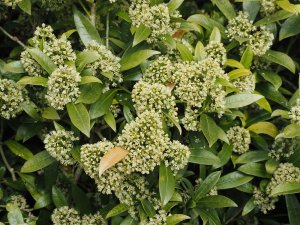
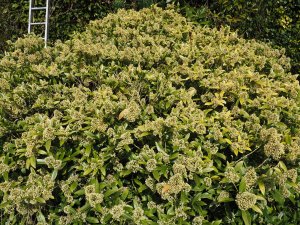
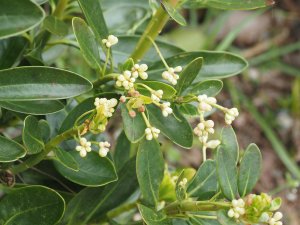
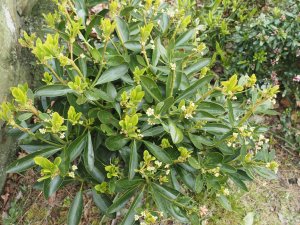
Skimmia japonica ‘Kew White’ looking superb at the entrance. In Kevin’s view the best of all the Skimmia varieties in flower.
Frost a severe issue with the new growth on lots of hydrangeas and magnolias badly frosted. Here the new growth all gone on Daphniphyllum macropodum by a wall.
Daphniphyllum macropodum
Then to a 5 acre private garden at No. 3 Mill Hall (near Kirkcudbright) owned by Alan Shamash. A plantsman’s paradise alongside an east facing estuary and built on a steep slope with narrow paths down to the water’s edge. An outstanding collection of Rhododendron species from Edinburgh Botanics originally. All created in the last 45 years.
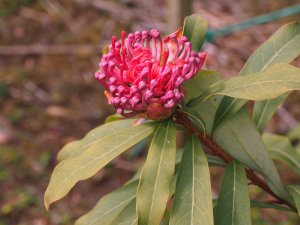
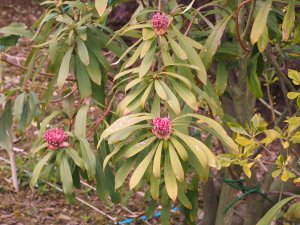
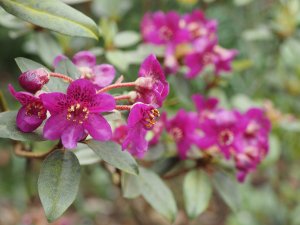
A plant I have been trying to buy since I saw it at Mount Congreve years ago – Telopea oreades. Here in full flower and fully exposed to the wind at the top of the garden.
Telopea oreadesTelopea oreades
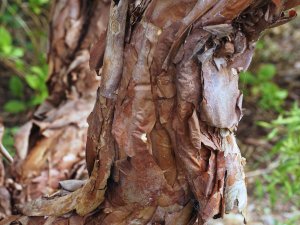
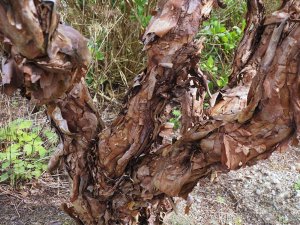
A huge Polylepis australis with its bark. Ours seem to die long before achieving this sort of size.
Polylepis australisPolylepis australis
Rhododendron proteoides.
Rhododendron proteoides
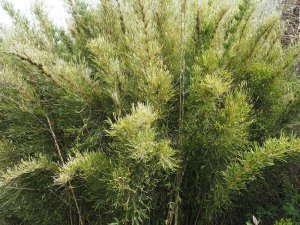
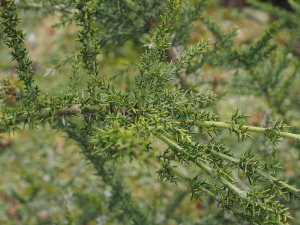
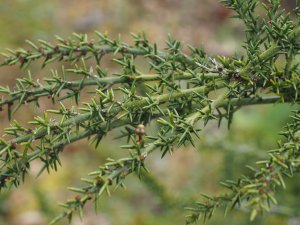
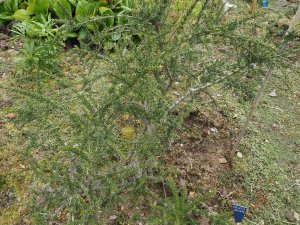
A new species of Colletia to us all – Colletia ulicina. Rather smaller growing with pink flowers in season (autumn).
Colletia ulicinaColletia ulicinaColletia ulicina
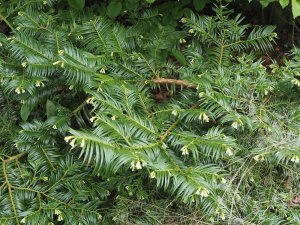
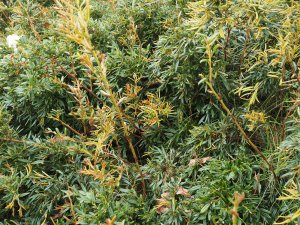
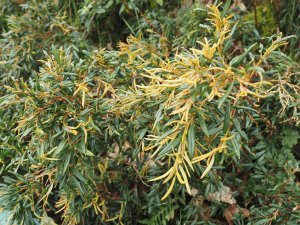
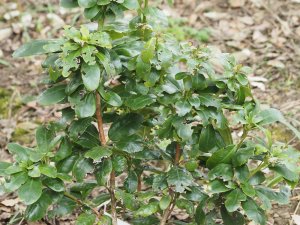
Cephalotaxus harringtonia ‘Prostrata’ – originally from Burncoose we were told.
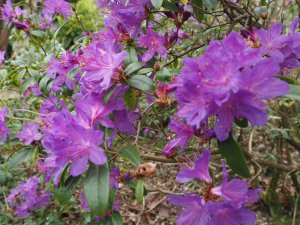
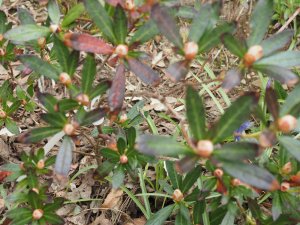
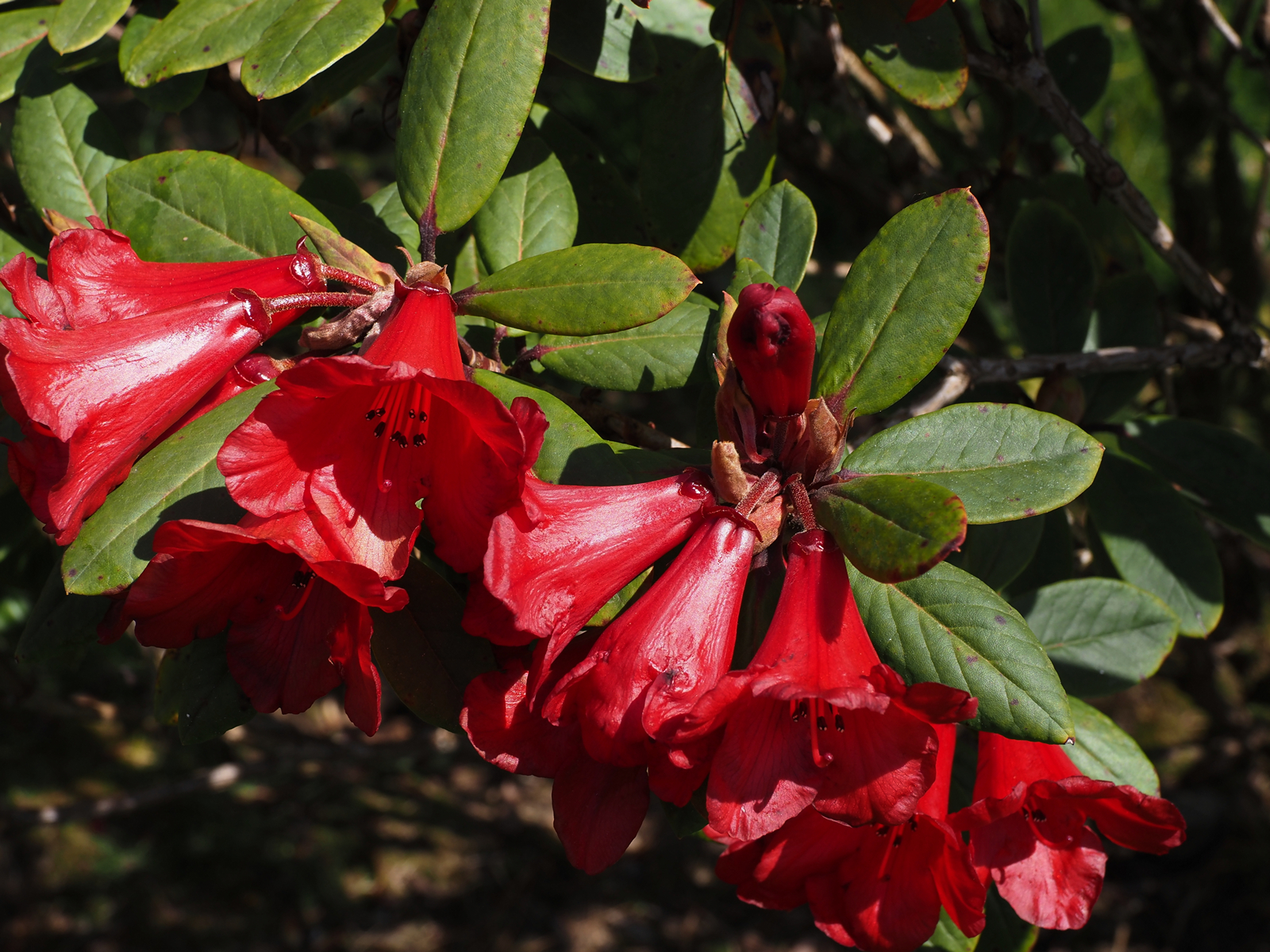
Rhododendron baileyi which died out with us above the Main Quarry.
Rhododendron baileyiRhododendron baileyi
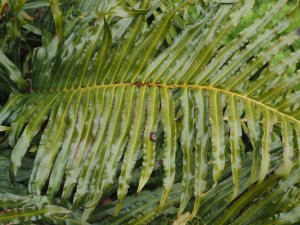
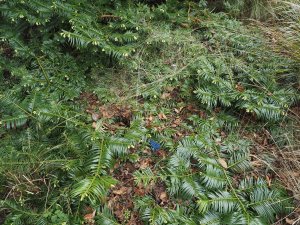
Philesia magellanica – a huge carpet on a bank but no flowers at this time of the year. Easy enough from cuttings if we had a decent stock plant.
Philesia magellanicaPhilesia magellanica
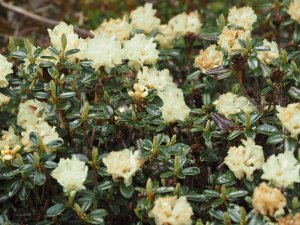
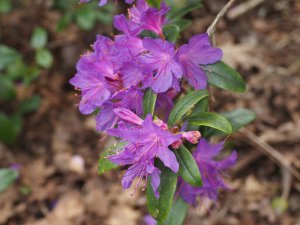
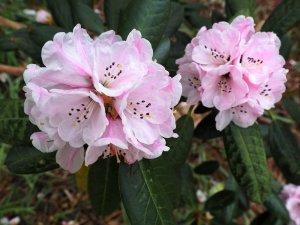
Rhododendron rupicola var. rupicola.
Rhododendron rupicola var. rupicolaRhododendron rupicola var. rupicola
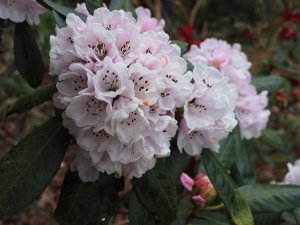
Rhododendron fulvum in full flower.
Rhododendron fulvumRhododendron fulvum
Drimys andina which has died at Burncoose below the Tennis Court.
Drimys andinaDrimys andinaDrimys andina
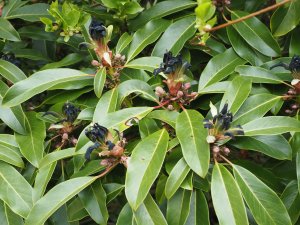
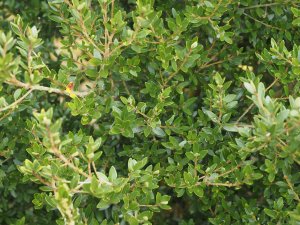
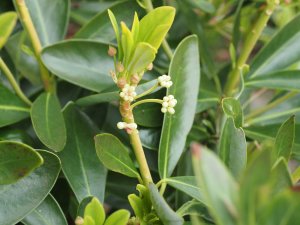
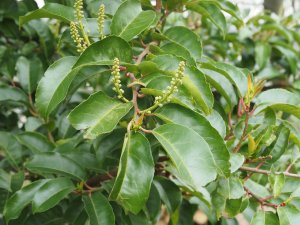
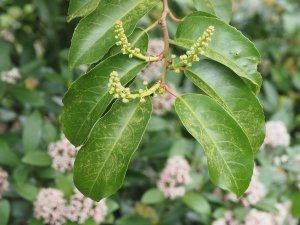
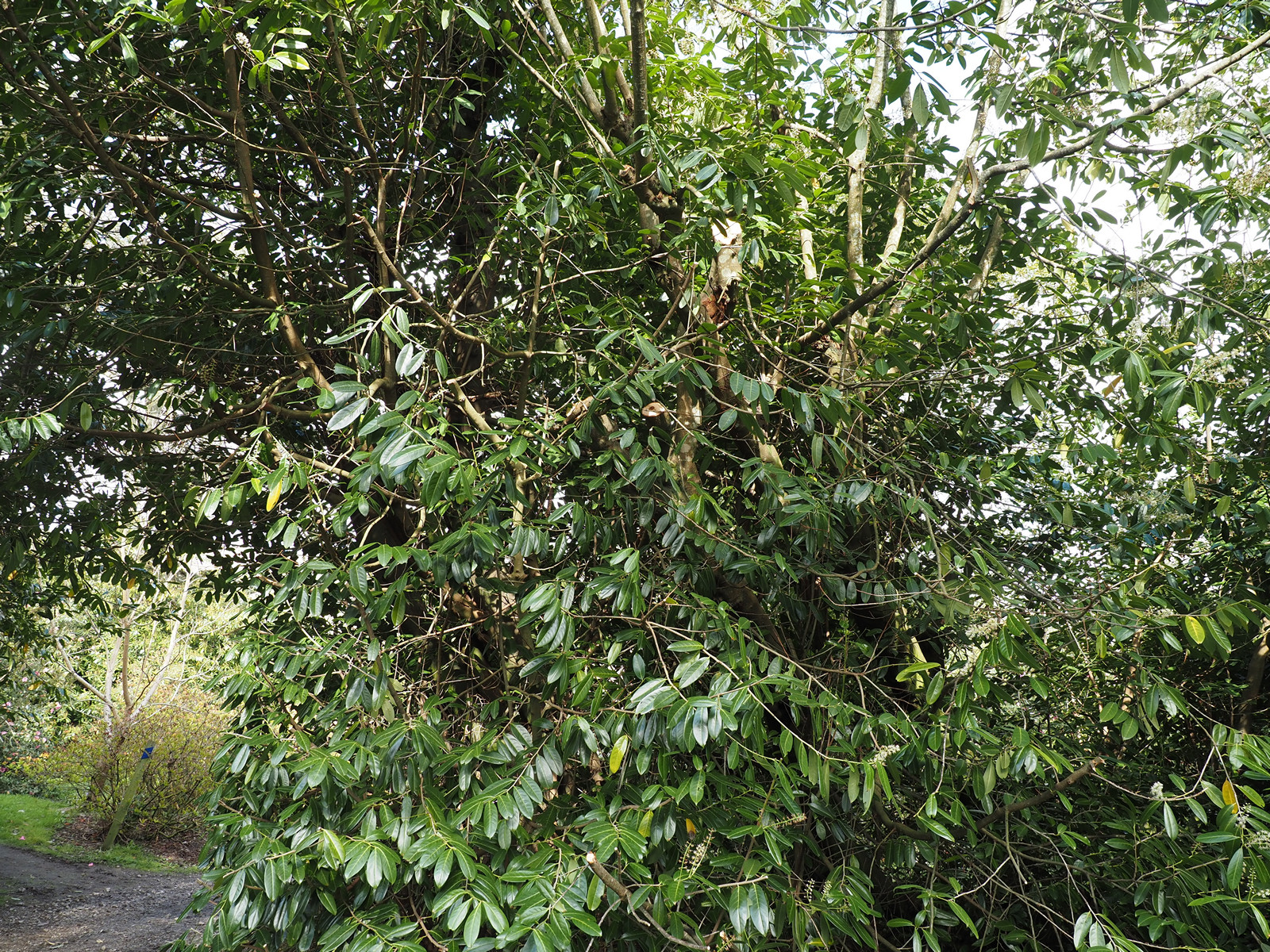
Prunus lusitanica var. azorica although the identification is arguable or contested.
Prunus lusitanica var. azoricaPrunus lusitanica var. azorica
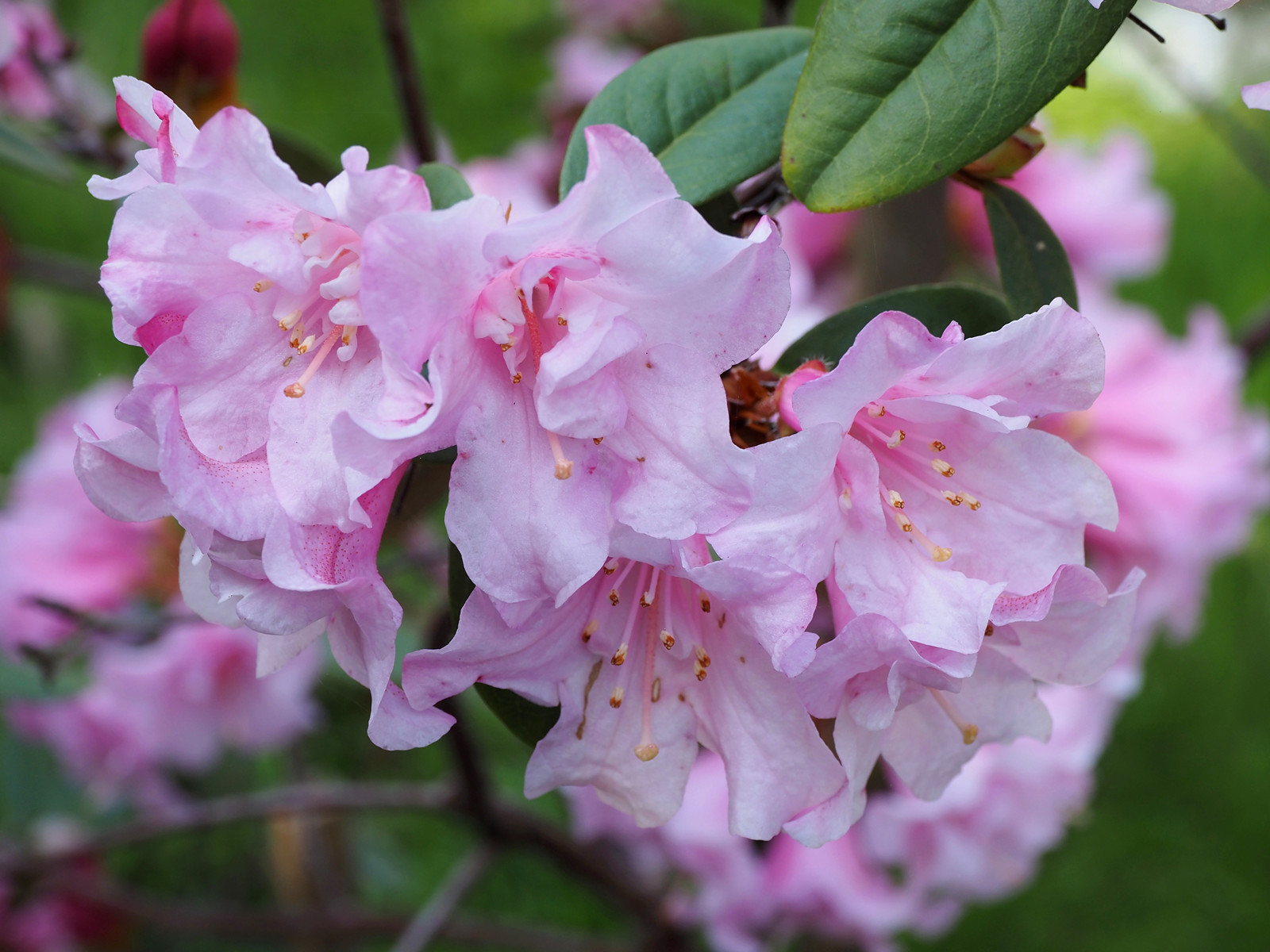
Rhododendron daphnoides – totally new to me.
Rhododendron daphnoides
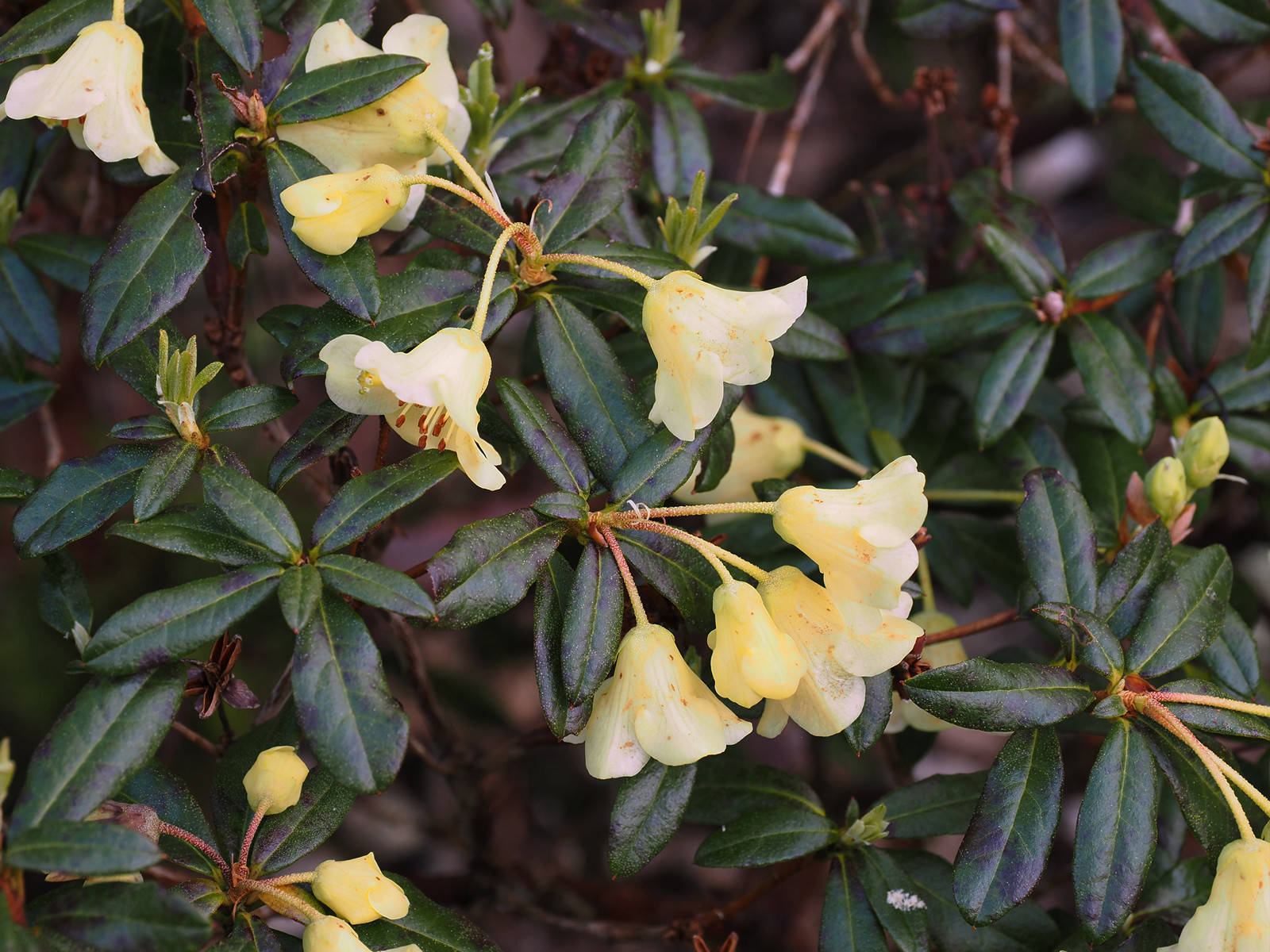
Rhododendron iteophyllum – totally new to me.
Rhododendron iteophyllum
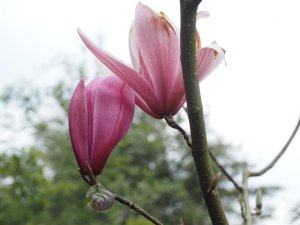
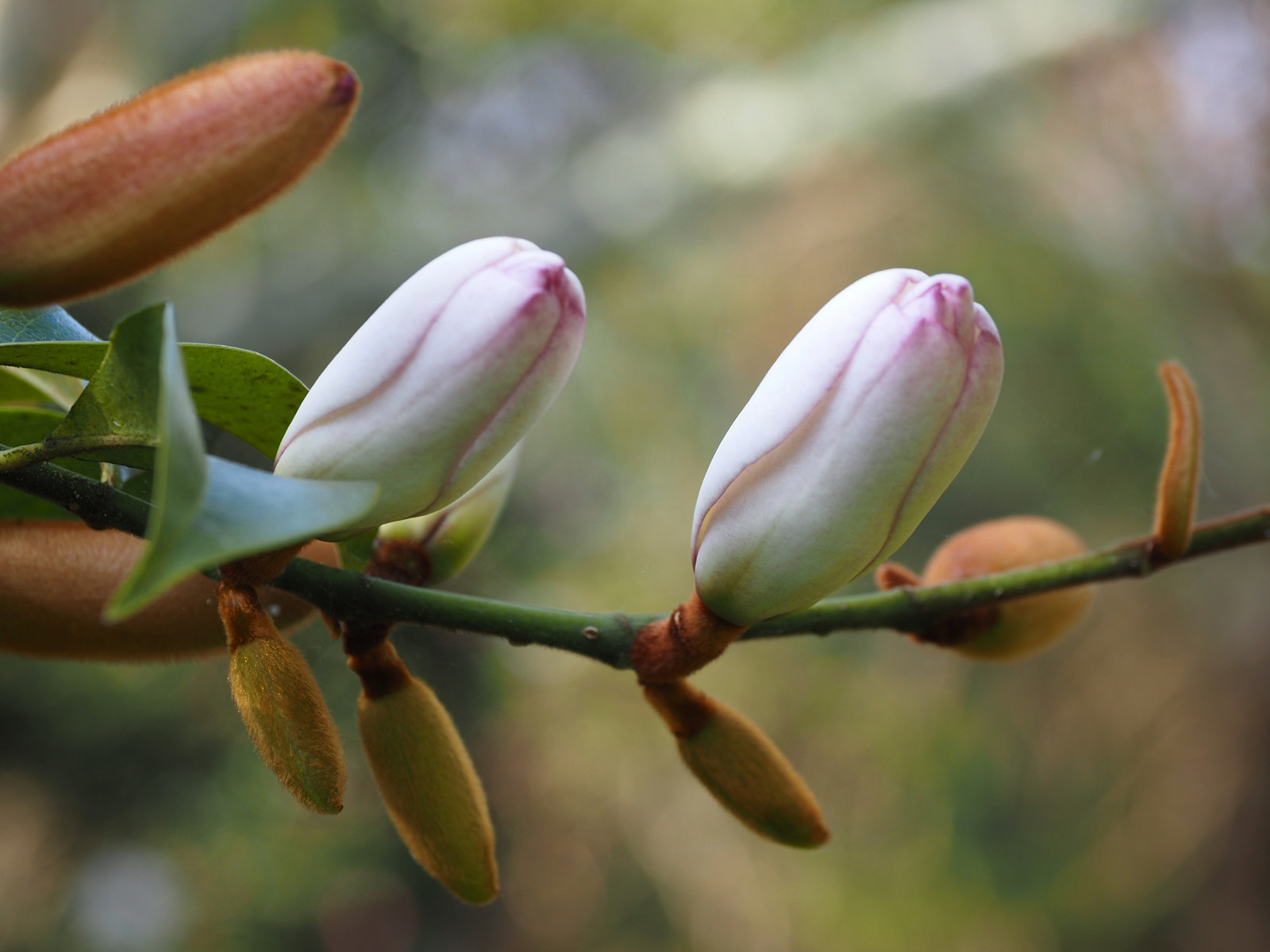
Magnolia ‘Kimun-cho’. Most of the other magnolias were from Burncoose.
Magnolia ‘Kimun-cho’
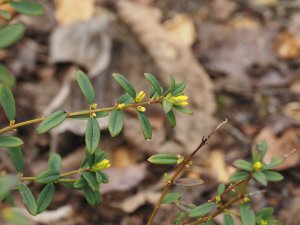
Daphne calcicola with yellow buds in the teeth of the wind by the water’s edge.
Daphne calcicola
Olearia lacunosa which has died at Caerhays and has not yet flowered here.
Olearia lacunosaOlearia lacunosa
The suckering Polyscias fruticosa which none of us had ever seen before. Around 6-8 feet tall and multi-stemmed with reddish new growth.
Polyscias fruticosaPolyscias fruticosa
A 5 star garden in a setting where one would have thought that few of the rhododendrons or other tender plants could possibly survive. A big Burncoose customer over the years who usually speaks to Steve Dance about his orders. We left 6 plants as presents which went down well with Alan who is aged 81.
2025 – CHW
A state visit to Exbury where we spent 6 hours in the garden and in Marie’s House Garden across the road.
Sambucus racemosa ‘Lemony Lace’ – a new Sambucus which Burncoose needs to stock.
A trip on the 1½ mile model railway adorned with ‘critters’ (here a lizard) which were bought and placed out by Lionel de Rothschild. The railway is the creation of his uncle.
A trip on the 1½ mile model railway adorned with ‘critters’A trip on the 1½ mile model railway adorned with ‘critters’A trip on the 1½ mile model railway adorned with ‘critters’
The Rockery which was superb – 2000 tonnes of rocks in the 1930’s and said to be the largest in Europe.
Marcus and Marie Louise Agiues have started to plant a 20 acre field. Work began in 2022 on poor soil with deer fencing and a watering system. Here Tilia endochrysea.
Tilia endochrysea
Three Cryptomeria japonica ‘Golden Promise’ getting going.
Cryptomeria japonica ‘Golden Promise’
New growth on Abies pindrow.
Abies pindrow
Cercidiphyllum ‘Heron’s Wood’ – an excellent form which we need to obtain.
Cercidiphyllum ‘Heron’s Wood’
2024 – CHW
Photos from Clandeboye Lodge Hotel and then to the 54 acres of National Trust Rowallane Garden – click here to view.
Clandeboye Lodge Hotel.
Two very contrasting gardens which were both worth more than a full day’s attention. Clandeboye, despite the recent death of its last resident owner, still planting. Their mulching of young trees in poorer and water logged soils was exemplary. Deer damage a major problem. The Pinetum developing nicely and the shrub border absolutely superb.
Rowallane rhododendrons approaching that level of maturity where one had to contemplate what can back to regenerate. Cherries reaching the end of their natural lives. Restoration of the rockery area extremely well done and the walled garden beautifully maintained. In the great Phytophthora ramorum scare the NT decide to remove all the laurel shelter belts around the garden. Quite why no one seems to be able to remember. In Cornwall garden owners were paid to remove ponticum and replace with large laurels. The end result at Rowallane is another wind threat to the collections and the trees in the shelter belts. This is a unique collection of Chinese rhododendron species and not nearly enough is being done to propagate, layer and replace the more ancient plants. With so many rocky outcrops new planting areas are not easy but NT budgets never seem to get as far as new plants. If this does not change this will not be the garden it is today in 20 or so years’ time which would be a serious loss to horticulture.
We had hoped to see Clematoclethra at Rowallane but it could not be located. (Subsequently found to have died in 2017). We also missed out on other record Rowallane trees this time around – Podocarpus spinulosus, Tetradium glabrifolium and Malus trilobata. Labelling at Rowallane very much better than at most NT gardens but still plenty to do especially the Pinetum area.
2023 – CHW
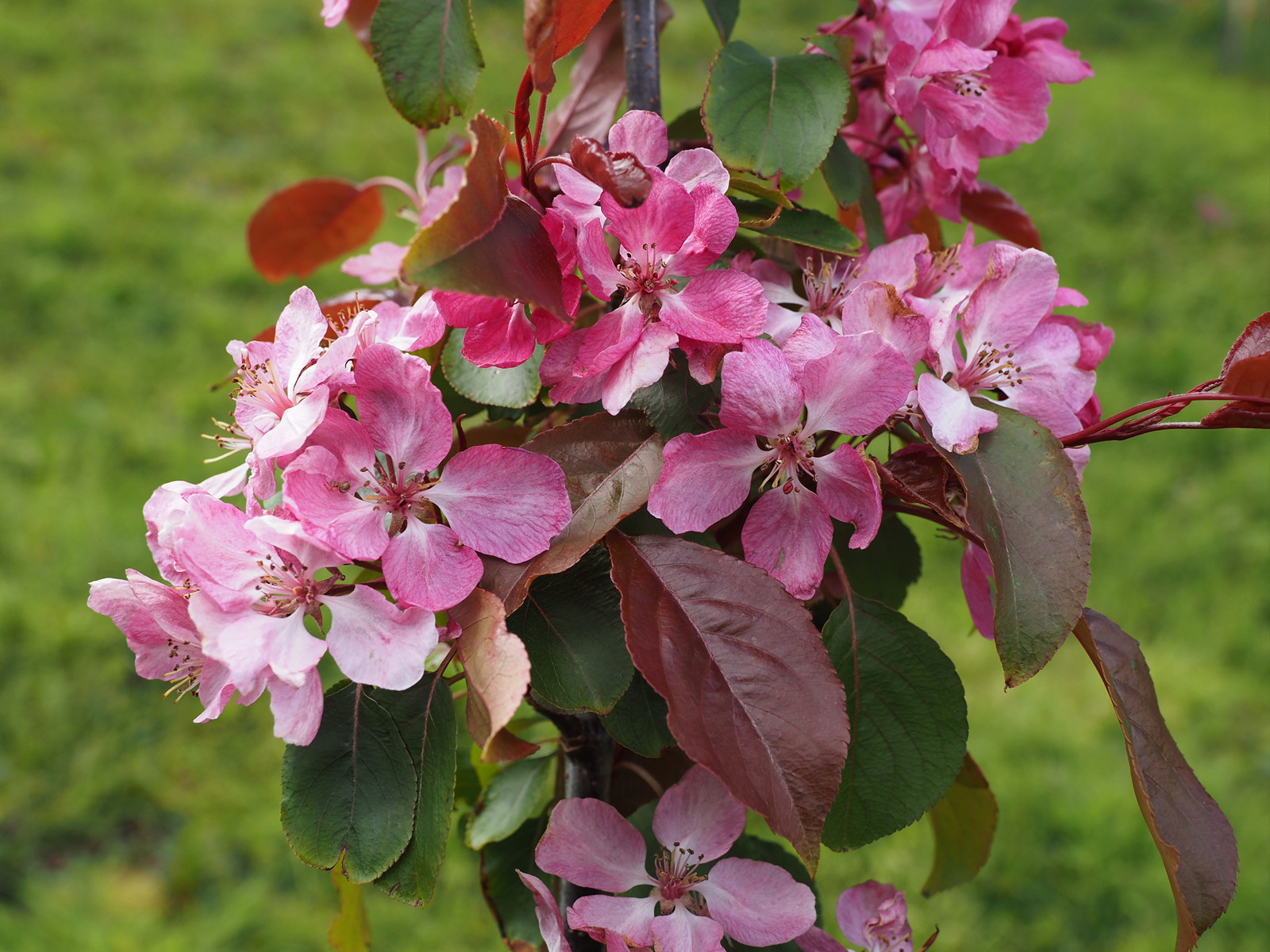
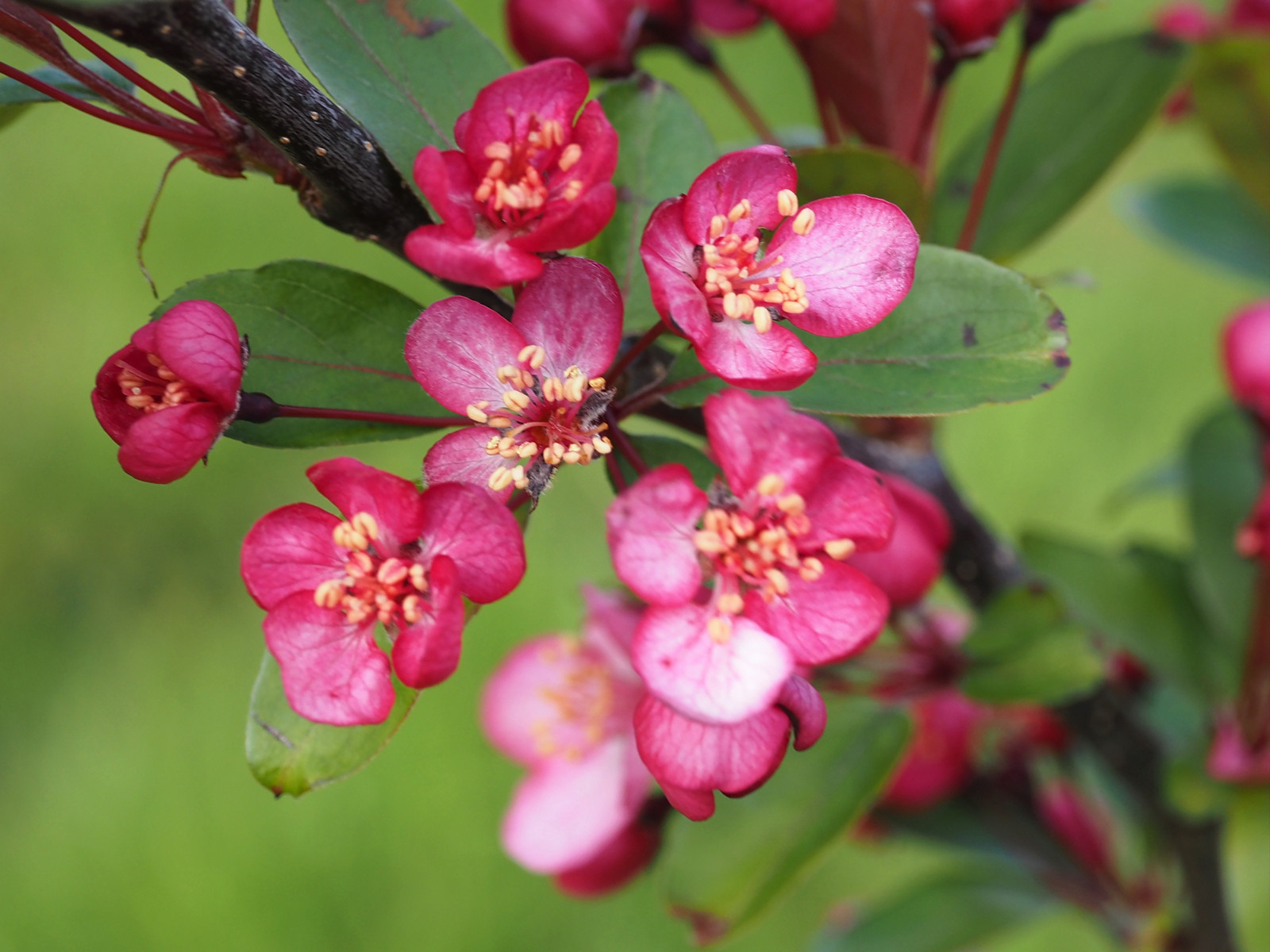
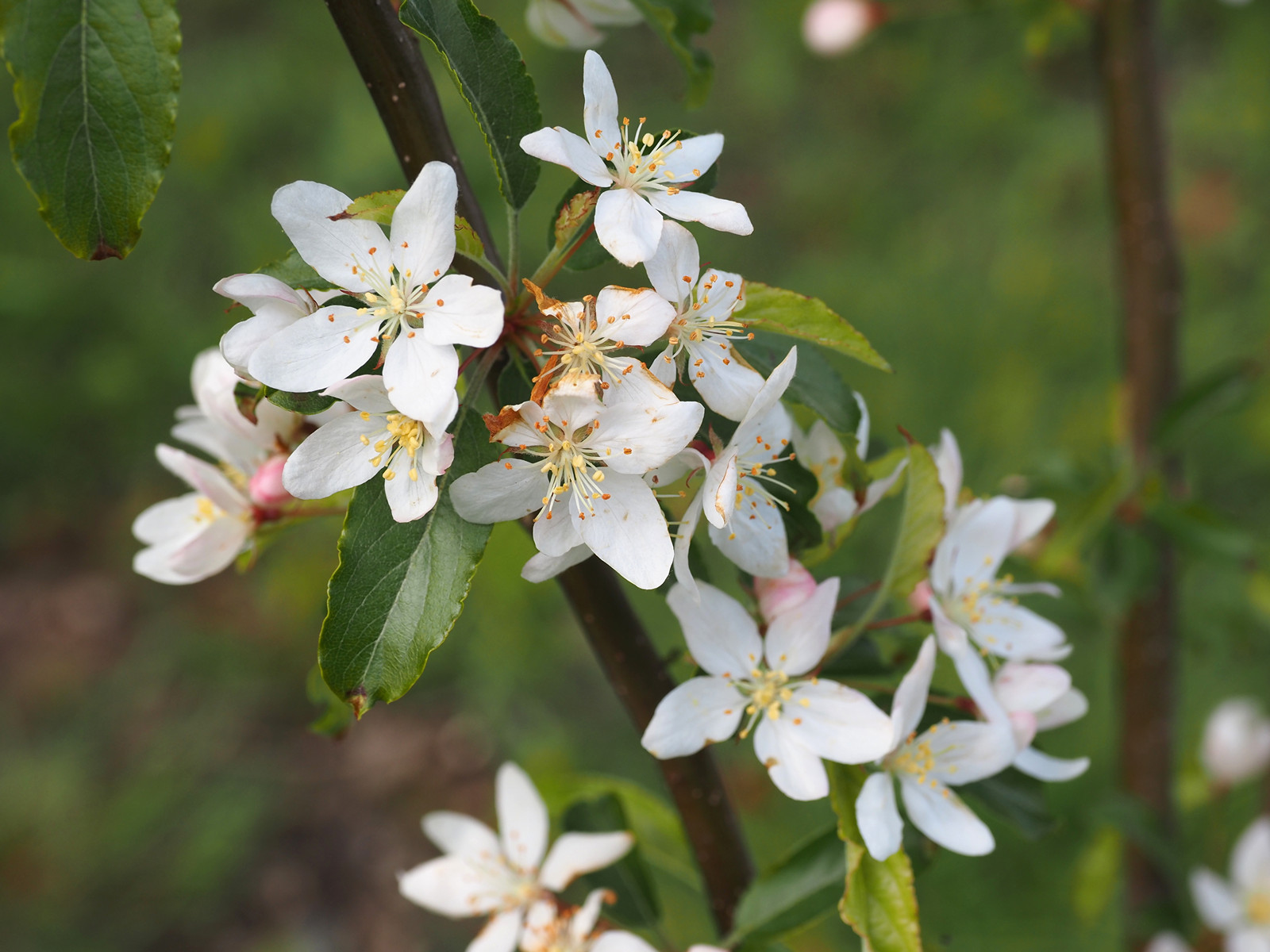
Malus ‘Rudolph’.
Malus ‘Rudolph’Malus ‘Rudolph’
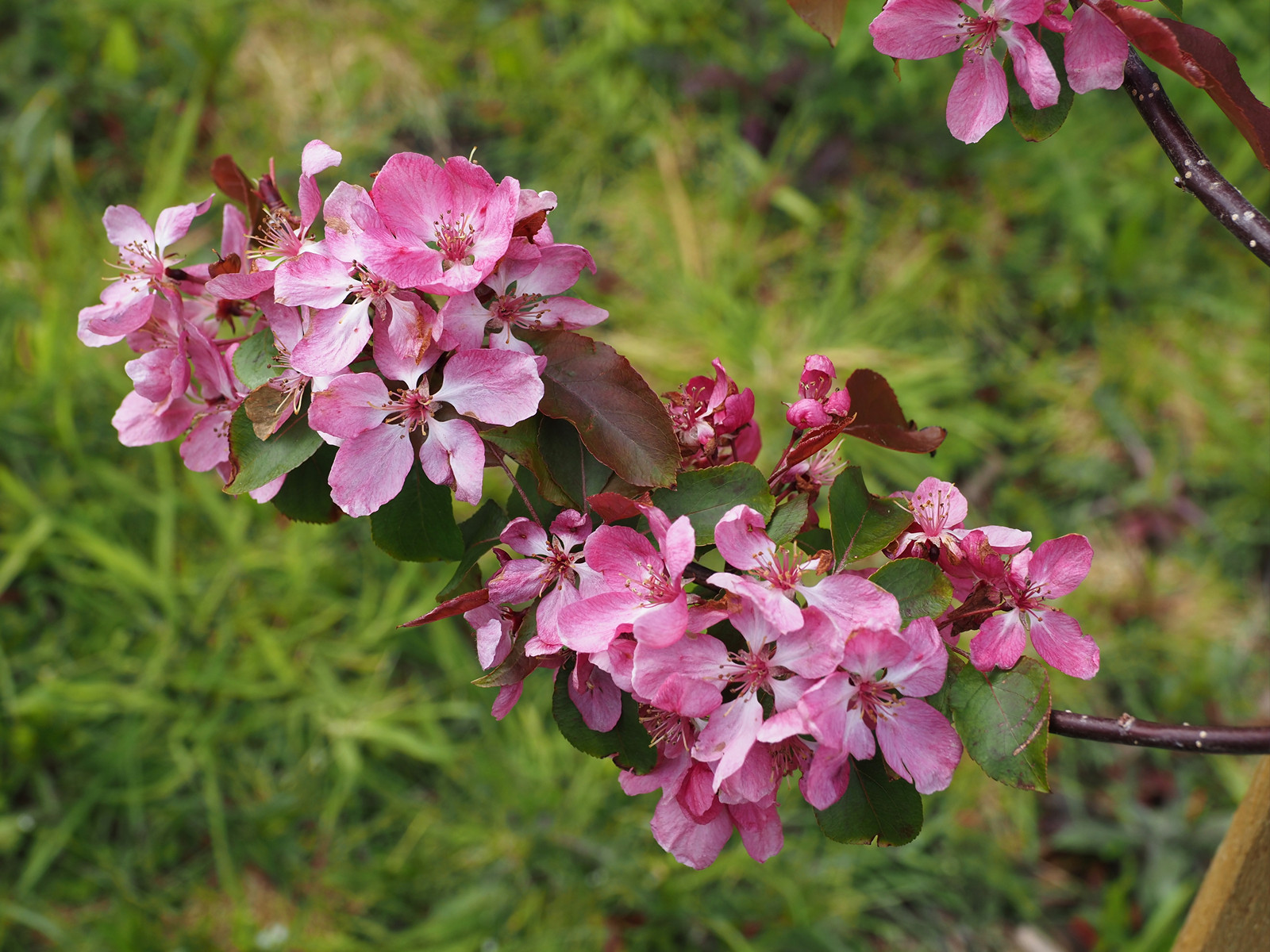
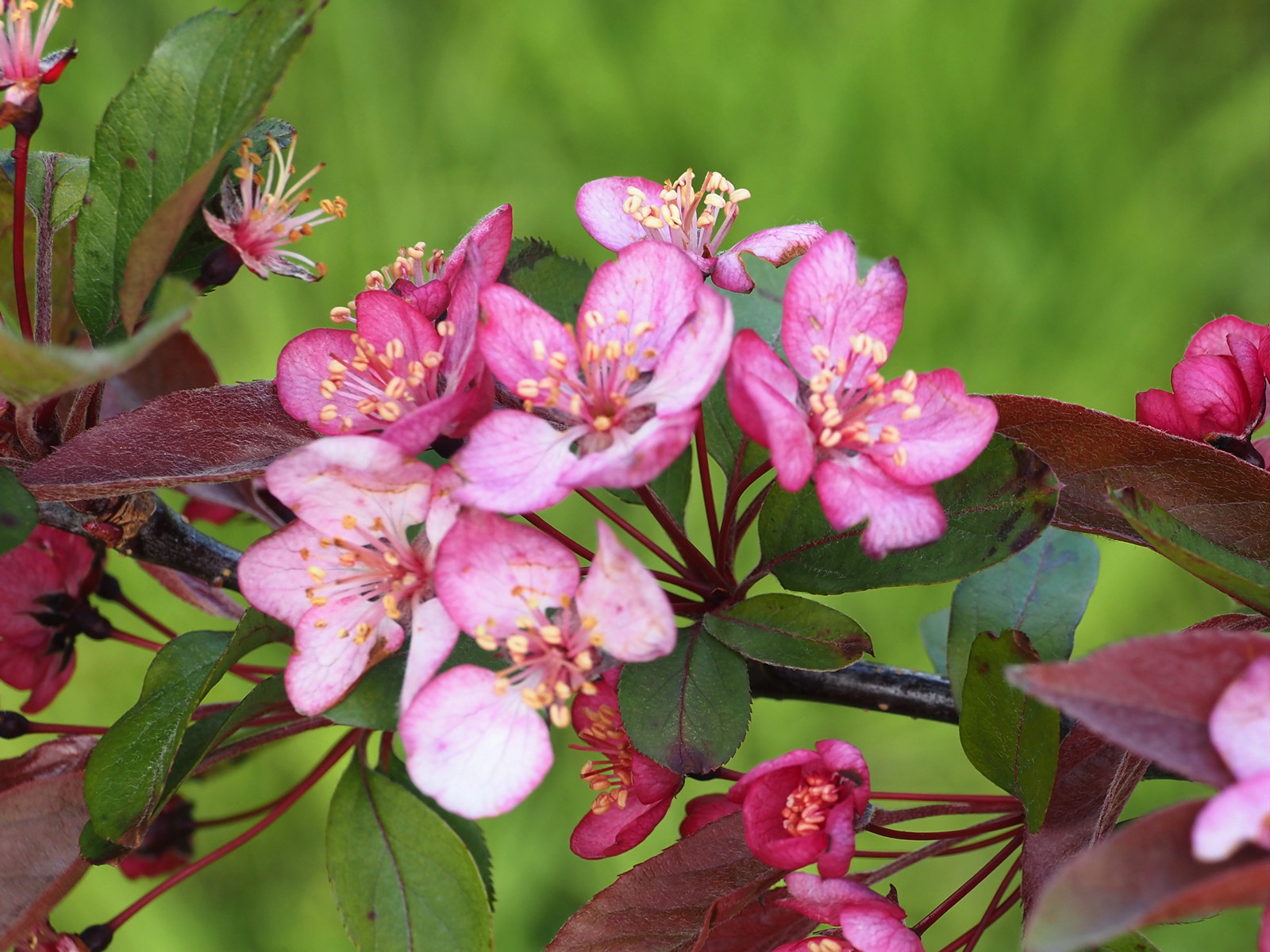
Malus ‘Candymint’.
Malus ‘Candymint’Malus ‘Candymint’
Malus transitoria.
Malus transitoria
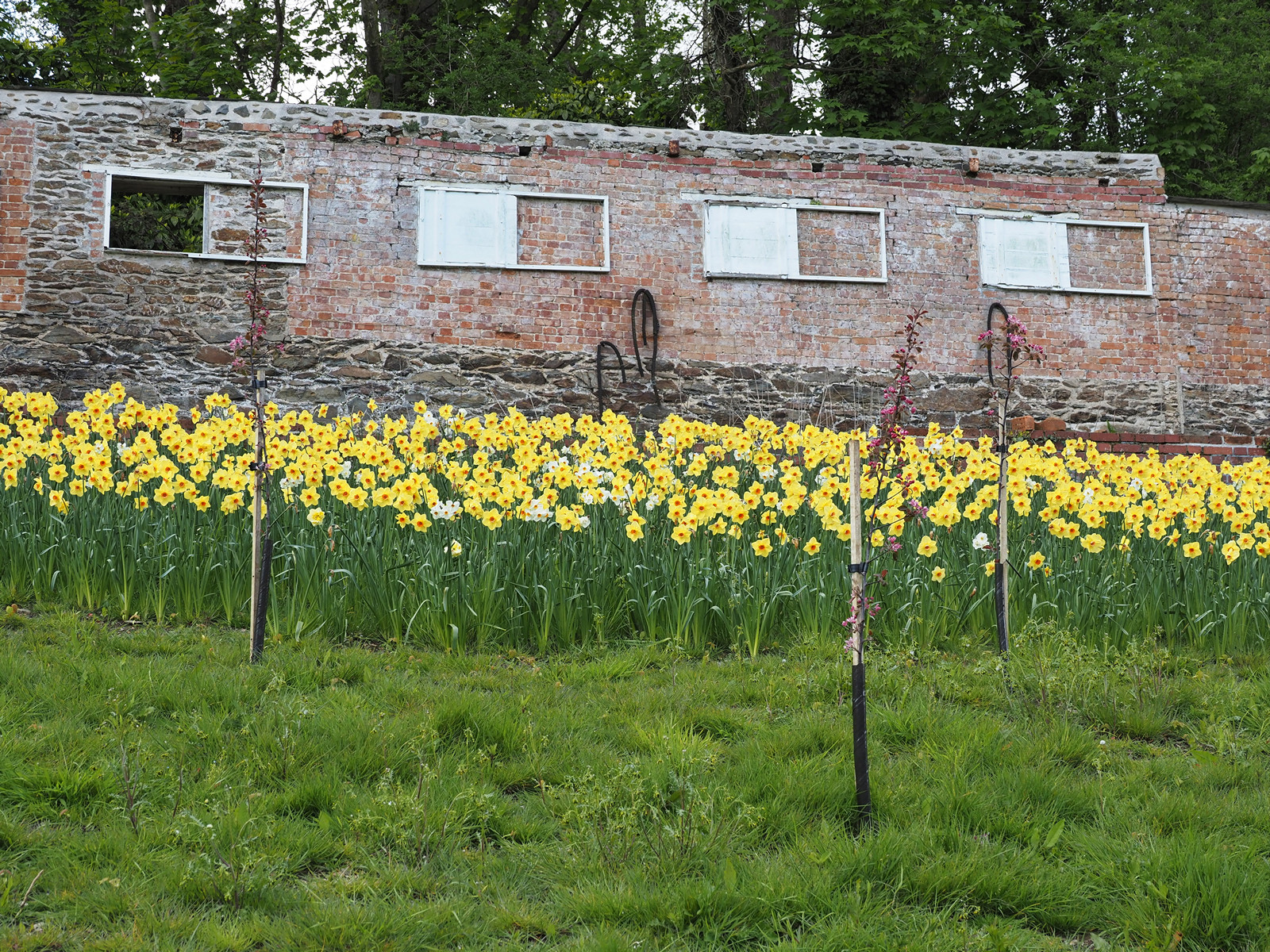
Malus and daffodils in the Old Kitchen Garden. Made a video today with Karol of the first year flowering.
Malus and daffodils
A huge laurel branch collapsed over the path below Donkey Shoe and had to be cut up.
A huge laurel branch
Thankfully no damage to the Rhododendron ‘Michael’s Pride’ opposite.
Rhododendron ‘Michael’s Pride’
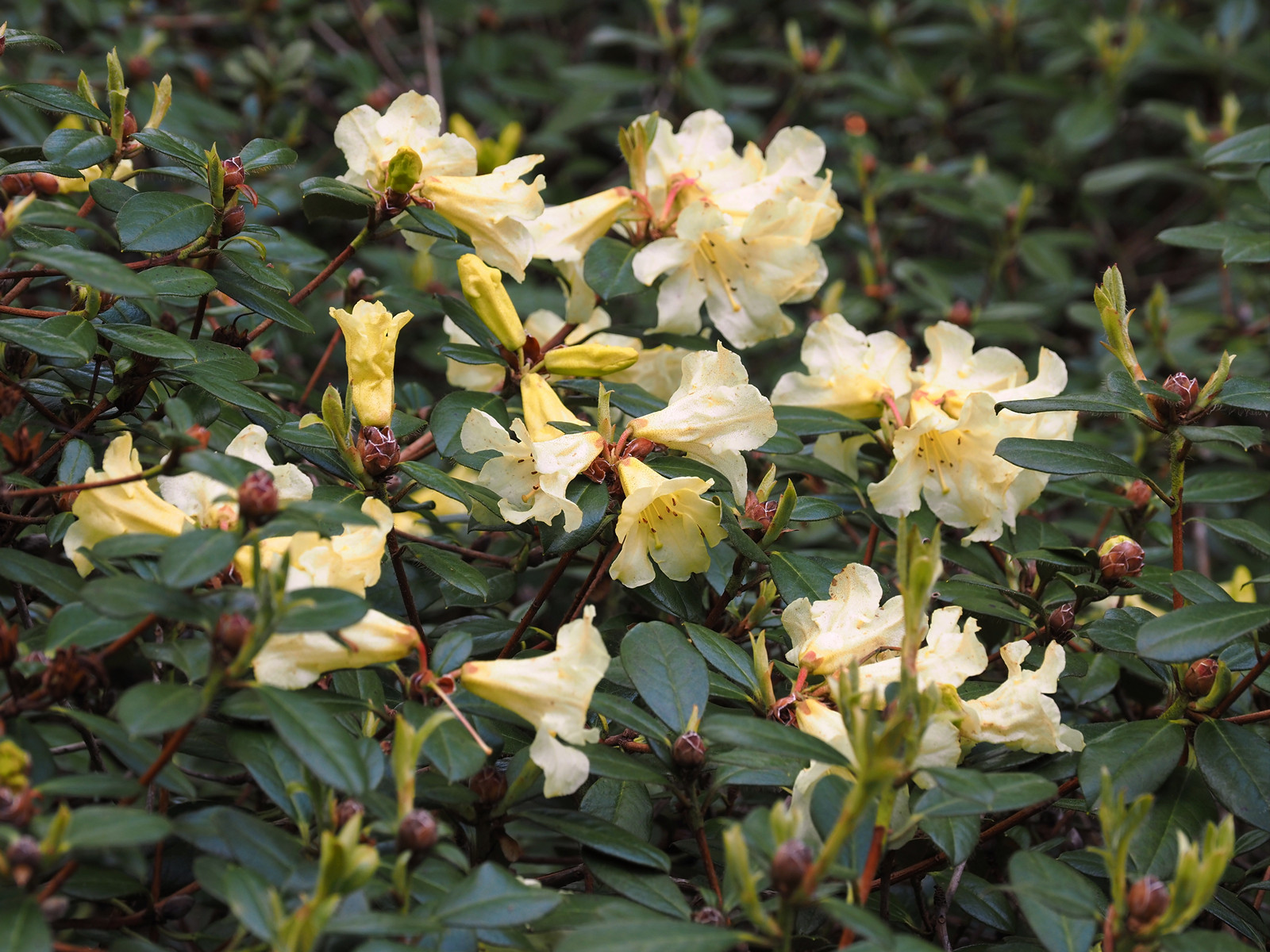
Rhododendron luteiflorum nearly out.
Rhododendron luteiflorum
Not that much flower on Rhododendron burmanicum this year.
Rhododendron burmanicum
2022 – CHW
We need rain badly now as the leafing up stalls in the garden. Drying east wind for several days and the ground is becoming rock hard. Worrying in April.Six more deer in the larder from the weekend including a four to five year old fallow (one of ten seen).Rhododendron ‘Johnny Johnstone’ now full out by Georges Hut. A popular double flowered plant which we need to propagate.
Rhododendron ‘Johnny Johnstone’
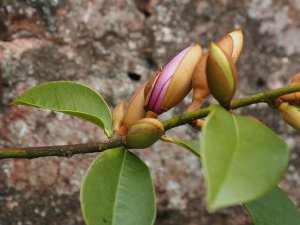
Michelia foggii ‘Jack Fogg’ just showing now all of a sudden.
Michelia foggii ‘Jack Fogg’
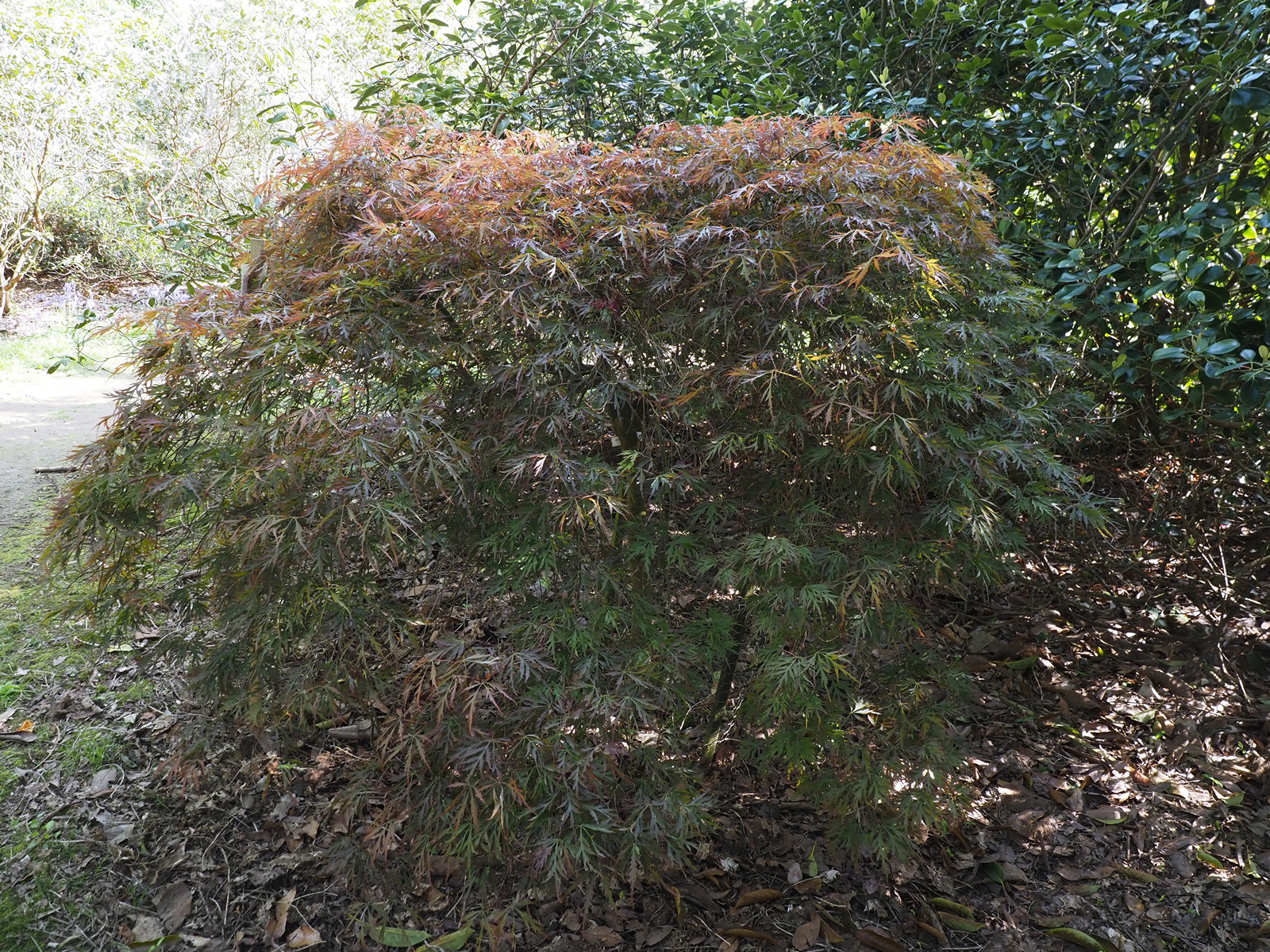
Acer palmatum dissectum ‘Crimson Prince’ in full leaf. After uplifting nearby trees recently it now has a better chance.
Acer palmatum dissectum ‘Crimson Prince’
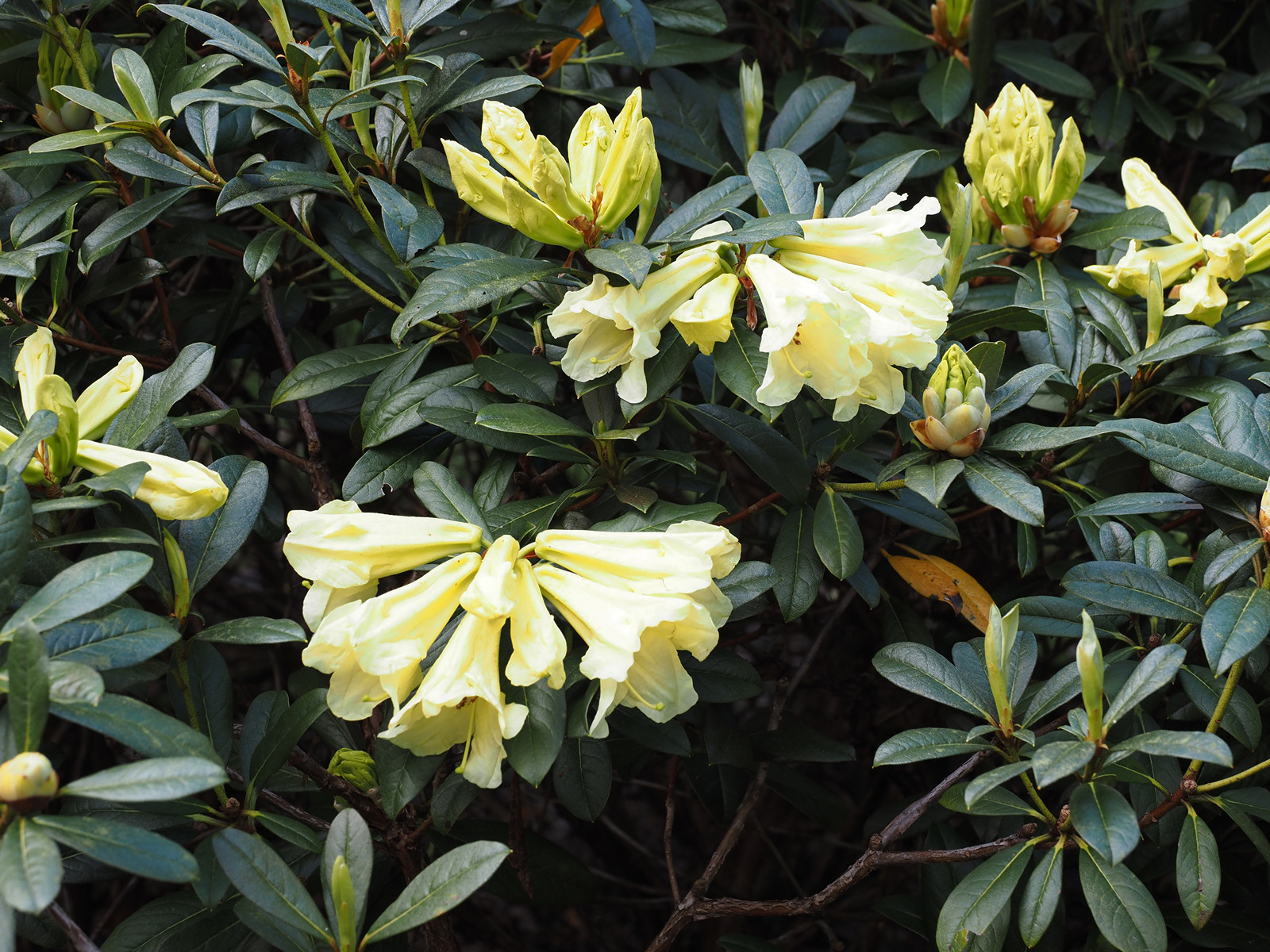
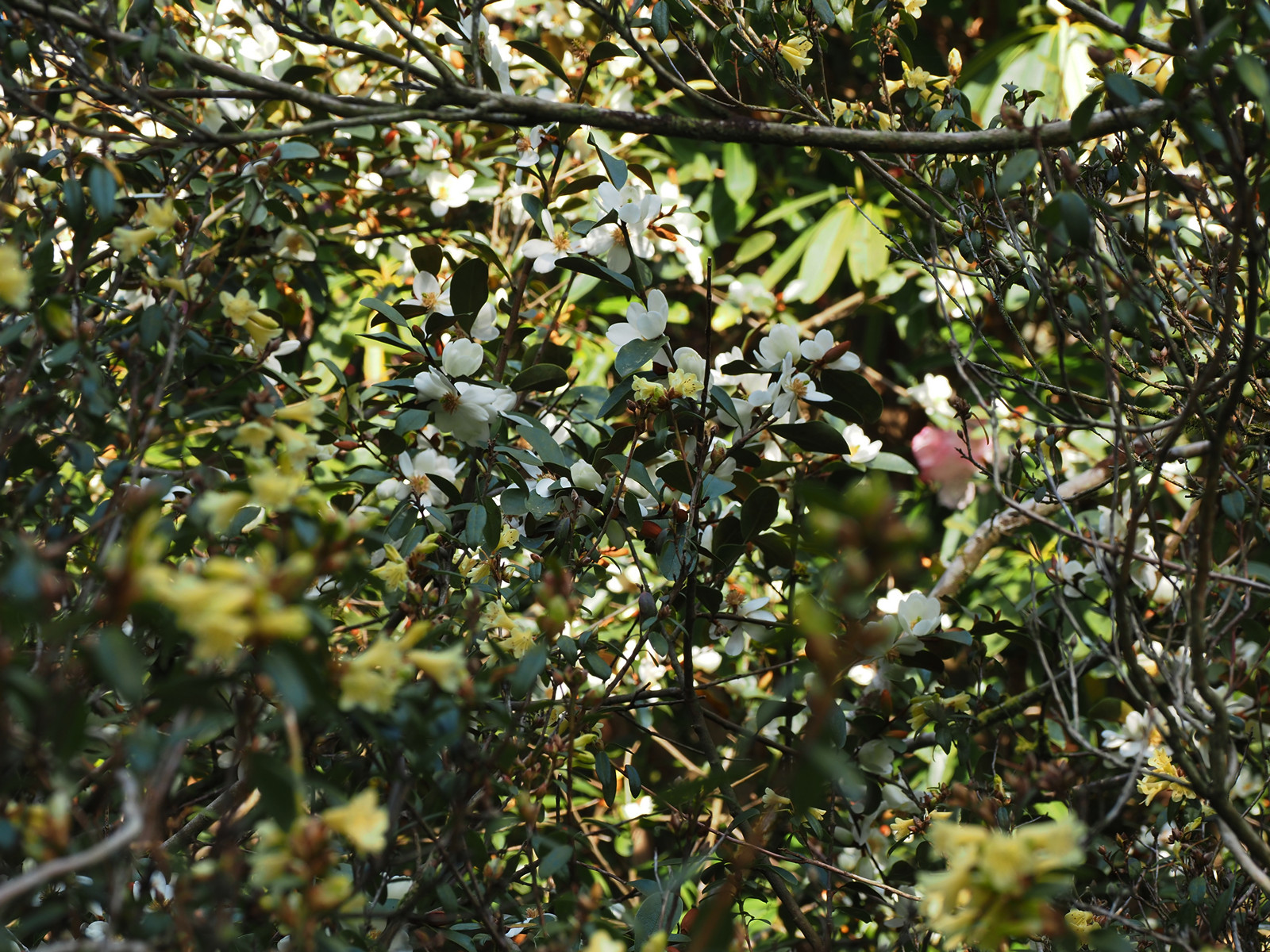
The unusual combination of Rhododendron ‘Yellow Hammer’ and Michelia laevifolia.
Rhododendron ‘Yellow Hammer’
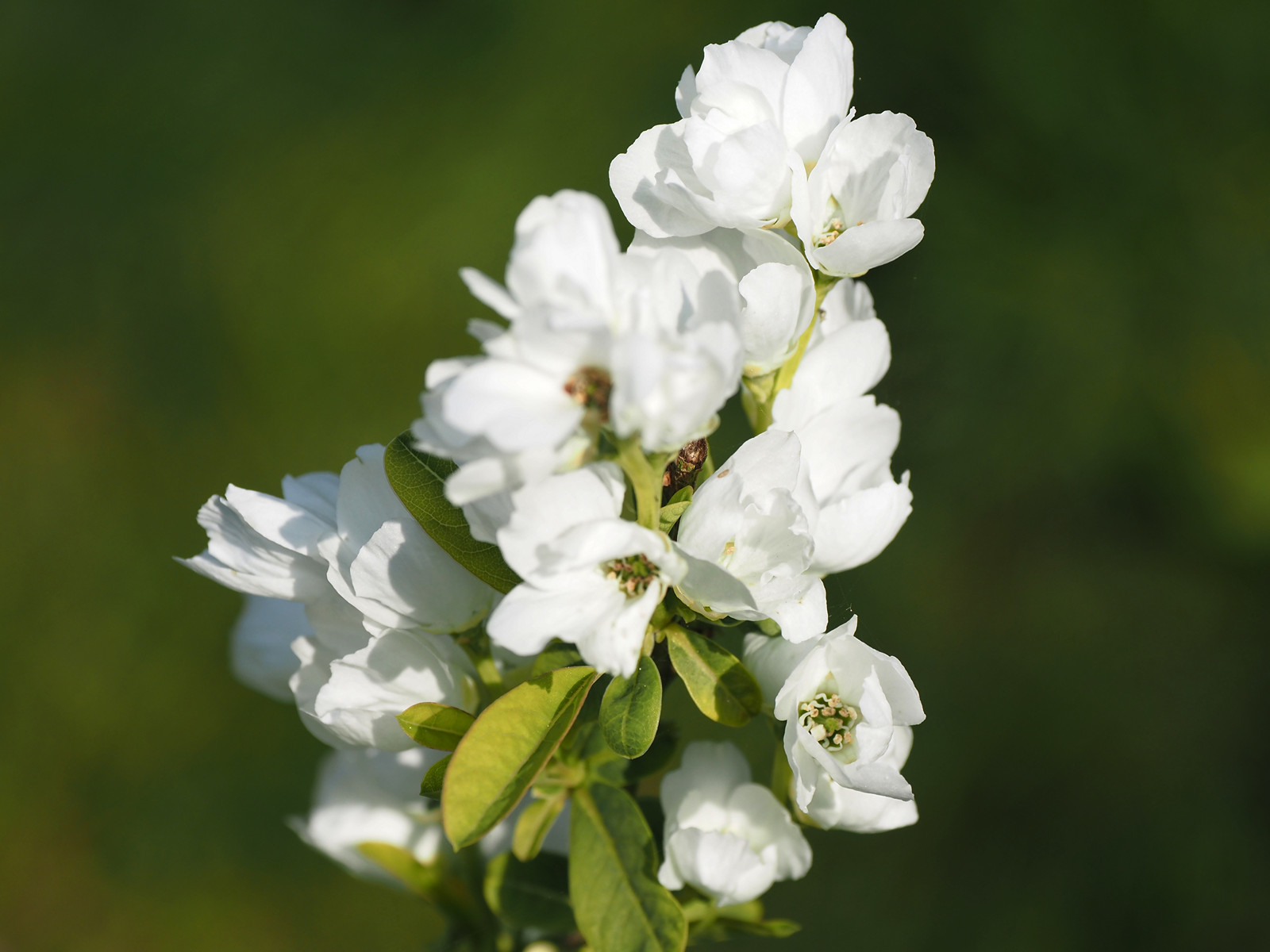
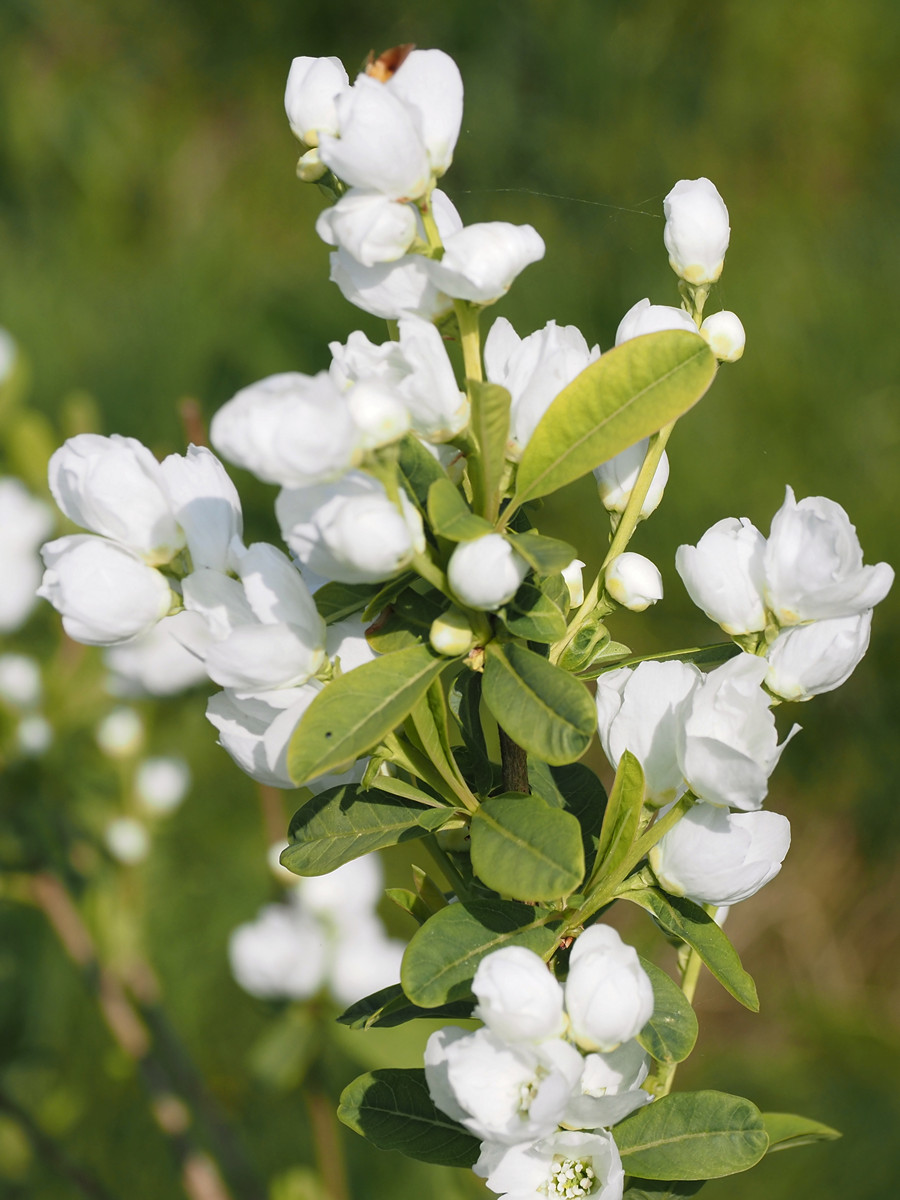
Exochorda tianschanica is, I think, turning out to be a nicer flowered plant than the other more commonly grown species and varieties. Vigorous grower.
Exochorda tianschanicaExochorda tianschanica
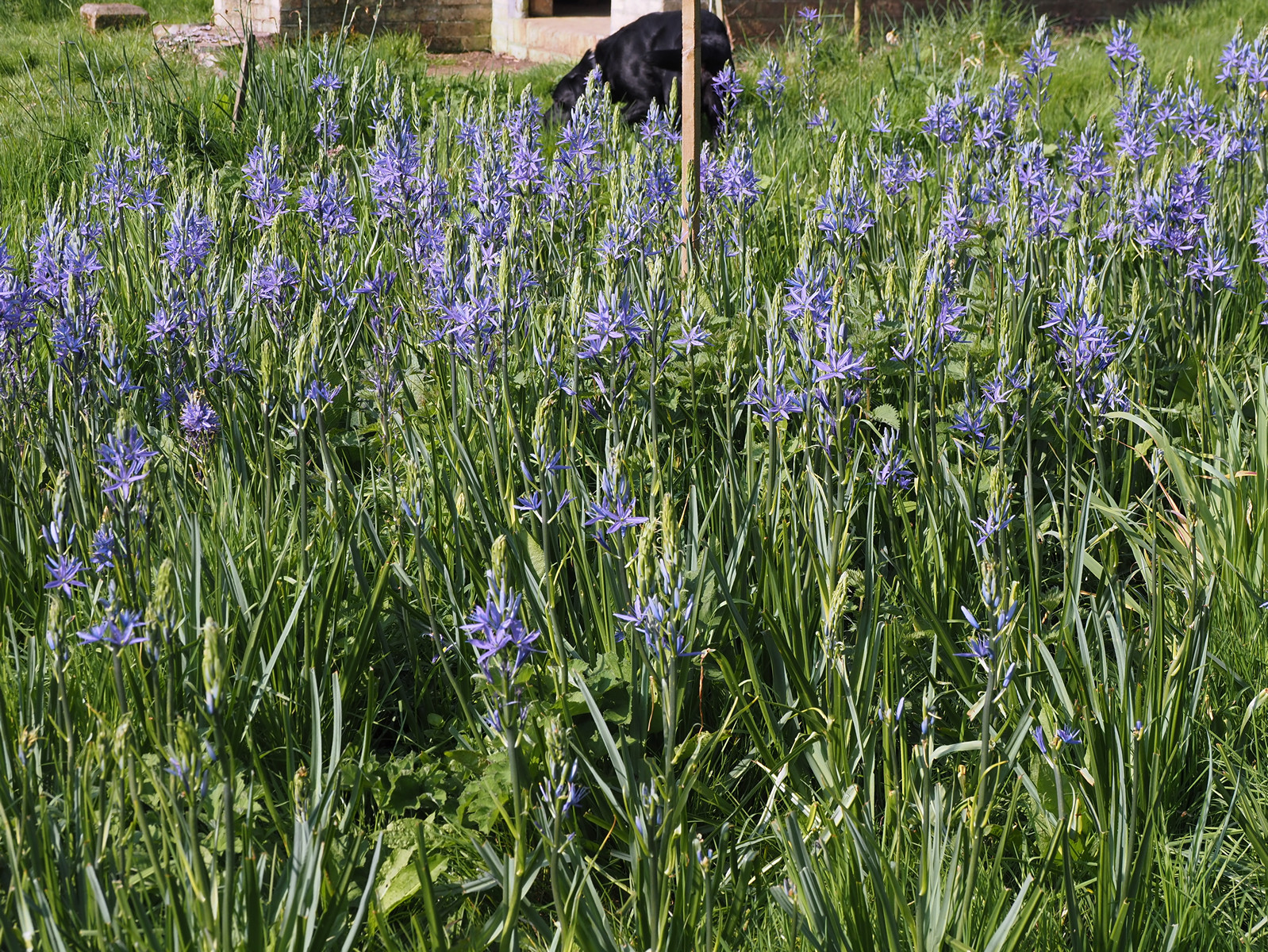
In their second year the Camassia leichtinii ‘Superba’ are finally performing in Tin Garden despite their young leaves being nibbled by deer and pheasants.
Camassia leichtinii ‘Superba’
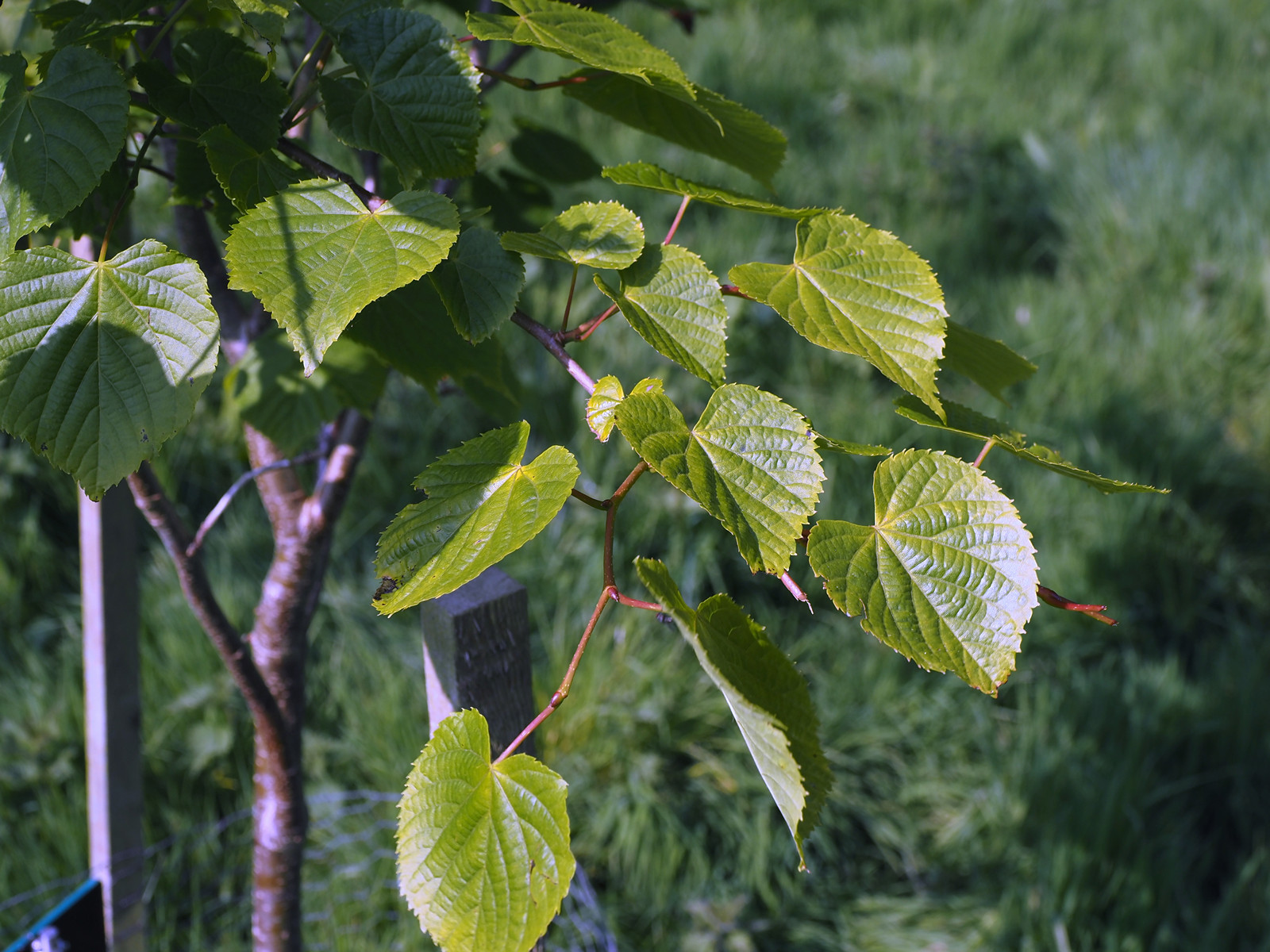
Tilia amurensis from Chollipo in Korea coming into leaf in Tin Garden.
Tilia amurensis
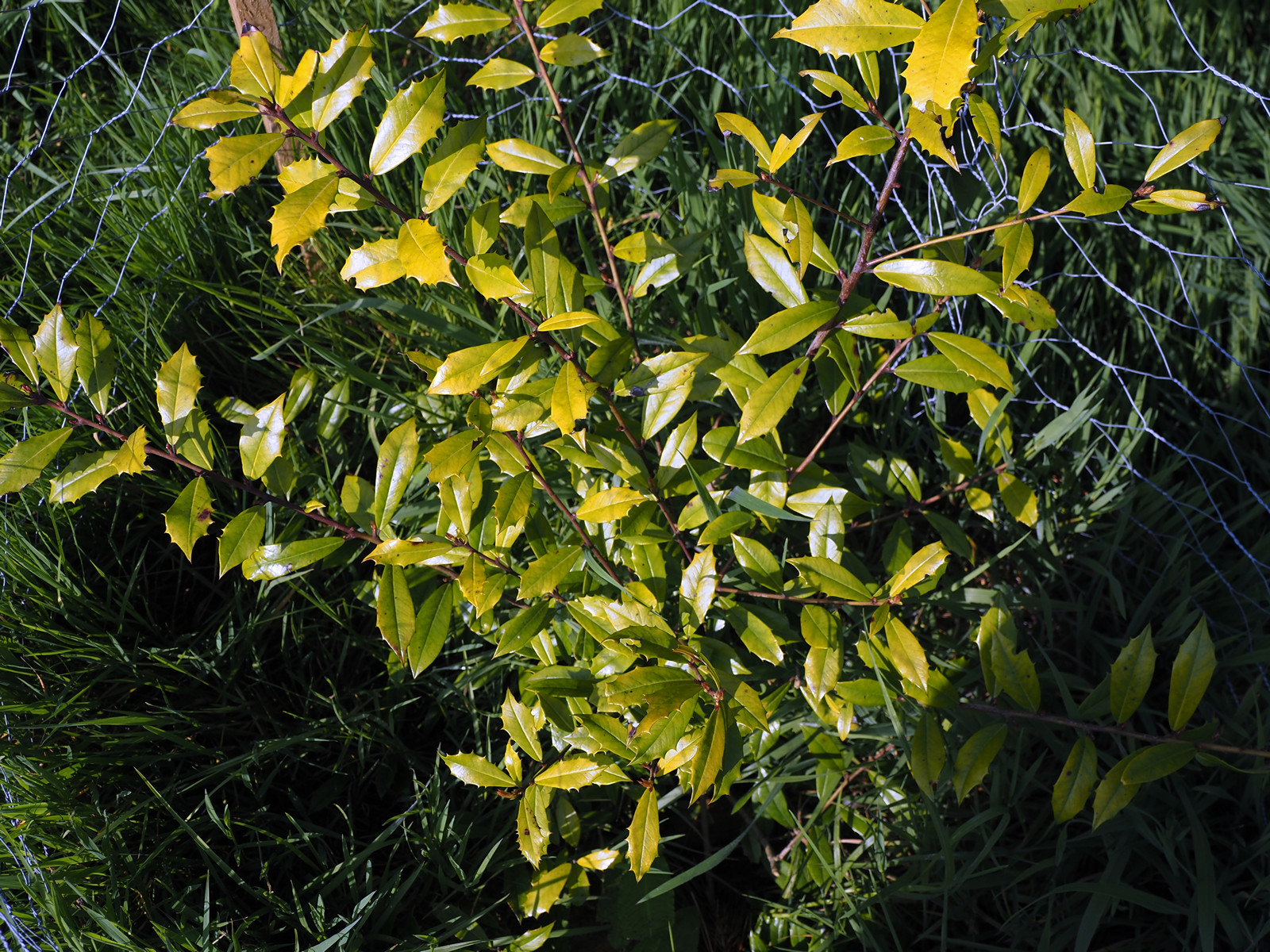
Ilex x altaclarensis ‘Sunny Foster’ living up to its name with no new growth visible yet.
Ilex x altaclarensis ‘Sunny Foster’
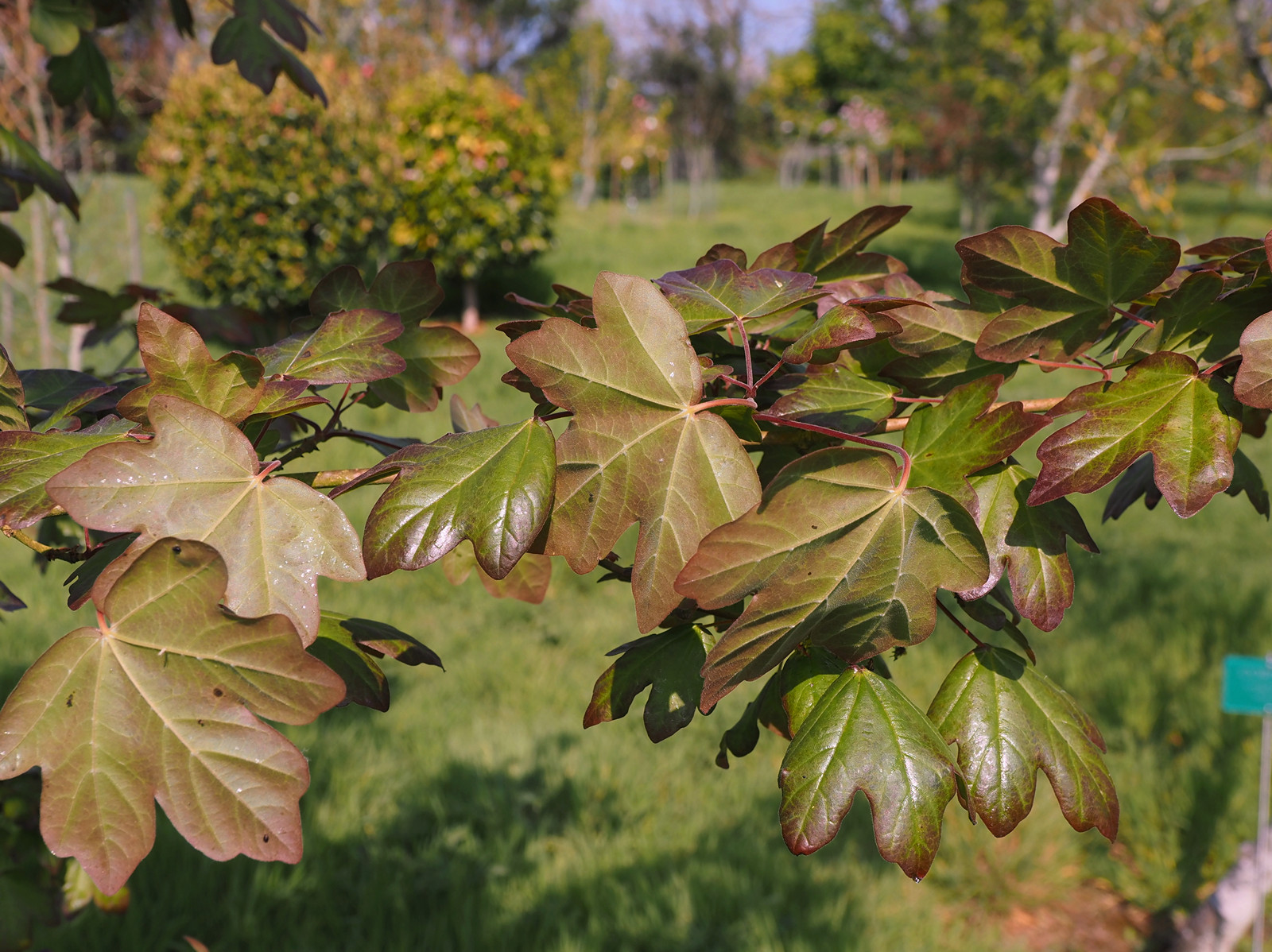
Acer campestre ‘Red Shire’ early into leaf.
Acer campestre ‘Red Shire’
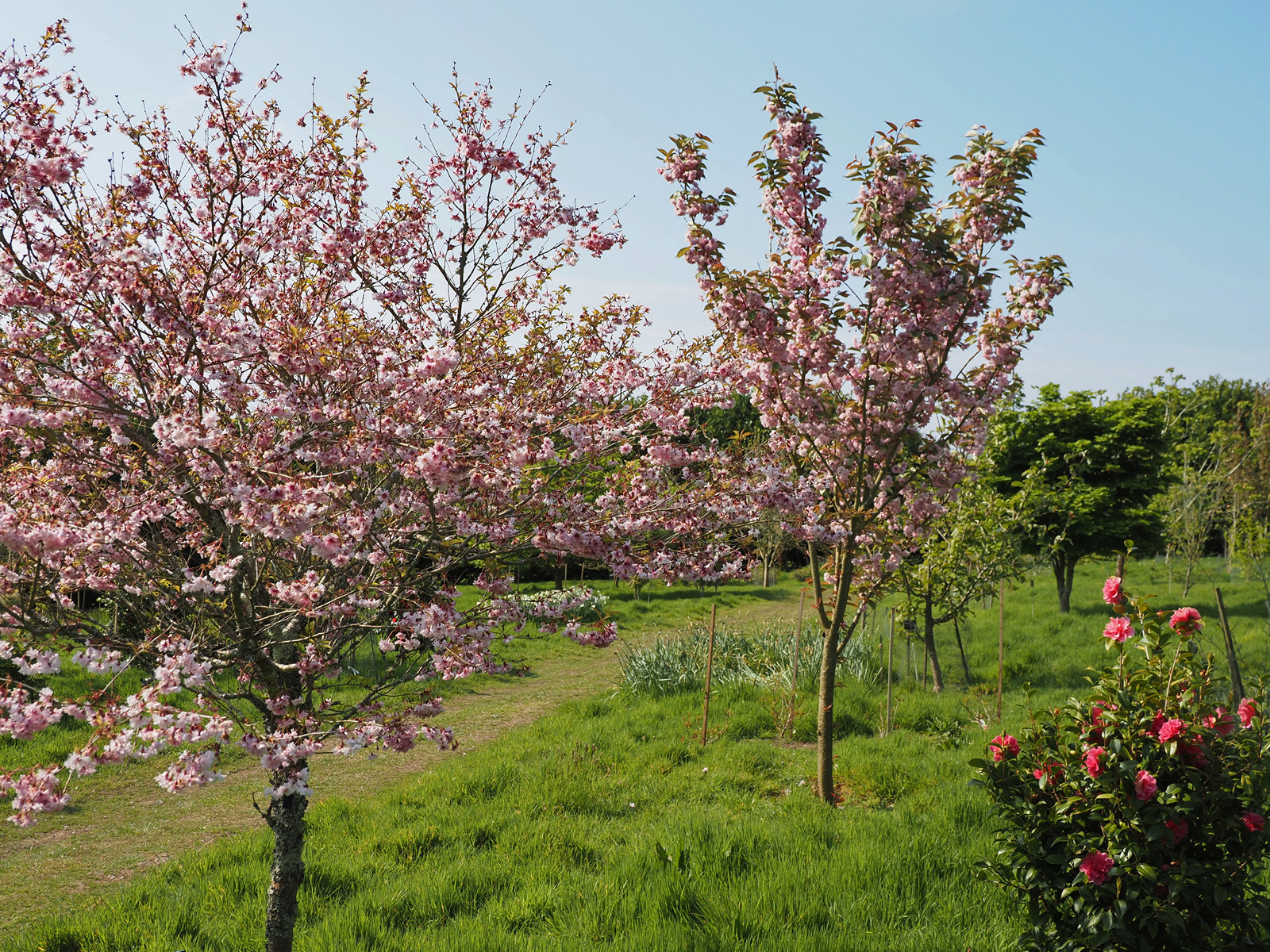
Prunus ‘Hally Jolivette’ and Prunus ‘Hokusai’ – together in the sun.
Prunus ‘Hally Jolivette’
2021 – CHW
Still a howling (warm) easterly wind.
A carpet of mainly large white flowered wild violets above Crinodendron Hedge in and above the new planting where the soil was exposed after our tree felling. As we saw they are predominantly purple and smaller flowered on Sinogrande Walk.
violets
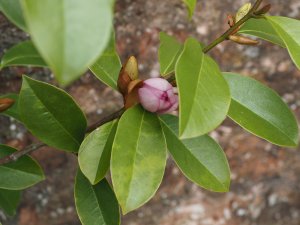
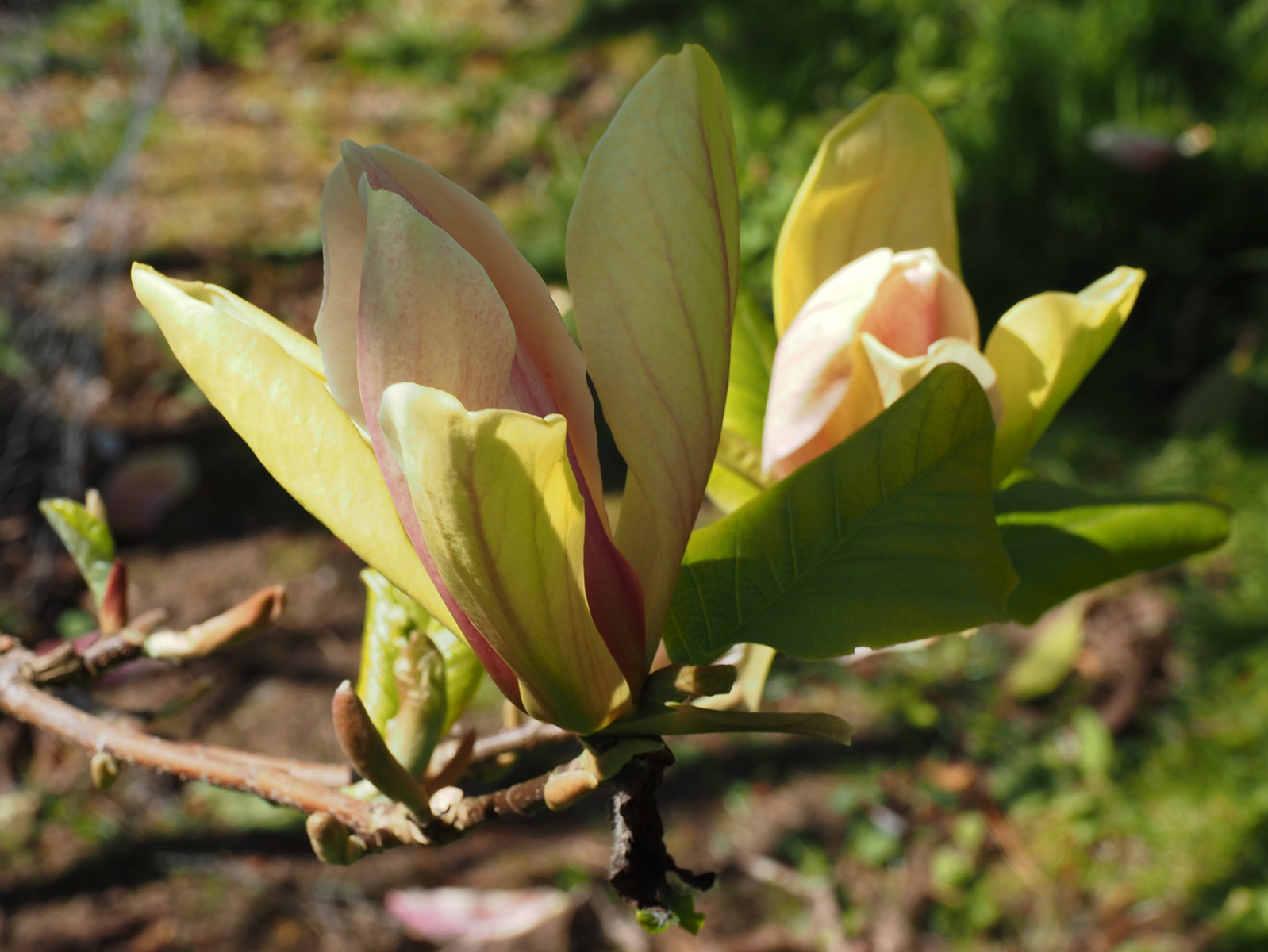
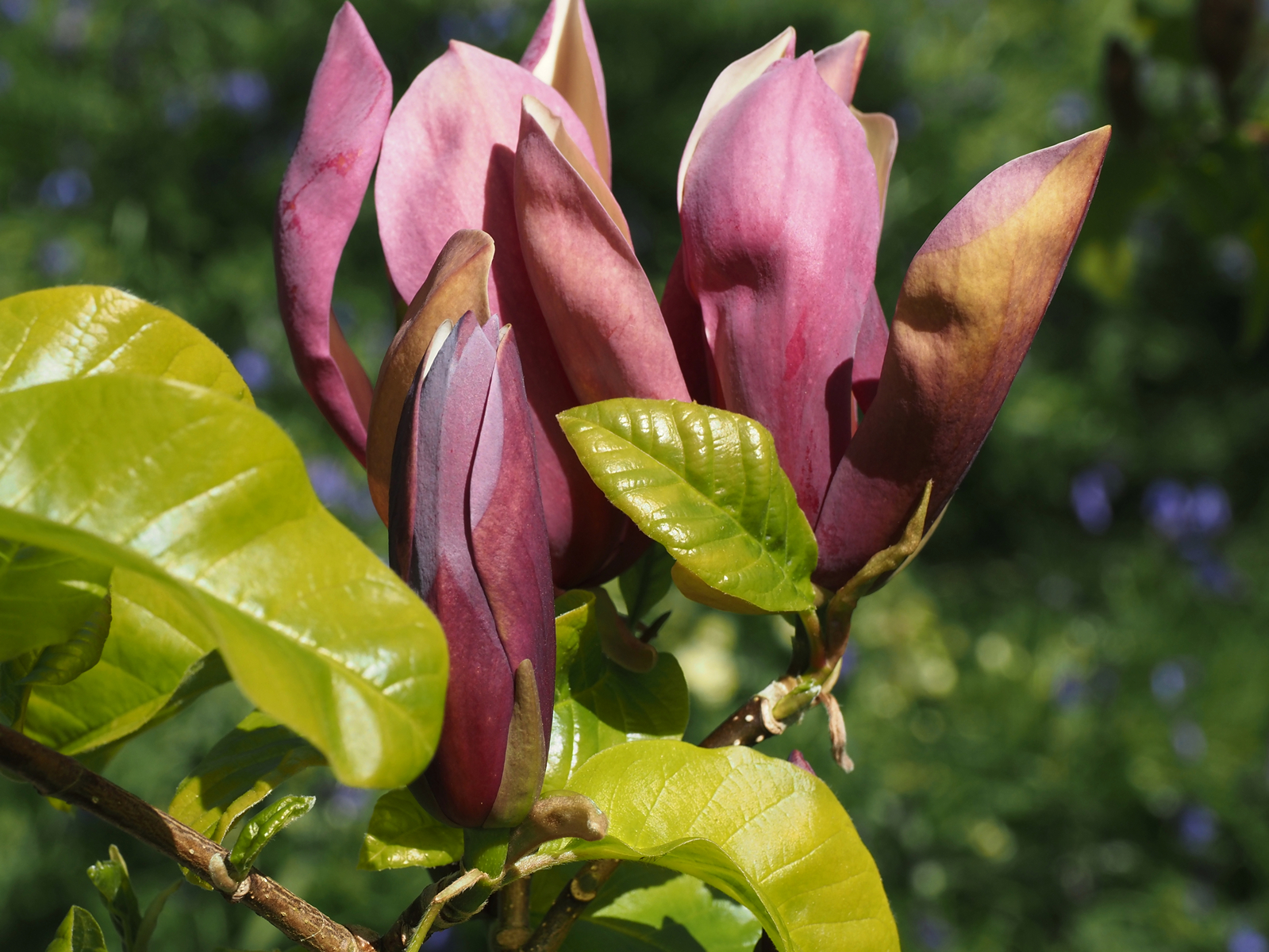
Magnolia x brooklynensis ‘Woodsman’ x Magnolia ‘Pink Surprise’ which is now called ‘LADY WOODSMAN’ or so I read in the Eisenhut book.
‘LADY WOODSMAN’‘LADY WOODSMAN’
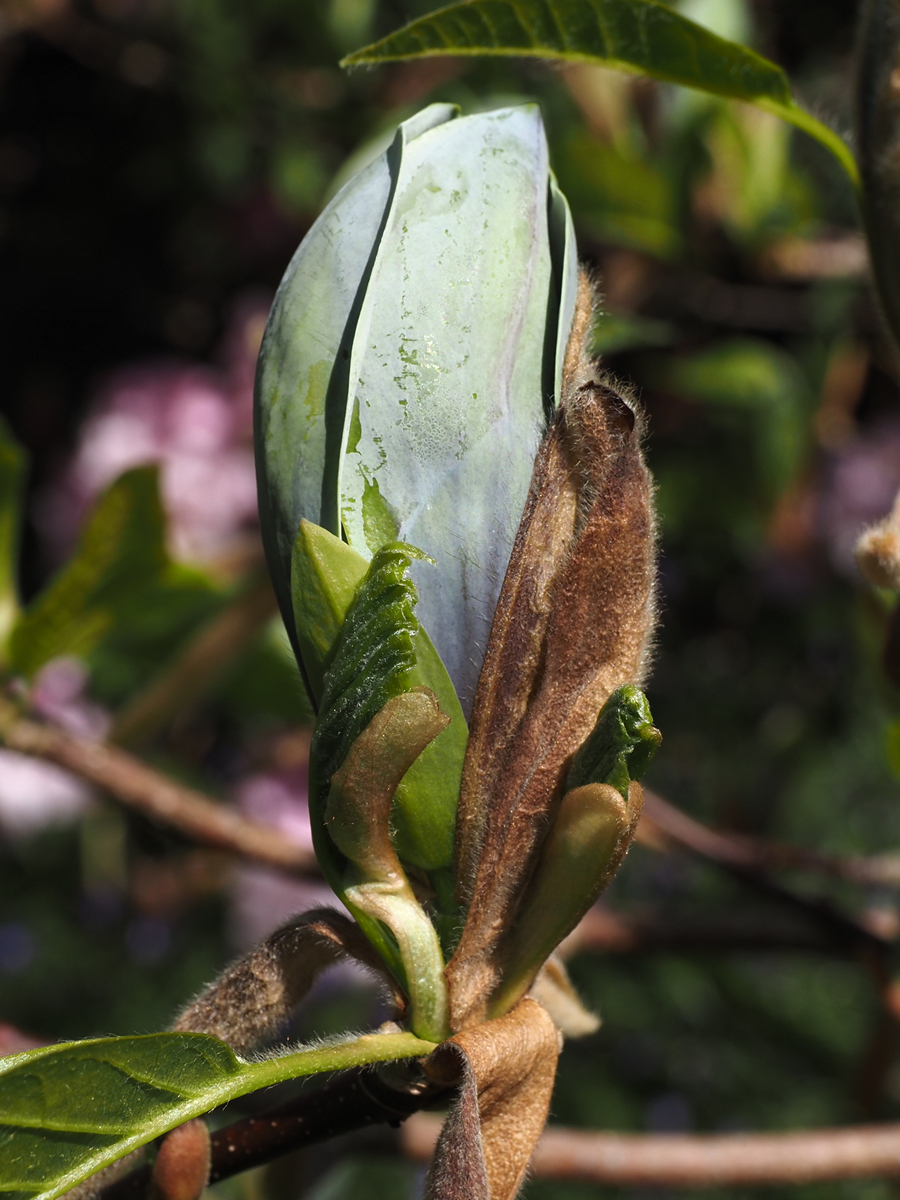
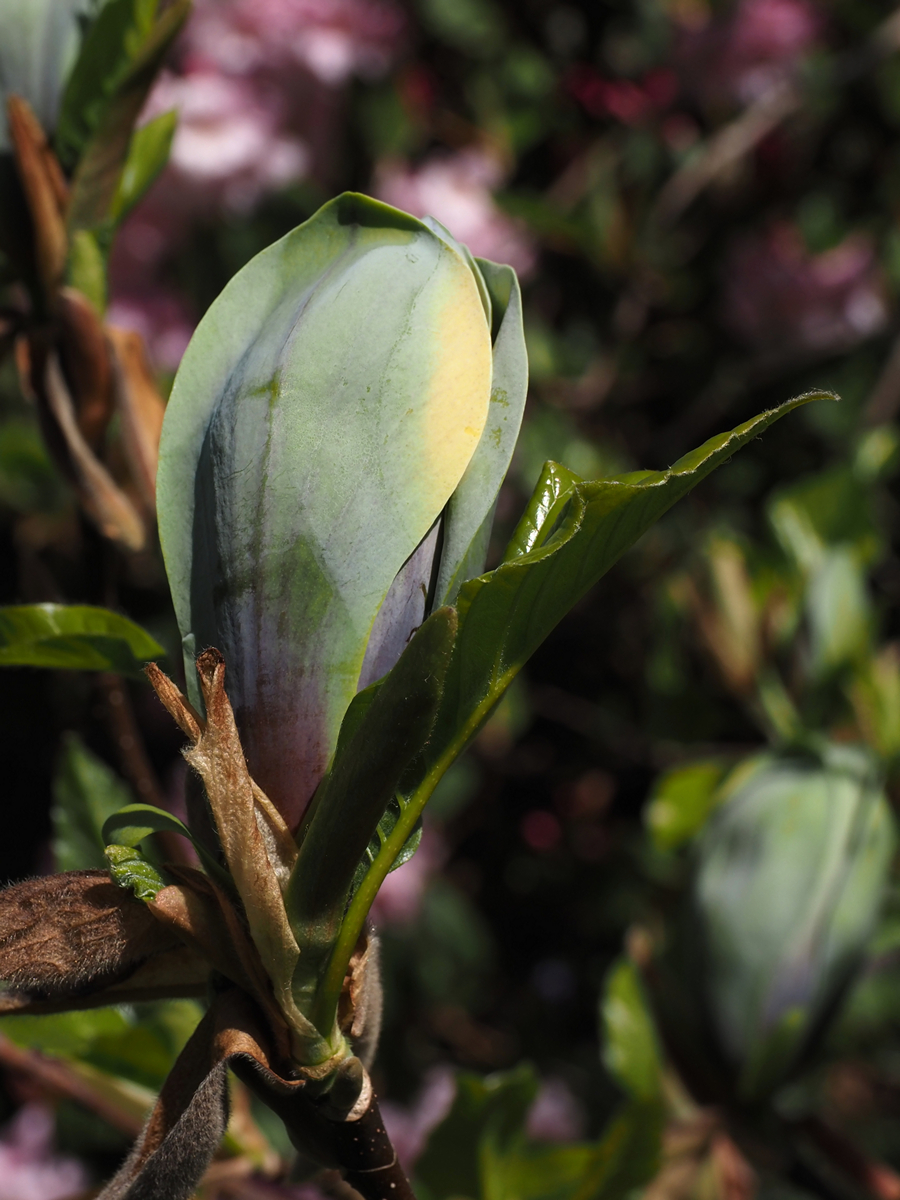
Magnolia x brooklynensis ‘Woodsman’ x Magnolia ‘Patriot’ with its extraordinary blue flowers.
Magnolia x brooklynensis ‘Woodsman’ x Magnolia ‘Patriot’Magnolia x brooklynensis ‘Woodsman’ x Magnolia ‘Patriot’
Magnolia x brooklynensis ‘Black Beauty’ at its very best.
Magnolia x brooklynensis ‘Black Beauty’Magnolia x brooklynensis ‘Black Beauty’
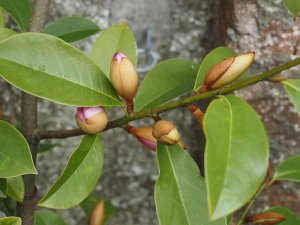
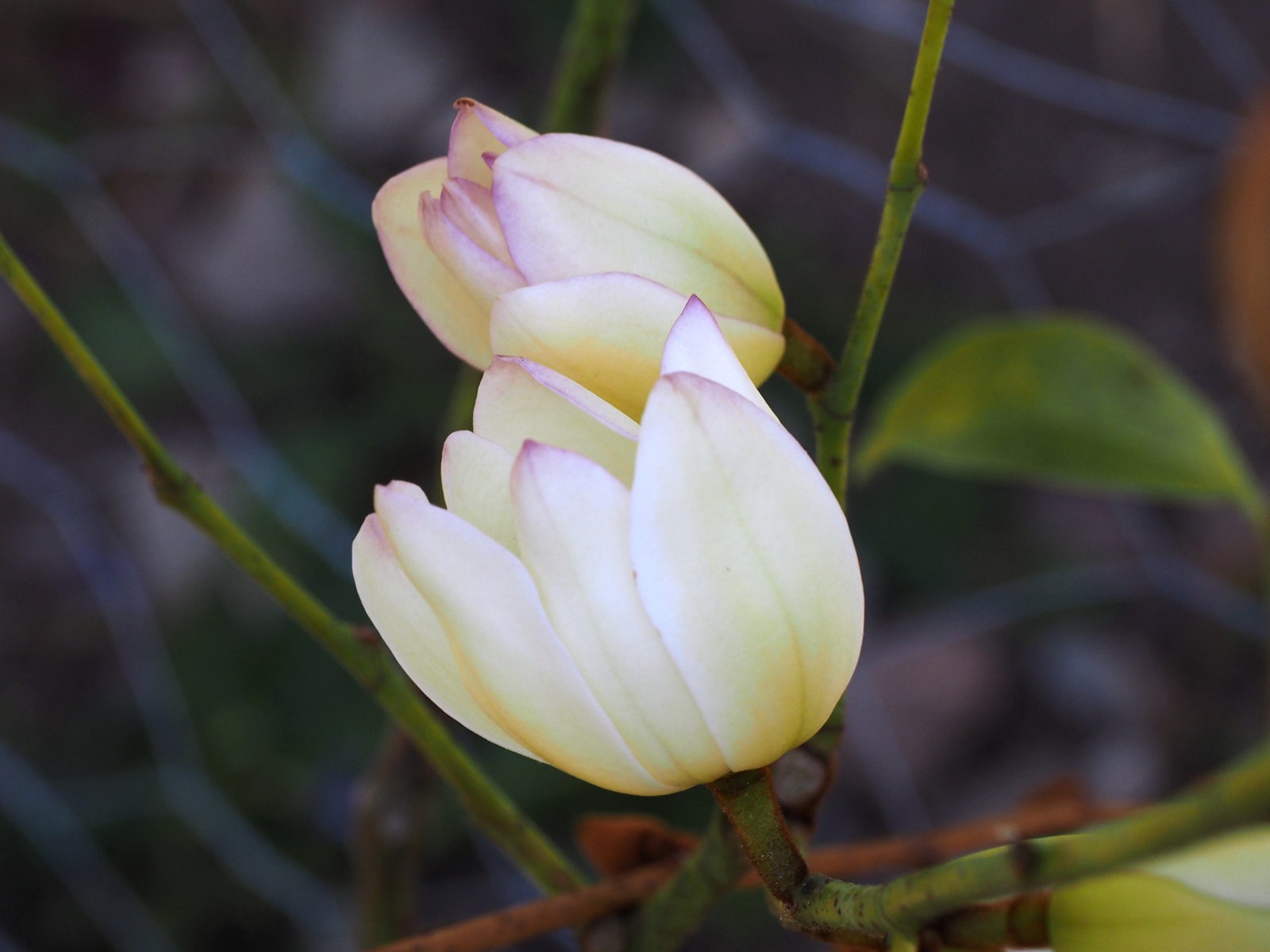
Michelia ‘Fairy Lime’ with pink tips to its petals.
Michelia ‘Fairy Lime’
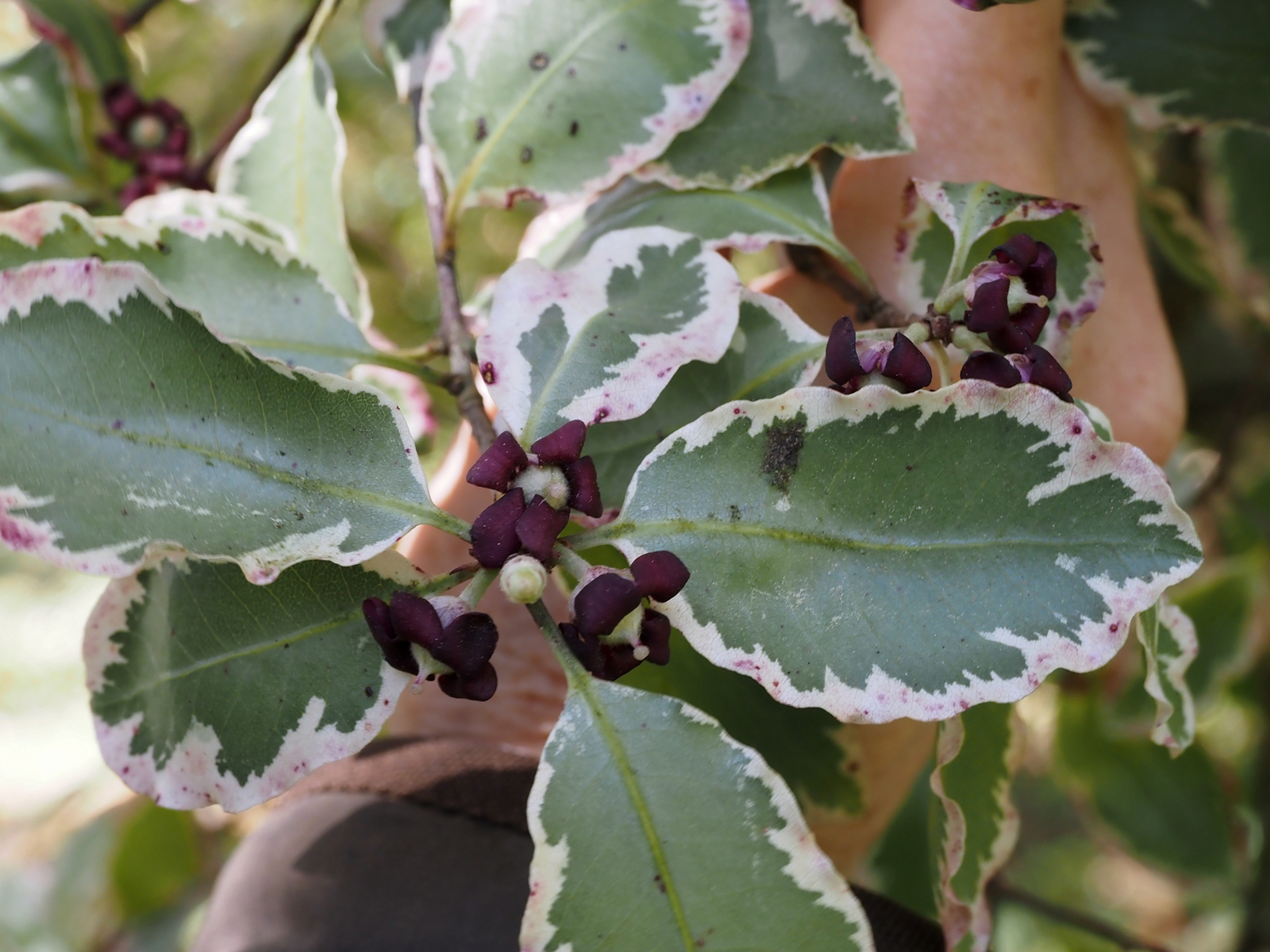
Pittosporum tenuifolium ‘Garnettii’ with a lovely contrast between variegated leaf and purple-black flowers.
Pittosporum tenuifolium ‘Garnettii’
Another superb Rhododendron niveum full out above Orchid House Nursery.
Rhododendron niveum
Acer palmatum ‘Orange Dream’ just in leaf with Rhododendron niveum.
Acer palmatum ‘Orange Dream’
One of Dad’s hybrids (unnamed) Rhododendron ‘Elizabeth’ x Rhododendron ‘Charles Michael’. This one (in a group of three) very nearly ‘Charles Michael’ which had died out on us but still hangs in there at Burncoose.
Rhododendron ‘Elizabeth’ x Rhododendron ‘Charles Michael’Rhododendron ‘Elizabeth’ x Rhododendron ‘Charles Michael’
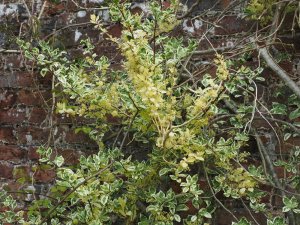
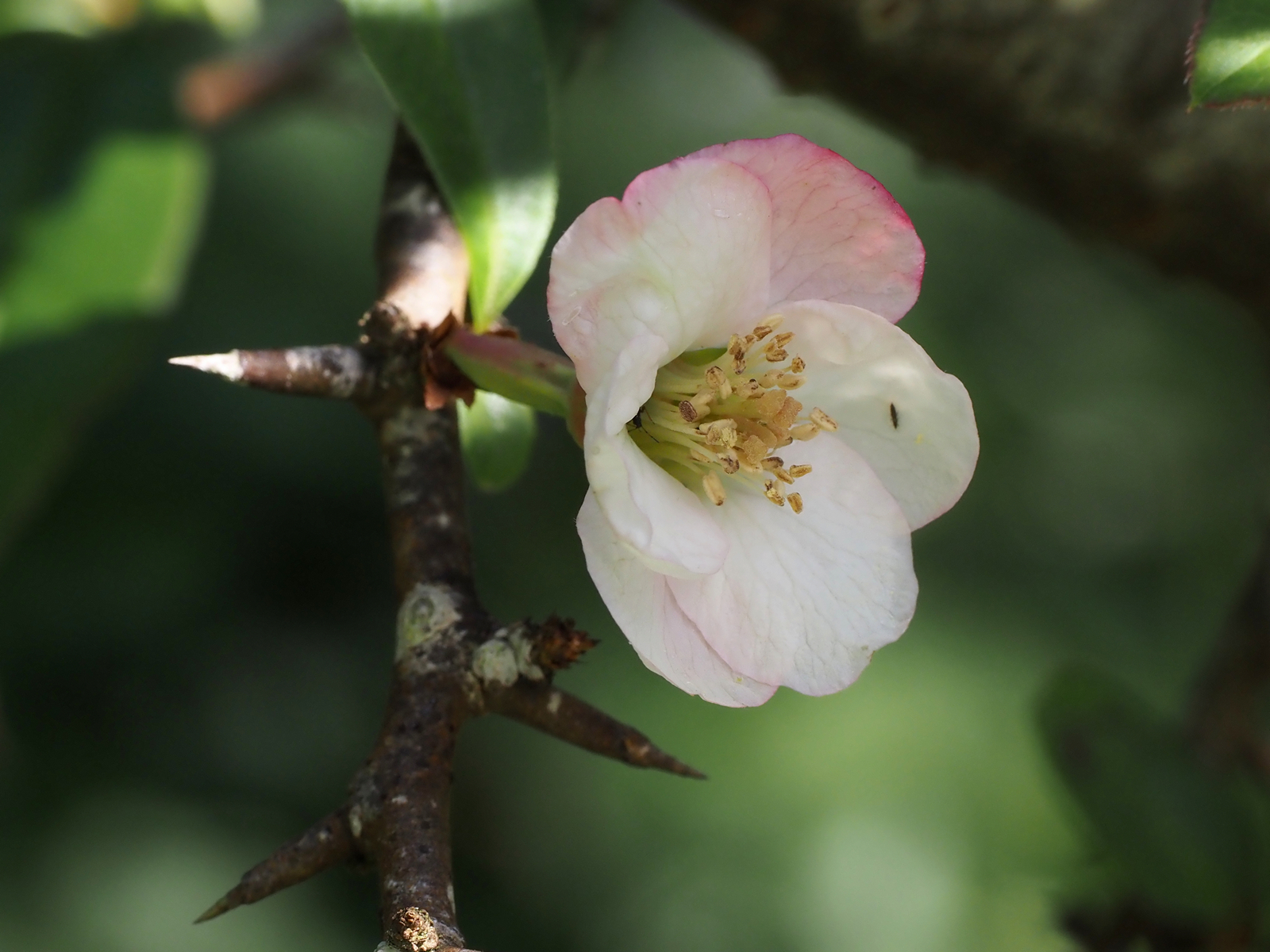
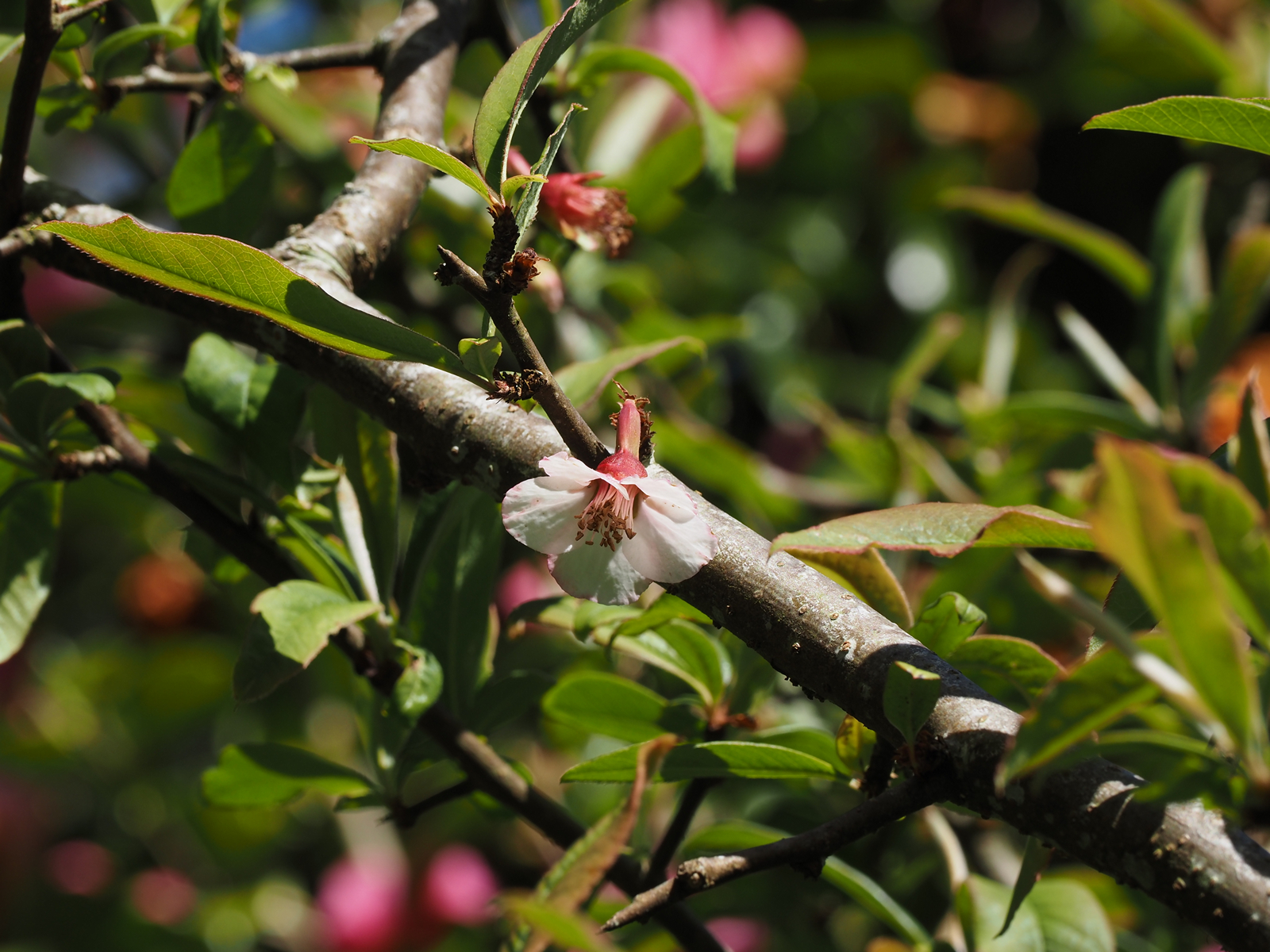
Then a real find hidden away above Crinodendron Hedge. Two Chaenomeles of which I had only ever seen one in flower. Both very old indeed. This one a tall multi stemmed shrub with single white flowers tinged pink. You can see the quinces beginning to form where the flowers have now largely finished. Nasty prickles! This is more or less certainly the true species – Chaenomeles cathayensis.
Chaenomeles cathayensisChaenomeles cathayensis
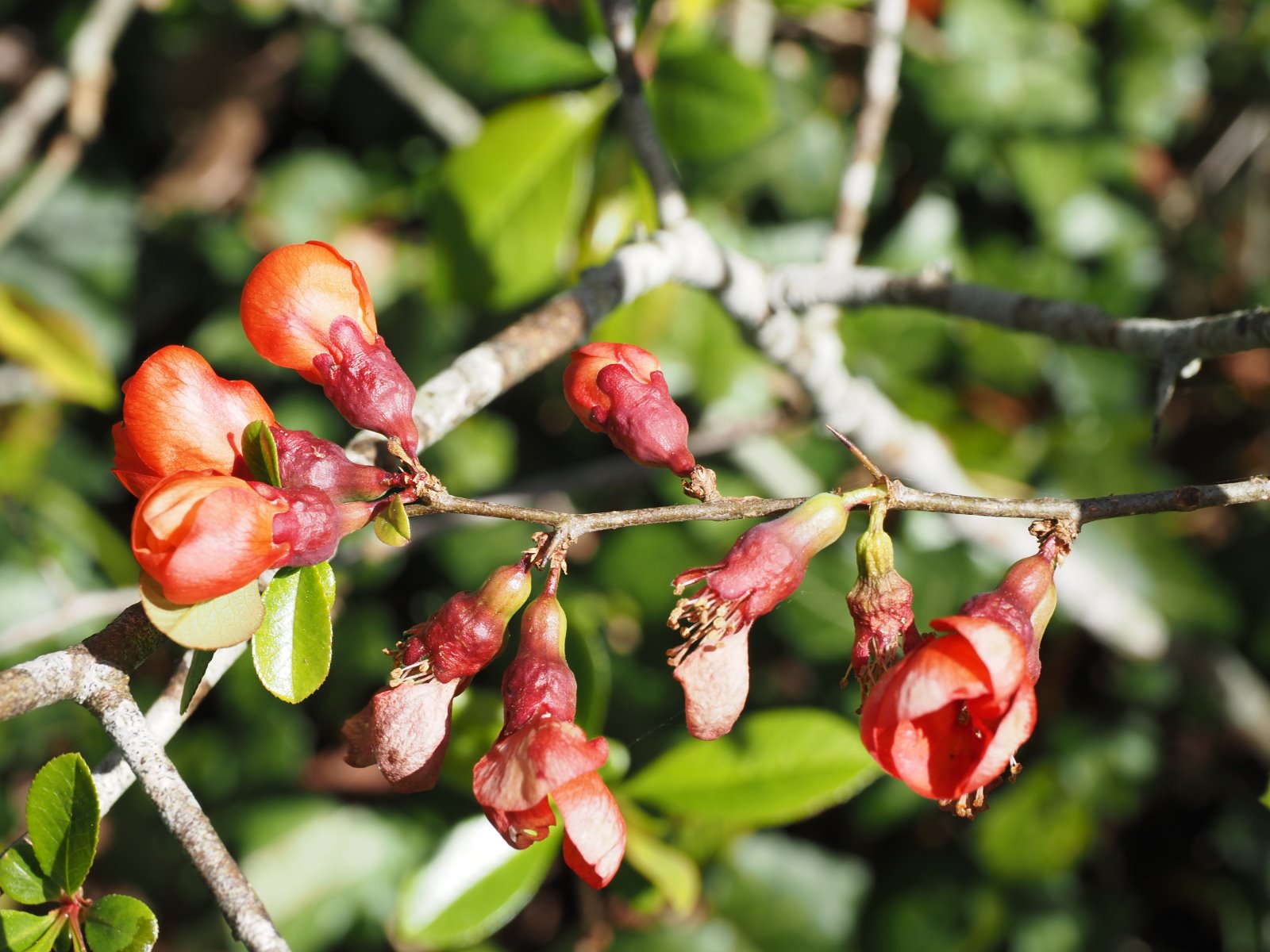
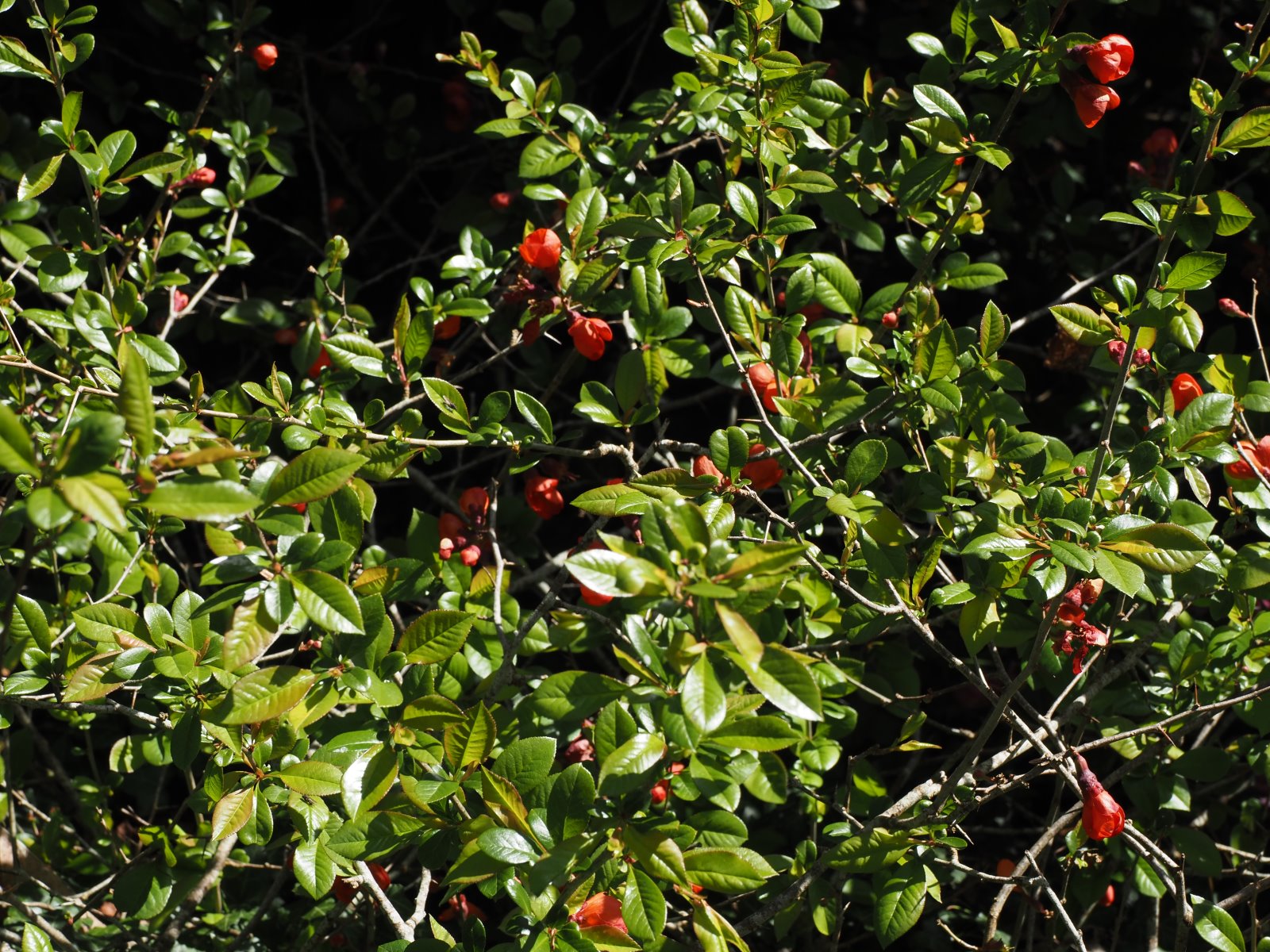
The second one is a small spreading shrub with single orange flowers. Very probably the true species; Chaenomeles japonica or Cydonia japonica.
Chaenomeles japonicaChaenomeles japonica
I watched a Plant Heritage webinar on the National Collection of Chaenomeles earlier last week. The collection holder, David Ford, has 109 varieties in Surrey and all are grown in pots in his garden.
Japanese quinces may be Pyrus, or they may be Cydonia. No one is really sure of their origins. Chaenomeles are recorded as being on sale in a Bristol nursery in 1870 but were introduced to the UK 100 years earlier by Joseph Banks. Of the four species only forms of C. superba and C. x speciosa varieties are generally available to gardeners today as these have the largest and most saleable flowers.
The original Caerhays collection which still exists today is therefore:
C. speciosa ‘Umbilicata’ – Slip Rail (deep salmon-pink and very early into flower with last year’s quinces still on the tree)
C. japonica – Crinodendron Hedge
C. cathayensis – Crinodendron Hedge (biggest fruits and biggest thorns)
Perhaps over 100 years old and certainly nearly centenarians.
The best modern or new varieties of flowering and fruiting Chaenomeles seen in the lecture were as listed below. Well worth obtaining for the next Burncoose catalogue if we can. In the USA there are 450 varieties of Chaenomeles in cultivation apparently.
C. speciosa ‘Mango Storm’ – has second flowering and rounded yellow fruits
C. speciosa ‘Madame Butterfly’ – pink/bicolour
C. speciosa ‘Salmon Horizon’
C. speciosa ‘Orange Storm’
C. x superba ‘Apple Blossom’ – pink and white – variegated
C. x superba ‘Issari White’ – tiny flowers in profusion
C. x superba ‘Pink Trail’ – white flowers age to pink
This website uses cookies to improve your experience. We'll assume you're ok with this, but you can opt-out if you wish.AcceptRead More
Privacy & Cookies Policy
Privacy Overview
This website uses cookies to improve your experience while you navigate through the website. Out of these, the cookies that are categorized as necessary are stored on your browser as they are essential for the working of basic functionalities of the website. We also use third-party cookies that help us analyze and understand how you use this website. These cookies will be stored in your browser only with your consent. You also have the option to opt-out of these cookies. But opting out of some of these cookies may affect your browsing experience.
Necessary cookies are absolutely essential for the website to function properly. This category only includes cookies that ensures basic functionalities and security features of the website. These cookies do not store any personal information.
Any cookies that may not be particularly necessary for the website to function and is used specifically to collect user personal data via analytics, ads, other embedded contents are termed as non-necessary cookies. It is mandatory to procure user consent prior to running these cookies on your website.