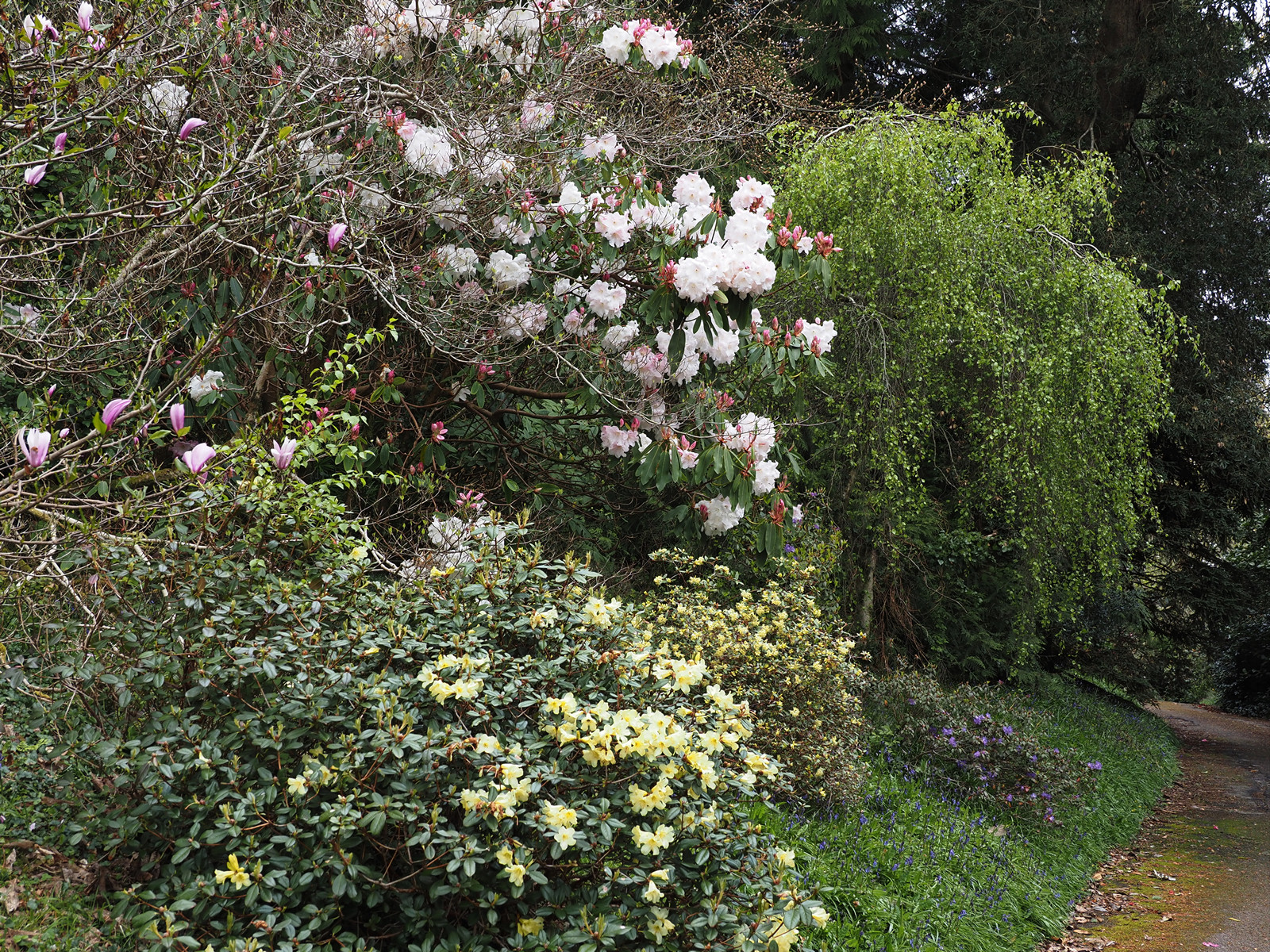
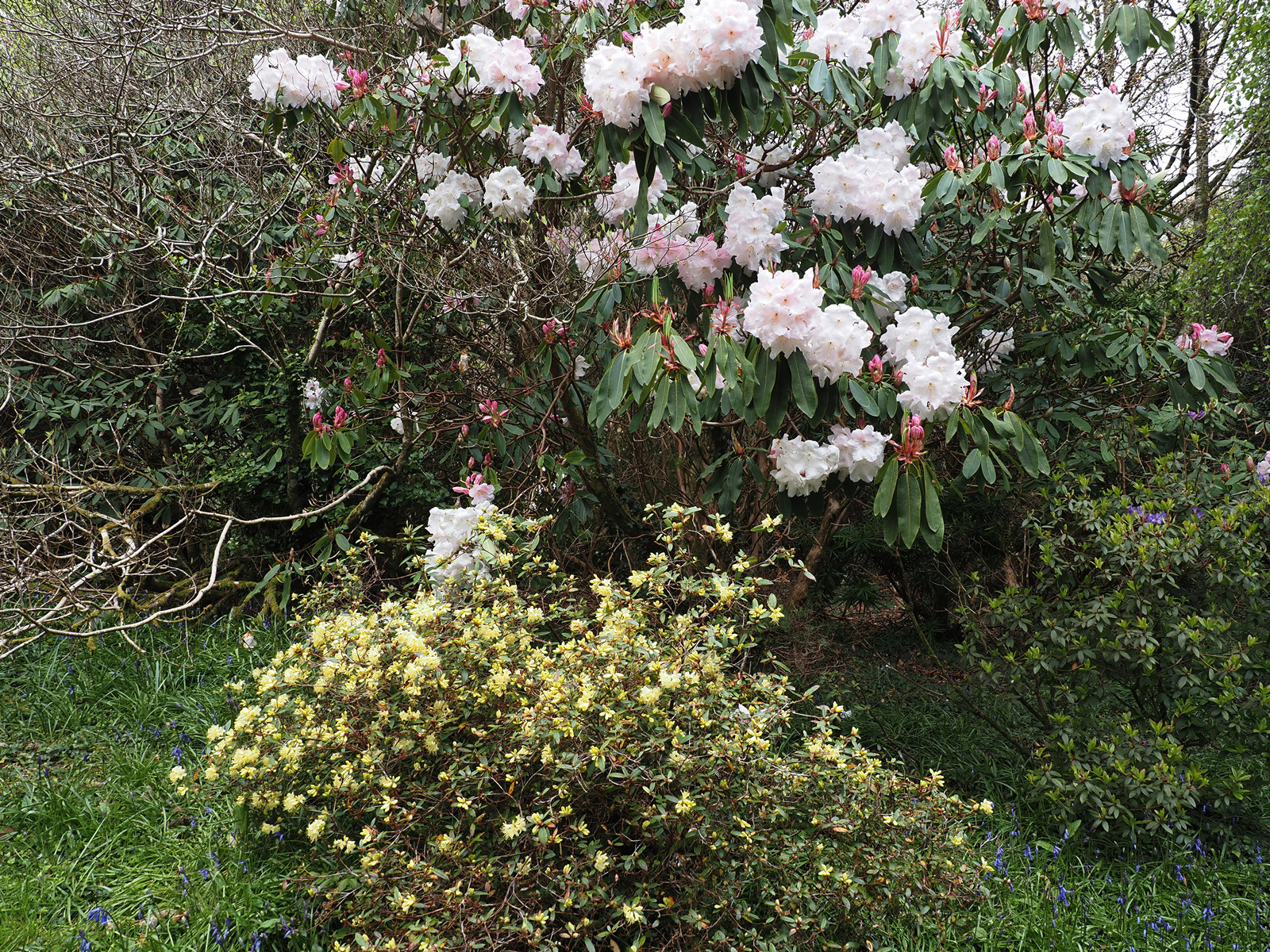
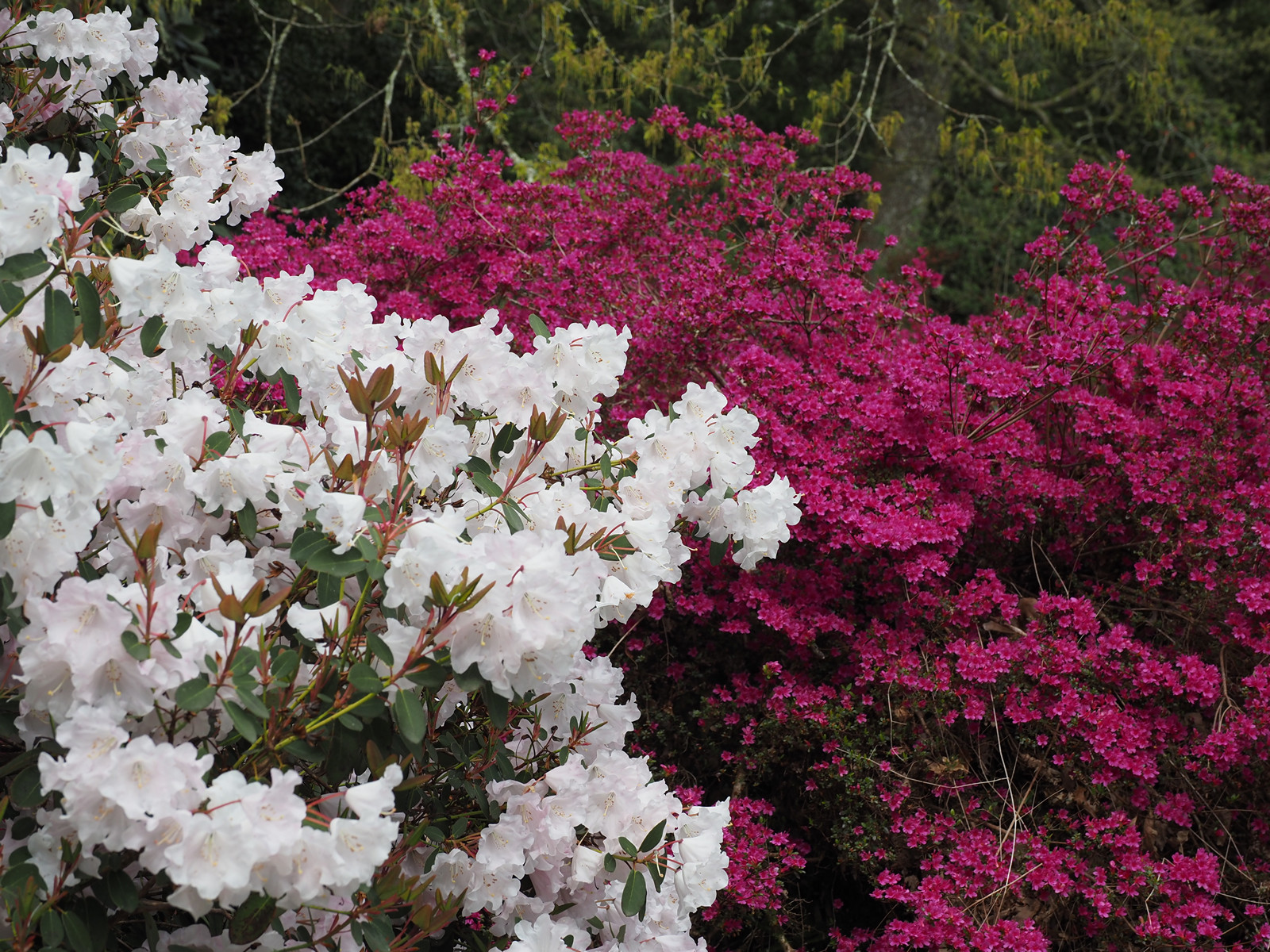
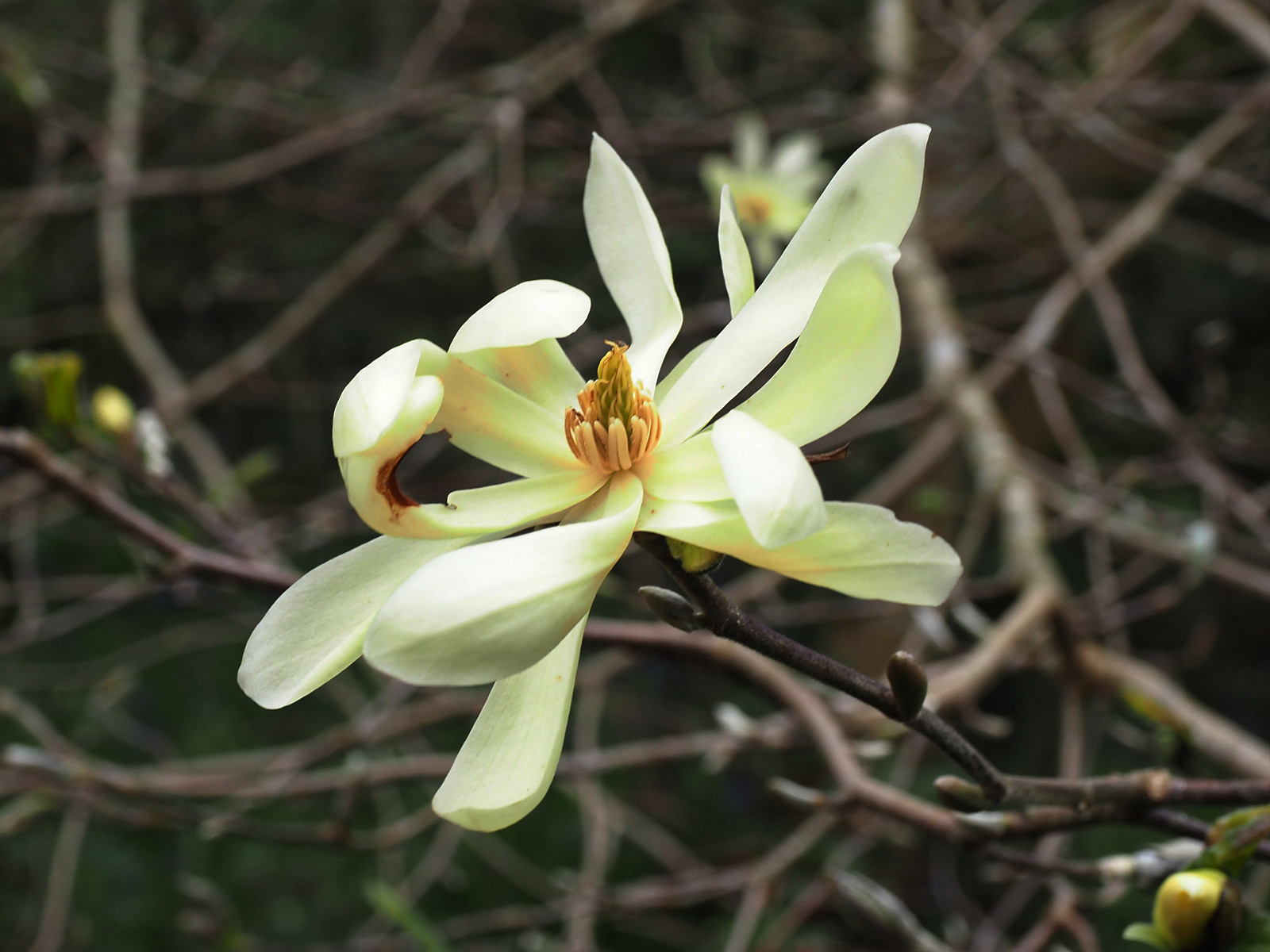
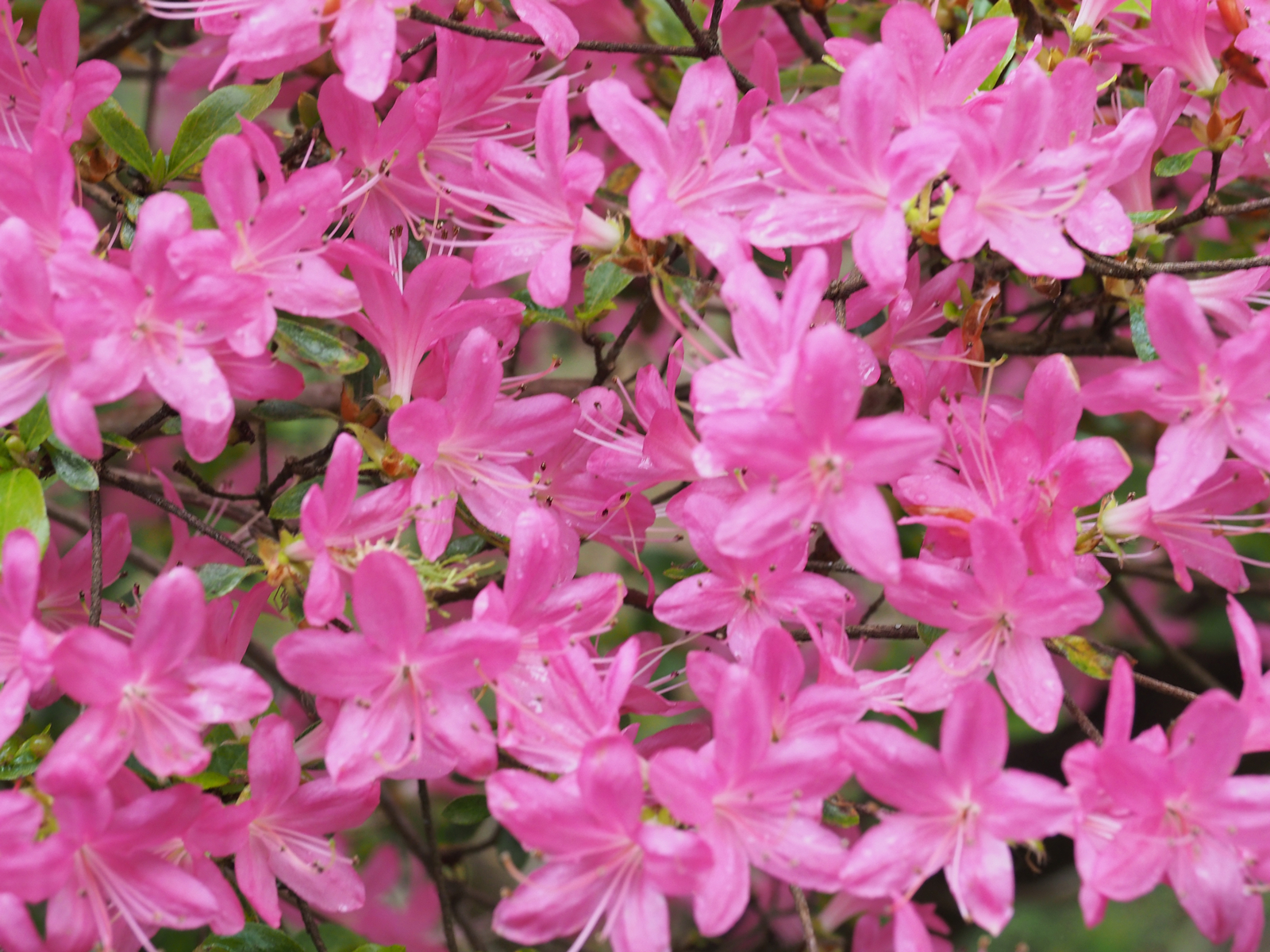
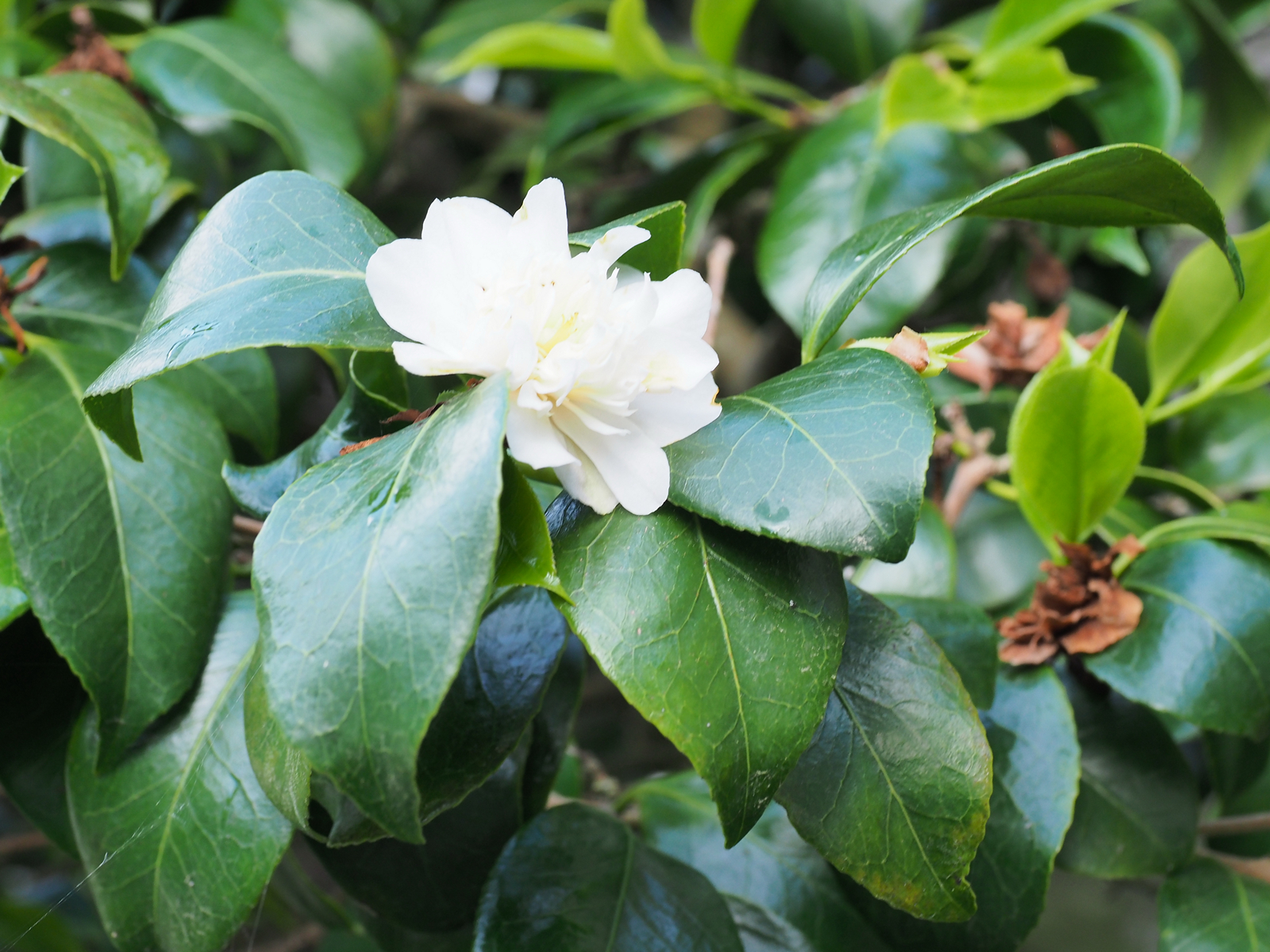
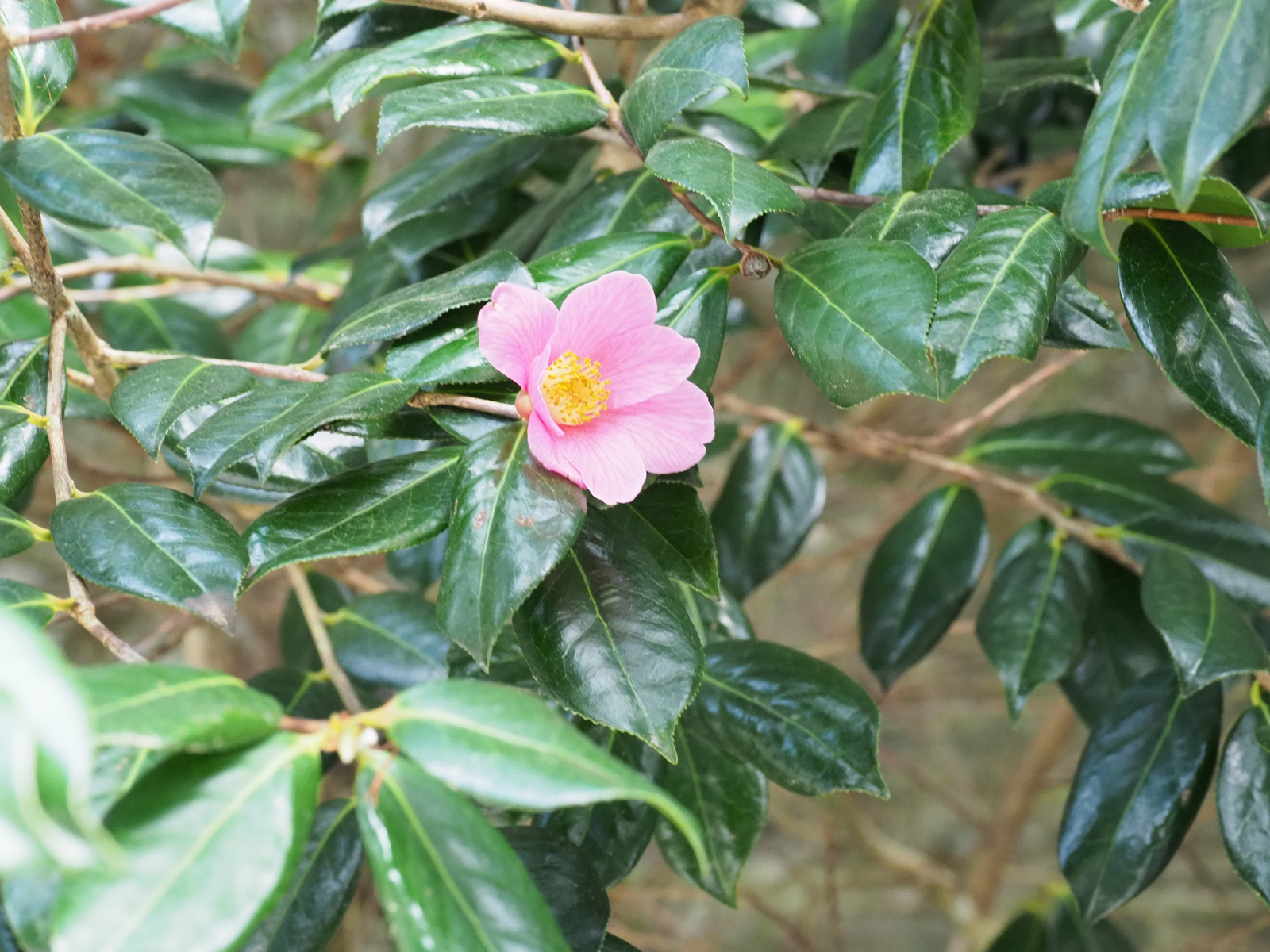
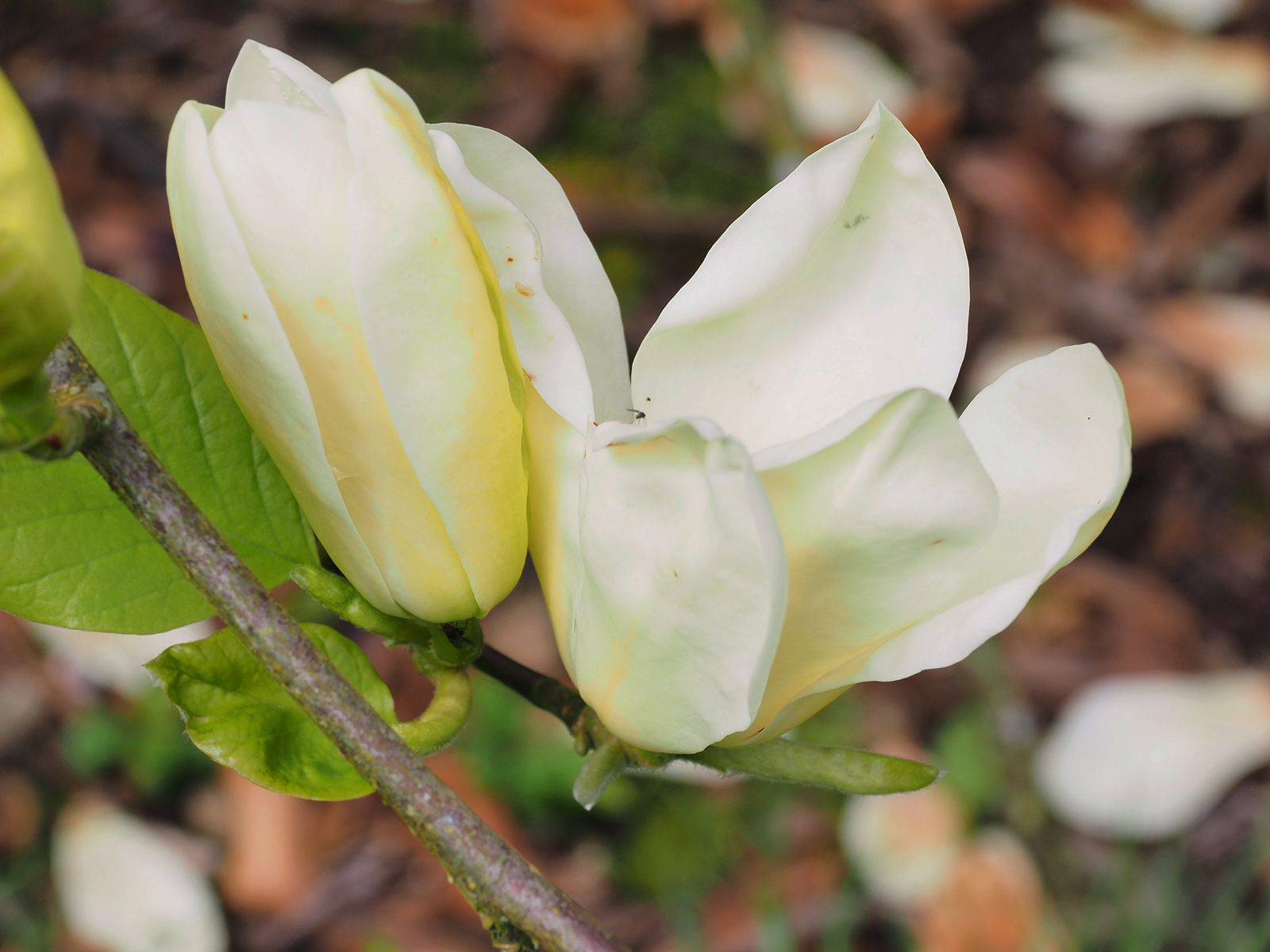
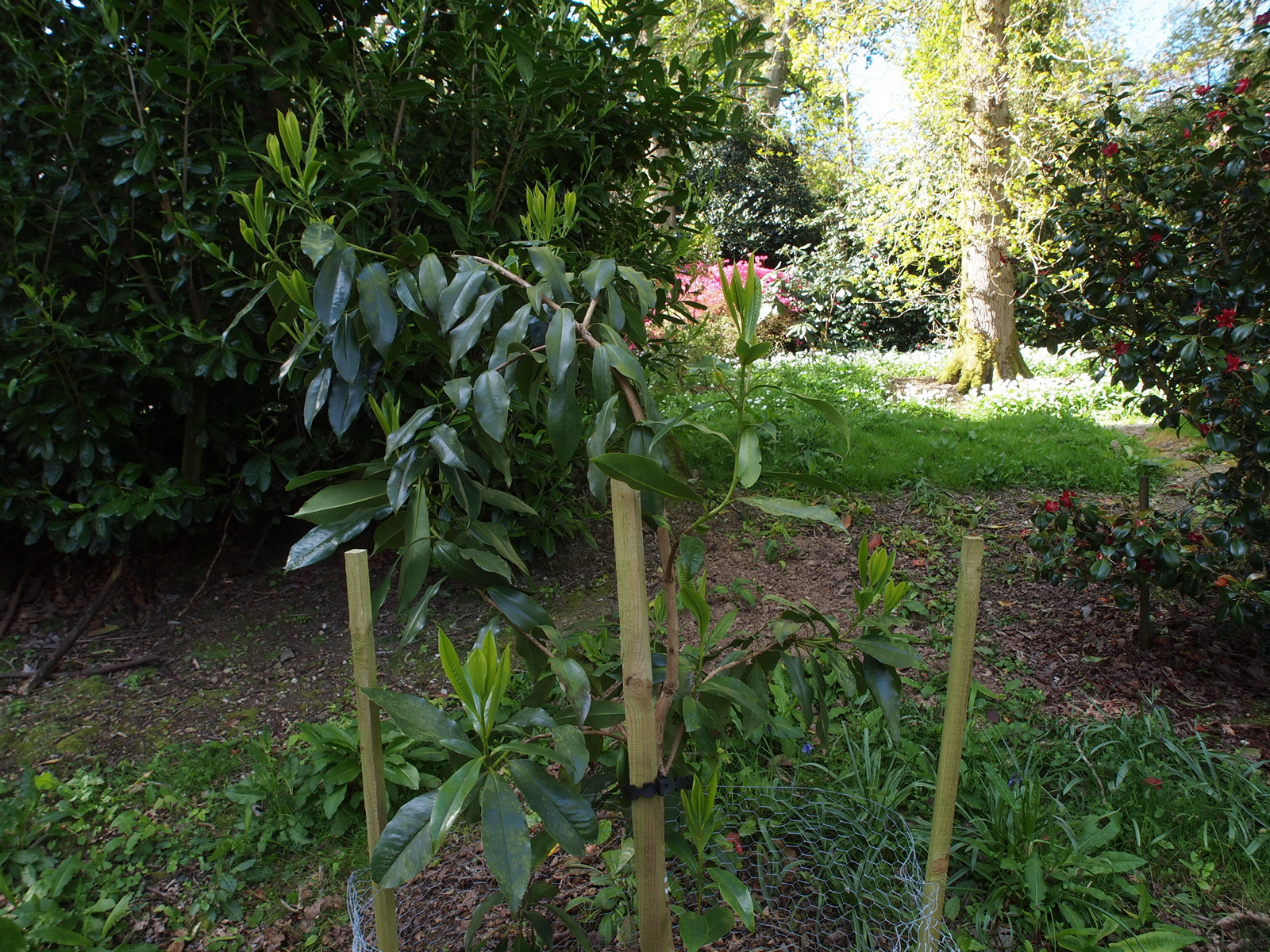
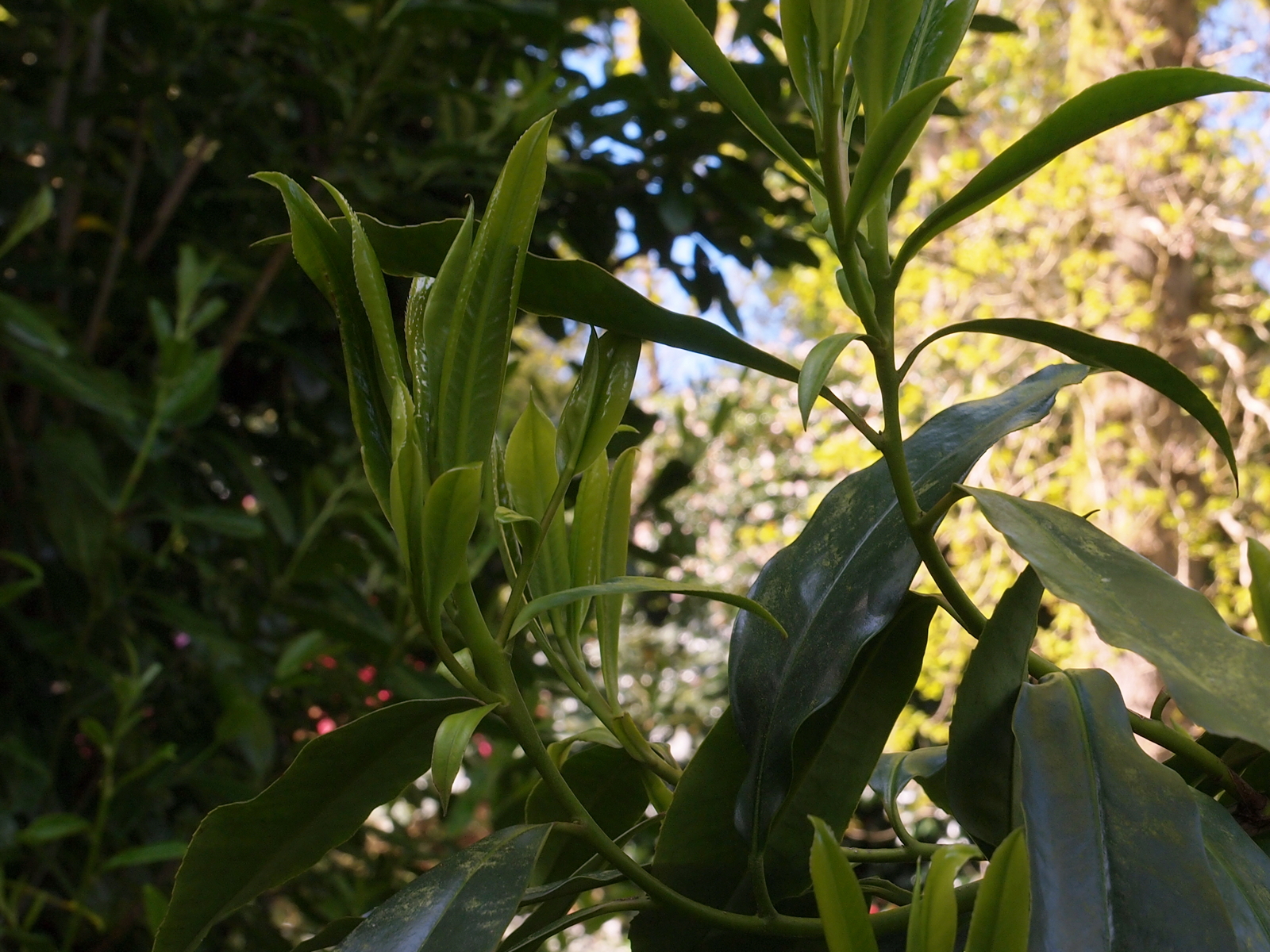
Castle Kennedy – the huge wisteria growing up the ruins was not in flower. Strangely a Gingko biloba growing from a corner.
Castle Kennedy
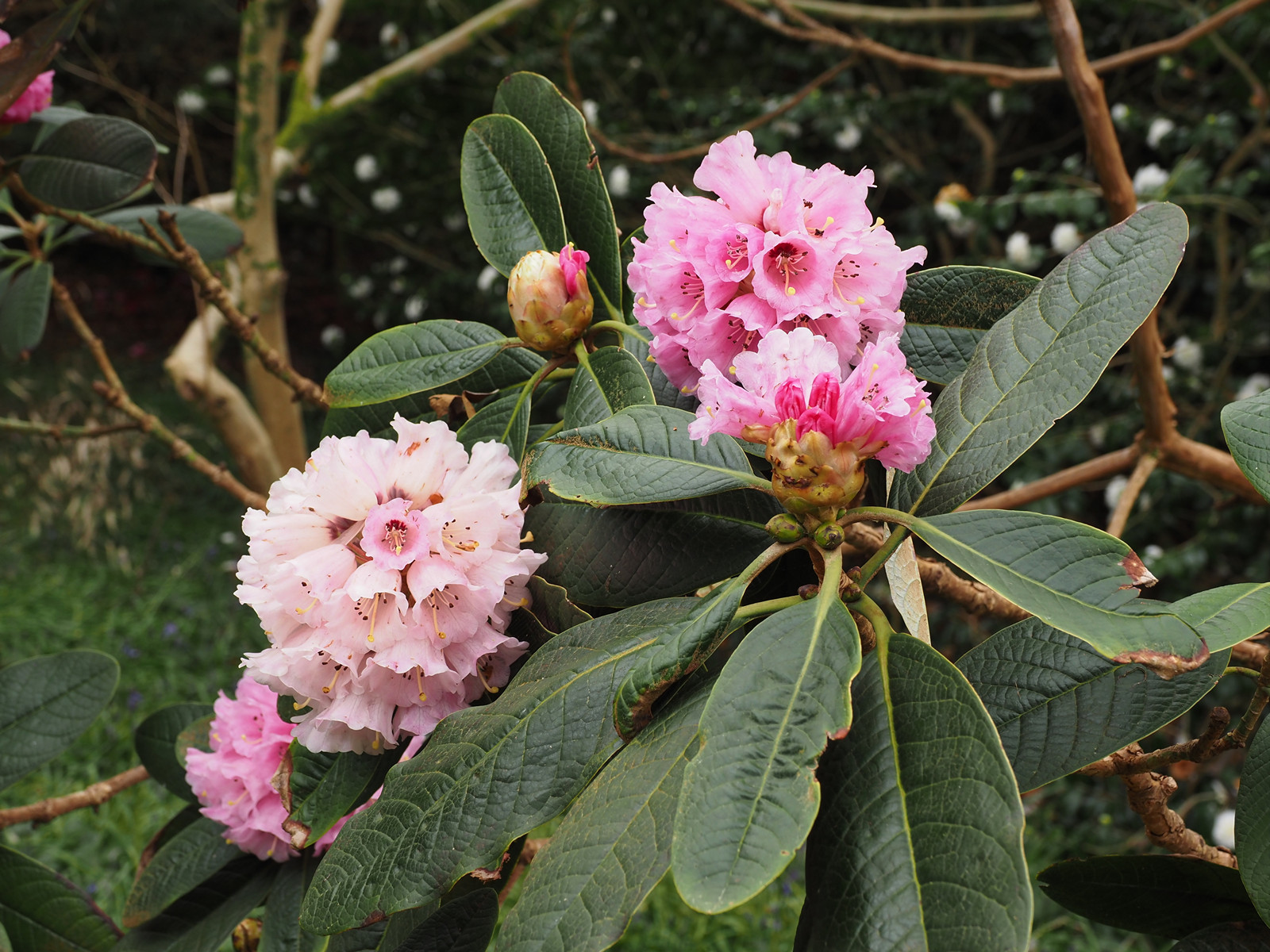
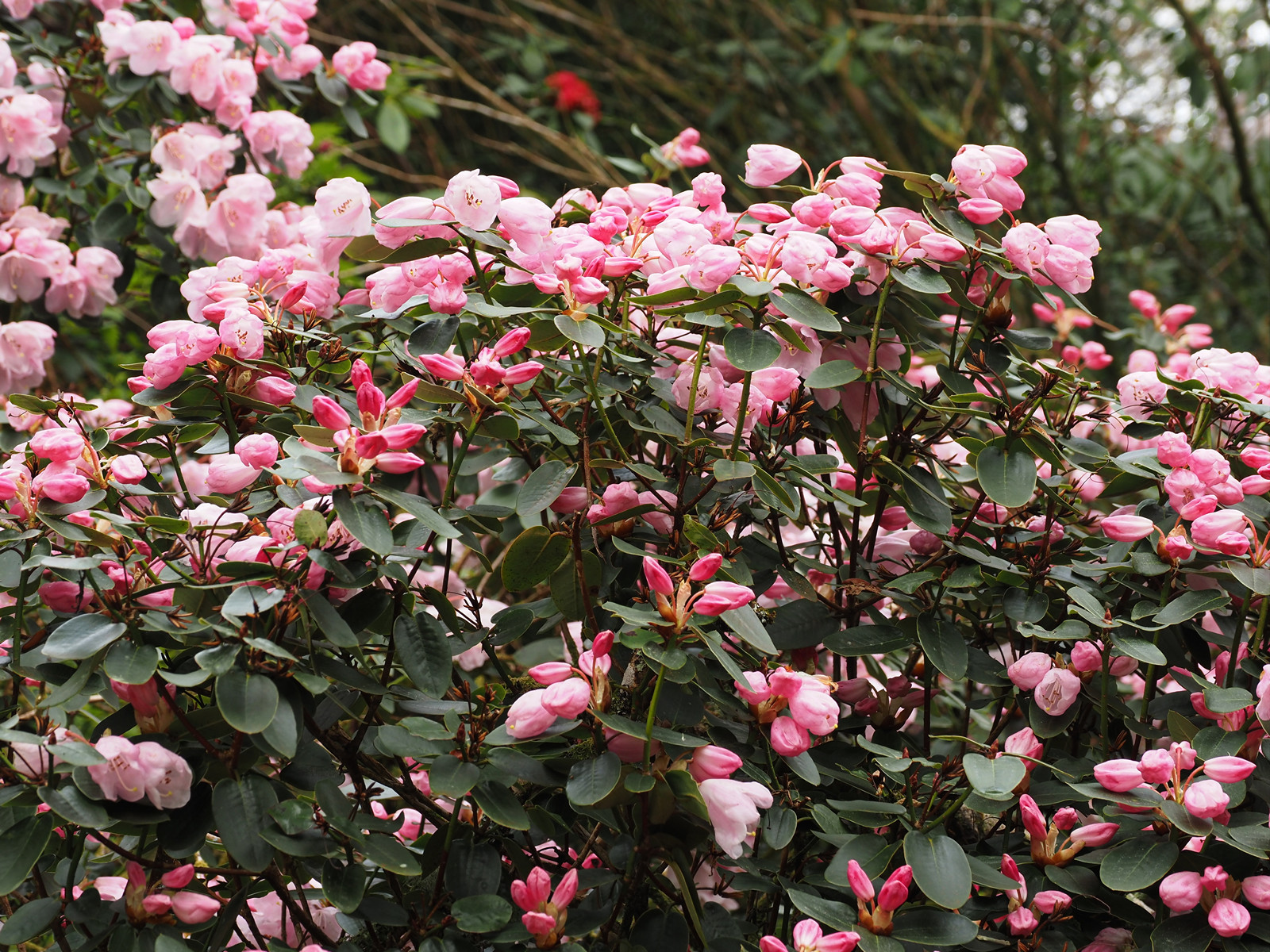
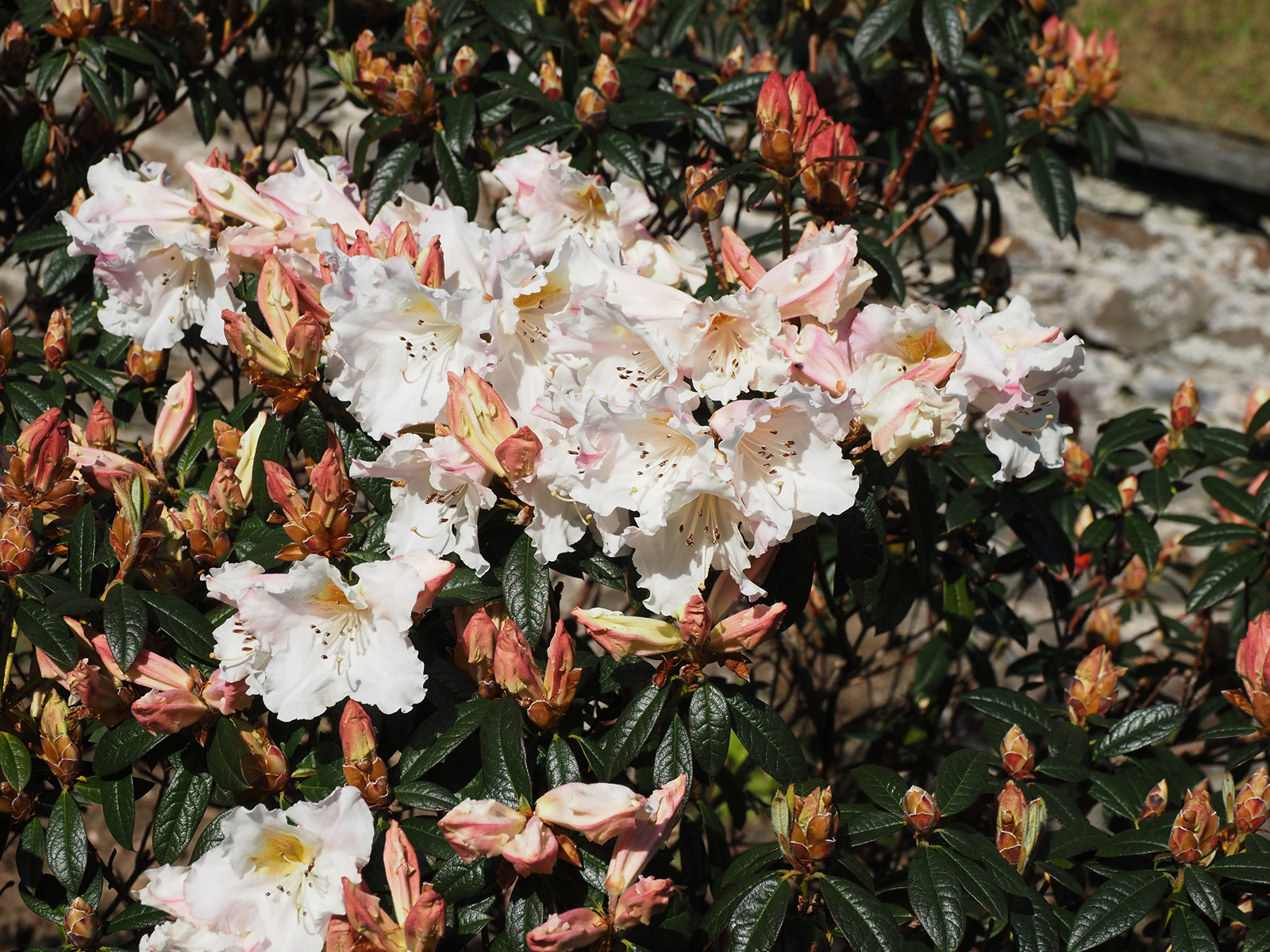
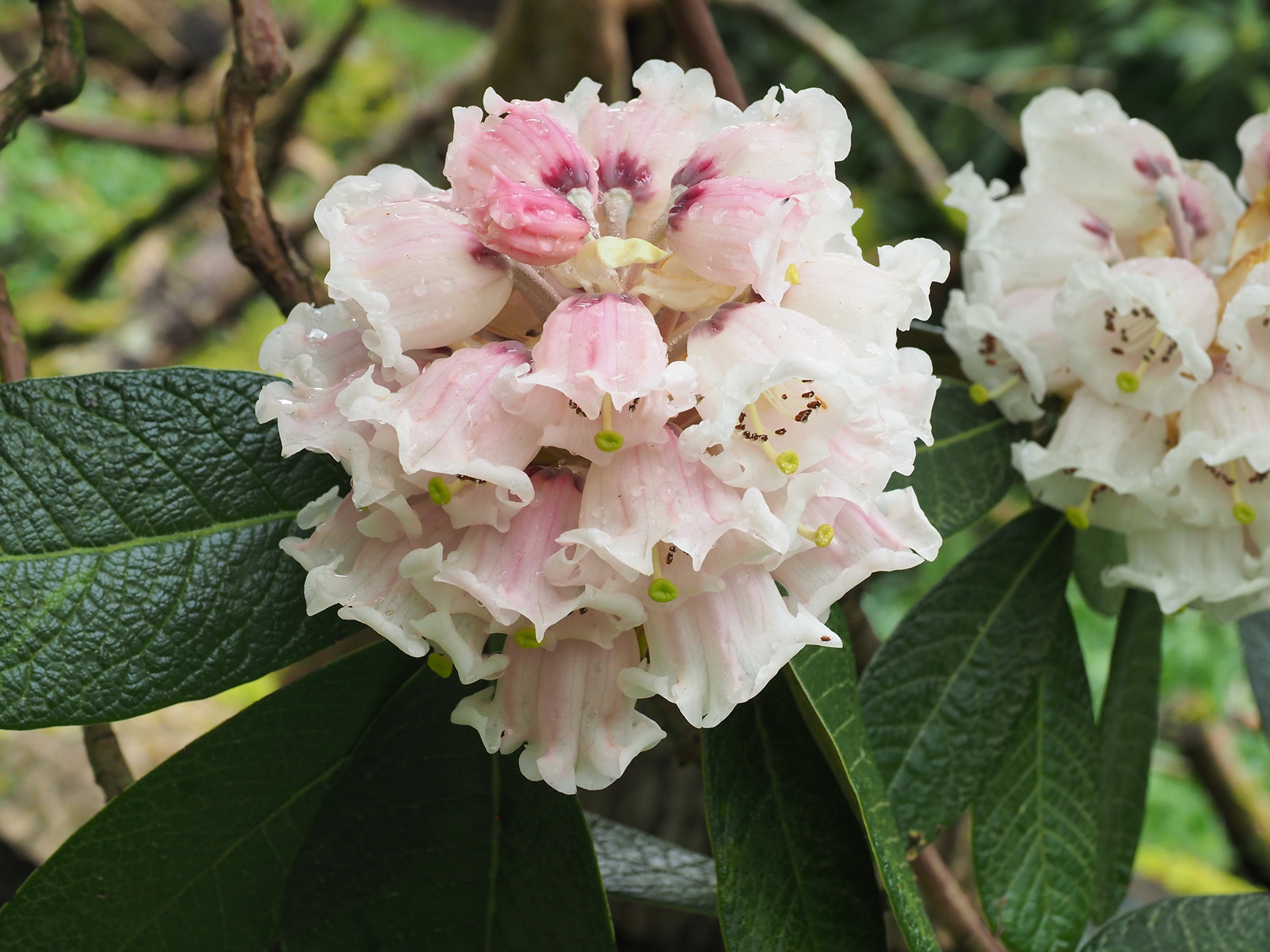
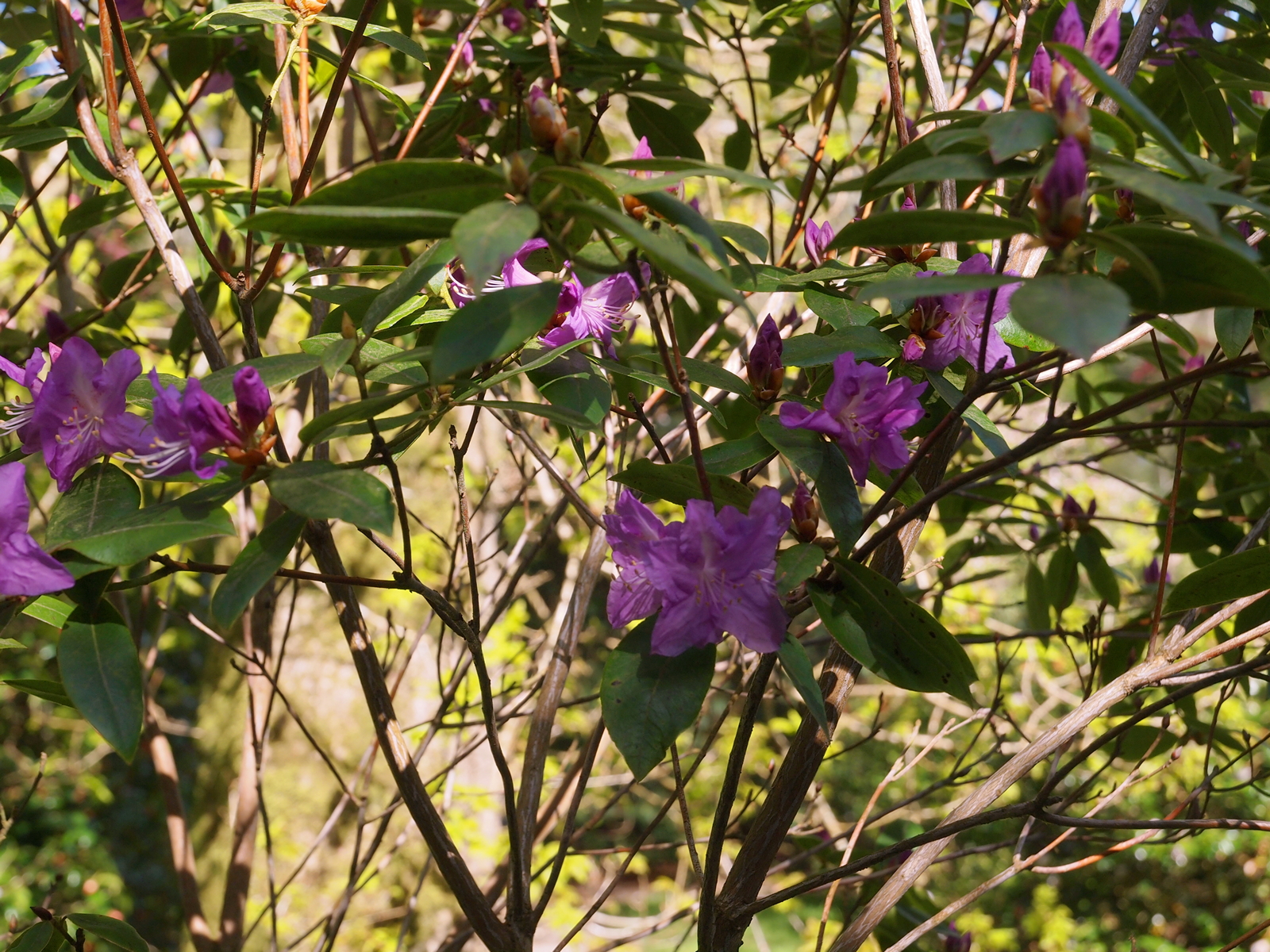
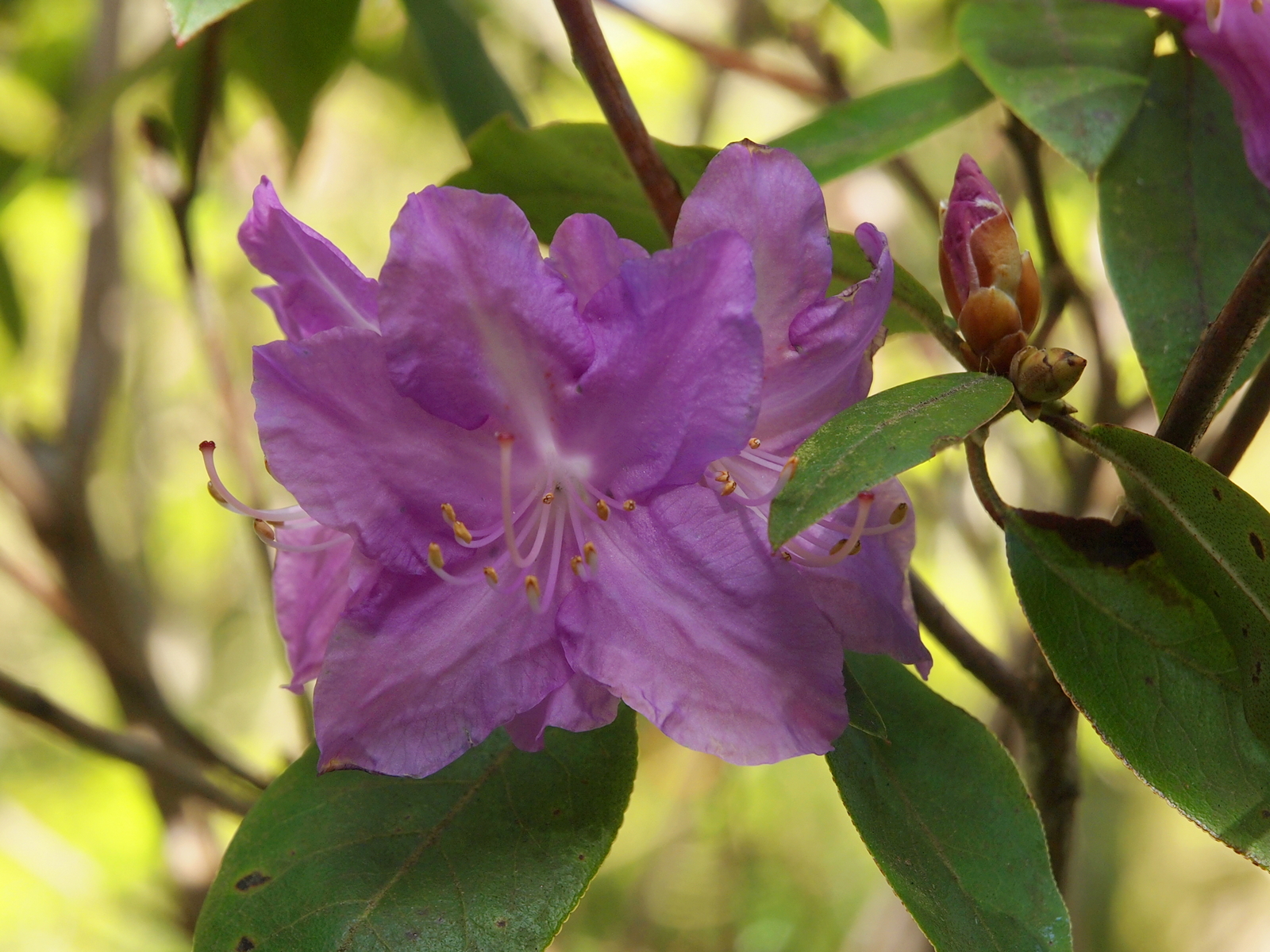
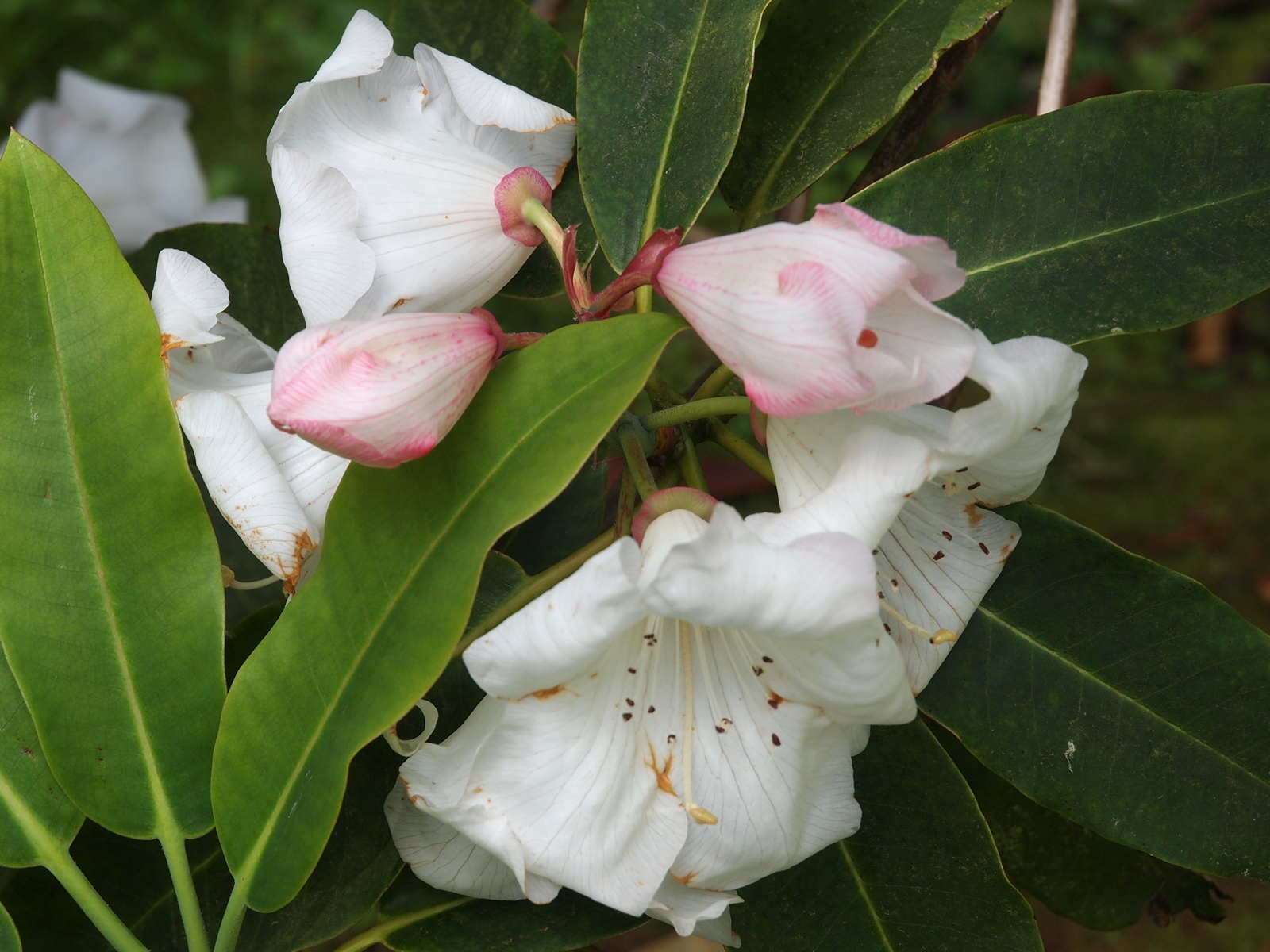
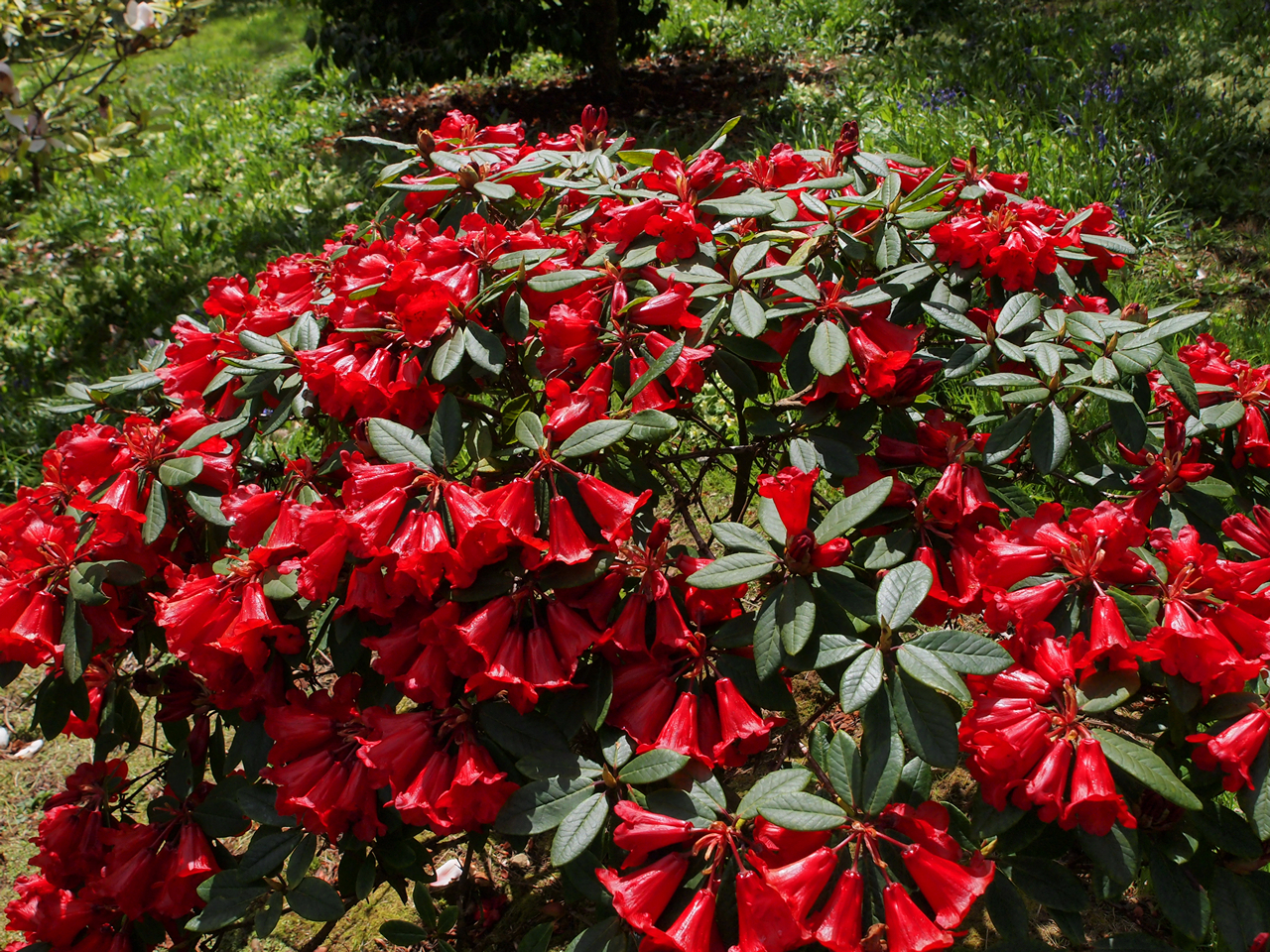
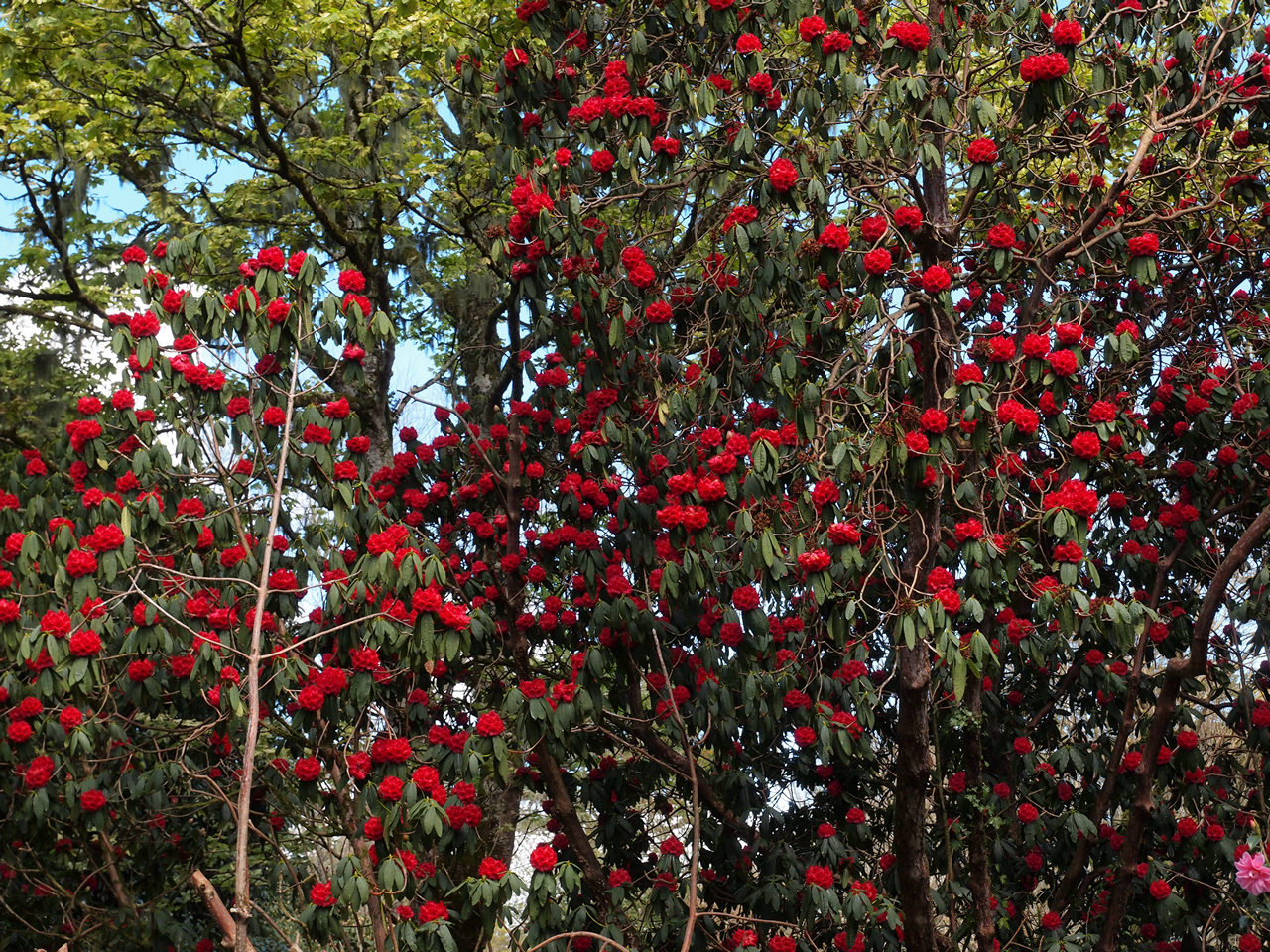
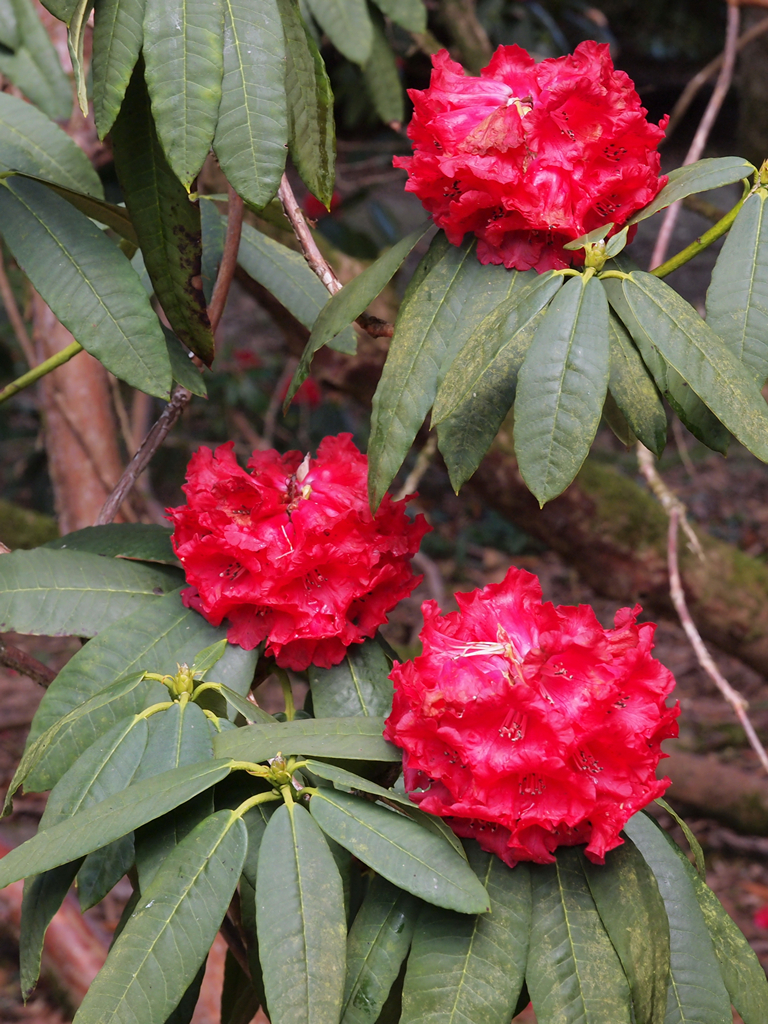
Rhododendron rex ssp. rex with very few flowers but the leaf form is correct.
Rhododendron rex ssp. rexRhododendron rex ssp. rexRhododendron rex ssp. rex
The 2 acre circular lake with rare water lilies.
The 2 acre circular lake
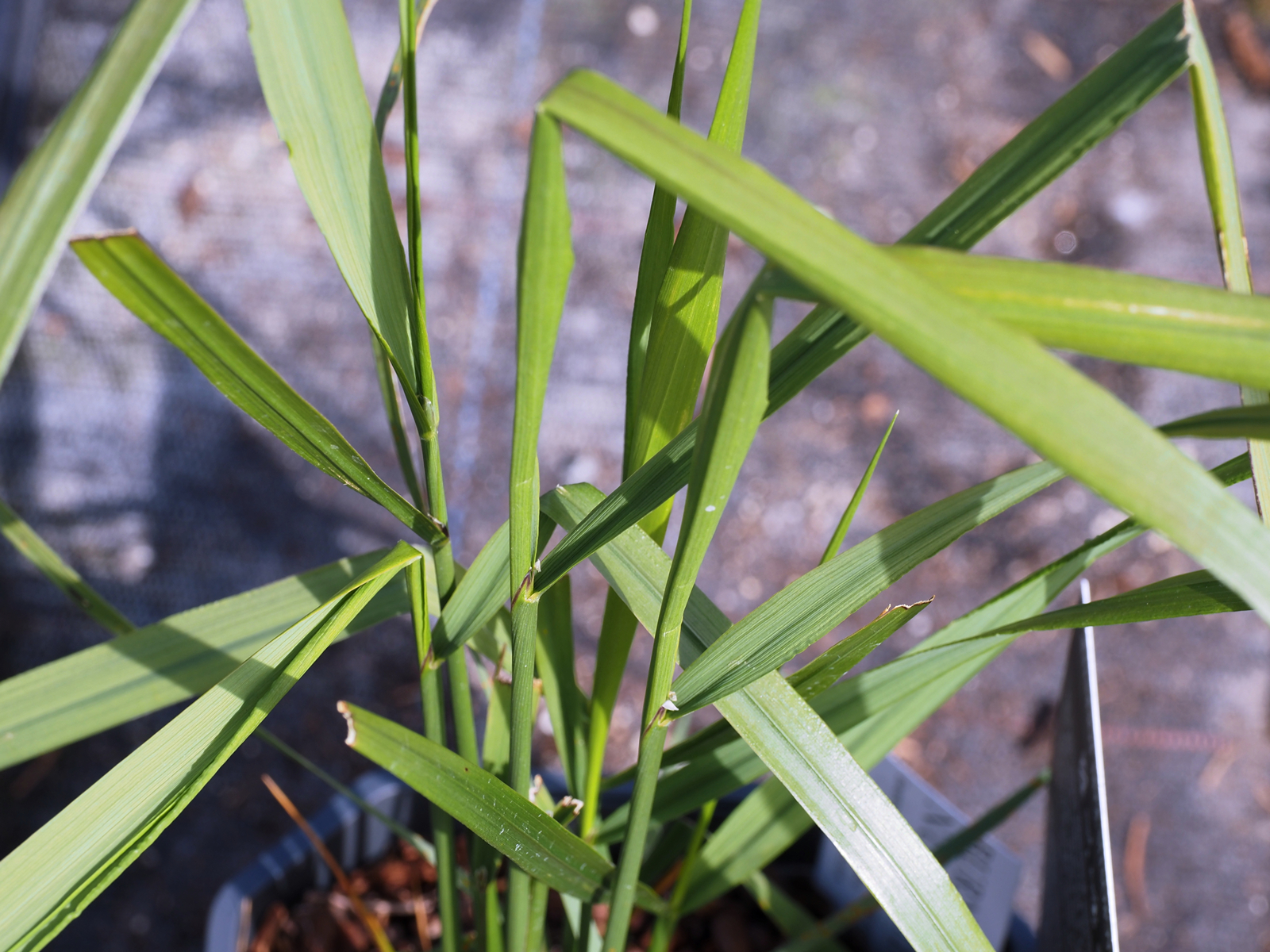
Red deer nibbling on Sasa palmata – reds are a severe problem in the garden.
Red deer nibbling on Sasa palmata
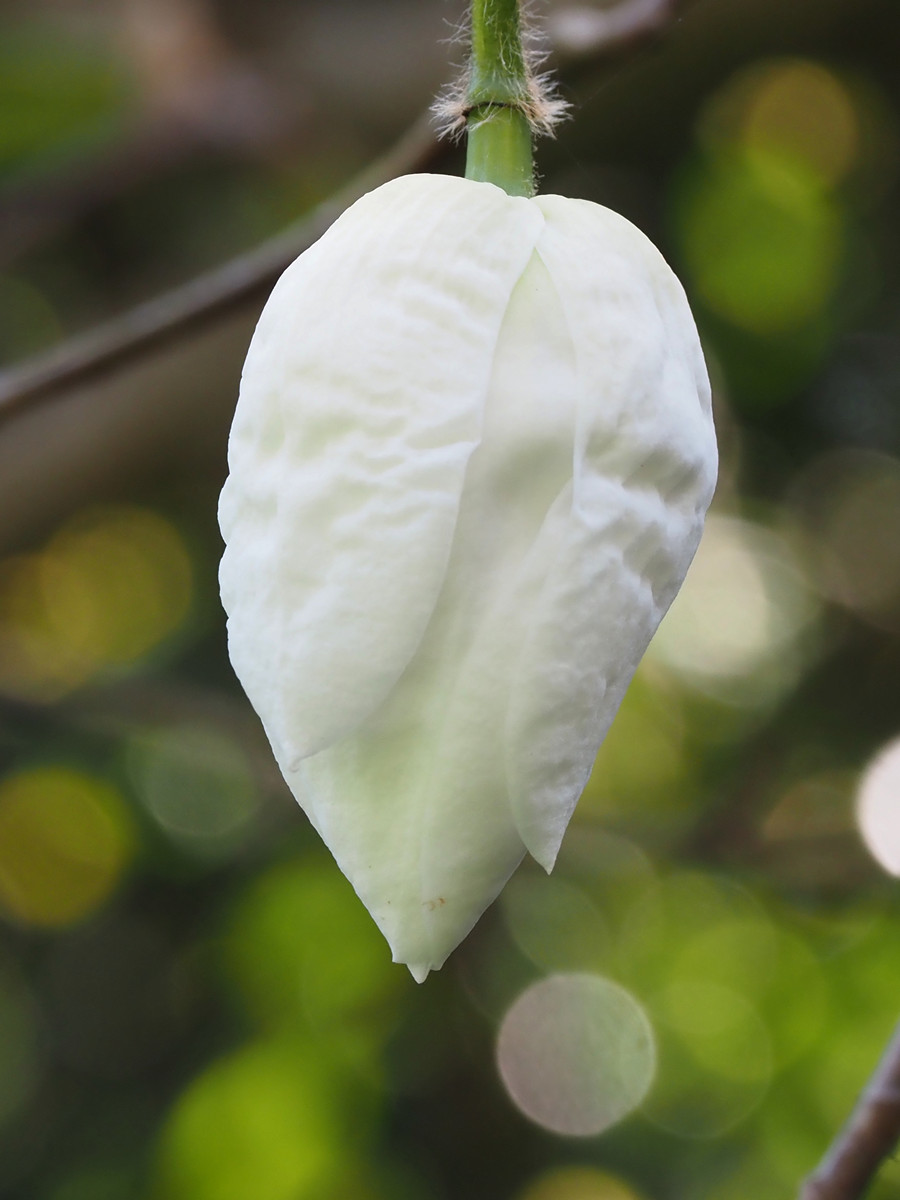
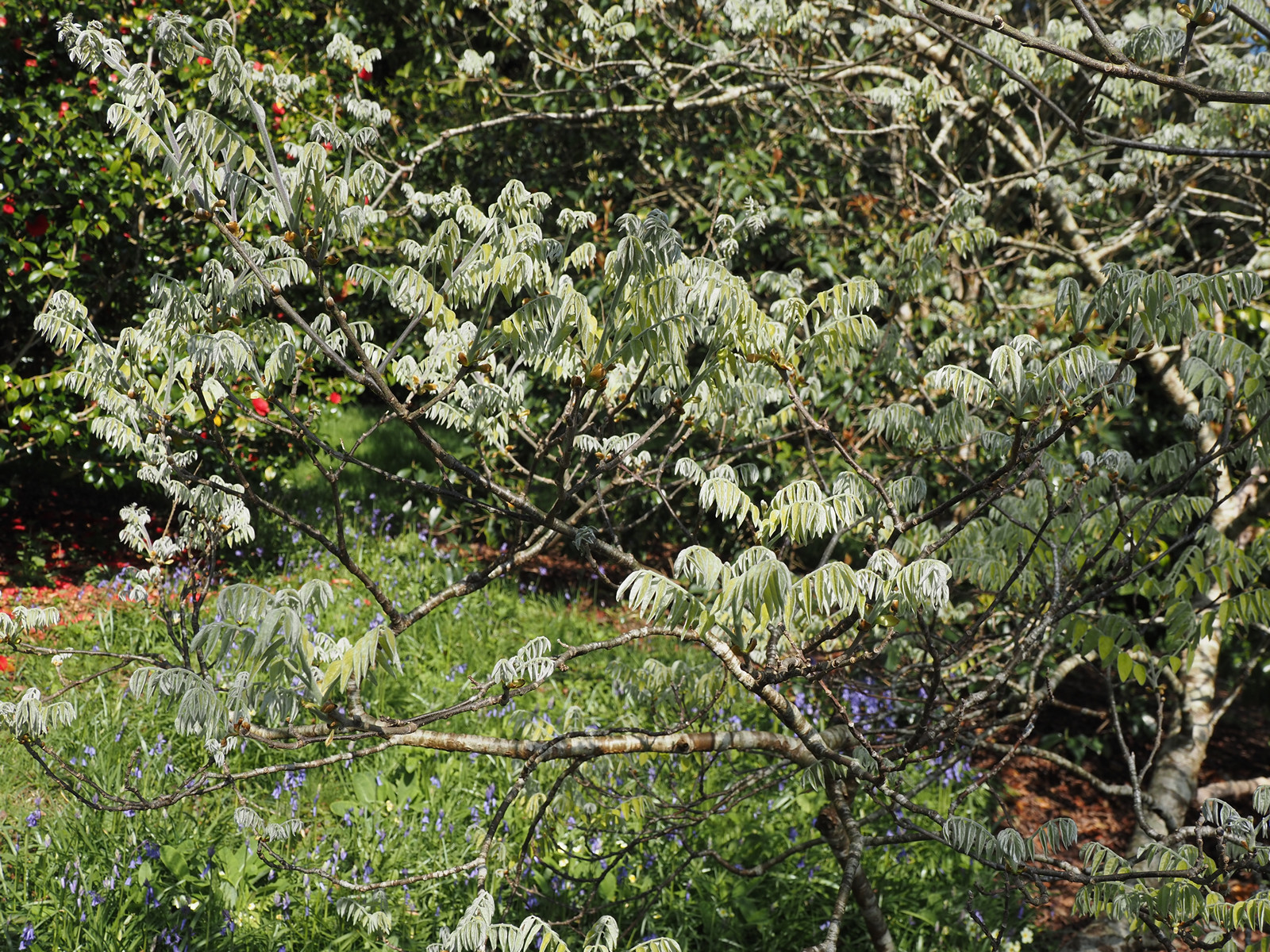
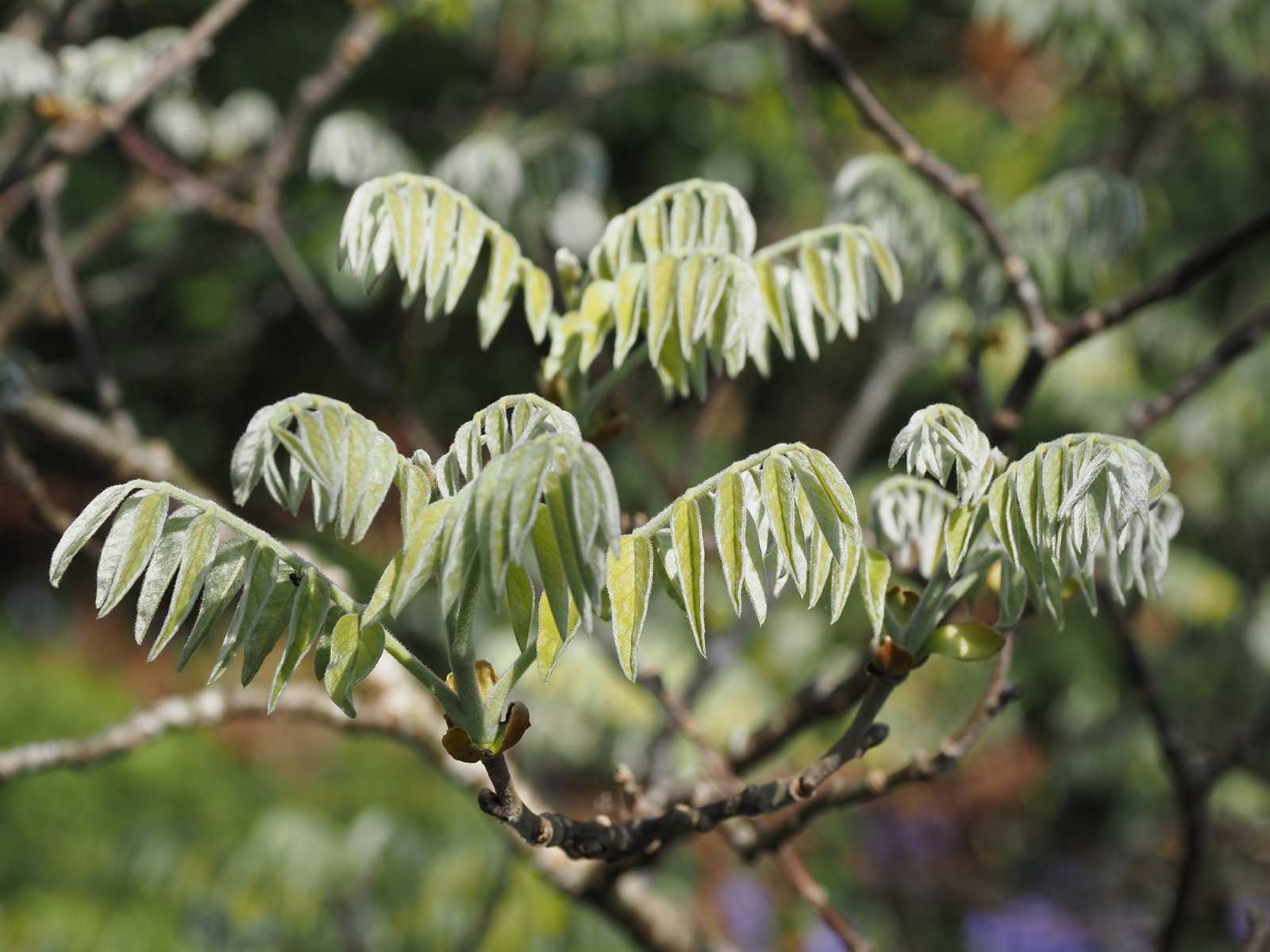
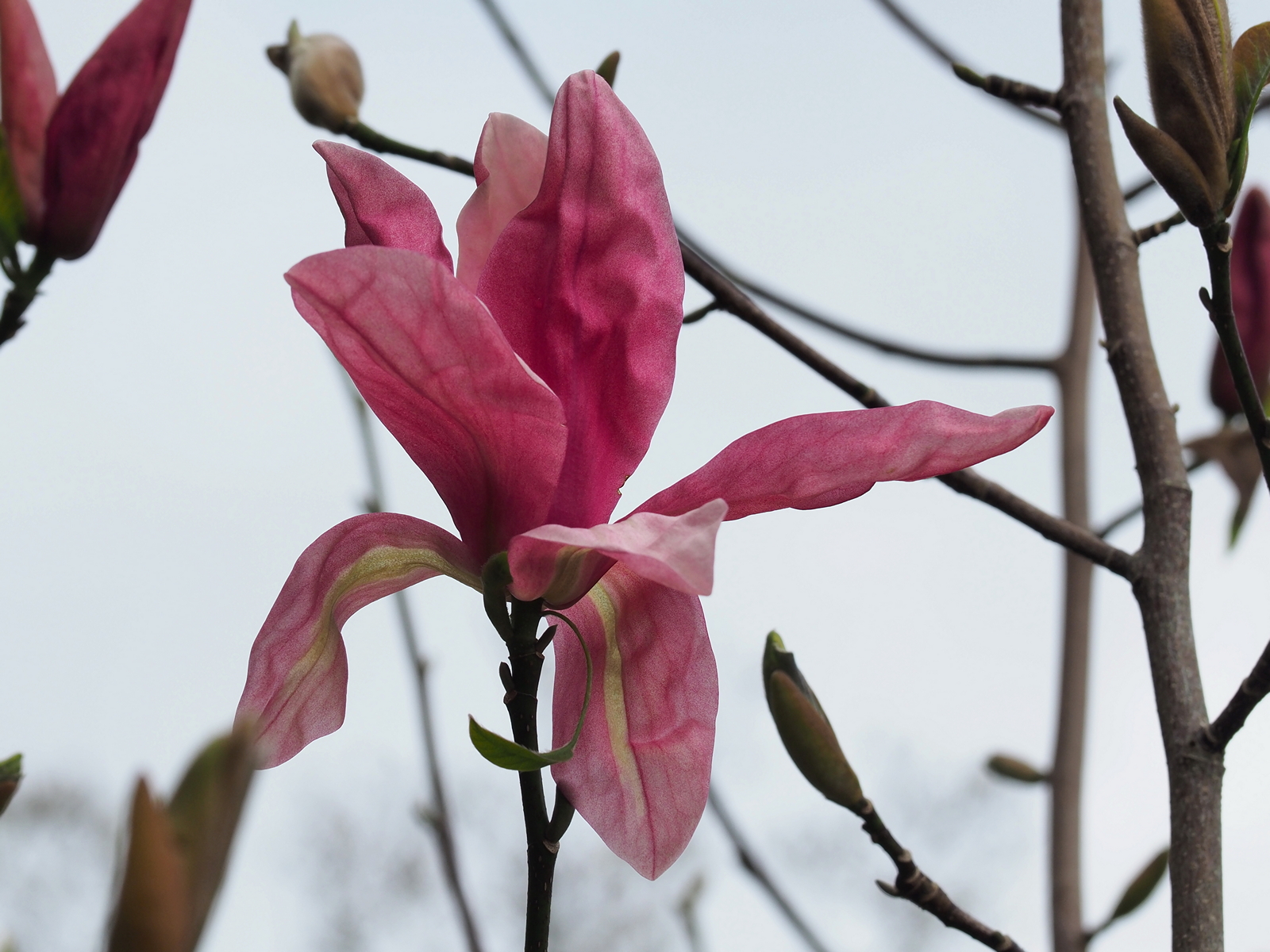
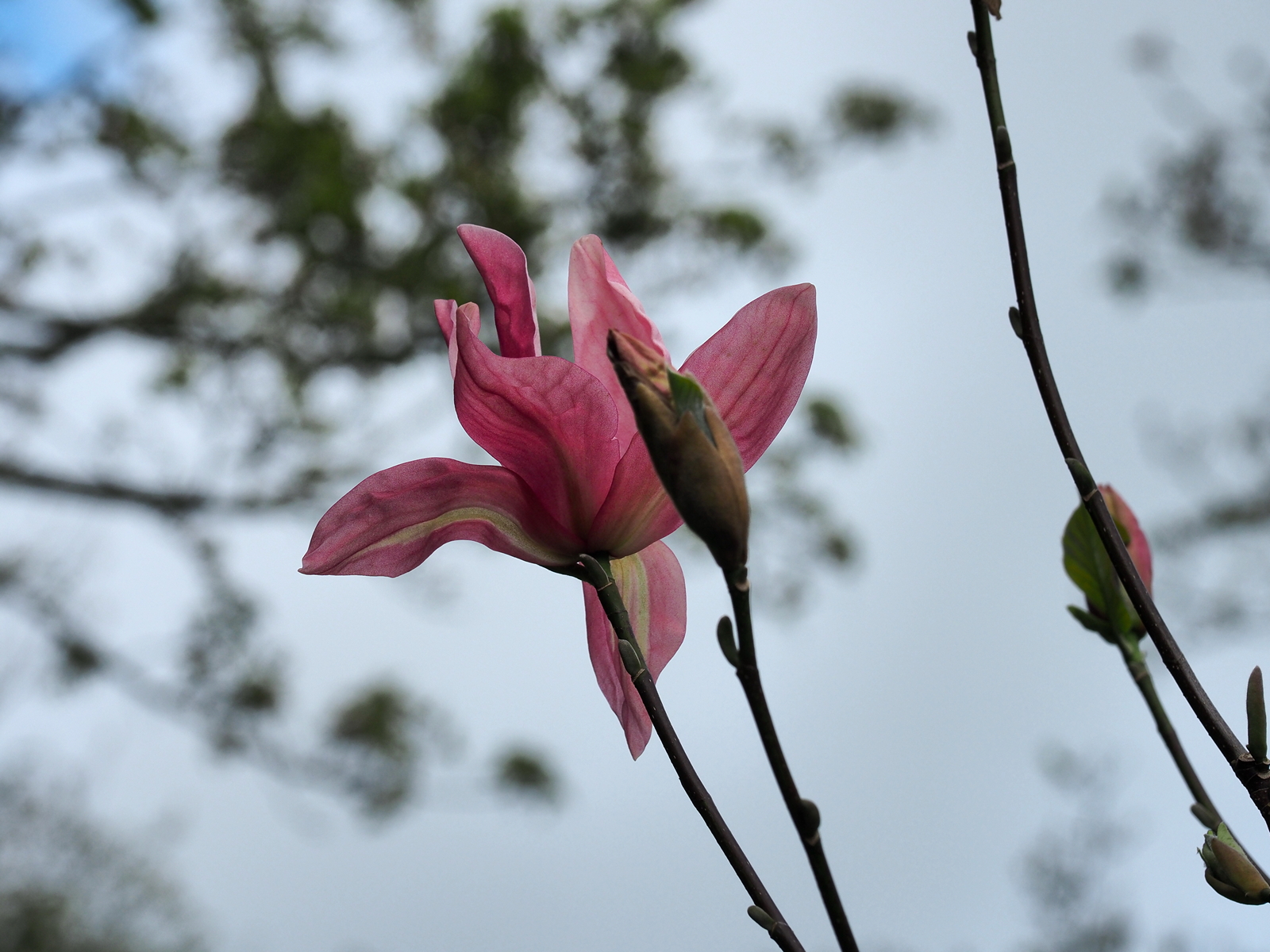
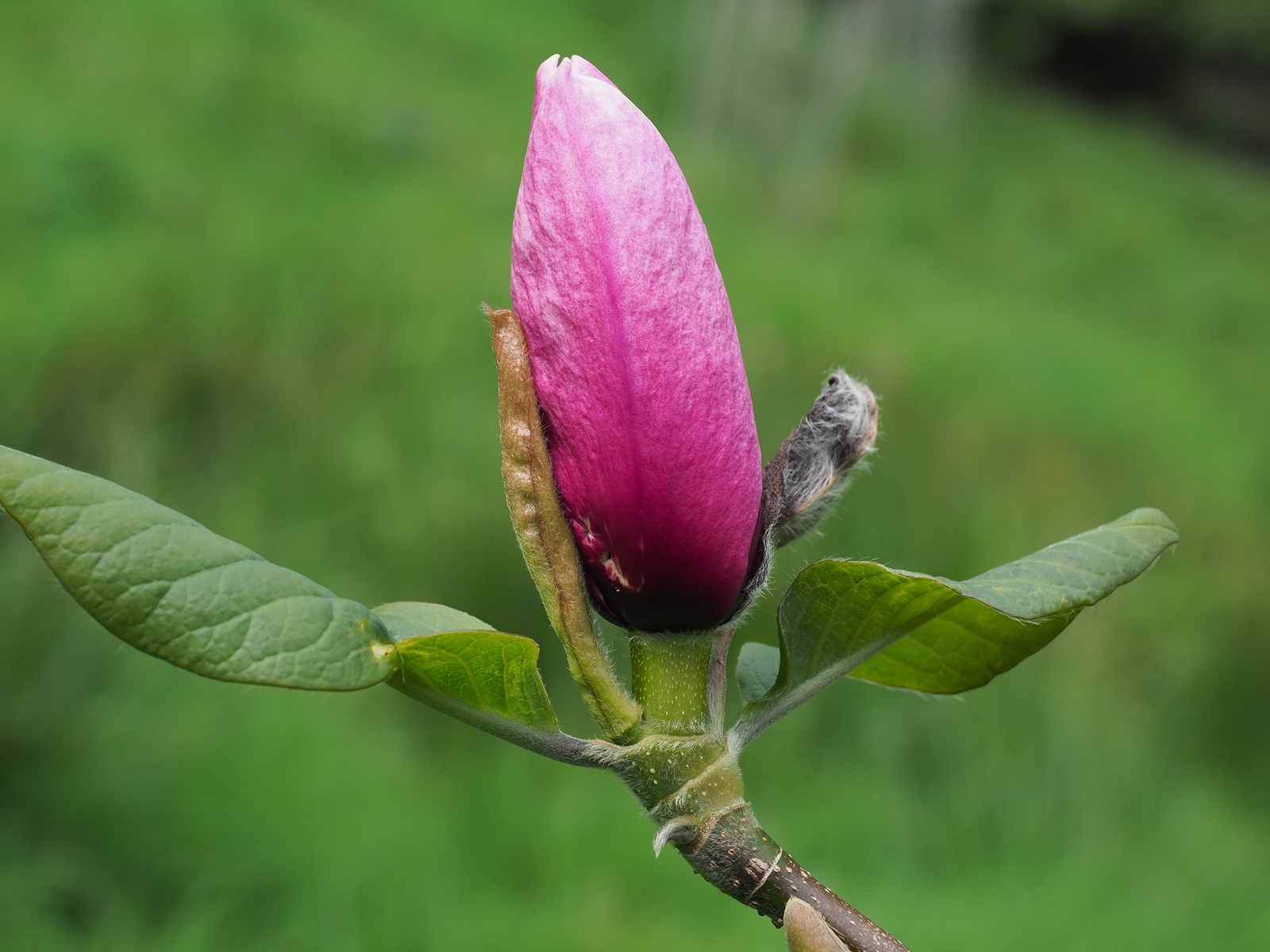
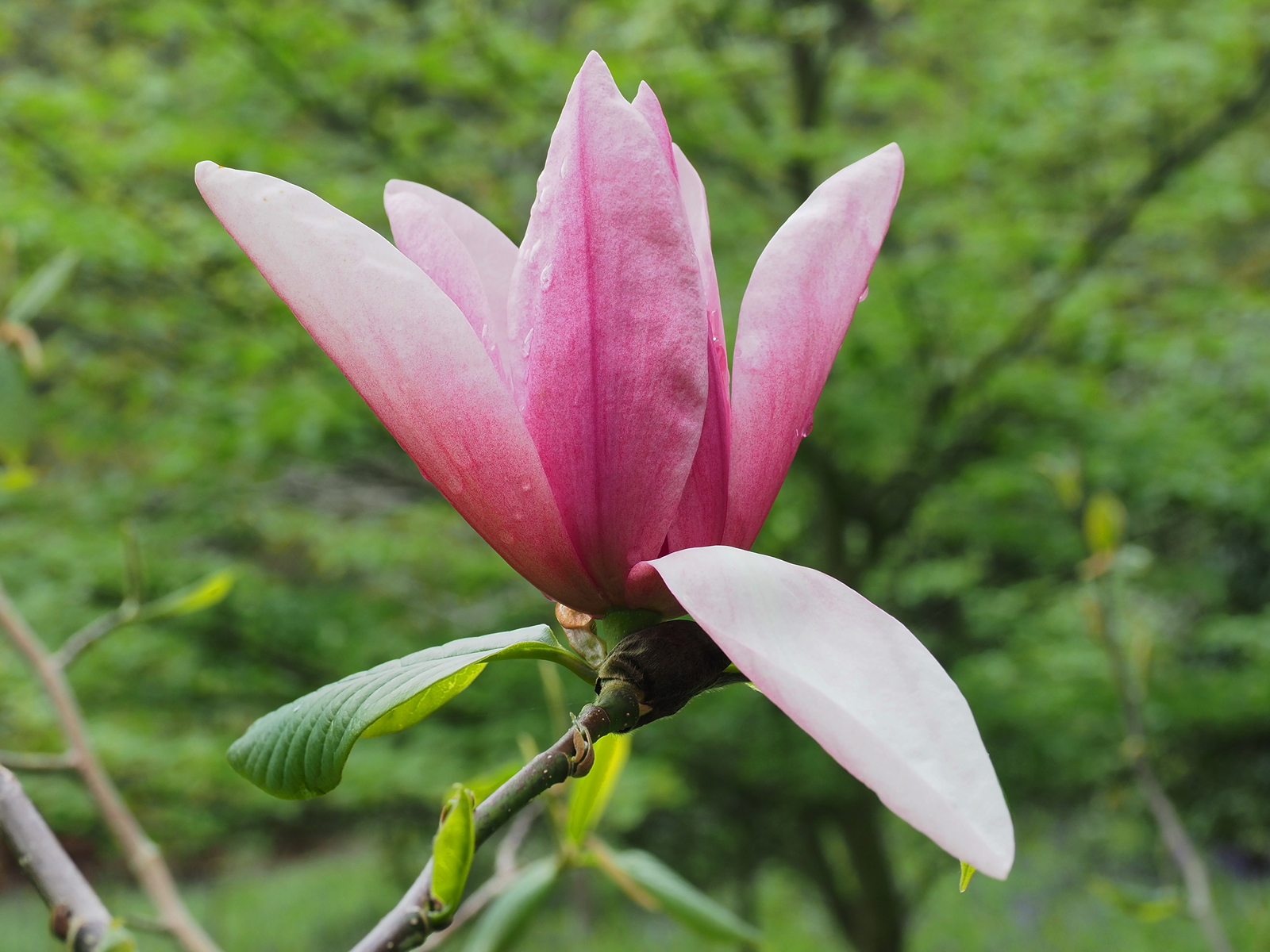
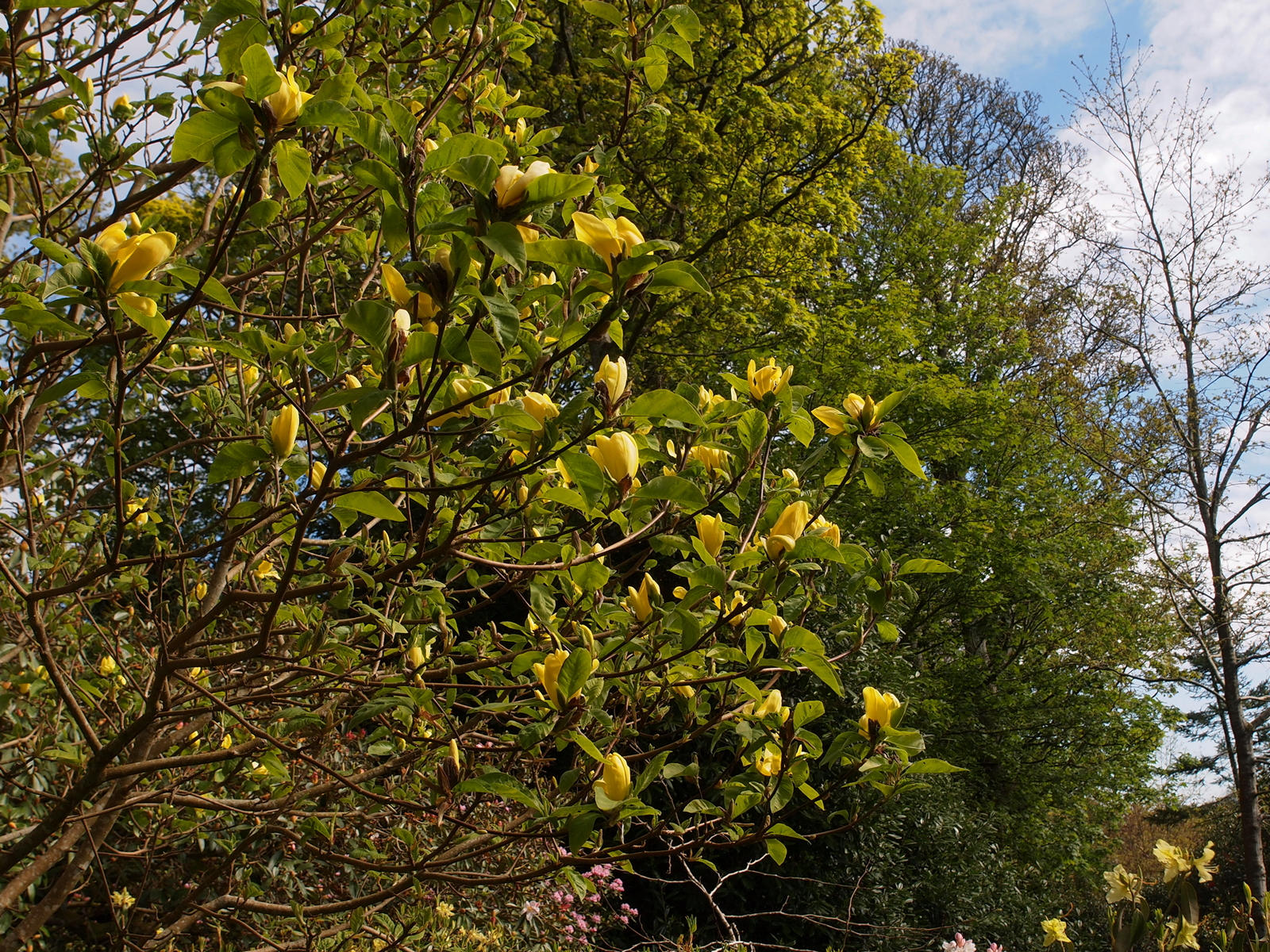
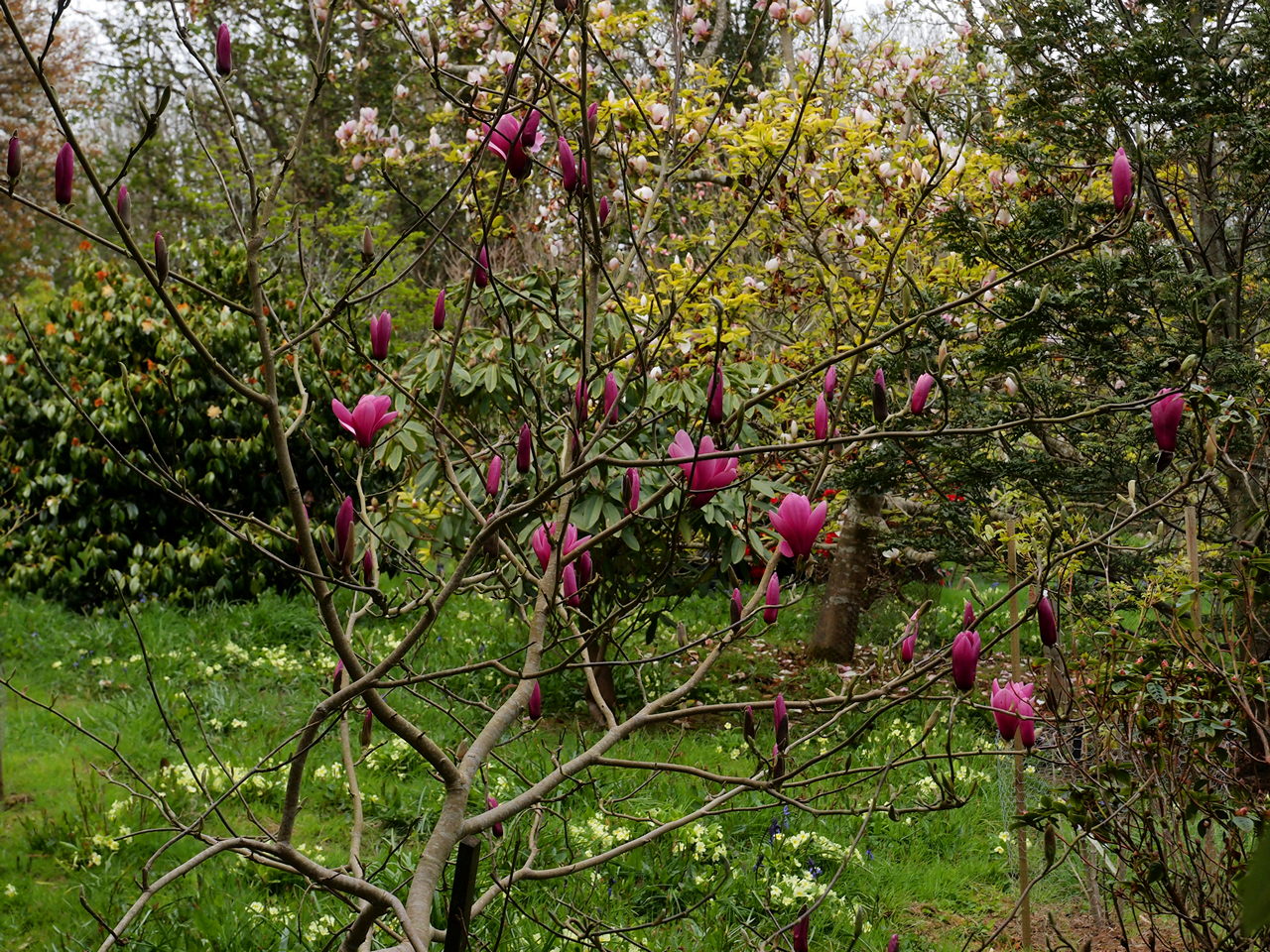
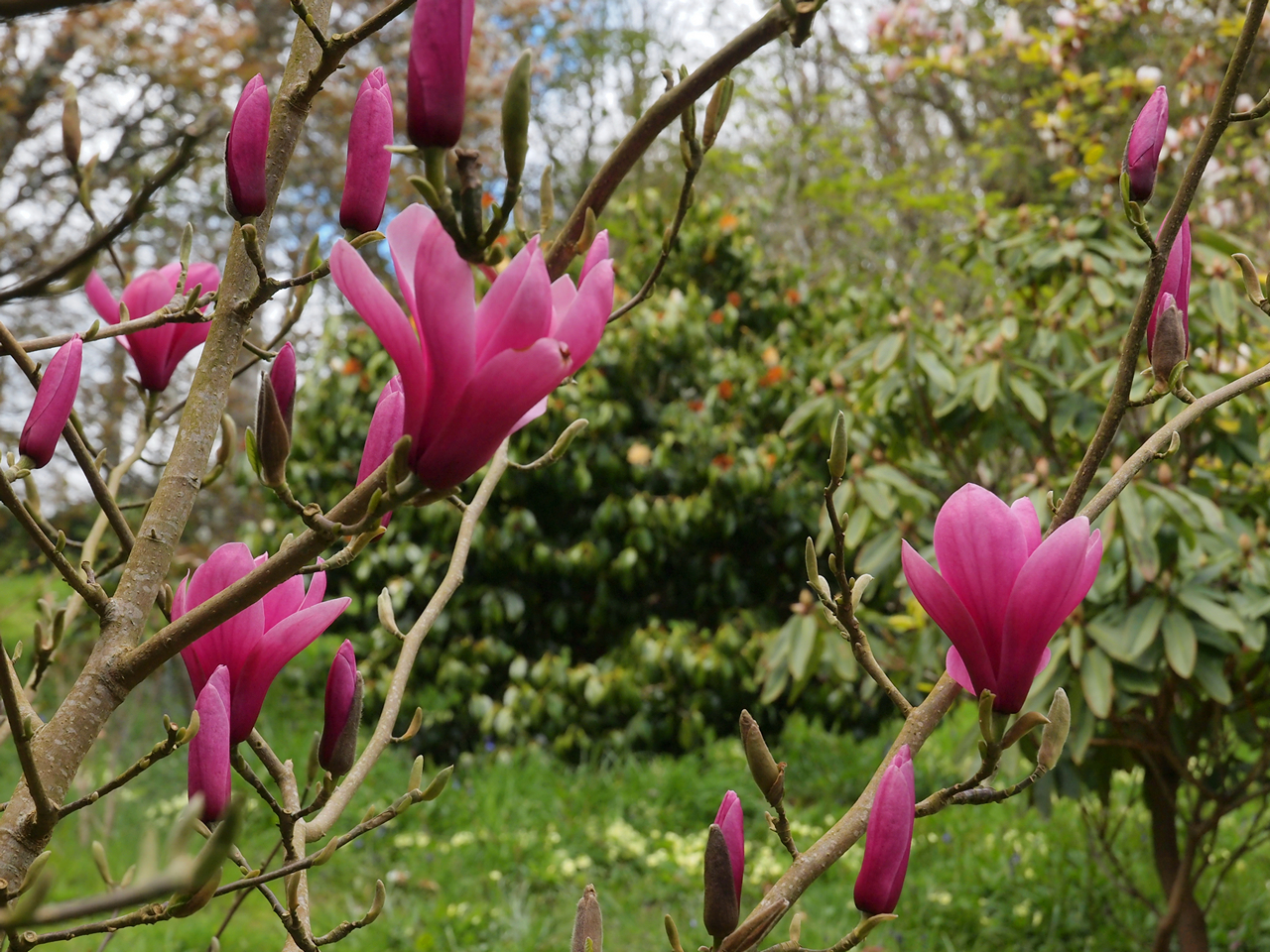
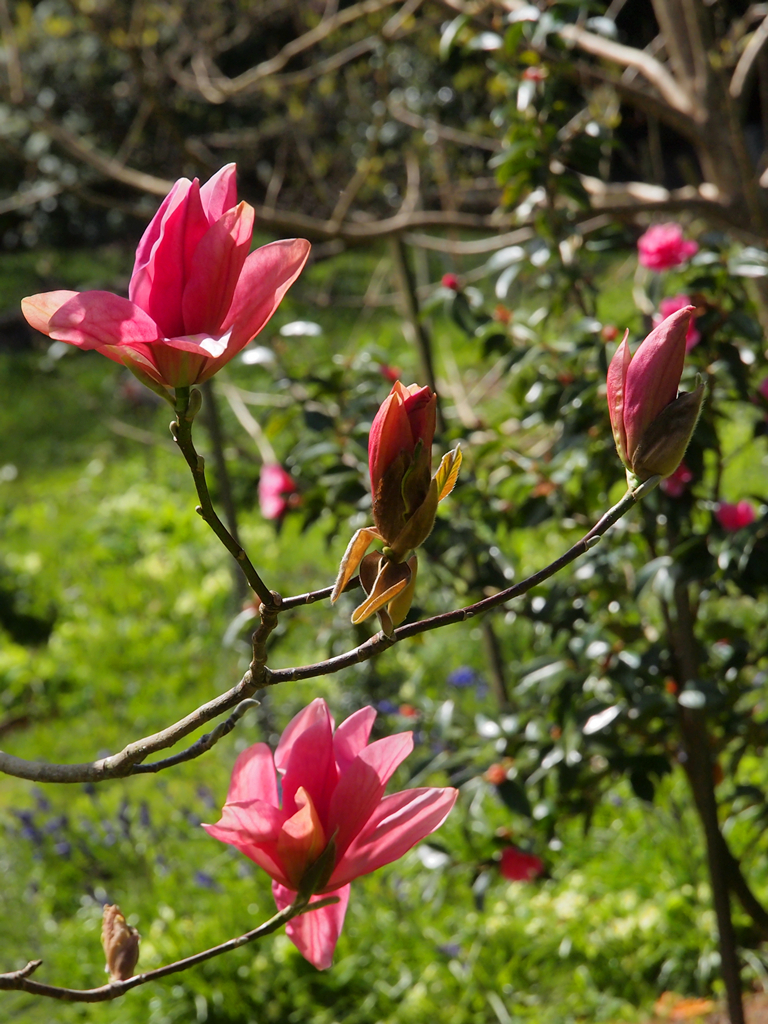
Magnolia obovata in flower as a mature tree – one of three which we saw but only one had flowers.
Magnolia obovataMagnolia obovataMagnolia obovata
The views back to Kennedy Castle and the round lake.
The views back to Kennedy CastleThe views back to Kennedy CastleThe views back to Kennedy Castle
A dead Eucryphia x nymansensis ‘Nymansay’ – drought or old age?
A dead Eucryphia x nymansensis ‘Nymansay’
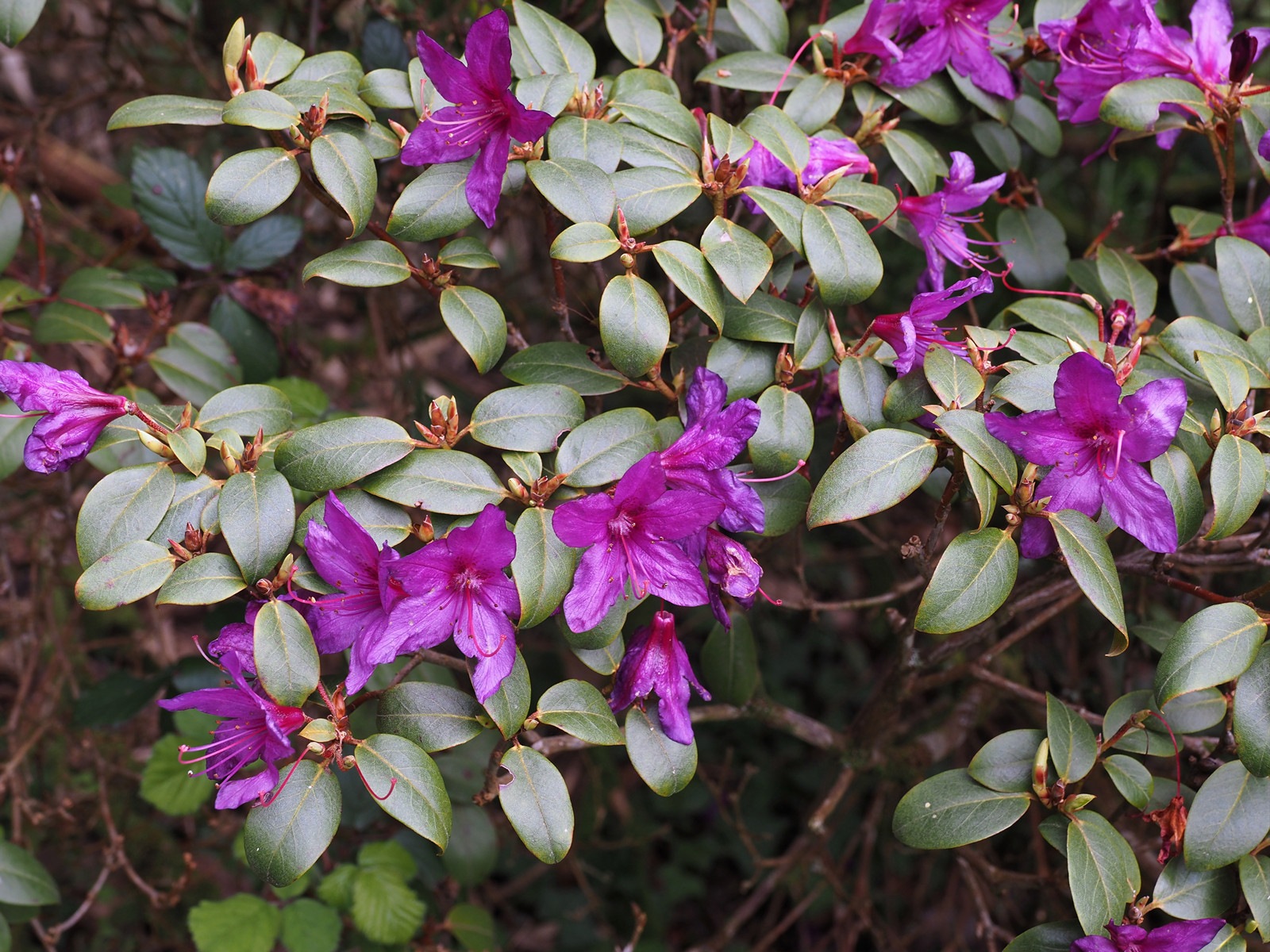
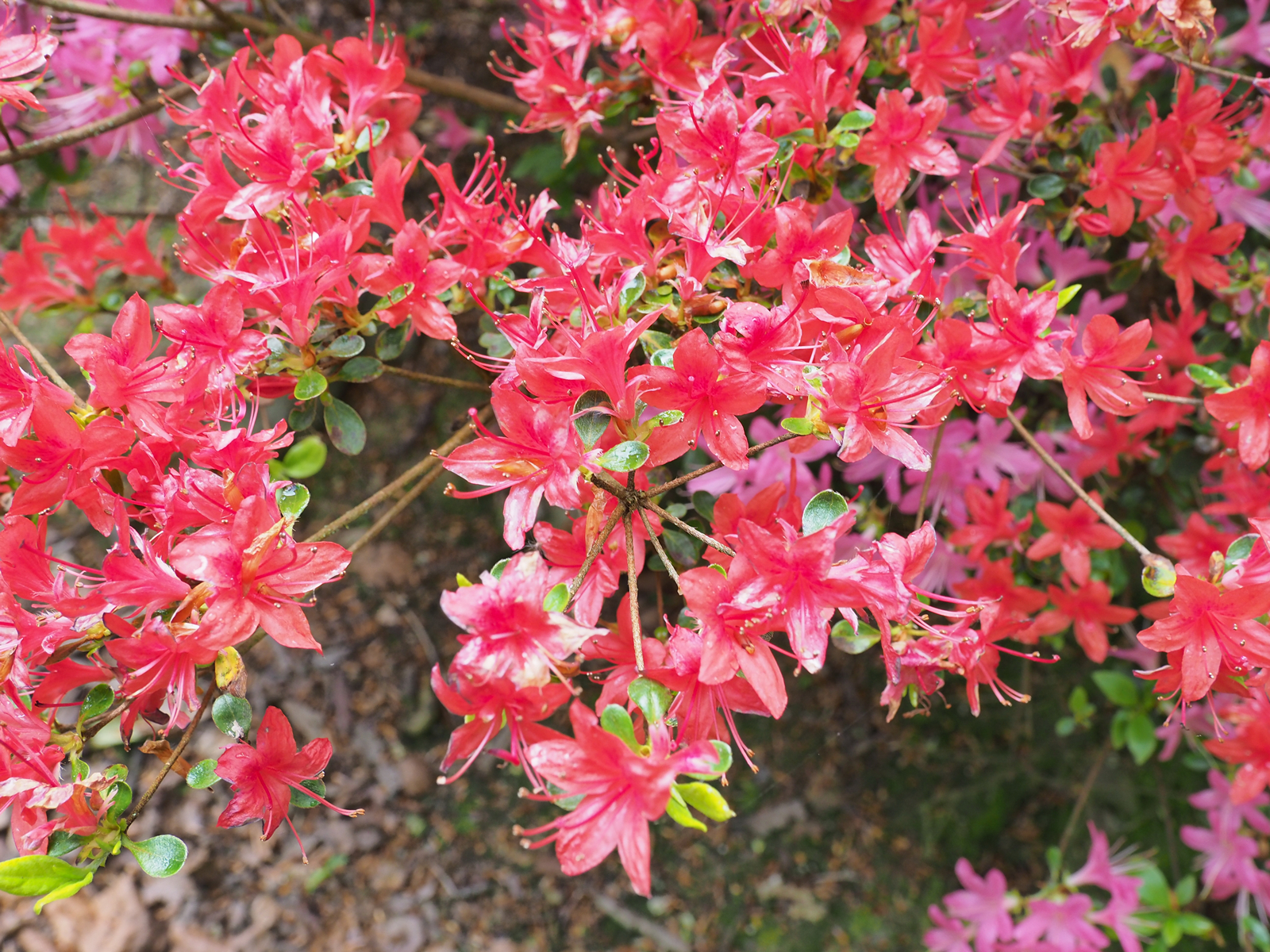
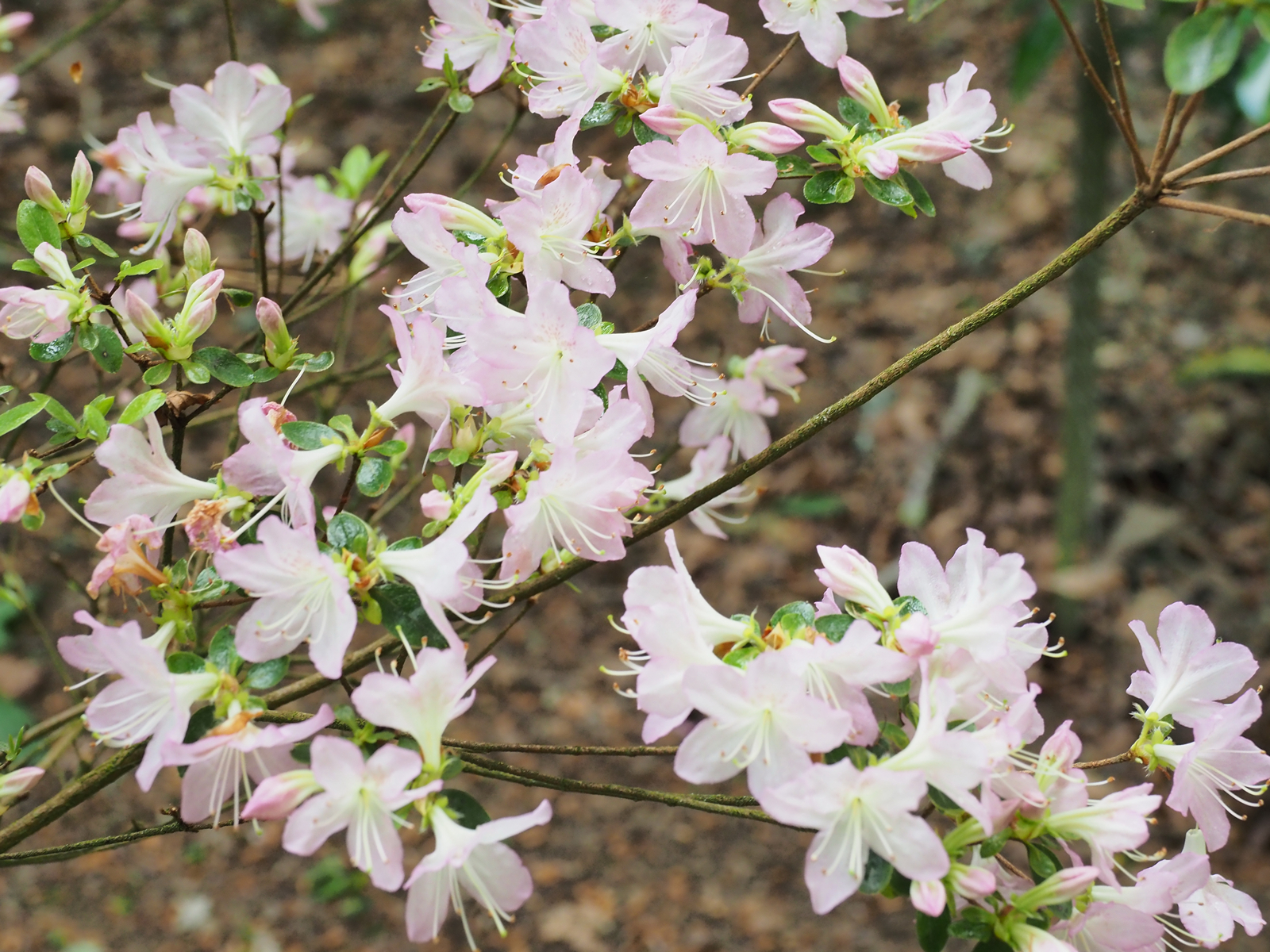
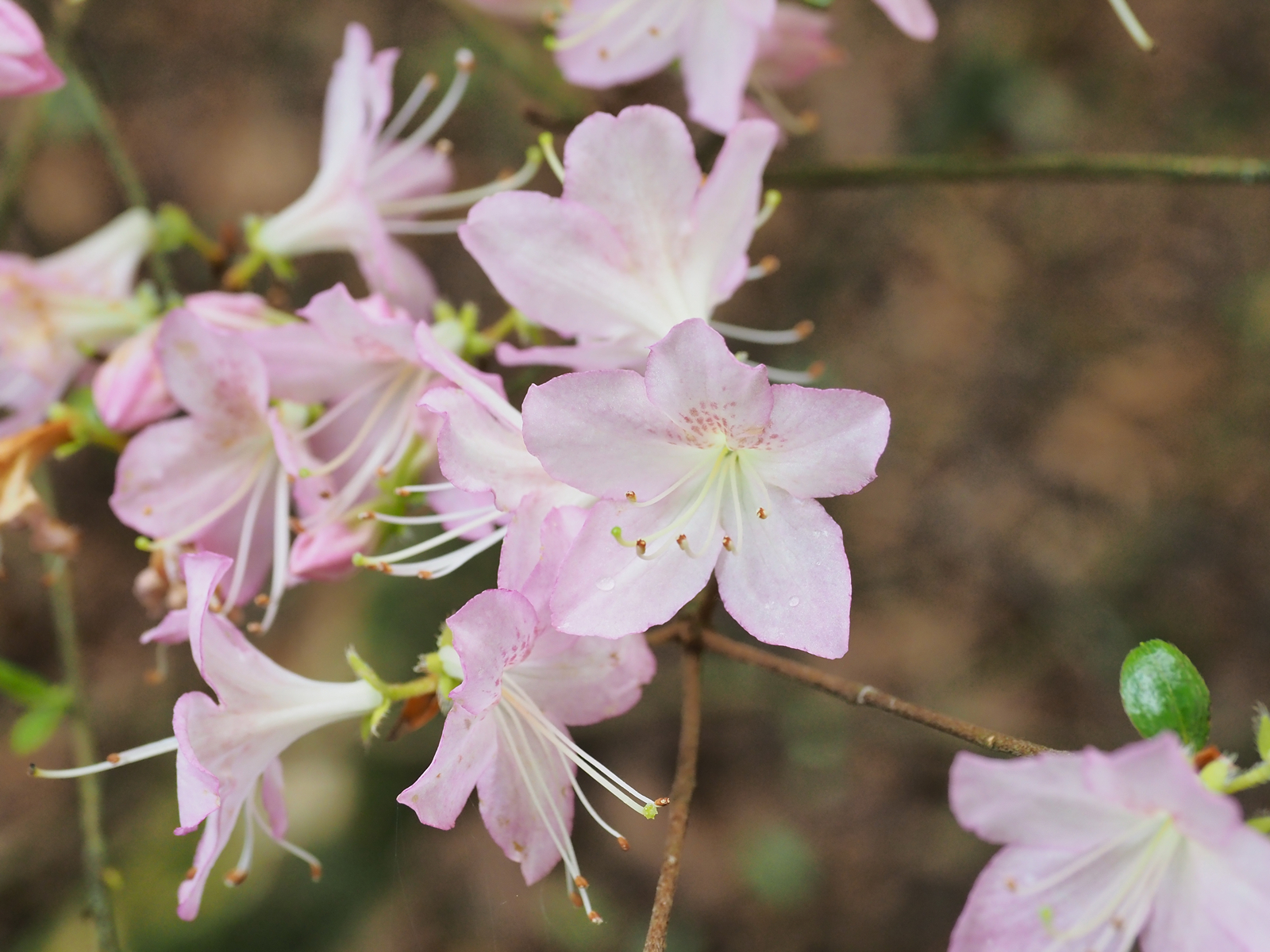
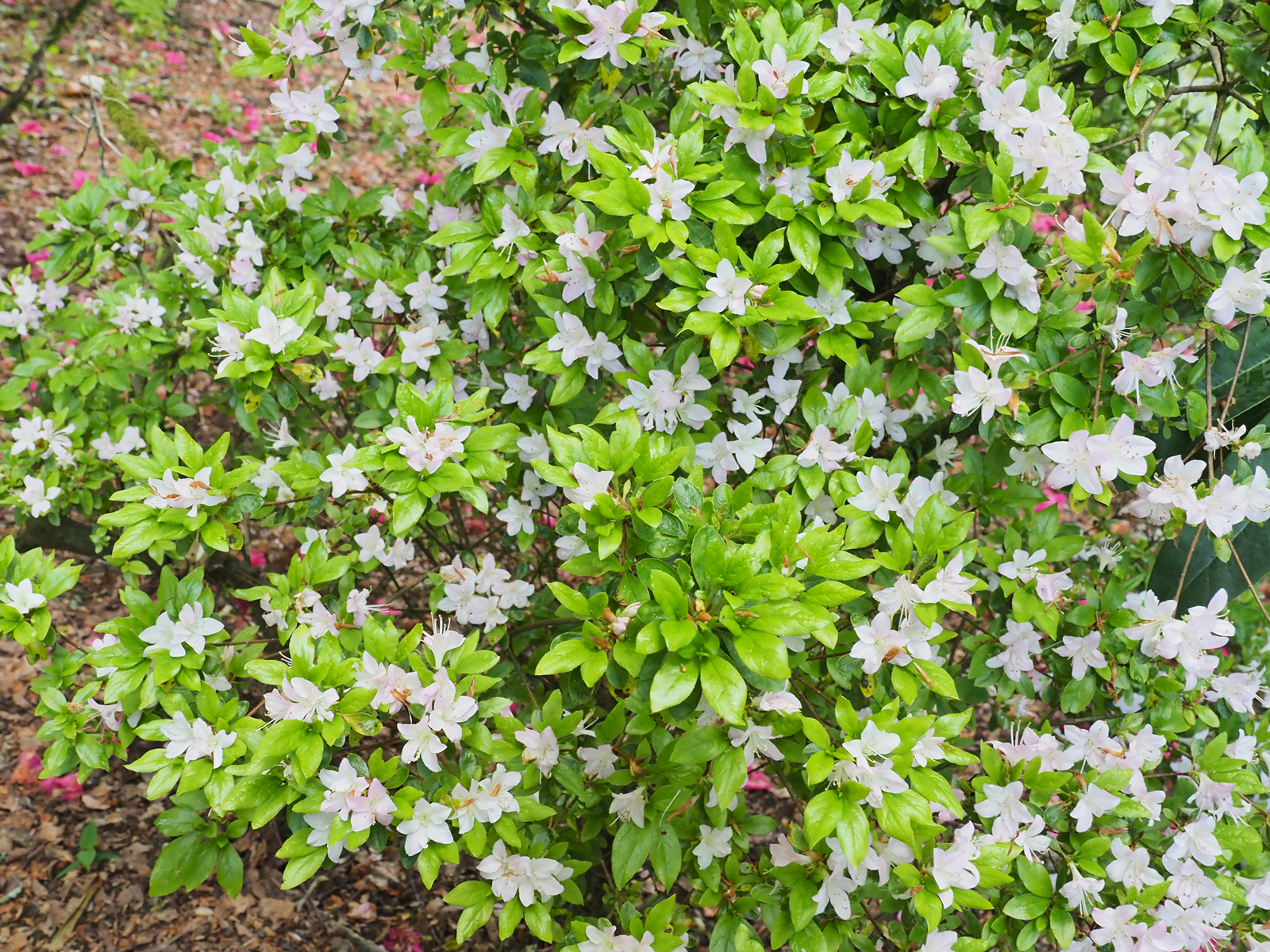
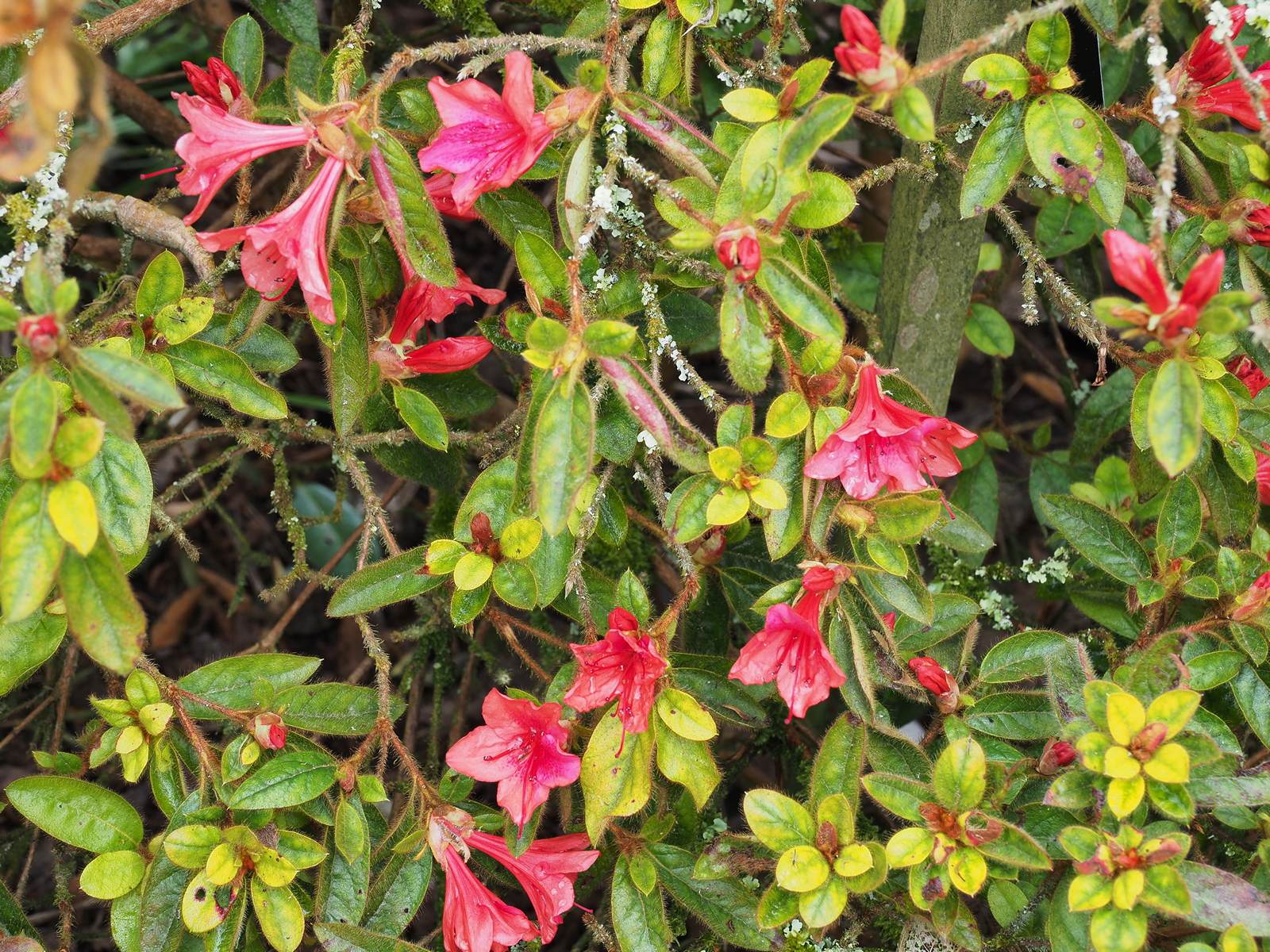
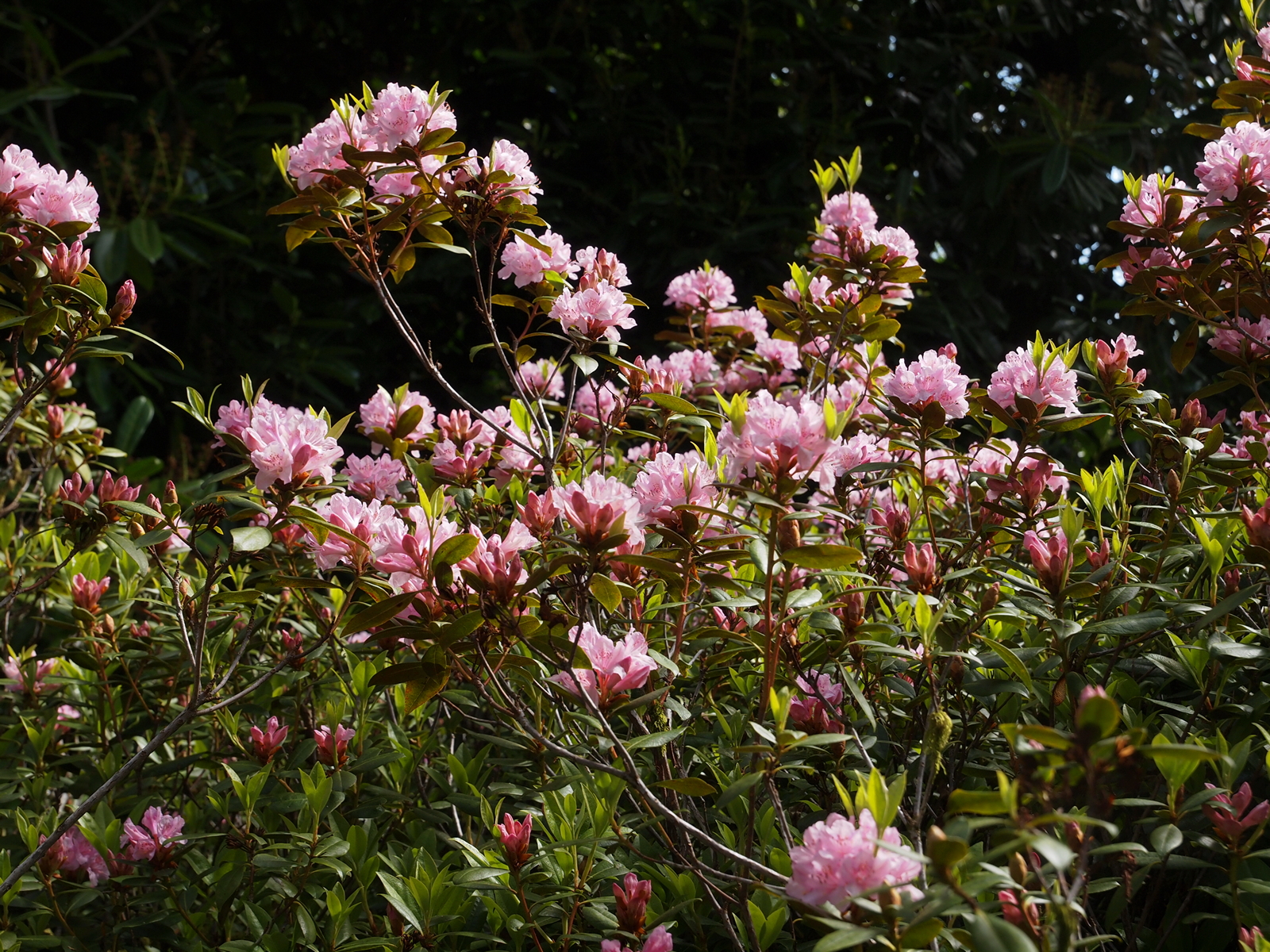
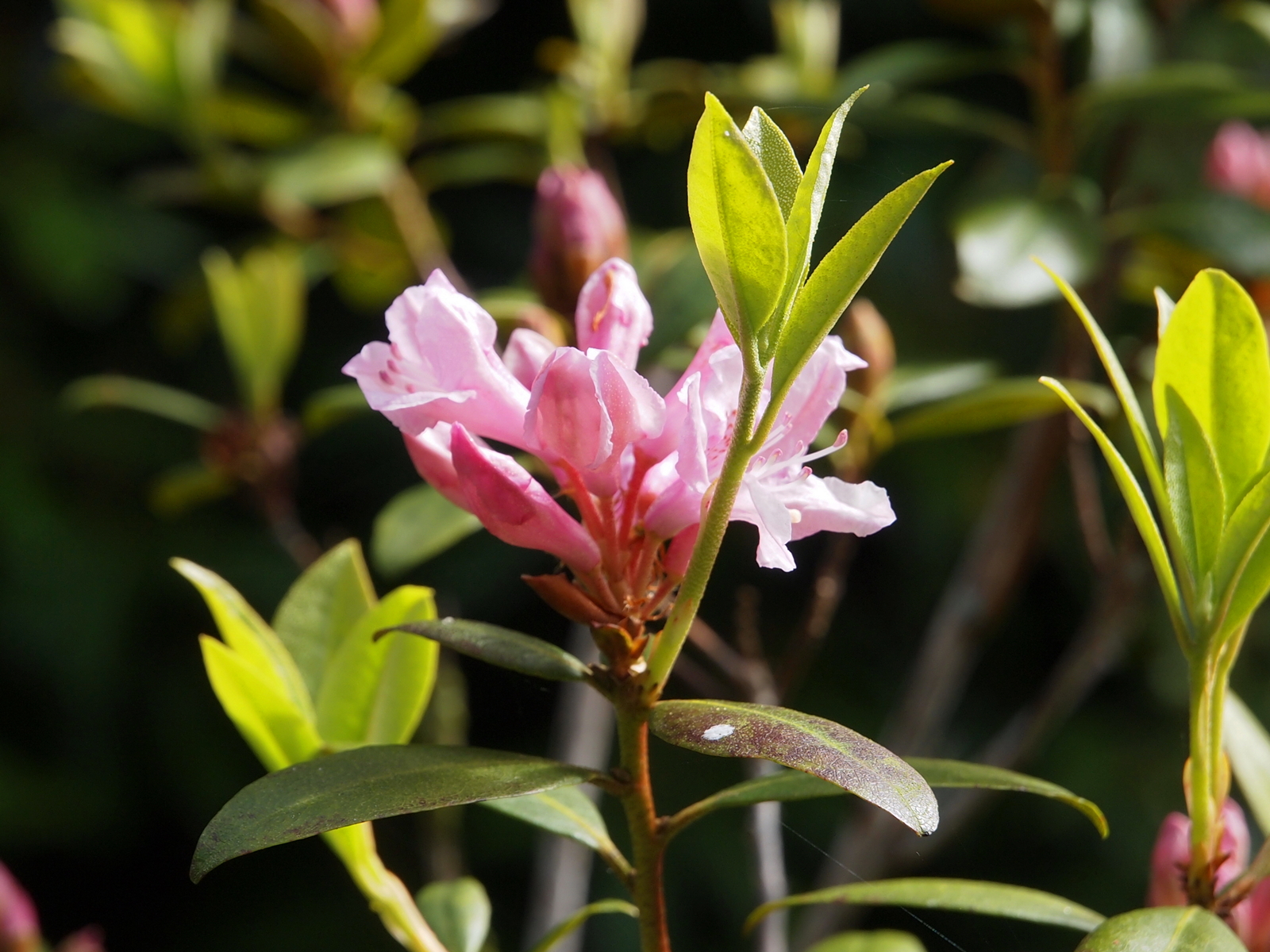
The deciduous Rhododendron reticulatum.
Rhododendron reticulatumRhododendron reticulatum
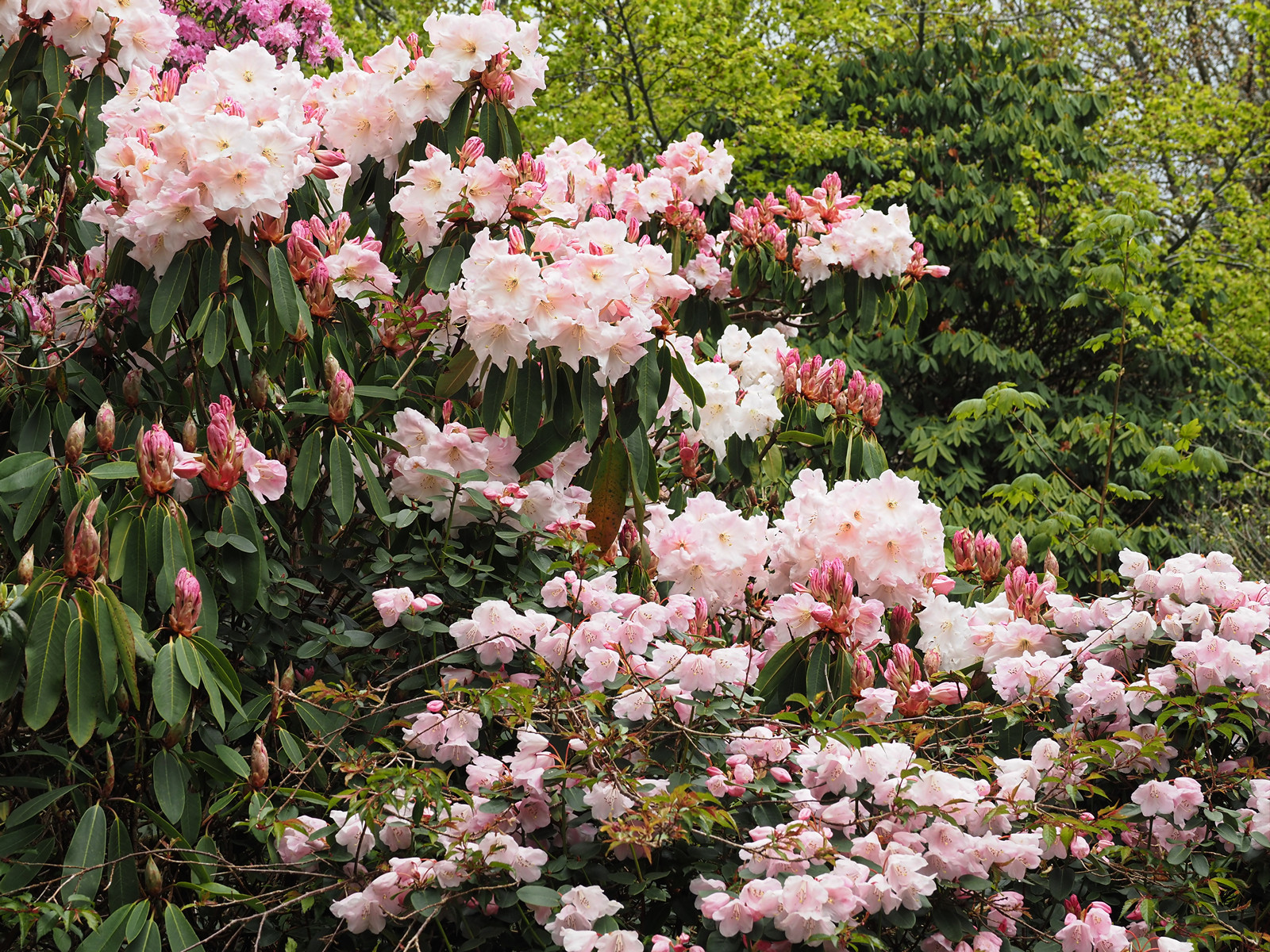
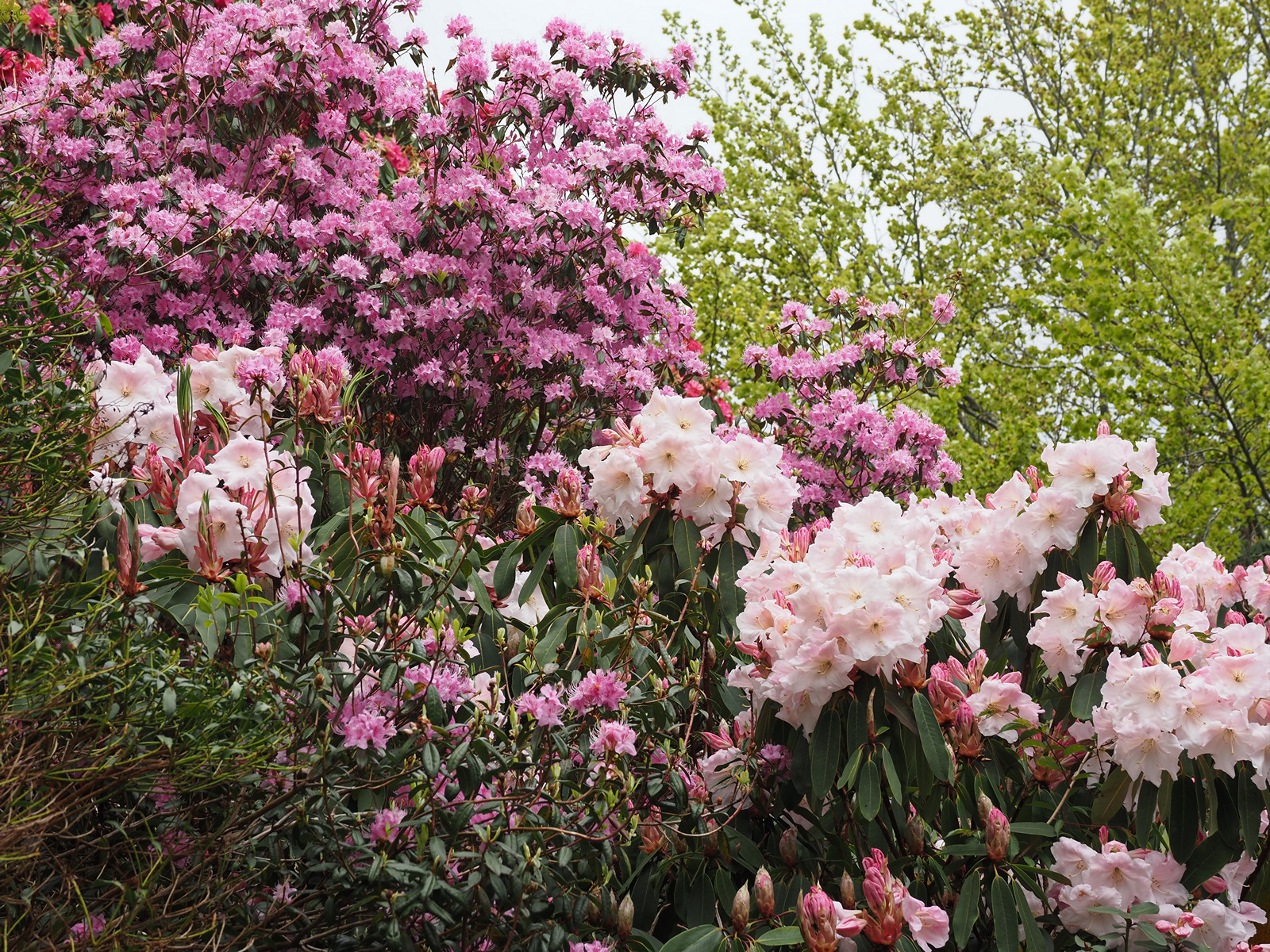
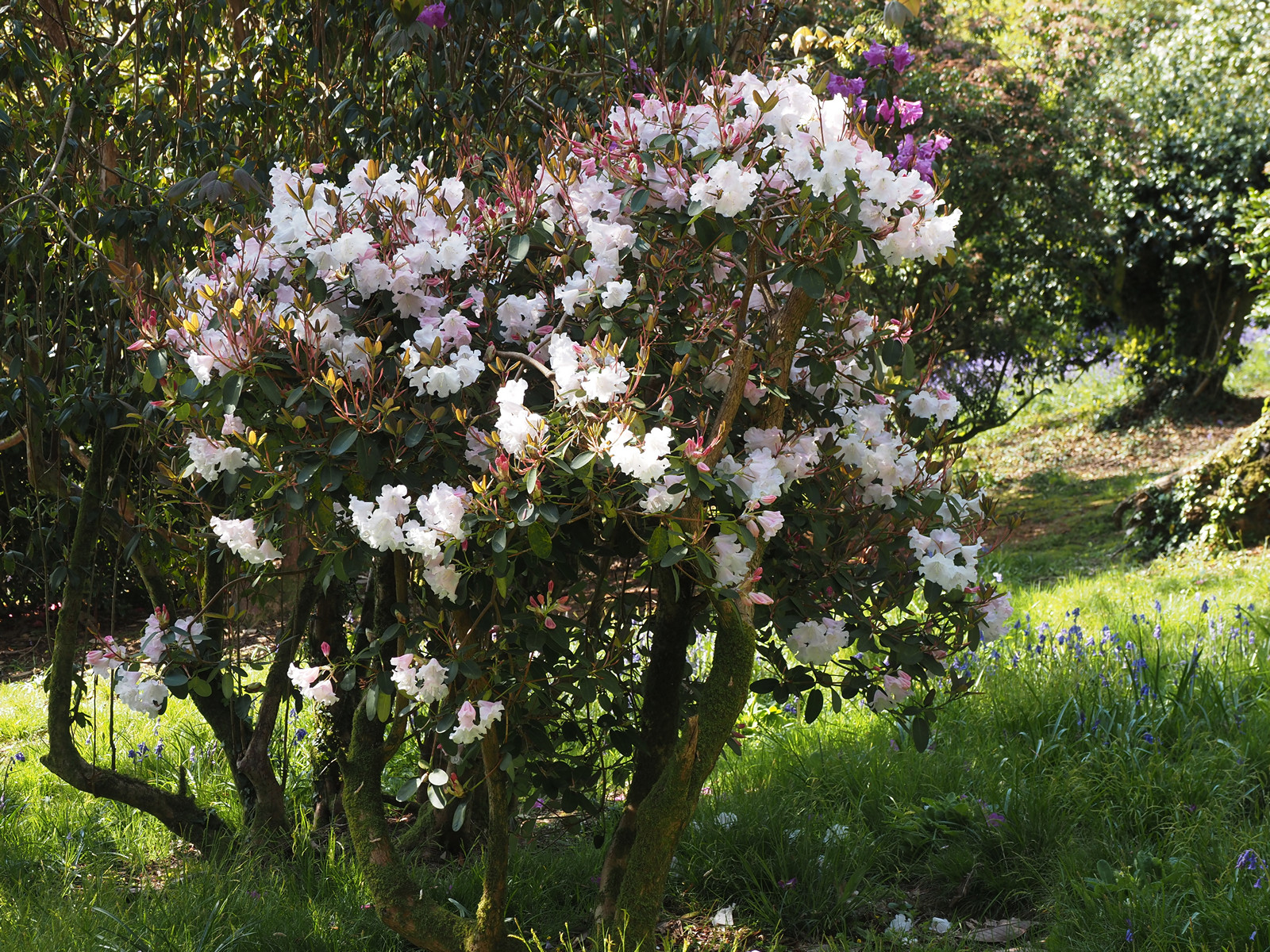
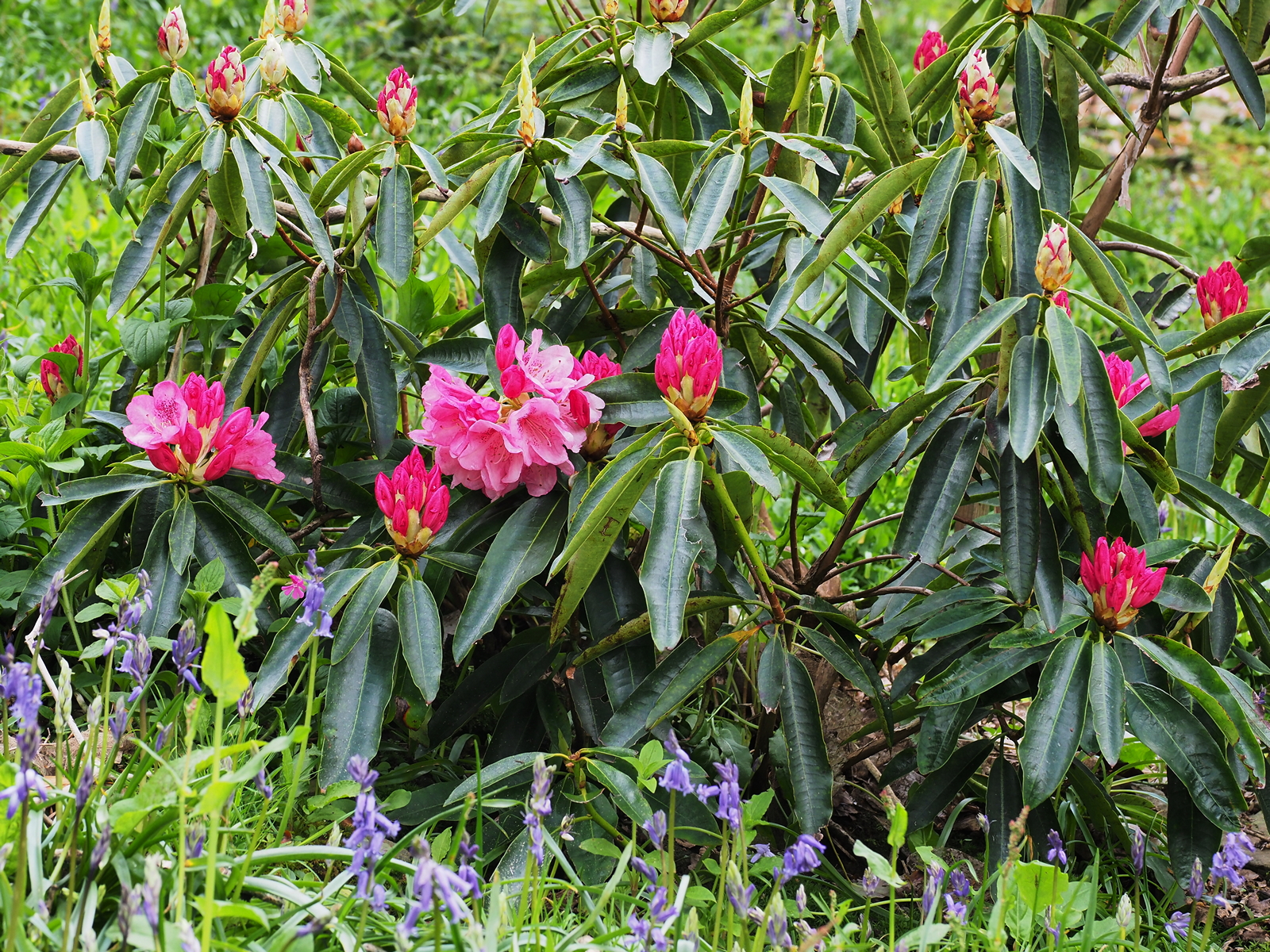
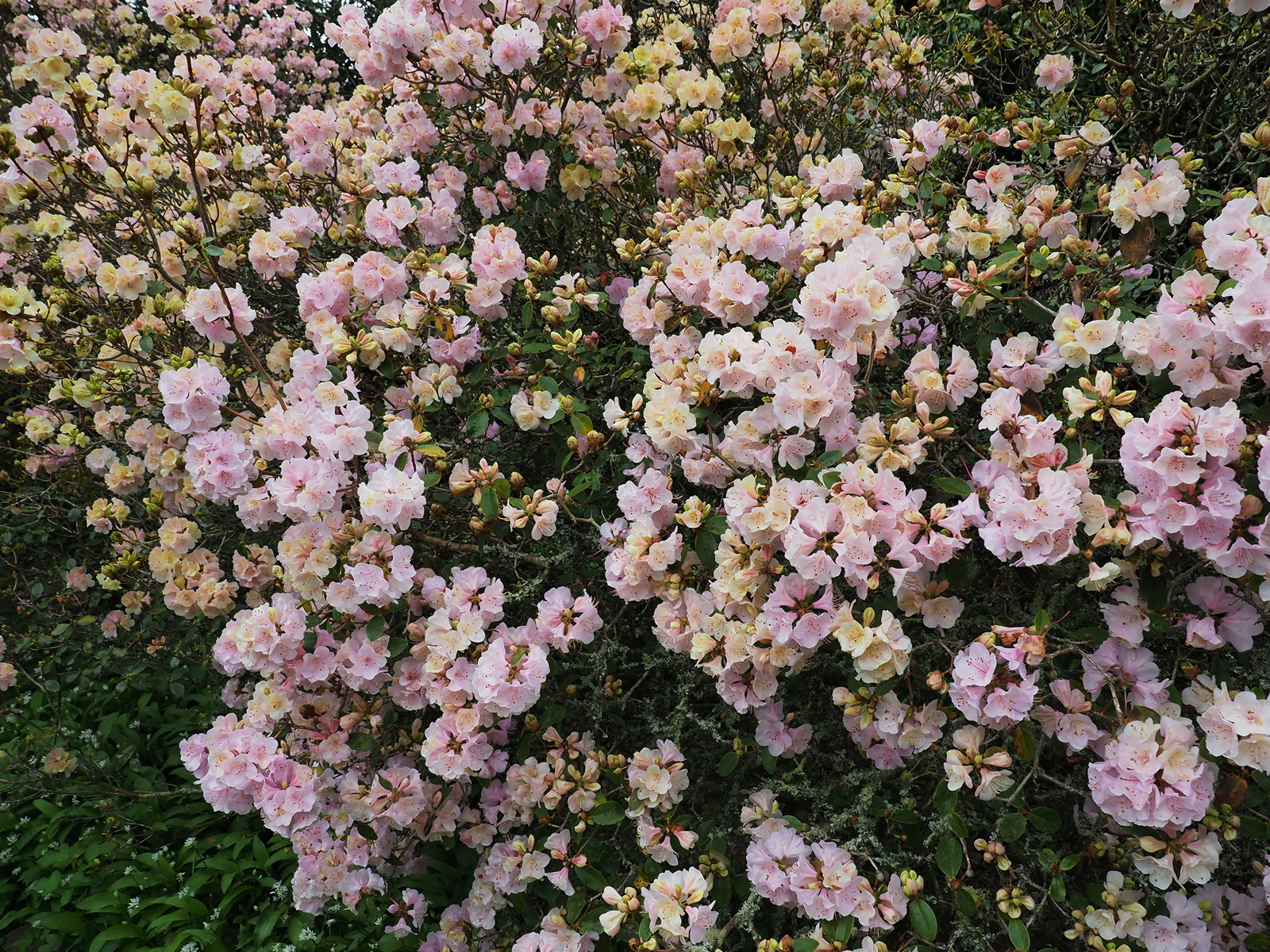
The second best Rhododendron in the garden today was a Rhododendron thomsonii hybrid. No name unfortunately but I suspect it may well be Rhododendron ‘Richard Gill’ (Rh. fortunei x Rh. thomsonii) although this is a Cornish hybrid from Tremough
The view of the castle facing the White Loch. I have never seen so many geese and goslings. Mainly Pink Feet.
The view of the castle facing the White Loch
An over mature, historic and important woodland garden without a current head gardener and plenty of storm damage from Storm Arwen a couple of years ago. The garden needs a rejuvenation plan. If it was Caerhays we would clear a whole block or avenue of 2 acres each year leaving the best rhododendrons and record trees but clear felling the rest to start again with new plantings. Without this the best rhododendrons will be dead from old age in the next 20 years. Lots of layering and new shelter belts with a clear new plant theme for each area. A difficult garden to work in without making a terrible mess in wet weather but ‘needs must’. What to do about the 1860’s Monkey Puzzle Avenue? Many of these are nearly dead from old age and look exactly as the old ones do at Burncoose and Tregullow. In a garden of tremendous avenues and vistas across two lochs one has to start again with a whole new avenue. The rhododendron collections and Castle Kennedy hybrids need propagating in bulk to start again. Evergreens are going to need serious deer protection but there is no obvious solution to the three or four species deer problem. Grey squirrels arrived around 10 years ago and still mix with the native reds.
2025 – CHW
A visit to Roy and Sue Lancaster’s garden in Chandlers Ford. Unsurprisingly I took more pictures of rare new plants here in this tiny area than in any other garden on our current trip. I have never seen such a small space with literally thousands of plants from numerous genus. It took us nearly 3 hours to see most of it! Unbelievably interesting from the greatest living plantsman. I am only going to show plants in flower and not the 30 or so species of Mahonia which you will now find (without flowers) on our website database.Acer ‘White Tigress’ dominates the front garden.
Acer ‘White Tigress’
Magnolia laevifolia ‘Gail’s Favourite’ at its absolute best.
Roy’s wild collected Aucuba himalaica var. lenicactus.
Aucuba himalaica var. lenicactus
Roy gave us a seedling of the Cotoneaster-like Dichotomanthes tristaniicarpa. Very dull plant none of us had ever heard of.
Dichotomanthes tristaniicarpa
Euonymus neeriflora.
Euonymus neerifloraEuonymus neeriflora
Roy’s wild collected Aucuba confertiflora.
Aucuba confertiflora
We were given seed of Sarcococca bledwinii.
Sarcococca bledwinii
Roy says this is the true Mahonia bealei.
Mahonia bealeiMahonia bealei
Carpinus rankanensis in full flower.
Carpinus rankanensis
The peculiar Mespilus canescens.
Mespilus canescens
2024 – CHW
Castlewellan is owned by the Ministry of Agriculture/ Forest Service and was closed for major tree surgery work. The 12½ acre woodland garden is known as the Annesley Garden. We were shown around by head gardener, Alwyn Sinnamon and his delightfully knowledgeable team. Alwyn had visited Caerhays and had a tour with Jaimie this spring. The big problem this garden has is the 1 mile distance it is across the park to the public car park. A very well-known garden managed by people who understand that Castlewellan has to evolve when its many historic record trees finish their innings and not become a mausoleum. We were staggered by the size of the trees which we saw and there are many happy days of exploration of the arboretum and rhododendron garden on future visits. An exceptional and great garden with so many plants bearing the name Castlewellan.
The staff car park and lots of lottery funding for rebuilt greenhouses.
rebuilt greenhouses
Greenhouses to be restored (again) above the Terrace although quite to what purpose was unclear. The Terrace is not easily accessible to the public and at the top of the hill in the walled garden.
Greenhouses to be restored
Click here for the complete day at Castlewellan and Seaforde.Seaforde is a remarkable collection bearing testament to the hard work and skill of Paddy and Anthea Forde over 60 years. To maintain and expand it in the next generation will require a big swing shovel. I spoke to Paddy 20 years ago about Phytophthora and ponticum. Seaforde did not dig theirs out then and it has had no ill effect.
I forgot to mention earlier what Alwyn said about their own Eucryphia x nymansensis crosses. ‘Nymansay’ is the first out, then ‘George Gresham’ (which we just planted above the greenhouse) and then, a fortnight later, ‘Castlewallan’ itself. We saw all 3 of these gigantic multistemmed clumps. An August visit to see them in flower?
2023 – CHW
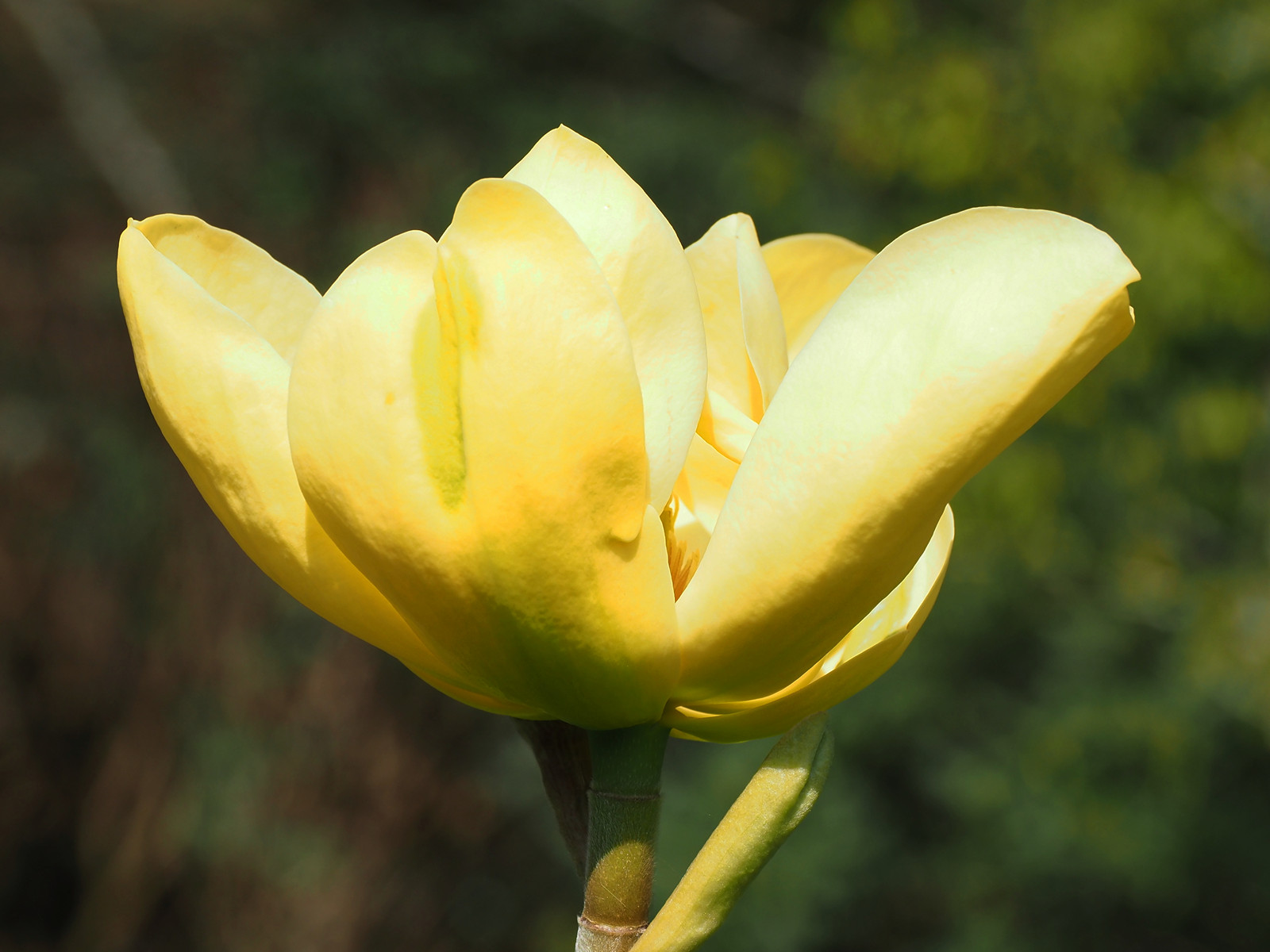
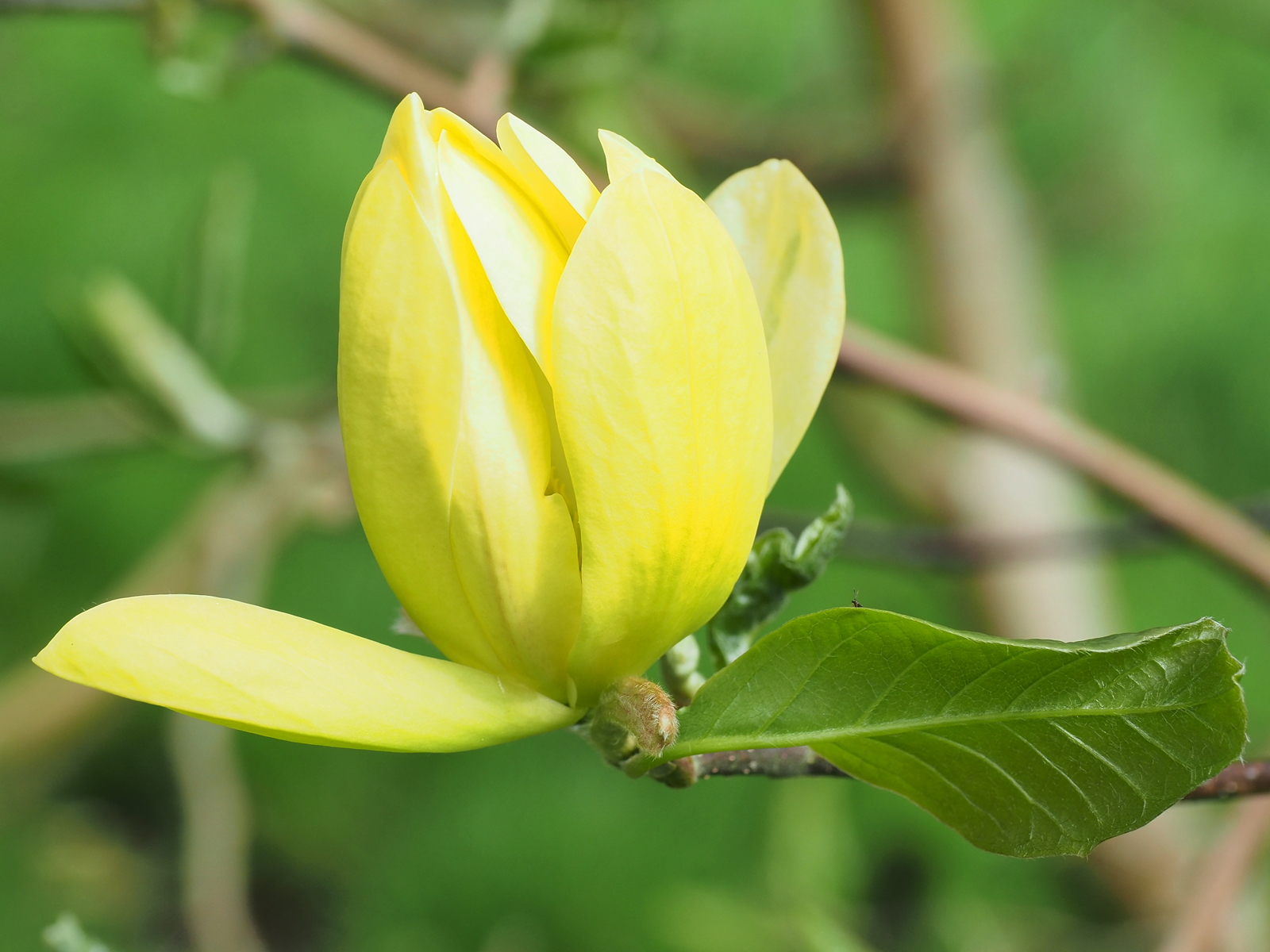
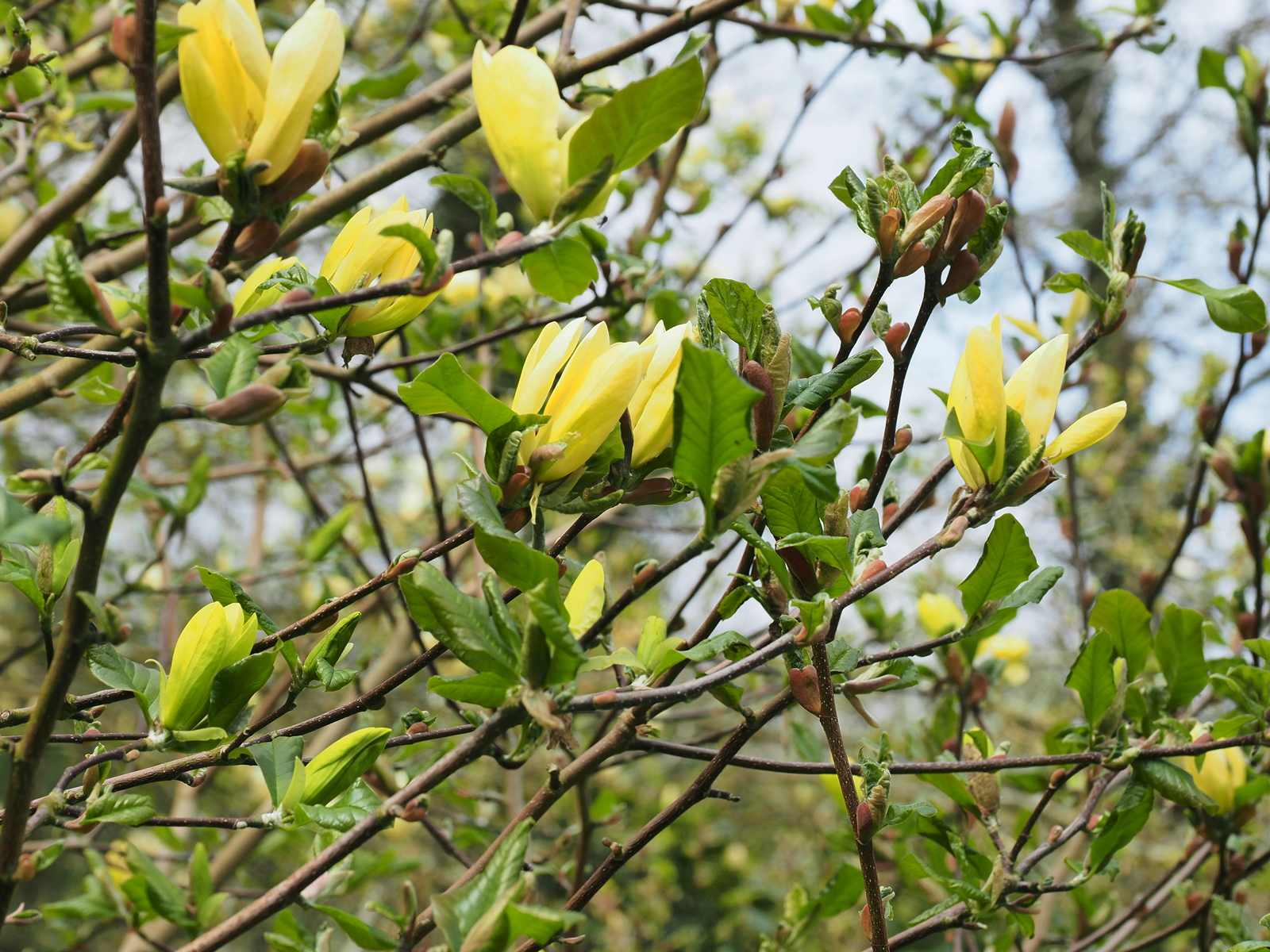
A tour of Burncoose Gardens with 12 members of the Cornwall Garden Trust today. Cold east wind but the yellow magnolias looking good.
Rhododendron concinnum by the pond.
Rhododendron concinnum
Rhododendron montroseanum with its change in flower colours.
Rhododendron montroseanum
Rhododendron ‘Veryan Bay’ and Rhododendron loderi ‘King George’.
Rhododendron ‘Veryan Bay’ and Rhododendron loderi ‘King George’
Rhododendron loderi ‘King George’ and Rhododendron davidsonianum.
Rhododendron loderi ‘King George’ and Rhododendron davidsonianum
Rhododendron loderi ‘King George’ and Rhododendron burmanicum.
Rhododendron loderi ‘King George’ and Rhododendron burmanicum
Rhododendron loderi ‘King George’ and Rhododendron ‘Nancor’ (Caerhays hybrid).
Rhododendron loderi ‘King George’ and Rhododendron ‘Nancor’
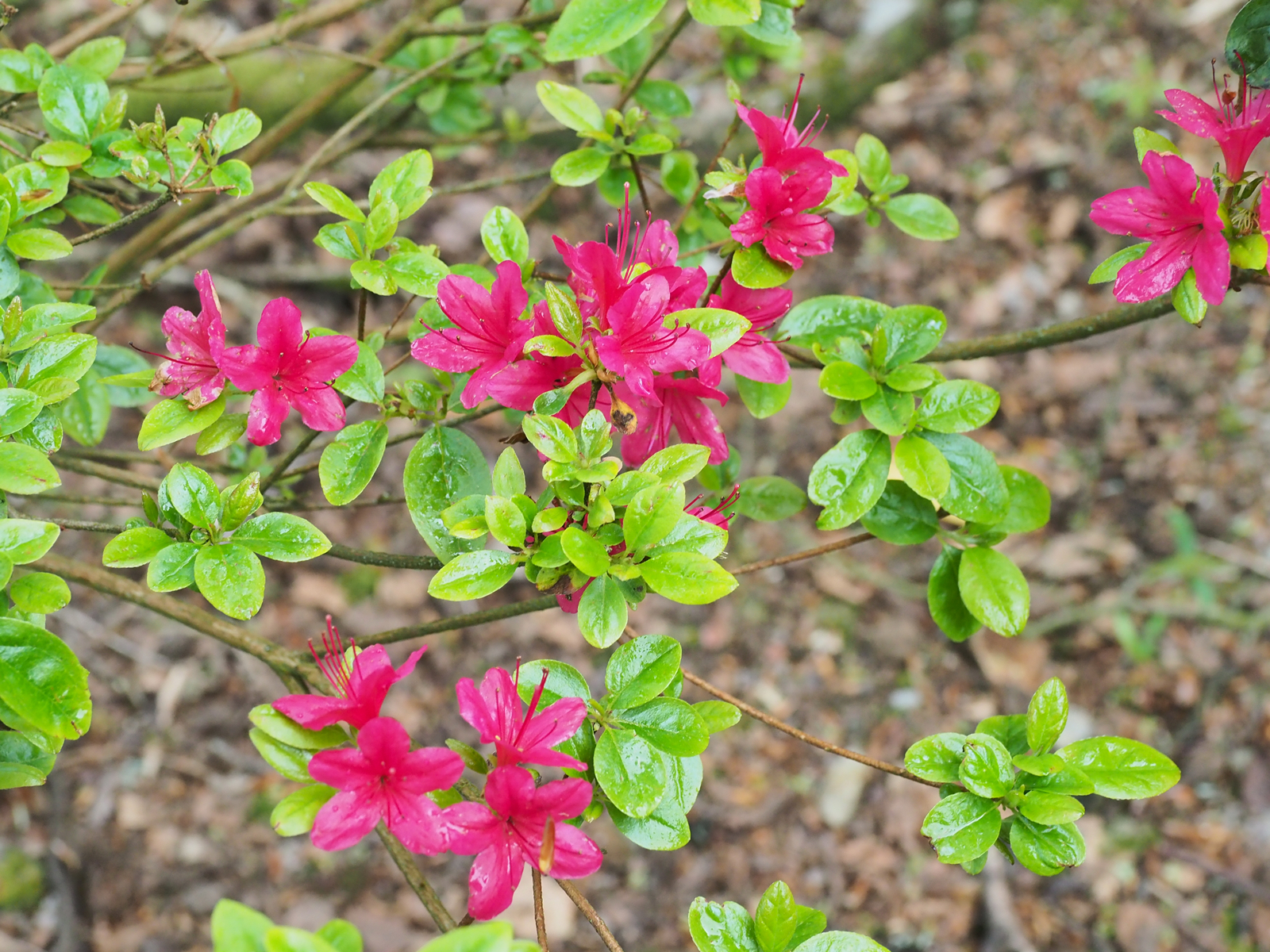
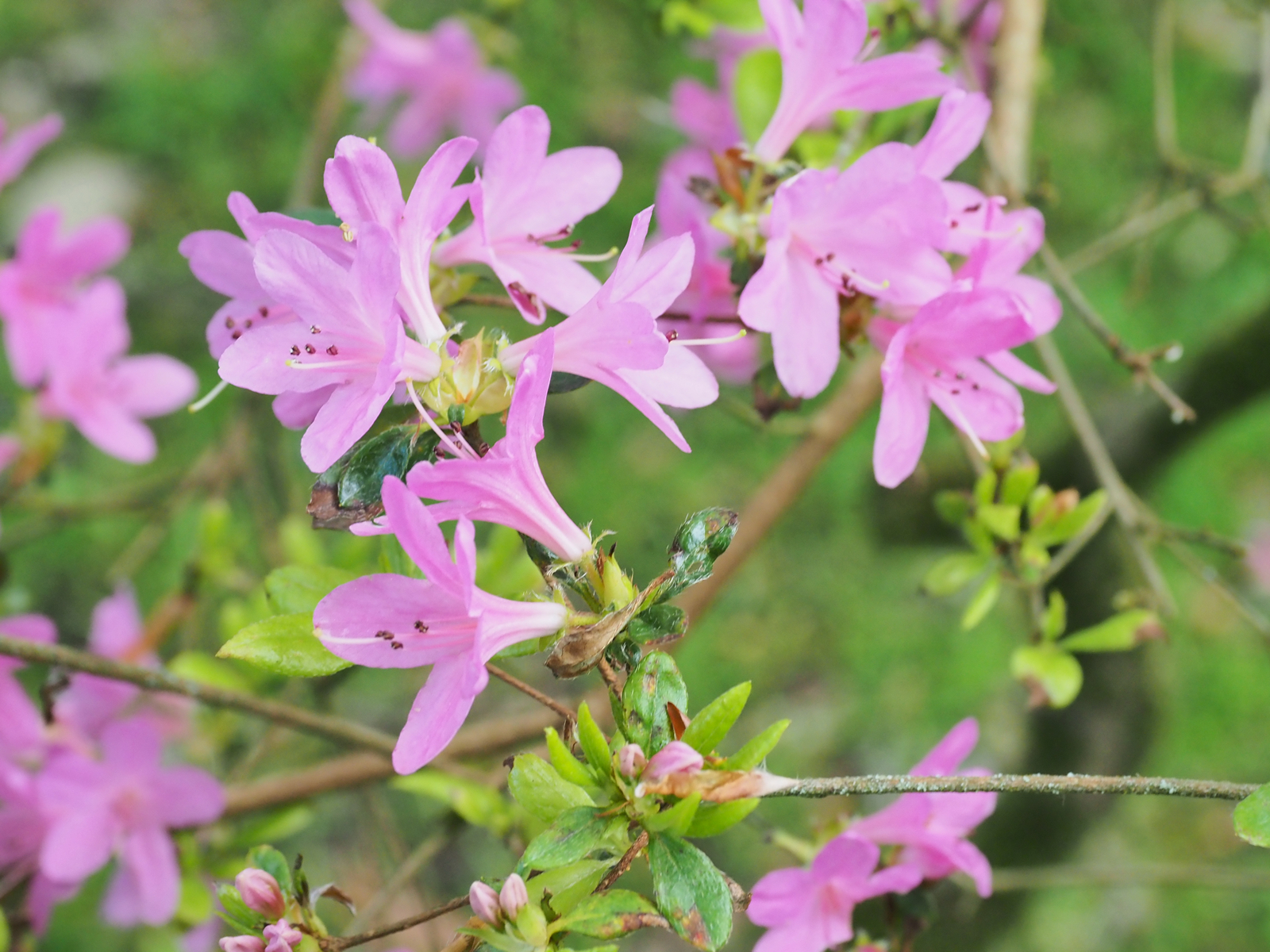
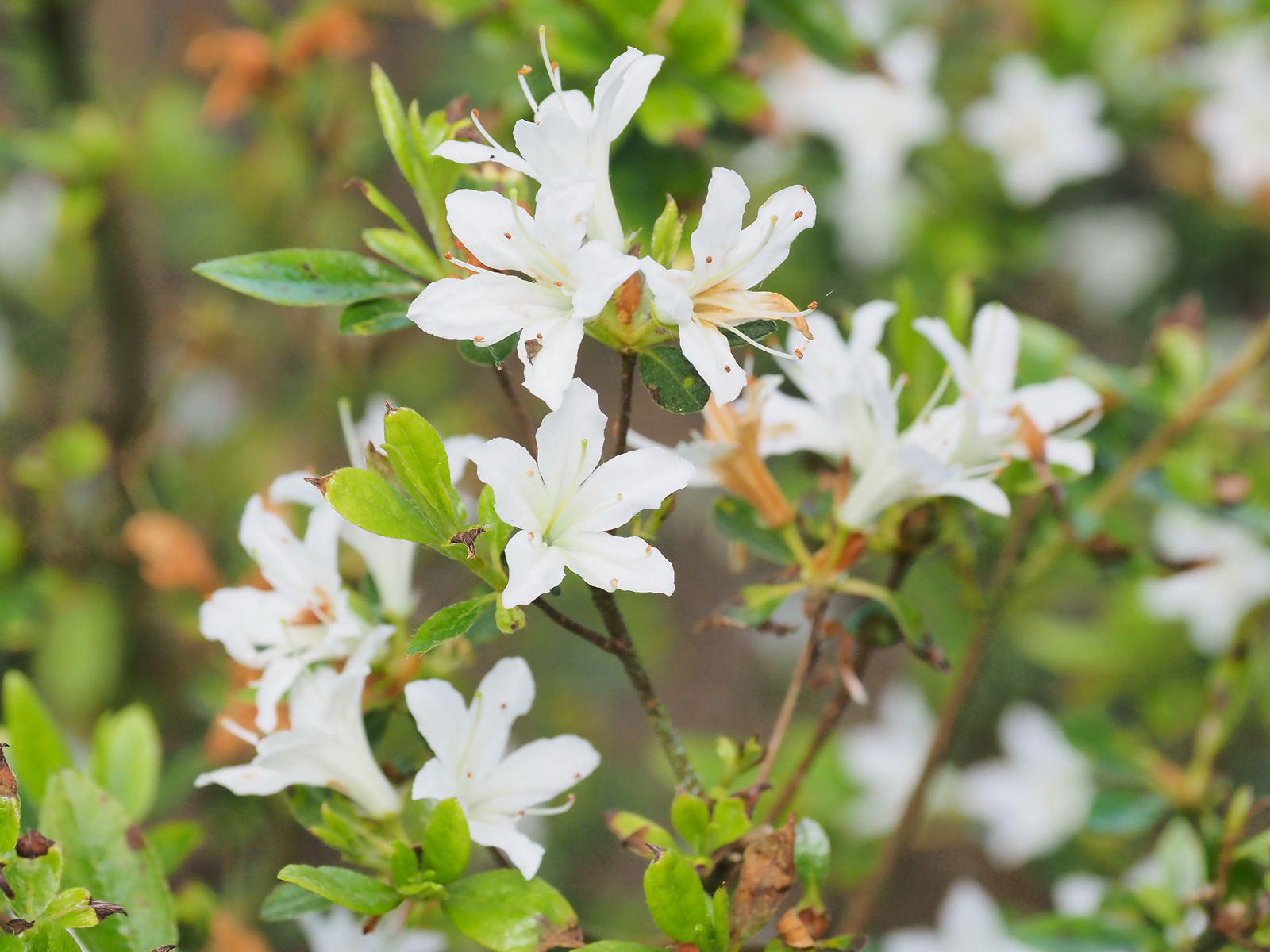
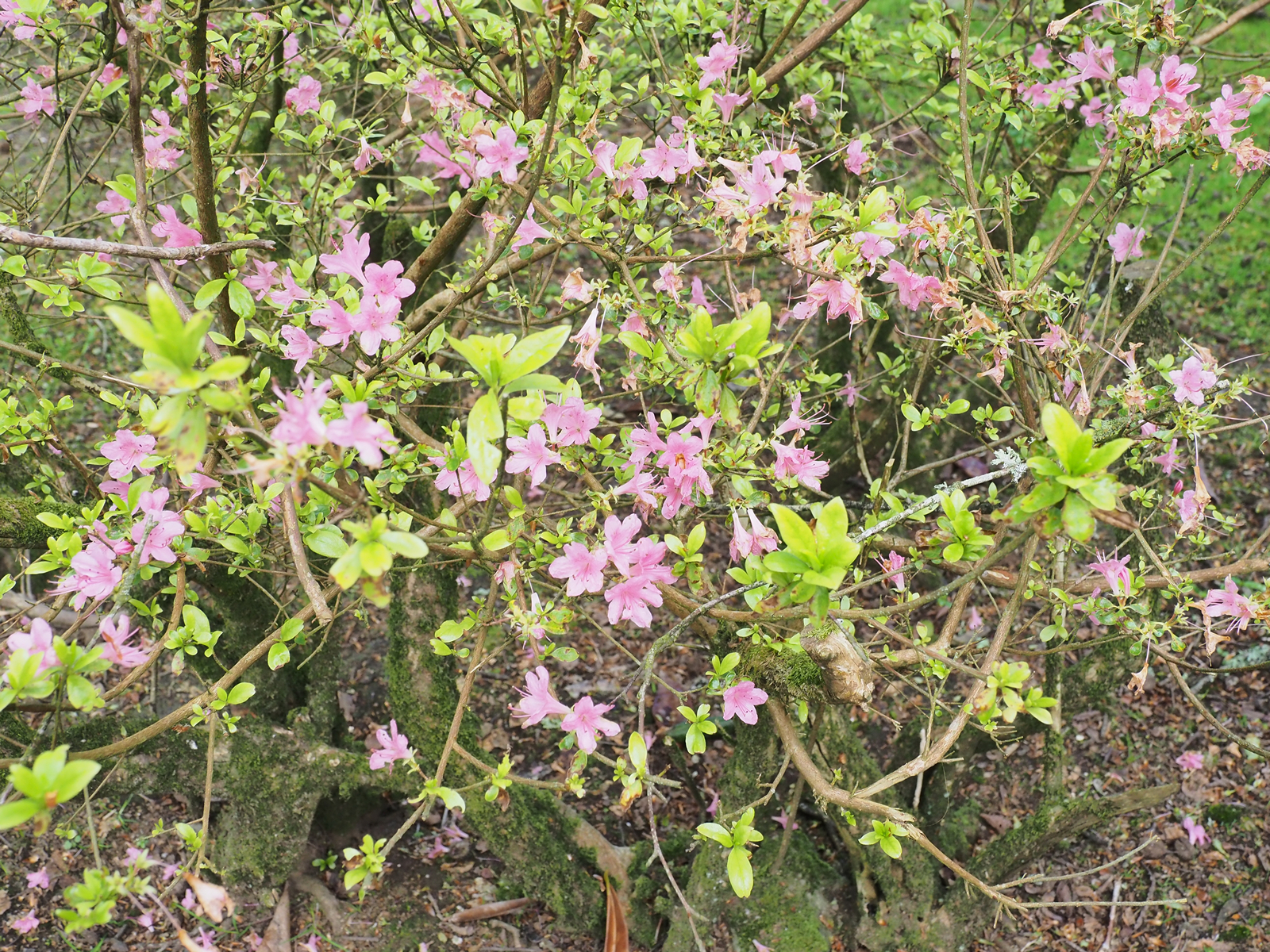
Azalea amoena and rhododendron ‘High Sheriff’.
Azalea amoena and rhododendron ‘High Sheriff’
Magnolia ‘Gold Star’ by the lodge.
Magnolia ‘Gold Star’
Rhododendron ‘Veryan Bay’
Rhododendron ‘Veryan Bay’
2022 – CHW
A pair of swallows rebuilding their nest in the dog kennels (as usual) and twittering happily.
A look at the new planting above the greenhouse.
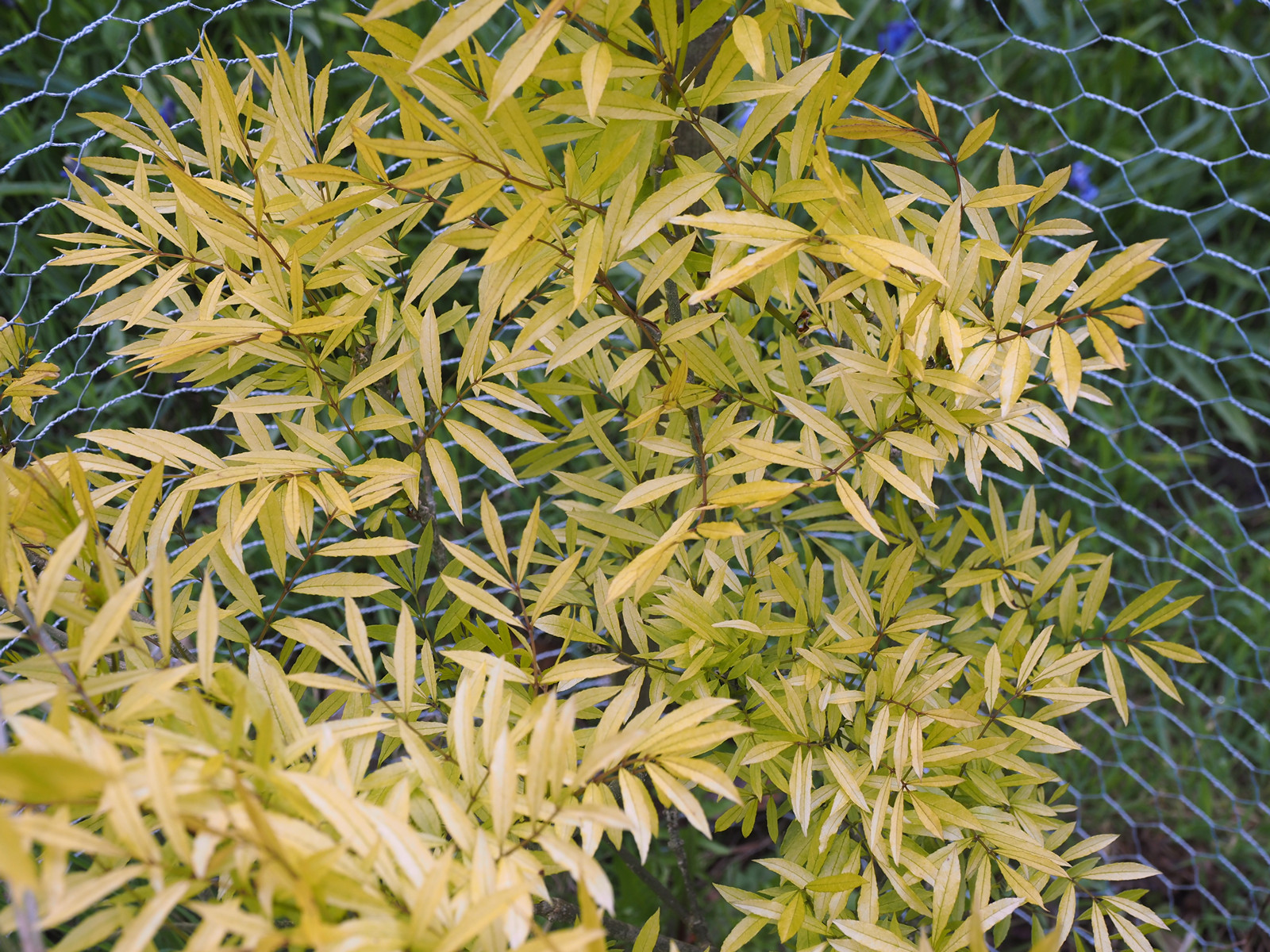
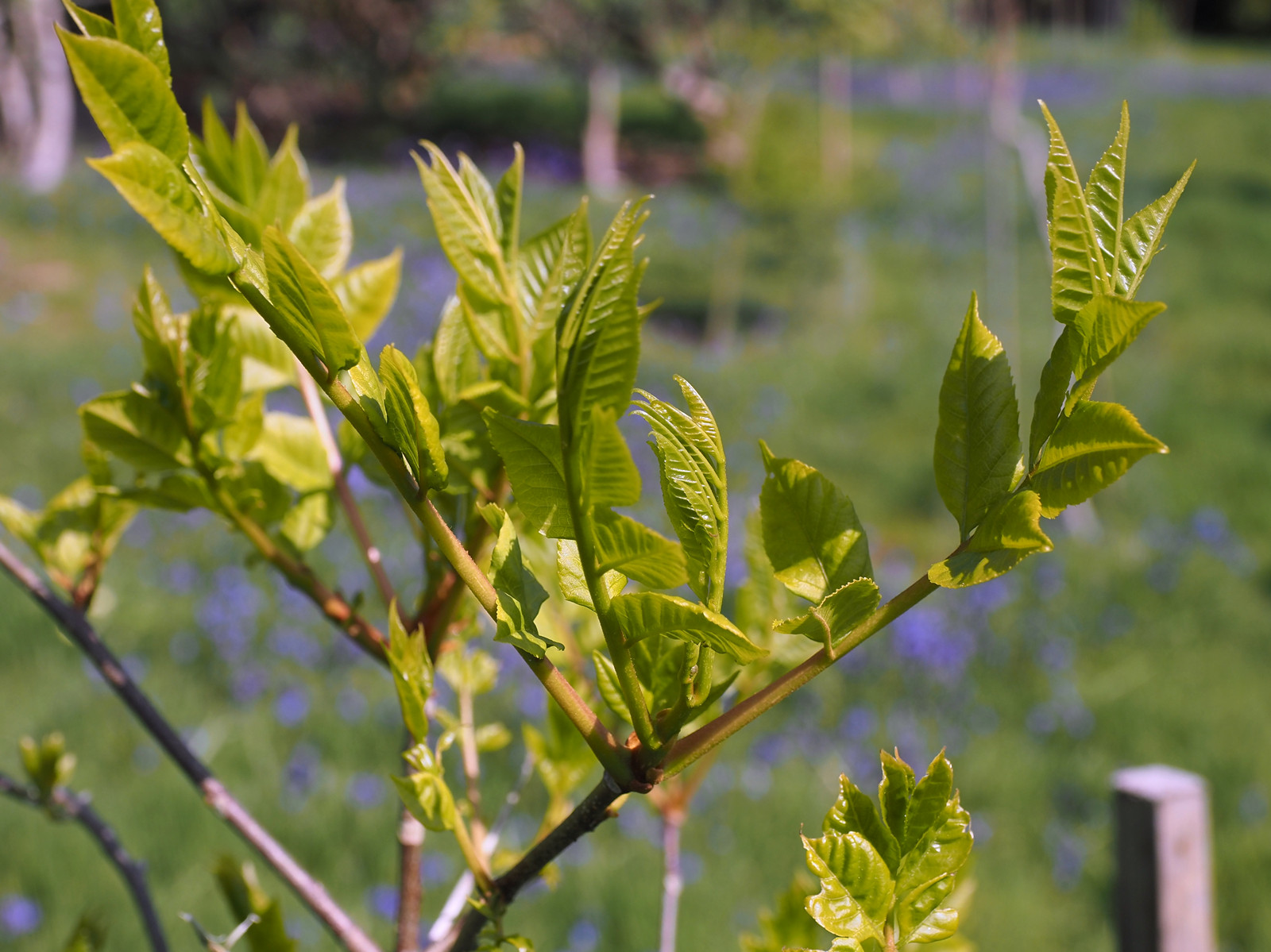
What we think (Susyn Andrews) is the small growing (4m only) Fraxinus baroniana with its attractive yellow new growth. It has taken years to get to 3ft with multiple stems and deer nibbling.
Fraxinus baroniana
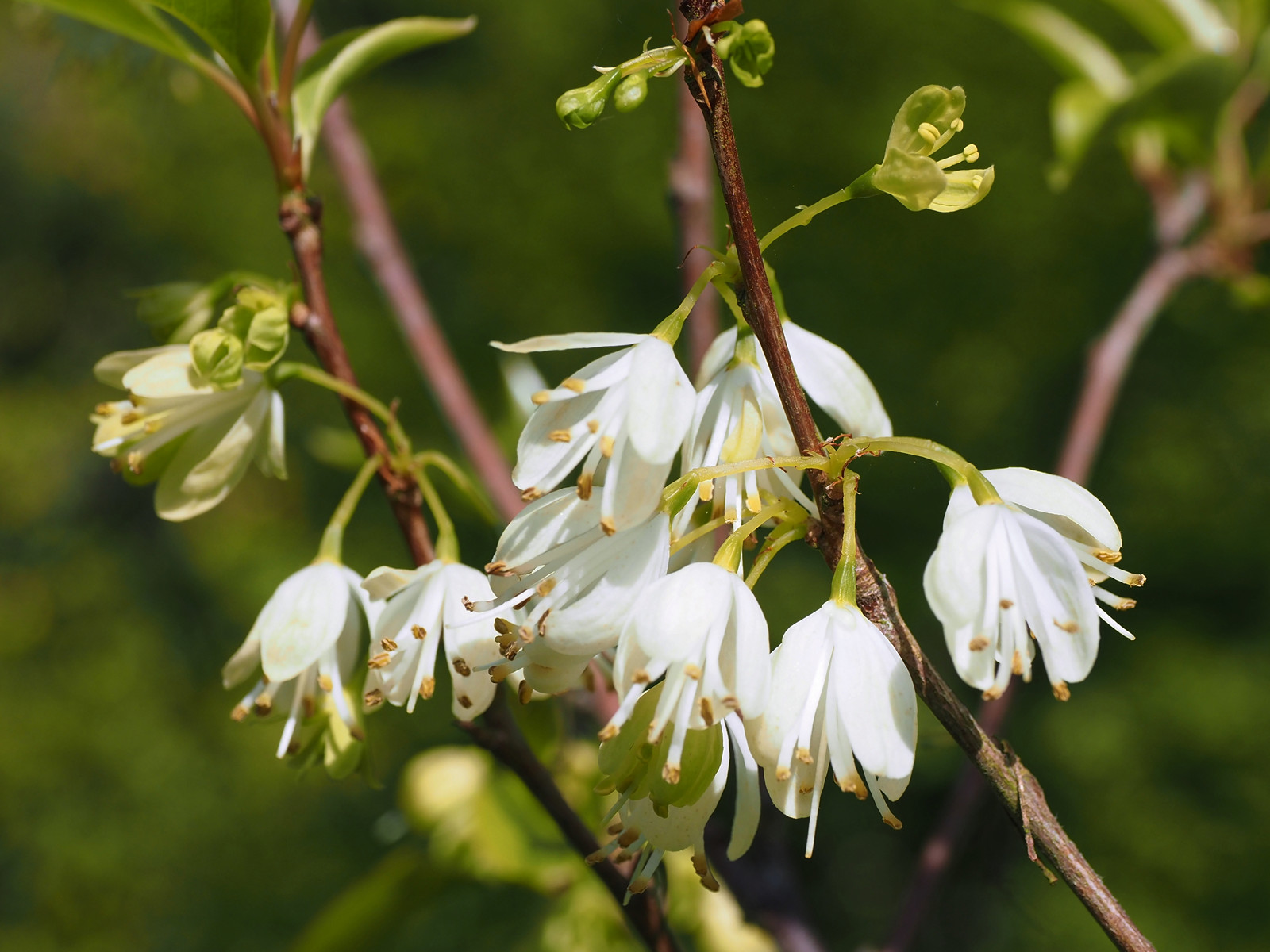
Halesia macgregori (one of three younger plants) already just in flower.
Halesia macgregori
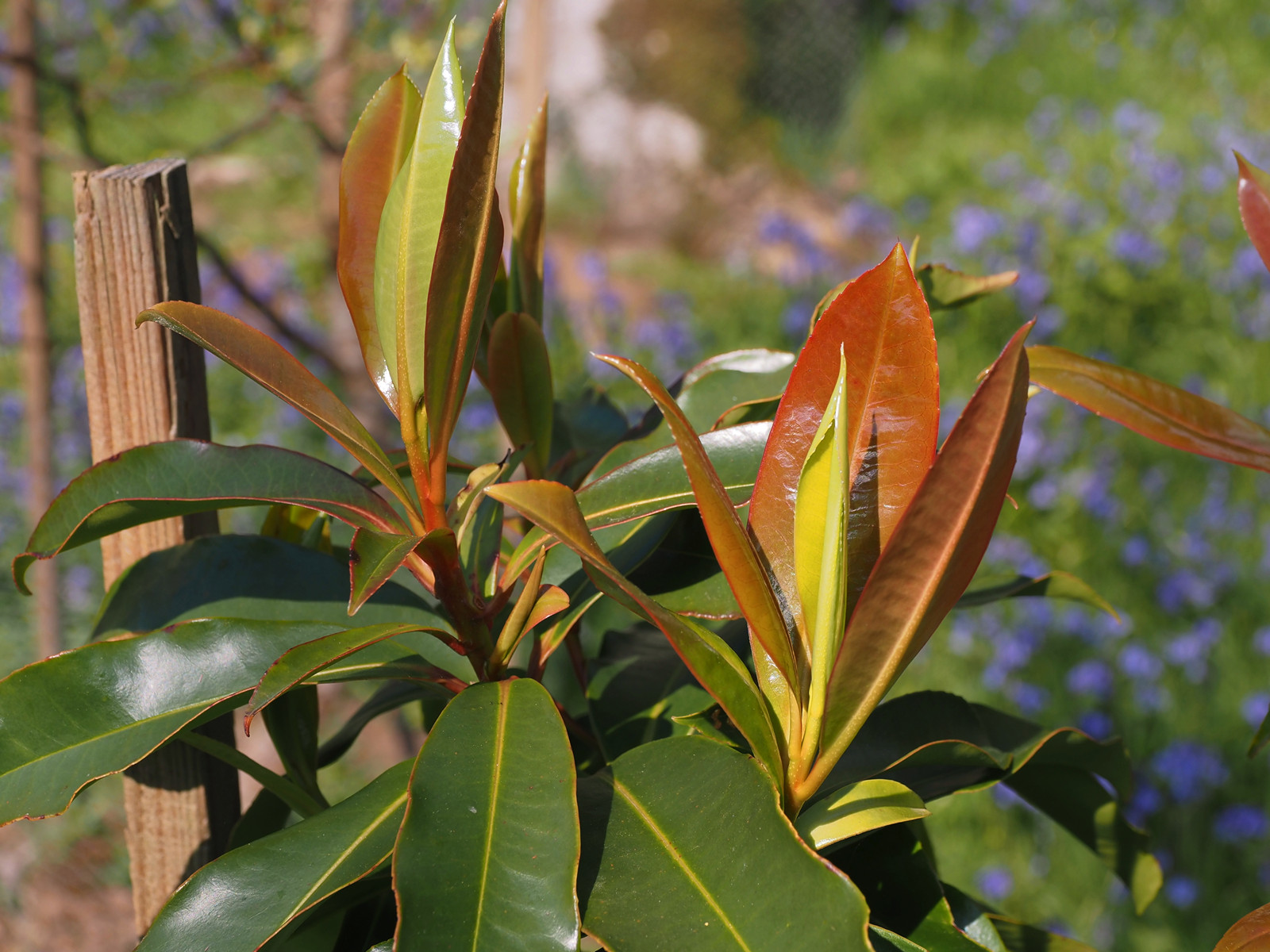
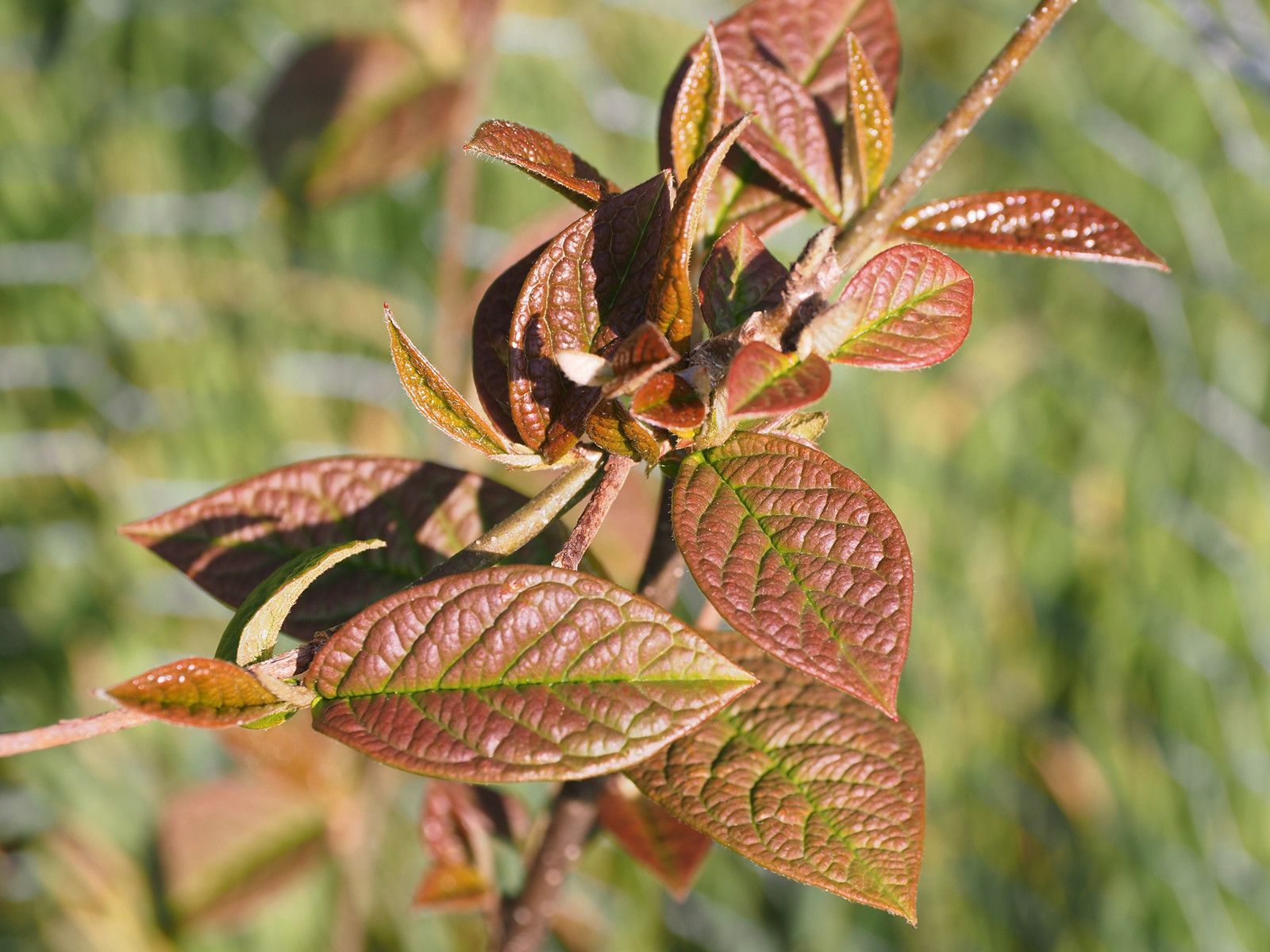
Attractive reddish new growth on Polyspora speciosa (KWJ 12204) which is romping away like its predecessors here.
Polyspora speciosa
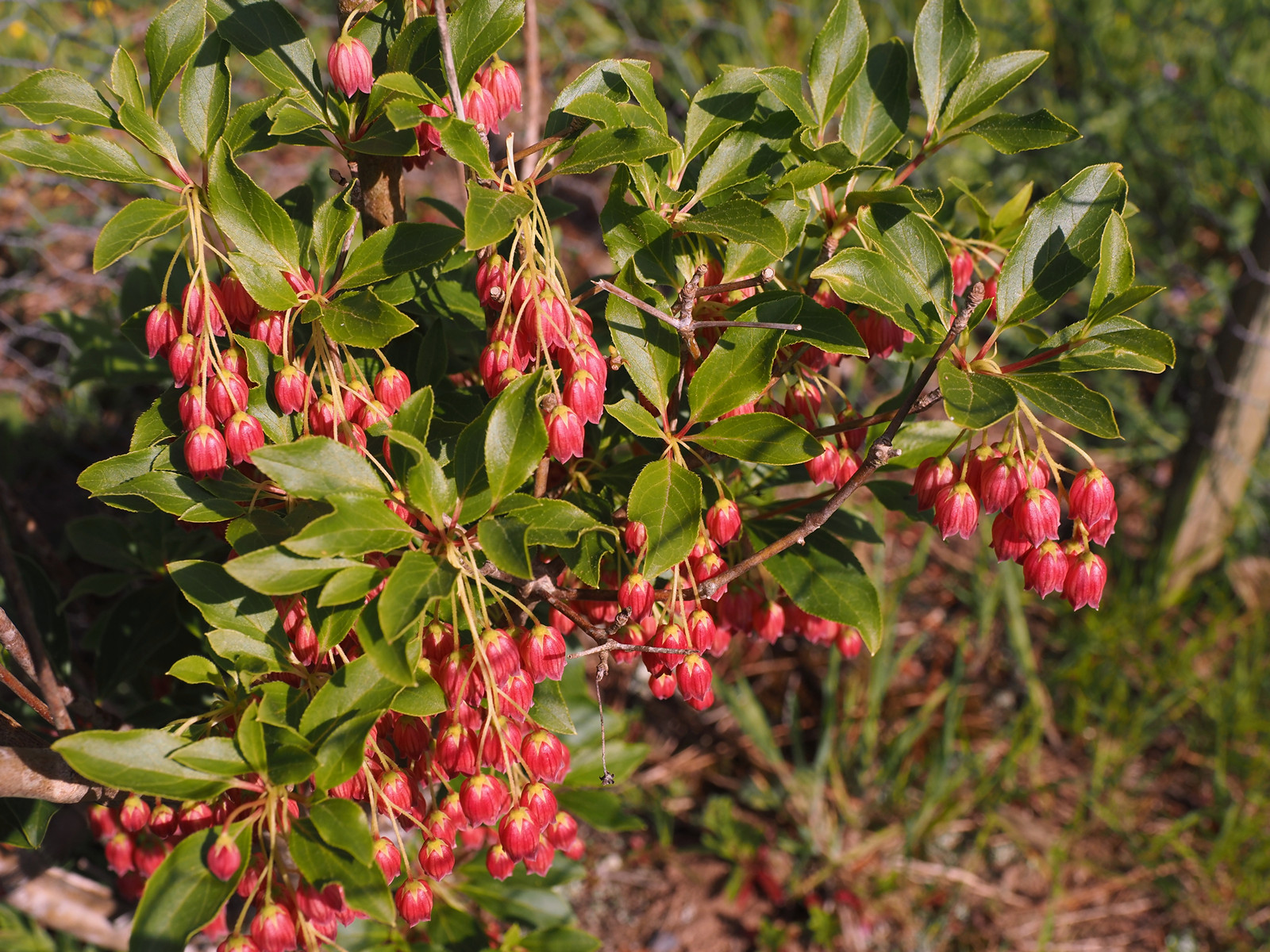
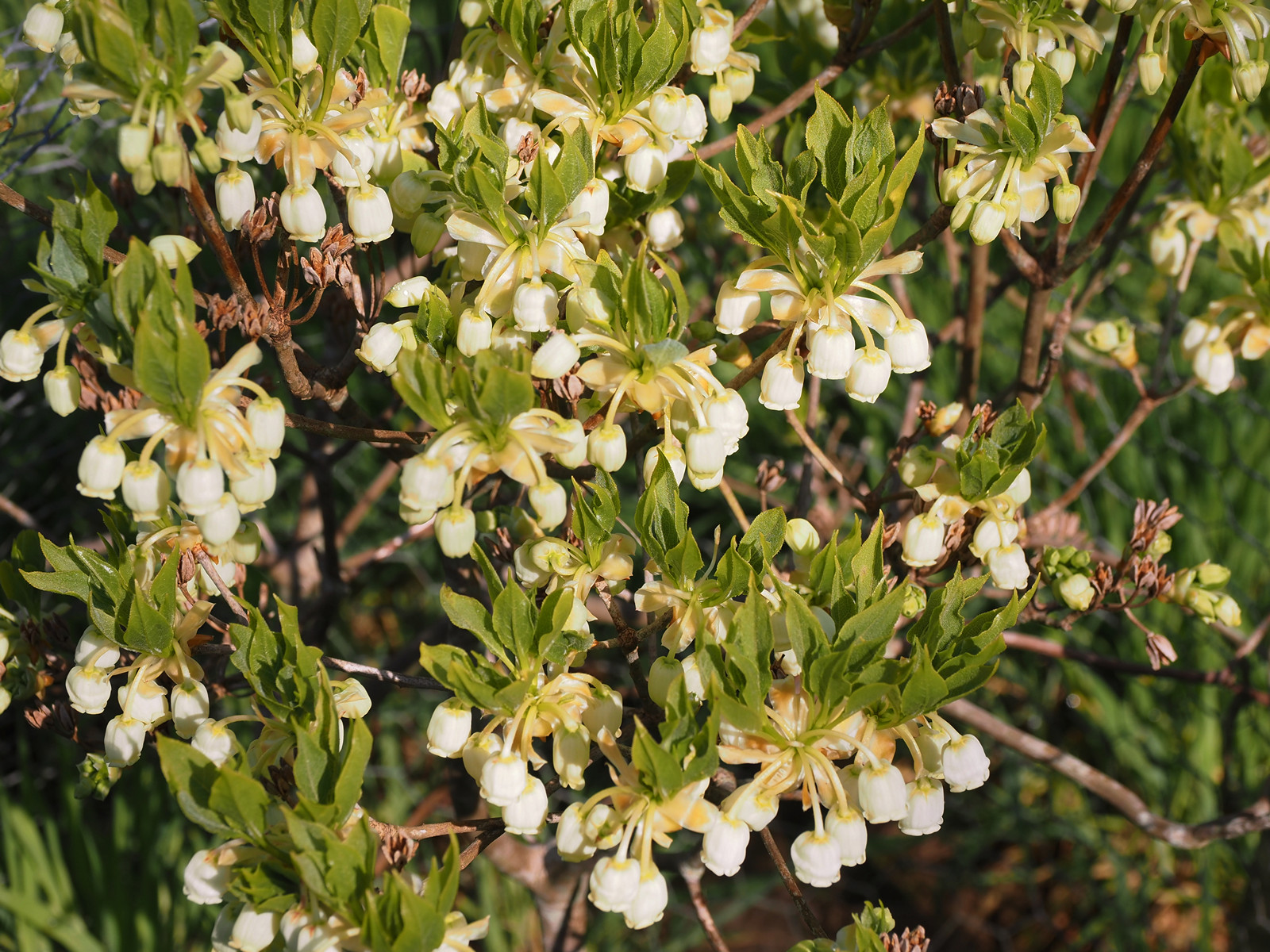
The outstanding Enkianthus campanulatus ‘Showy Lantern’ – an excellent red which gets better and better.
Enkianthus campanulatus ‘Showy Lantern’
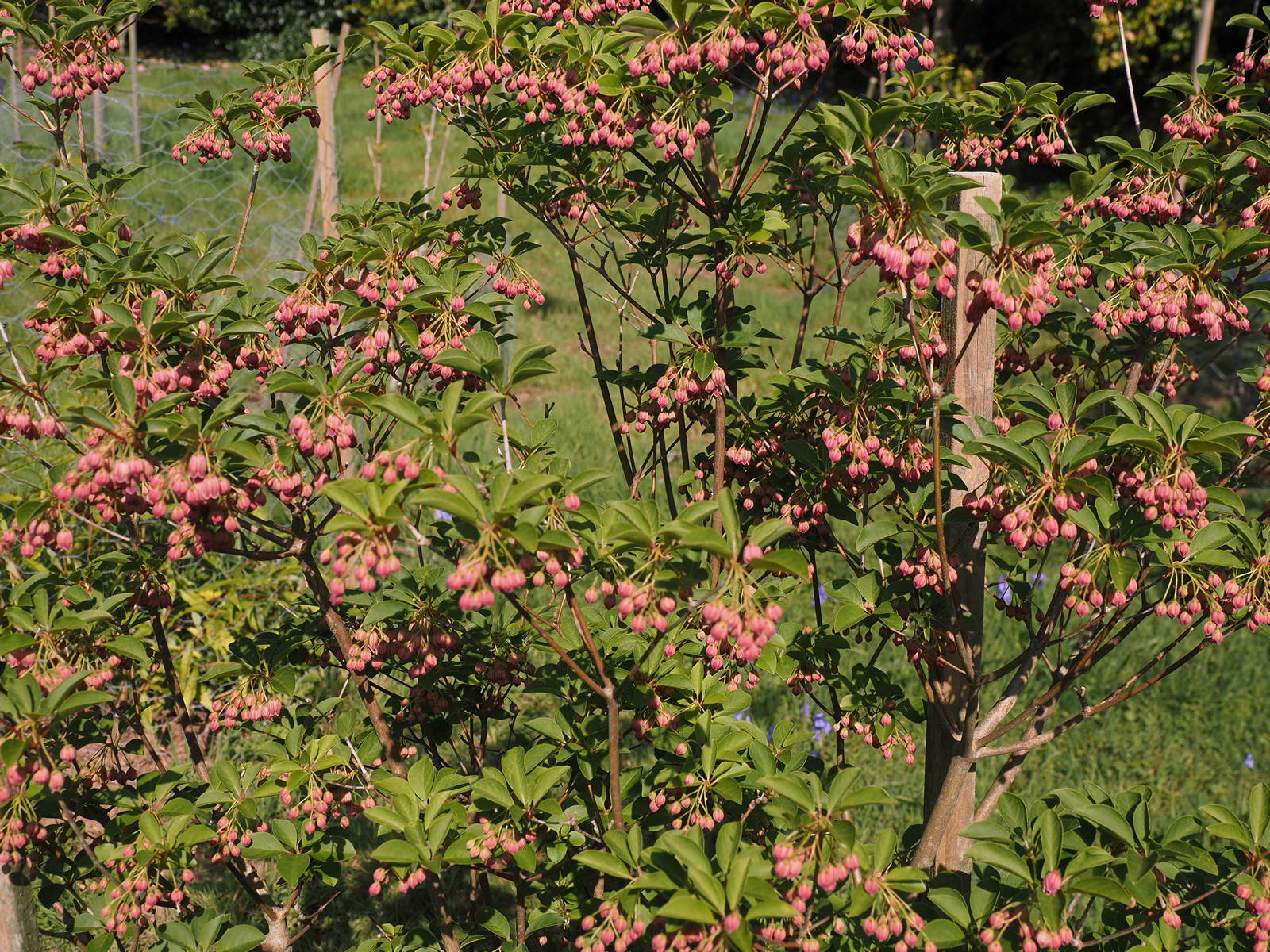
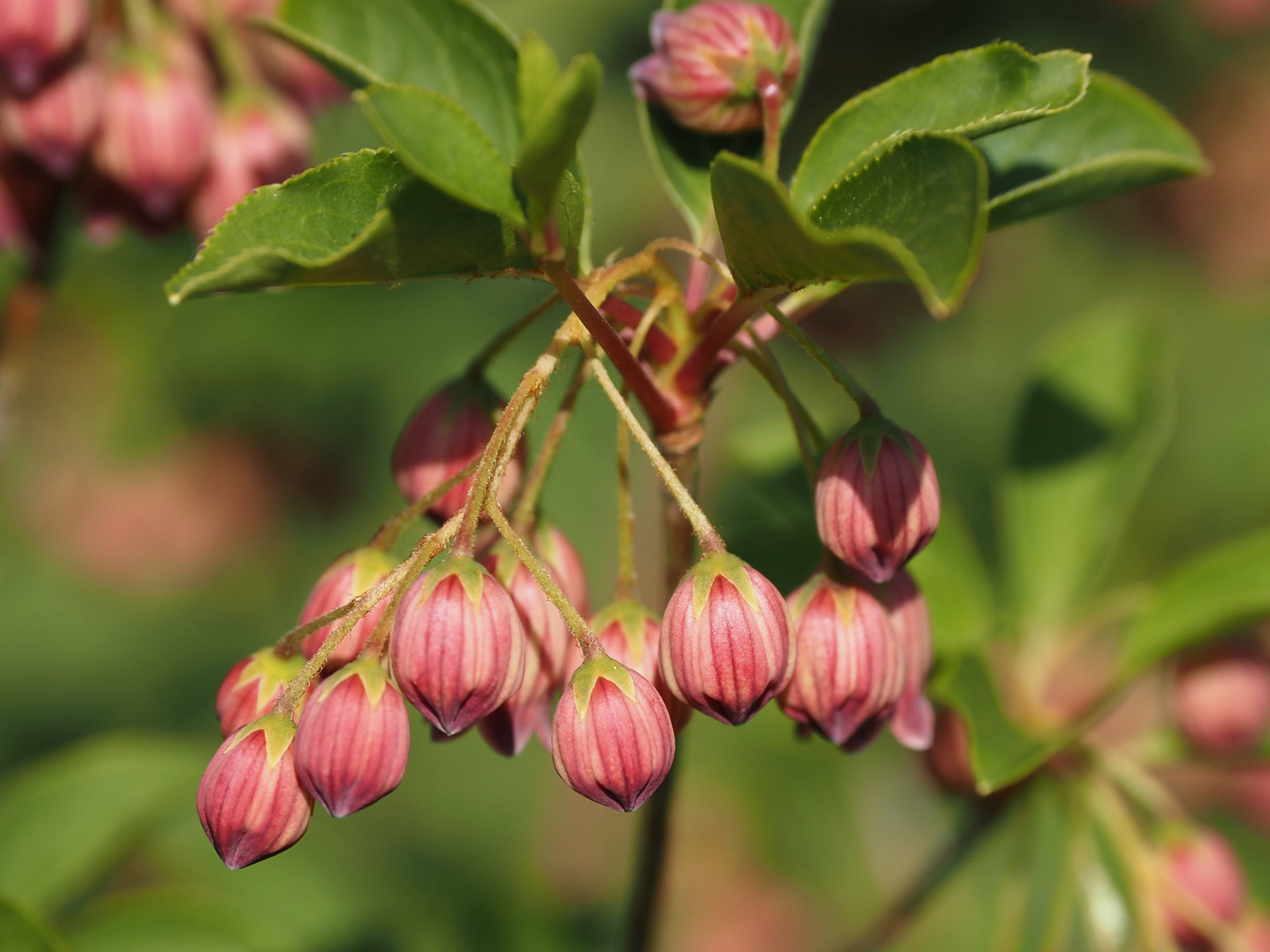
Enkianthus cernuus recurvatus – the unopened flowers not yet living up to its name.
Early flowers on the record tree Magnolia sinensis (now not M. sieboldii var. sinensis but a species in its own right according to the latest International Dendrology Society magnum opus on magnolias).
Magnolia sinensis
Outstanding new growth on Maackia hupehensis although hidden away here.
Maackia hupehensisMaackia hupehensis
These original plants from my father’s Rhododendron williamsianum x Rhododendron decorum cross have been recently cut down but are reshooting beautifully (two named – ‘Tinner’s Bush’ and ‘High Sheriff’).
Rhododendron williamsianum x Rhododendron decorum
Picrasma quassioides coming into leaf. A Chinese/Japanese small, ornamental, hardy tree with good autumn colour.
Picrasma quassioides
Magnolia ‘Honey Liz’ just out with buds to come. M. acuminata ssp. subcordata ‘Miss Honeybee’ x M. ‘Elizabeth’. Not bad but not as good as ‘Honey Tulip’ or ‘Honey Belle’, or ‘Judy Zuk’ as we can now compare.
Magnolia ‘Honey Liz’
Cotoneaster cornifolus ‘Ogisu’ (93330) just into leaf. A deciduous species first collected by Ernest Wilson in 1910 and in 2007 by Mikinori Ogisu.
Cotoneaster cornifolus ‘Ogisu’
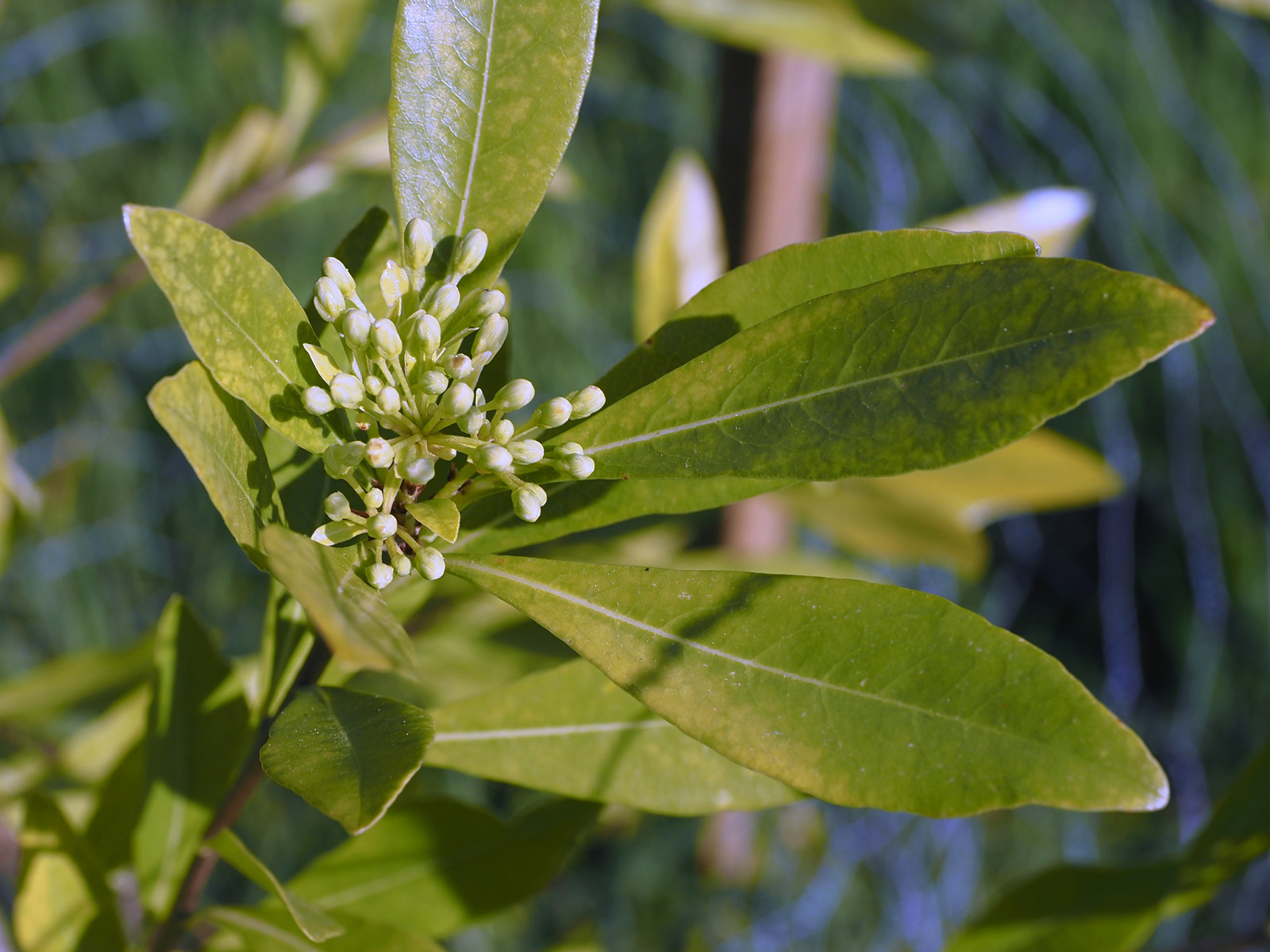
A very good form of Enkianthus serrulatus (group of three) – better I think than on the one Tom Hudson gave us and certainly flowering later in the season.
Enkianthus serrulatus
First flowers out on Rhododendron ‘Fragrantissimum’ by the front door.
Rhododendron ‘Fragrantissimum’
2021 – CHW
A Burncoose trip to finalise trip to finalise next year’s budget and implement pay-rises and bonuses.Toona sinensis ‘Flamingo’ with its startling pink new growth in the cash point.
Toona sinensis ‘Flamingo’
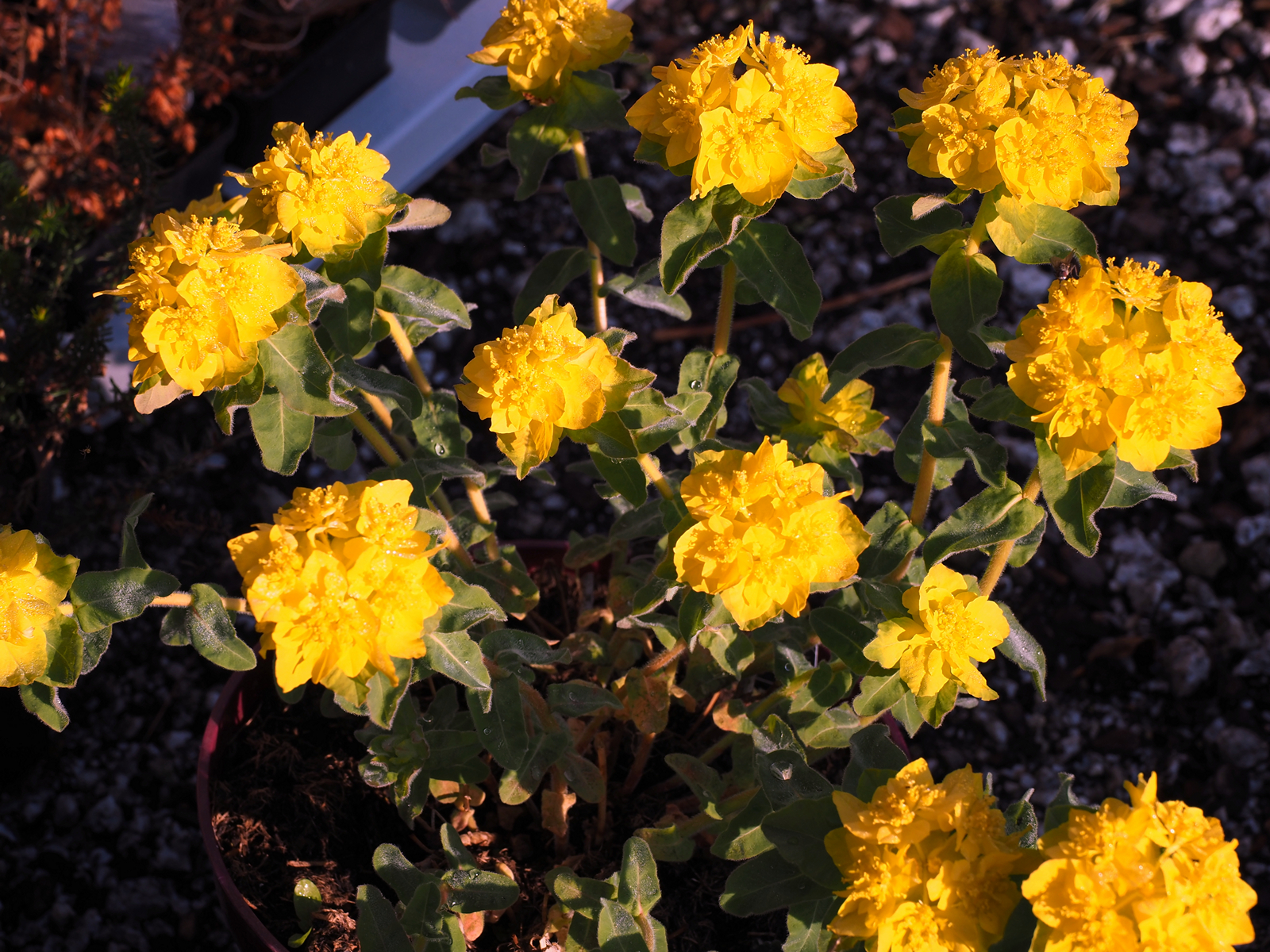
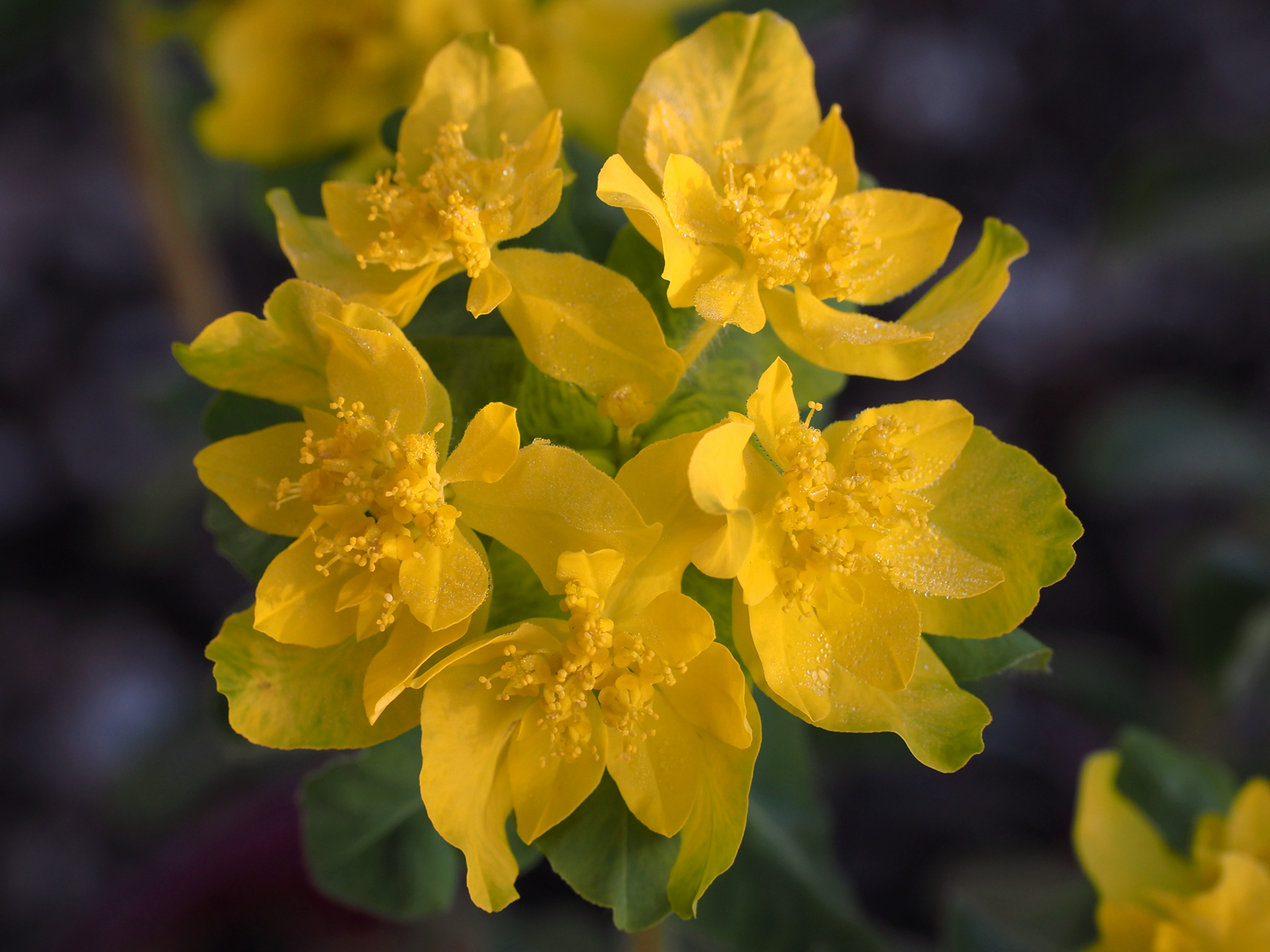
Euphorbia polychroma looking especially good in the sun.
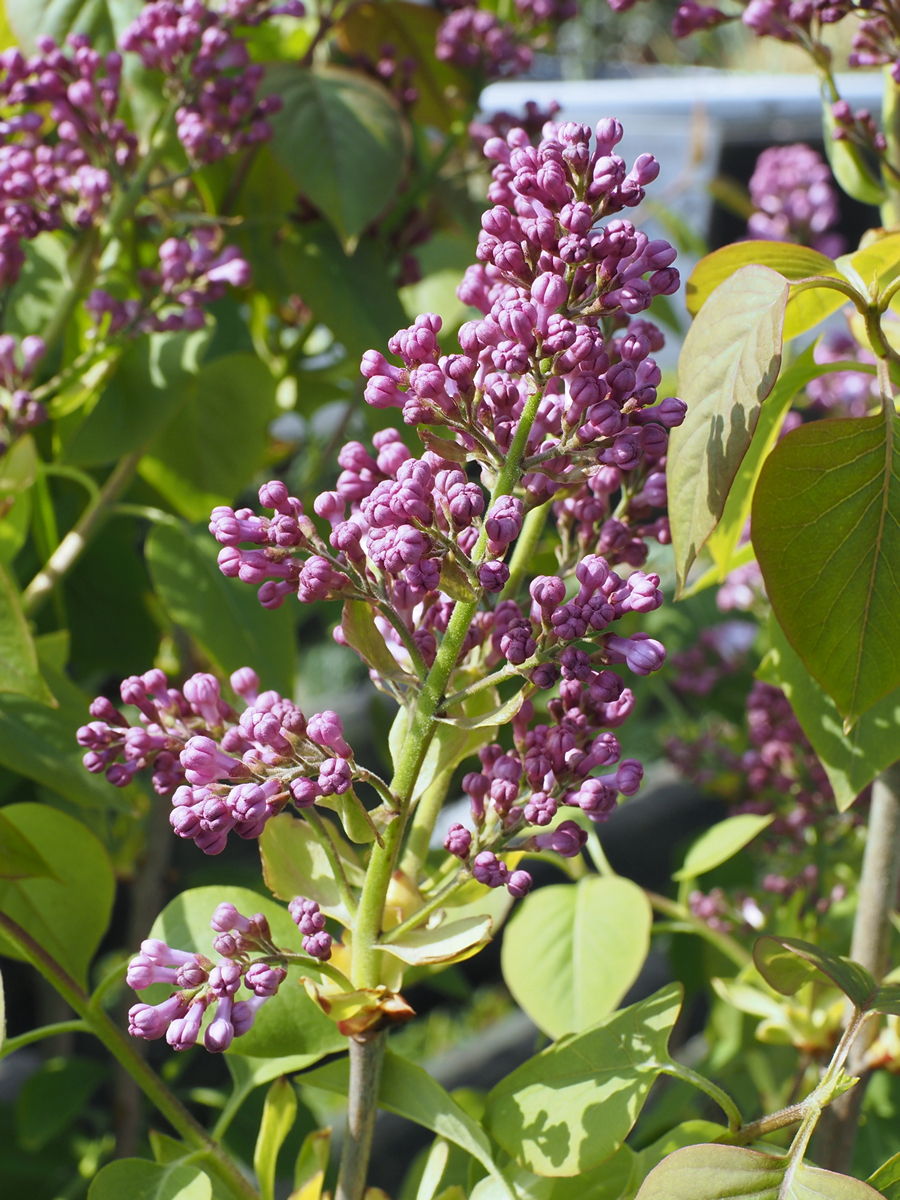
Syringa vulgaris ‘Madame Antoine Buchner’ just coming out. A new entry in our 2021 catalogue.
Syringa vulgaris ‘Madame Antoine Buchner’
2020 – CHW
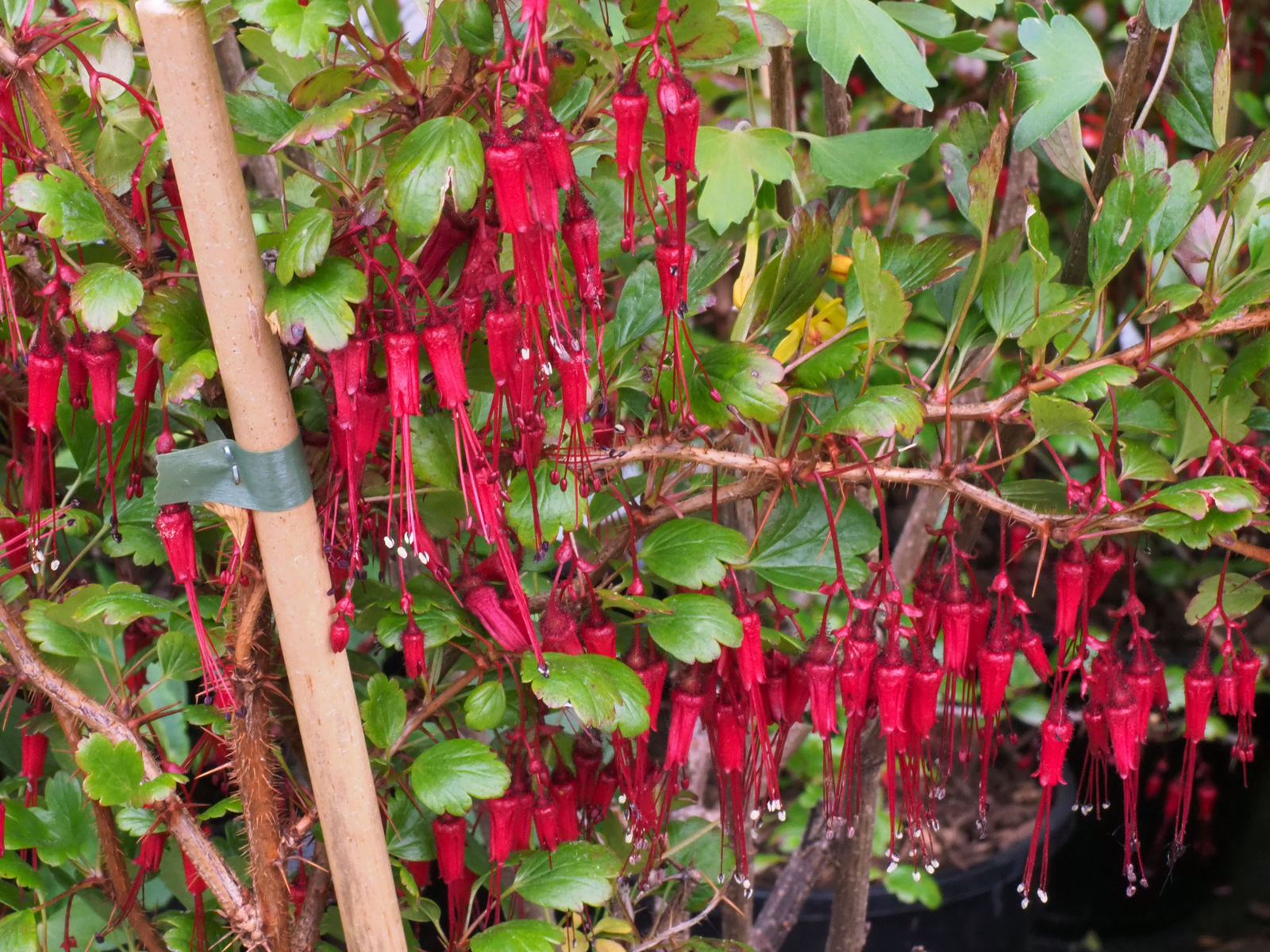
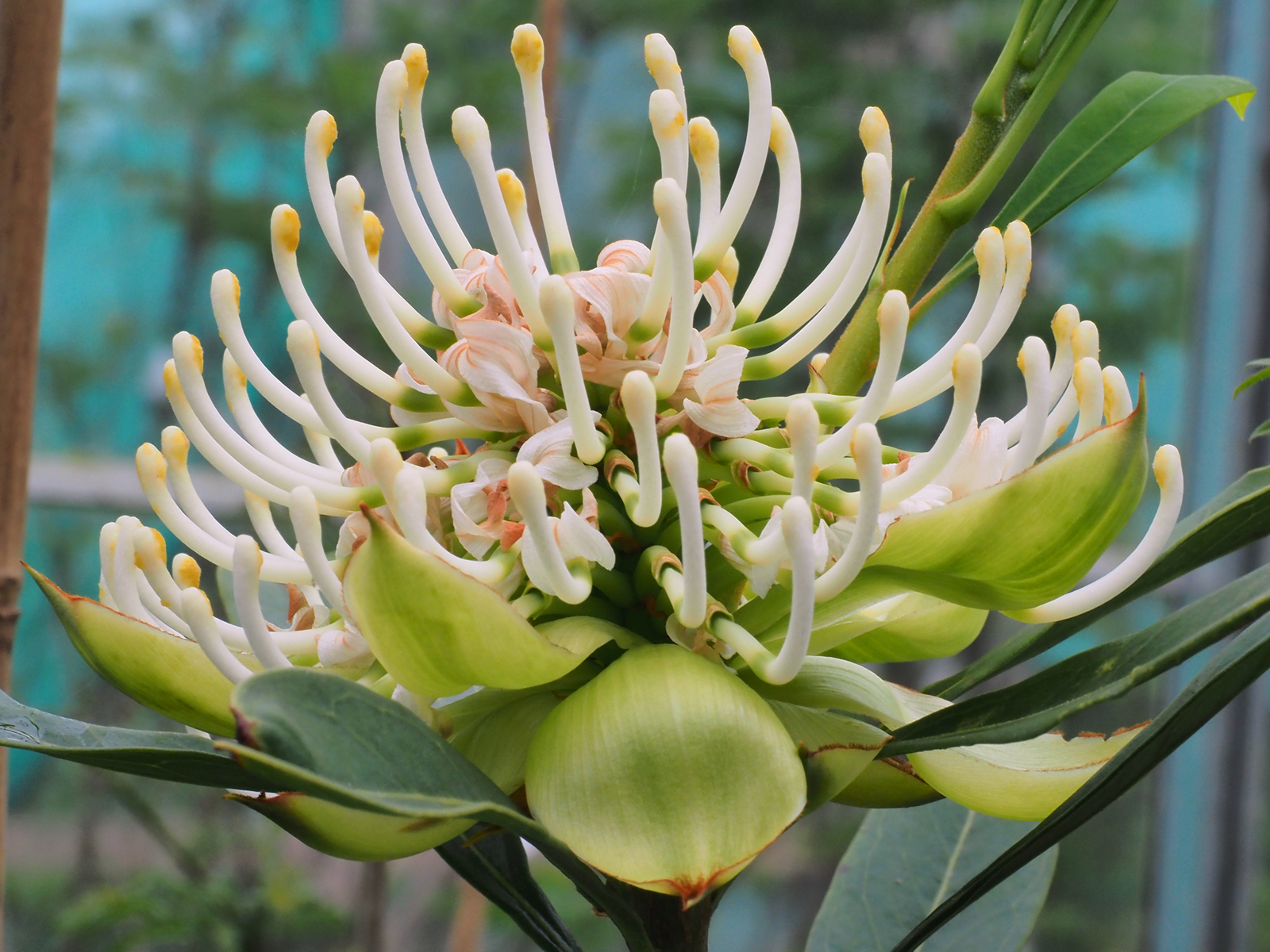
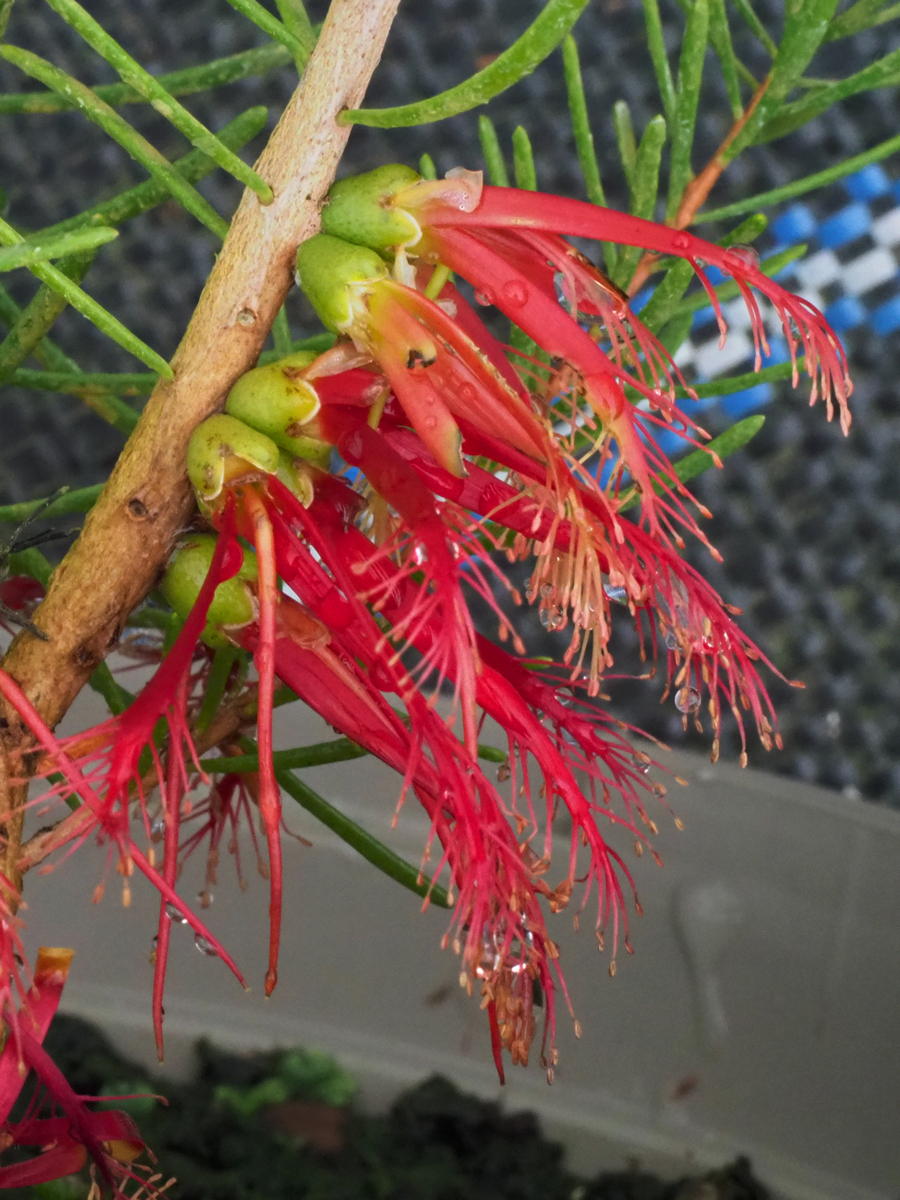
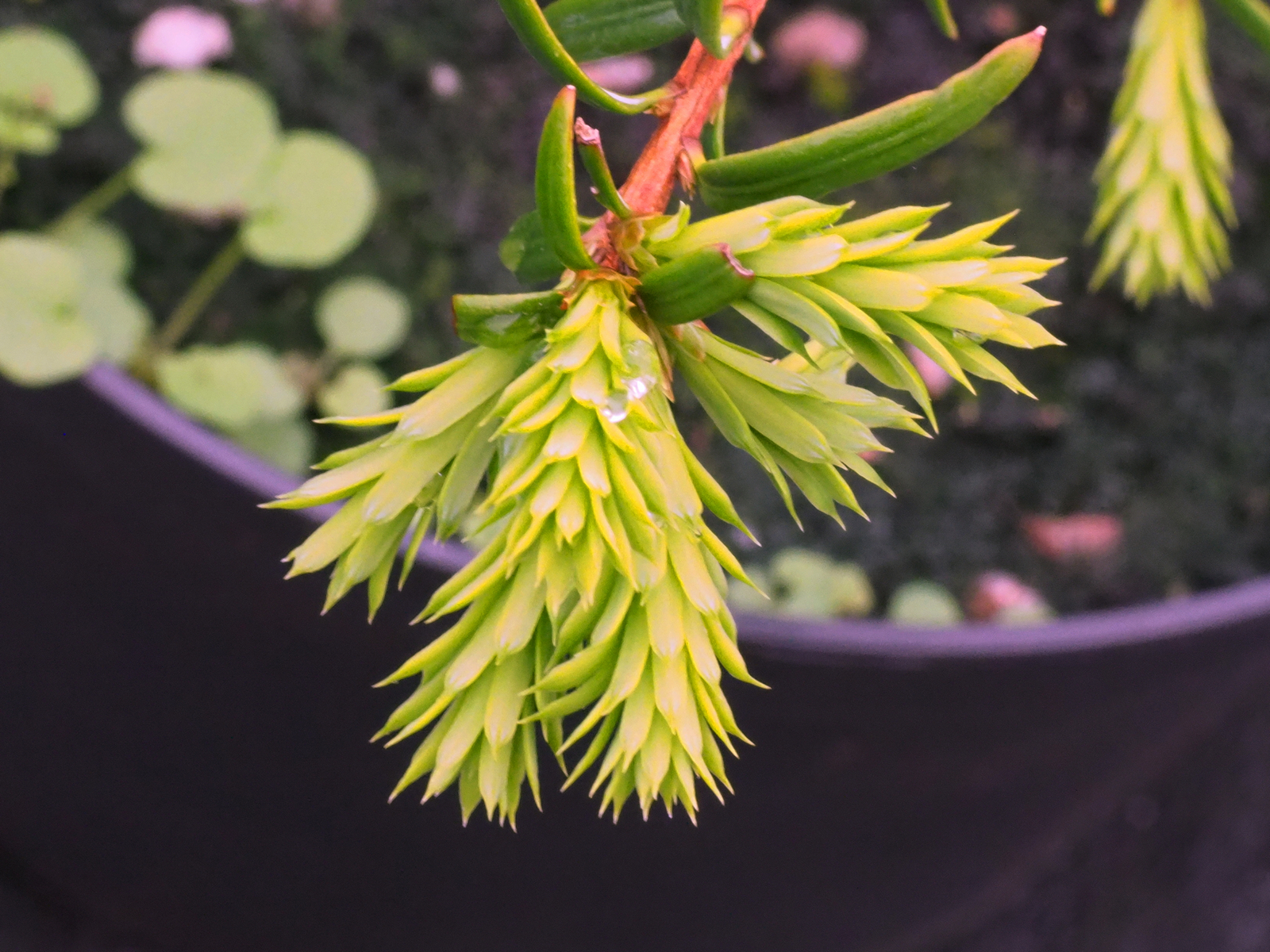
In a ‘war’ there will always be profiteering and skulduggery. The insurance industry have belatedly got their PR machine to operate to tell us how much they will be paying out for the corona (£1.2bn).It is a total lie of course because very very few businesses have any ‘business interruption’ cover for something like corona. Those who might have, and thought that they did, have had their claims denied.The insurers and Lloyds are not going to pay up to businesses, and why should they, despite what will be a torrent of legal battles and pressure on the government to ‘do something’ (as for flood victims insurance in a government backed scheme). Read the contract!Since few people are driving their cars the main vehicle insurers are coining it on the lack of motor insurance accidents (or whiplash/bogus) claims. Let us see how they lower premiums for next year? Do not hold your breath!And then there are the travel companies, airlines, railways etc who are using people’s prepaid cash (and mine) to not refund what they have not delivered.The insurance industry’s media claims over the weekend should be seen for what they are. Defensive profiteering!No doubt the BBC will help them to promote this as another ‘entitlement’.Looking at Tunnel Field today at Burncoose with my brother and Rob Toy. Rob will spray the brambles off and we will then slash them down and spray any regrowth. Early next spring we will plant this 2 acre field as a new yellow magnolia garden which should be a new first for Cornwall to flower in April and May. My brother wants to restore the tunnel under the gardens to this field so that this can eventually be the public access. In the meantime a small path from the main drive. A few specimen conifers with the yellow magnolias and, later on, big clumps of tall growing rhododendrons. A great new project for the garden.Looking good in the nursery today:Ribes speciosum
Ribes speciosum
Telopea ‘Shady Lady White’
Telopea ‘Shady Lady White’
Calothamnus quadrifidus – first flowers ever with us on the ‘one sided bottlebrush’.
Calothamnus quadrifidus
Our first plants in stock of Pseudotaxus chienii.
Pseudotaxus chienii
First flowers here on Amelanchier alnifolia ‘Obelisk’.
Amelanchier alnifolia ‘Obelisk’
Weigelia ‘Black and White’ nicely out.
Weigelia ‘Black and White’
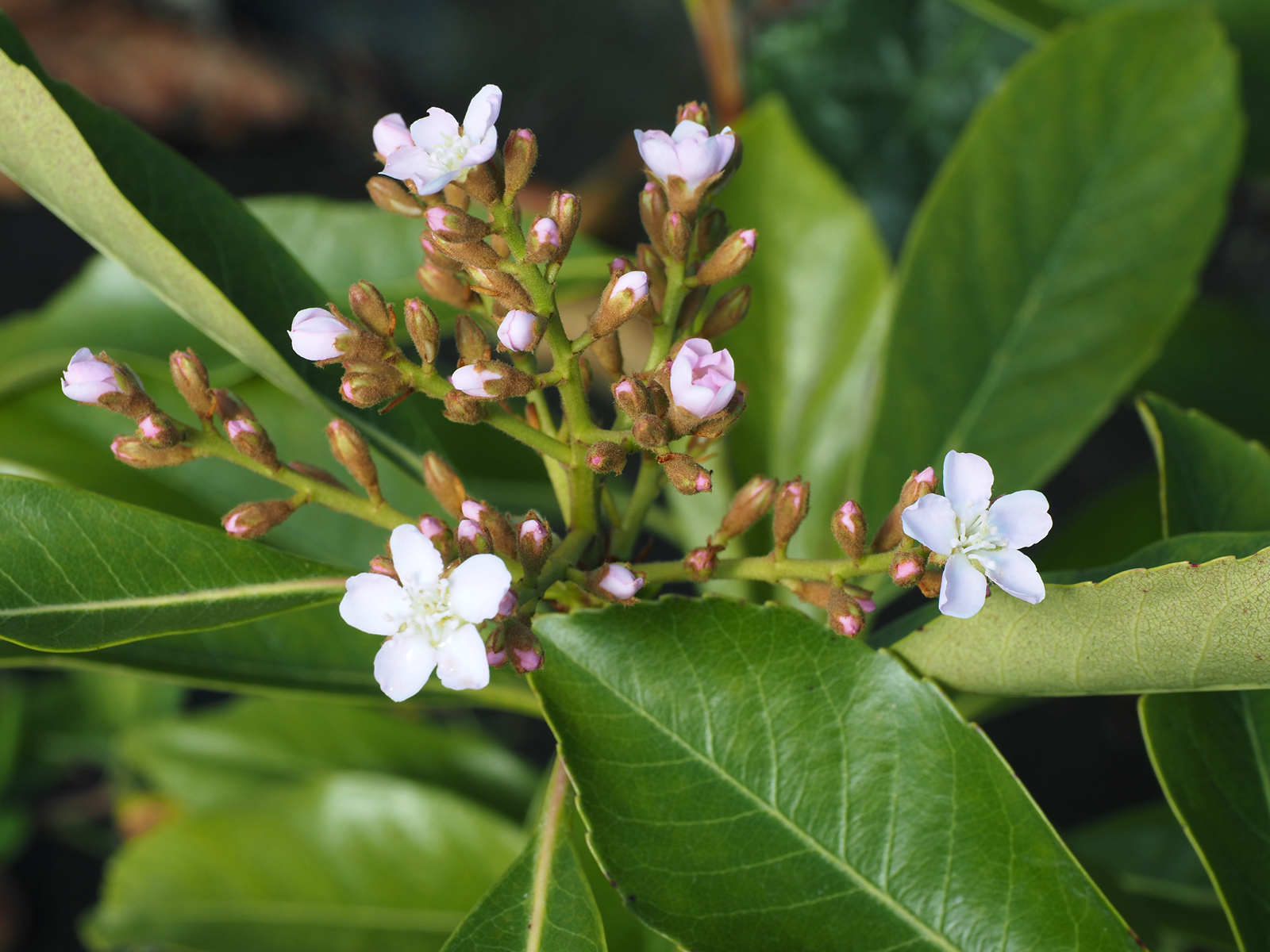
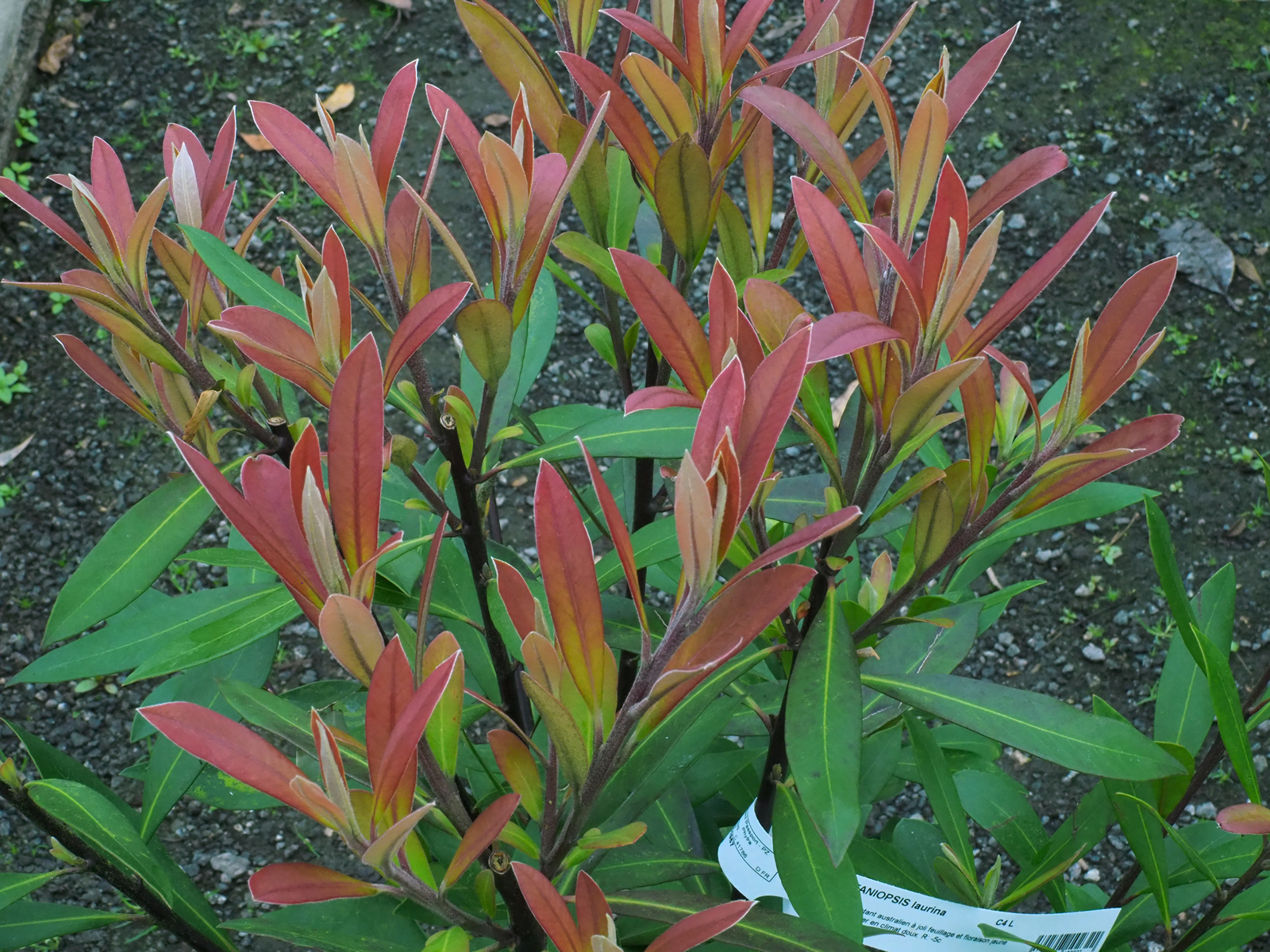
Attractive new growth on Tristianopsis laurina.
Tristianopsis laurina
I attach email correspondence with James Garnett from the Service des Espaces Verts et de l’Environnement (SEVE) in Nantes about Michelias with his pictures. At issue is the variation in the forms of Michelia doltsopa and whether the big plant here of Michelia floribunda is actually that species.
From: James Garnett
Sent: 16 April 2020 15:55
To: Charles Williams PA
Subject: Re: Magnolia martinii
[…]
I hope everyone is ok at Caerhays, here in France it’s starting to calm down a bit.. I’m only aloud to work in the arboretum twice a week, sometines only once, so it’s quit frustrating.
Thank god we have good french wine to help us cope with that situation..
Since I’m stuck at home most of the time, I’ve been working on difficult botany subjects like Michelias for example.
And just before the start of the crisis we went to a nursery in brittany (Arven) and he has a few mother plants at the back. We’ve seen different species, all from seeds collected in China, some from the Kunming Botanical Garden. And finally we’ve seen a true Magnolia floribunda in flower with its typical star shaped white flower and leaves with a silvery underside. I’ve read your article on Michelias in the IDS Yearbook 2017, I find it very interesting, it shows how difficult Michelias are to identify. Considering what I’ve seen in Europe and China, I don’t think your plant at Caerhays is Magnolia floribunda. At that same nursery we’ve also seen 2 different forms of Magnolia doltsopa, one white, similar to the old ones you have at Caerhays and one more yellowish. The next week, we went to the amazing arboretum of “La Roche Fauconnière” in Cherbourg and there, they have a big Magnolia doltsopa, planted in 1967 and it is a bit different from everything I’ve seen… I tend to conclud that M. doltsopa is a very variable species. At that same garden they also a huge Magnolia lanuginosa (Michelia velutina) with a copious amount of seeds in late winter. Do you have that species? if not we can keep one for you.
[…]
From: Charles Williams PA
Sent: 17 April 2020 13:52
To: ‘James Garnett’
Subject: RE: Magnolia martinii
[…]
The Michelia doltsopa puzzle which I wrote about was mainly prompted by Maurice Foster who strongly maintains that the larger plants at Caerhays at the top of the garden should be classified as Michelia manipurensis because of the velvety indumentum on the undersides of the leaves etc. The three other mature Michelias growing above the greenhouse are all a bit different to each other and very different indeed to what Maurice thinks is manipurensis. Tom’s view is that all the plants at Caerhays, including the one we call Michelia floribunda, are forms of doltsopa. He may, or may not, be right and this provides us with plenty of entertainment in future arguments.
[…]
2019 – CHW
Much of the spraying around young plants in the garden now complete. Along the way Jaimie discovered:How well the bluebells are now doing in full shade in the top section of Forty Acres Wood which was destroyed in the 1990 hurricane and replanted soon afterwards mainly with beech.
bluebells
Some very odd fungi in a clump. I wish I knew more about these. Why in the spring?
fungi
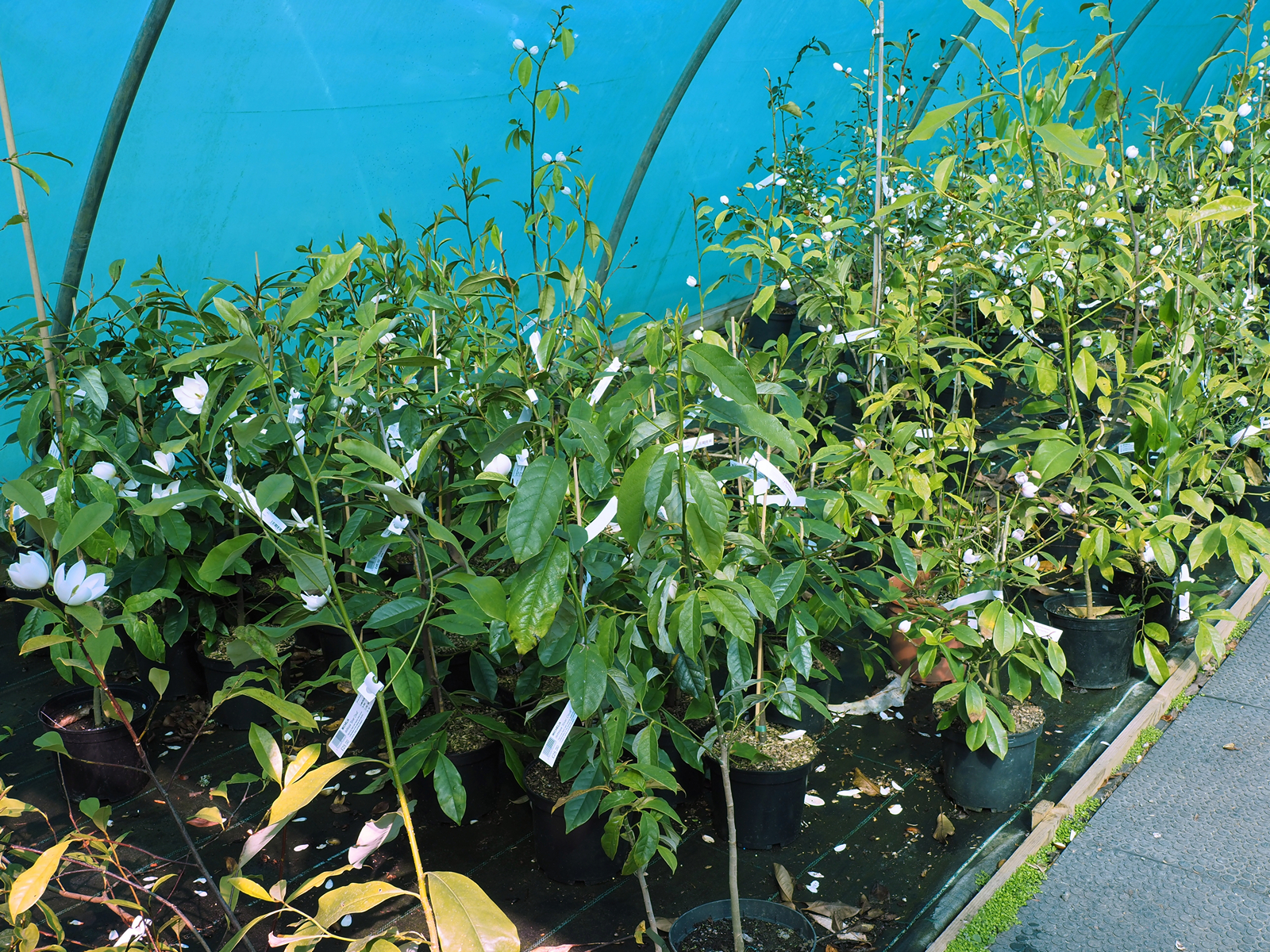
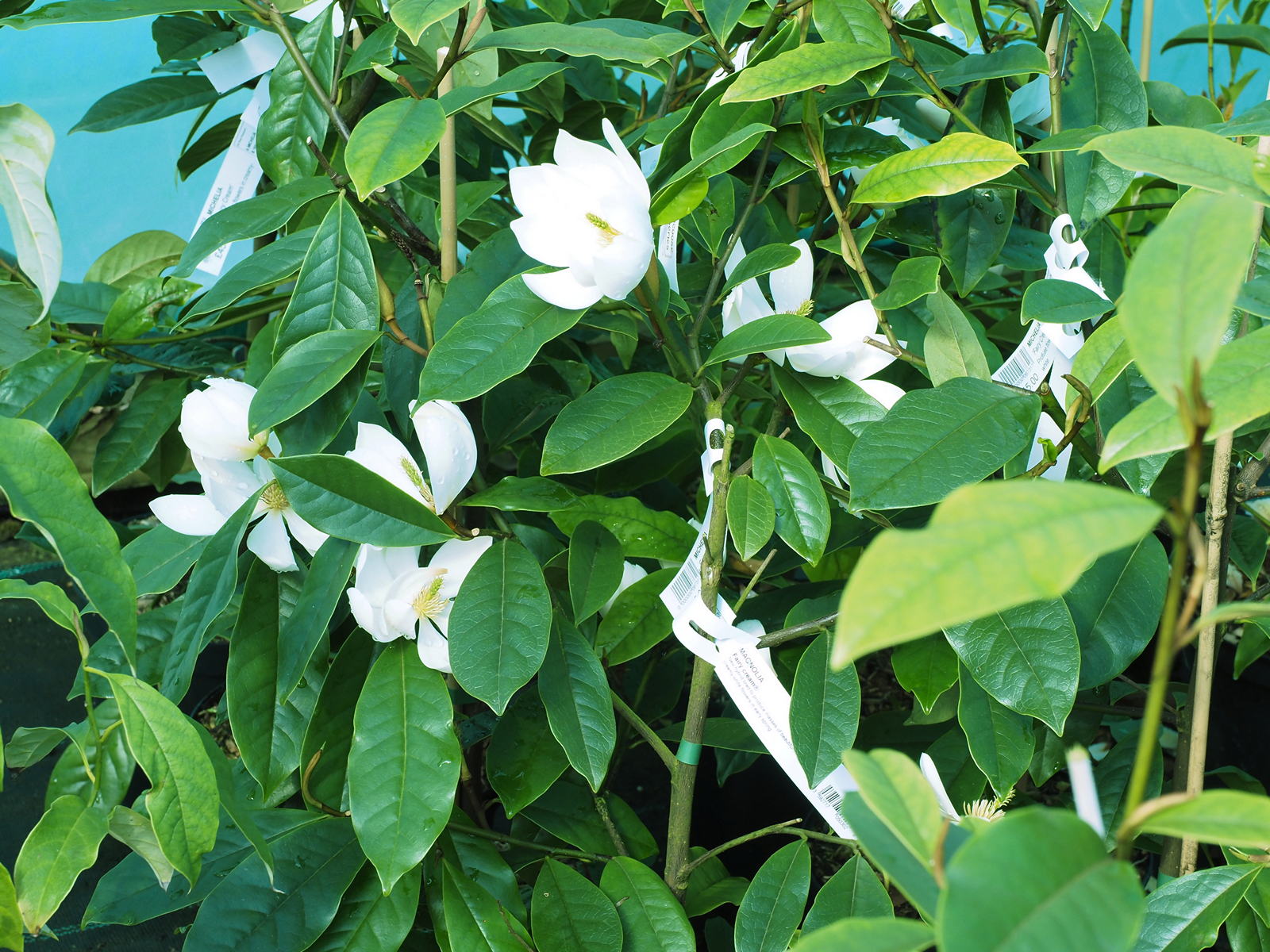
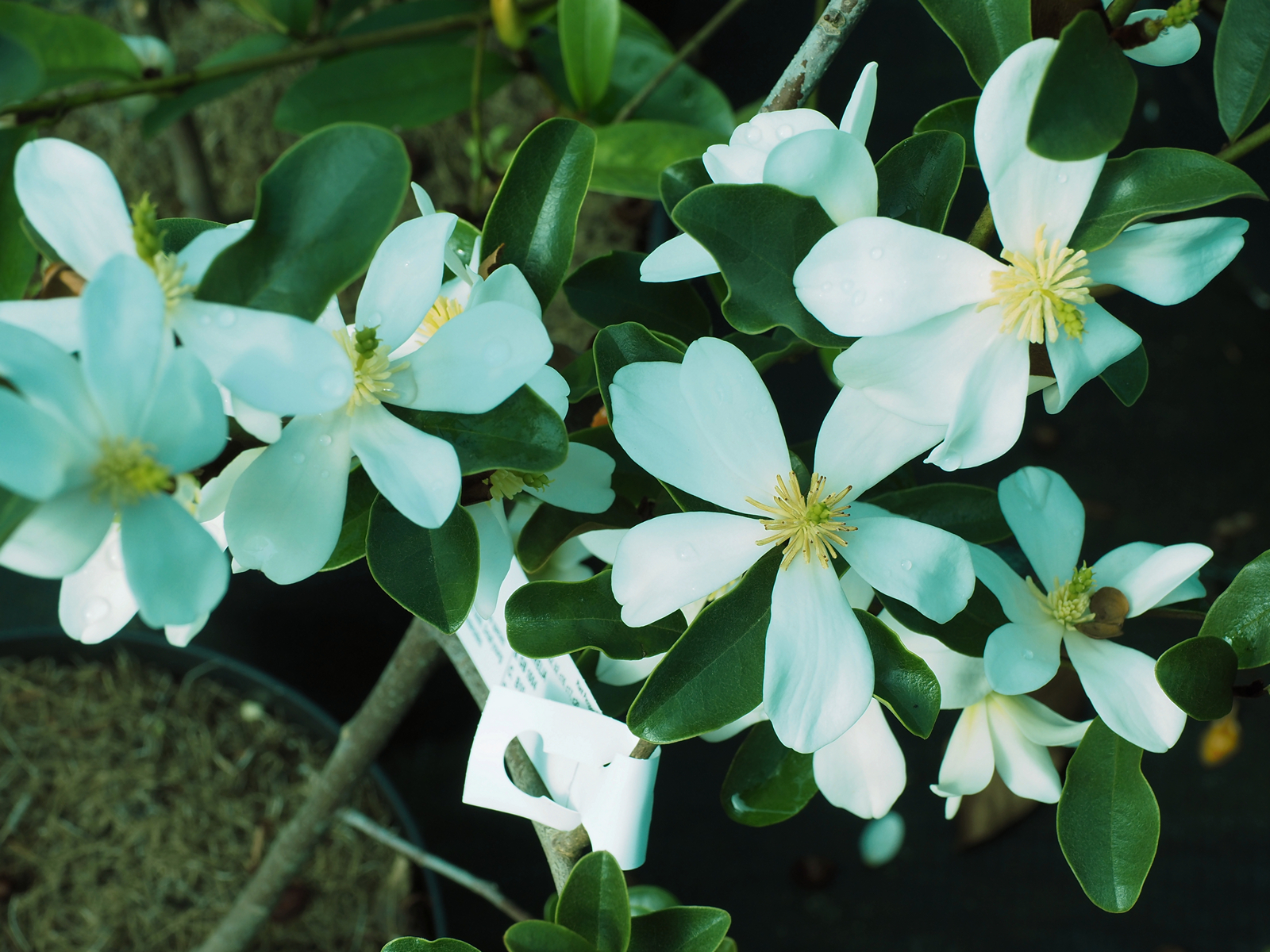
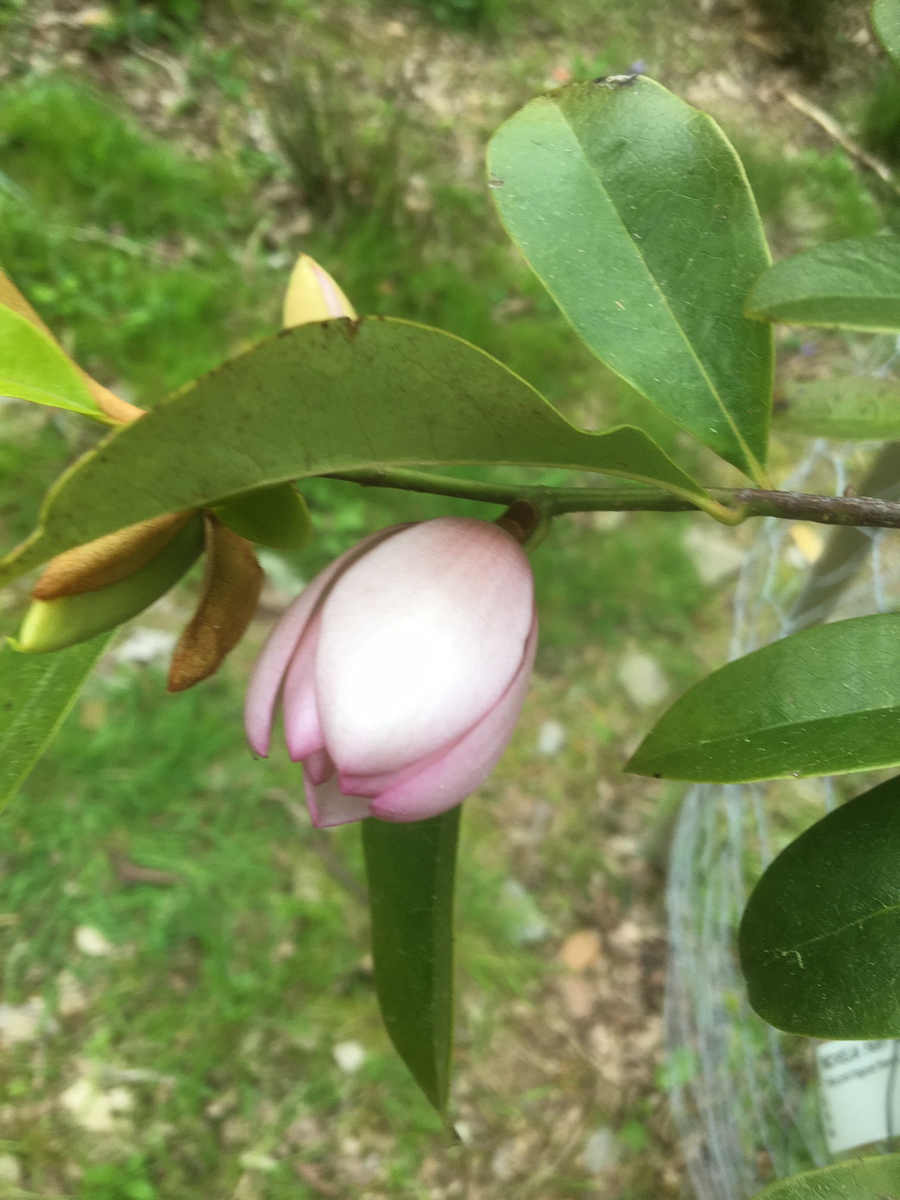
First proper flowering of Michelia ‘Fairy Blush’.
Michelia ‘Fairy Blush’
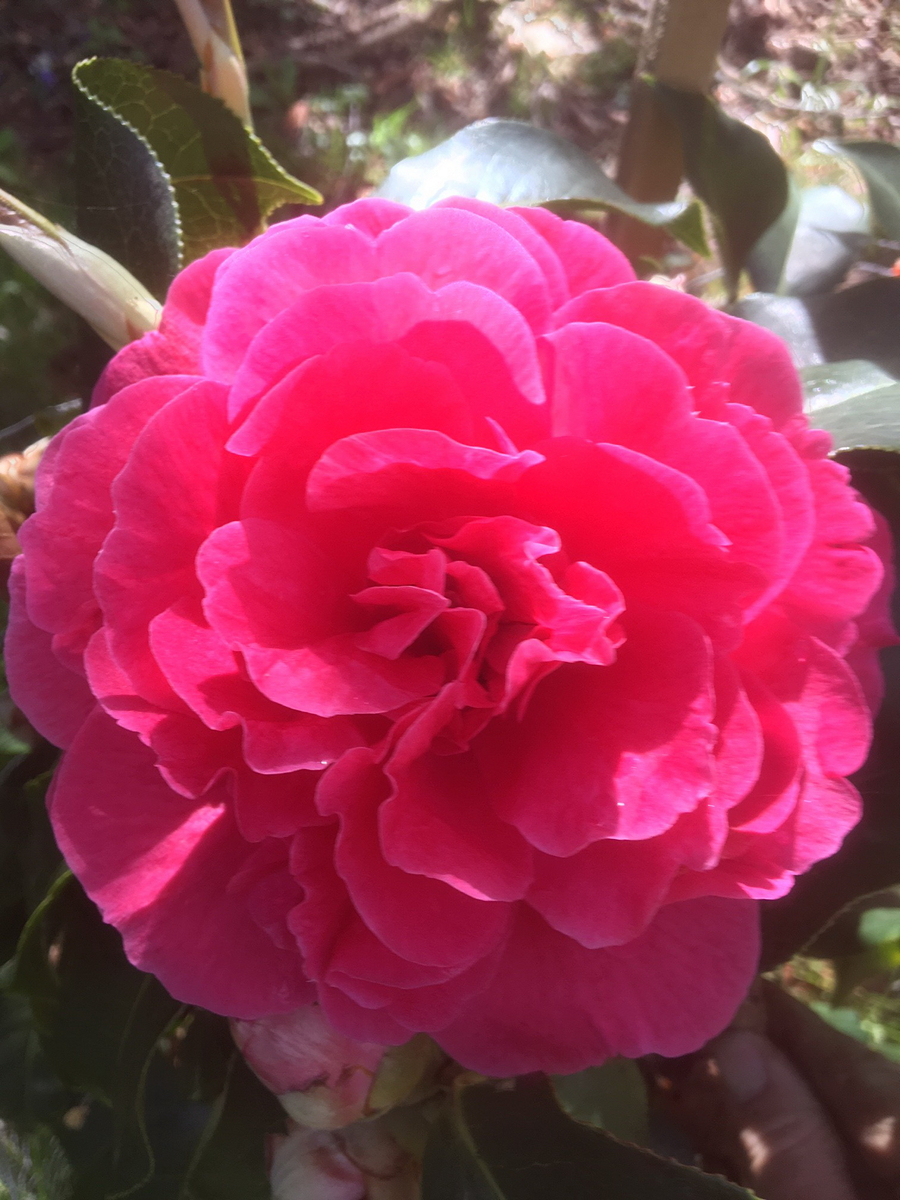
Camellia reticulata ‘Lary Piet’ – a new one to us.
Camellia reticulata ‘Lary Piet’
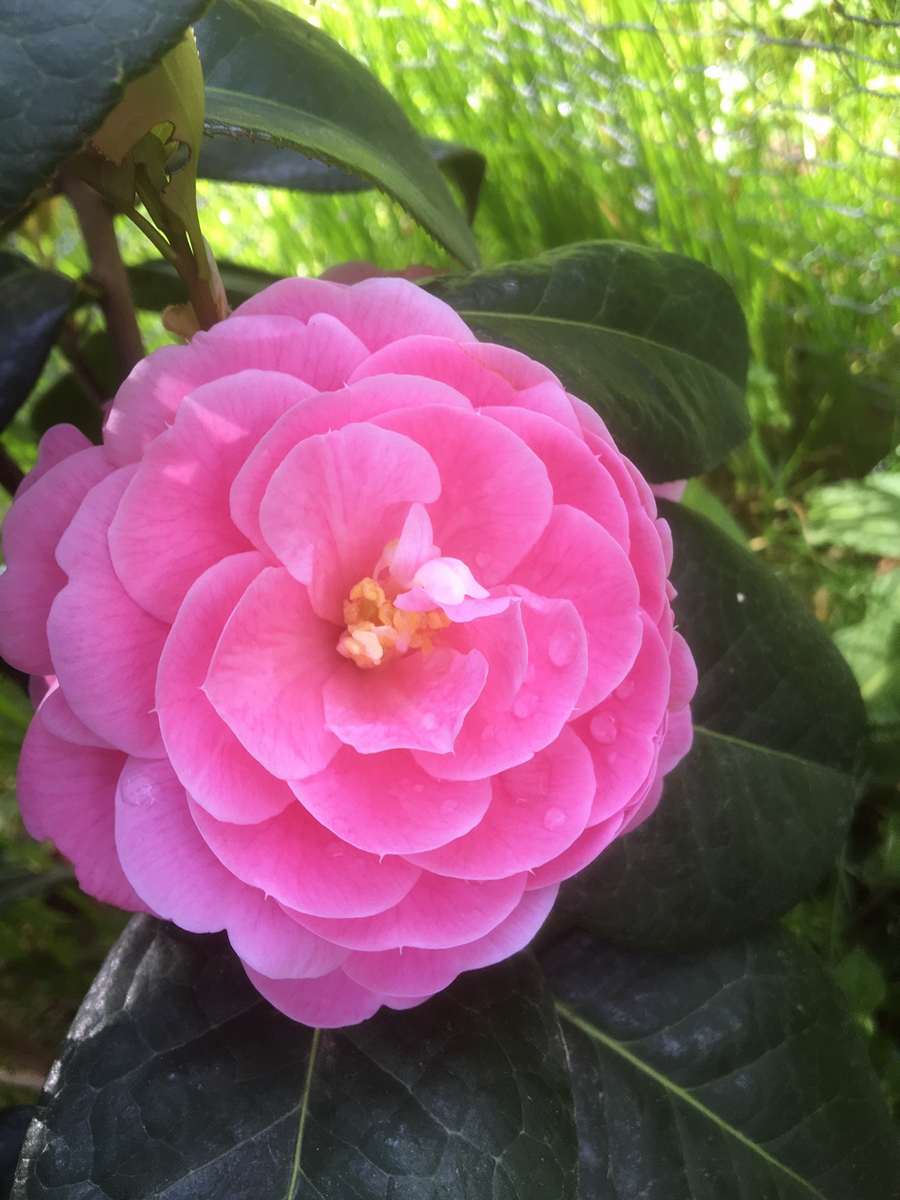
Camellia reticulata ‘Lovely Lady’ – ditto.
Camellia reticulata ‘Lovely Lady’
I have often wondered how many of the original Wilson 50 evergreen azaleas we actually have tucked away in the older parts of the garden. The plants in the Rookery are elderly and many have been hit by falling beech trees. In my lifetime no one has ever known what any of these were actually called but I suspect they are Wilson 50 albeit rather poor plants by modern standards. Richard Morton at Trewidden is assembling the full 50 so he may perhaps be able to identify some of them? Here are eight different ones – some not that different perhaps but possibly all still unique originals?
Scrambling up the bank above the drive and hidden away are three good pinkish Rhododendron sinogrande seedlings. Tree damaged a few years ago but a secret surprise.
Rhododendron sinogrande seedlings
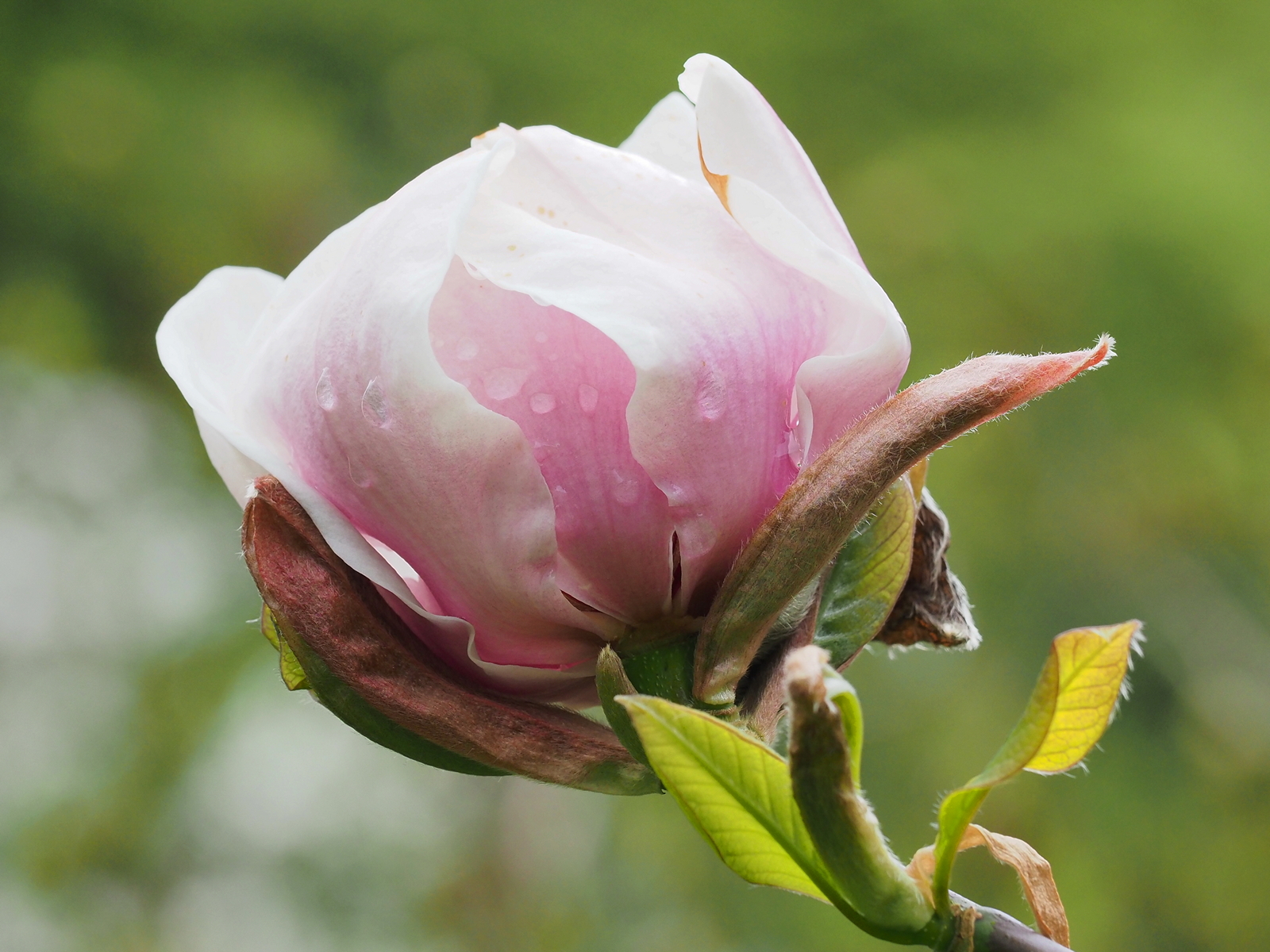
Scrambling further up the bank to view a first time flowerer I am surprised to find it is Magnolia ‘Red Lion’. Our largest plant on Bond Street was out and over three weeks ago.
Magnolia ‘Red Lion’
First flowers on another Magnolia lilliiflora ‘Holland Red’.
Magnolia lilliiflora ‘Holland Red’
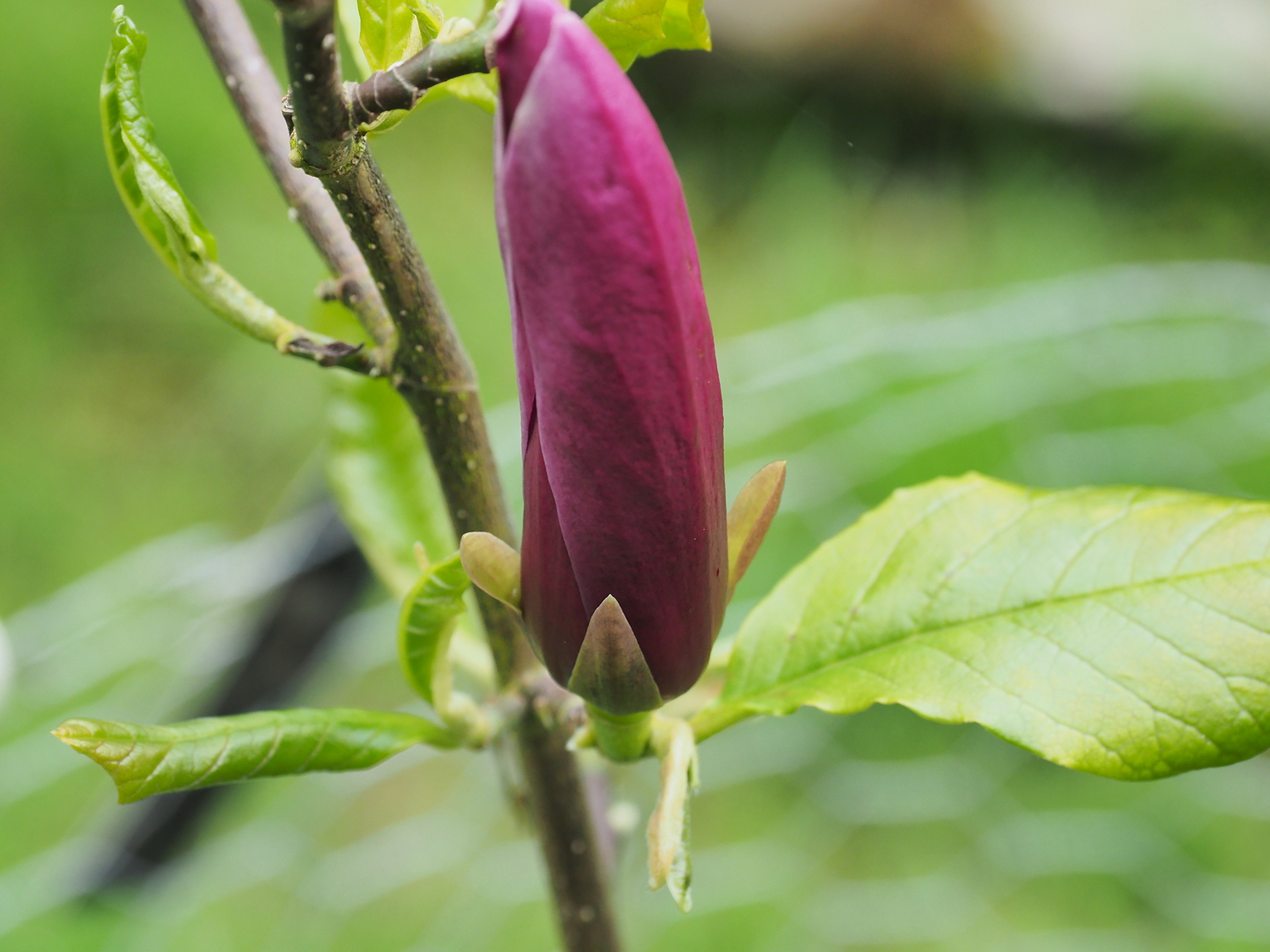
Magnolia ‘Plum Pudding’ ruined by the cold this year.
Magnolia ‘Plum Pudding’
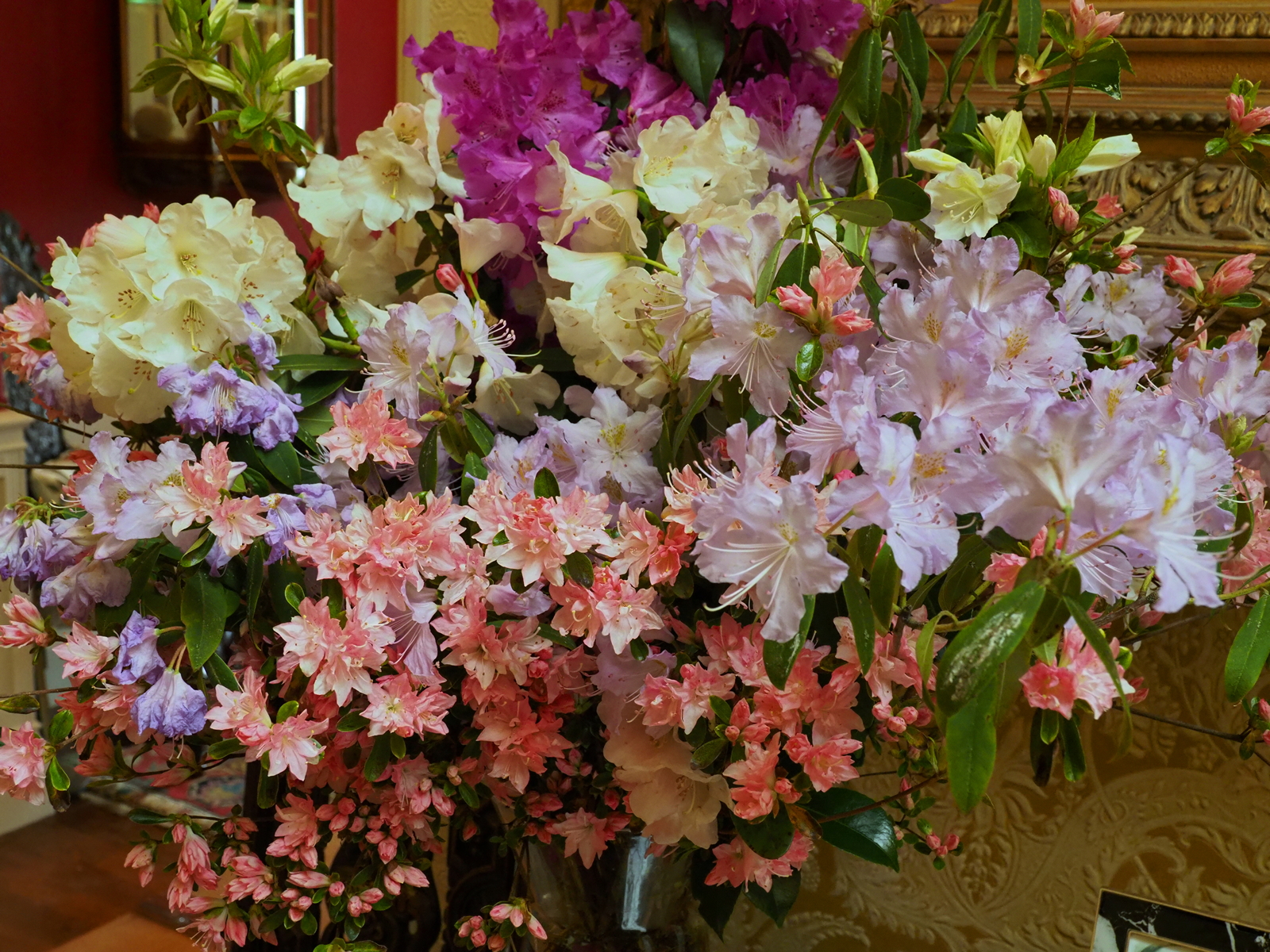
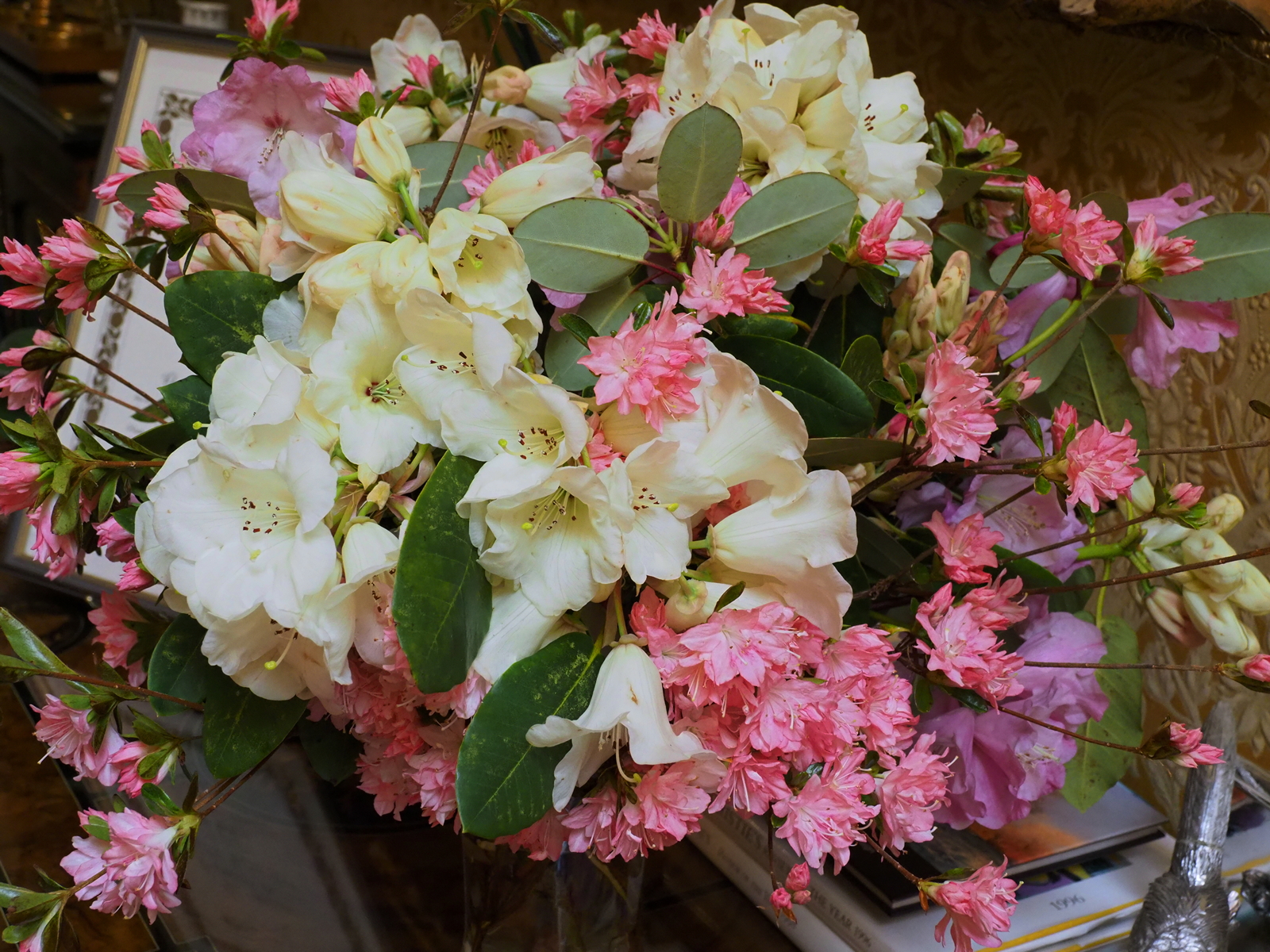
Nice vases of flowers for our weekend guests.
vases of flowersvases of flowers
2017 – CHW
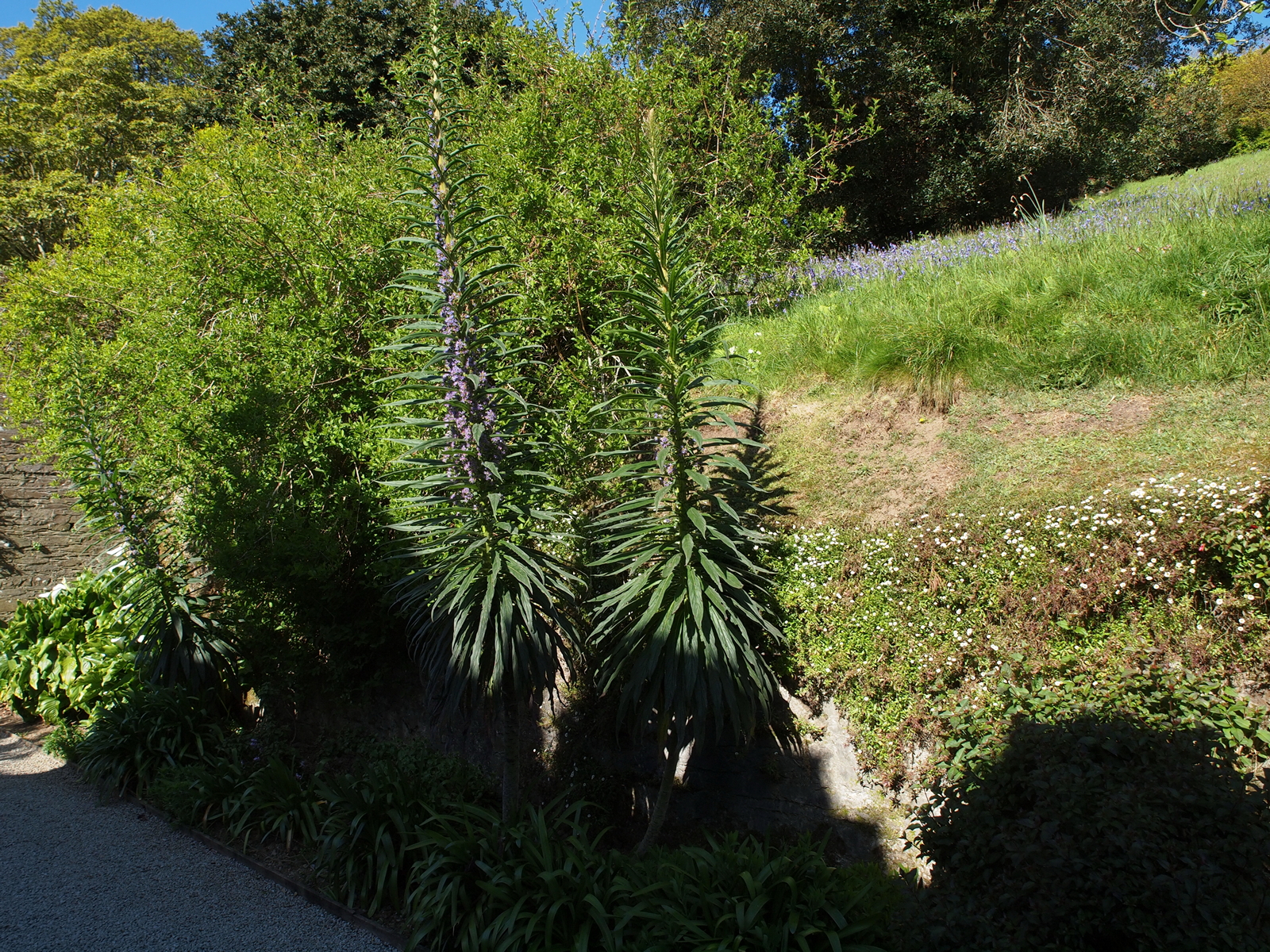
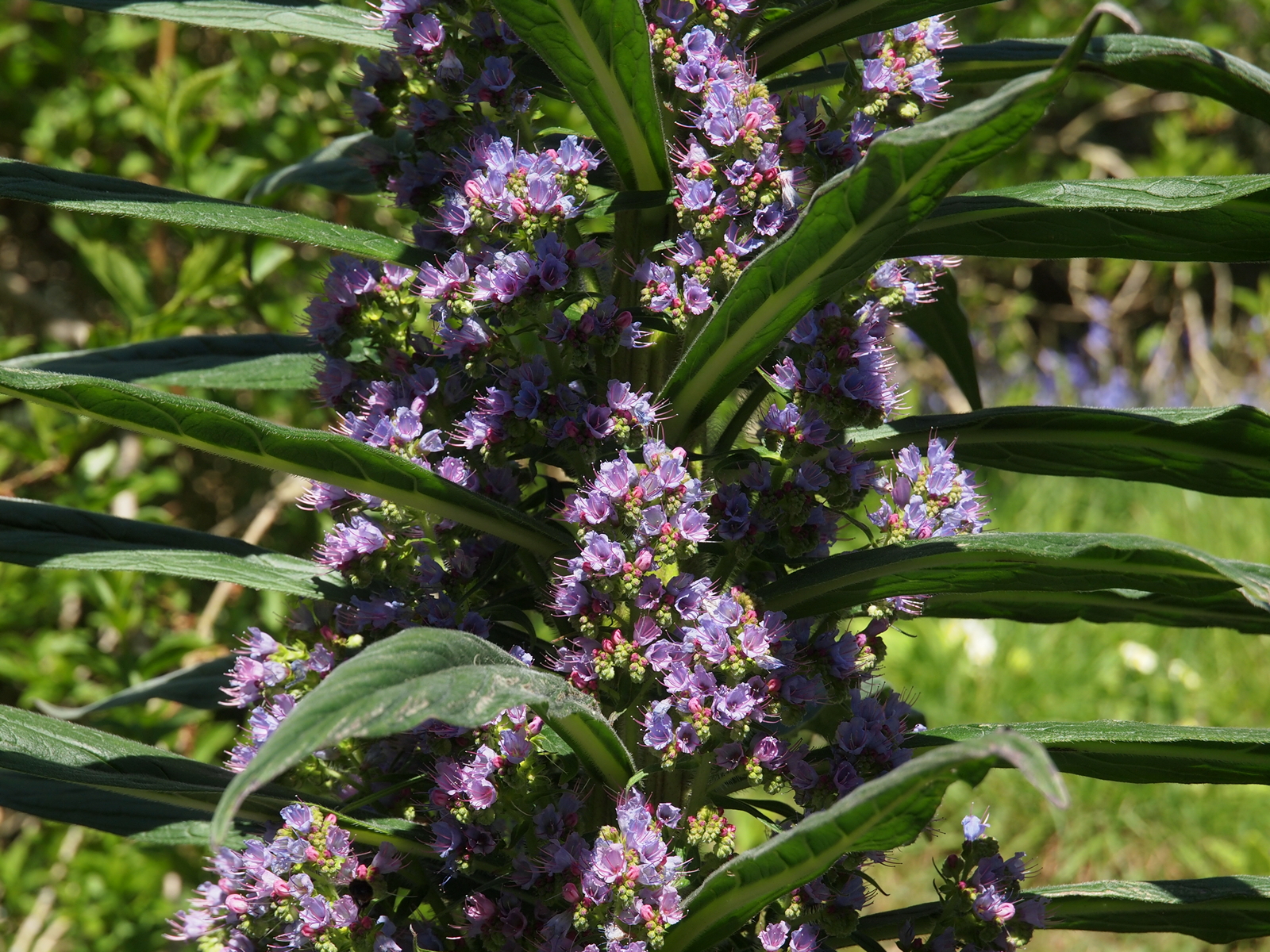
Amazingly some of the Echium pininana are already in flower and at least 12 feet tall. There was some white frost overnight, quickly burnt off in the early morning sun, but not enough to damage much or any new growth. Do echiums flower in April on Tresco? I wonder what the record height actually is?
Echium pininanaEchium pininana
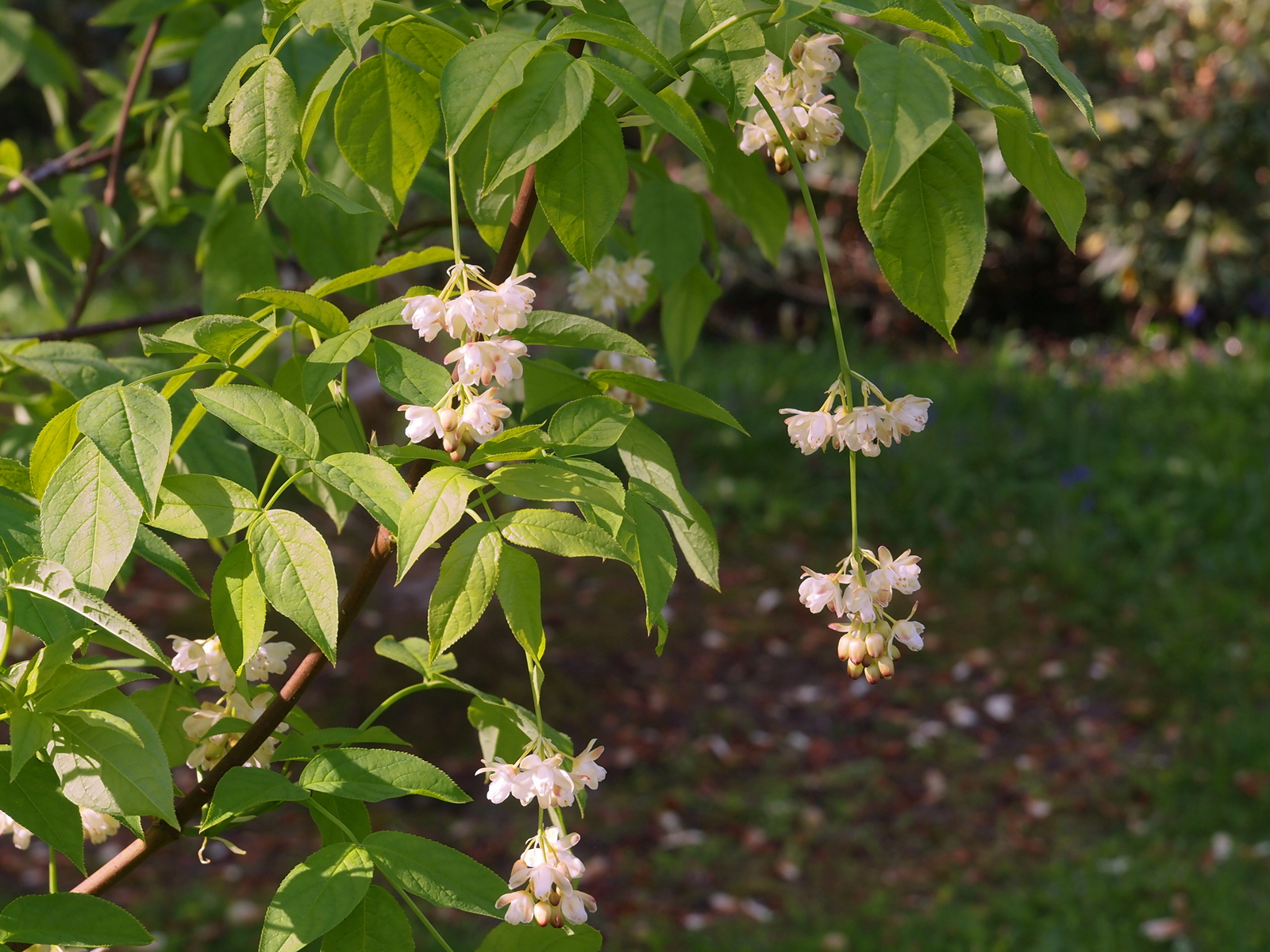
Staphylea x elegans is also a late flowerer compared to the rest. A tinge of red apparently as the buds open but we are almost too late for that here and I forgot to do a close up that might have shown this.
Staphylea x elegans
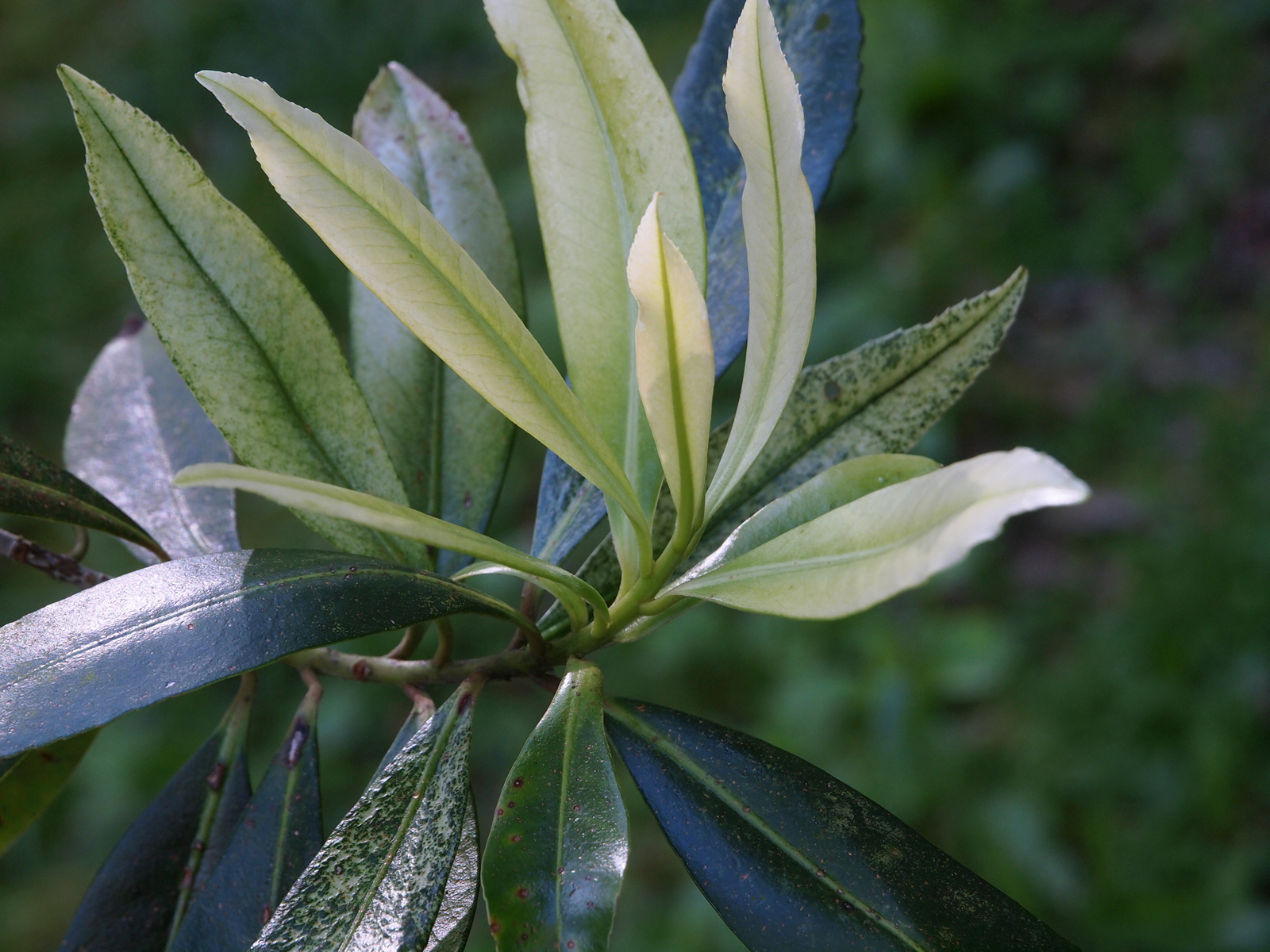
Polyspora axialis (from Crug) was planted two years ago. Good new growth but it looks chlorotic. Perhaps this is normal for this rare new species?
Polyspora axialisPolyspora axialis
Polyspora speciosa (from Crug) – no such problems here but a very floppy habit needing a good stake.
Polyspora speciosaPolyspora speciosa
An Alan Clarke collection of Rhododendron concinnum var pseudoyanthinum Group – apparently. In the Pocket Guide it looks more like Rhododendron concinnum var benthamianum. Very different to the Burncoose plant by the pond anyway and easily mistaken for a pale Rhododendron augustinii.
Rhododendron concinnum var pseudoyanthinum GroupRhododendron concinnum var pseudoyanthinum GroupRhododendron concinnum var pseudoyanthinum Group
I cannot locate the name of these three excellent loderi types with lovely peeling bark. Sparse flowers as yet but with initially frilly edges.
loderi typesloderi typesloderi types
Rhododendron chapmanii full out in the sun. Dense habit and now a good clump.
Rhododendron chapmaniiRhododendron chapmanii
The first of our three Magnolia ‘Daphne’ to be full out. It is arguably not as good as the Magnolia ‘Lois’ at Penrice Castle seen last week. More yellow but irregular flowers and too many leaves!
Magnolia ‘Daphne’Magnolia ‘Daphne’
2016 – CHW
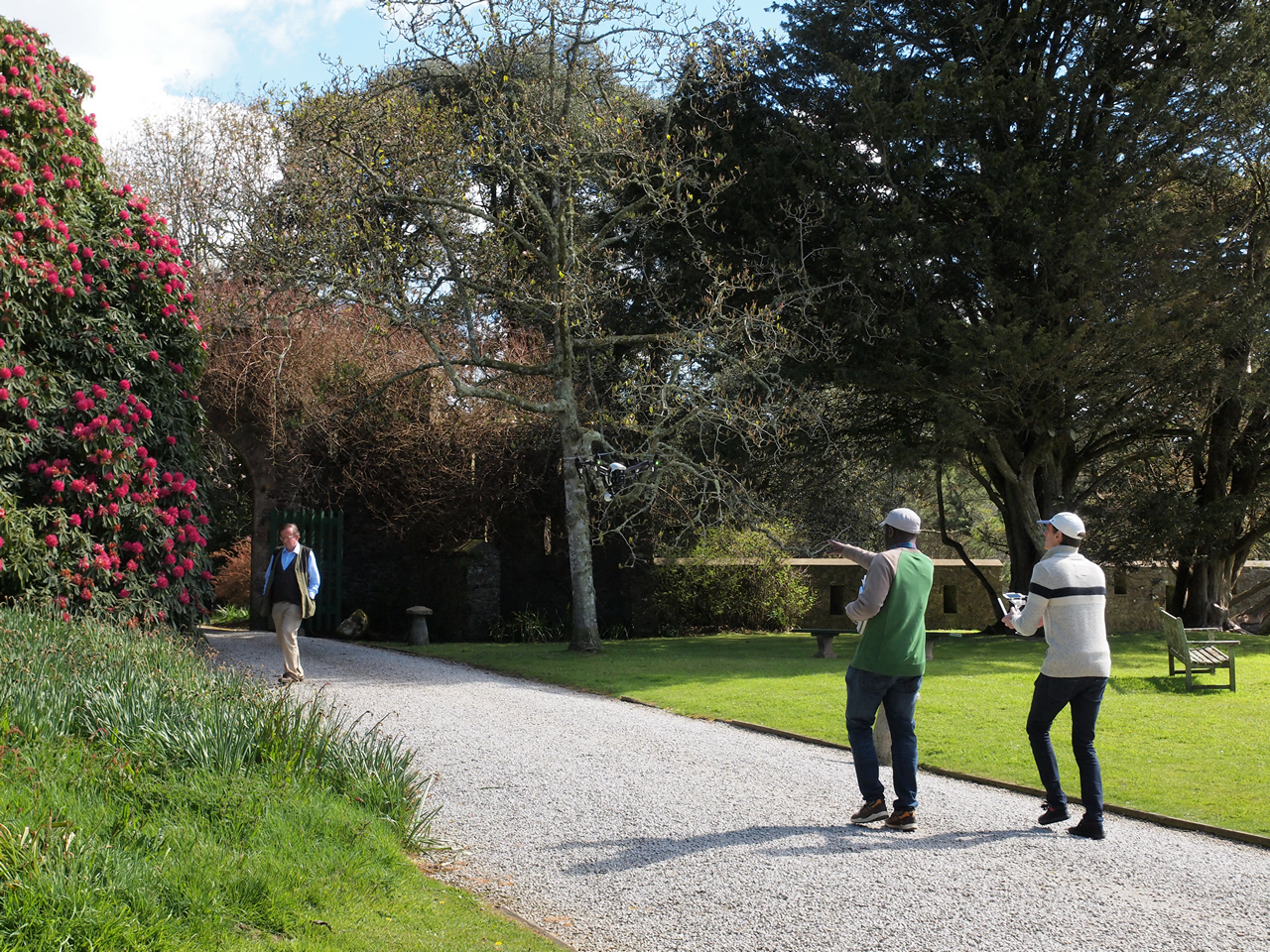
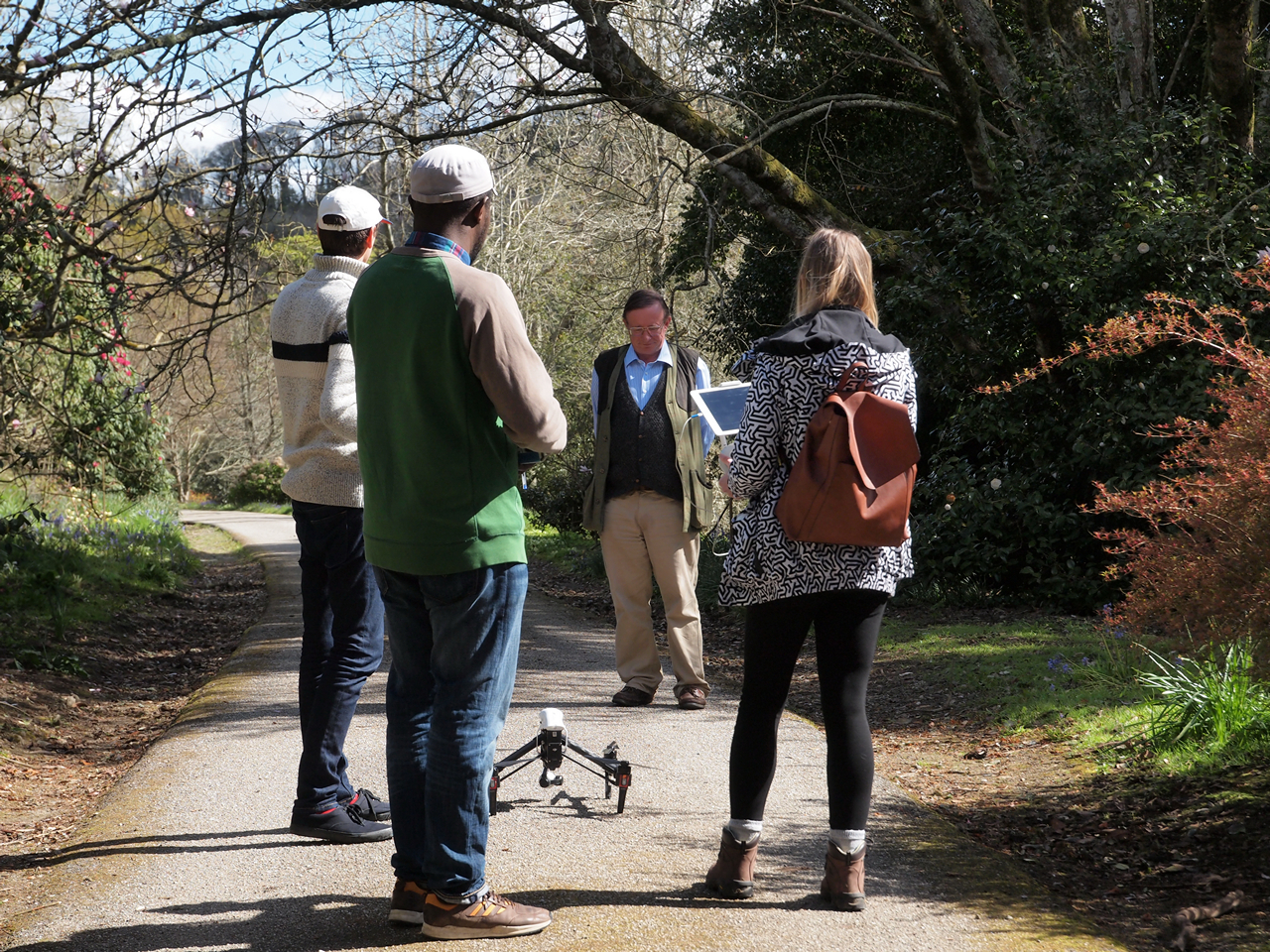
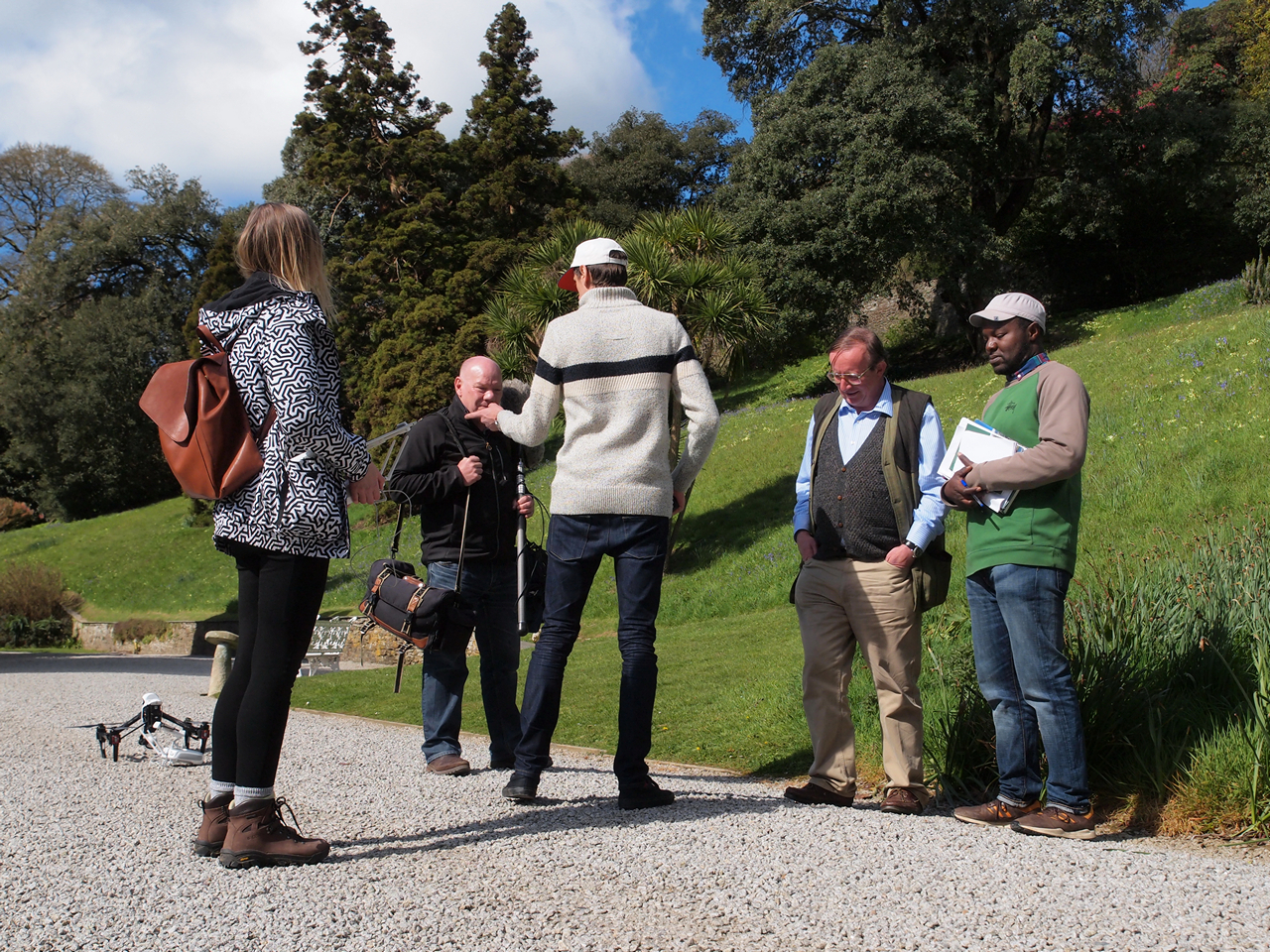
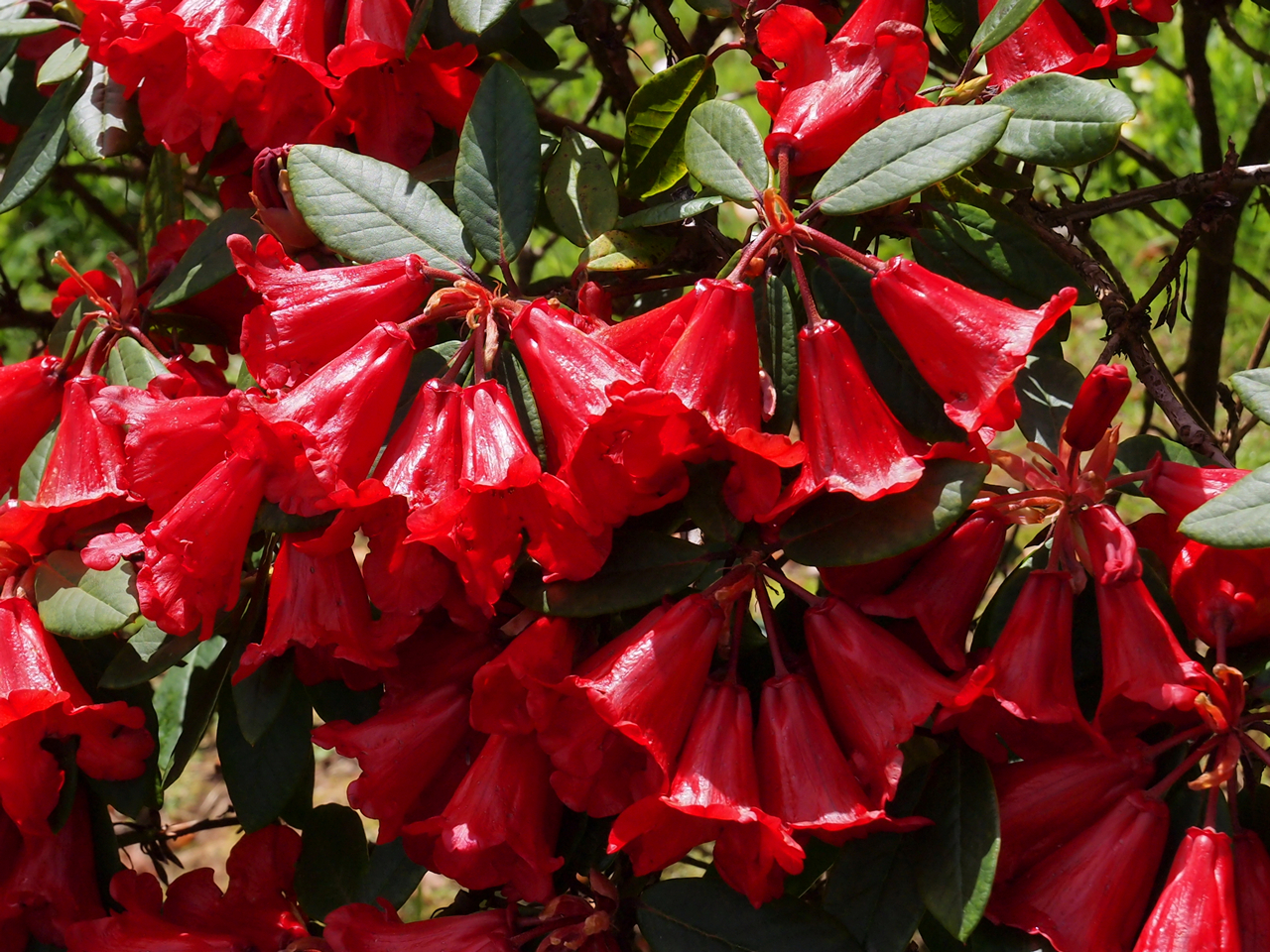
One day of ‘filming’ with a BBC crew from London who are prerecording rhododendron centenary clips for use in Chelsea Flower Show week TV broadcasts. For eight days they have to broadcast at least two hours of prime time TV so they need to bag a fair bit of it in advance. As expected the day is a write off in the cause of ‘publicity’.We start with two hours of drone filming which gets Karol excited as they have a very posh new drone in use. Whether we will ever get to see or obtain any of the stills from the overfly remains to be seen. We do three retakes of me walking through the arch from on high and picking off a few nearly dead flowers from a Rhododendron ‘Cornish Red’. Tedious!
BBC crew from London
BBC crew from LondonBBC crew from London
Then we do the digging up of a huge Rhododendron sinogrande with Jaimie and Michael for Chelsea and balling it up ready for shipping. Then a spiel about layering a Rhododendron falconeri and a lot of chat beside a perfect Rhododendron macabeanum at the top of the garden. Finally shots of the new FJW hybrid between Rhododendron ‘Elizabeth’ and Rhododendron ‘Charles Michael’ which is as yet unnamed and unregistered. A centenary name with probably be appropriate when we dream it up but something for the rhodo members to enjoy anyway. Planted here in 2005.
This all takes three hours with ‘Abs’ the producer. Thankfully it does not rain until we have finished. Abs also works for ‘The One Show’ and was not exactly a horticultural expert but at least the crew of three (plus two on the drone) was not quite as excessive as in past BBC performances.The afternoon was spent filming archive material indoors and took three hours.
Along the way I managed a few non BBC shots of:
Magnolia ‘Yakeo’ (probably) tucked away above the Main Ride tree ferns is nicely out but not on the 1997 onwards planting plans or not as this anyway.
Magnolia ‘Yakeo’Magnolia ‘Yakeo’
Camellia ‘Giant White’ still has a few decent flowers in the shade.
Camellia ‘Giant White’
Camellia ‘Francis Hanger’, the only true white x williamsii camellia, also has a few flowers left in the shade. Another plant I had forgotten existed in this location.
Camellia ‘Francis Hanger’
The old clump of Rhododendron ‘Duke of Cornwall’ is particularly fine today in the sun. We looked at some seedlings here a week or two ago on Sinogrande Walk.
Rhododendron ‘Duke of Cornwall’Rhododendron ‘Duke of Cornwall’Rhododendron ‘Duke of Cornwall’
Magnolia ‘Yuchelia’ has sprung out unnoticed by me.
Magnolia ‘Yuchelia’
What a day! All for a maximum of four minutes of live TV. I must have been ‘on camera’ for nearly two hours!2015 – CHW
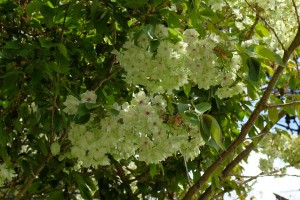
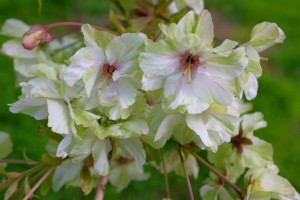
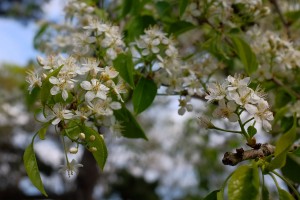
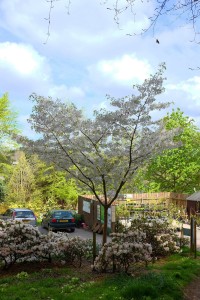
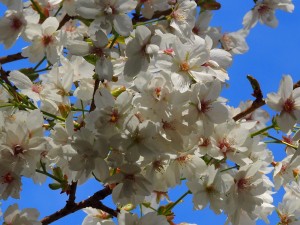
Time for a review of the newer cherries planted in the last 15 to 20 years replacing JC’s batch which he imported at vast expense from Japan. Grafted cherries used to be a major feature on the drive but, as grafted plants, their lifespan is only 40 to 50 years and they die suddenly usually full of canker having grossly over-flowered.Just beyond the Four in Hand is a late flowering double white cherry which came in a batch from Hillier’s. With all the unusual Japanese names these obscure cherries present a naming problem.
PRUNUS gyoikoPRUNUS gyoikoPRUNUS gyoiko
Prunus ‘Gyoiko’ above the Petrol House has a splendid greenish hue and green veining. Odd that it is relatively unknown.
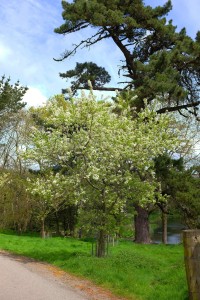
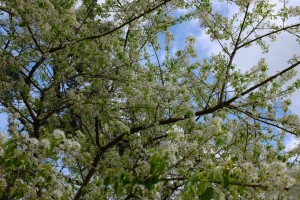
PRUNUS mahalebPRUNUS mahalebPRUNUS mahaleb
Prunus mahaleb, the St Lucie Cherry, is nearby but has yet to produce fruits although the small flowers are out for several weeks.
PRUNUS ahoiPRUNUS ahoi
Prunus ‘Ahoi’ by the cashpoint is another winner and well worth its place. An avenue of these would be quite a sight and the flowering period is far longer than ‘Shirotae’ or‘Kanzan’.
1927 – JCW
Yesterday was the Truro Show, nothing very new there, the usual crush of trade exhibits, the light very bad.
1924 – JCW
The Truro Show. Too late for daffs, too early for the cream of the Rhodo’s. AMW’s Werrington. Lacteum the best rhodo thee. H Hodges fine form form of R glaucum. I ran it close but no-one saw it. Nothing really new but Magor’s Rhodo damaris was very nice indeed.
1923 – JCW
A few Orbiculares open, ¾ of the very few Auklandii are open. Fargesi, barbatum, argenteum and the Corylopsis are over. Triandrus (pure) not all open. No Maddeni hybrids are really open.
1920 – JCW
The Azaleas have started. R orbiculare is the best thing we have, the Auklandii’s hold on.
1904 – JCW
Picked the first seed pod Cyclamineus x De Graaf.
1902 – JCW
The first carmine pillars open, also sparacio or two. Auklandii nearly at their best. Recurvas open, a bloom or two on Altaclarence.
1899 – JCW
Went to Appleshaw the best things I saw were 33, 57 and 146, 84 and 414, also the new poet (244).
This website uses cookies to improve your experience. We'll assume you're ok with this, but you can opt-out if you wish.AcceptRead More
Privacy & Cookies Policy
Privacy Overview
This website uses cookies to improve your experience while you navigate through the website. Out of these, the cookies that are categorized as necessary are stored on your browser as they are essential for the working of basic functionalities of the website. We also use third-party cookies that help us analyze and understand how you use this website. These cookies will be stored in your browser only with your consent. You also have the option to opt-out of these cookies. But opting out of some of these cookies may affect your browsing experience.
Necessary cookies are absolutely essential for the website to function properly. This category only includes cookies that ensures basic functionalities and security features of the website. These cookies do not store any personal information.
Any cookies that may not be particularly necessary for the website to function and is used specifically to collect user personal data via analytics, ads, other embedded contents are termed as non-necessary cookies. It is mandatory to procure user consent prior to running these cookies on your website.