


2026 – CHW
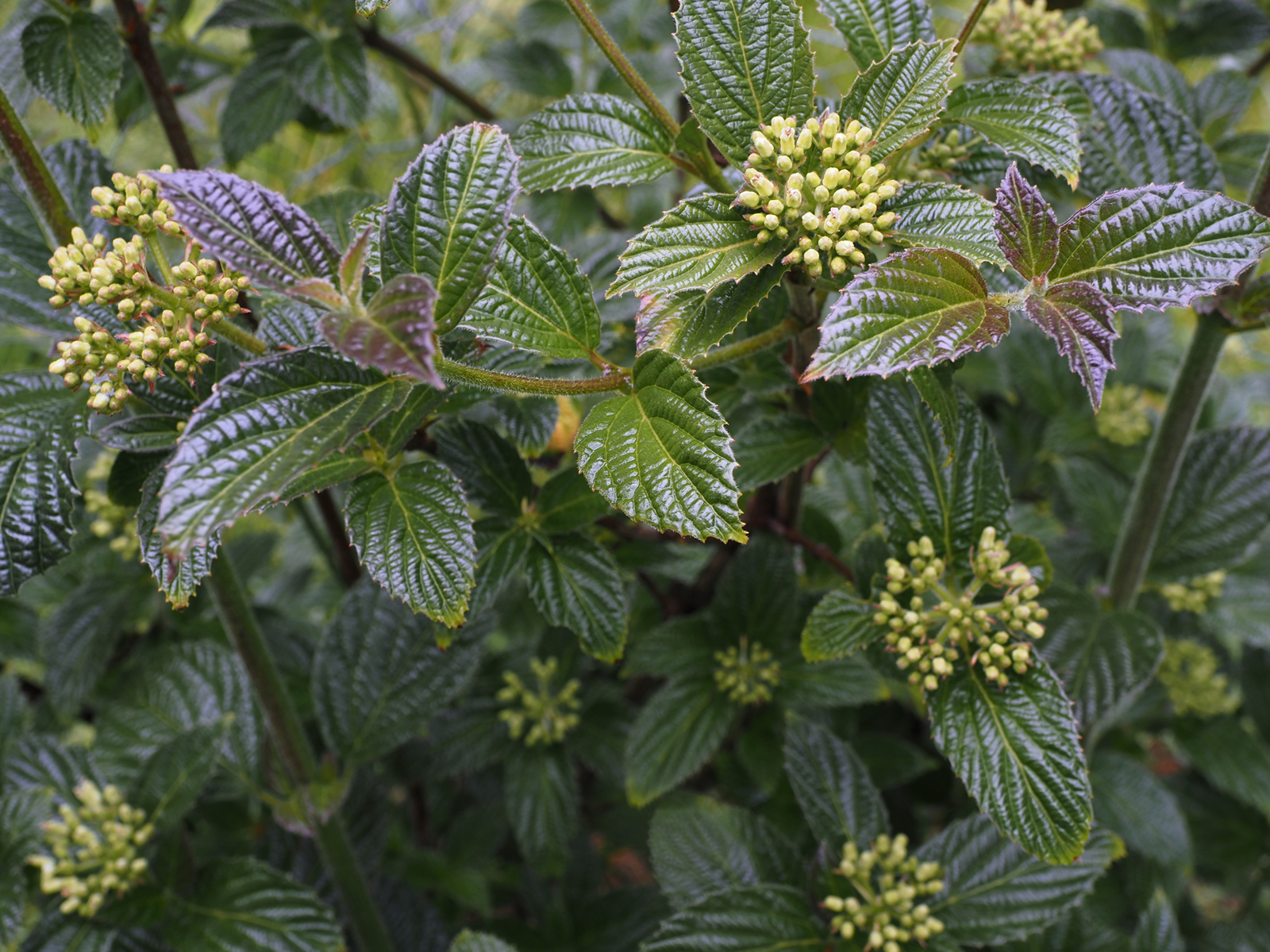
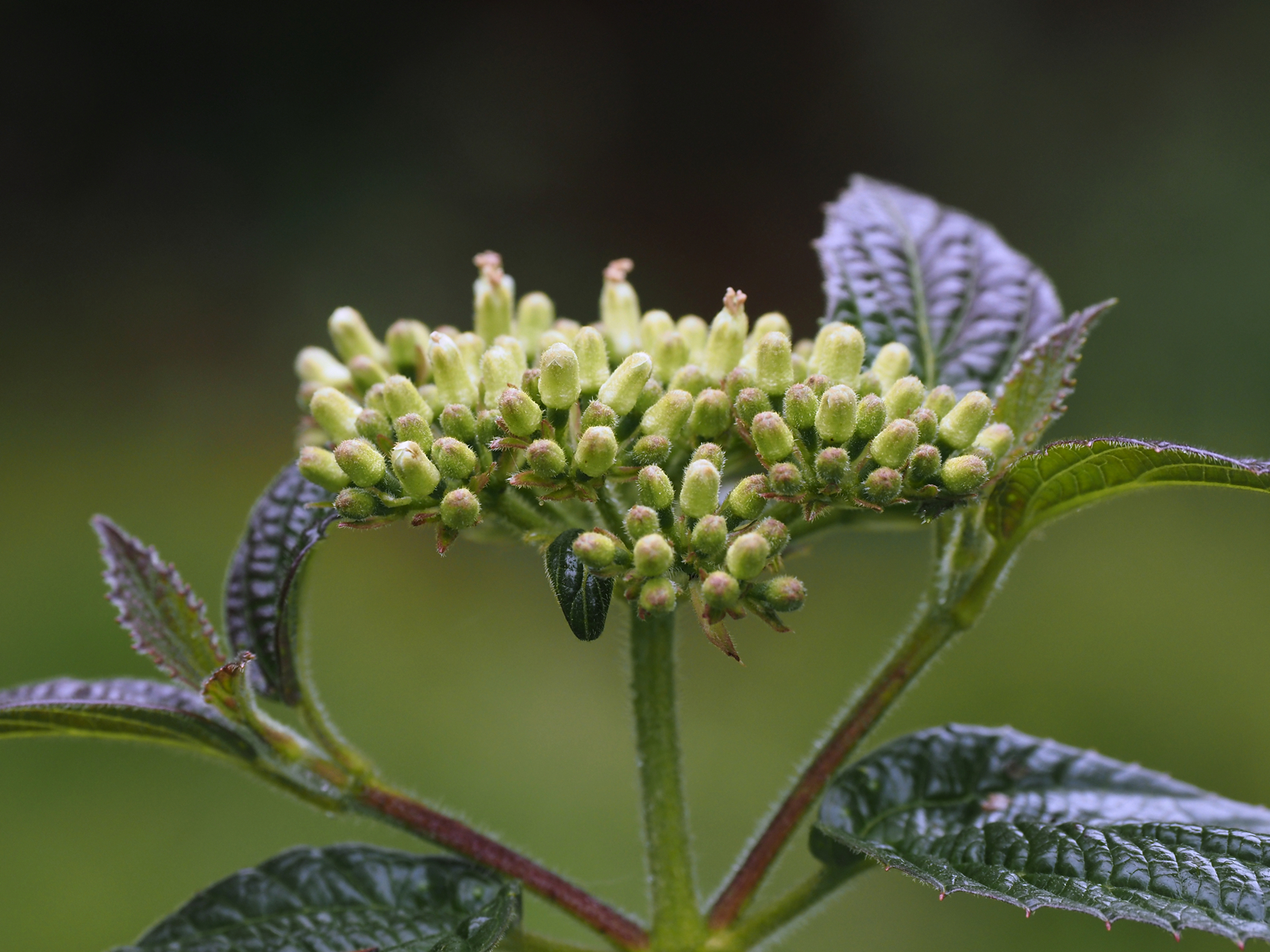
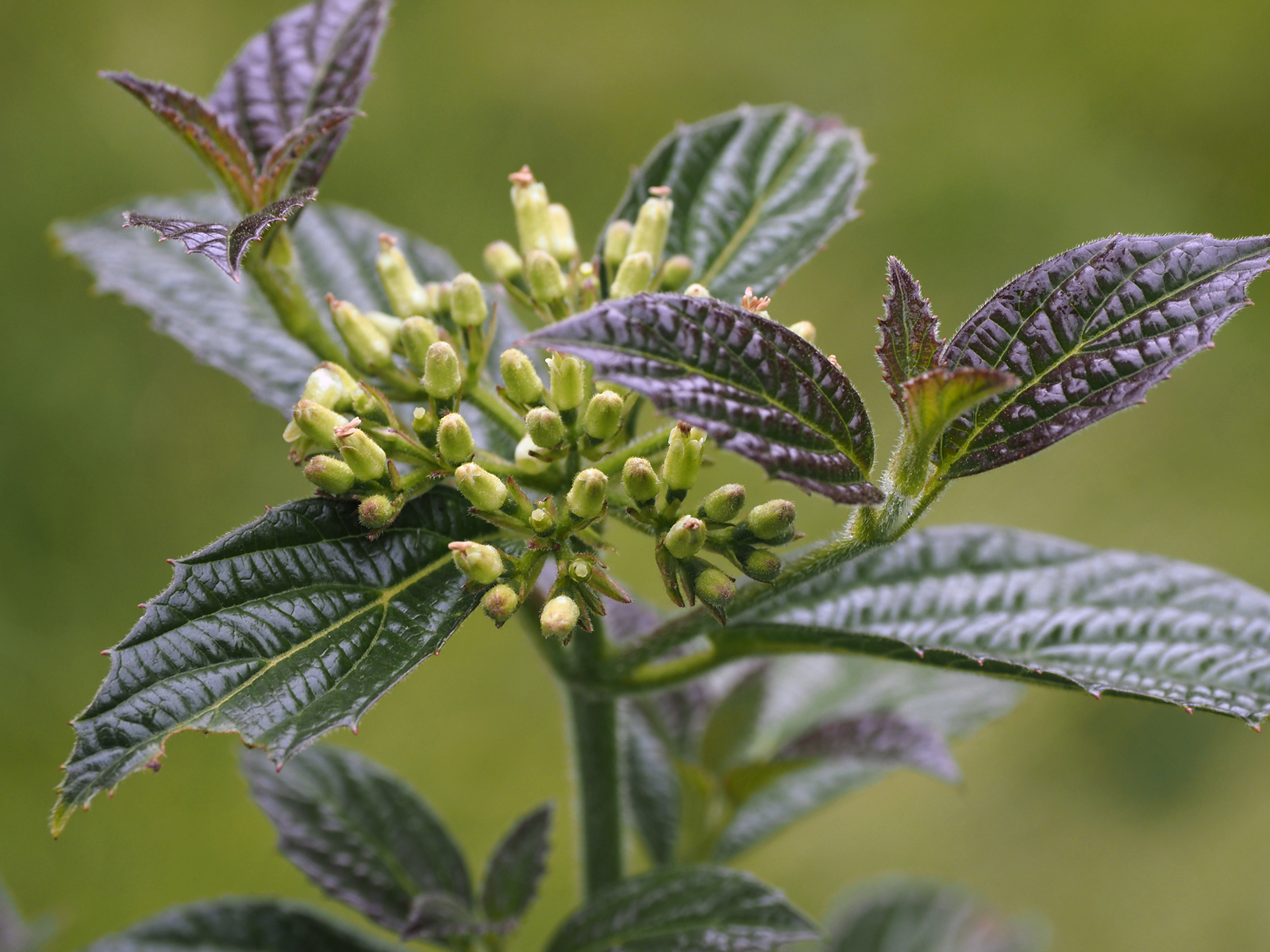
The Hydrangeas are starting to come out in a week of welcome drizzle and low cloud.


A car on fire in the car park.


Hebe x franciscana ‘Variegata’ doing equally well.


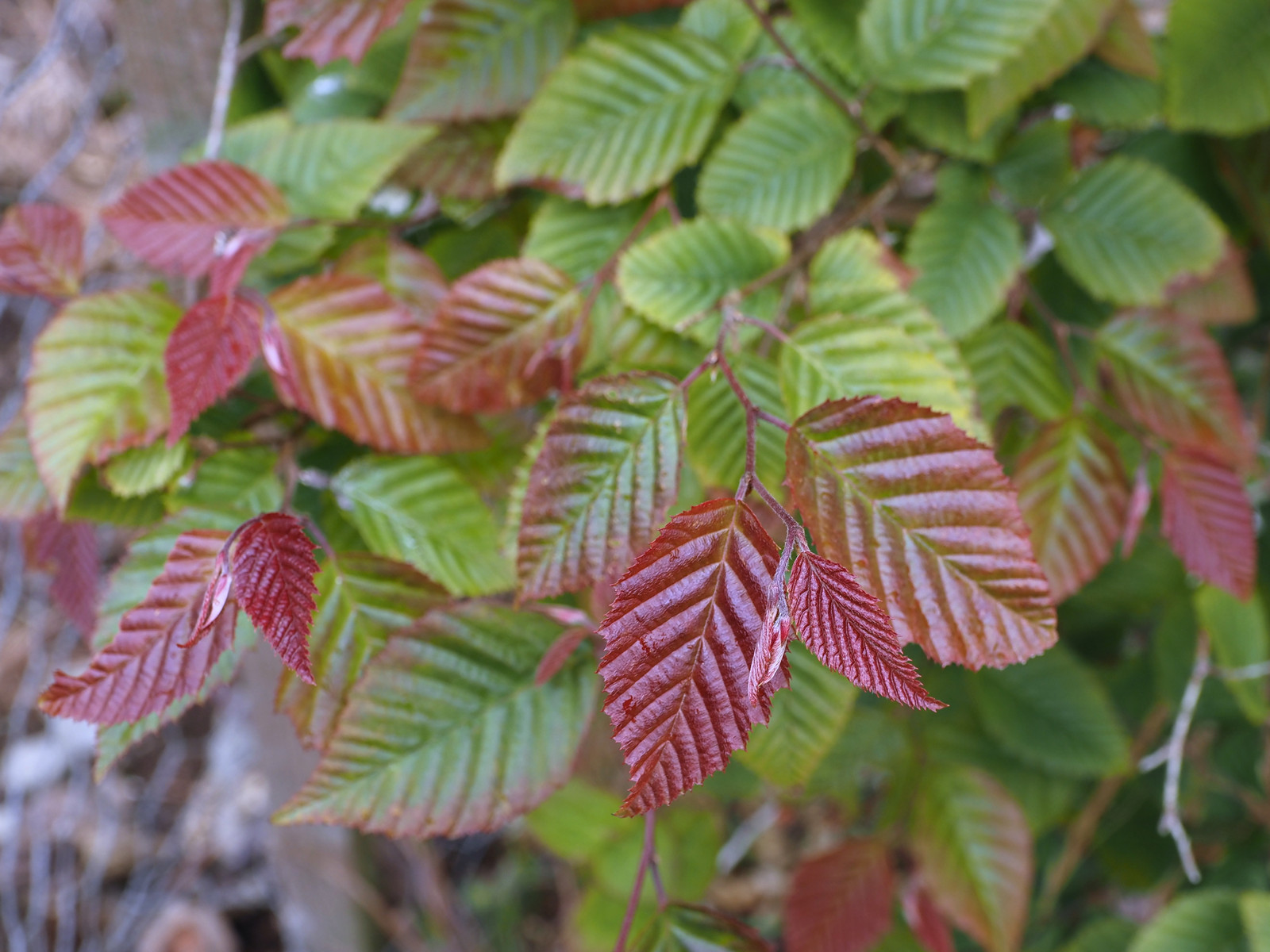
To Old Park to map out the next bit of clearance for Ross to undertake. This will hopefully benefit the shoot as well as making more space for new planting.Betula cylindrostachya was planted in Old Park in 2019. It is a rare species in cultivation today although collected by Wilson. In the wild it can be found from Pakistan to Yunnan province in China.


2023 – CHW
Rather like last year but, sadly, rather earlier in June than then, I find trips around the garden disheartening as I watch decent established rhododendrons, and other fairly recently planted things, in hotter spots die on their feet in only a few days from drought. When in a depressed mood, because I see no real rain in the next weeks forecast, I begin to wonder if it is worth growing rhododendrons at all. After a glass of wine somehow the depression lifts when one thinks about new species to try in catalogues and in our nursery beds. Tom Hudson’s email today about a Litsea/ Lindera tour here soon had a similar effect.
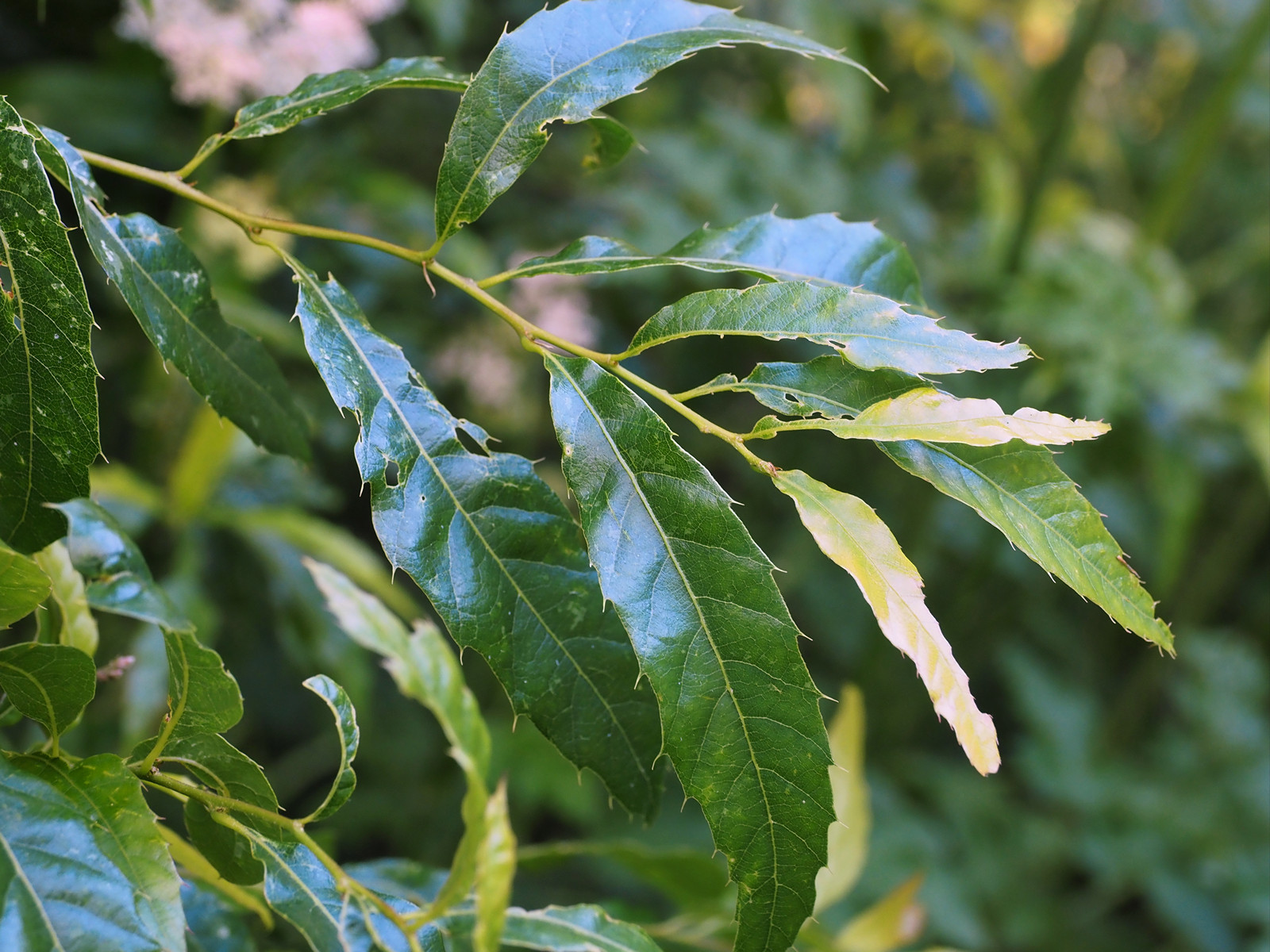
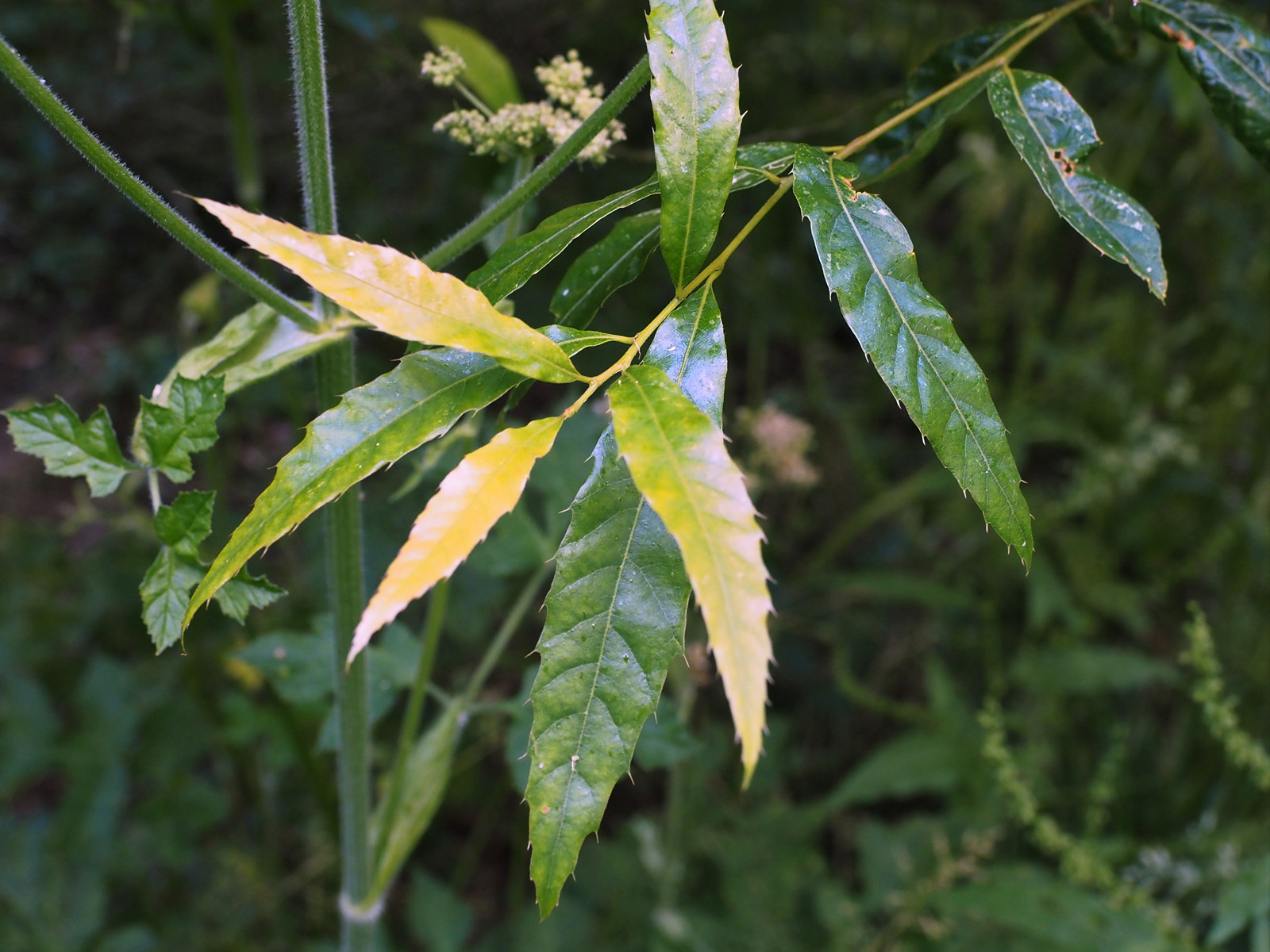
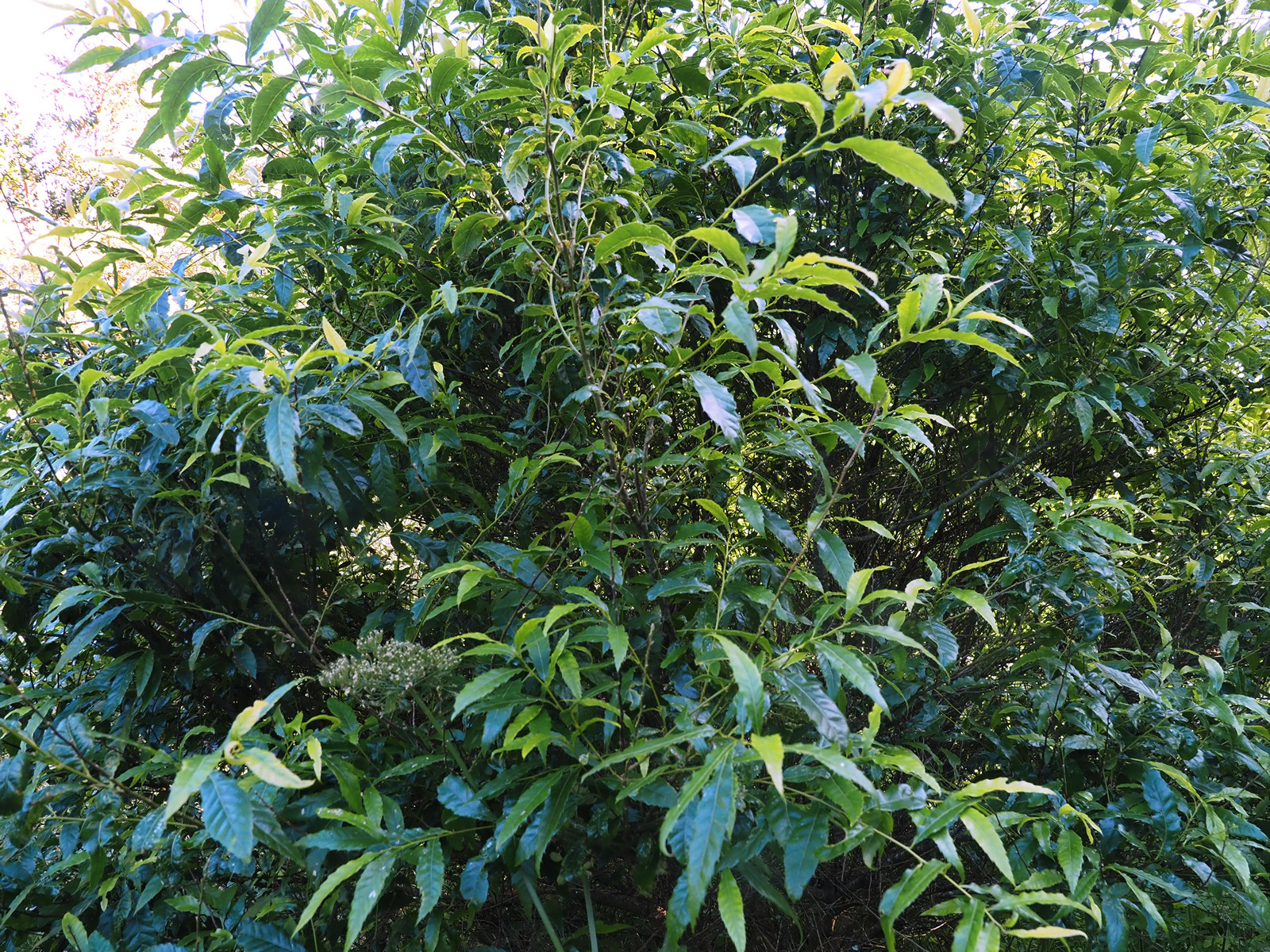
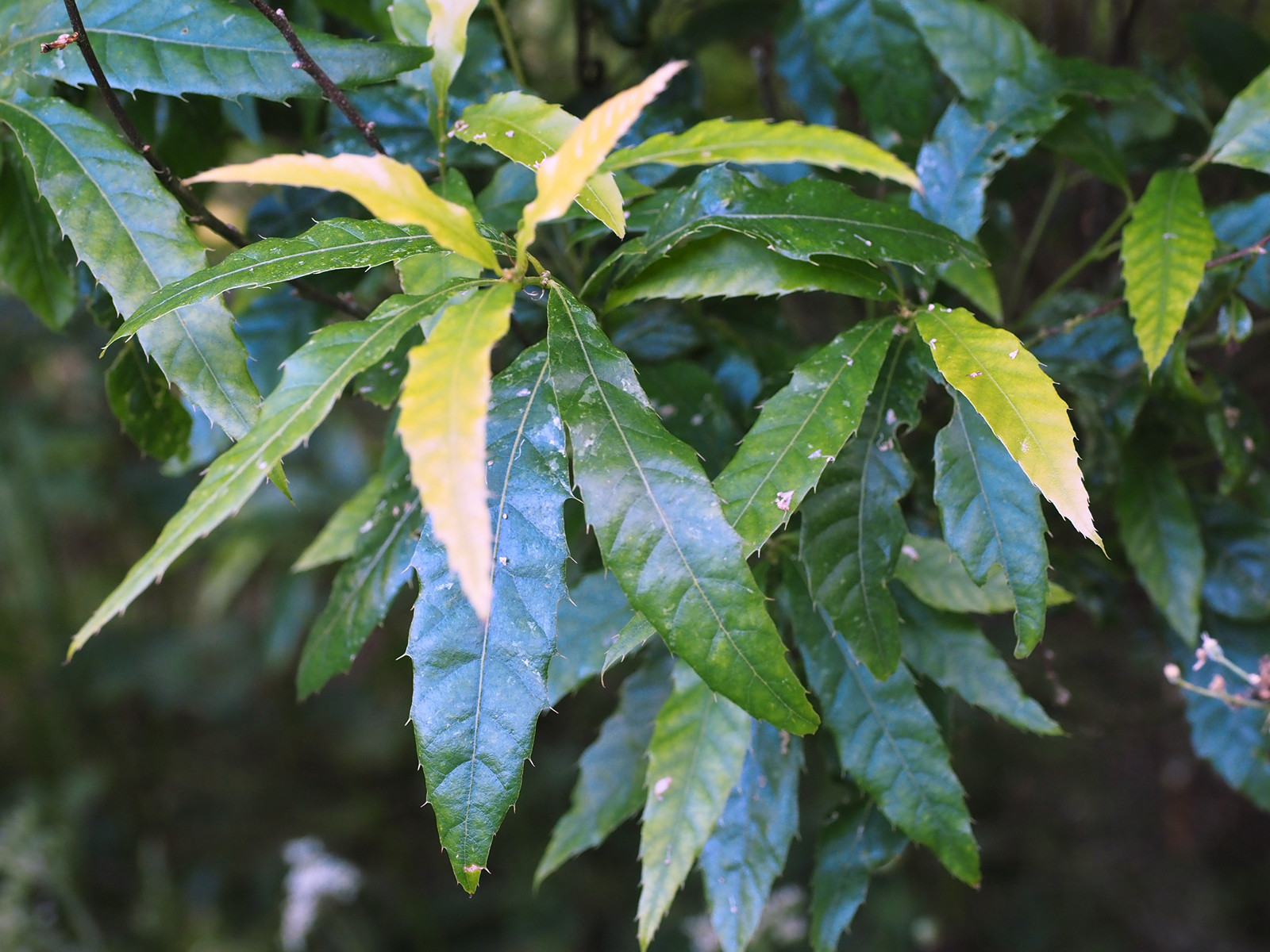
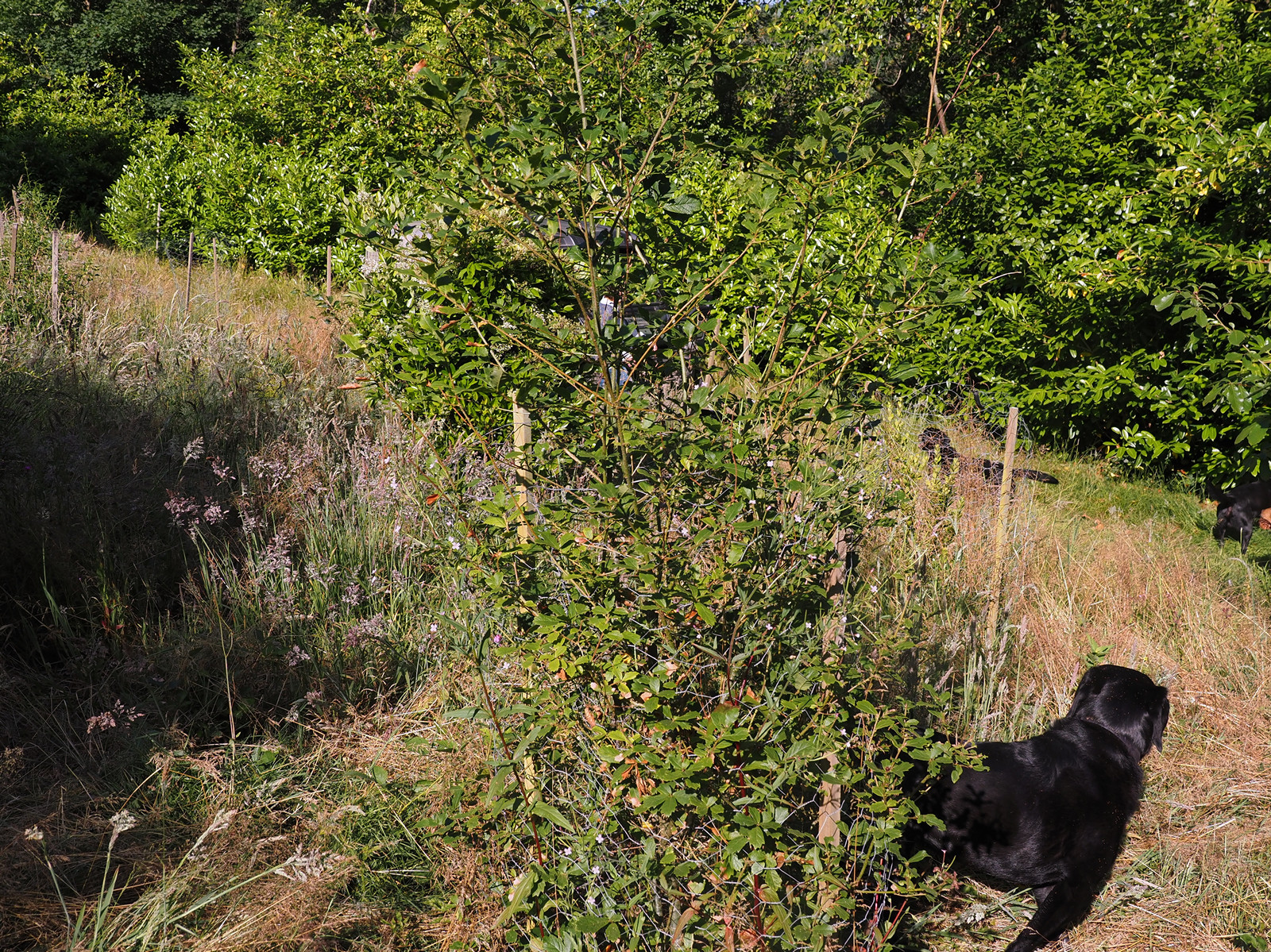
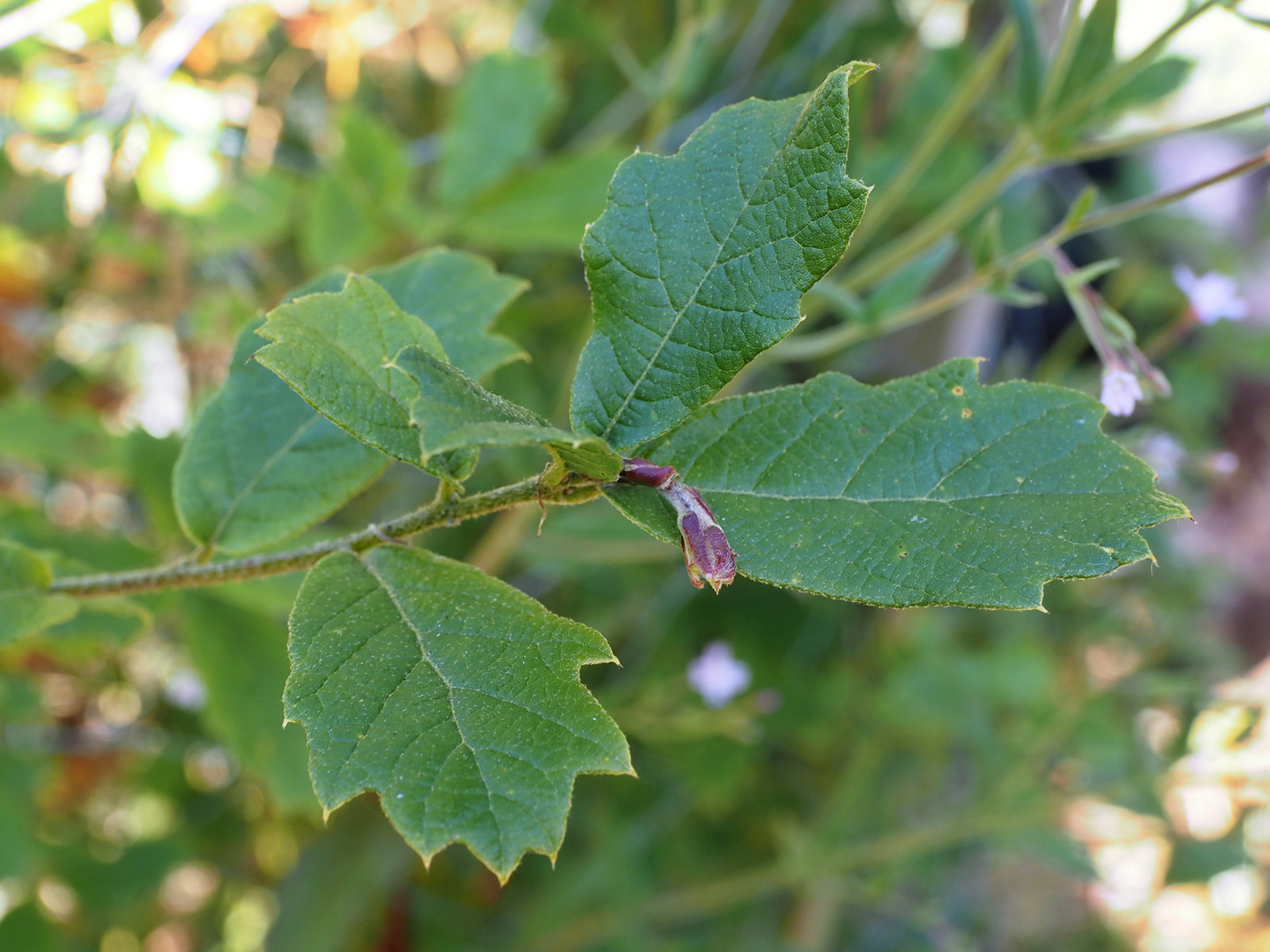
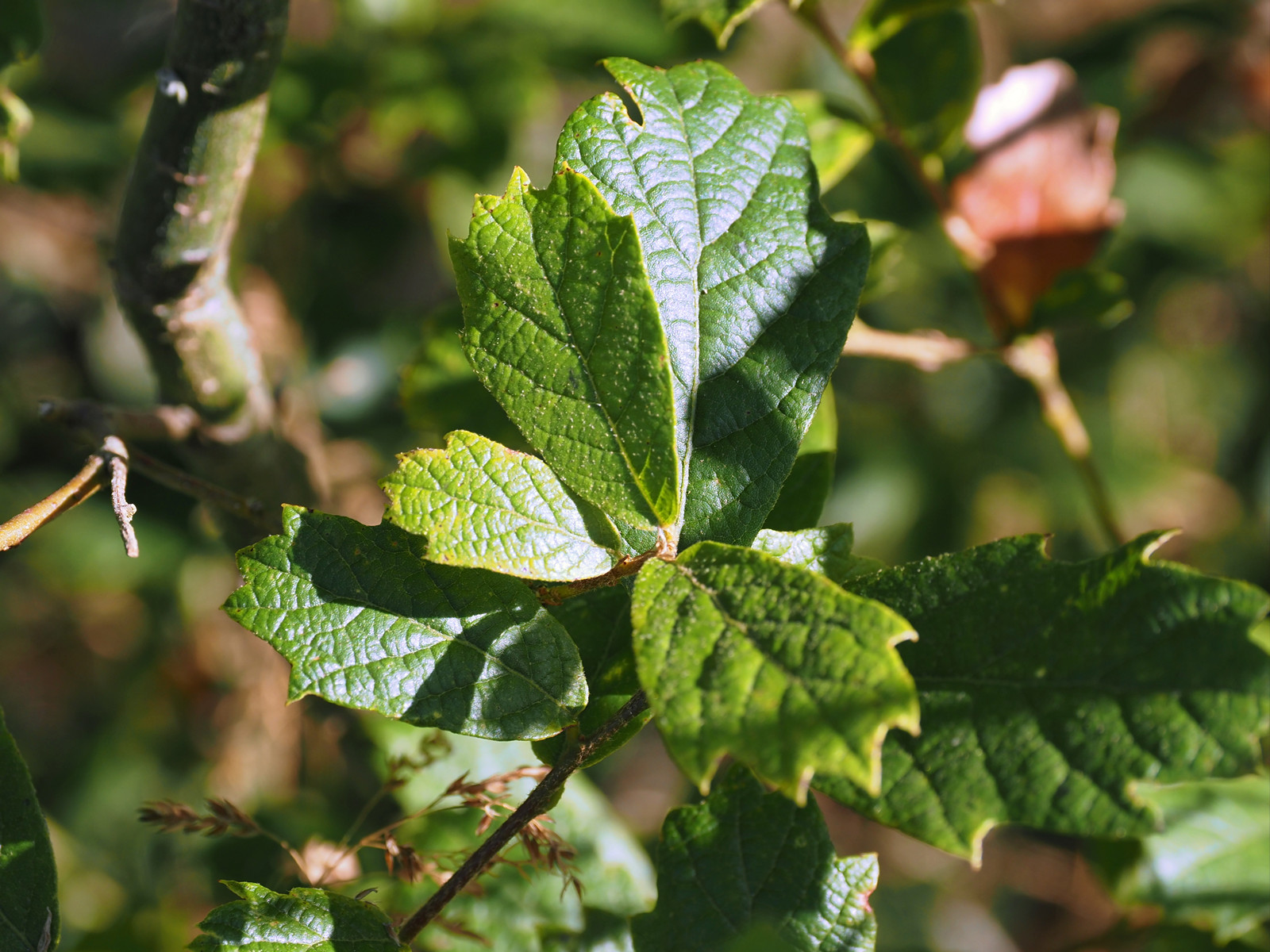
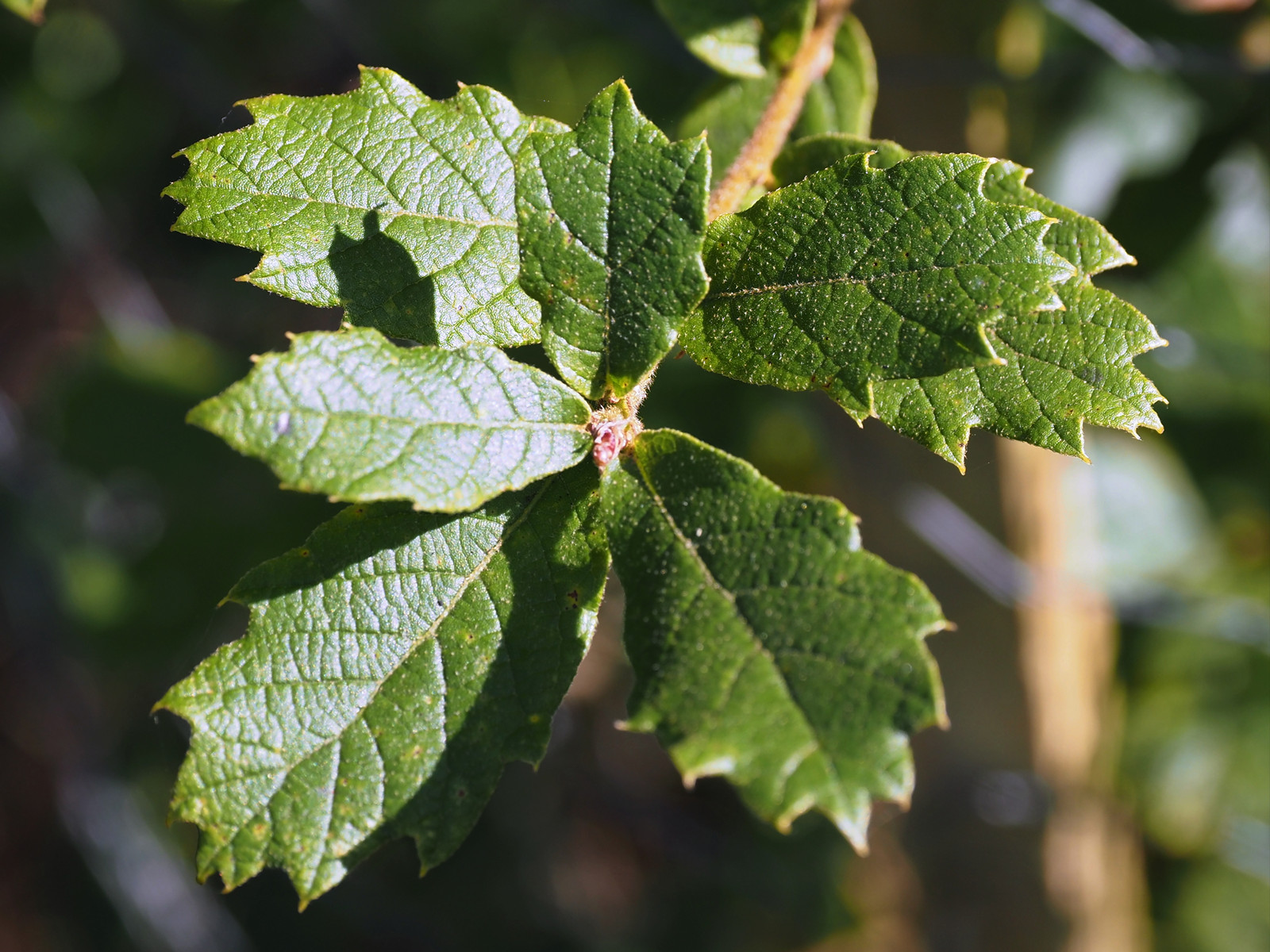
Todays quest is to photograph 3 oaks which I looked at earlier this week with Allen Coombes which he says are wrongly named.
This has always been known for generations as Quercus myrsinifolia which grows as a windbreak hedge in the Aucklandii Garden. Burncoose have grown this from cuttings for years and sold it as Q. myrsinifolia. Alan says it is Quercus glauca and, I agree, that it looks NOW very like the Q. glauca which I photographed at Batsford Arboretum last week (and an elderly plant here in the Rookery). Hilliers says that Q. myrsinifolia is often confused with Q. glauca but the difference is that the new growth is purple-red when it unfurls (a bit later than Q. glauca). Our ‘hedge’ certainly has attractive purple-red new growth. Alan then says that the undersides of the newer leaves of Q. glabra are ‘hairy’ and we gaze through the eyeglass to prove his point. Where is the true Q. myrsinifolia then to prove that it does not have hairs on the underside of its leaves? One has to enjoy these sorts of debates as a non-botanist, non-taxonomist and enthusiastic amateur. Its not the first time this issue has been raised. If our trees produce acorns this year I must photograph them! That just might be the decider. (In fact I think I already have in past years and they are exactly as pictured on the IDS website as Q. myrsinifolia and not at all like Q. glabra).
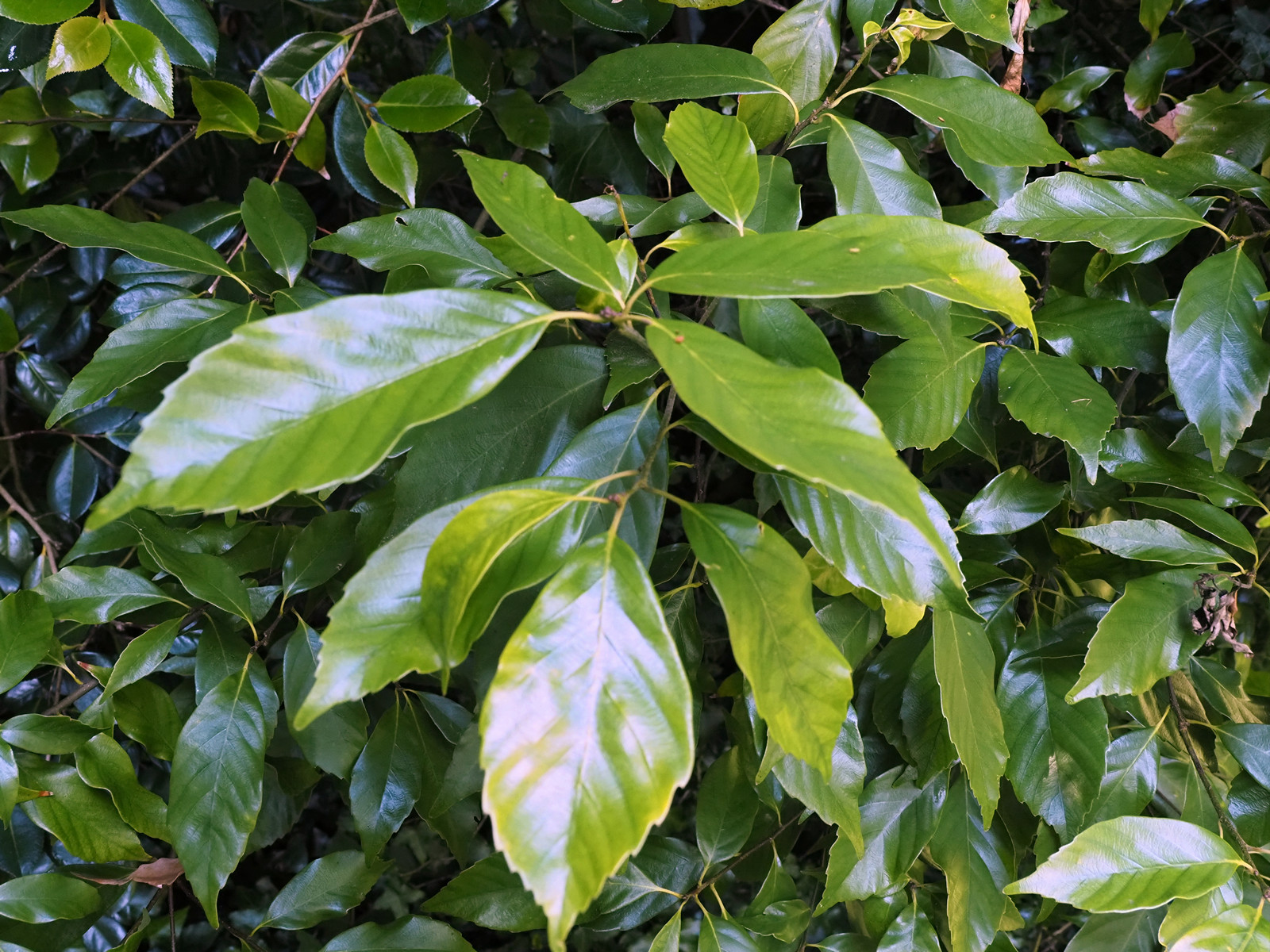
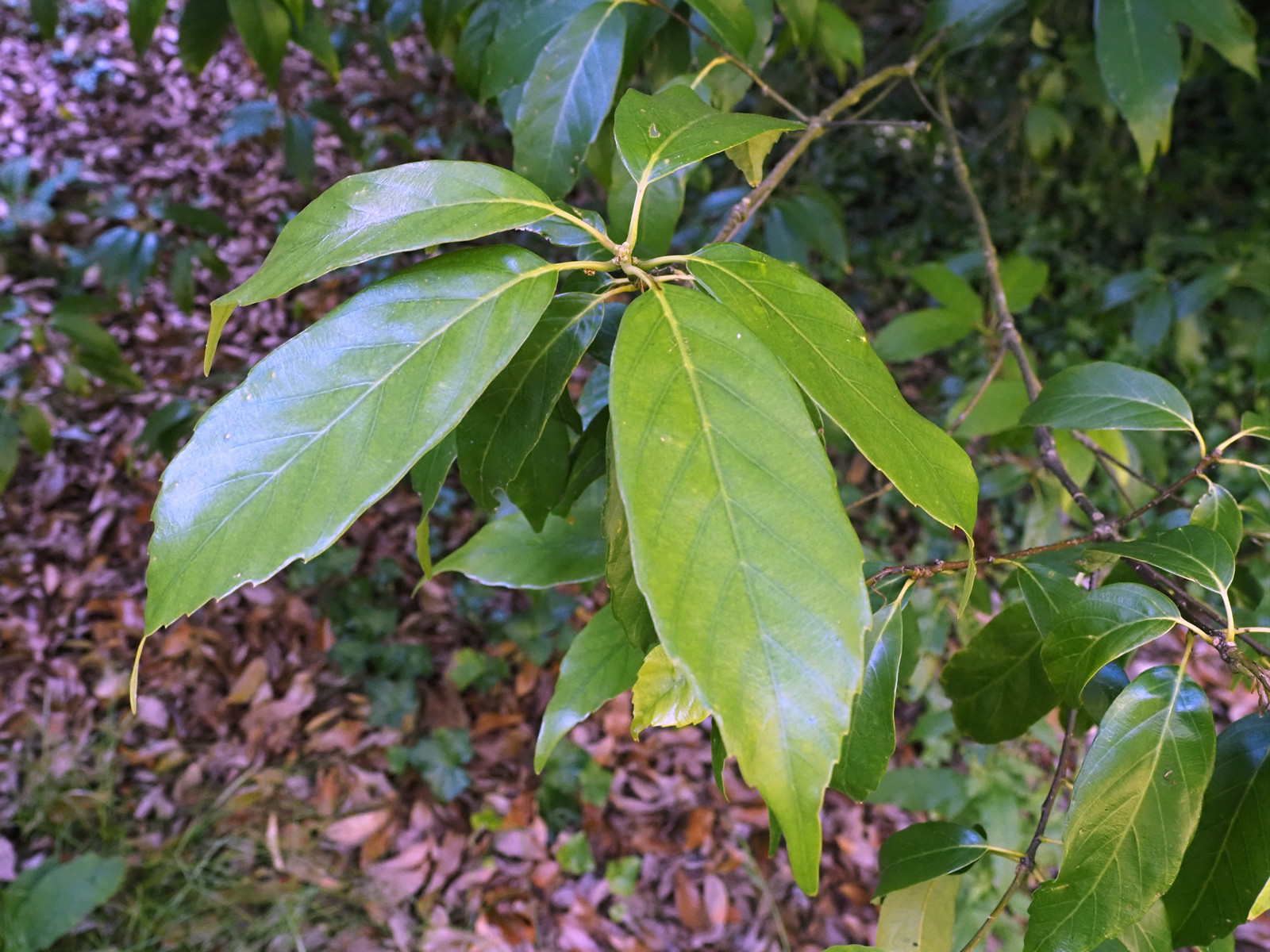
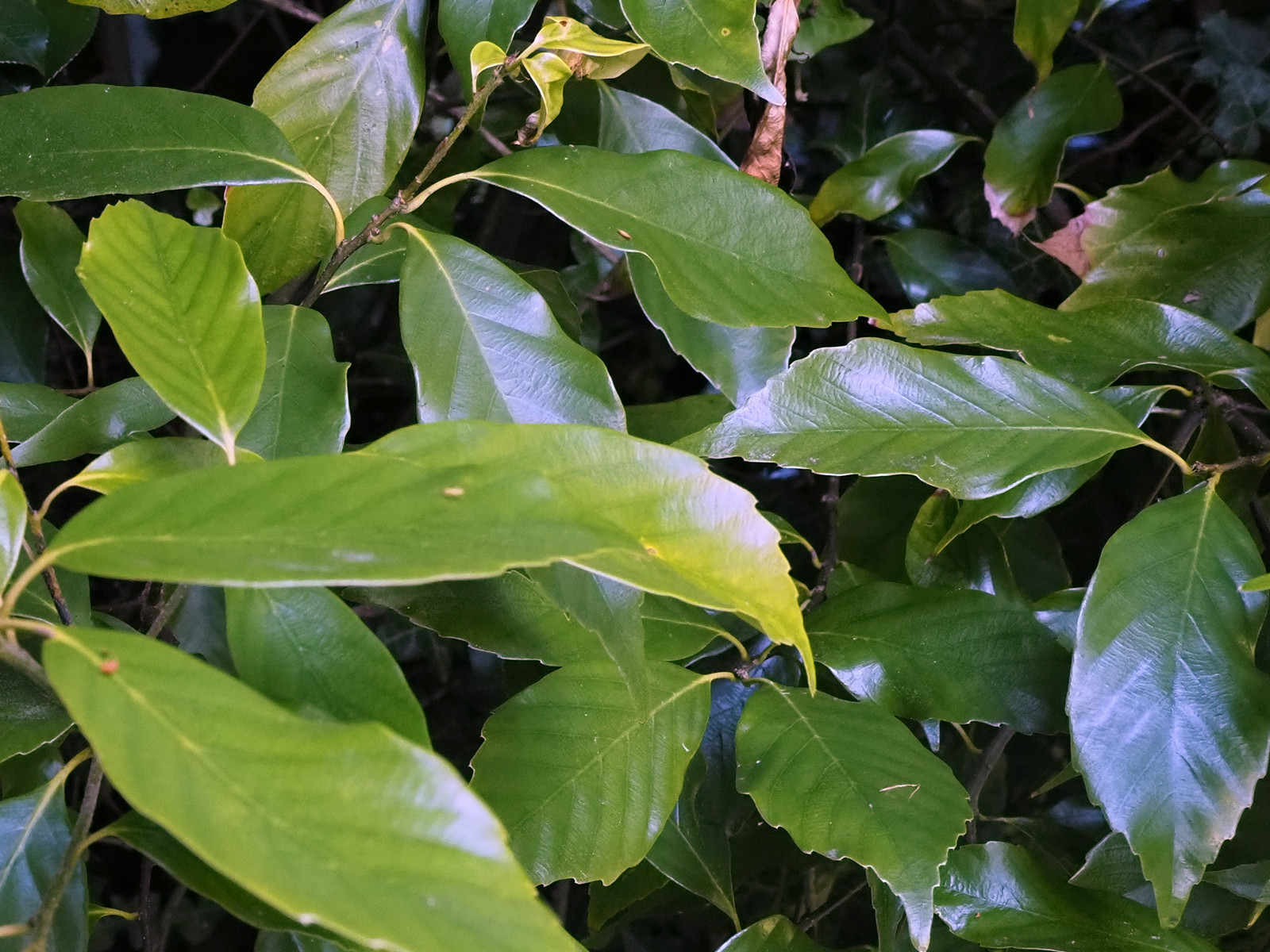
These 2 plants have always been labelled as 2 different species of Castanopsis from seed grown from one of Alan’s wild collections. They are not evergreen and clearly not Castanopsis. How this occurred in the greenhouse c. 2000 I have no idea or even whether it was our seed/ label/ growing muddle to start with. Anyway Alan is absolutely right and identifies them both as Q. chenii (previously Quercus acutifolia).
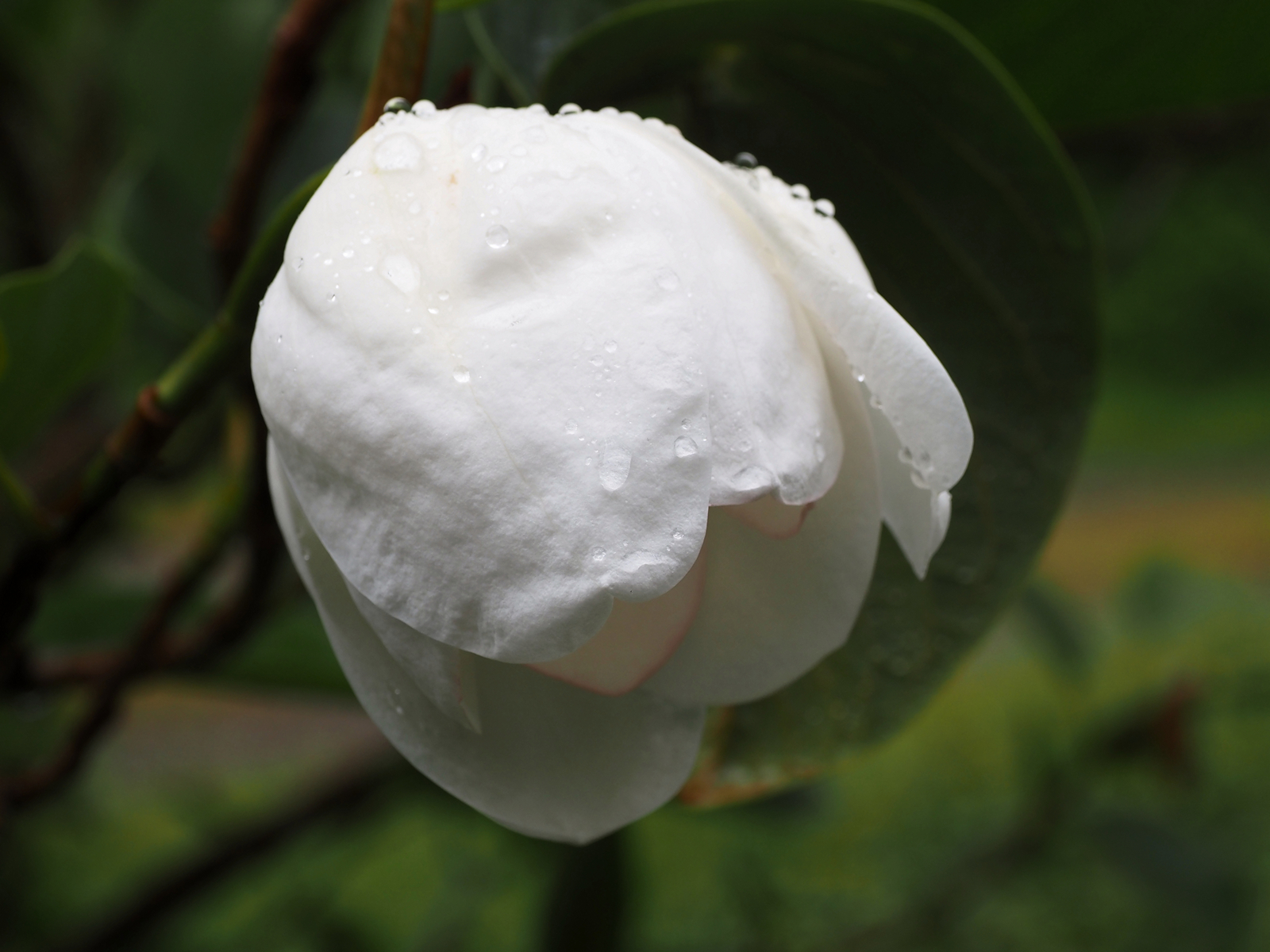
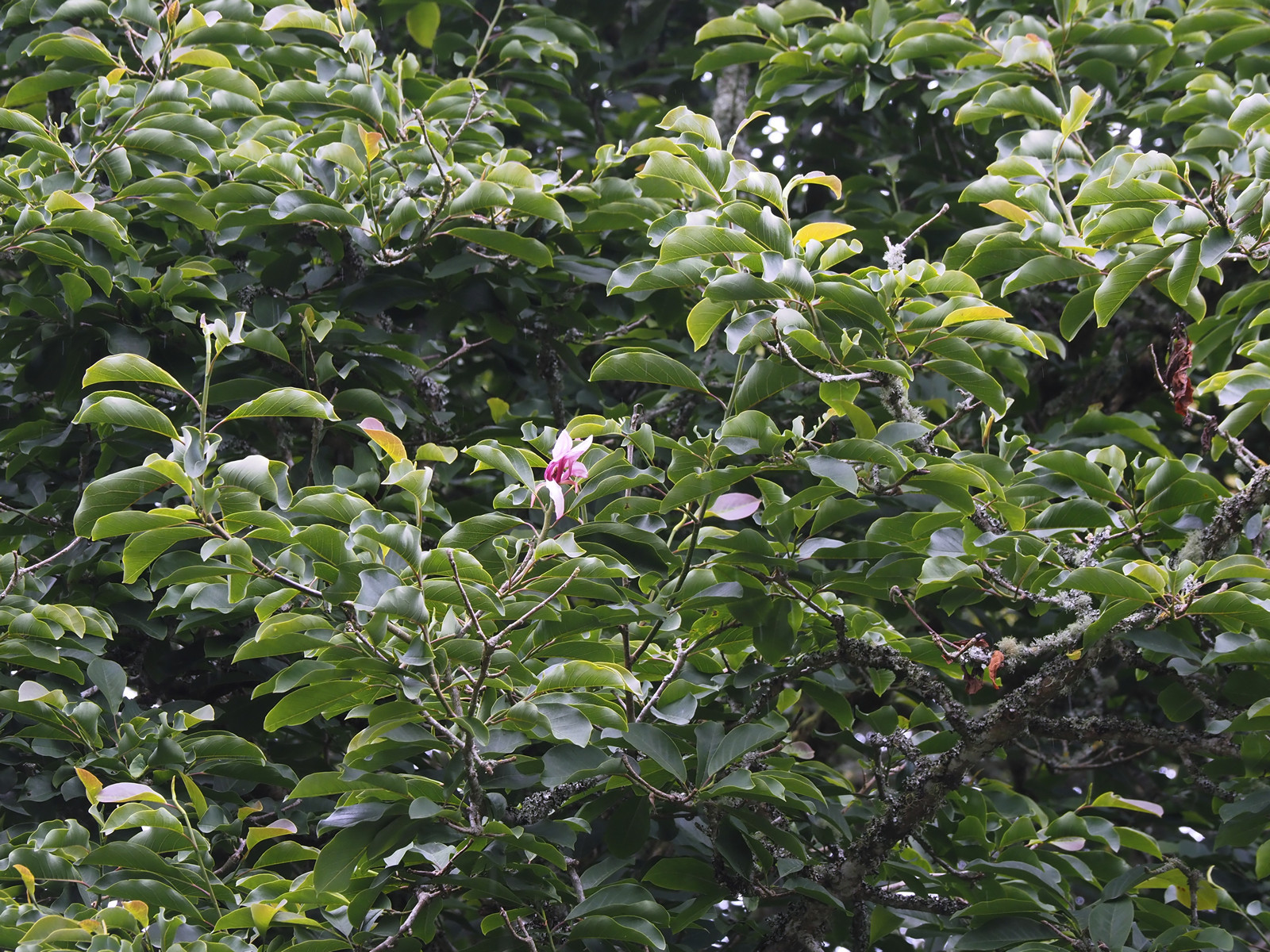
A few secondary flowers on the now fully recovered large Magnolia dawsoniana outside the front gate.
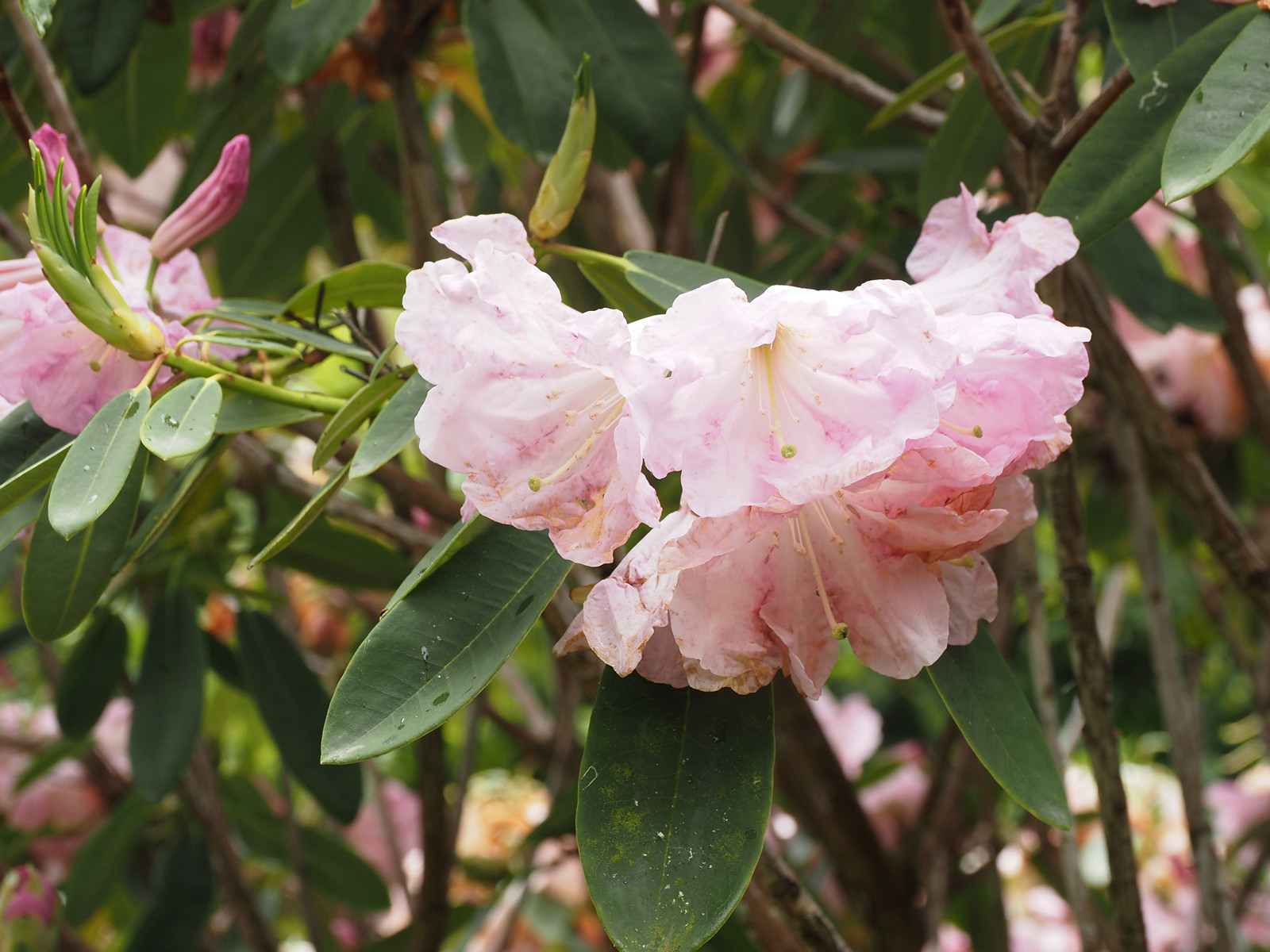
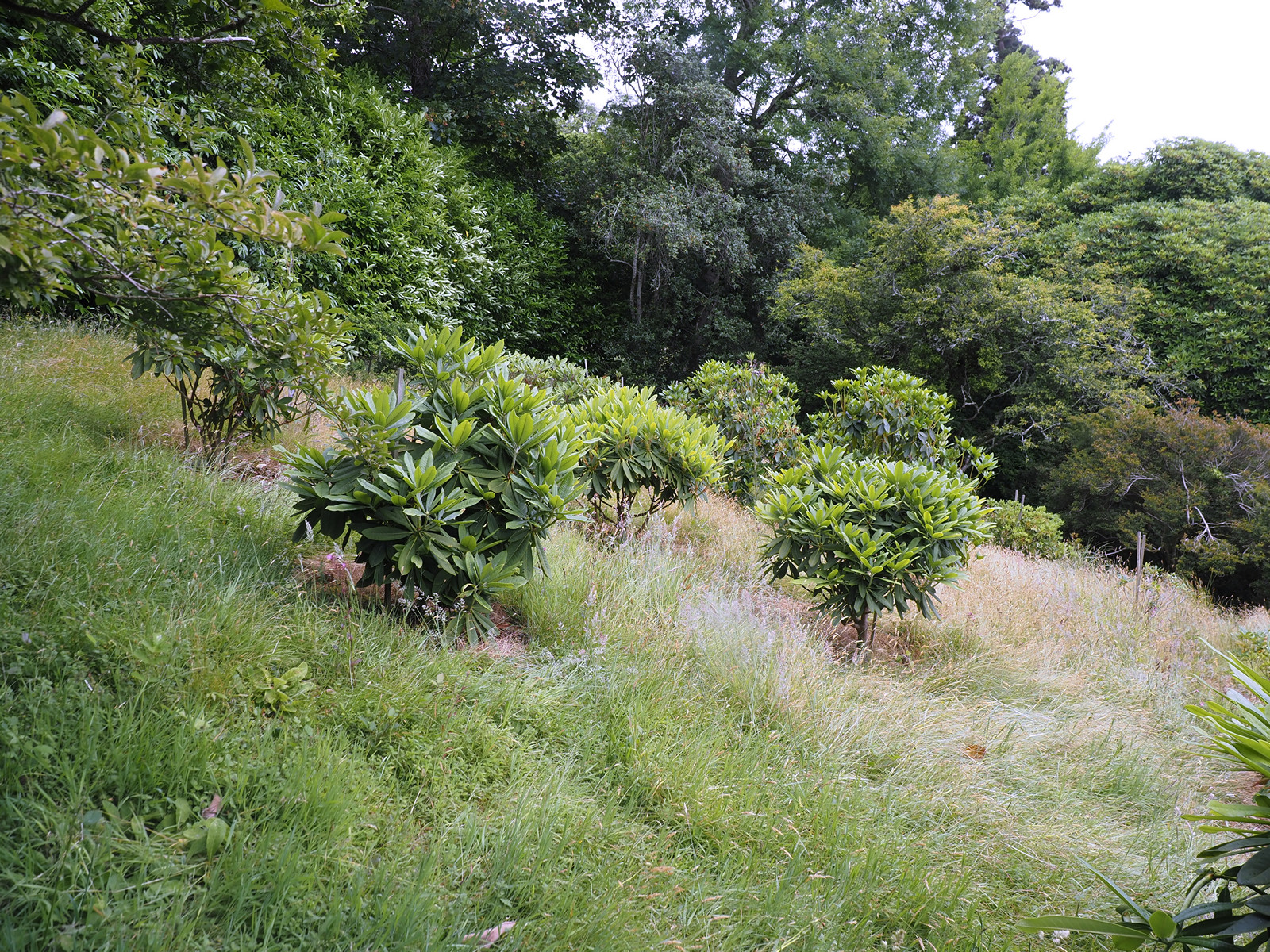
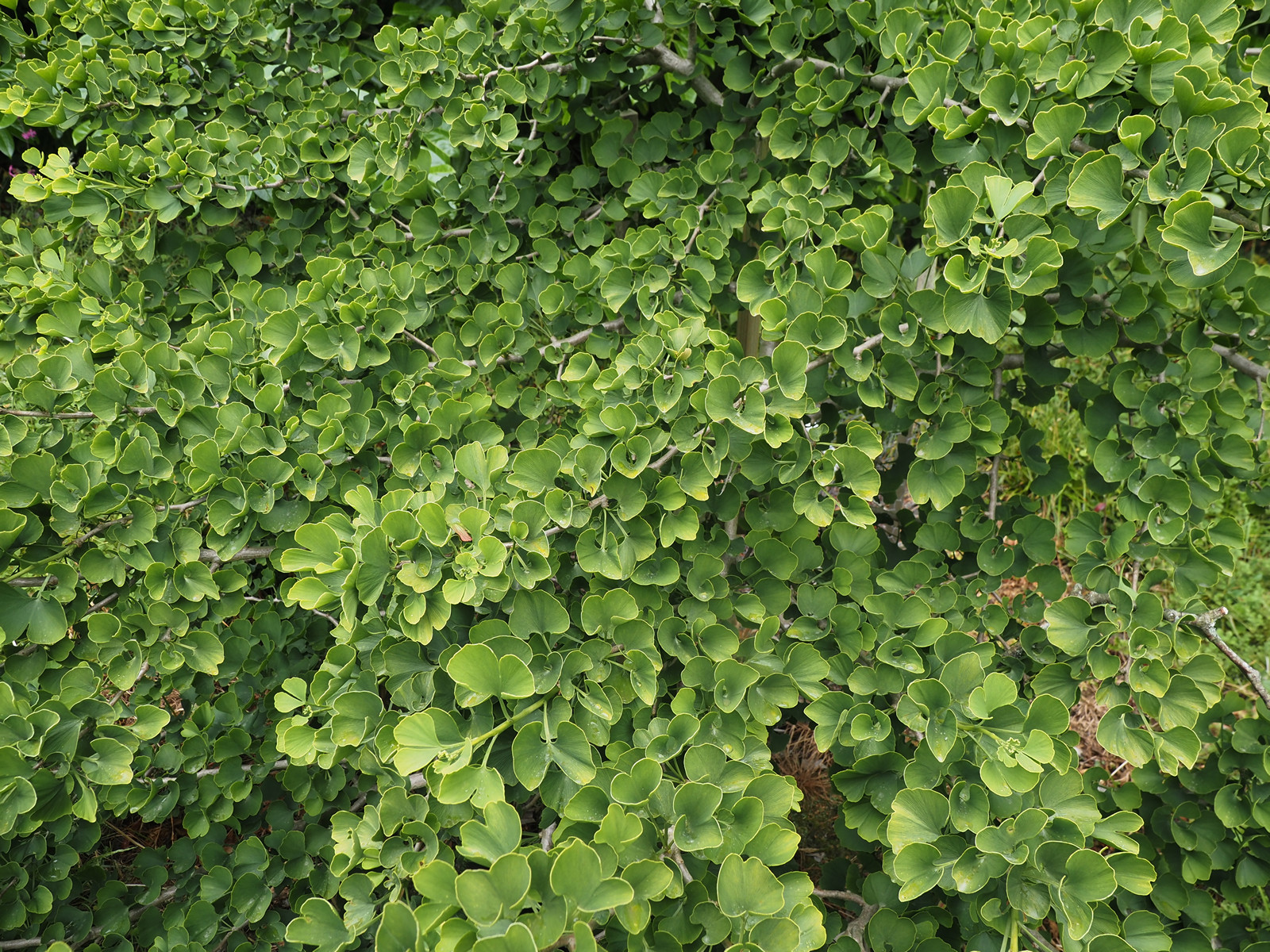
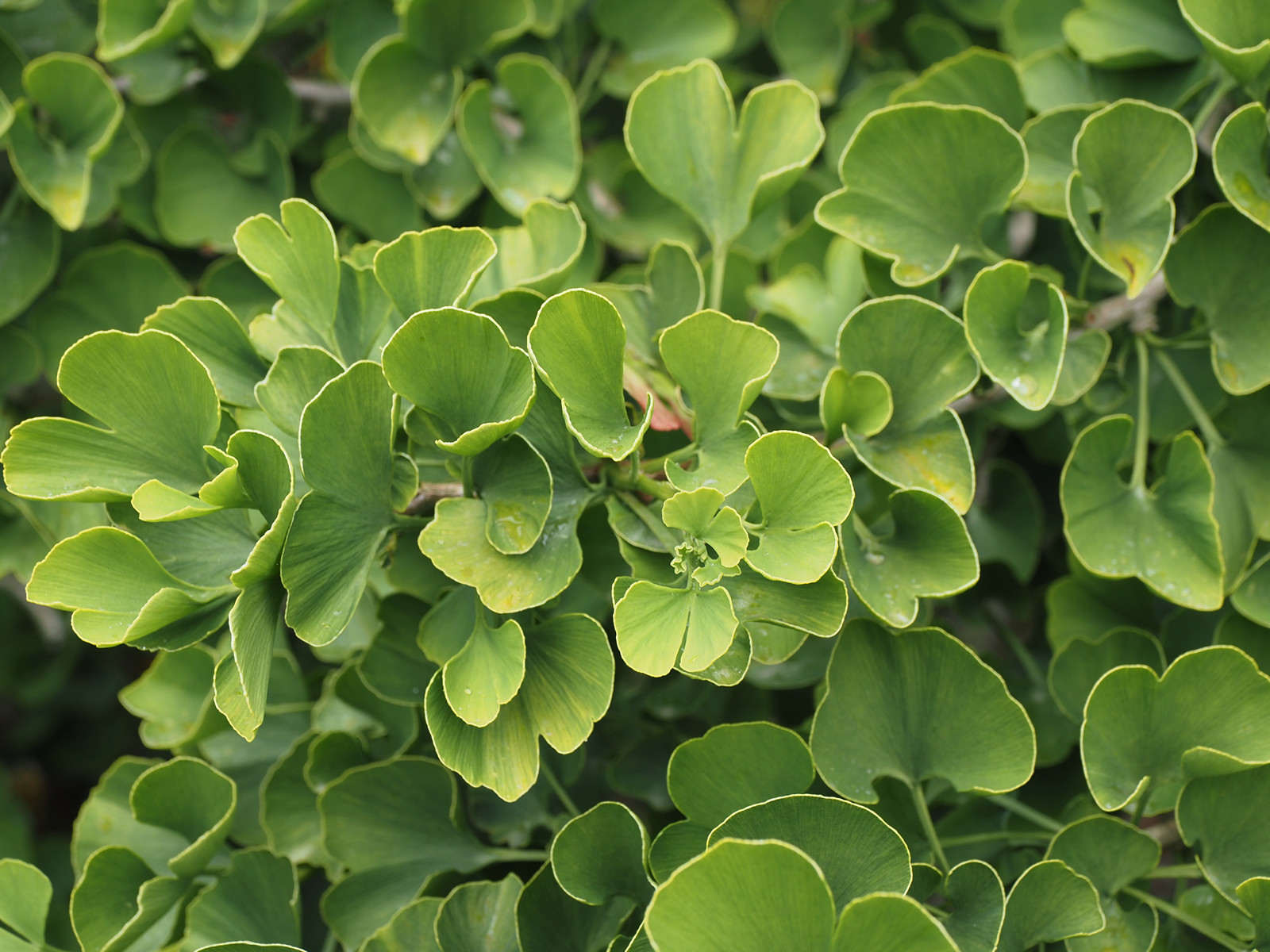
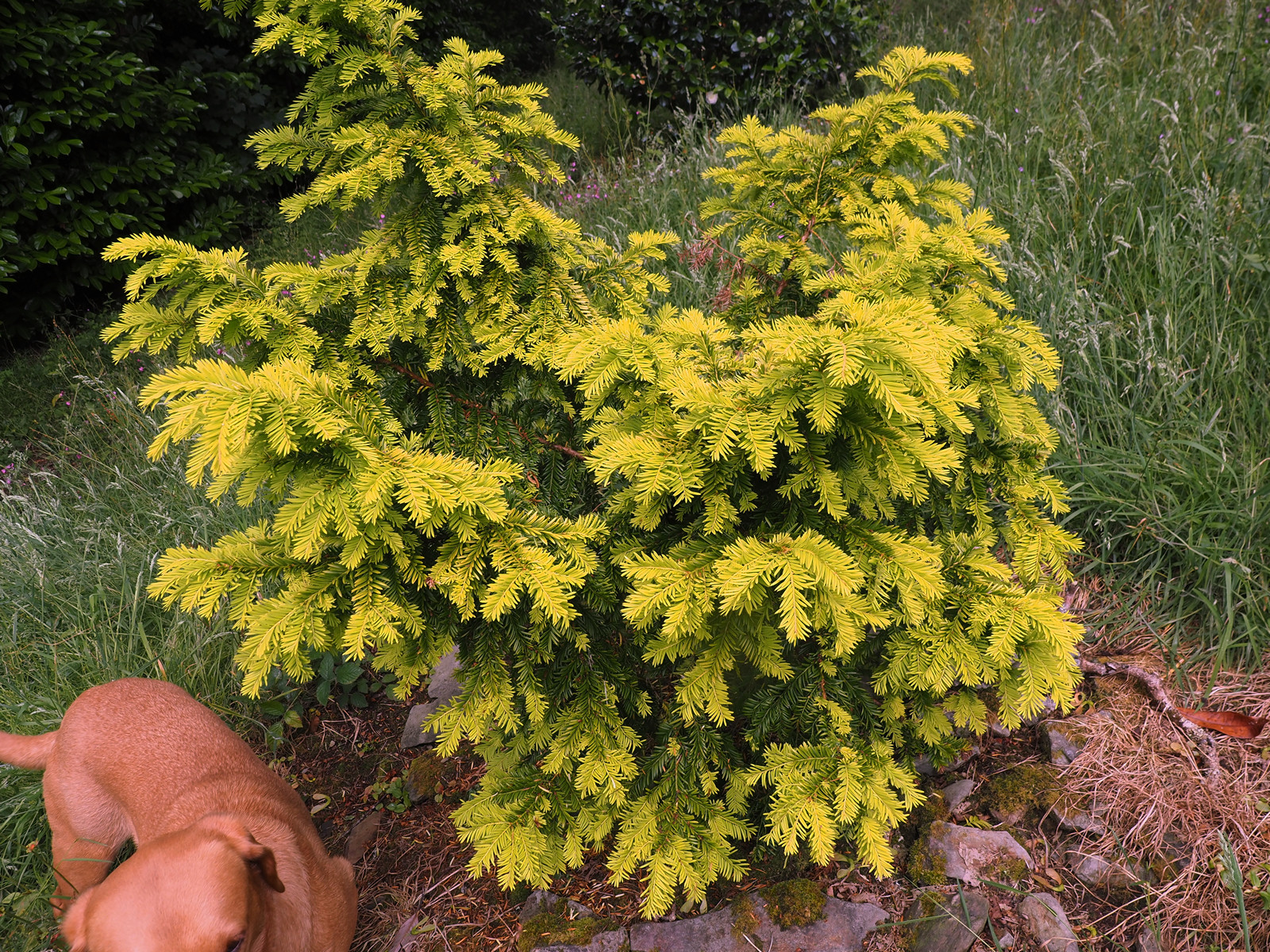
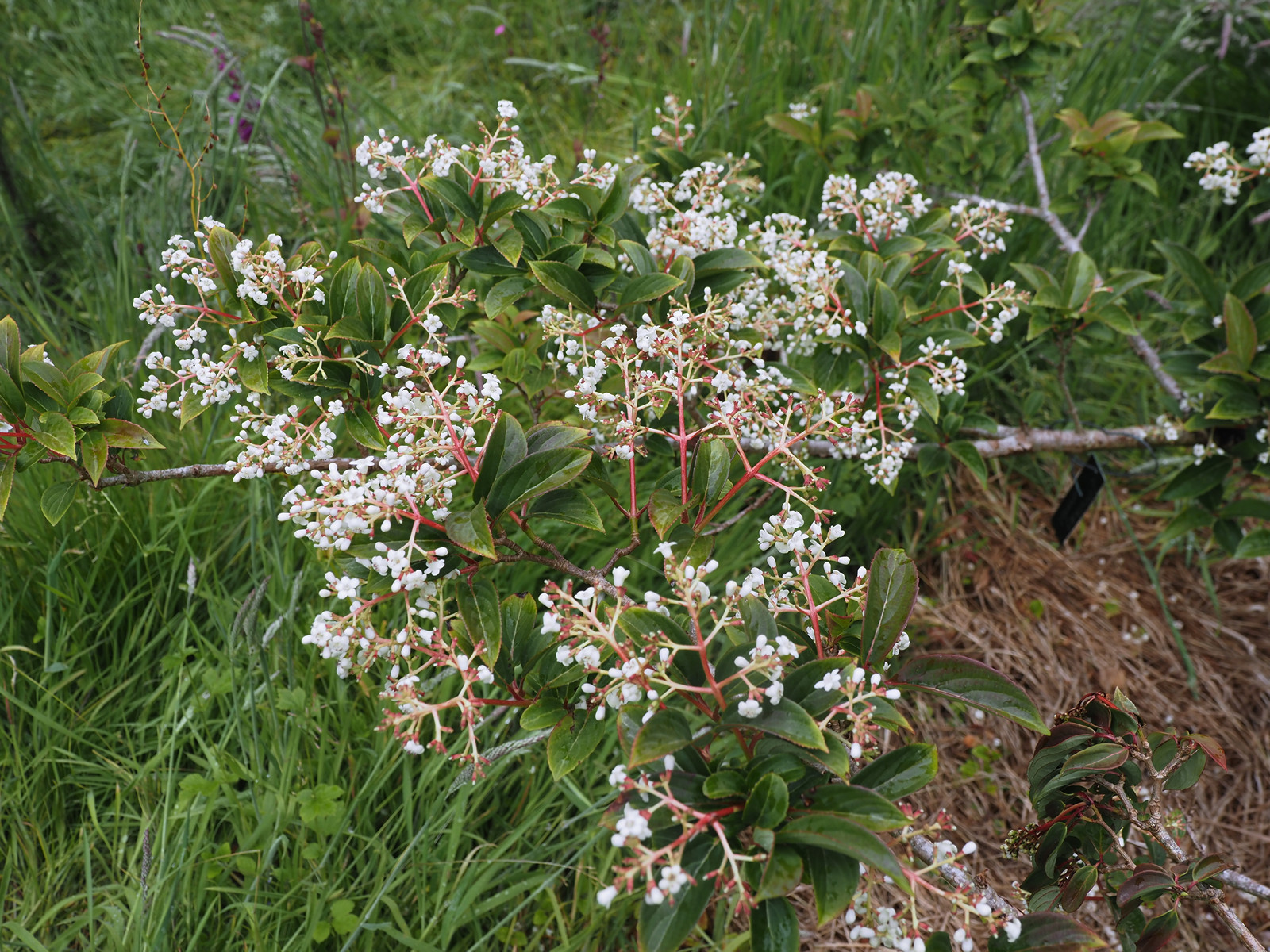
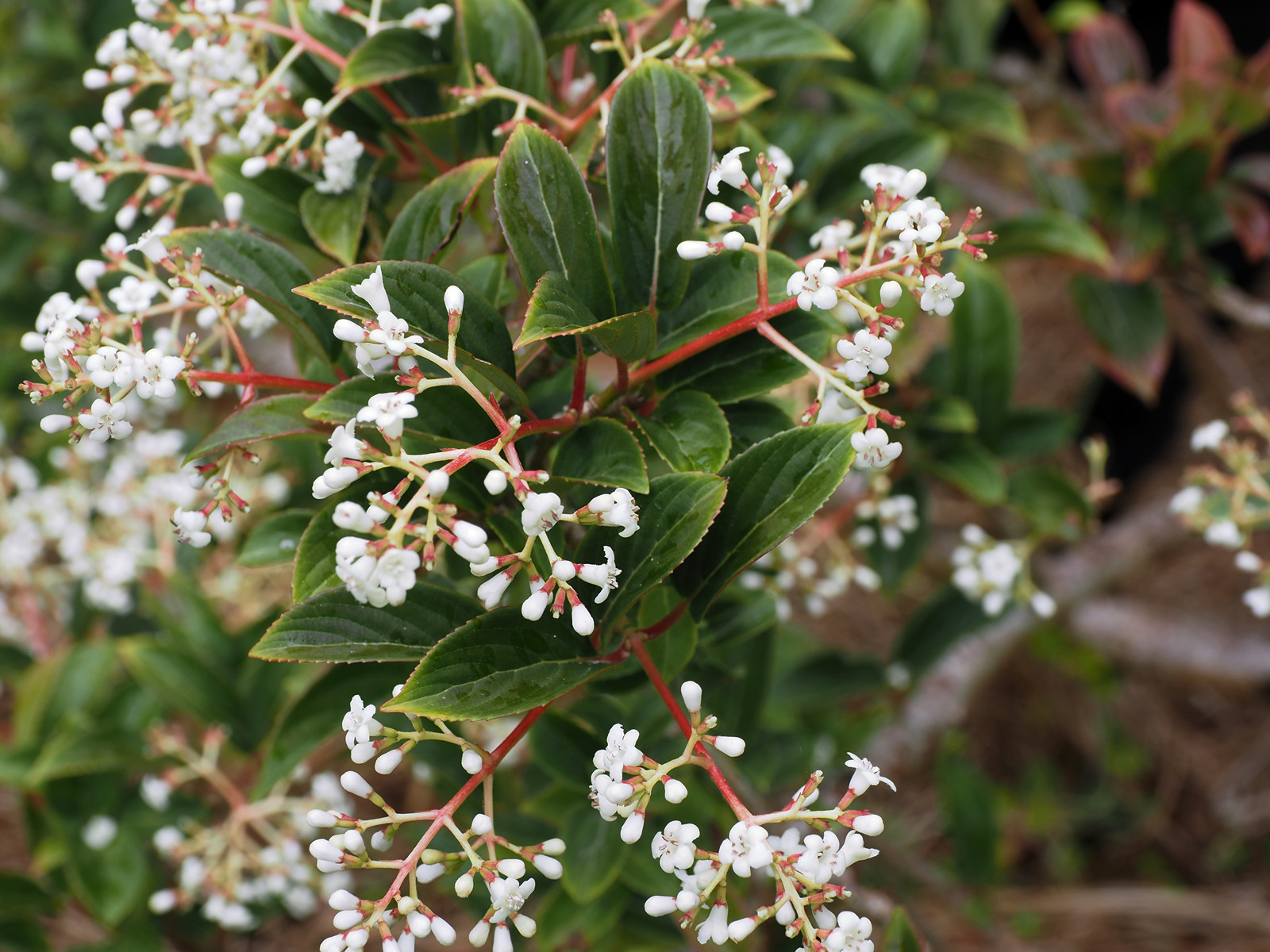
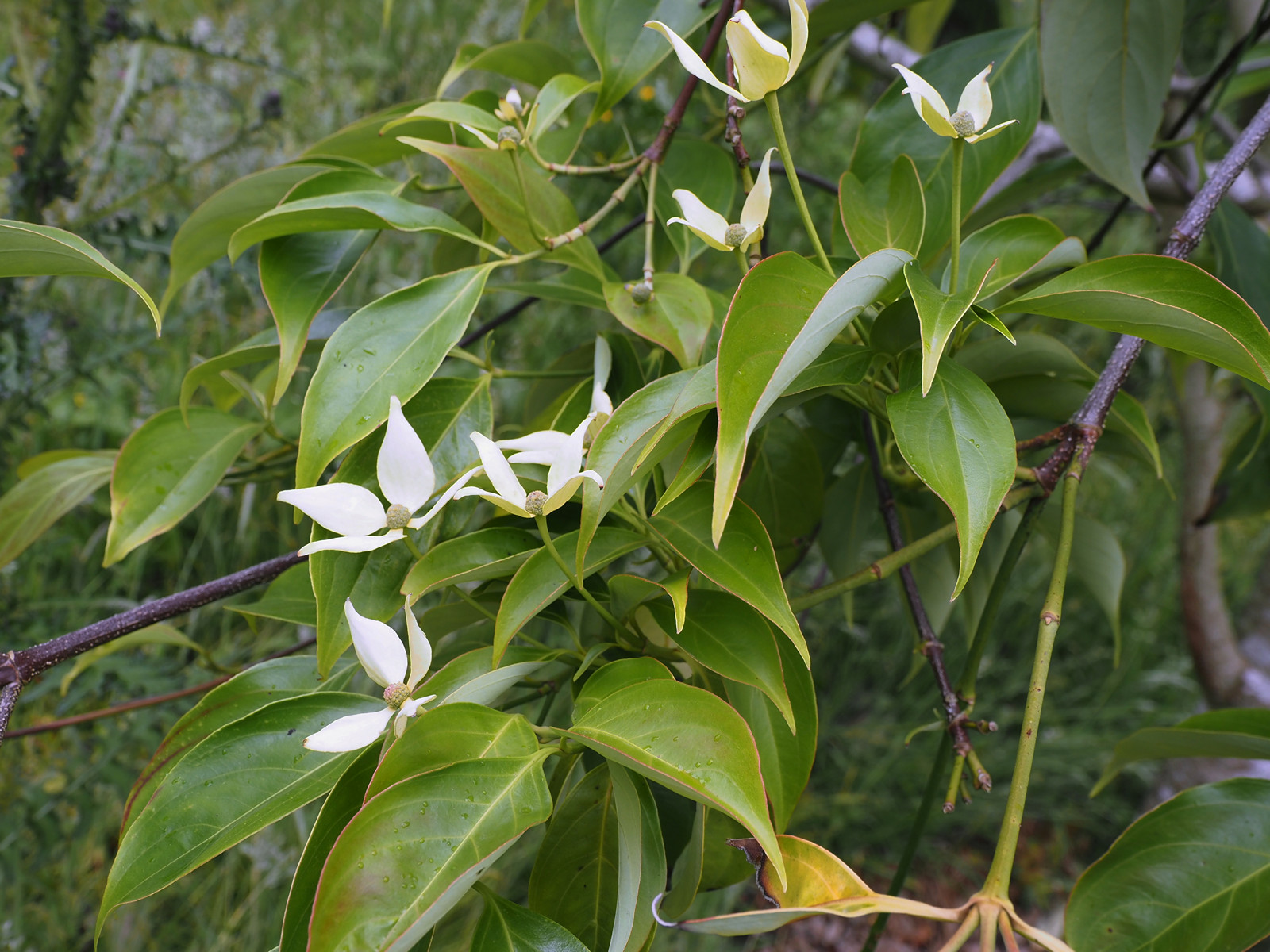
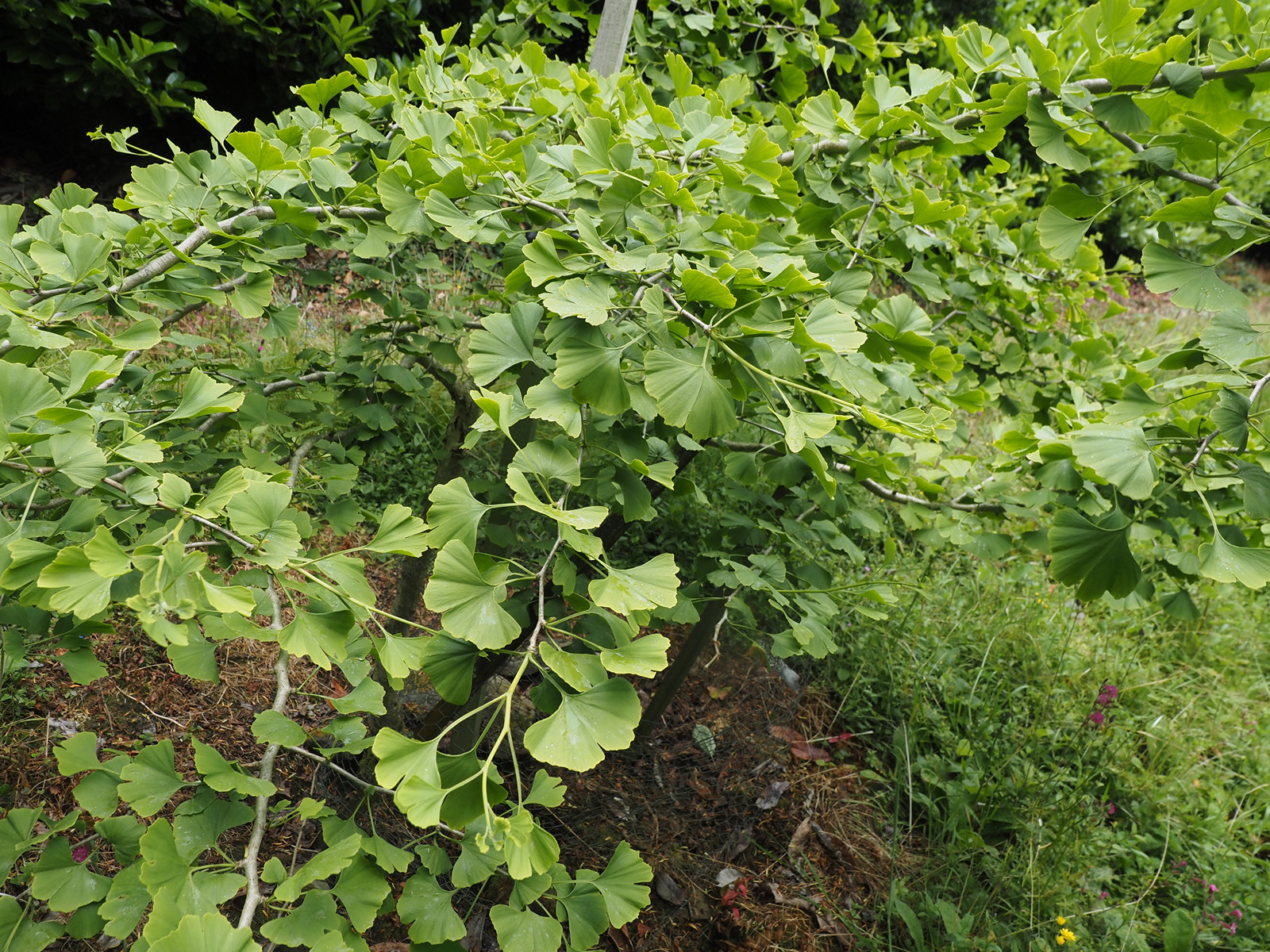
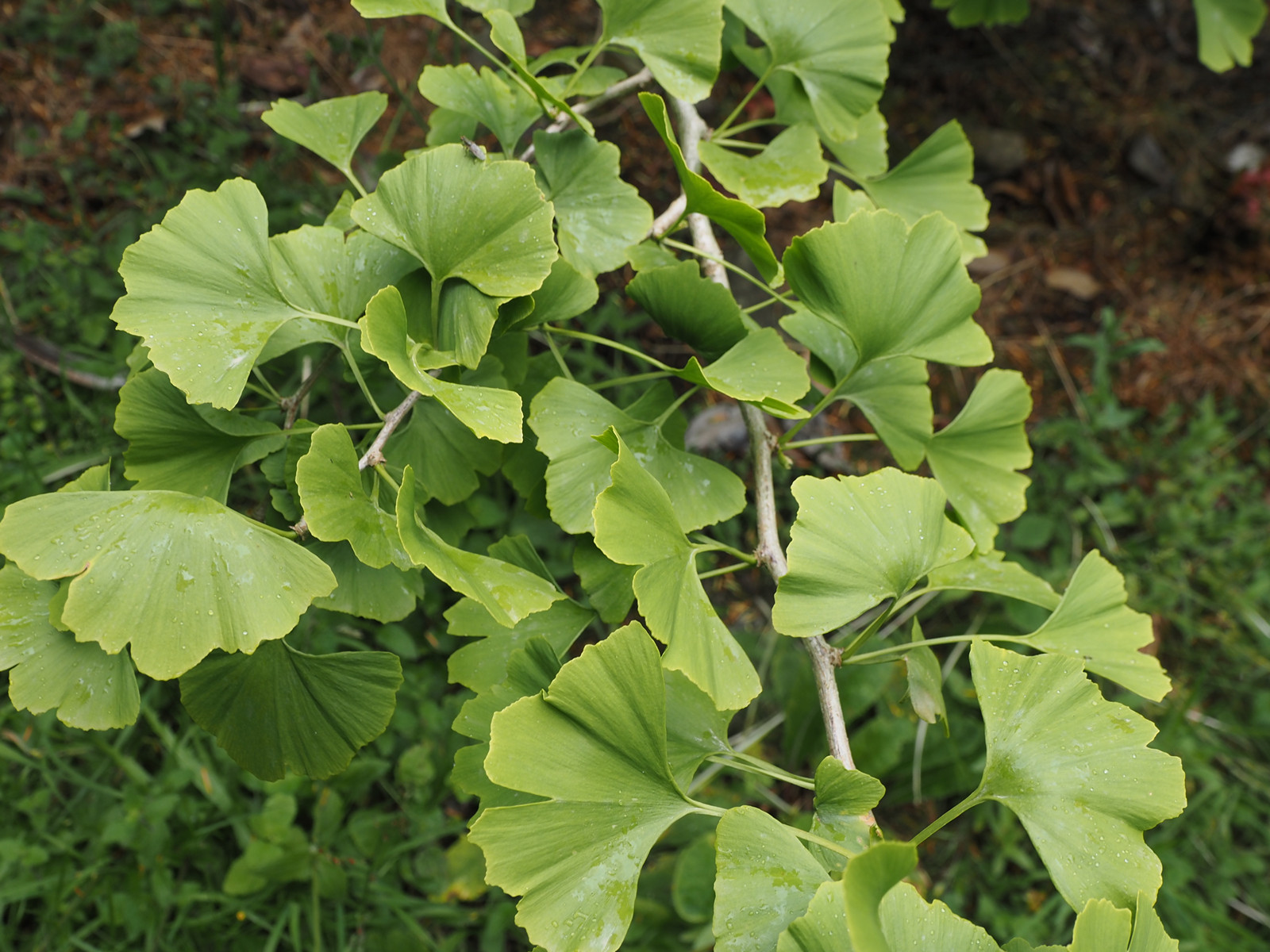
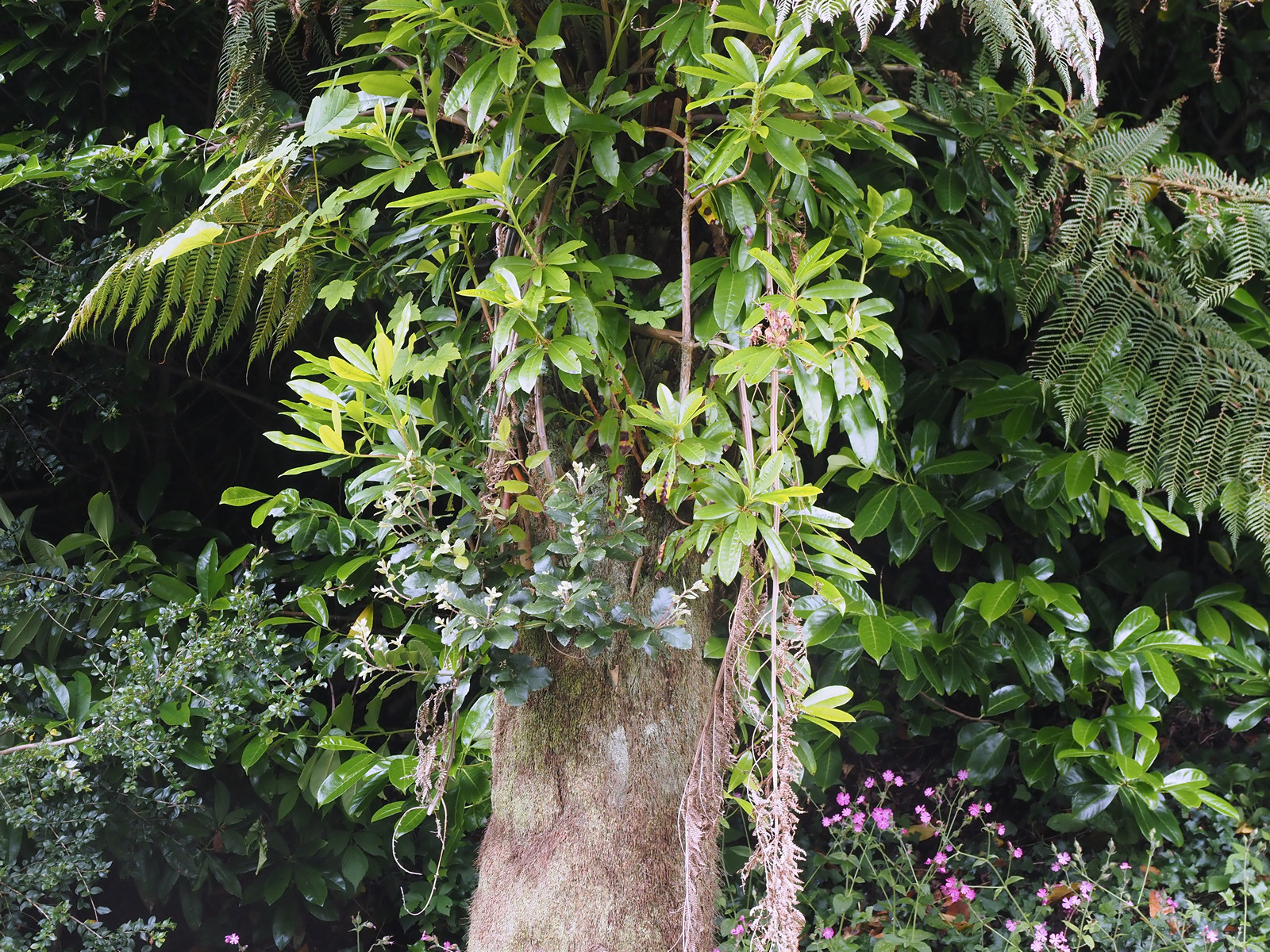
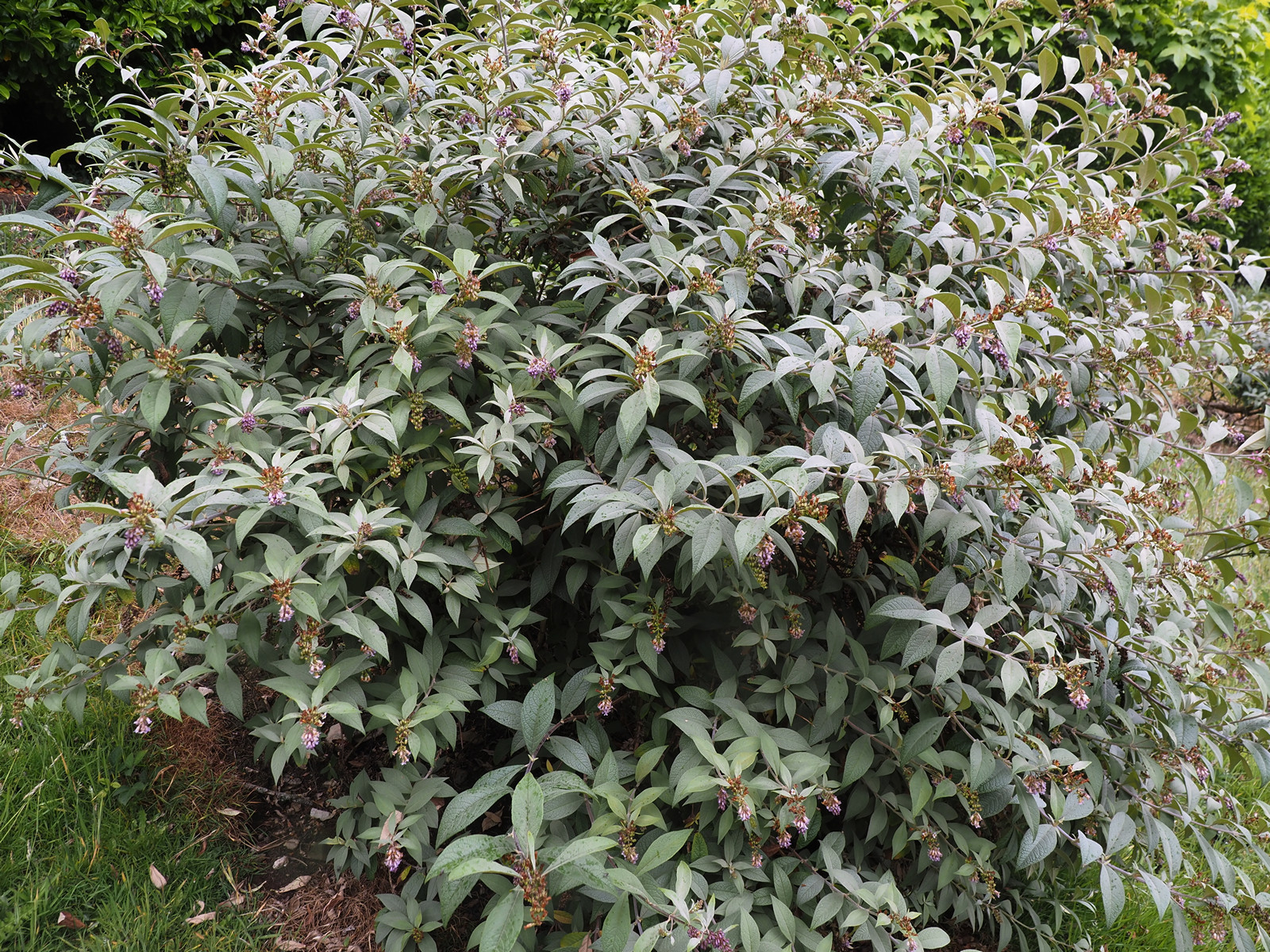
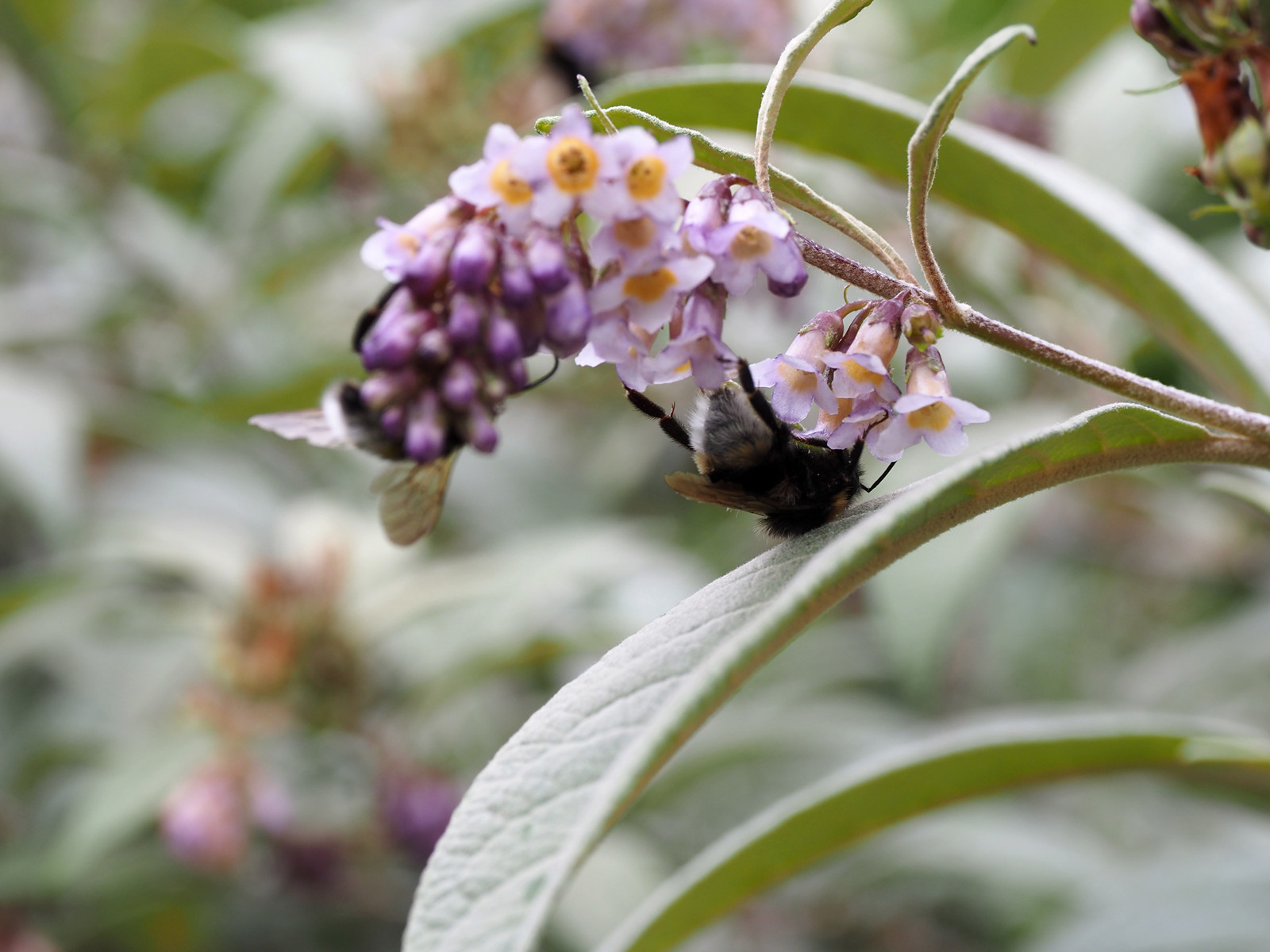
Yesterday’s rain has been a godsend to the younger plants especially the newly planted azaleas in Kennel Close which were wilting.Cornus kousa ‘Madame Butterfly’ at its best on Hovel Cart Road.


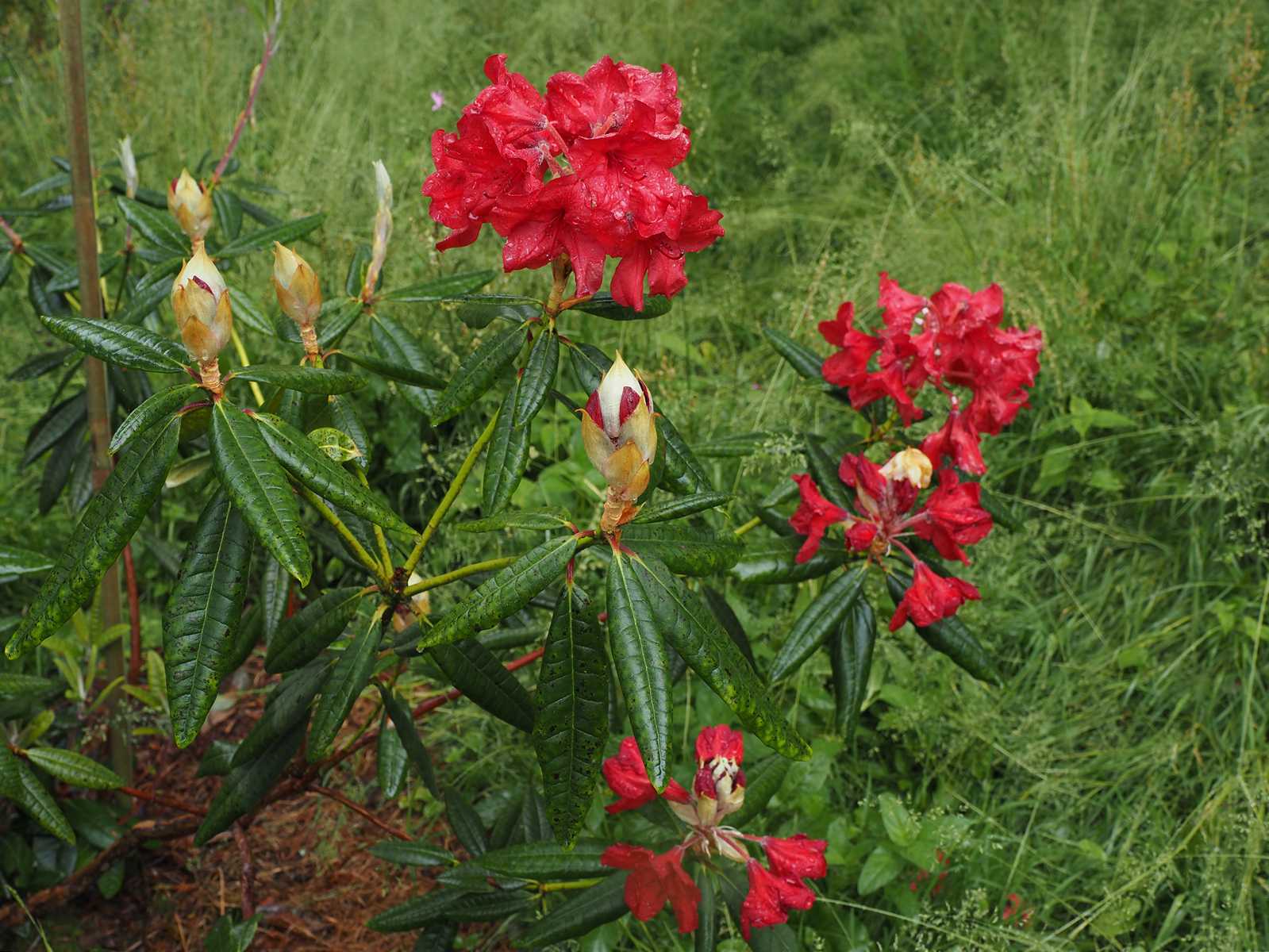
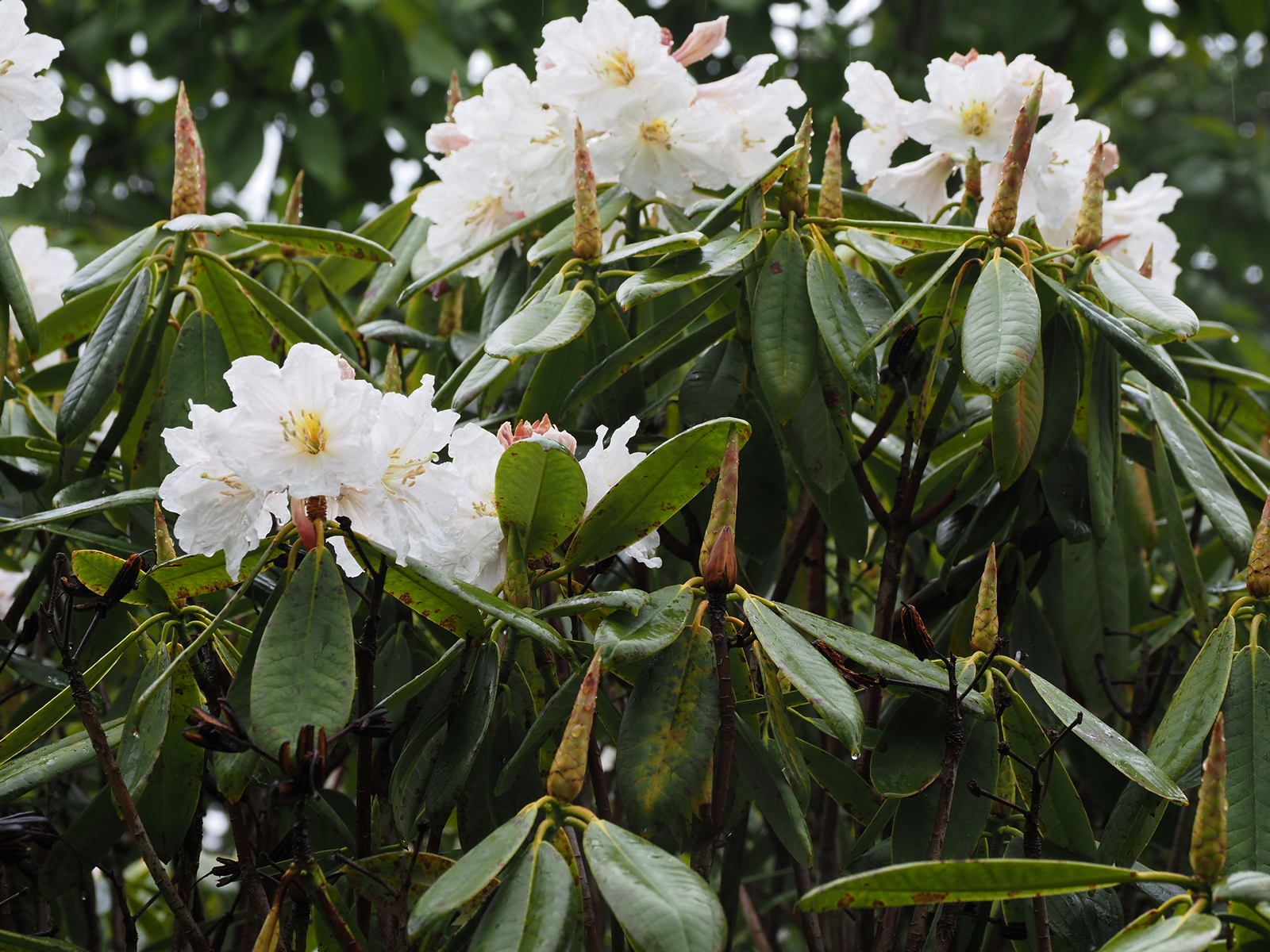
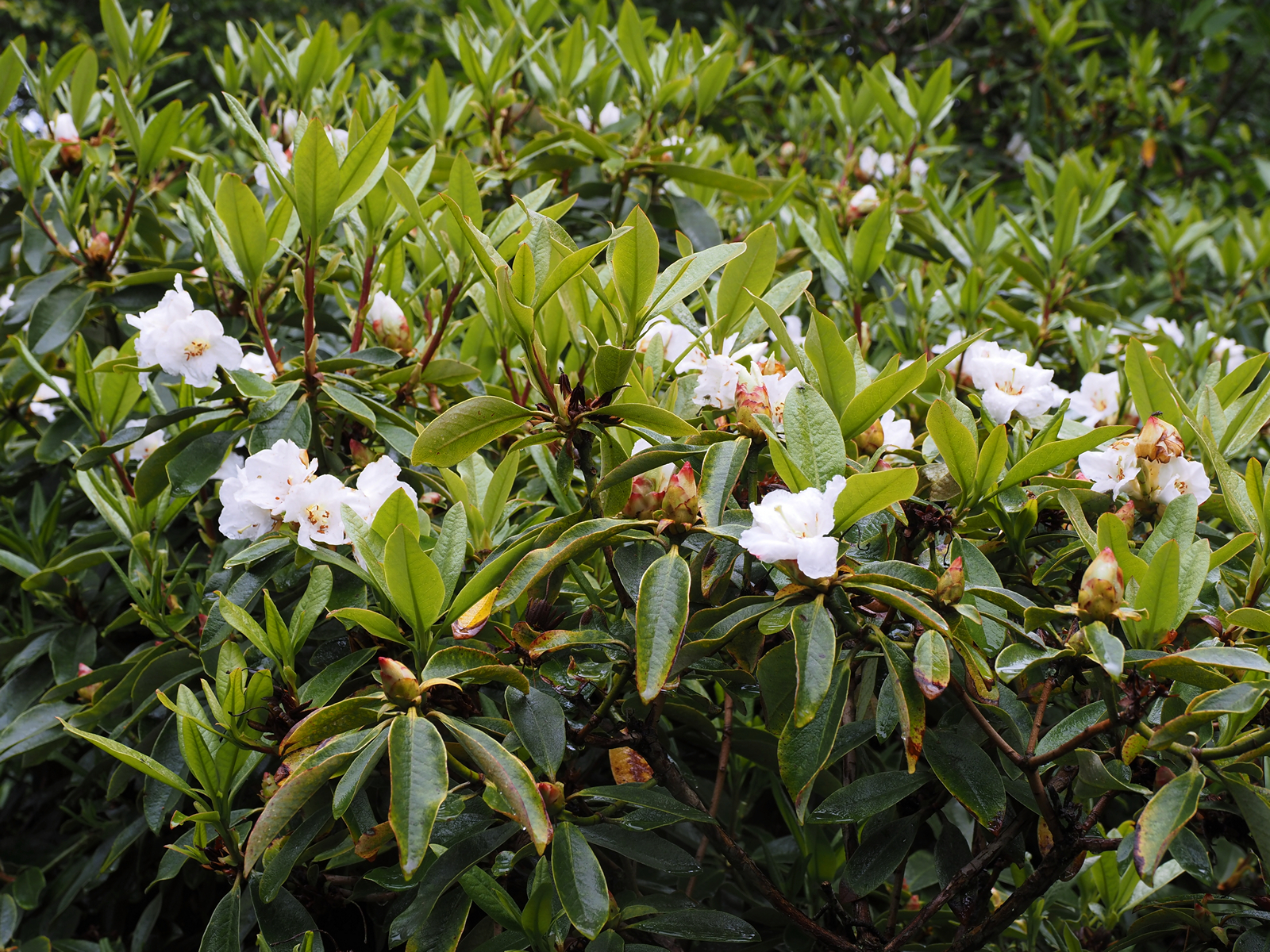
Rhododendron