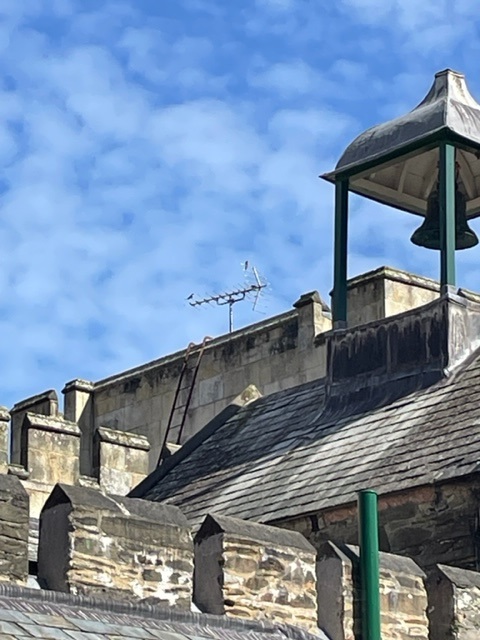
A visit from our Labour MP for Truro and Falmouth, Jayne Kirkham, to look at storm damage and the beach toilets.
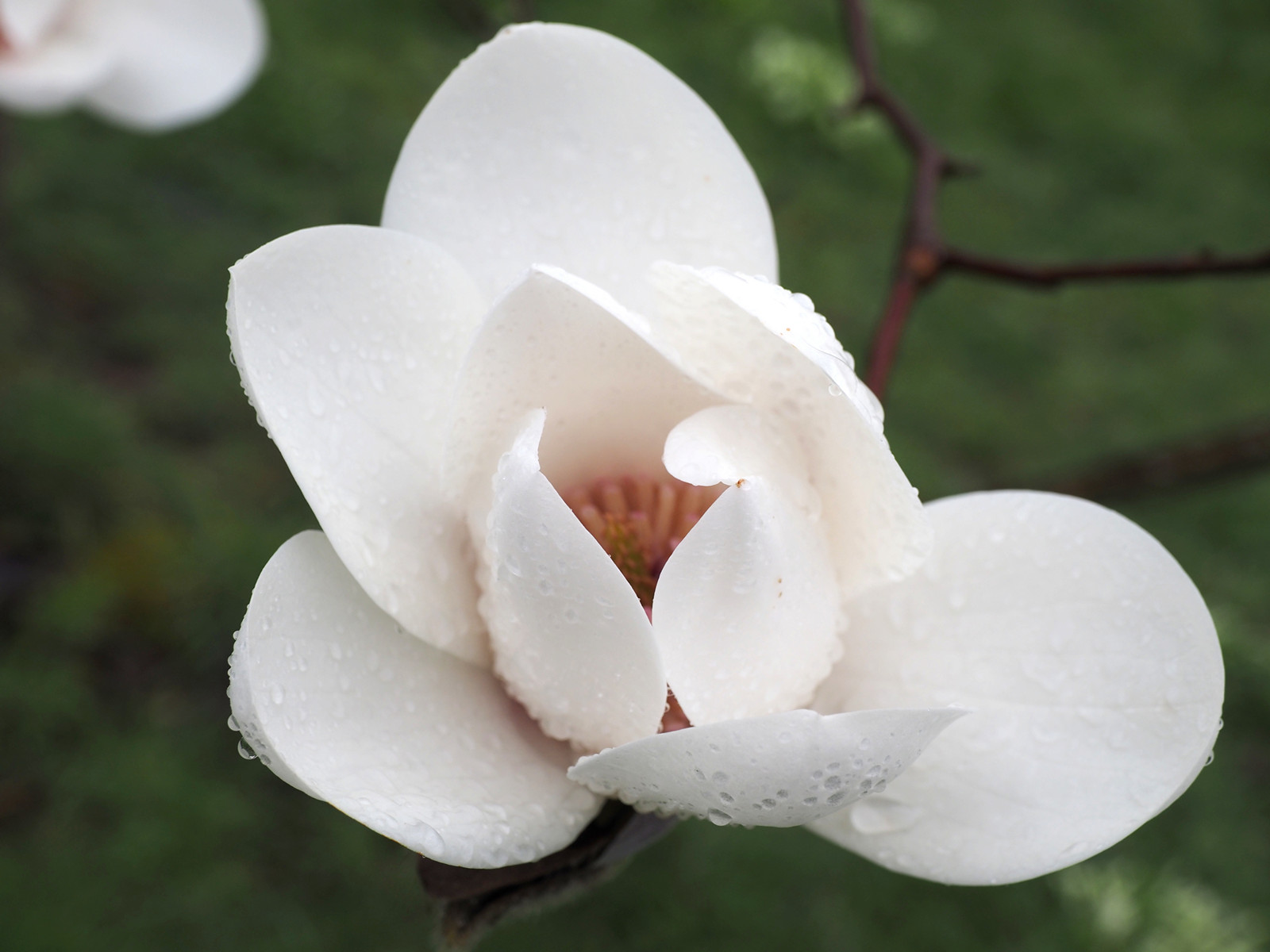
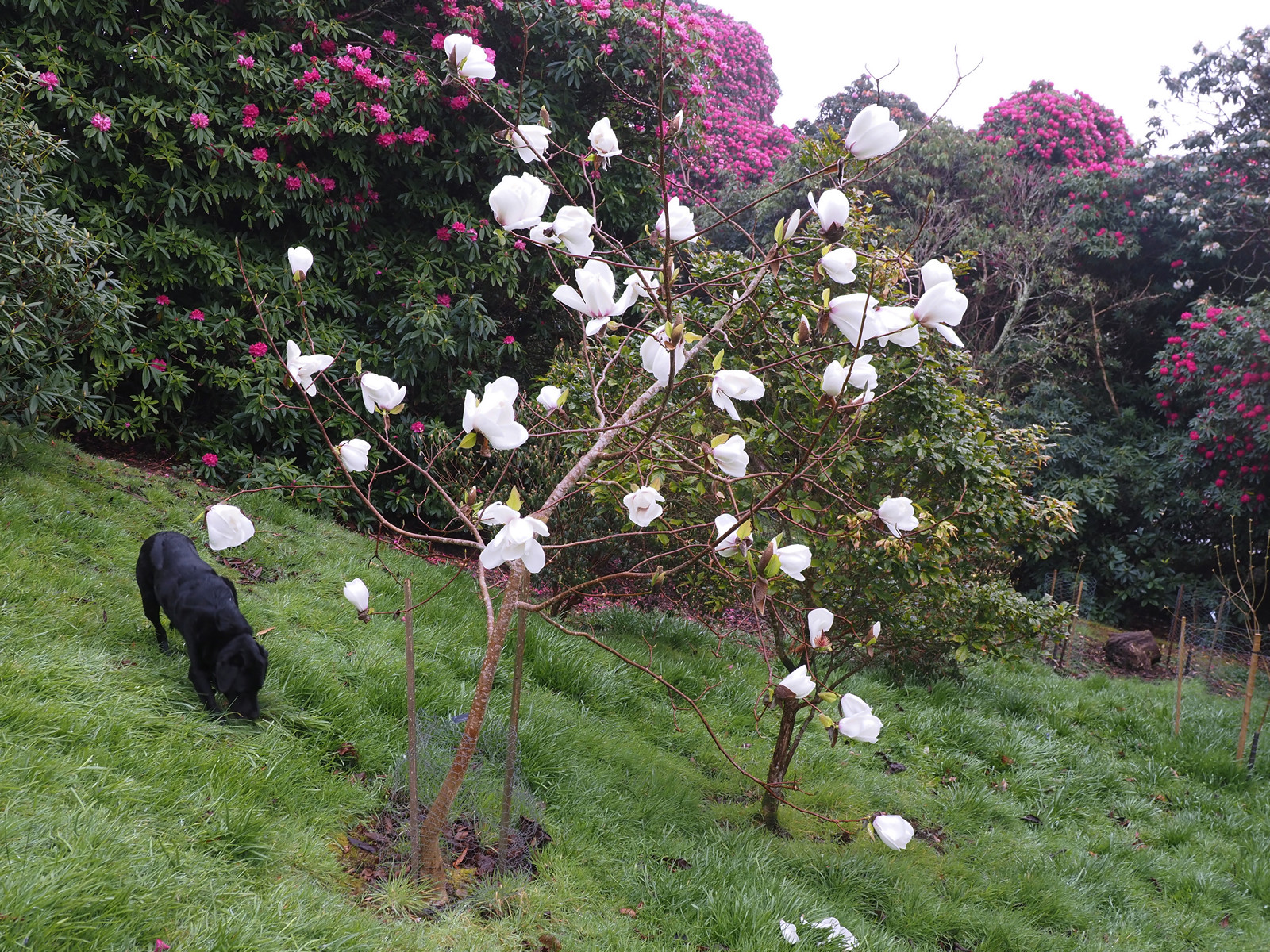
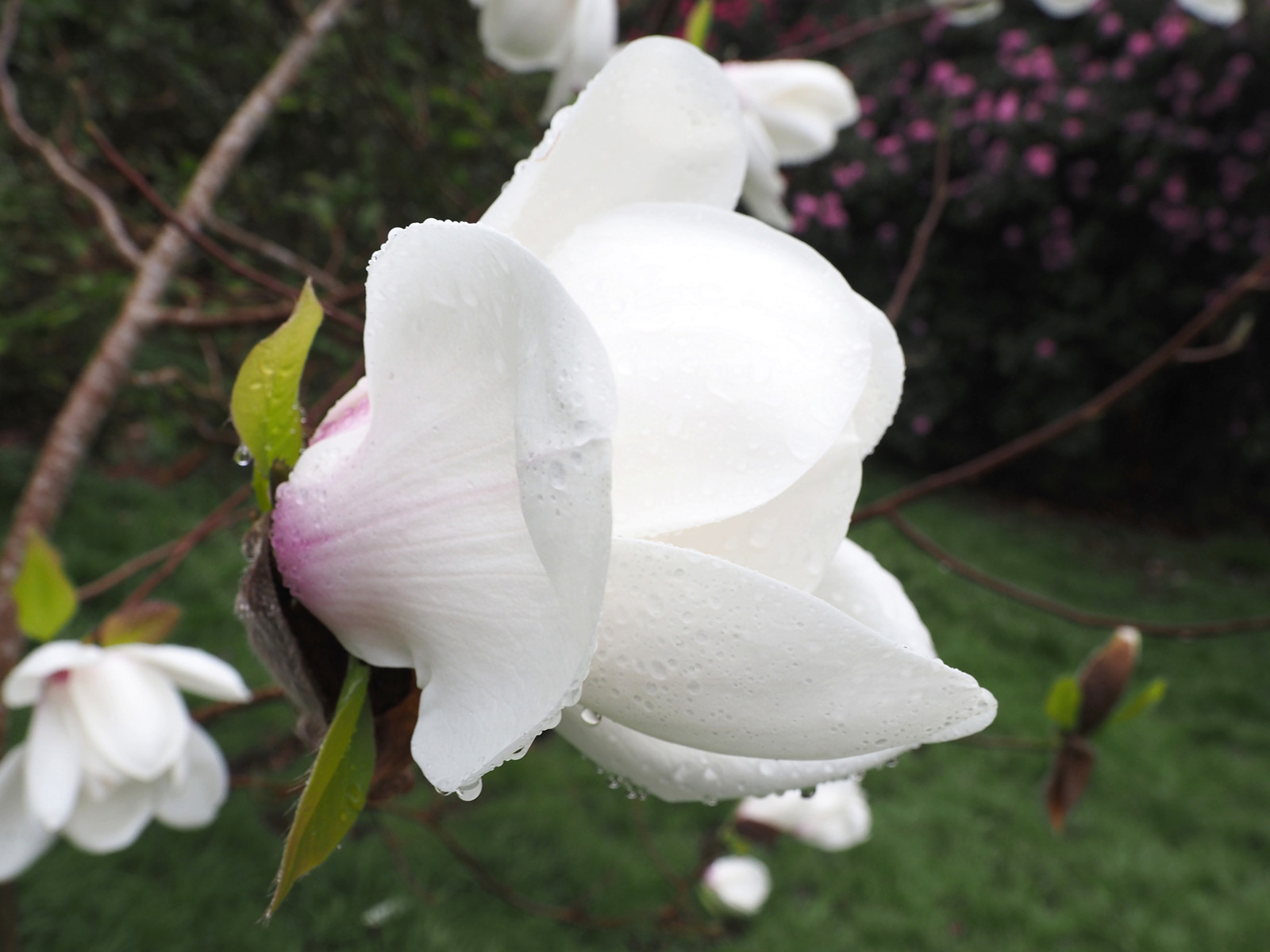
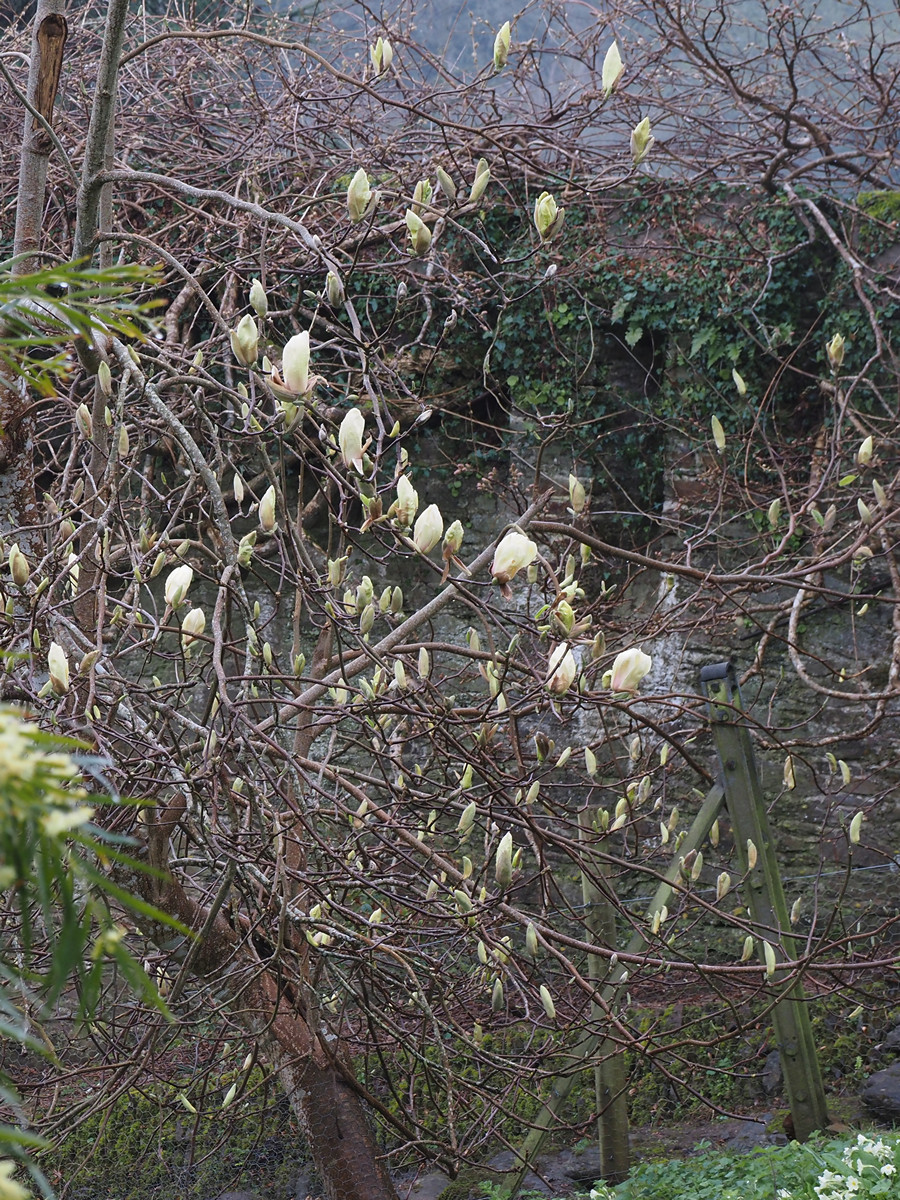
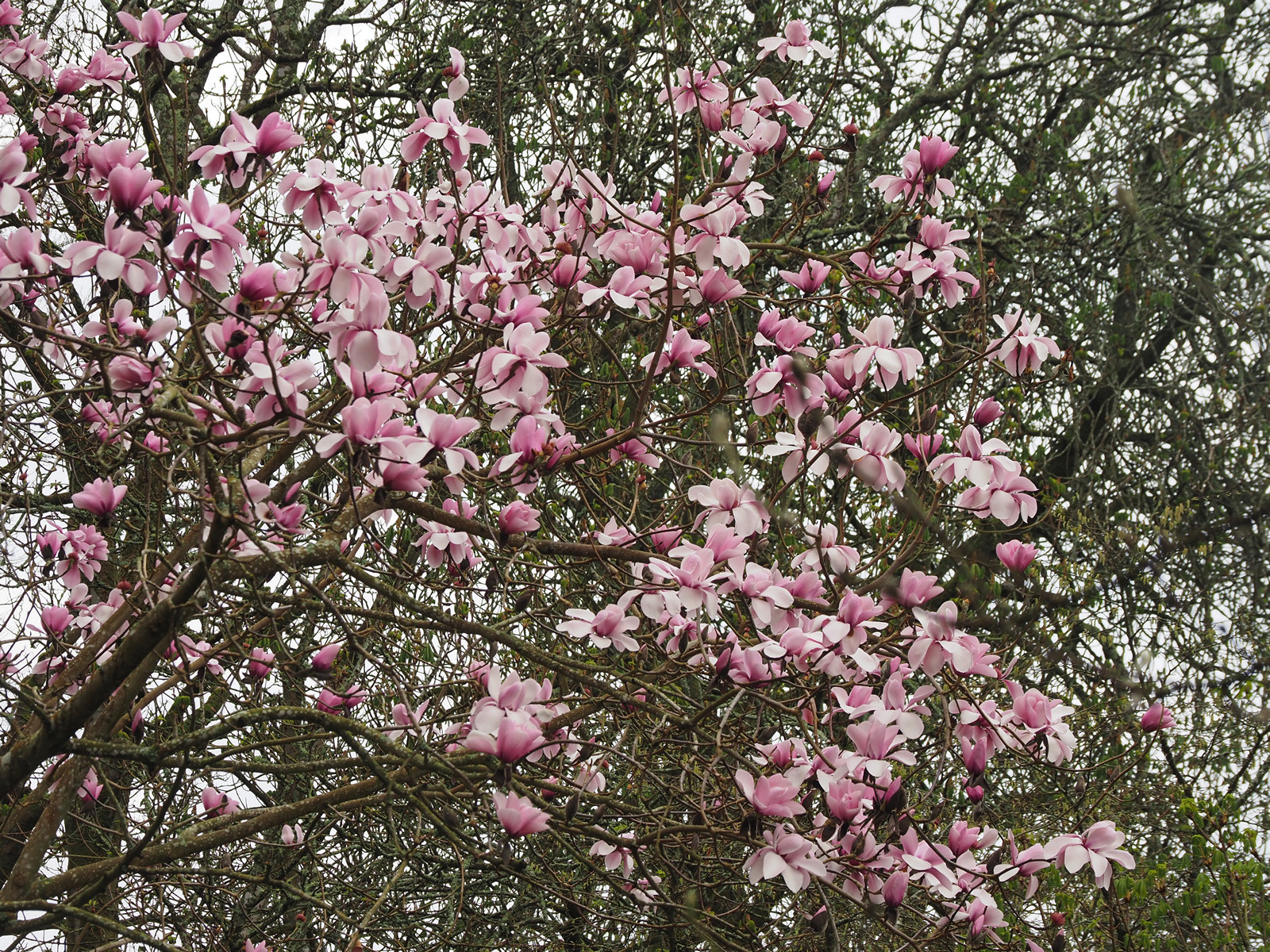
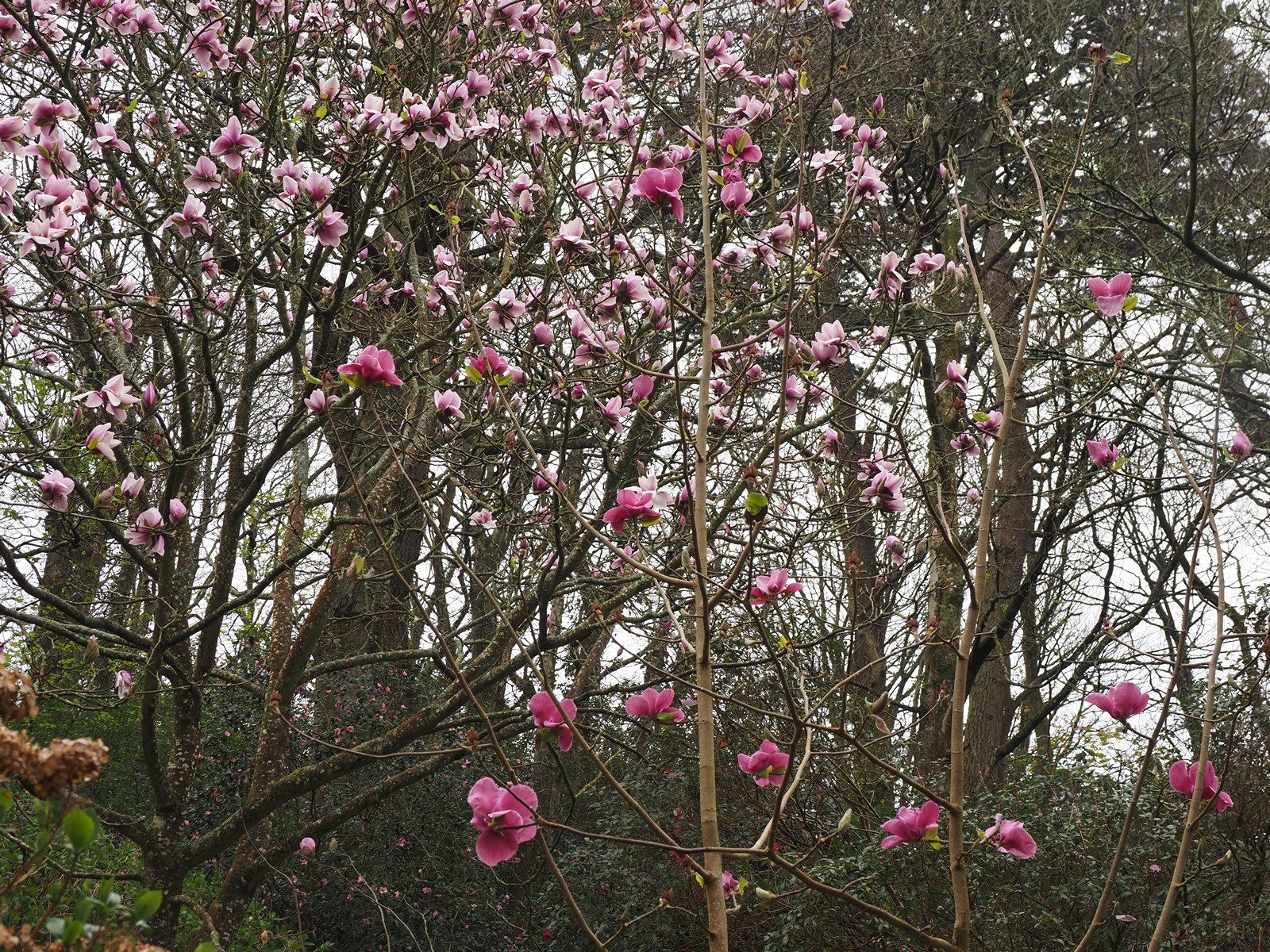
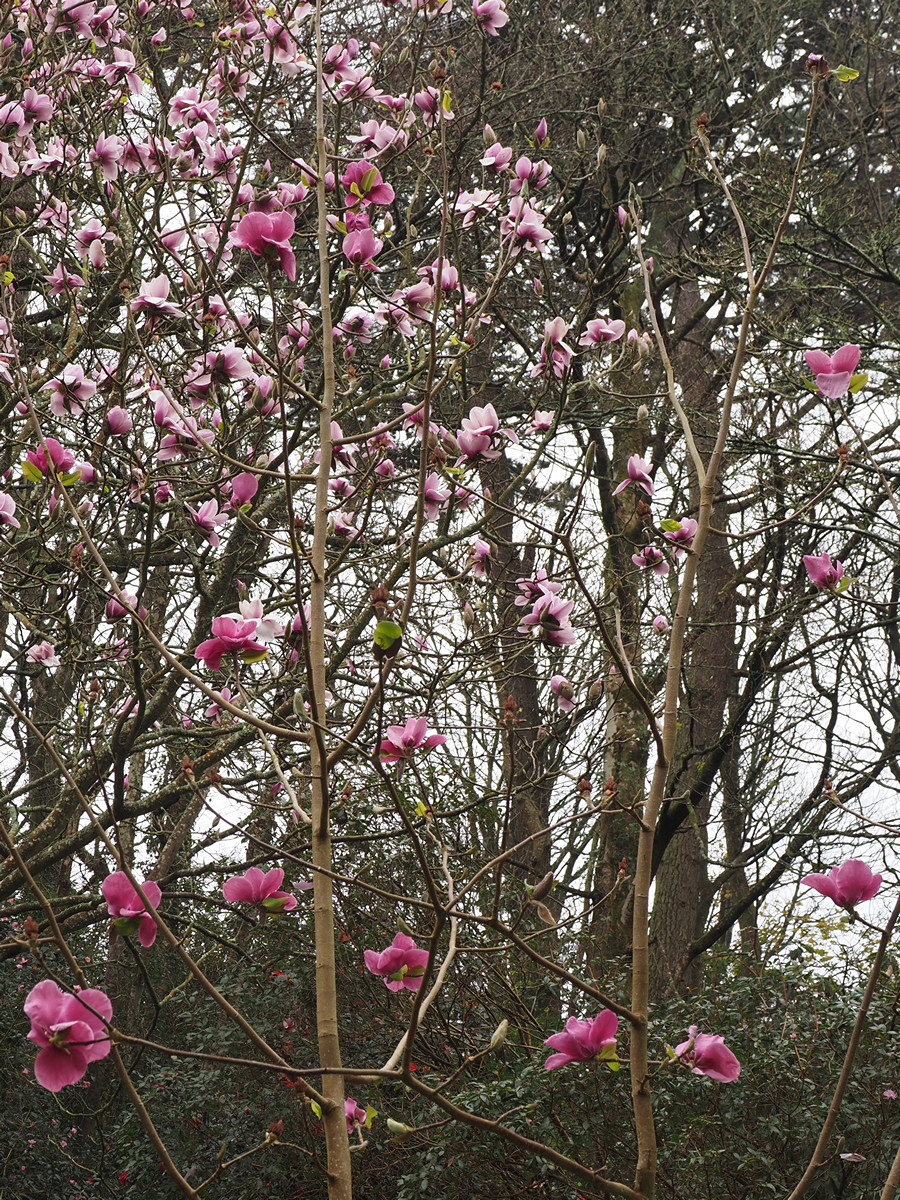
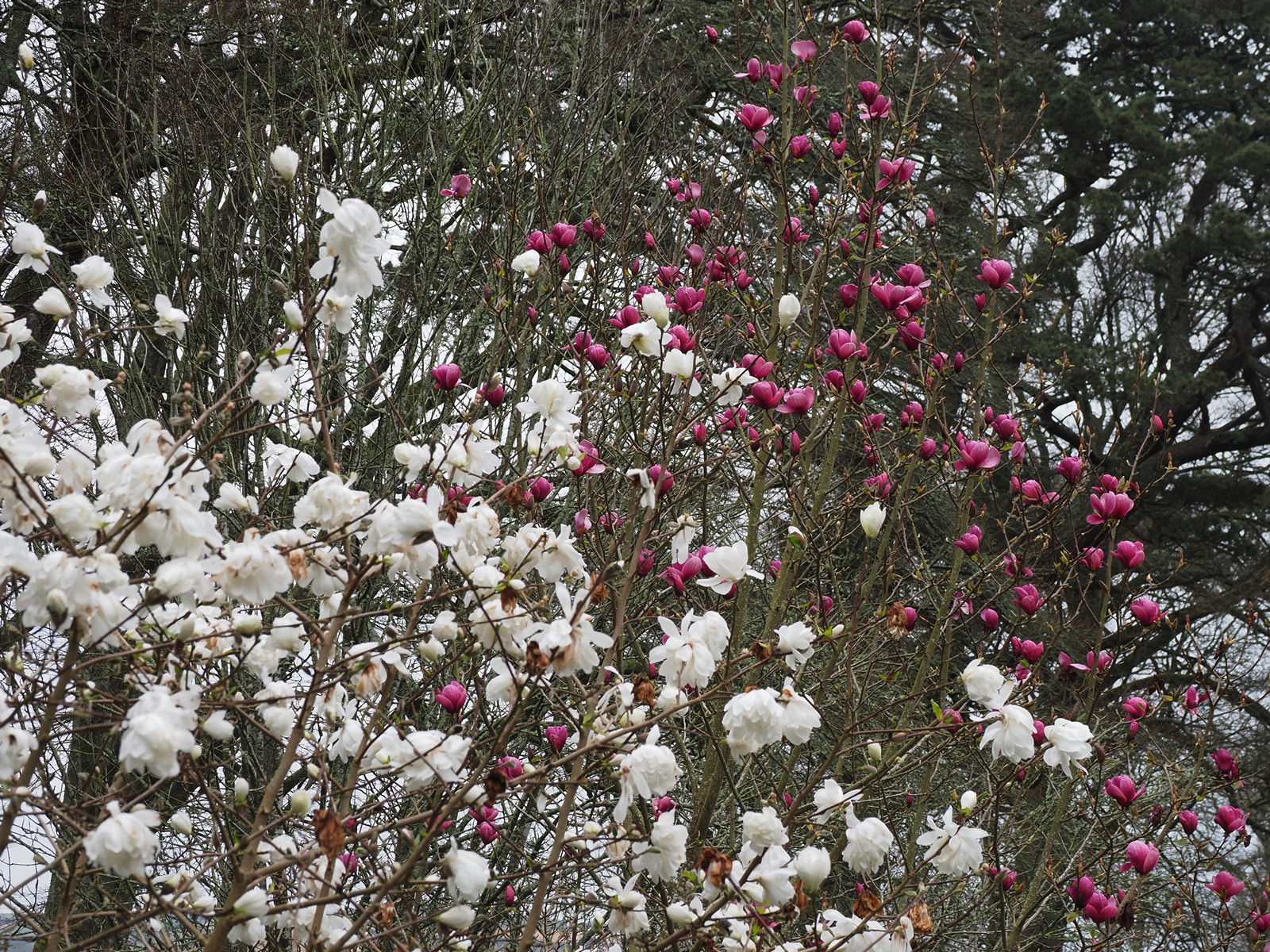
Magnolia x vetichii ‘Columbus’ at its best.
Magnolia x vetichii ‘Columbus’
Storm damage cleared above the Old Kitchen Garden and at the top of Giddle Orchard.
Strom damage clearedStrom damage cleared
Rhododendron minus in Old Park.
Rhododendron minus
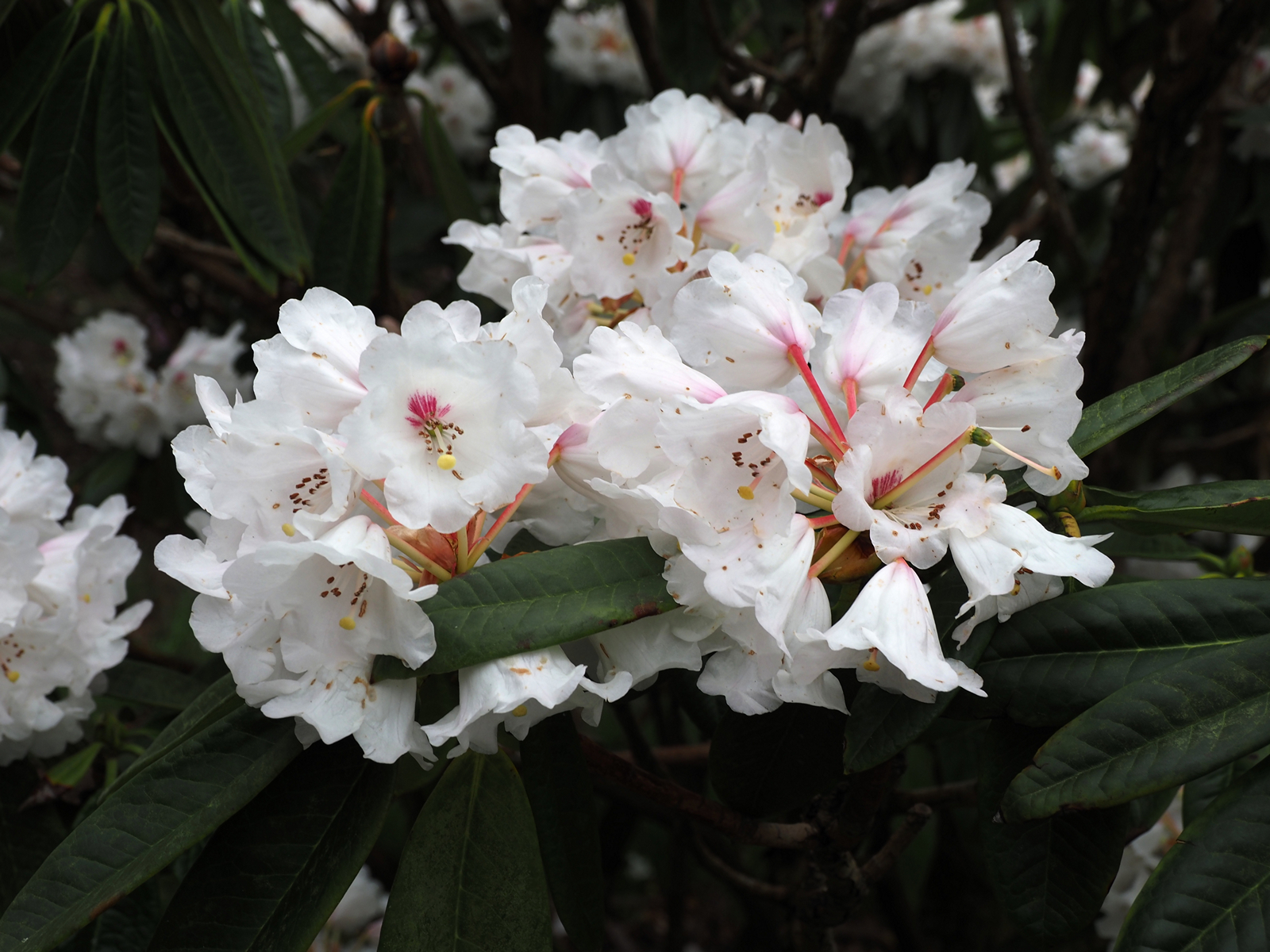
Rhododendron ‘Countess of Haddington’ just coming out.
Rhododendron ‘Countess of Haddington’
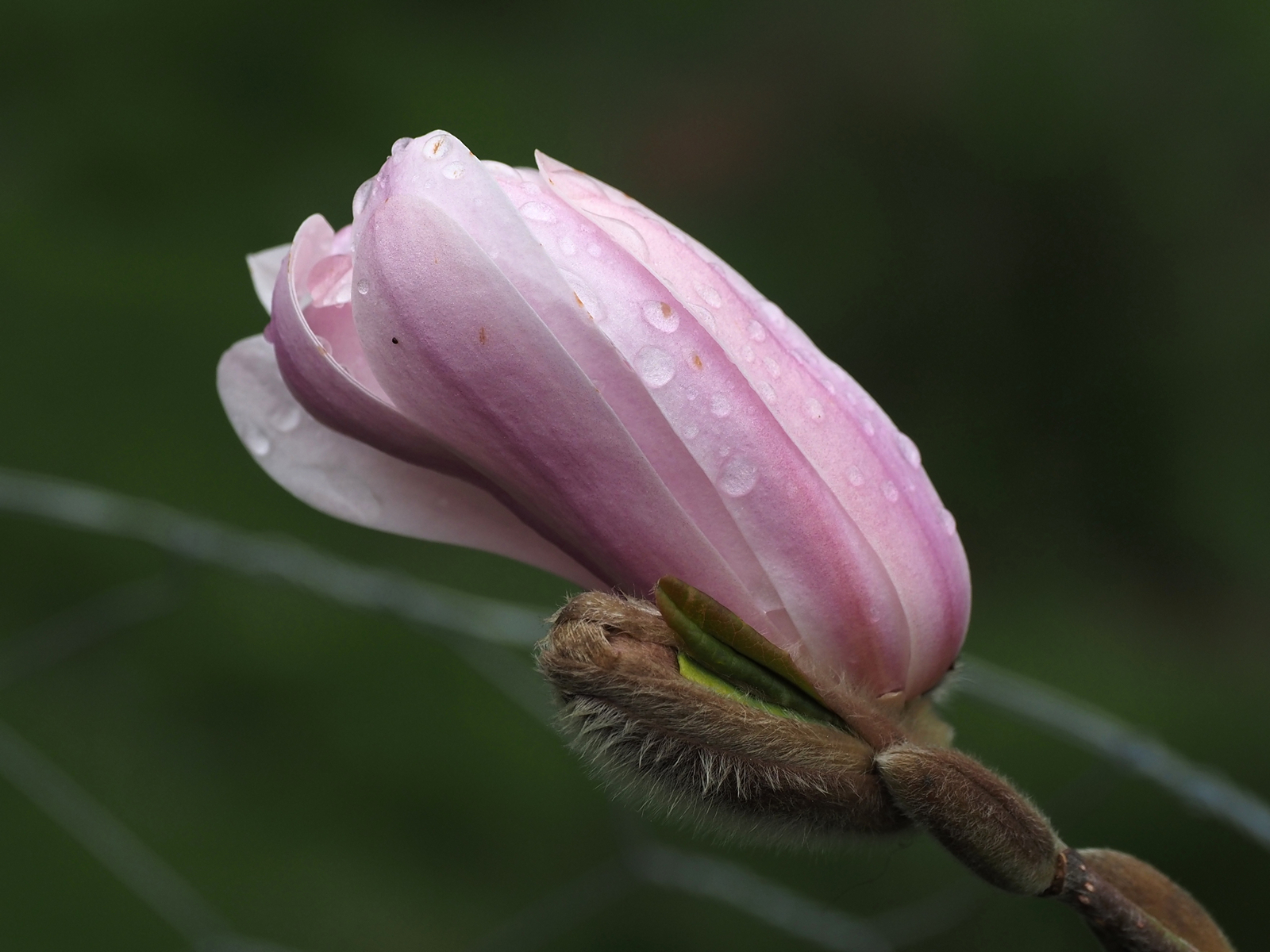
A few magnolias which did not open in time for the show.
Magnolia ‘Peachy’.
Magnolia ‘Peachy’
Magnolia ‘Daybreak’.
Magnolia ‘Daybreak’
Magnolia ‘Banana Split’.
Magnolia ‘Banana Split’
Magnolia ‘Hot Pants’.
Magnolia ‘Hot Pants’
Magnolia ‘Tinkerbelle’ – another plant was fine for the show.
Magnolia ‘Tinkerbelle’
The new Magnolia ‘Toro’ which is a bit like ‘Titan’ (M. acuminata x M. x soulangeana ‘Picture’).
Magnolia ‘Toro’Magnolia ‘Toro’Magnolia ‘Toro’
2025 – CHW
Videos of out species of Acacia today. Some species do not have leaves as such but Phyllodes which are a development of the leaf stalk into spines or what do resemble leaves. Confusing!Acacia pravissima nearly over. We had one before but it died in the 2018 Beast from the East in an exposed and far too shady a position. Short lived perhaps but very attractive as a small tree today.
Acacia pravissimaAcacia pravissima
Acacia longifolia has half flopped over and split in the gale. Wonderful flowers today. Exponential growth rates.
Acacia longifoliaAcacia longifolia
Another Magnolia ‘Phelan Bright’ at its best next to three Acacias.
Magnolia ‘Phelan Bright’Magnolia ‘Phelan Bright’
Acacia verticillata just coming out. A large shrub but not a small tree. You need gloves to cope with this one but quite a sight as it performs here.
Acacia verticillataAcacia verticillata
Acacia dealbata not over blessed with flowers this year. Cut it down to let it reshoot I think and then it might flower better? Lots of good trees of this as I commute to Burncoose each week but they flowered earlier than this.
Acacia dealbataAcacia dealbata
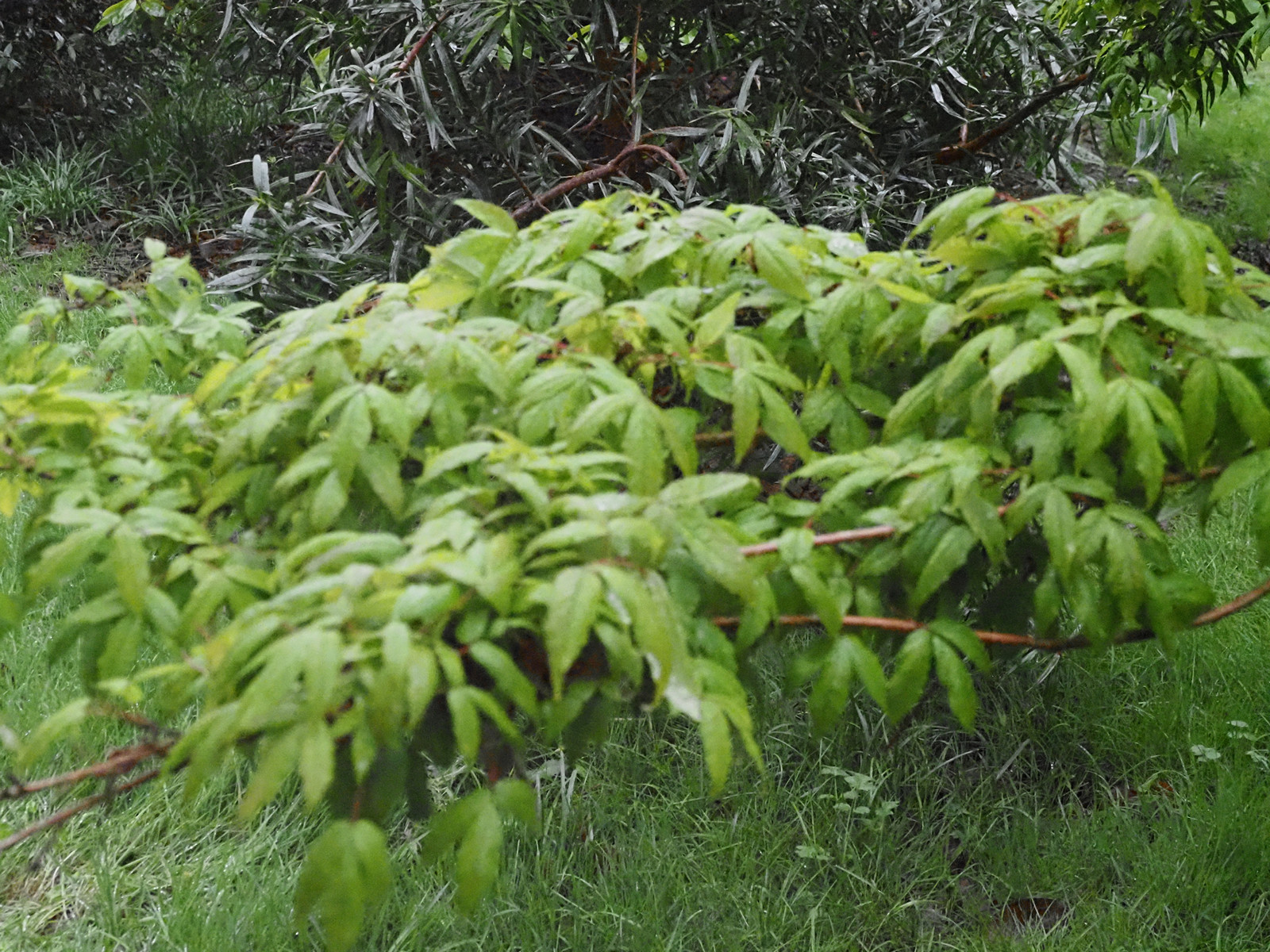
Acacia pataczekii is also shrubby and named after Wally Pataczekii who discovered it only in 1974. Hence known as Wally’s wattle. A difficult one to pronounce! Not well known and I missed the flowers this year.
Acacia pataczekii
Acacia baileyana is a huge tree but the flowers are over. A. baileyana ‘Purpurea’ was also over but the new growth had yet to show so Karol and I didn’t bother with a video of it.
Acacia baileyana
Acacia melanoxylon, the Blackwood, is a huge tree with attractive bark in maturity. There are two 25 year old trees above the wall and one above the greenhouse. Rather pale yellow flowers. On the west coast of Ireland this has become NICELY invasive!
Acacia melanoxylonAcacia melanoxylon
Perhaps my favourite Acacia cultriformis which is in full flower today and possibly the most tender of the lot. I look in the RHS A-Z Encyclopaedia of Garden Plants and their picture looks unlike our plant. The common name of this species is ‘knife-leaf wattle’. Our plant has knife leaves but the RHS pictures does not!
Acacia boormanii was too small to photograph and flowerless still. We need to add to the collection Acacia retinodes which has very similar leaves to Acacia longifolia but the flower is quite different and Acacia covenyi which I see that Burncoose now stocks. One to find on tomorrows visit and bring back here.
Acacia cultriformis
The cut and grab machine has given more space to a couple of good specimen trees near Tin Garden by removing nearby laurel plants.
The cut and grab machineThe cut and grab machine
The mighty machine demolishes the overgrown laurel opposite Tin Garden.
The mighty machineThe mighty machine
This is labelled as Magnolia ‘Paul Cook’. The reference books differ on the parentage but, bred by Frank Galyon in the USA, it is supposed to be M. sprengeri var. diva ‘Diva’ x M. soulangeana ‘Lennei’. I think we have the right plant from the MSI register although the picture in the Eisenhut book is of a pure white inside to the tepals with no indication of pink on the outside of the tepals.
2024 – CHW
Magnolia ‘Yellow Lantern’ just opening and Acacia cultriformis just going over.
Magnolia ‘Yellow Lantern’ just opening and Acacia cultriformis
A hail storm which Geraint Richards and I just miss.
hail storm
Then the rainbow.
rainbow
Rhododendron hyperythrum ‘Omo’ received an AM in 1976. This is a Taiwanese species.
Rhododendron hyperythrum ‘Omo’
Lindera angustifolia against a blue sky.
Lindera angustifolia
Magnolia ‘Hot Pants’ just coming out.
Magnolia ‘Hot Pants’
A really good young Magnolia nitida.
Magnolia nitida
Then the discovery of the day/ week – Halleria lucida from South Africa with loads of flowers and berries. The berries have yet to go black when ripe. I have once seen this shrub in flower before but it was late last summer. Very tender, rare in the UK, and attractive.
Halleria lucidaHalleria lucidaHalleria lucida
A good young Rhododendron calophytum.
Rhododendron calophytum
Another rainbow over The Park.
Another rainbow
Myrtus lechleriana scenting the air above Orchid House Nursery. (This is now properly Myrtus luma after the latest name change).
Myrtus lechlerianaMyrtus lechleriana
Another Staphylea holocarpa var. rosea which may well be cuttable for the show.
Staphylea holocarpa var. rosea
2023 – CHW
The first pair of swallows are building their nest above the dog kennels in the Back Yard and were first spotted here on 23rd March which is extremely early. No sign of any house martins yet.
first pair of swallows
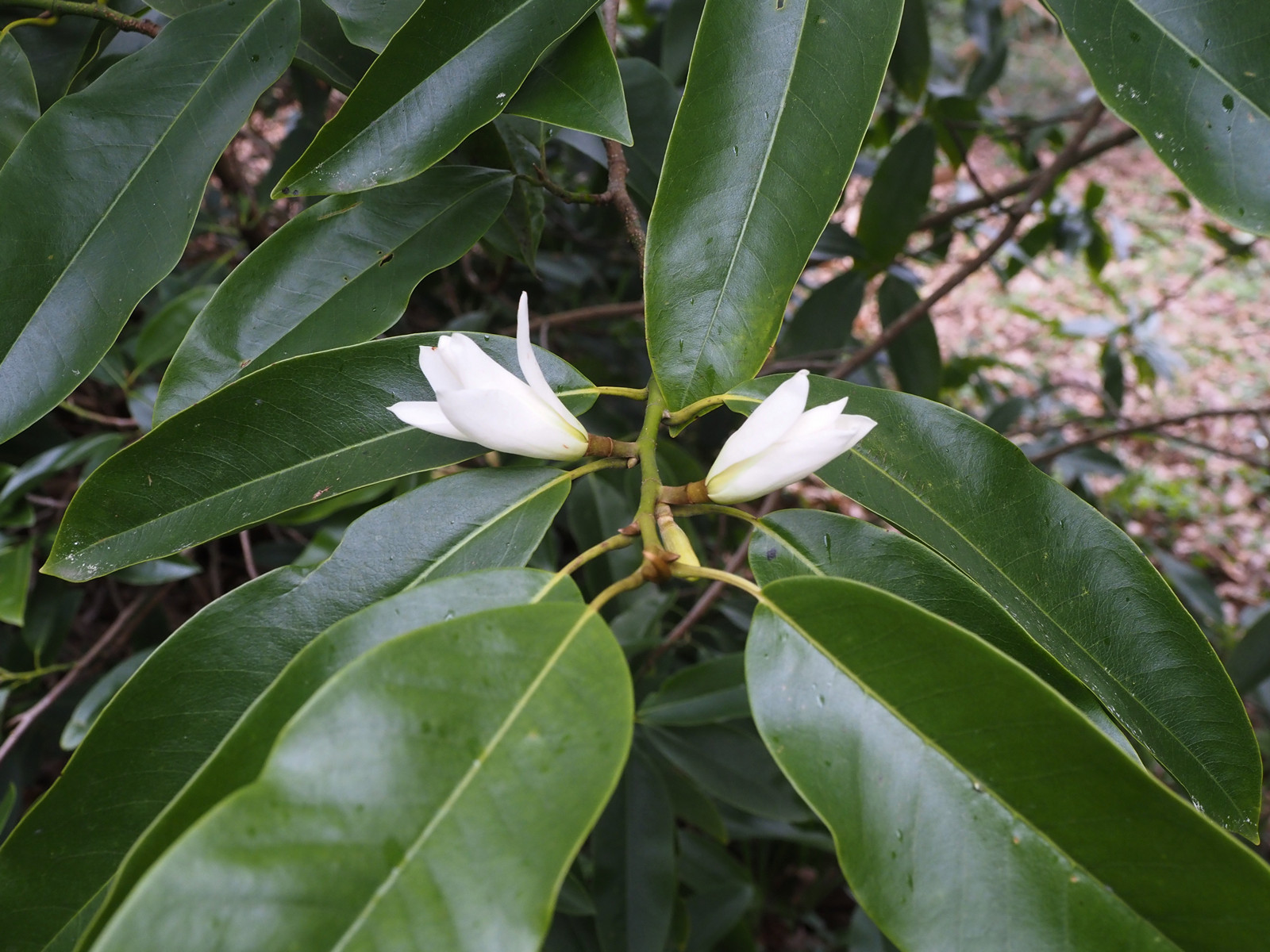
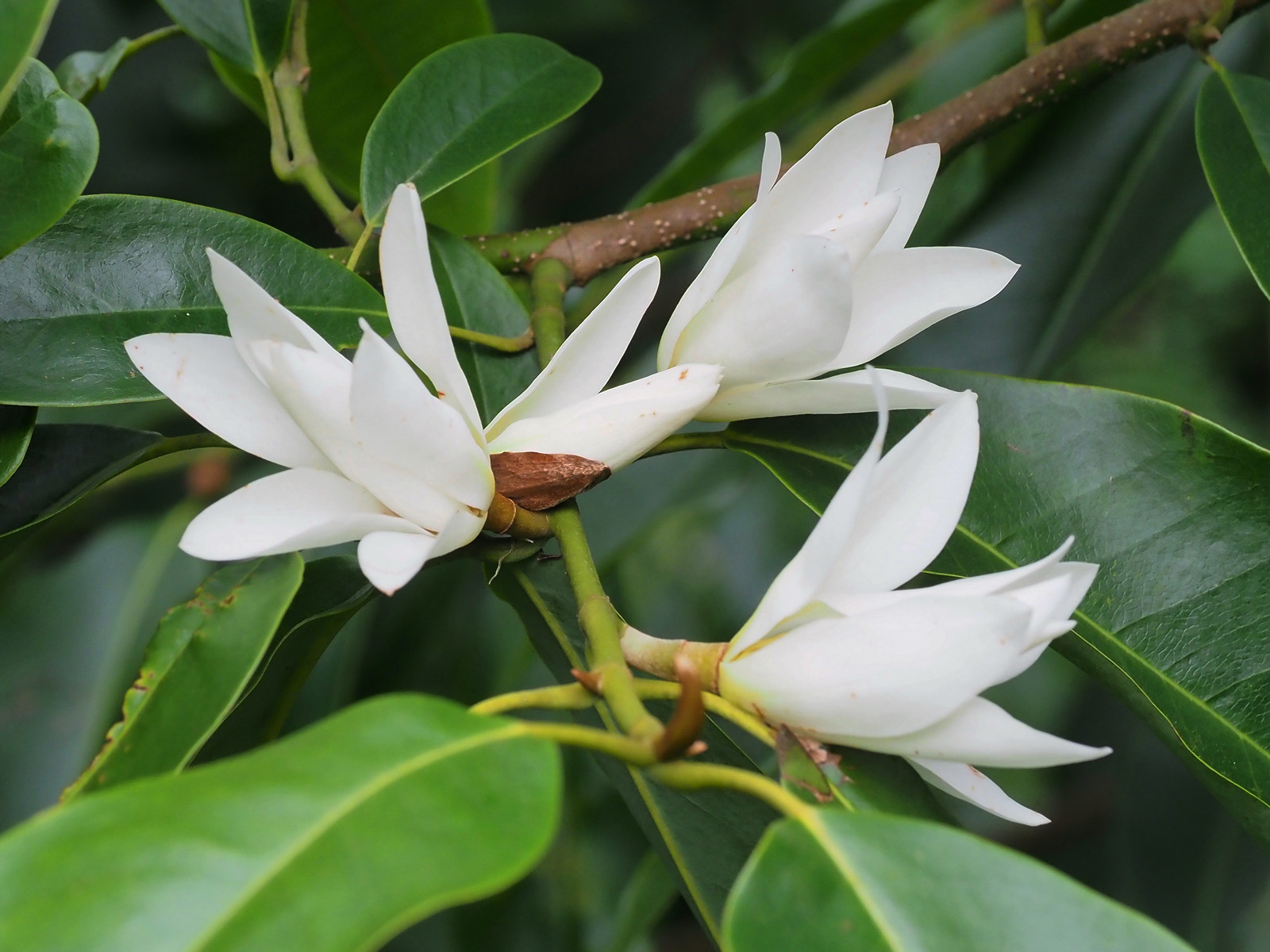
Preparing the multiple Michelia species and hybrids exhibit for the Cornwall Garden Society Spring Show at Wadebridge this weekend has alerted me to two possible misnaming’s here and at Burncoose.
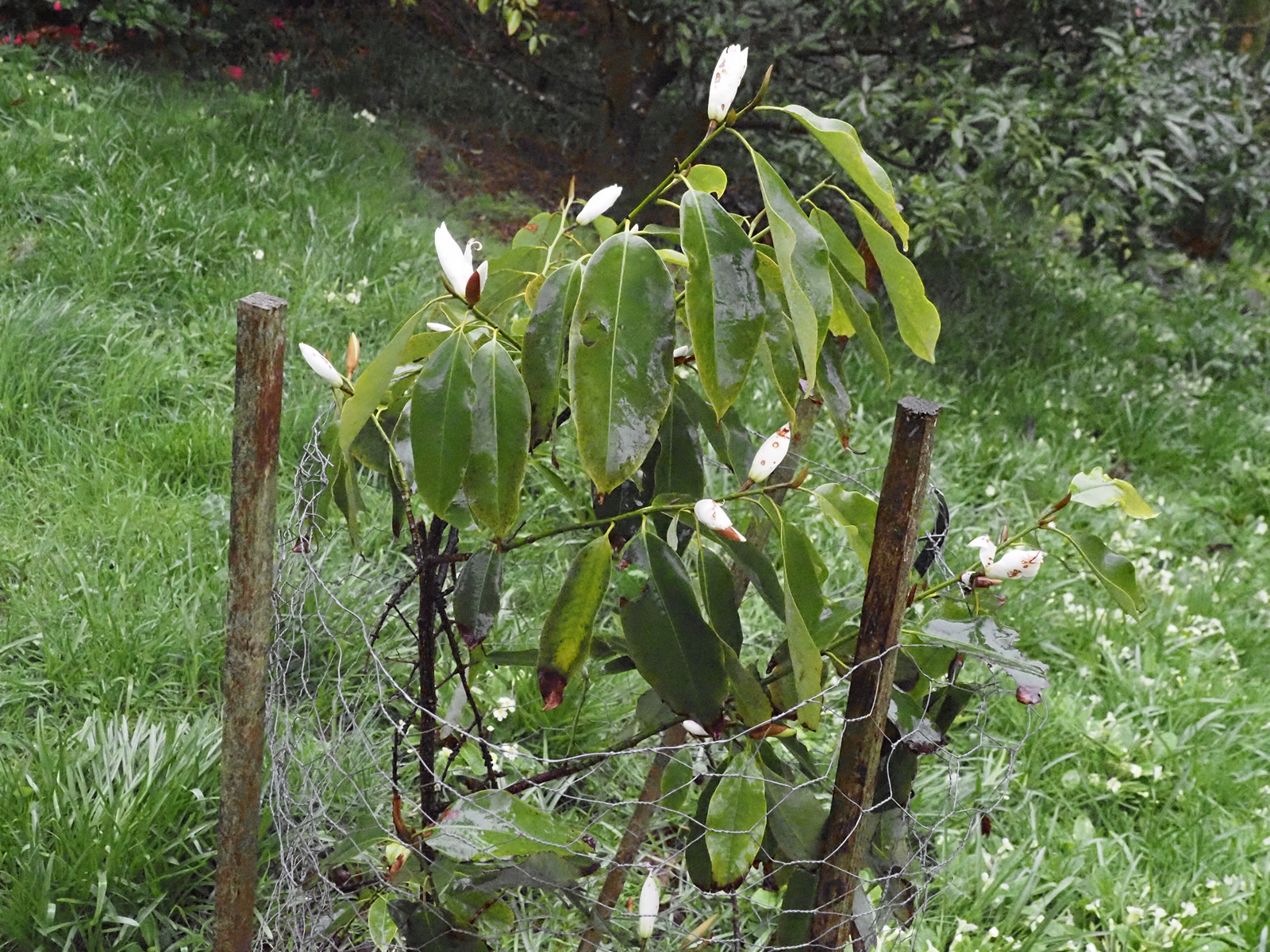
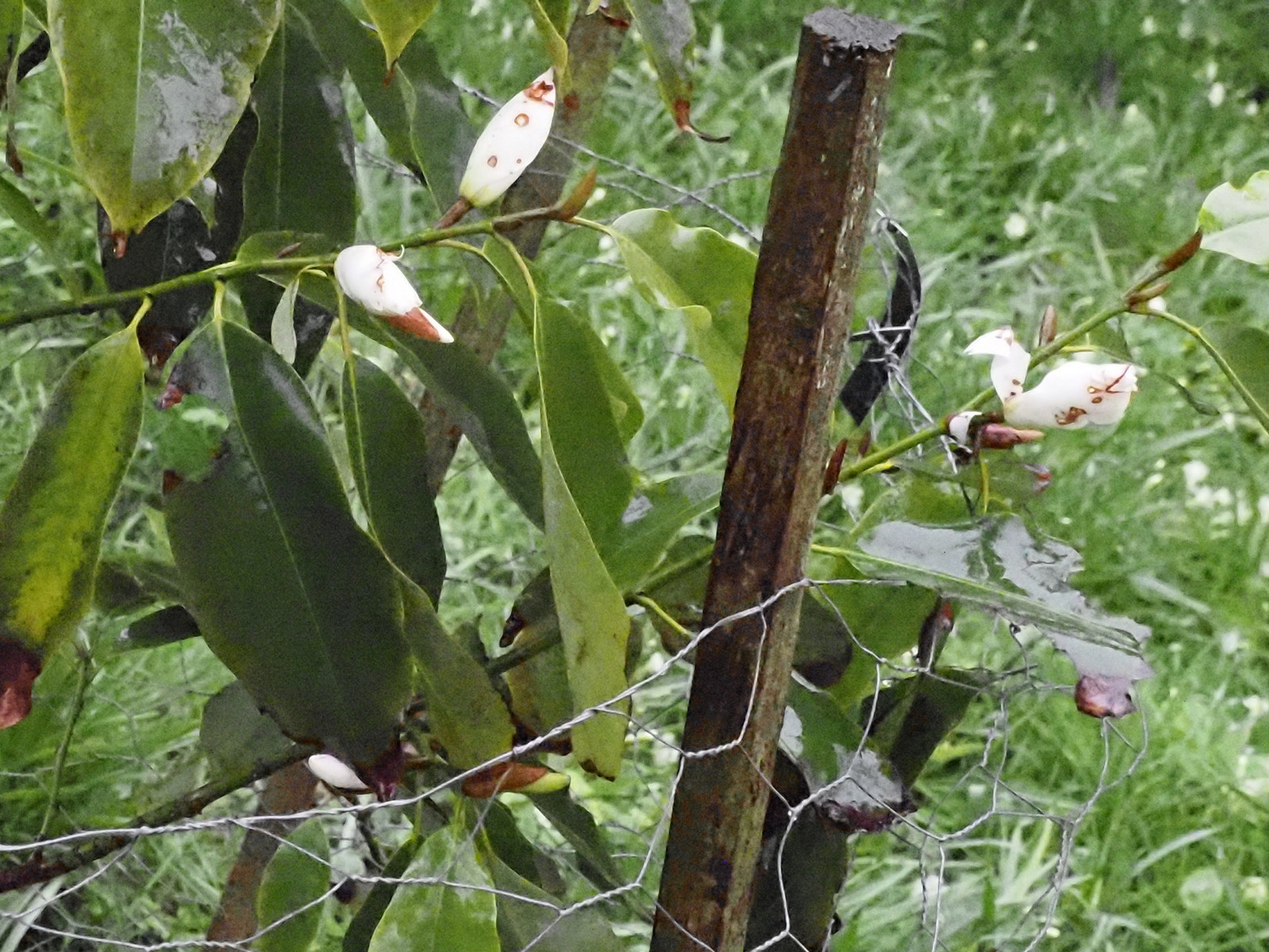
What we have named and labelled as Michelia foveolata has obviously been wrong all along as Tom Hudson and others said years ago. It is in fact Michelia platypetala or, more correctly, now Michelia cavalerei var. platypetala.
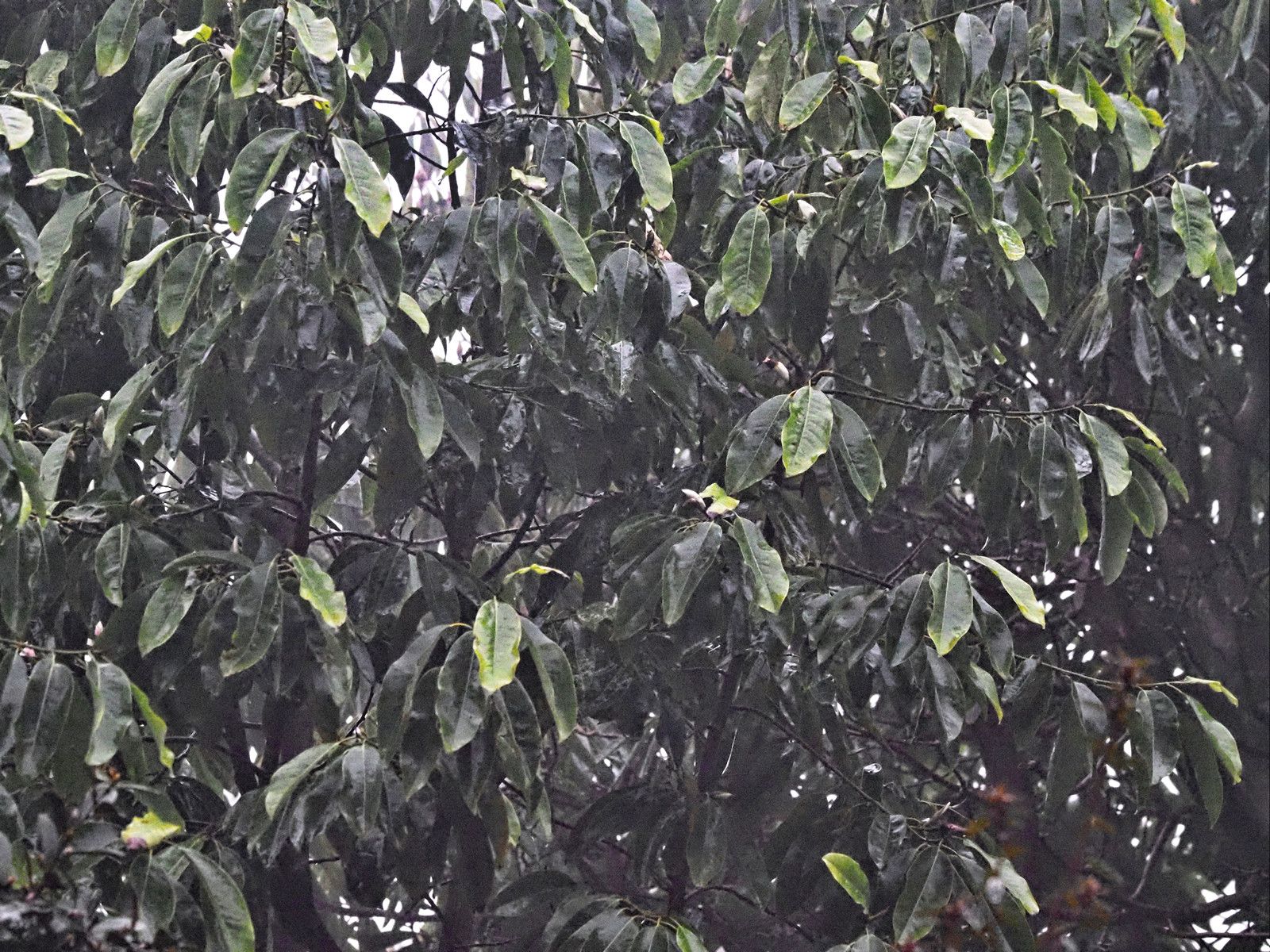
I strongly suspect from the description and pictures in the ‘Magnolias of China’ book that the Burncoose Michelia macclurei tree may well actually be Michelia cavalerei. The undersides of the leaves of cavalerei are blush-white while those of macclurei apparently have reddish hairs or indumentum on the underside of its leaves. Neither species is said to have leaf stipules. I cannot be certain from the rather poor ‘Magnolias of China’ pictures but, if the descriptions are correct, then Burncoose grows M. cavalerei.
Michelia macclureiMichelia macclurei
In any event Michelia platypetala (M. cavalerei var. platypetala) is quite different from Michelia cavalerei as far as its leaf form and flowers are concerned. I am sure there is still a great deal for taxonomists to sort out in the naming of Michelia species and the Chinese are only part way there with classifying all their rare indigenous species correctly.
With their strong flower scent Michelias are notoriously promiscuous in gardens and cross fertilisation of species is highly likely.
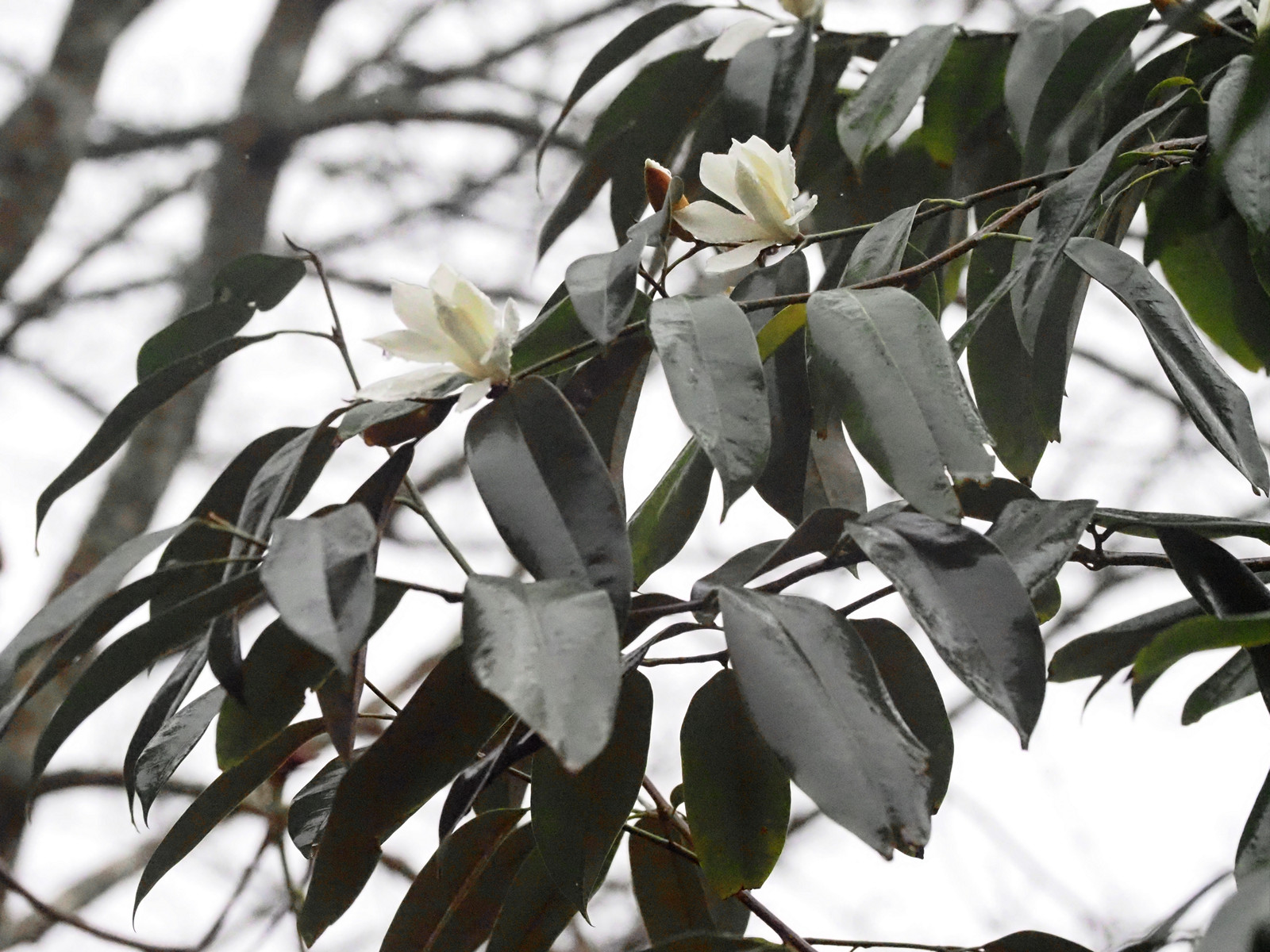
Amid the gloom a few flowers high up on our Michelia cavalerei which is the same plant as grows (rather better) at Burncoose. I had not made the connection before now. Had we really never noticed this plant in flower as it is hidden away behind a Schefflera and 2 other Michelias? We do however now know that it probably isn’t Michelia macclurei.
Michelia cavalerei
Acer mandshuricum in full leaf already as usual.
Acer mandshuricum
A young Michelia cavalerei var. platypetala (from Raf Lenaerts 2017) in flower again this year for the second time.
Michelia cavalerei var. platypetalaMichelia cavalerei var. platypetala
Michelia floribunda var. tonkinensis (WWJ 11982) with a few flowers high up. Not as many flowers as last year.
Michelia floribunda var. tonkinensis (WWJ 11982)
2022 – CHW
More scented rhododendrons rush on into flower although April is still two days away.
Magnolia ‘Joli Pompom’ full out now.
Magnolia ‘Joli Pompom’Magnolia ‘Joli Pompom’
Magnolia ‘Phelan Bright’ with its huge near white flowers.
Magnolia ‘Phelan Bright’Magnolia ‘Phelan Bright’
The huge white Rhododendron arboreum above the Playhouse are at their best even though it may be their swansong.
Rhododendron arboreum
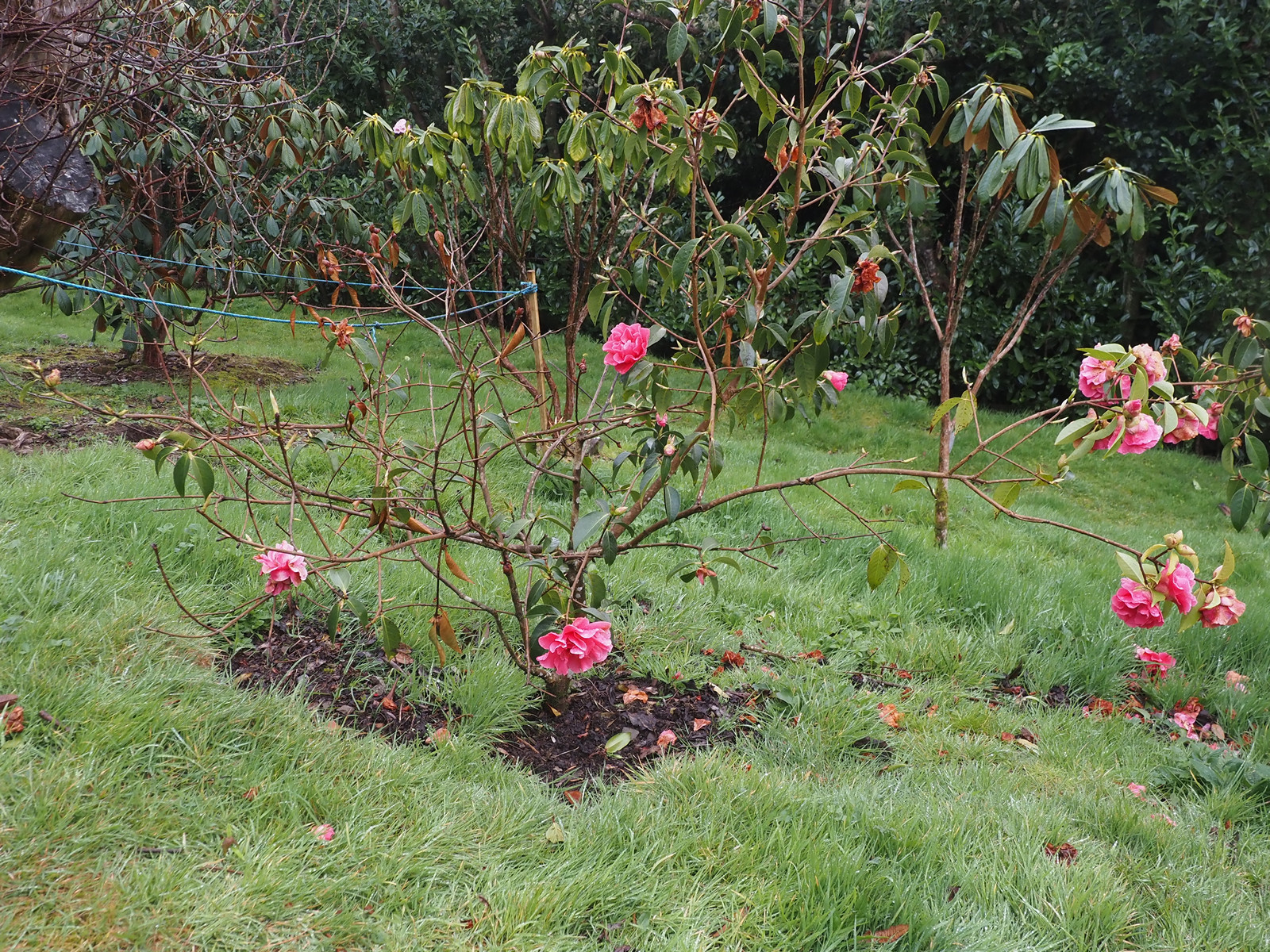
These two young Camellia reticulata ‘Captain Rawes’ both have dieback. Despite the firm staking they have been blown about in the wind and the roots have been damaged. Traditionally reticulata camellias were grown on a wall for a reason.
First colour on Magnolia ‘Yellow Lantern’. The plant has had several branches snapped off in the late autumn winds over the years and has always reshot vigorously but the shape of the tree is a bit of a mess!
Dad’s unnamed hybrid at Red Linney is late into flower but not really nameworthy.
unnamed hybrid
Magnolia ‘Felix Jury’ and Magnolia ‘Atlas’ on the drive.
Magnolia ‘Felix Jury’Magnolia ‘Felix Jury’
Magnolia ‘Caerhays Surprise’ and Magnolia ‘Serene’ also on the drive.
Magnolia ‘Caerhays Surprise’
Magnolia x loebneri ‘Mag’s Pirouette’ and Magnolia ‘Anne Leitner’ above the Hovel.
Magnolia x loebneri ‘Mag’s Pirouette’
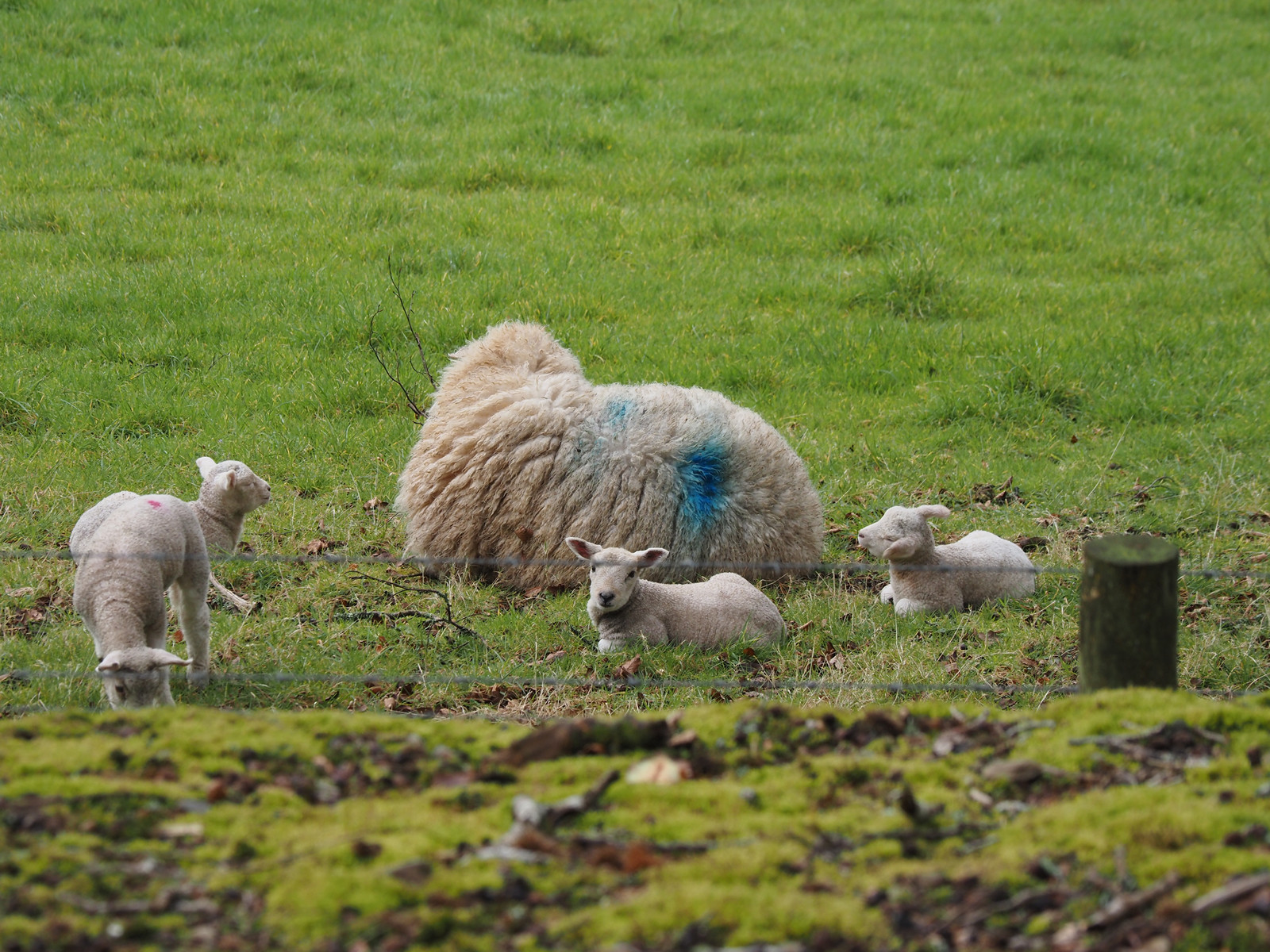
Spring lambs in White Stiles. Foxes have threatened and been dealt with.
lambs
2021 – CHW
A trip to Forty Acres but every magnolia frosted and just a few coming now with little colour. Old Park is much the same story.Magnolia x loebneri ‘Champaign’ flowering for the first time in Old Park. An odd name but quite pretty. A US loebneri hybrid which is an improvement on the pinks and well worth growing.
Magnolia x loebneri ‘Champaign’Magnolia x loebneri ‘Champaign’
Wild collected Rhododendron racemosum in Old Park flowering especially well.
Rhododendron racemosumRhododendron racemosum
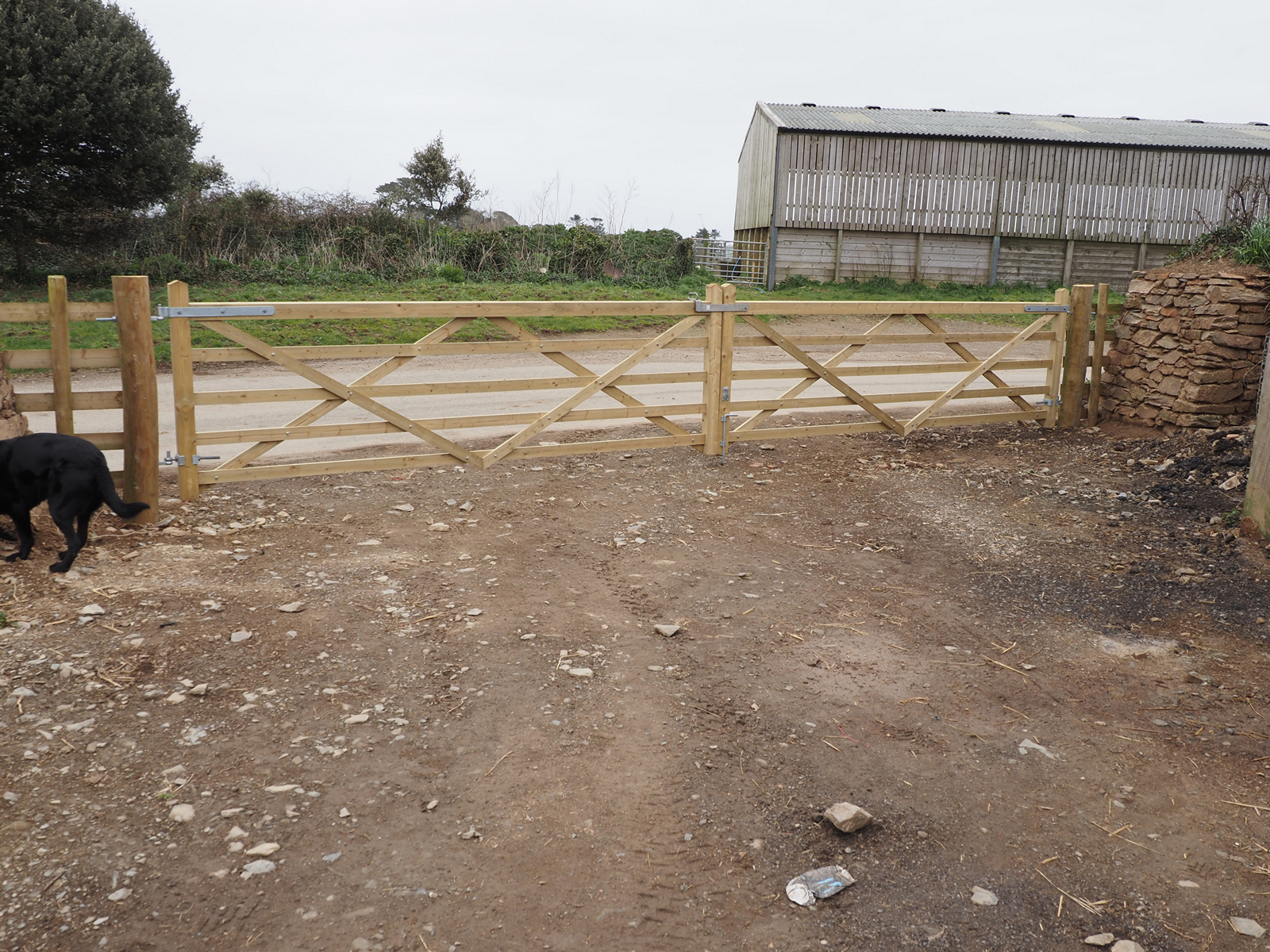
New gates and a nice bit of hedging for the new laundry in the farmyard.
New gates
Which is not far at all from completion after only about five weeks.
This website uses cookies to improve your experience. We'll assume you're ok with this, but you can opt-out if you wish.AcceptRead More
Privacy & Cookies Policy
Privacy Overview
This website uses cookies to improve your experience while you navigate through the website. Out of these, the cookies that are categorized as necessary are stored on your browser as they are essential for the working of basic functionalities of the website. We also use third-party cookies that help us analyze and understand how you use this website. These cookies will be stored in your browser only with your consent. You also have the option to opt-out of these cookies. But opting out of some of these cookies may affect your browsing experience.
Necessary cookies are absolutely essential for the website to function properly. This category only includes cookies that ensures basic functionalities and security features of the website. These cookies do not store any personal information.
Any cookies that may not be particularly necessary for the website to function and is used specifically to collect user personal data via analytics, ads, other embedded contents are termed as non-necessary cookies. It is mandatory to procure user consent prior to running these cookies on your website.