



As usual I was wrong to say that the new cotoneaster (species) collection only had two species with berries. A closer inspection with more time revealed some exciting new berries even if the specie names are horribly unpronounceable. The only real reference book on cotoneaster was published in 2009 and written by Jeanette Fryer and Bertil Hylmö. Since they are all planted fairly close together below White Styles I guess we should try to propagate from cuttings rather than seed.Cotoneaster tengyuehensis. Forrest collected this on his 1912-14 expedition so it might well have grown here before. It is often misnamed as Cotoneaster franchettii or Cotoneaster wardii although I am doubtful as to why when I look at our C. franchettii.


First flowers evident today after wind and rain on the first original pink Camellia sasanqua. These are 100+ year old plants and this one (of seven) is always the first but not always out in September. Is August the only month when there is no camellia out in the garden?




Sheep have found a crab apple tree with plenty of low hanging fruit in a hedge and are enjoying the rather bitter taste.


Last year’s new planting above Auklandii Garden is looking good. We removed a laurel hedge and have still to dispose of a few stumps from the fire in the centre.


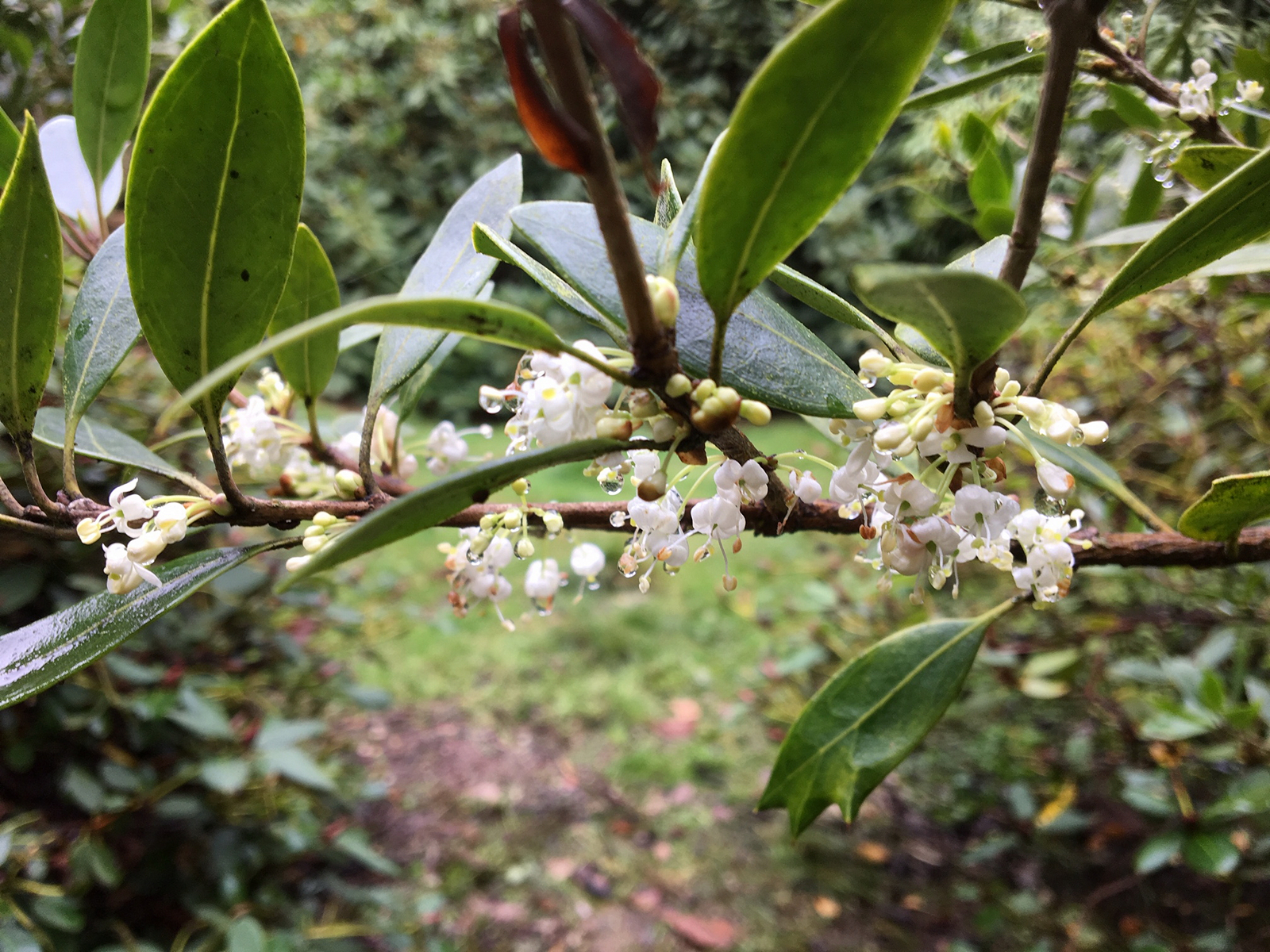
The best thing in flower in the garden today is the mature Schima khasiana. We have Schima argentea and Schima wallichii in the garden but they are younger and not out. I am confused by the three species which do not actually look that different. The resemblance with Camellia oleifera in the flower is striking. Some scent with the schima flowers but only close up.


2015 – CHW
Lapageria rosea out by the front door. A sad remnant of a once huge plant. We think of lapagerias as flowering in autumn but in The Garden diary notes of 80 to 100 years ago these are commented on as being frosted in January. Winters seem generally to have been colder then so why were they flowering much later than now. Has this Chilean (and really greenhouse plant) adapted to our Cornish climate?


1918 – JCW
Rhodo’s as below. Cyclamen very good. Lapagerias fair. Hydrangeas fair.
(Hand written note attached to Garden Book page)
Rhodo’s showing more or less flower at Caerhays Sept 27 1918
R neriflorum, R haematodes, R cuneatum, R ravurn, R lutescens, R hanceanum, R dichroanthum, R websterianum, R fastigiatum, R oreotrephes, R saluense, R hippophaeoides, R scintillans, R telmatium, R impeditum, R decorum, R rupicolum, R primulicum, R racemosum, R lepidotum, R trichodadum, R intricatum, R leoides, R ponticum.
1919 – JCW
All above rhodo’s in flower except R dichroanthum, R ponticum, with additional ones of R waterii, R adenogynum, R valentinicium, R auriculltum, R maddeni, R saluense, R davidsonianum , R baylei.