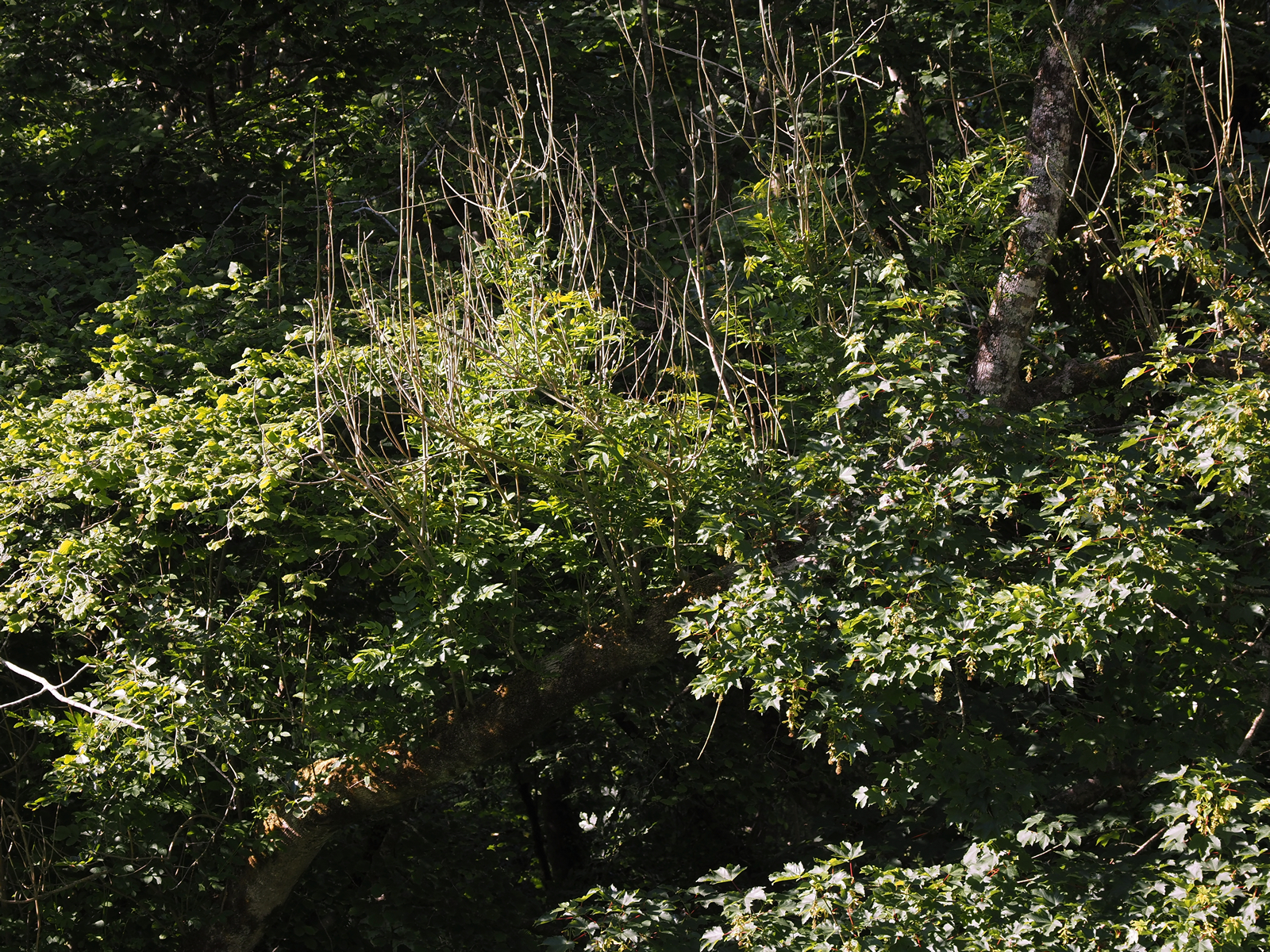



2026 – CHW
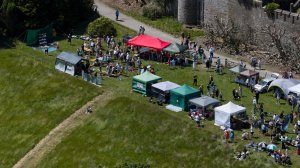
A few more aerial pictures of the fete.





2025 – CHW
Another fine set of new growth.


Loads of flower on Lithocarpus cleistocarpus but, as we know, no seed sets on this ancient tree.

Magnolia virginiana ‘Pink Halo’ nearly out.

Photinia davidsoniae in flower by George’s Hut.

Hydrangea serrata ‘Shichidanka’ starts pink and then goes blue.


Hydrangea ‘Hobella’ is still one of the best varieties. Vigorous and long flowering.

Rosa canina (Dog rose) at the top lodge.


Red tints on the new growth of Carpinus polyneura.

Viburnum recognitum which I do not think I have seen in flower before.

Styrax japonicus ‘Rubra Pendula’ is as excellent as Raf said it was. Last of the japonicus flowering as well.

Euonymus atropurpureus flowering nicely.Tiny flowers but bright red.


Stewartia serrata flowering well and I am fairly certain that this one is indeed correctly labelled.

2024 – CHW
Rhododendron auriculatum just out high up.
Rhododendron auriculatum just out high up.

A youngish Styrax japonicus near George’s Hut is the only japonicus to be covered in flower this year. Plastered in fact.


A few flowers this year on the elderly Photinia prionophylla.

I frequently get confused between Rhododendron decorum, Rh. diaprepes and Rh. auriculatum. According to my planting records this is Rh. diaprepes but I do not think the reference books agree. I need David Chamberlain or someone with this level of knowledge to adjudicate on several of our plants which have flowered recently. The Pocket-Guide to Rhododendron species refers to Rh. decorum ssp. diaprepes and Rhododendron decorum subsp. cordatum so this is even more muddling particularly looking also at the leaf sample pictures.

2023 – CHW
An oak tour with Allan Coombes and his wife after a train trip from Cheltenham Spa.
Cornus capitata with gigantic bracts.

Quercus liebmannii (gift from Penrice Castle) growing well in full sun.
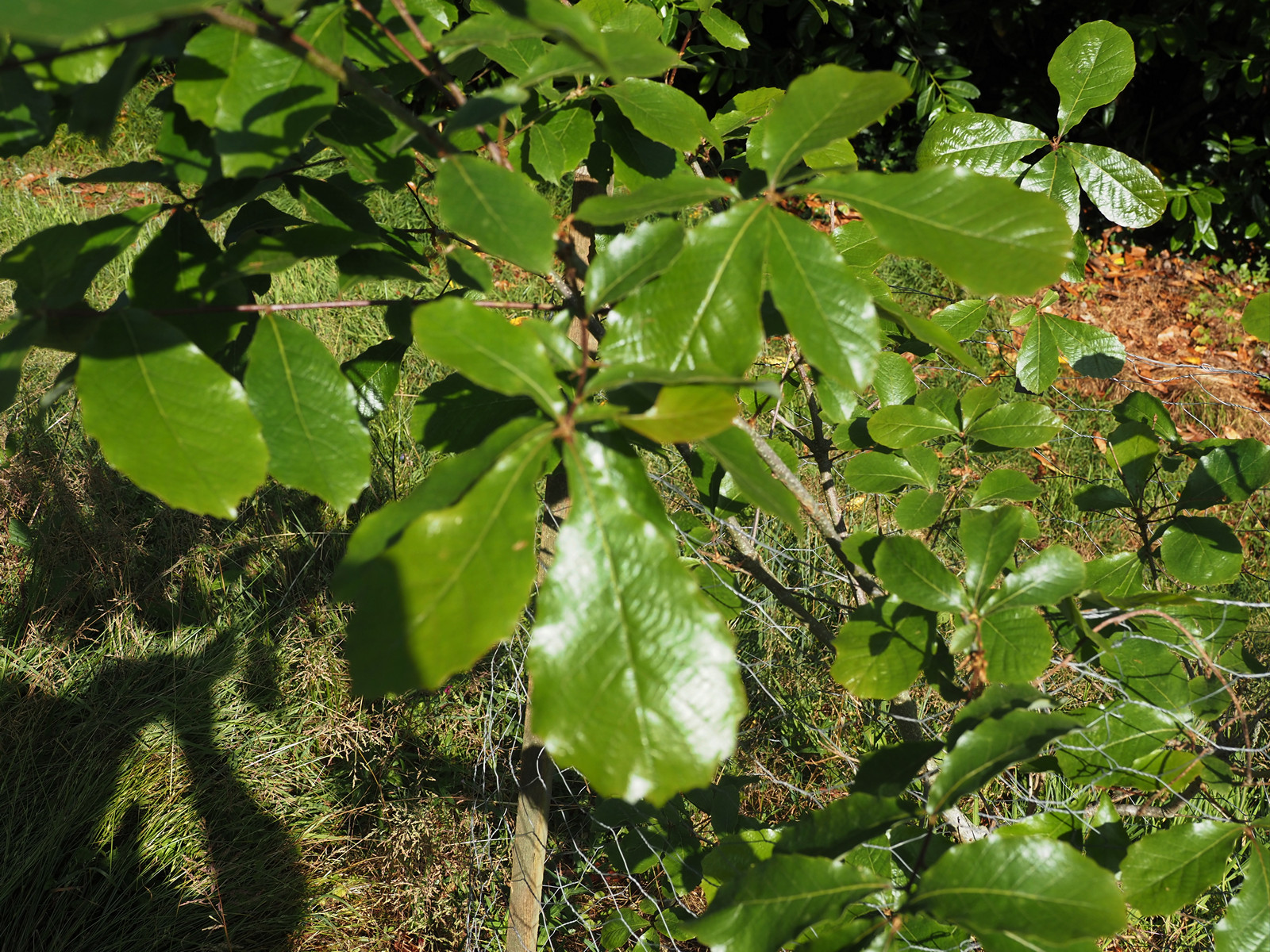
Styrax japonicus ‘Evening Light’ full out in front of S. formosanus var. formosanus which has just gone over.
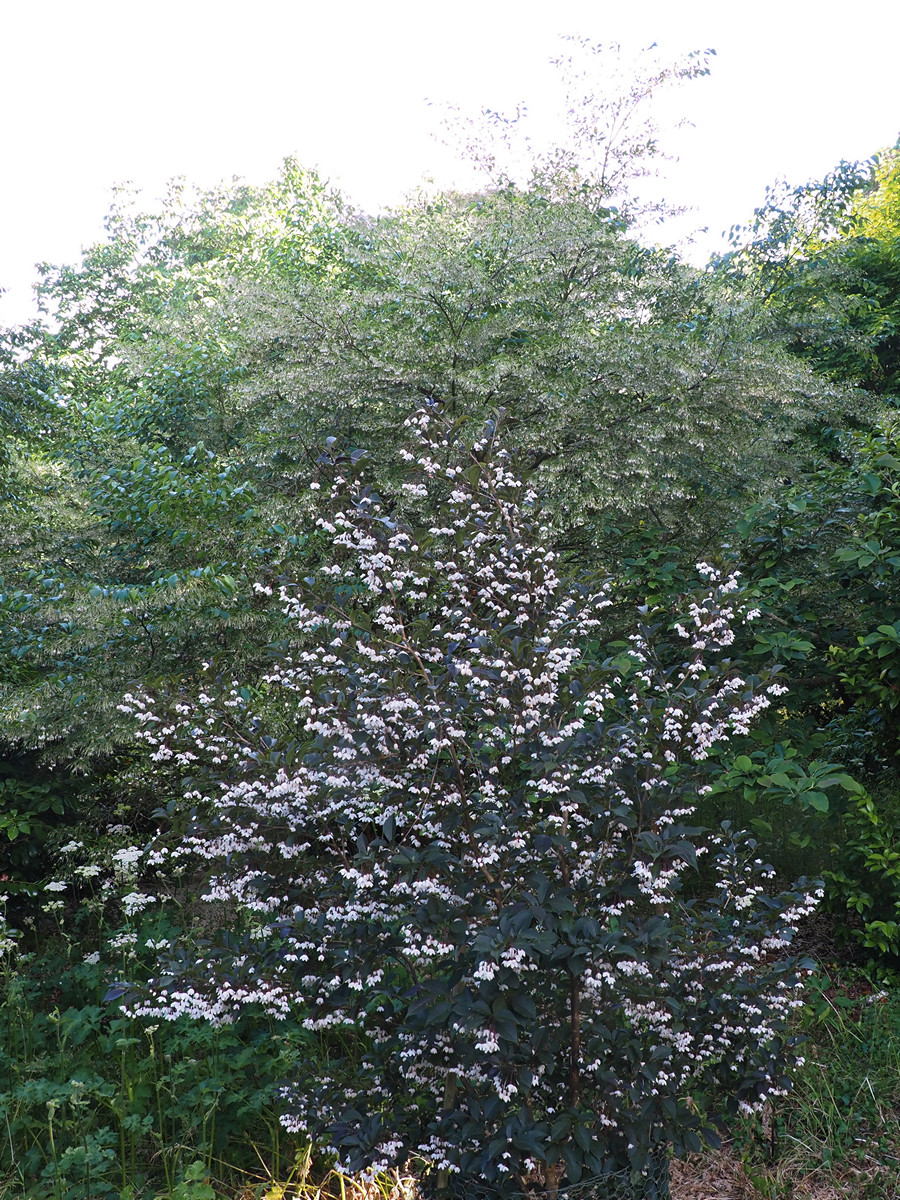
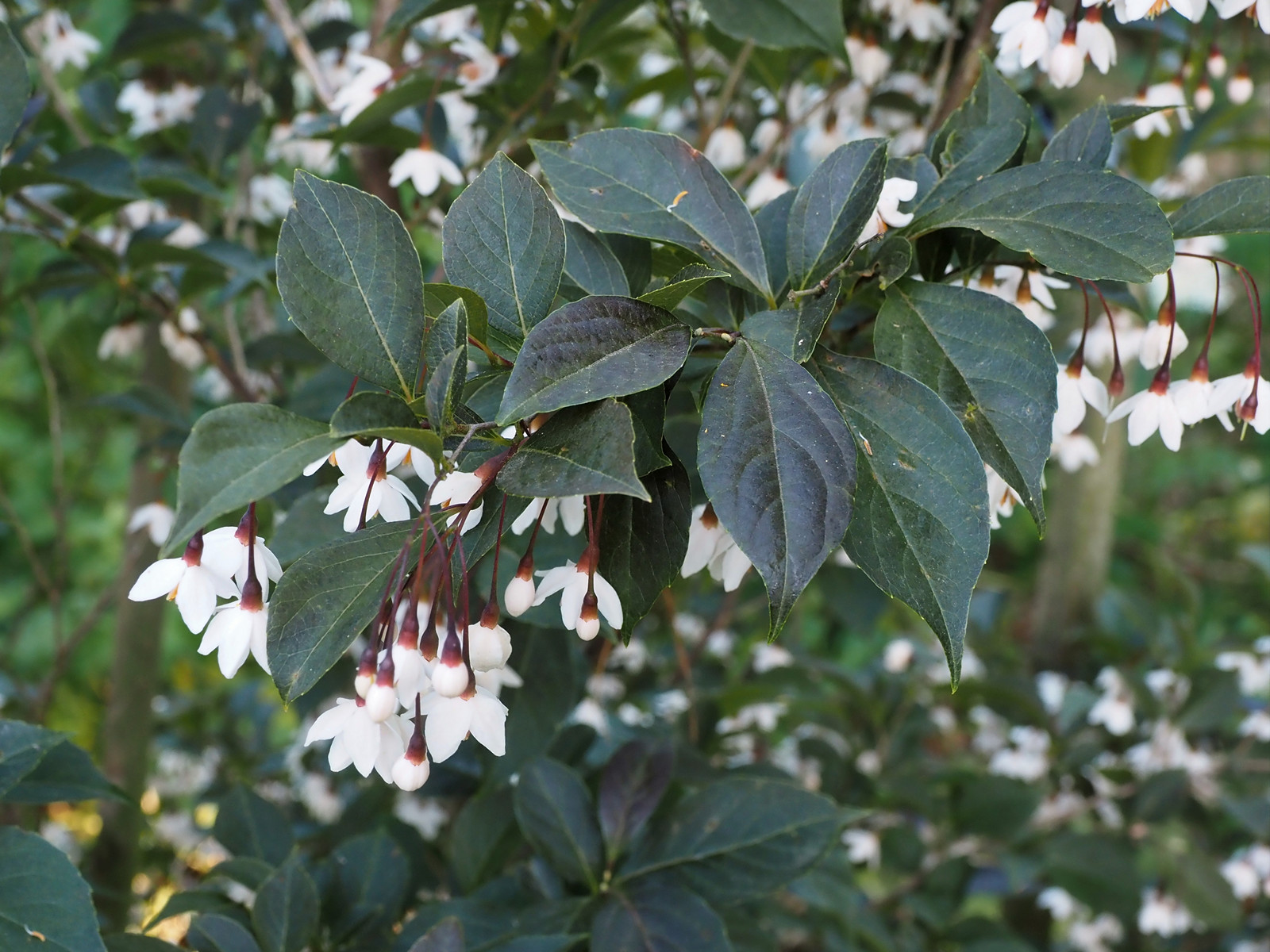
Buds on Magnolia virginiana ‘Pink Halo’ for the first time.
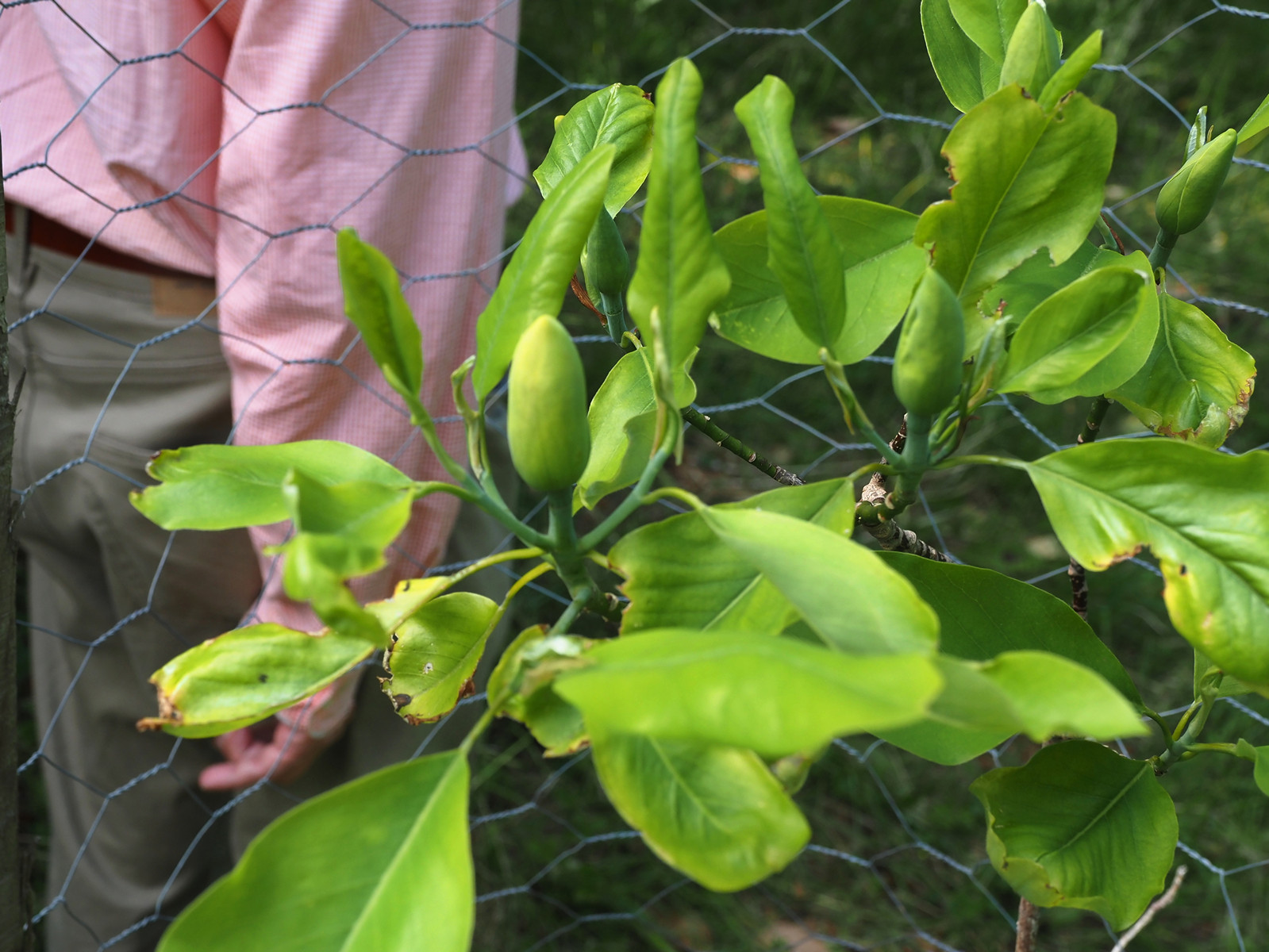
Flower tassels on Quercus oxyodon.
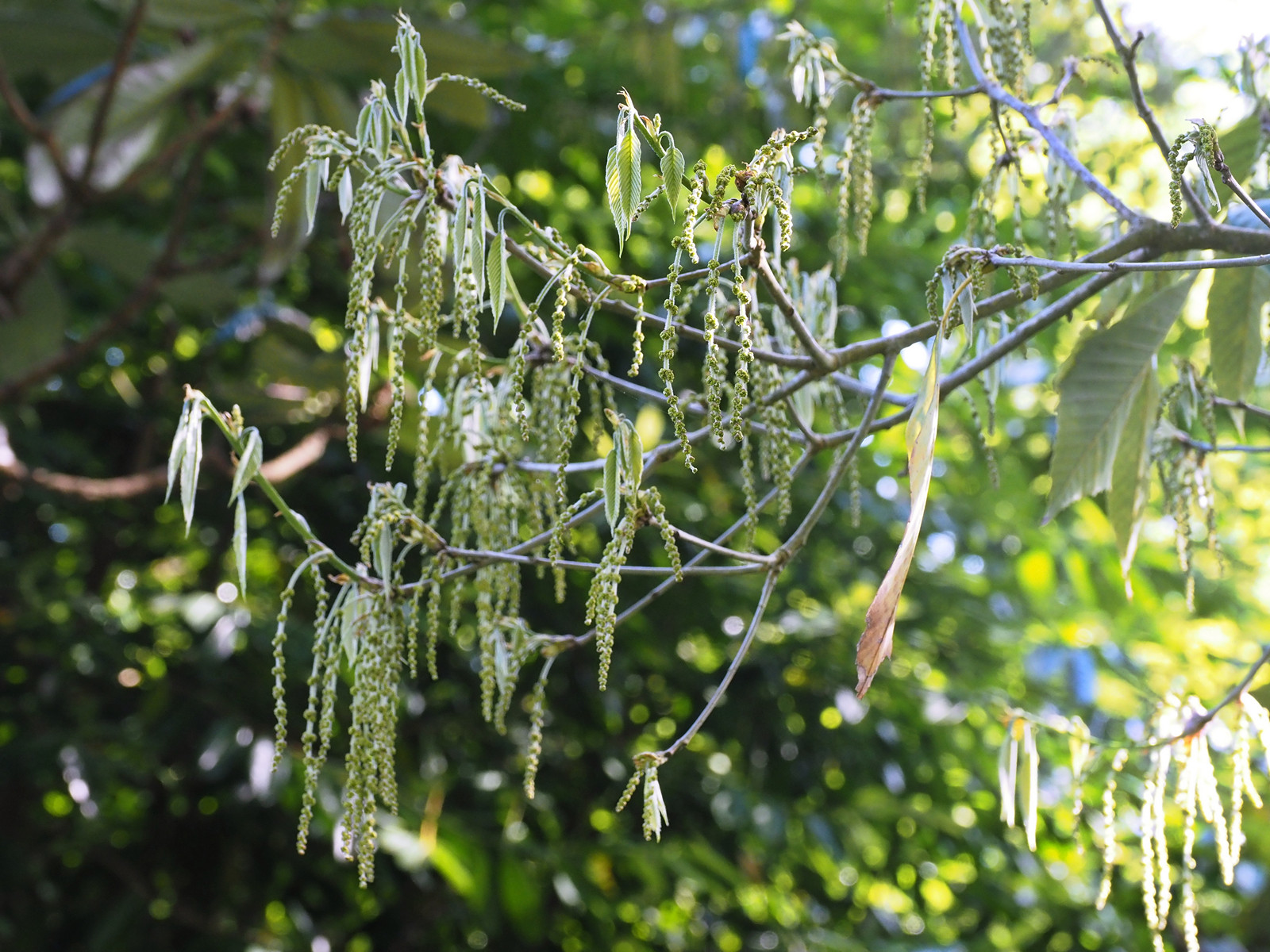
Hydrangea seemannii just out.
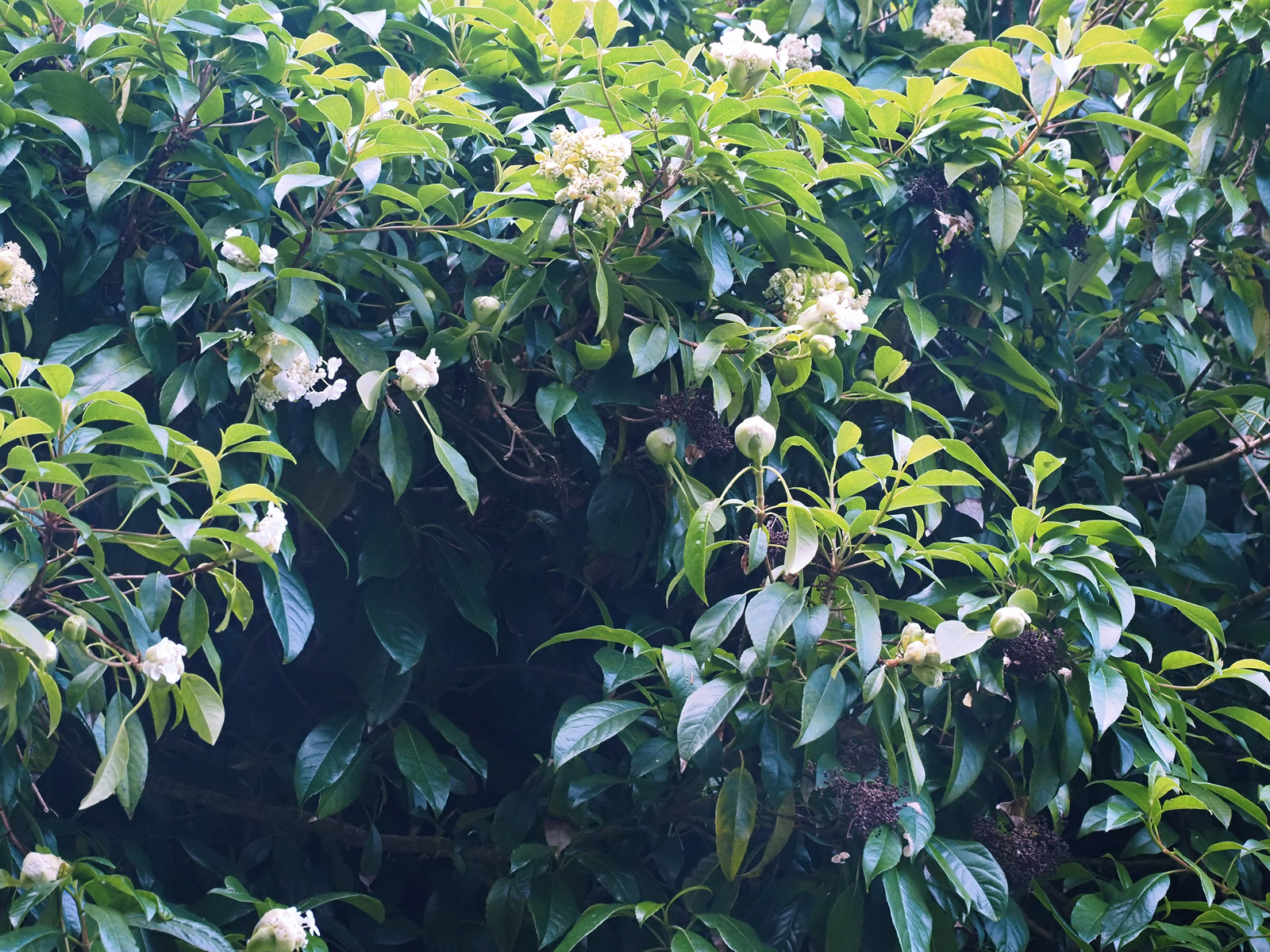
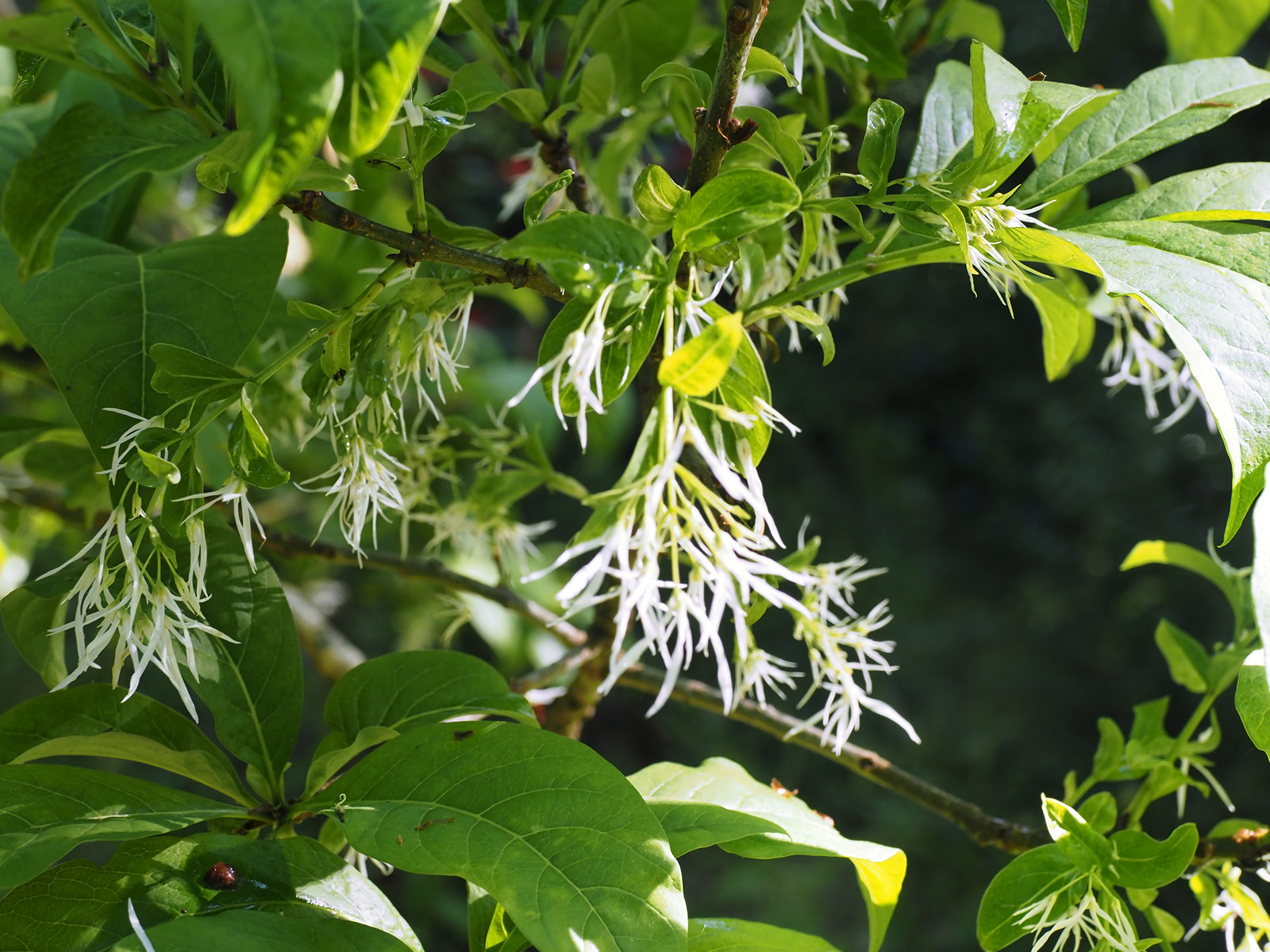
Chionanthus virginicus nicely out.
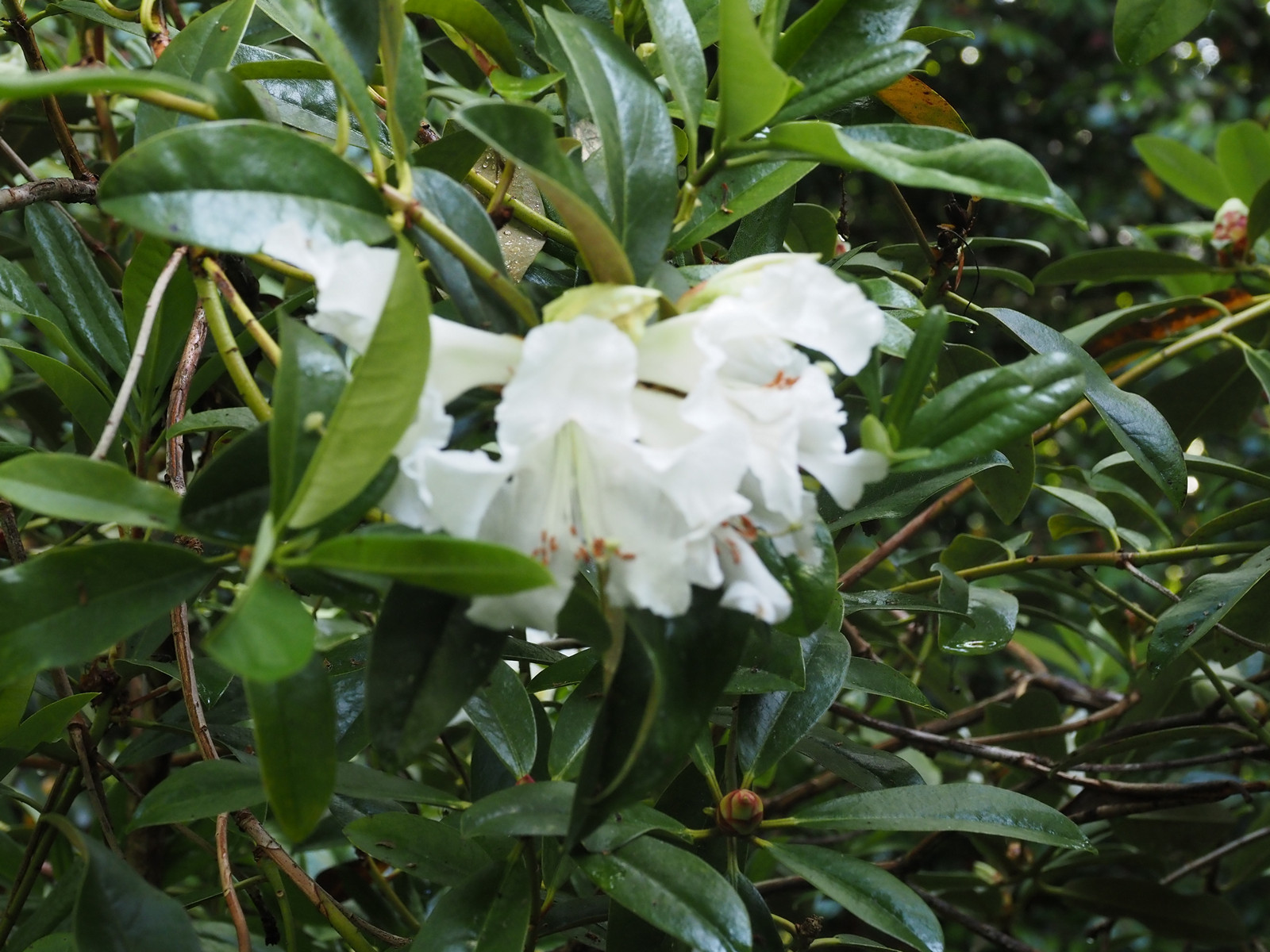
In the shade, a decently flowering Rhododendron maddenii.
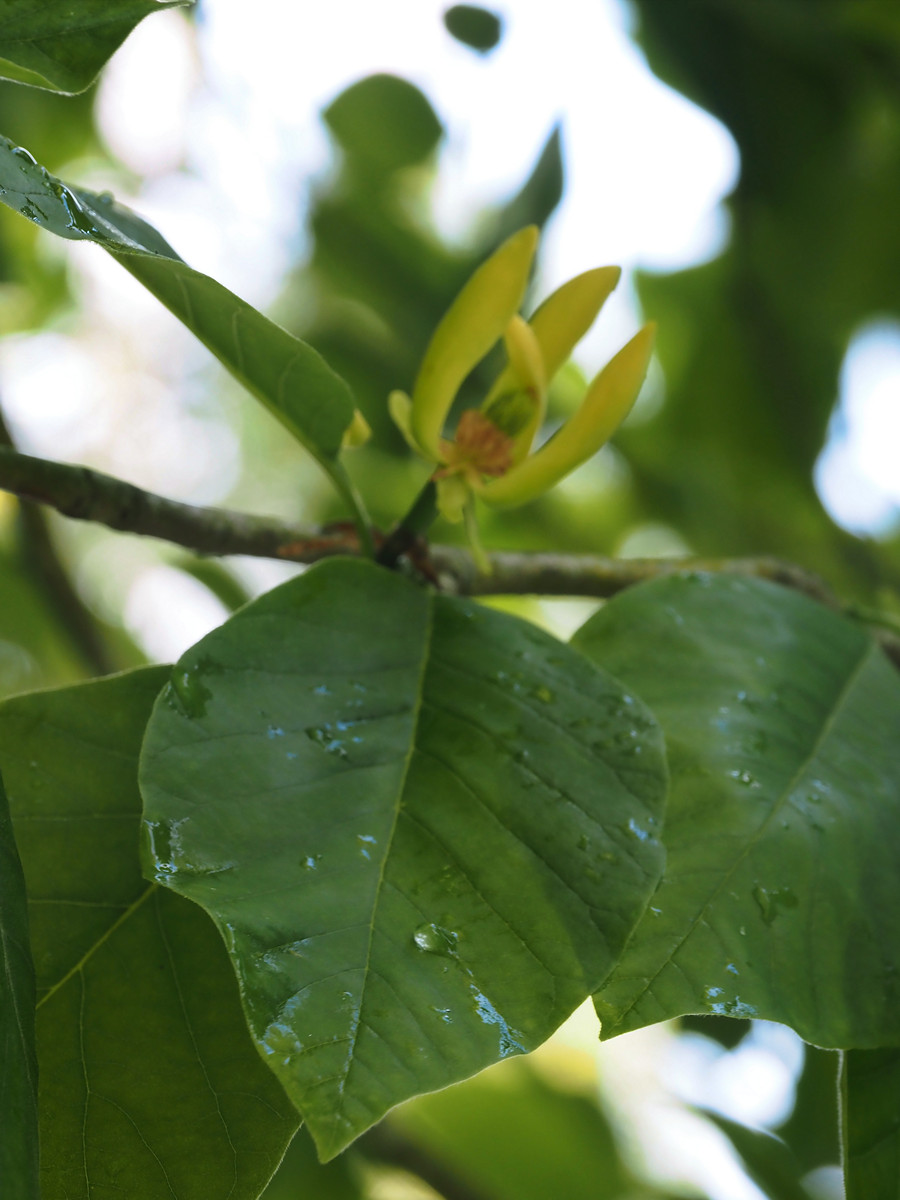
A tail end flower on Magnolia acuminata.
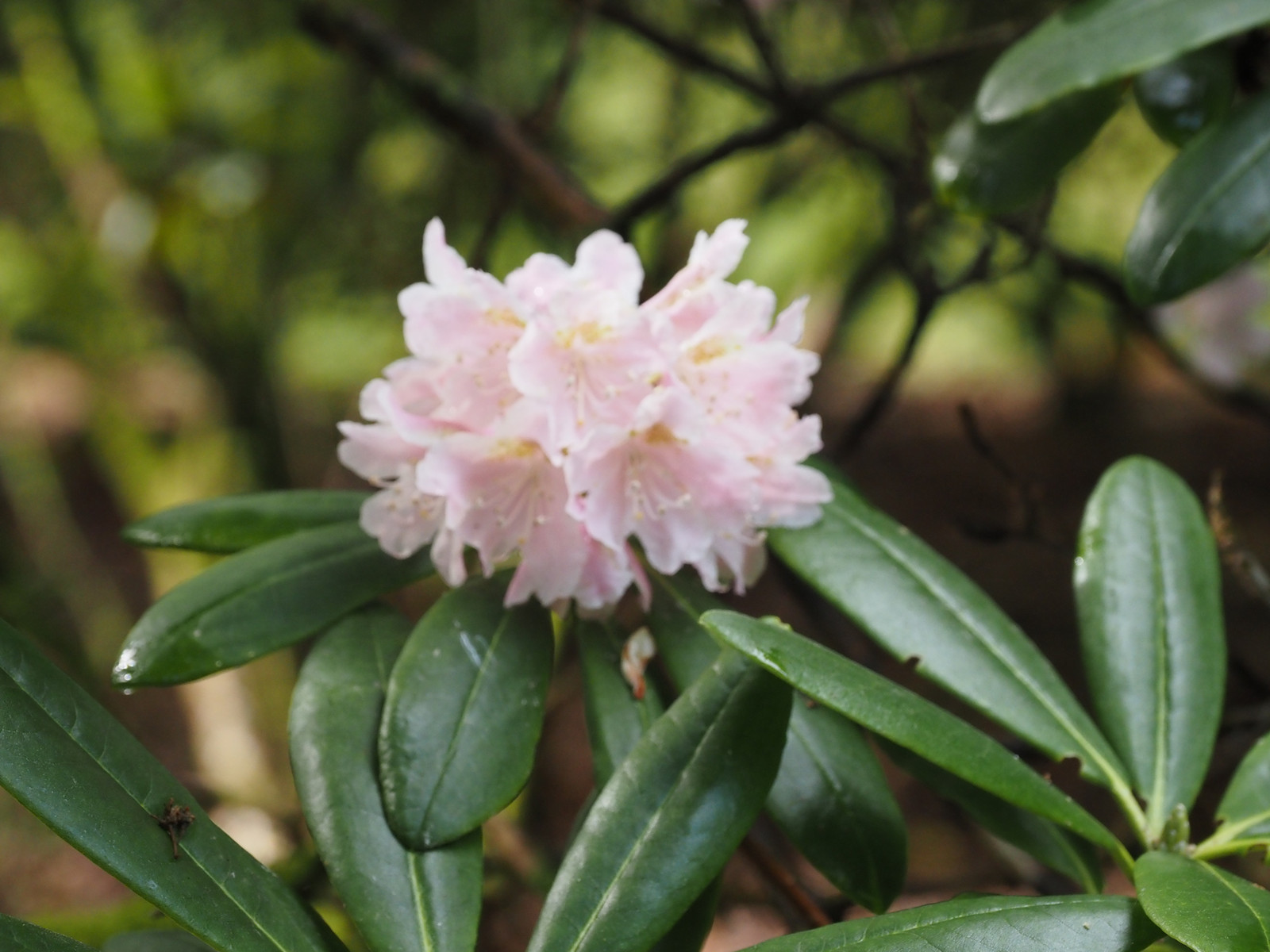
One of Major Howell’s rhododendrons hybrids above Rookery path.
2022 – CHW
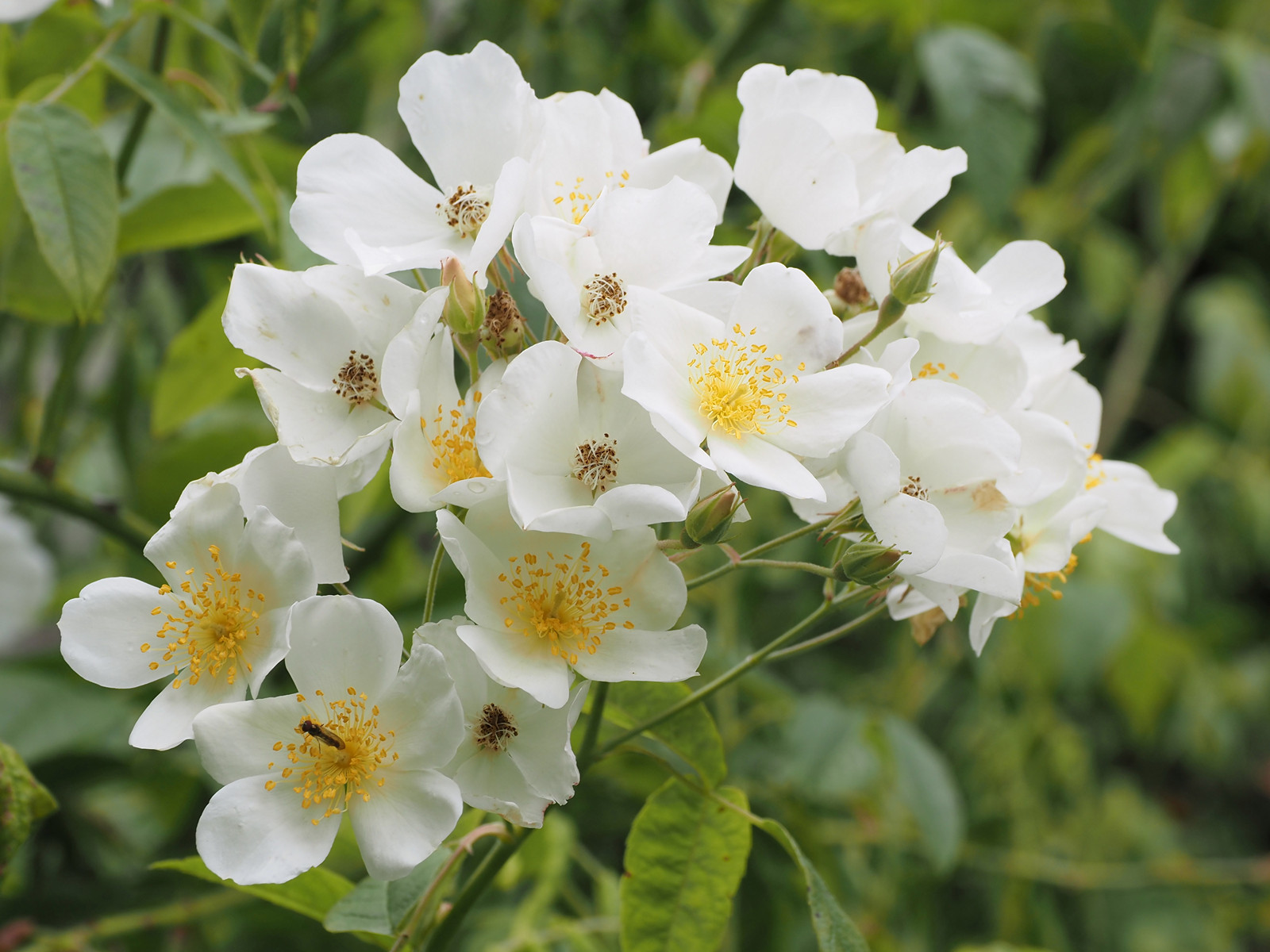
Thunderstorms and welcome rain last night with SW wind. Quite a bit of minor debris on the drive.This is one of Roy Lancaster’s wild collected rose species but name lost long ago and Roy unsure now too. Pretty yellow anthers and stamens which then die away to leave pure white flowers.
Thunderstorms and welcome rain last night with SW wind. Quite a bit of minor debris on the drive.This is one of Roy Lancaster’s wild collected rose species but name lost long ago and Roy unsure now too. Pretty yellow anthers and stamens which then die away to leave pure white flowers.
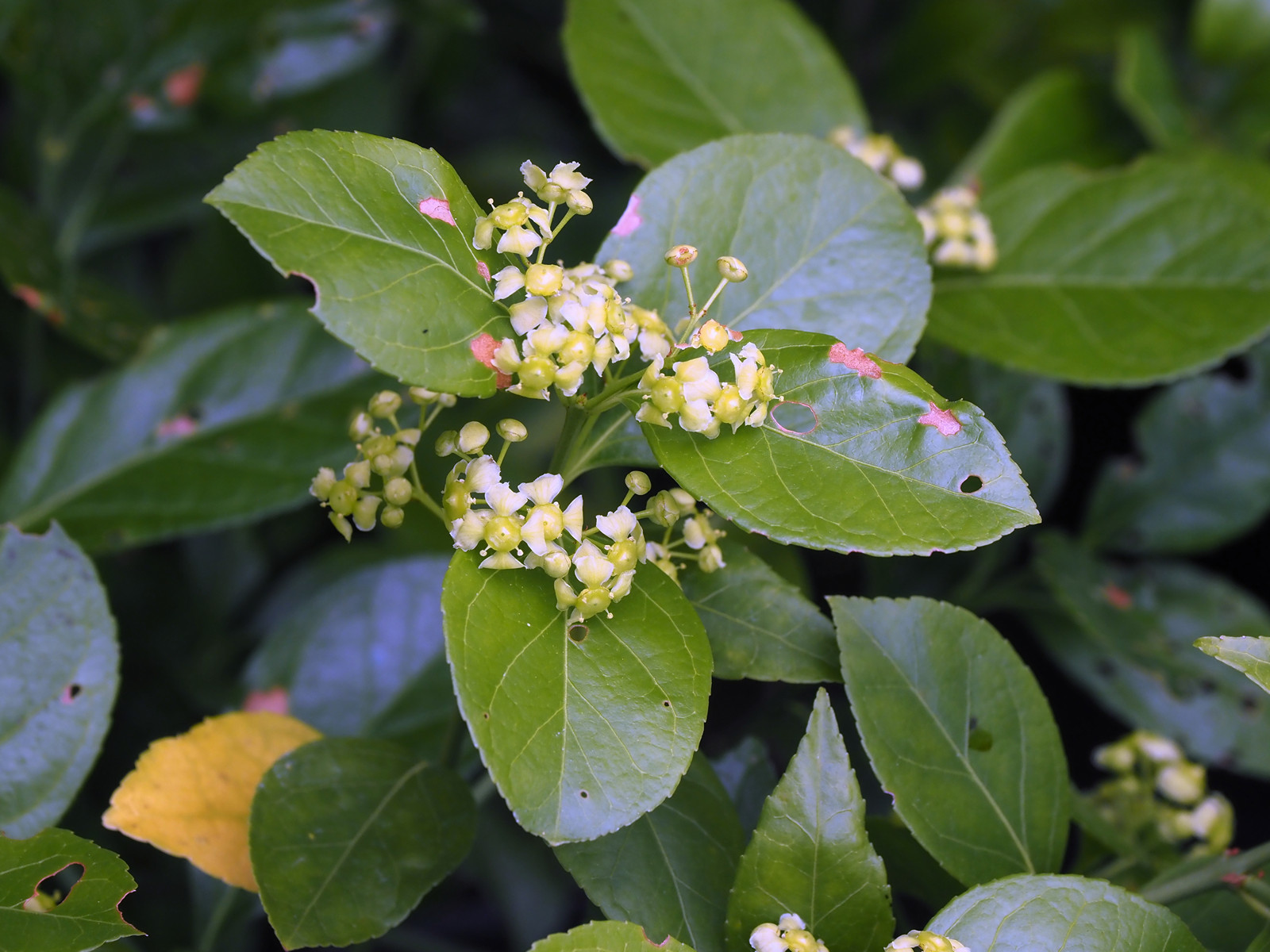
Euonymus tonkinensis flowering away in the greenhouse frames.
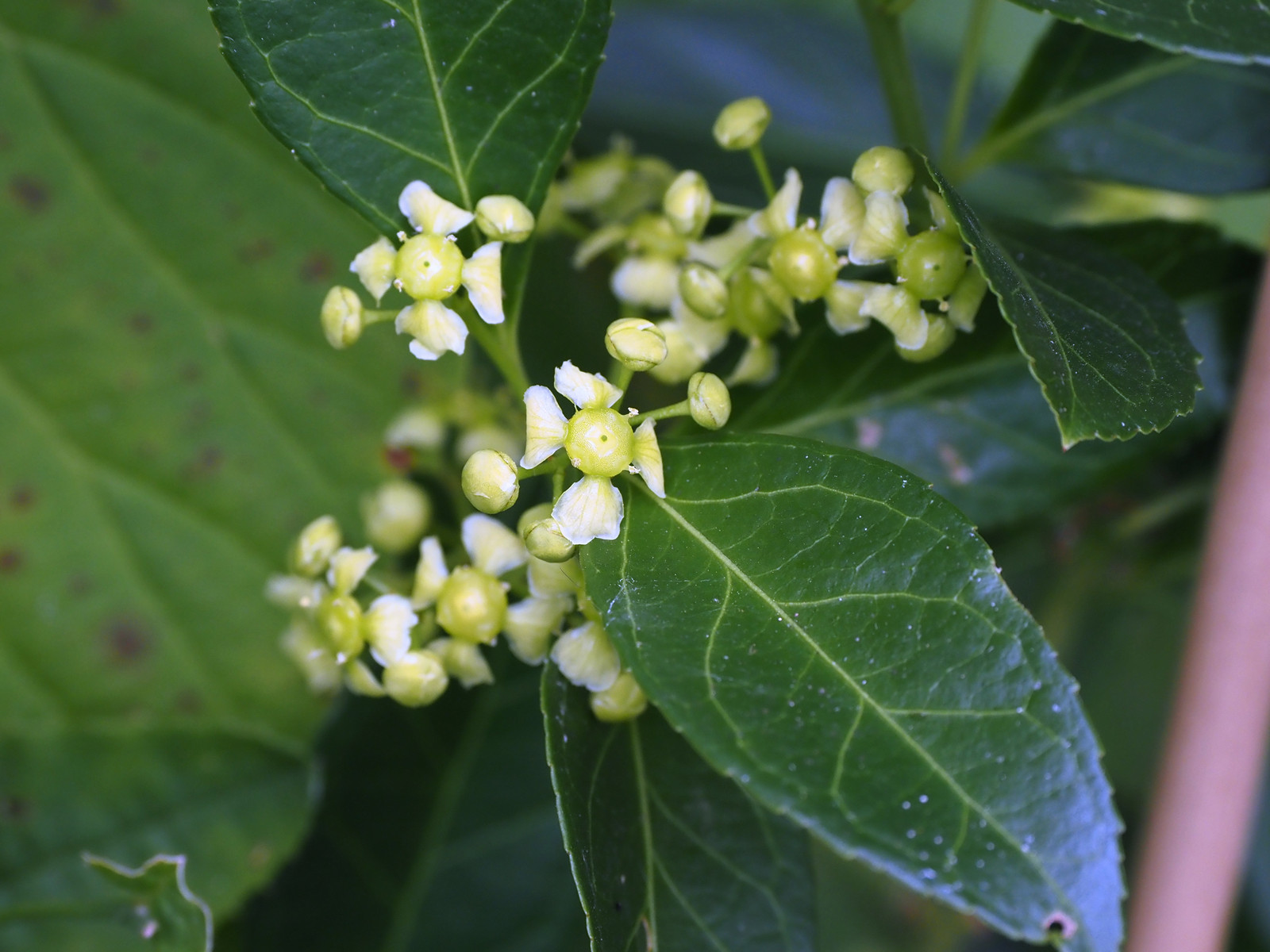
Euonymus wilsonii which is not that different in flower.
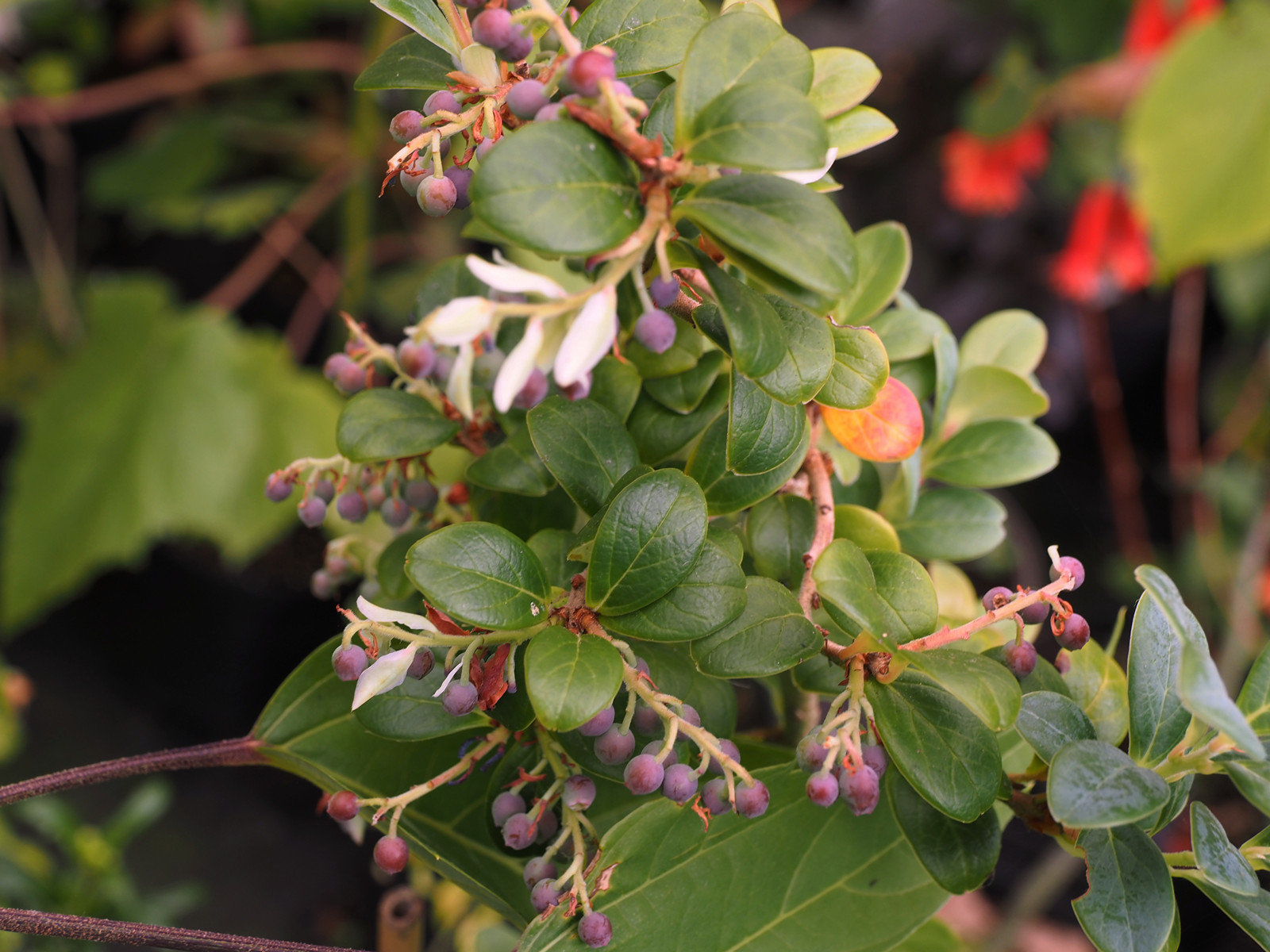
Vaccinum retusum producing purplish fruits and ready to plant out in the autumn.
Maurice Foster gave us this startlingly good hydrangea in March but we have lost the label (or it never had one). I will ask.
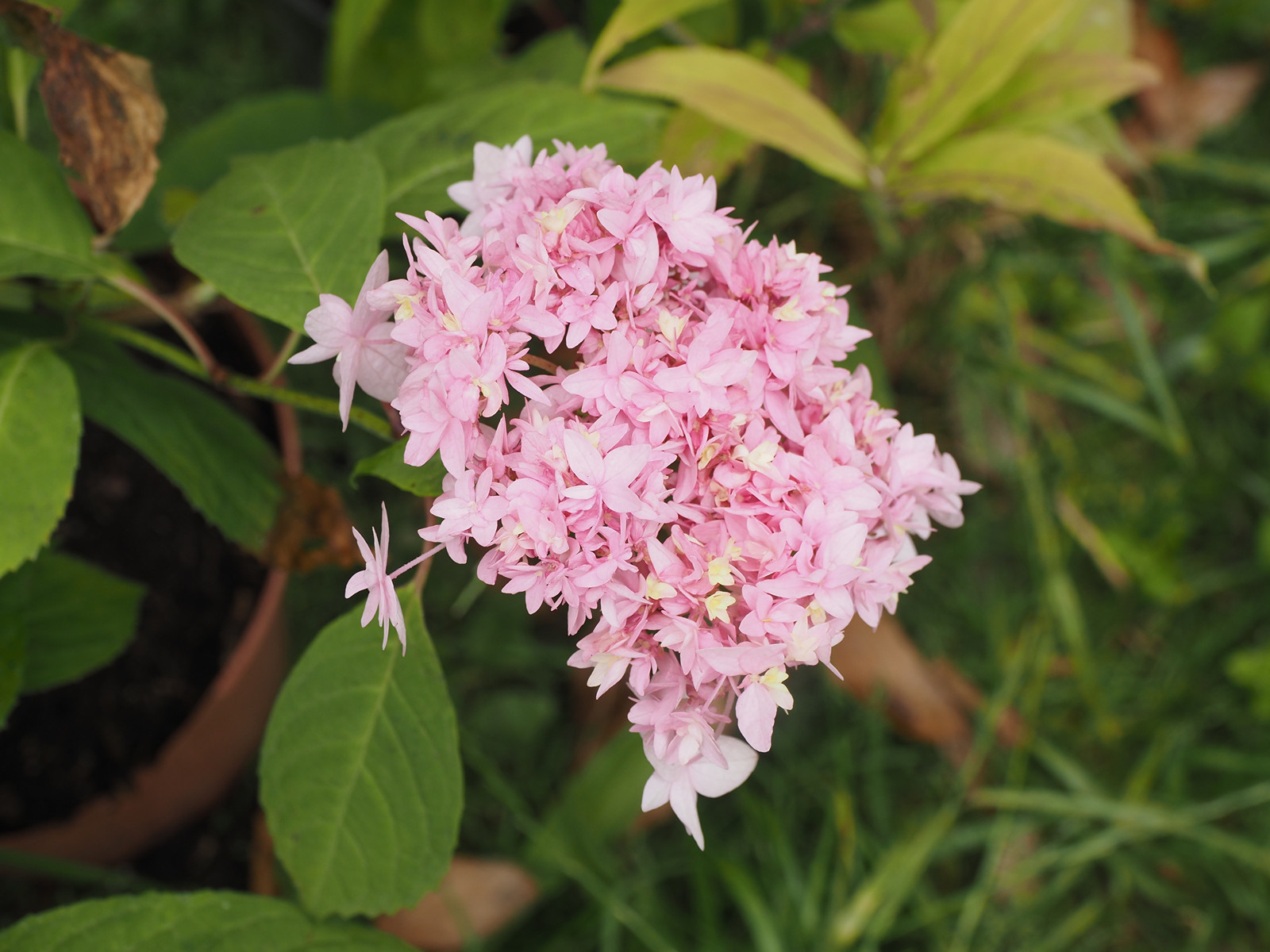
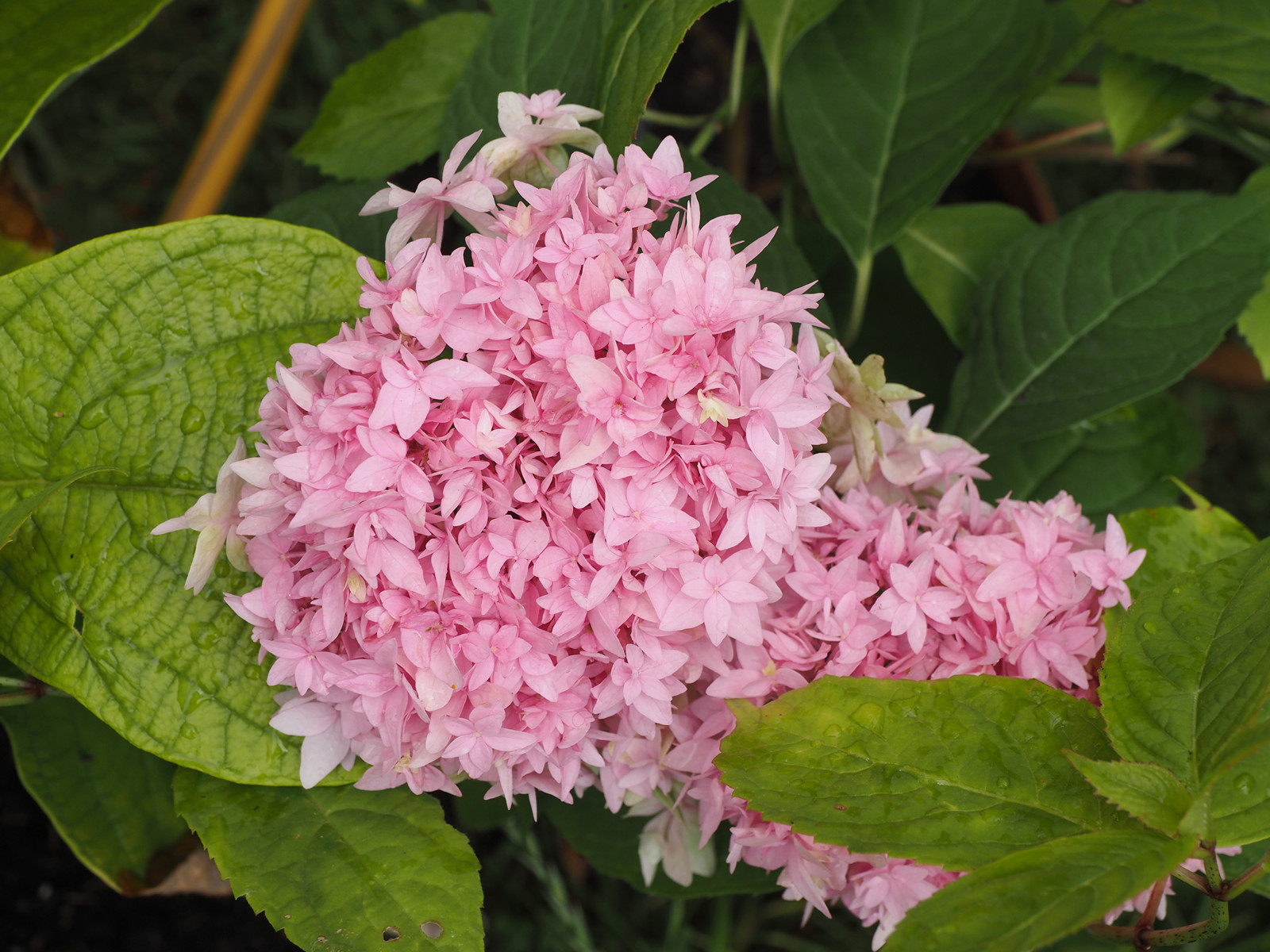
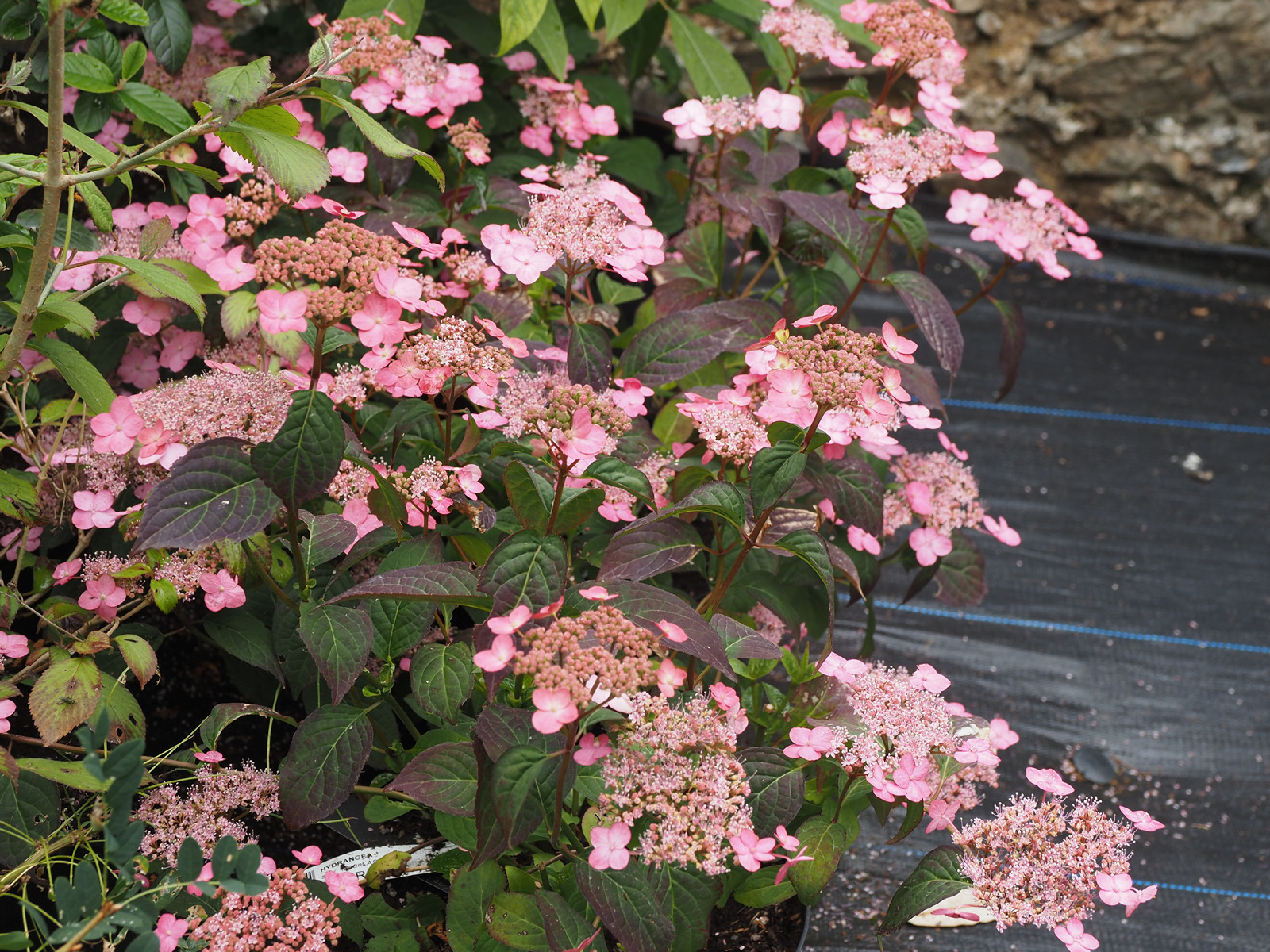
Hydrangea serrata ‘Mount Aso’. The Salix ‘Mount Aso’ flowering here for the first time in March was a good pink but this is better. What is the third plant which we have with Mount Aso in the name? I forget.
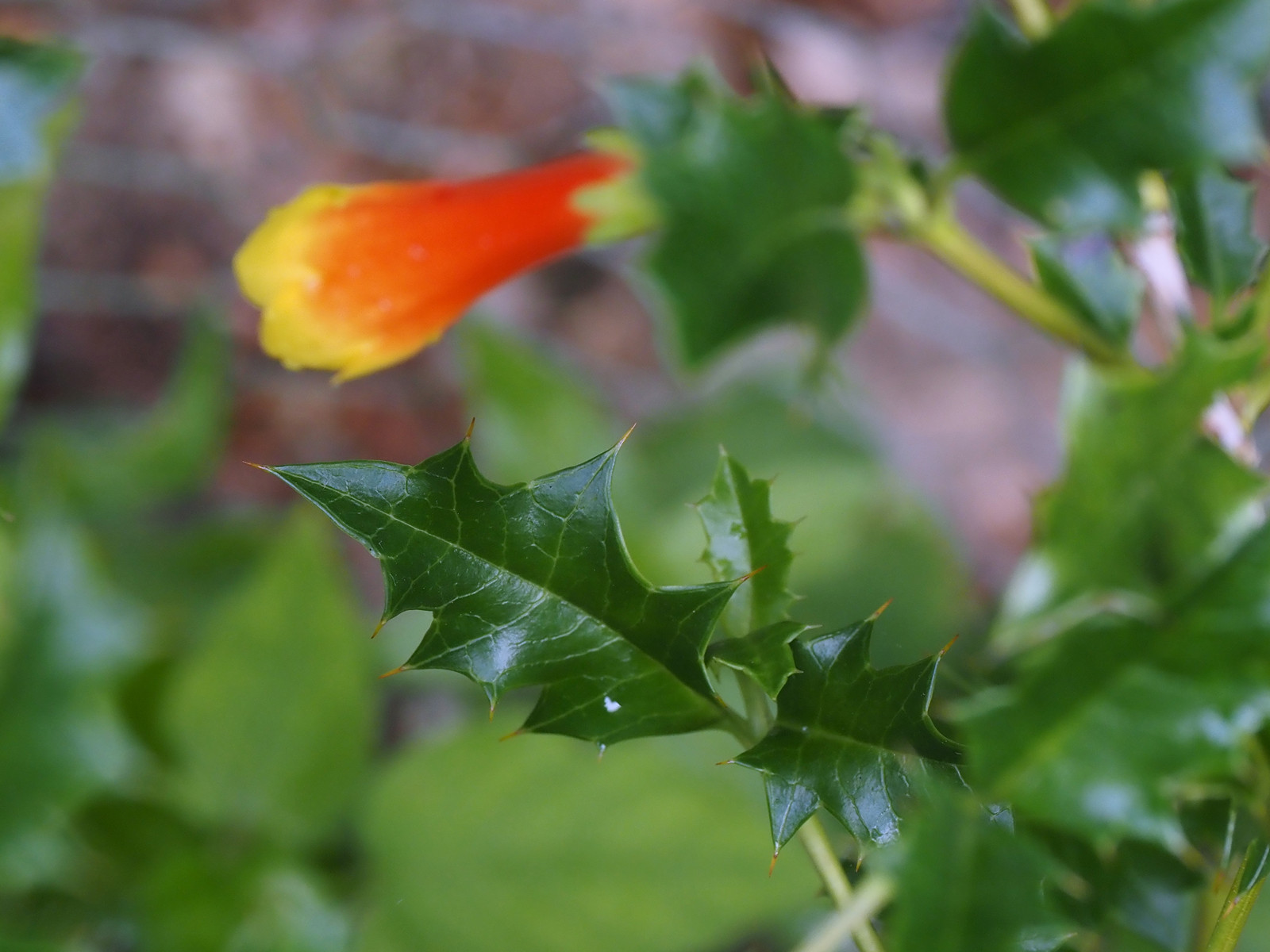
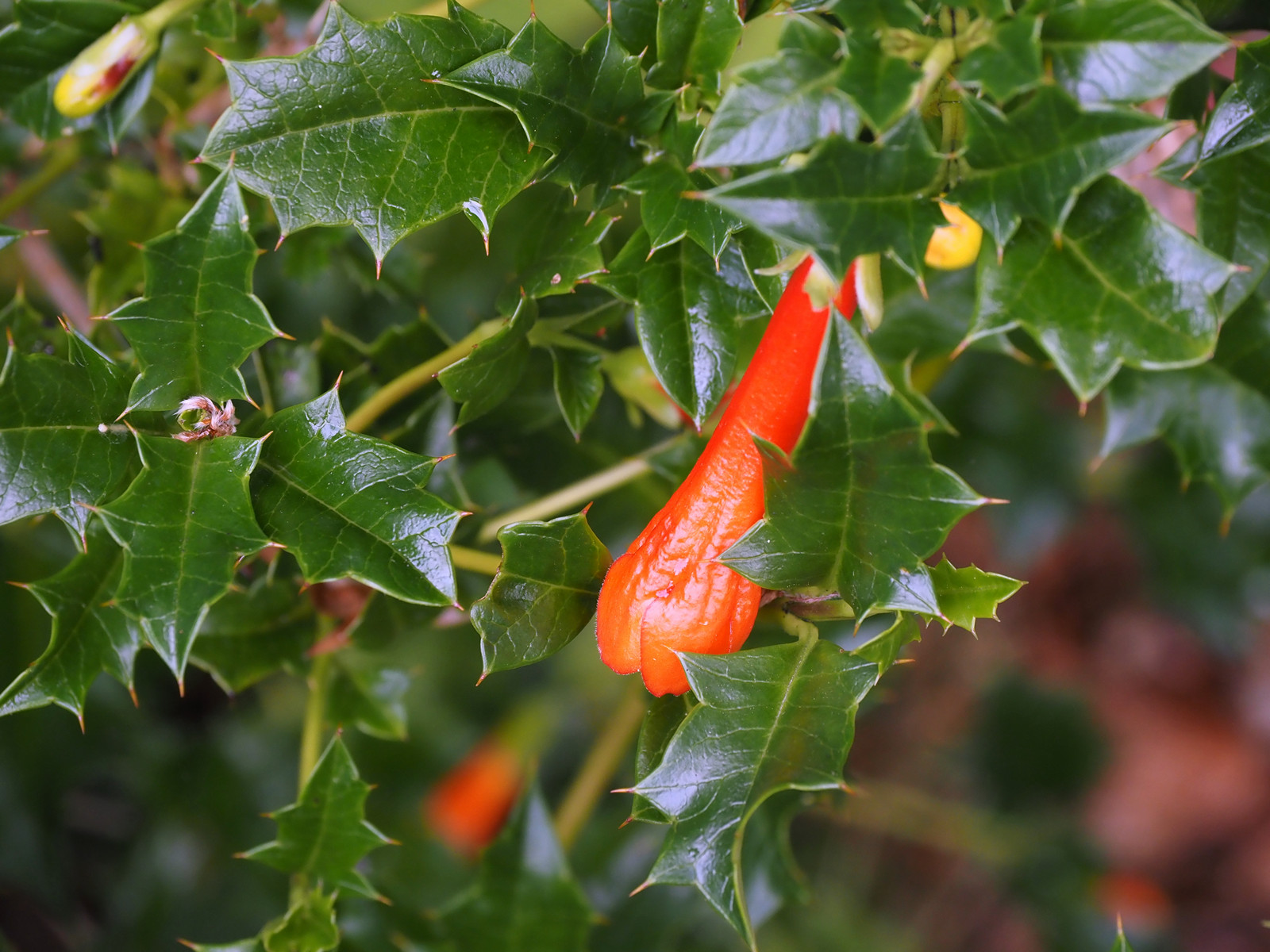
Why do some flowers on Desfontainea spinosa have a yellow tip to the orange and some not?
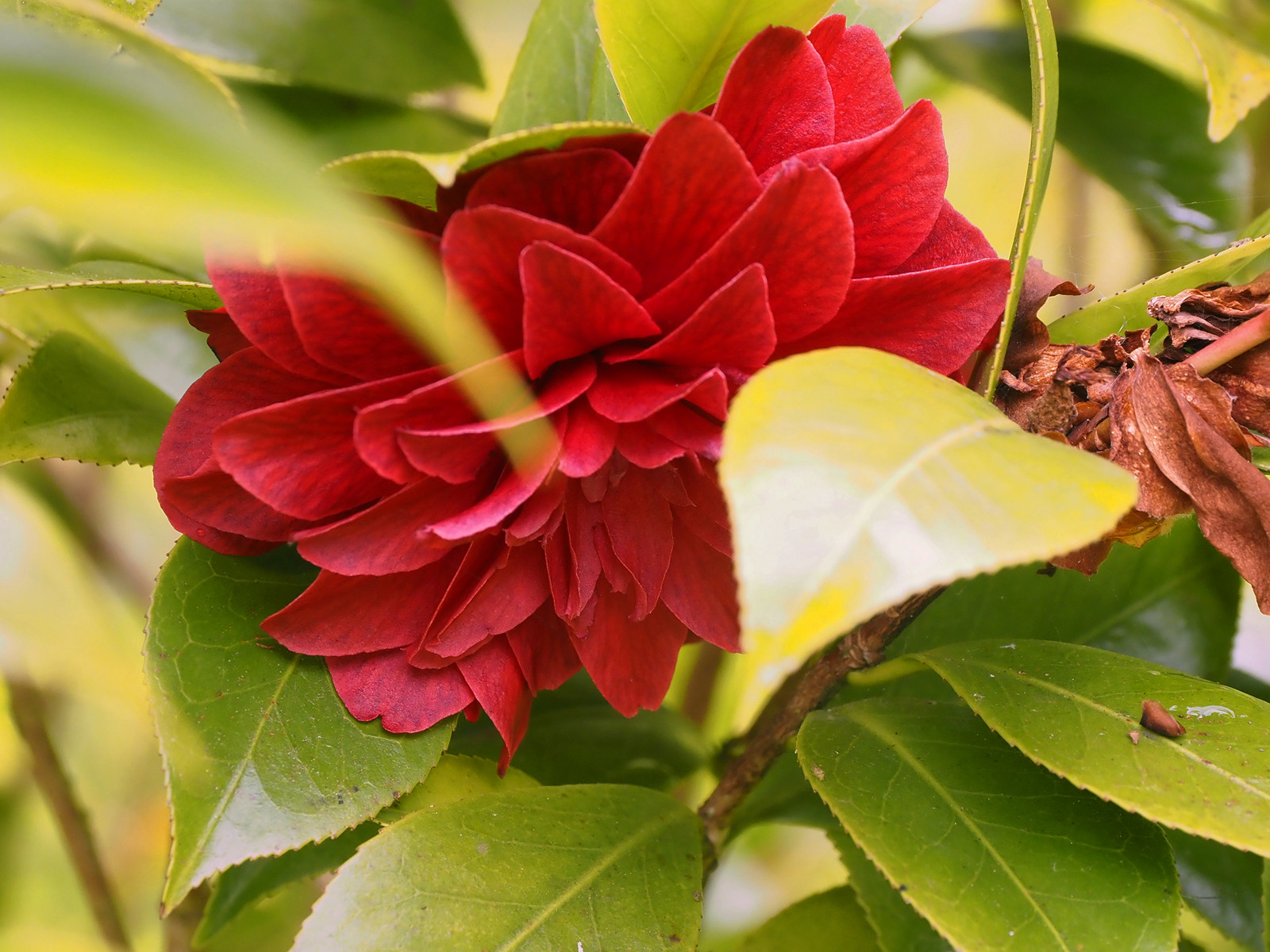
Camellia ‘Manuroa Road’ still with a flower.
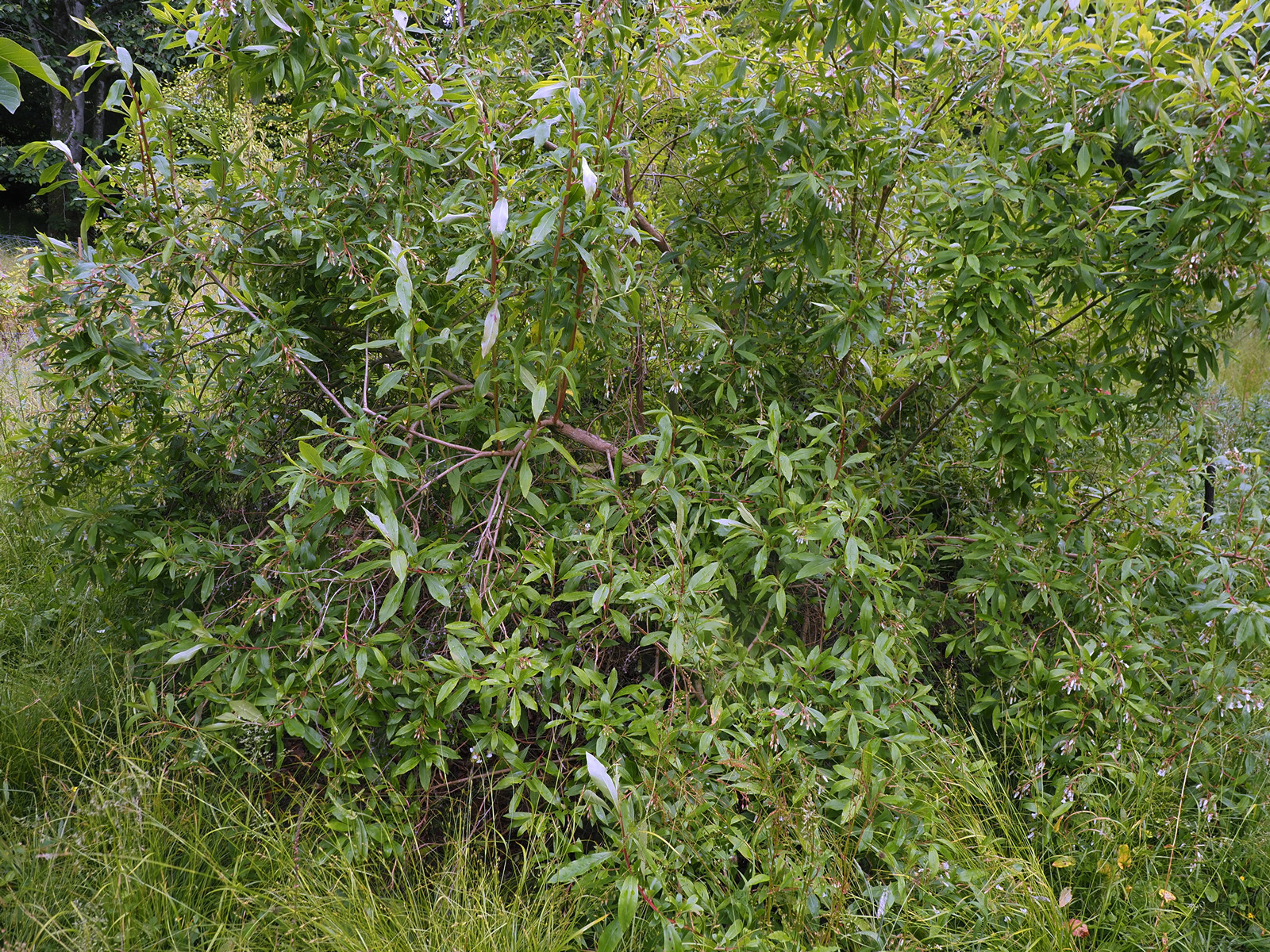
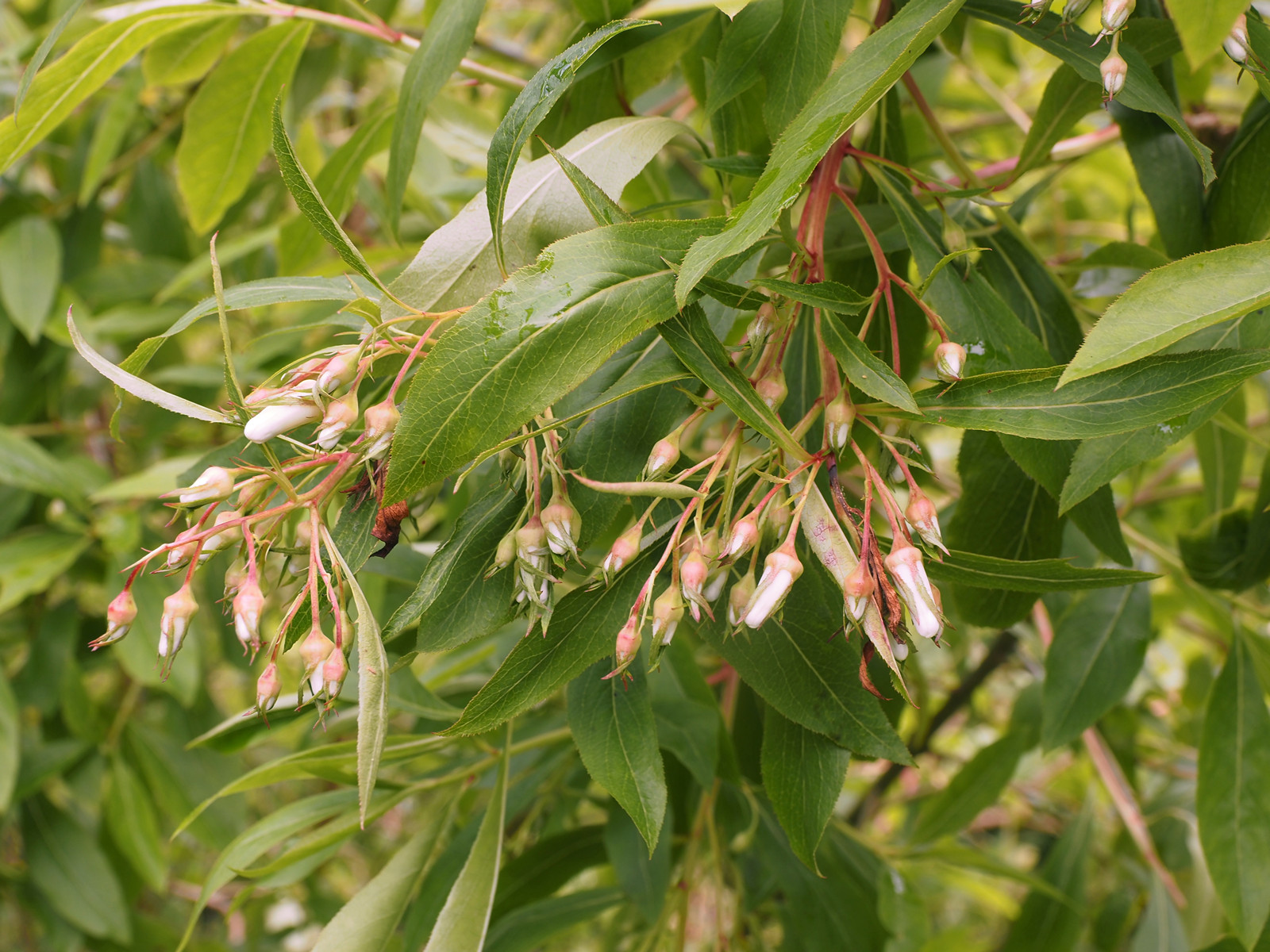
Escallonia tucumanensis with its drooping white flowers. The three plants in Old Park are struggling with frost damage but this one is now huge as you can see.
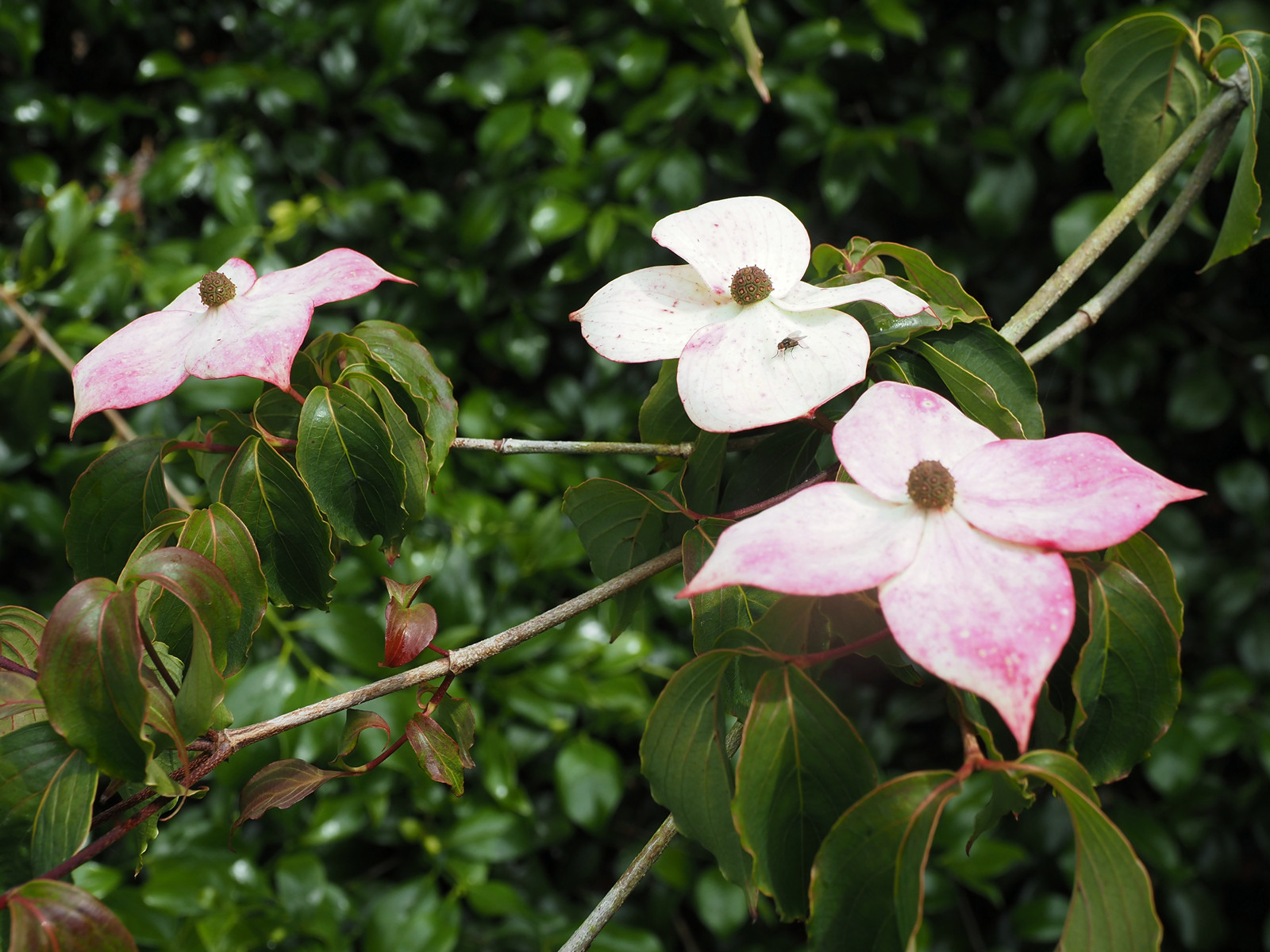
Cornus kousa ‘Rasen’ looking as good as ‘Wisley Queen’ yesterday.
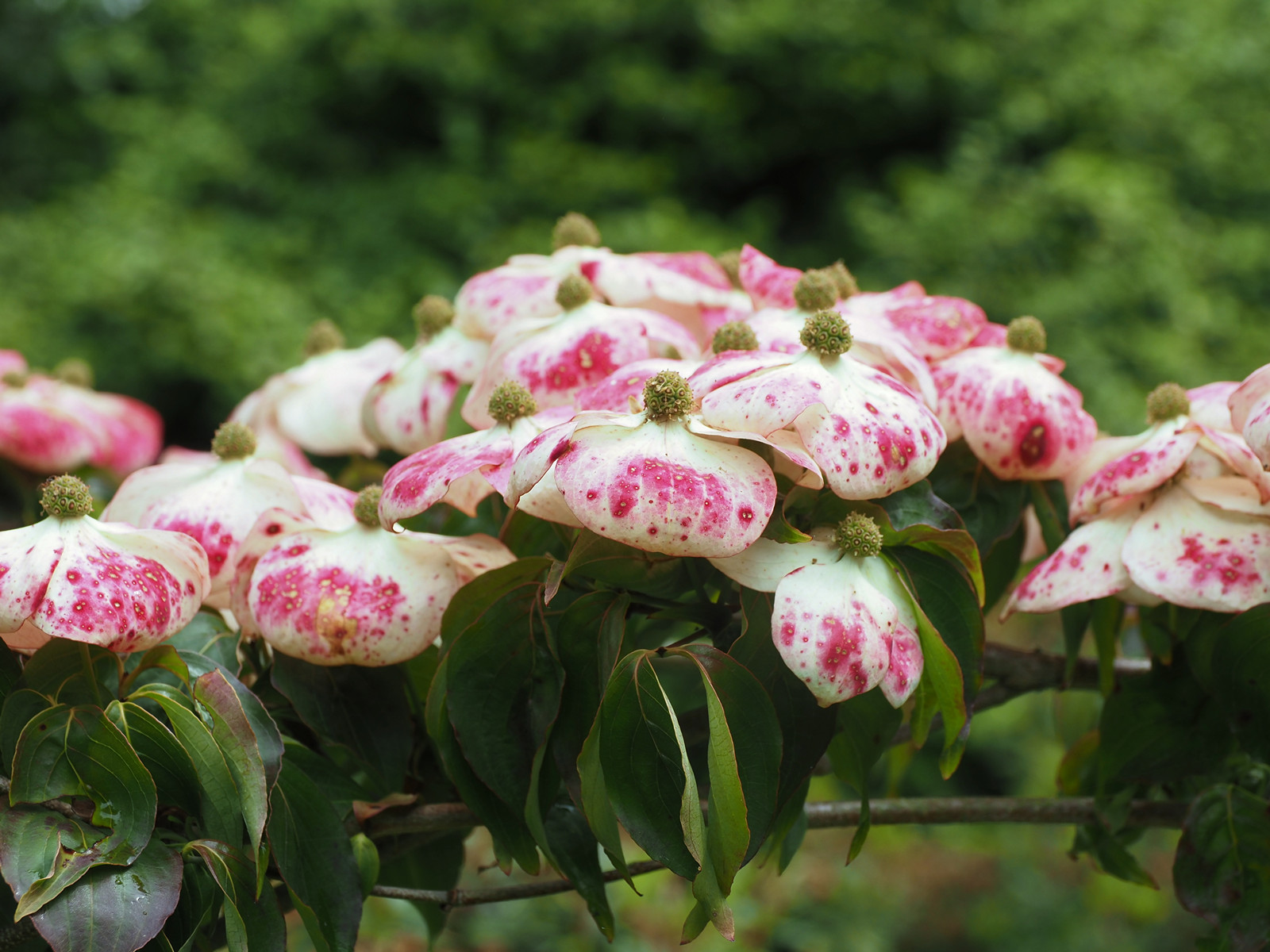
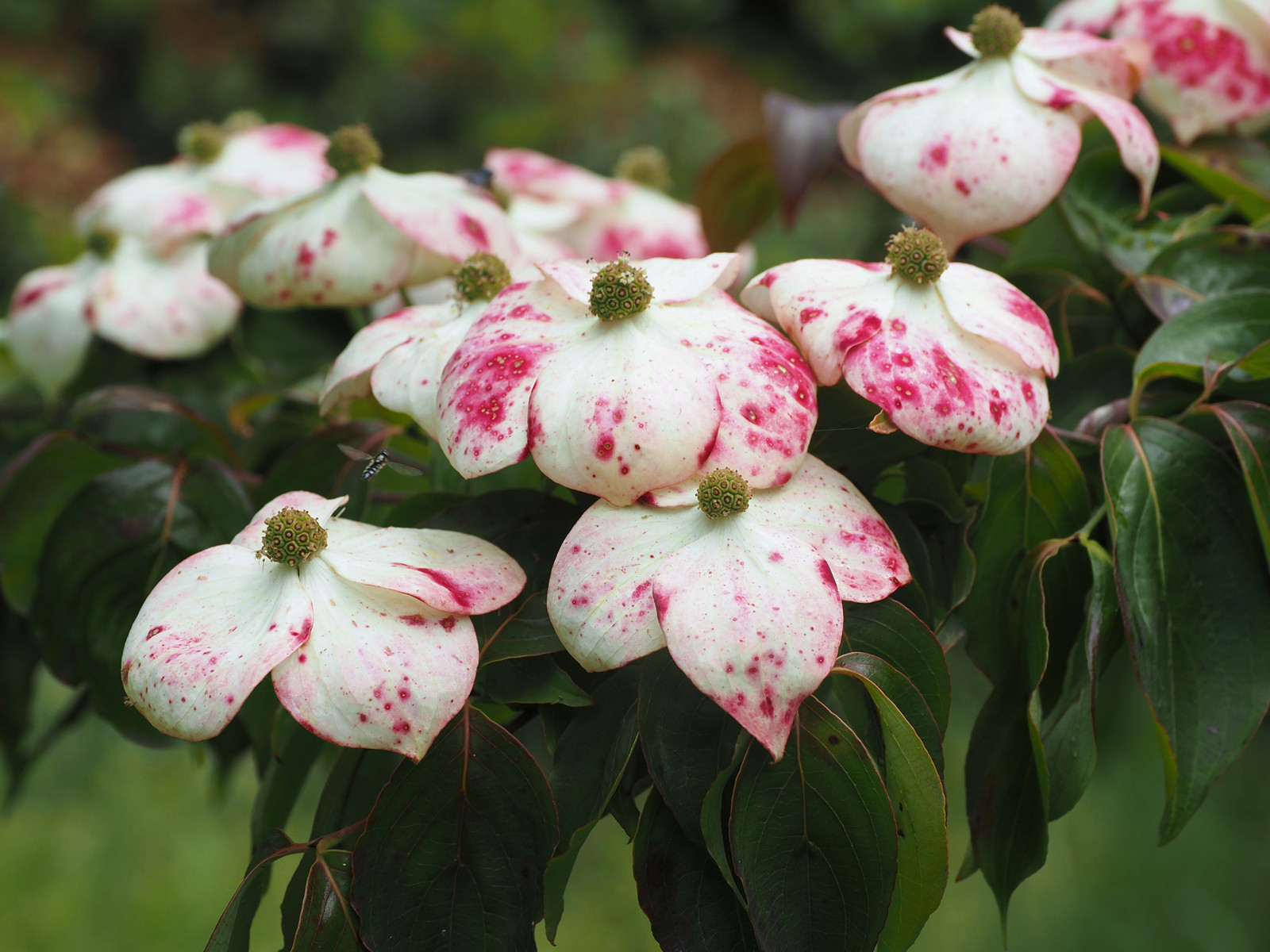
Cornus kousa ‘Weberi’ has few flowers but a very dense compact habit.
2021 – CHW
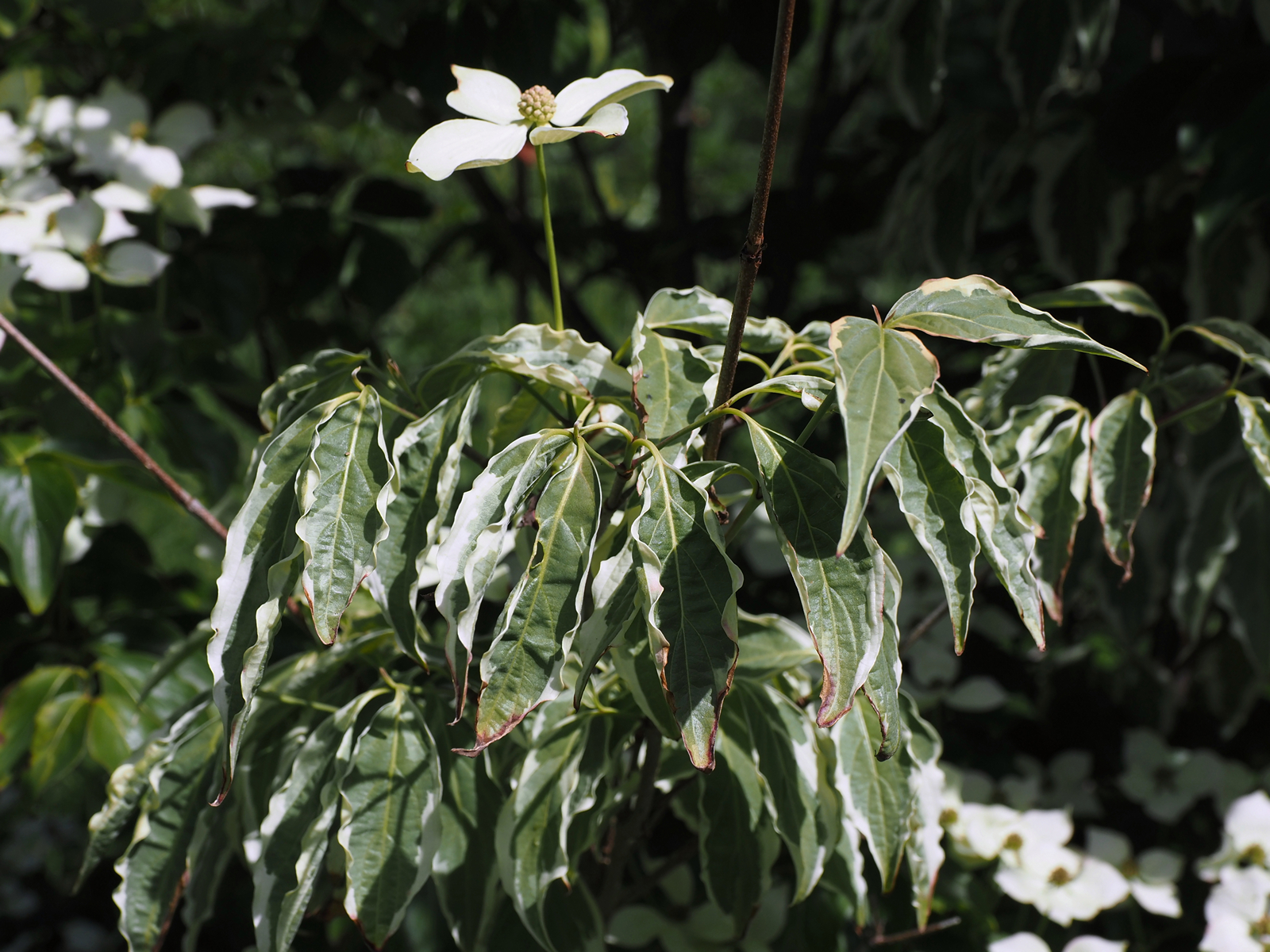
Friends ringing up and visiting from the Isle of Wight. How strange to be meeting up for a garden tour here after two years! We hope to get to the Isle of Wight in around 10 days from now but, as ever, things are still rather fluid with COVID.Cornus kousa ‘Wolf Eyes’ with its white edged leaves is just out. The plant has grown from below the graft and (sadly) taken over so very little variegated ‘Wolf Eyes’ remains. Not worth cutting out the rest at this late stage.
Friends ringing up and visiting from the Isle of Wight. How strange to be meeting up for a garden tour here after two years! We hope to get to the Isle of Wight in around 10 days from now but, as ever, things are still rather fluid with COVID.Cornus kousa ‘Wolf Eyes’ with its white edged leaves is just out. The plant has grown from below the graft and (sadly) taken over so very little variegated ‘Wolf Eyes’ remains. Not worth cutting out the rest at this late stage.
The huge clump of Azalea indica outside the front gate has several different colours and not all come out at once. At this time of the year a late delight.

The multi stemmed Cordyline australis outside the front door (which I planted 30 to 35 years ago) is flowering better than I have ever seen it. Must remember to gather a kilo or two of seed (please Asia). Plants which flower in profusion like this normally then die in the next year or so.


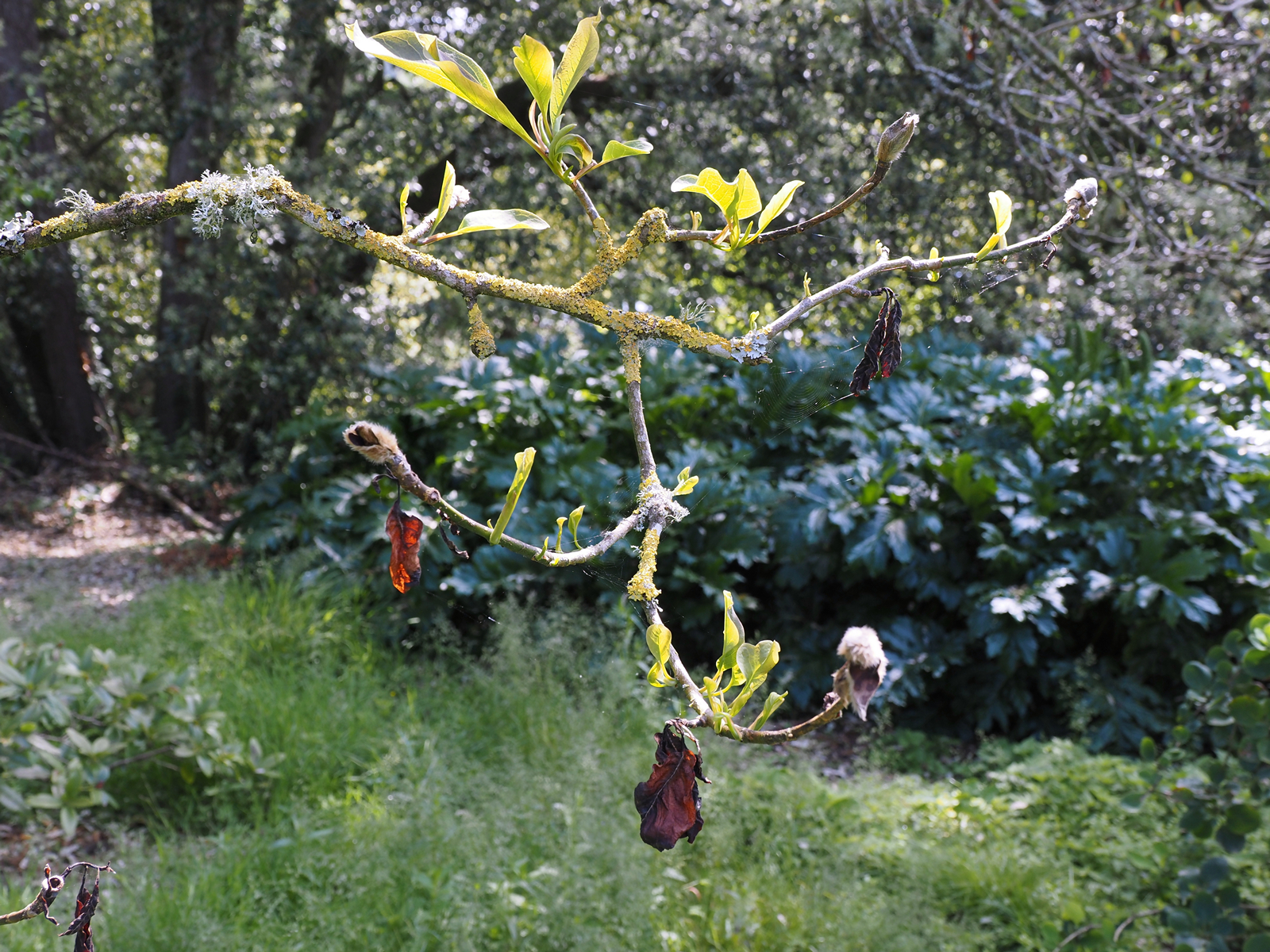
I do believe that the huge Magnolia dawsoniana outside the front gate is now starting to recover from the February frosts and March cold winds. Dieback yes but vigorous reshooting from bare branches is well underway all over the tree. Multiple shoots on most twigs while the previously frosted ‘new’ leaves still hang there black and dead ‘bending the knee’.

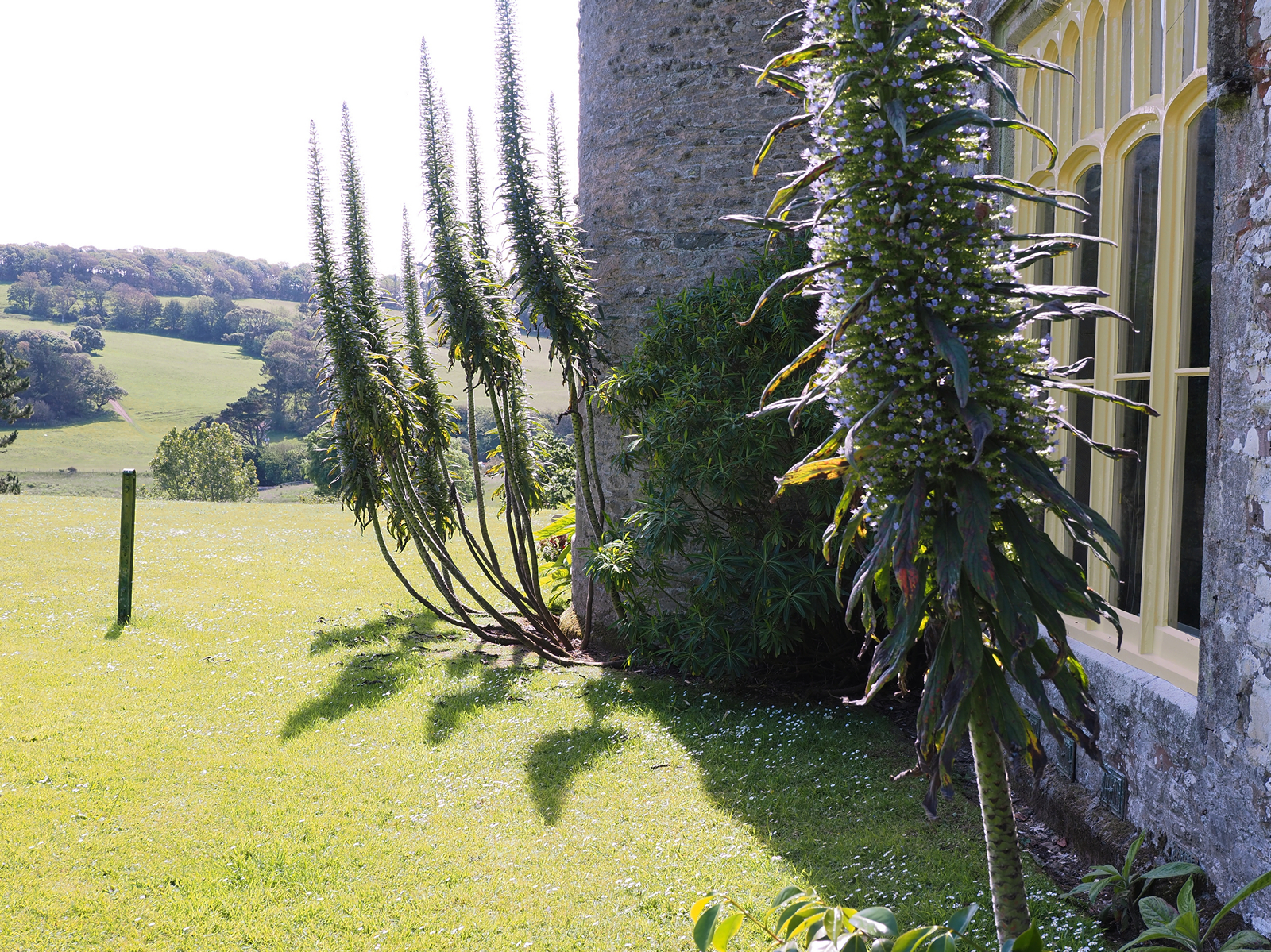
The clump of 15-18ft tall Echium pininana have nearly finished flowering and will soon be scattering seed far and wide. How did they survive the cold while the nearby magnolia took such a hit?
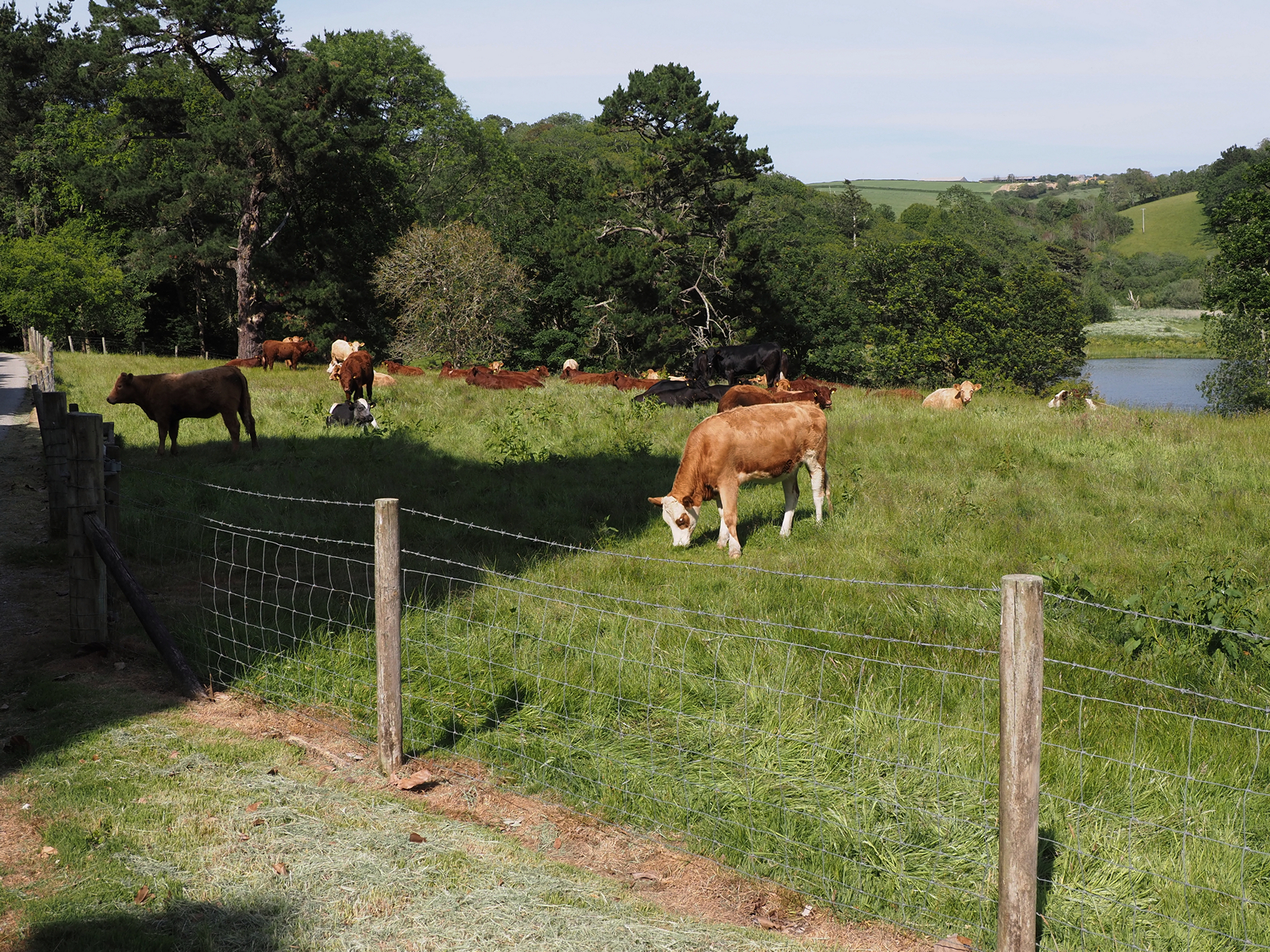
Good to see cattle in the castle front now that the public have left for another year. All of these animals are now each worth £400+ more than pre Brexit!

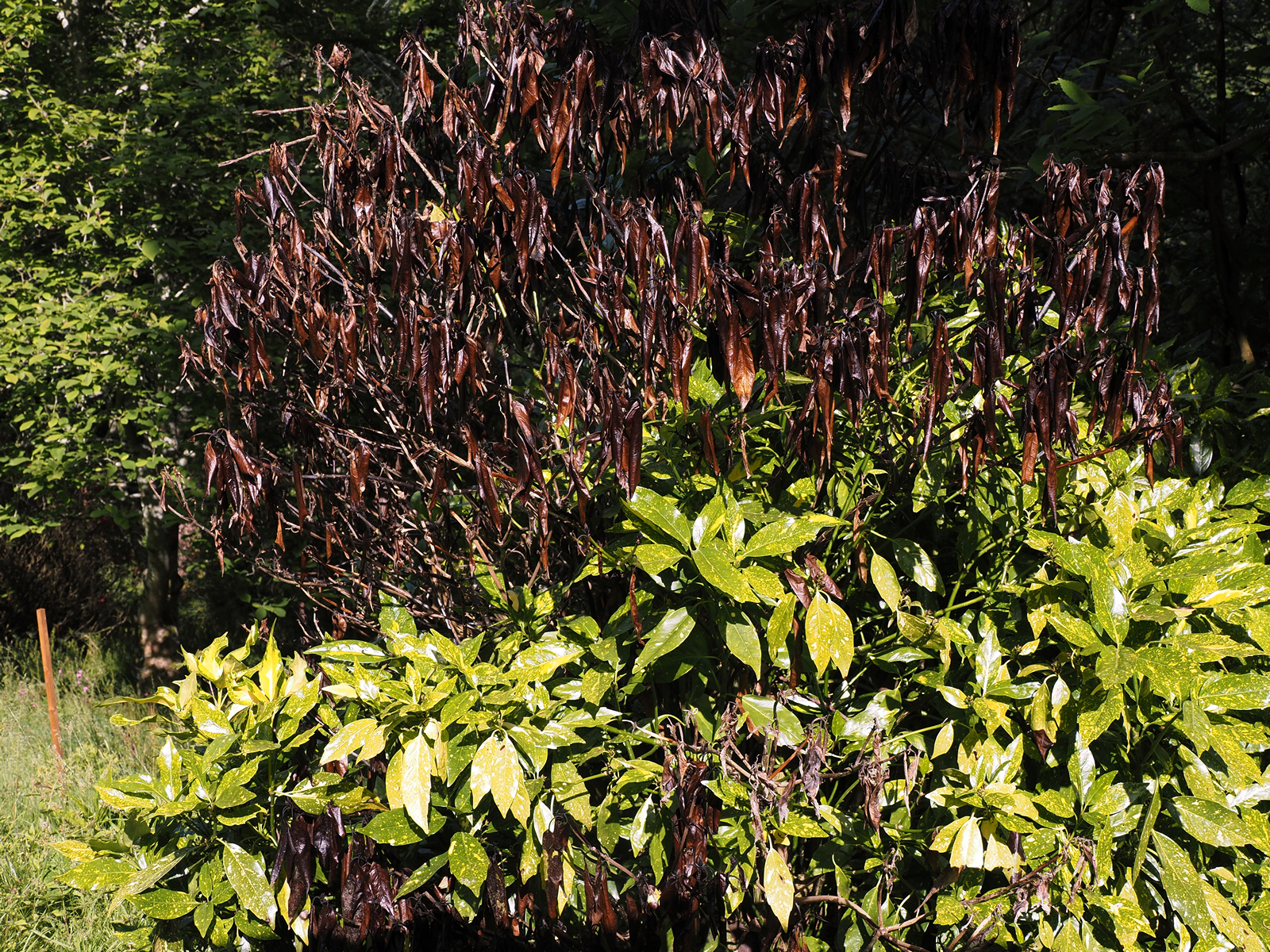
More aucuba dying of its very own and peculiar phytophthora. This has continued slowly for years and years.
The tail end of Azalea ‘Moidart’ on Hovel Cart Road growing in too much shade for best results. Not a named variety one often sees.

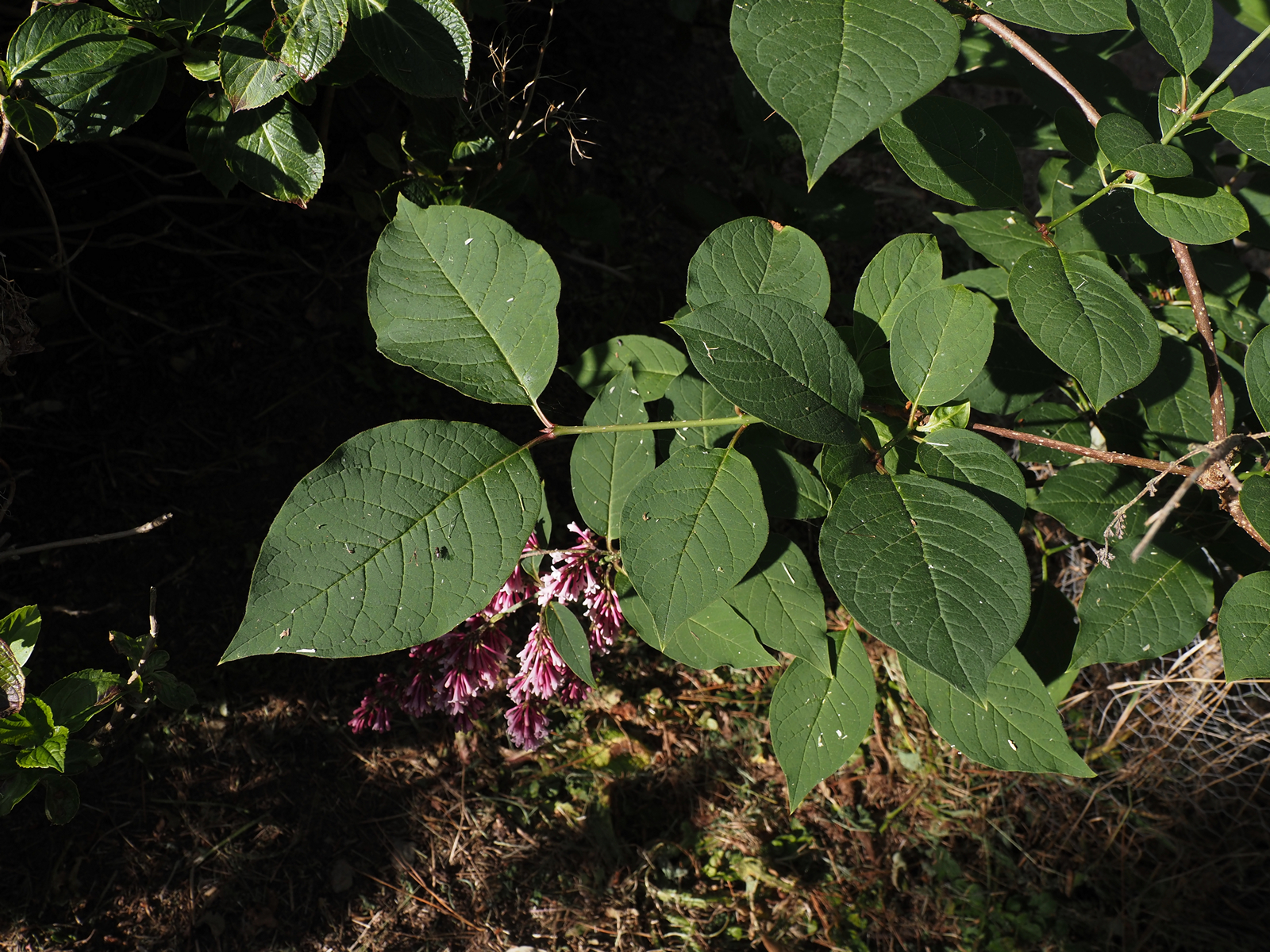
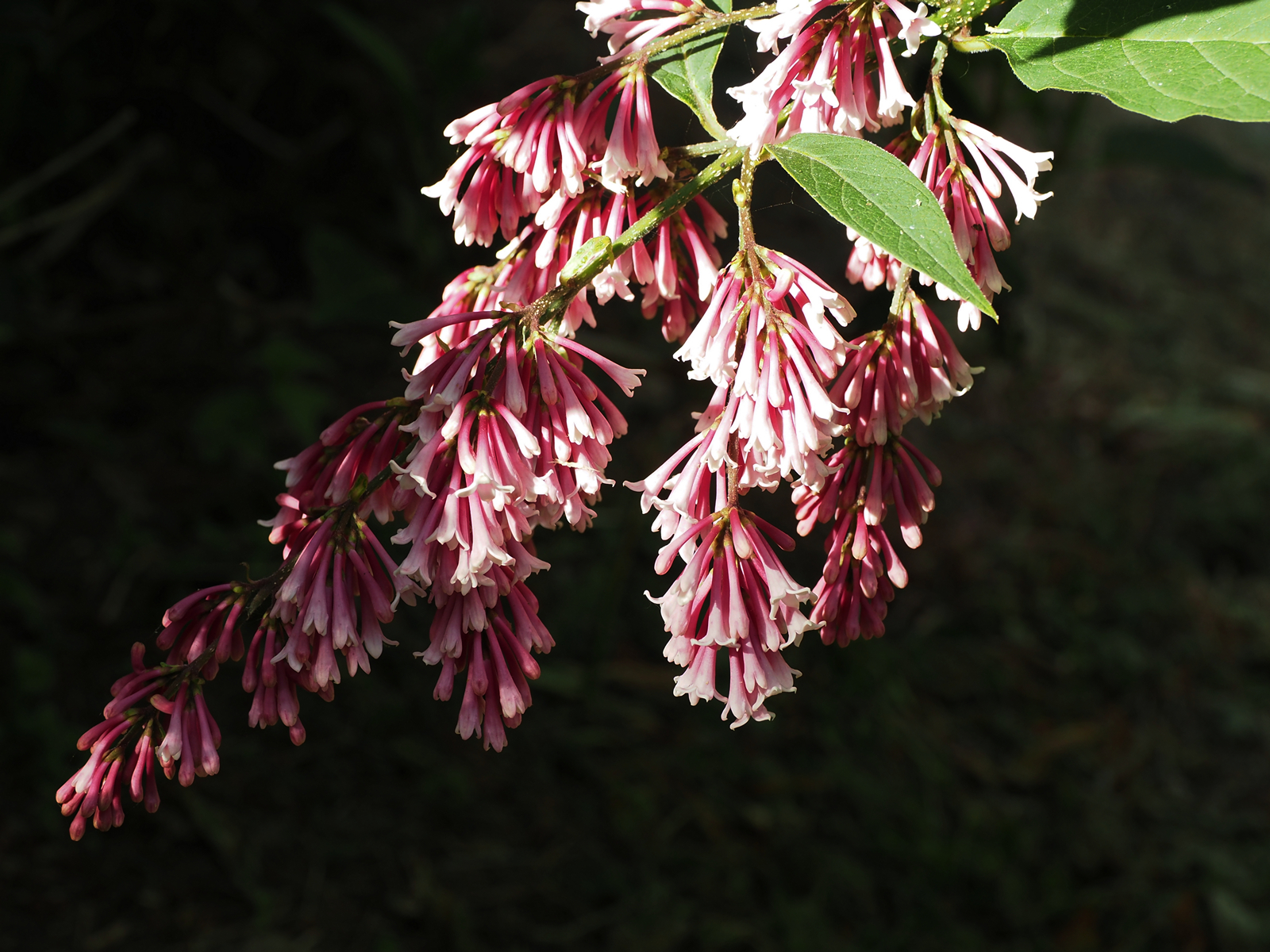
Syringa komarowii with its very distinct leaves and first racemes of flowers. We have seen three species of syringa in flower in the last week – all pink and not that different! Scented and good in mid-June though and this one has leaves you would not confuse with any other species (I may stand corrected!).
It is called ash dieback disease for a reason. Is this tree recovering? I have seen one or two bad ones today on a drive around but this horror is not properly established here YET!