


2026 – CHW (images to follow)
2025 – CHW
Colin French was surveying in the cliff fields to the west of the Coastguards Hut when he found a single Early Pink Orchid. Remarkably it was an albino form which, in 40 years of surveying the Flora of Cornwall, he had never seen.


2024 – CHW
Quite a big row about the Plant of the Year Competition. Unbeknown to all the entrants the RHS decided to judge the competition on the basis of the original photographs sent with the application rather than at the show at a formal presentation with the plant available. The problem was that some entries were pictures in a field or a garden, usually in full flower, while other pictures were of the plant as you saw it on display at Chelsea. The 3rd placed entry had no flowers on at all at the show and would certainly not have got to the podium if the judges had seen the plant itself.
Our entry of Hydrangea ‘Yulika’ was short listed but did not get a top 3 placing. It did however get a TV slot with Rachel de Thame on the Sunday night which sold 100 plants online very quickly. We sold twice this at the show itself in only a couple of days.


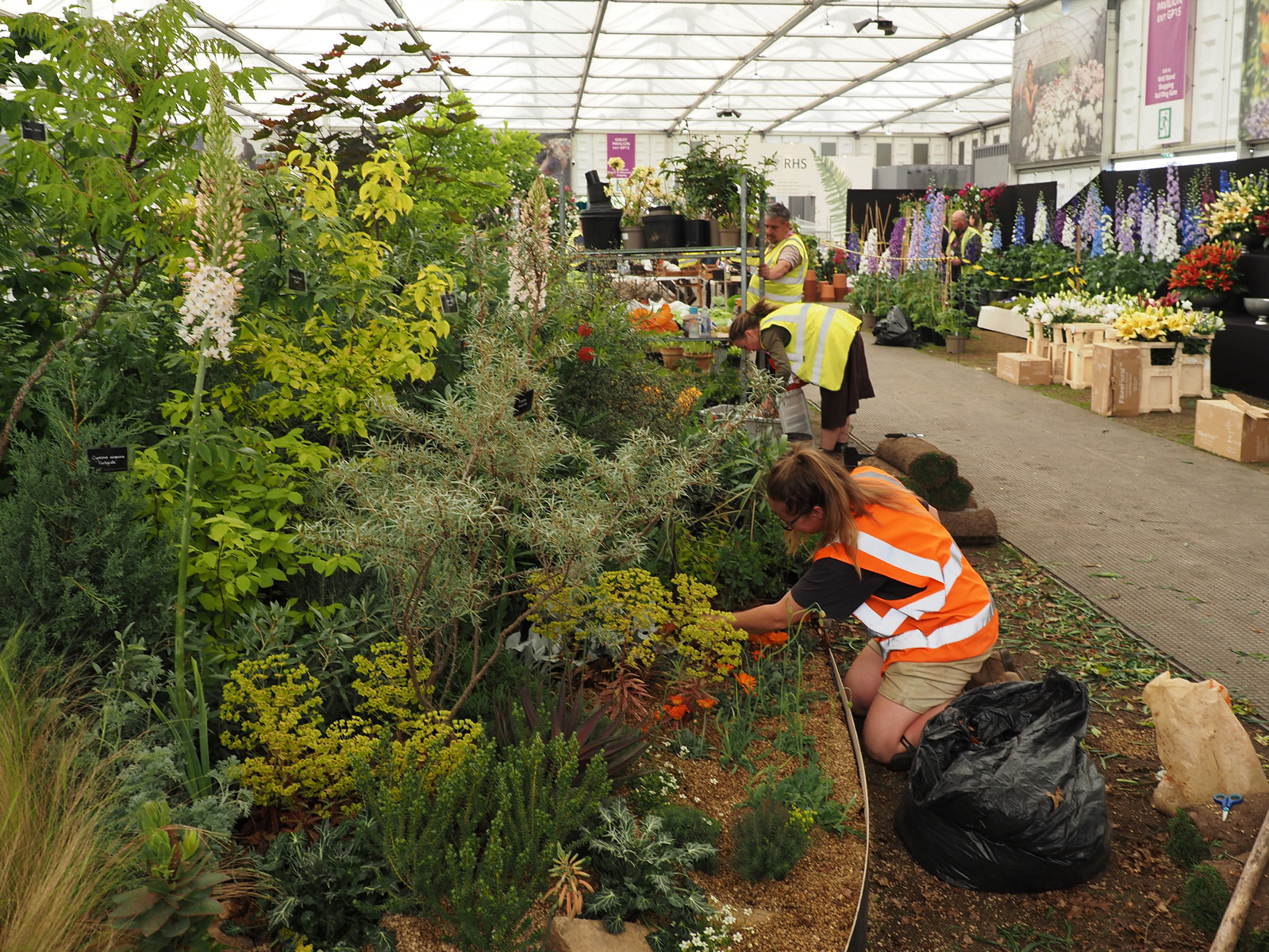
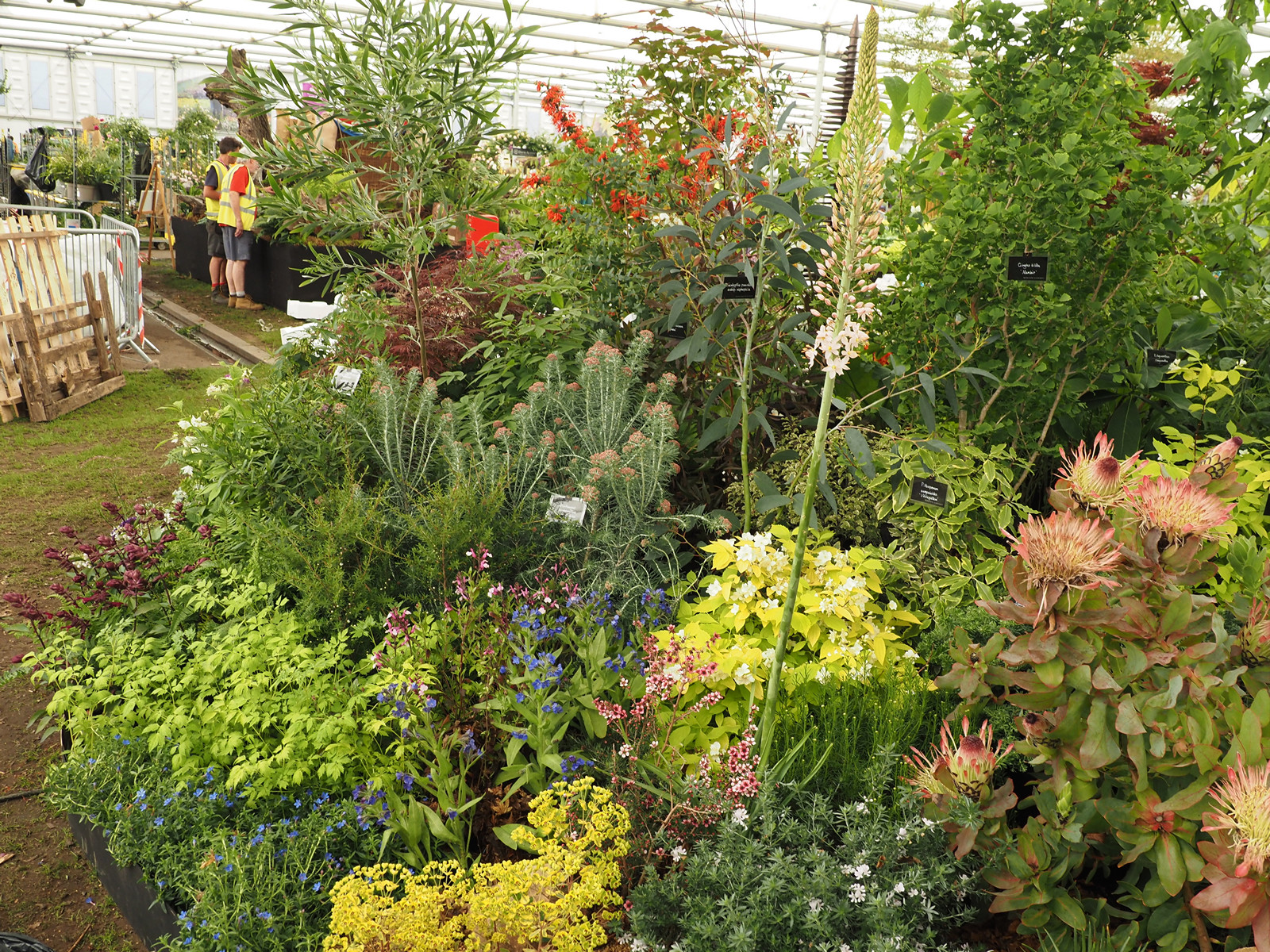
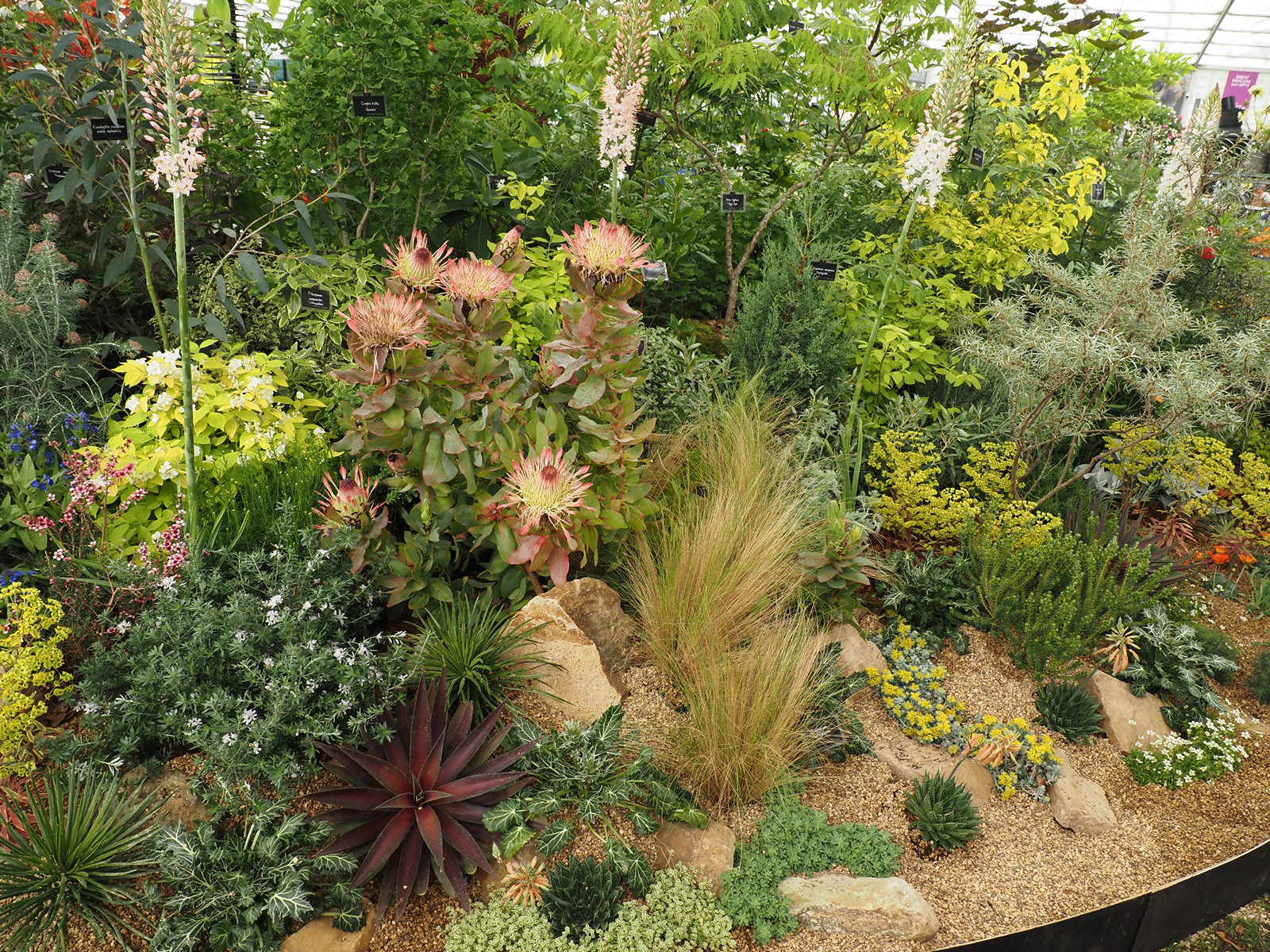
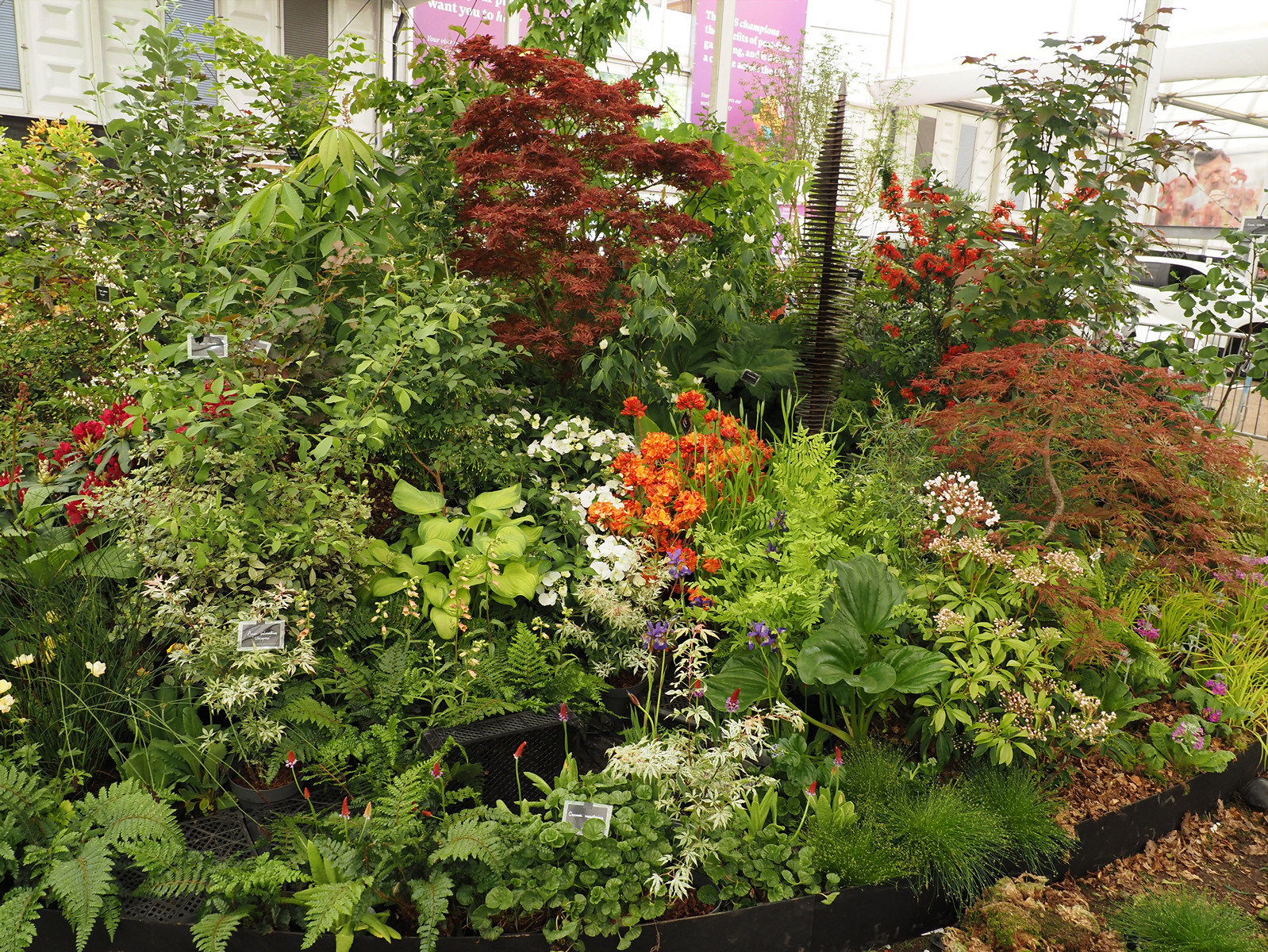
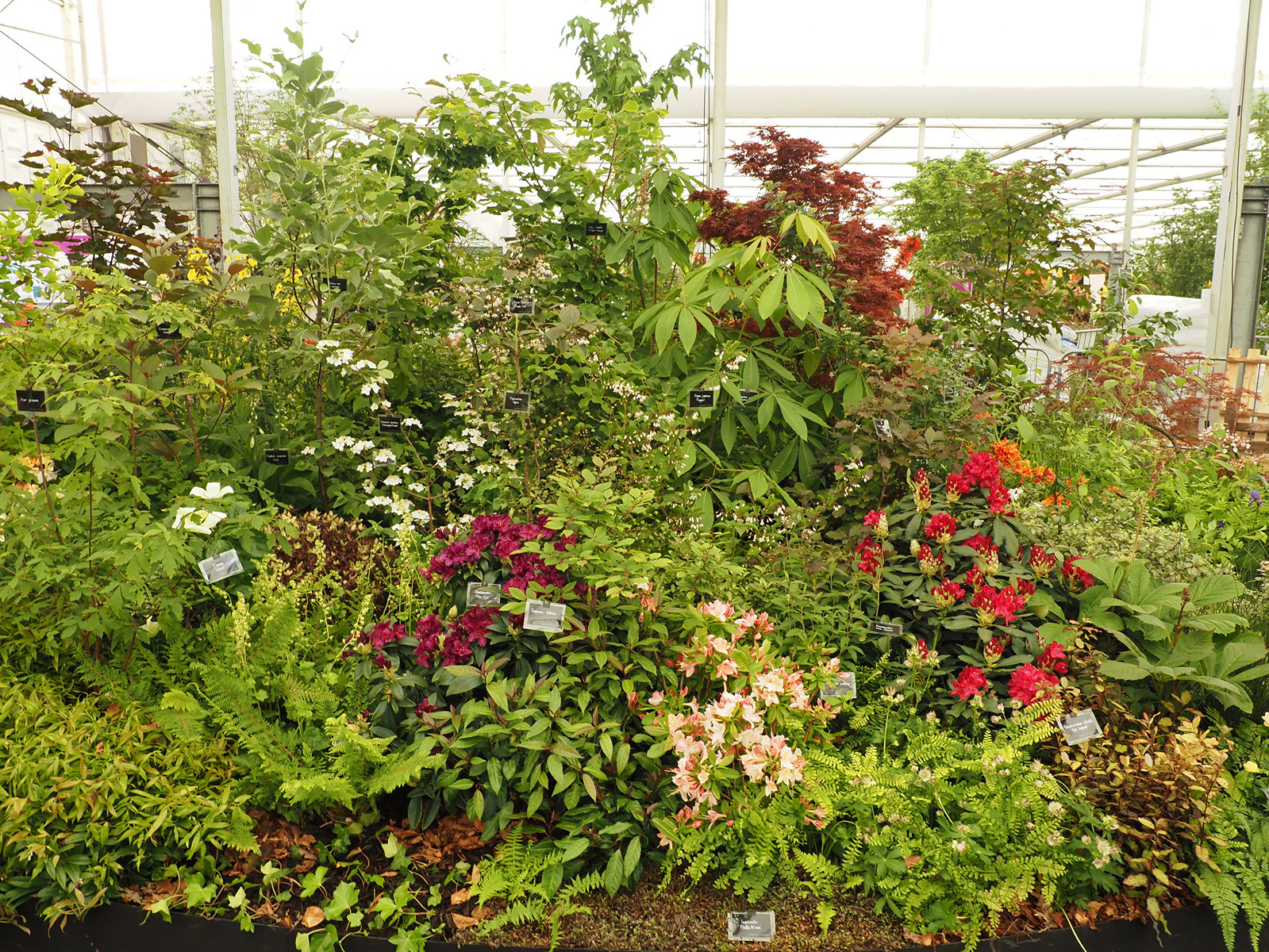
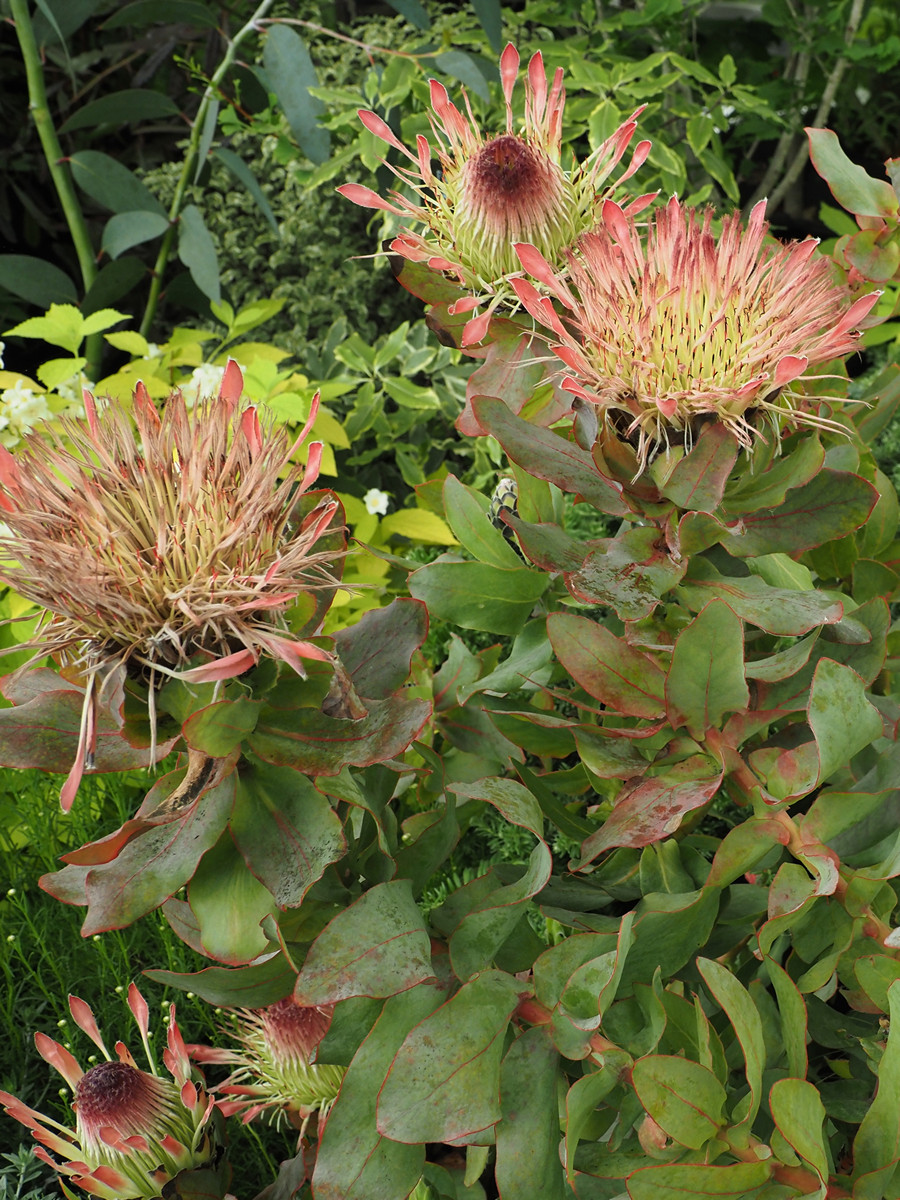
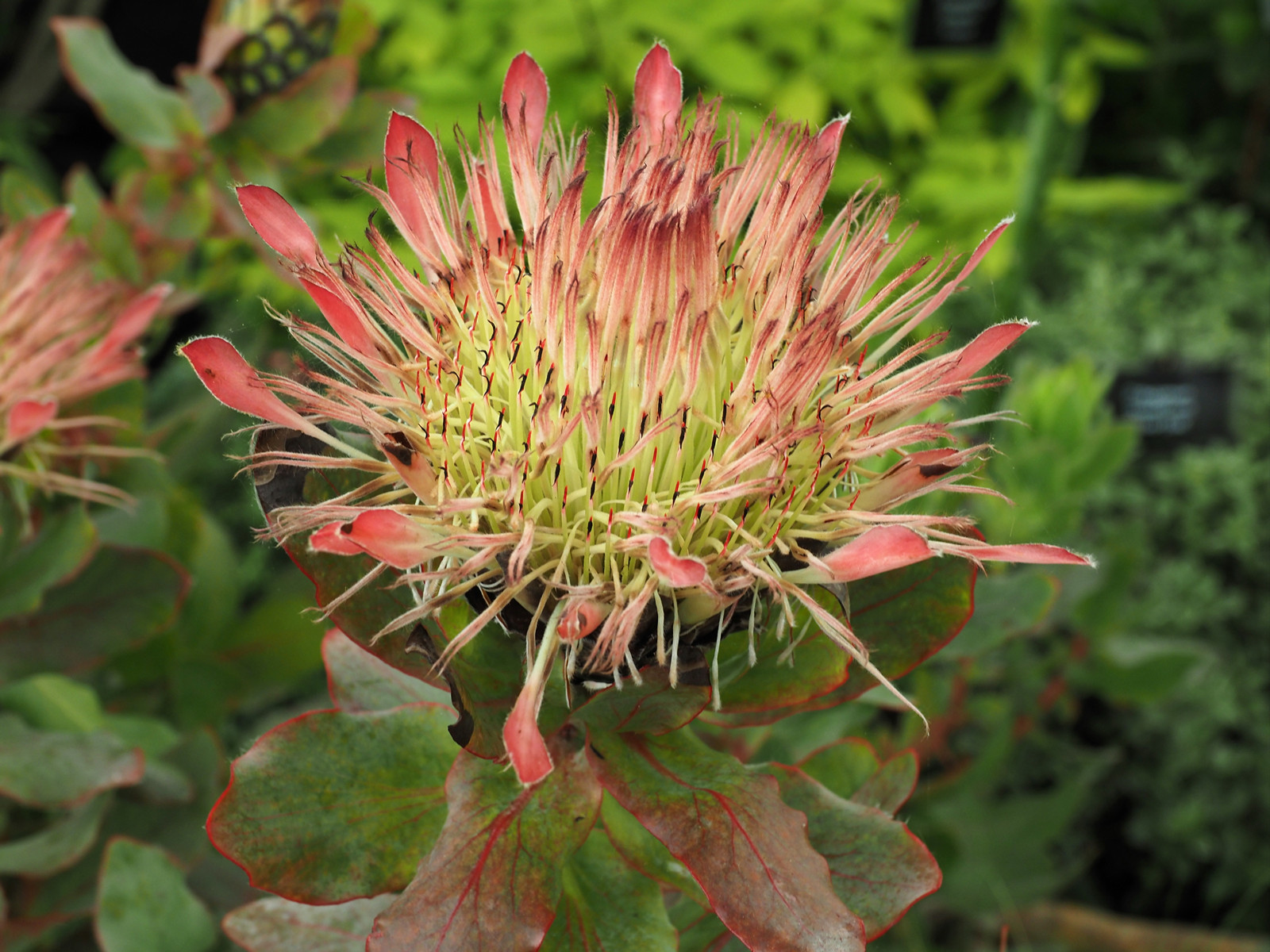
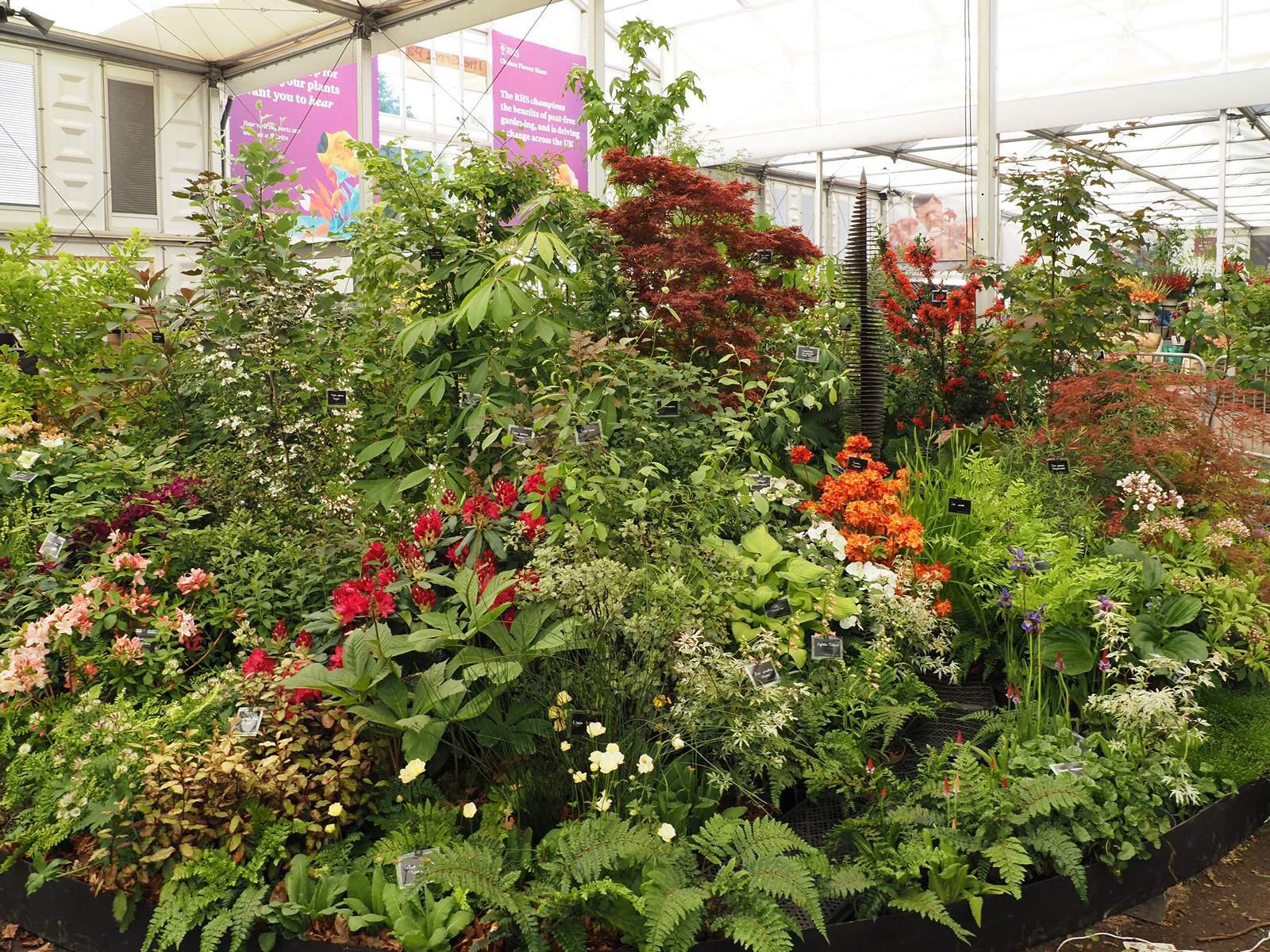
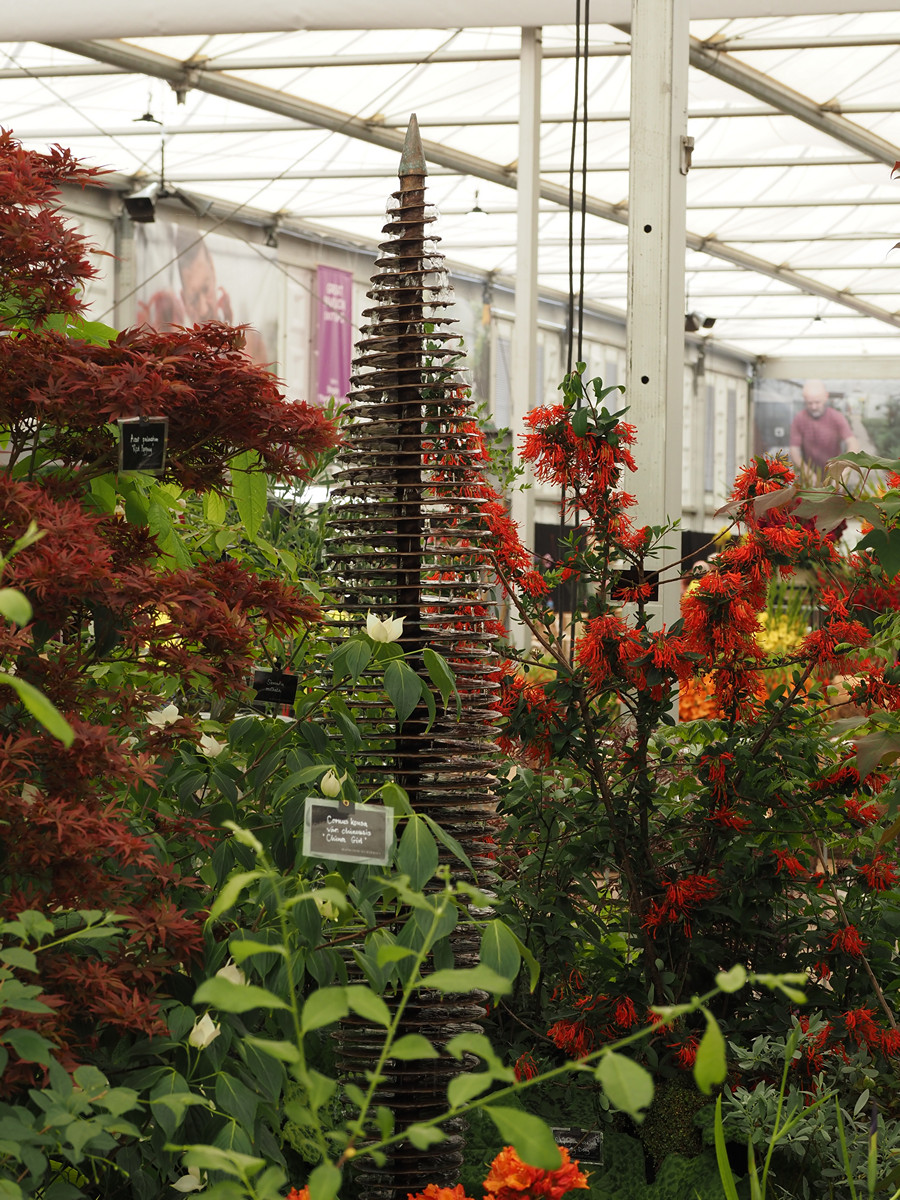
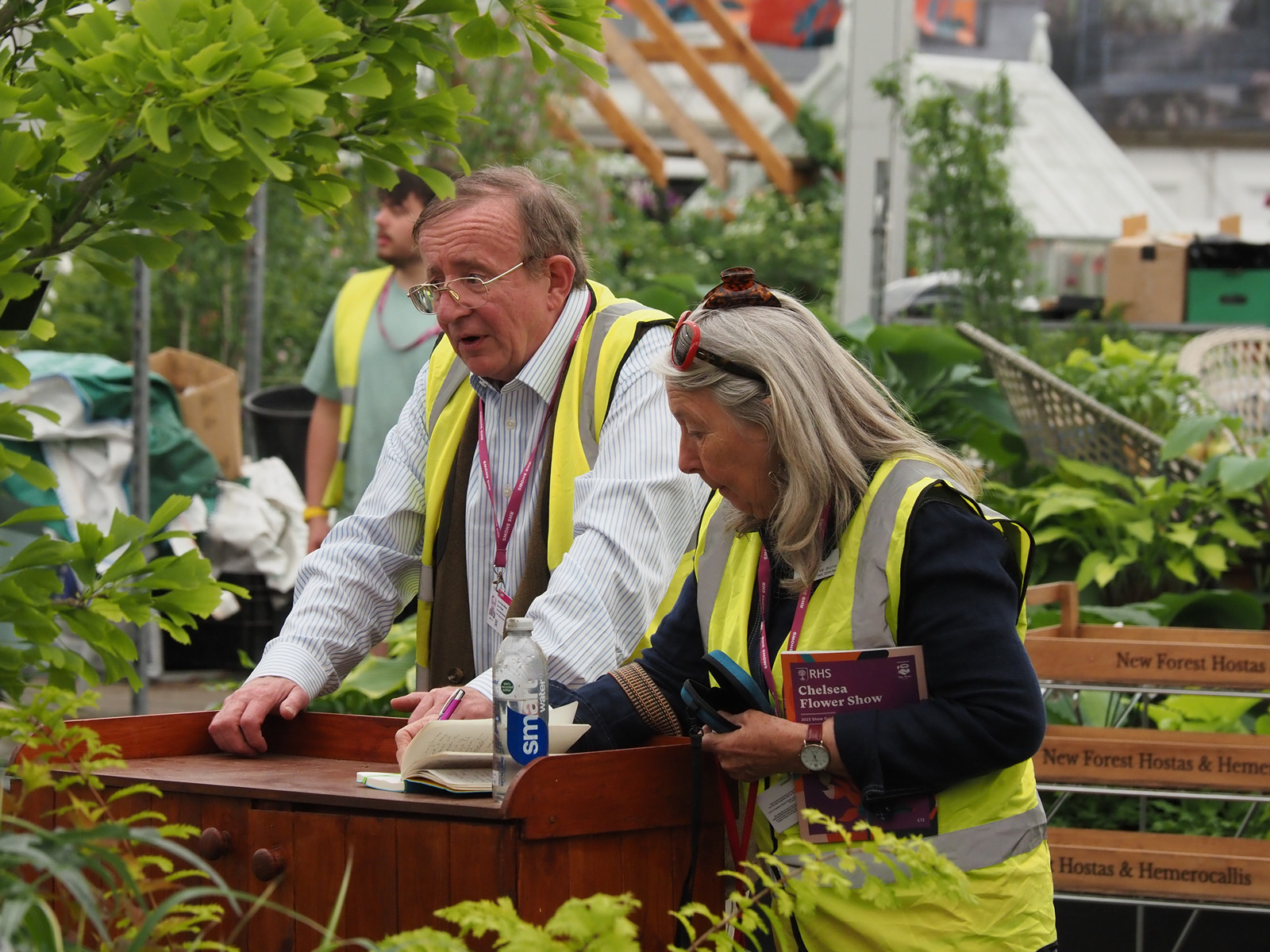
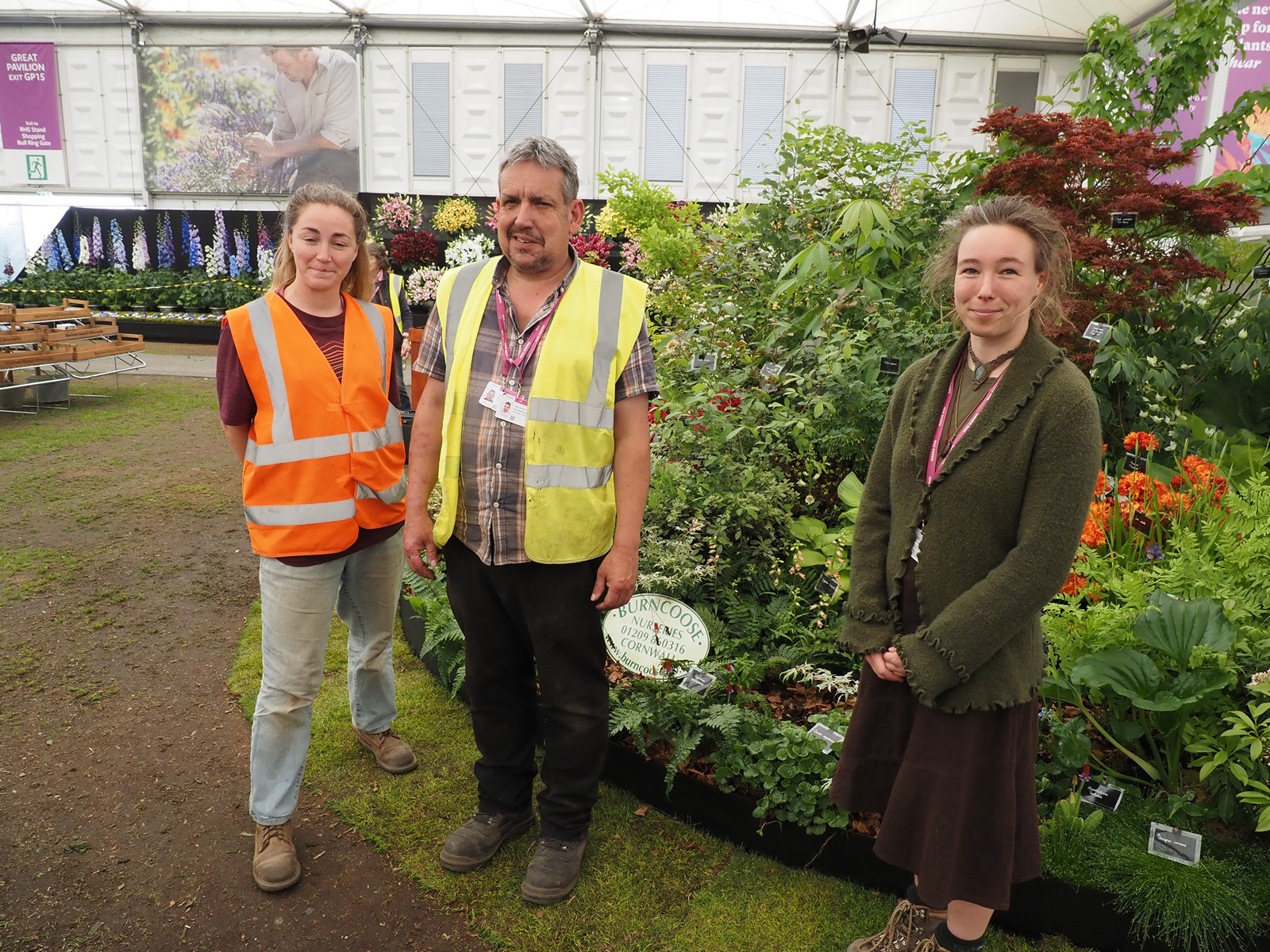
The Chelsea stand takes shape.

2022 – CHW
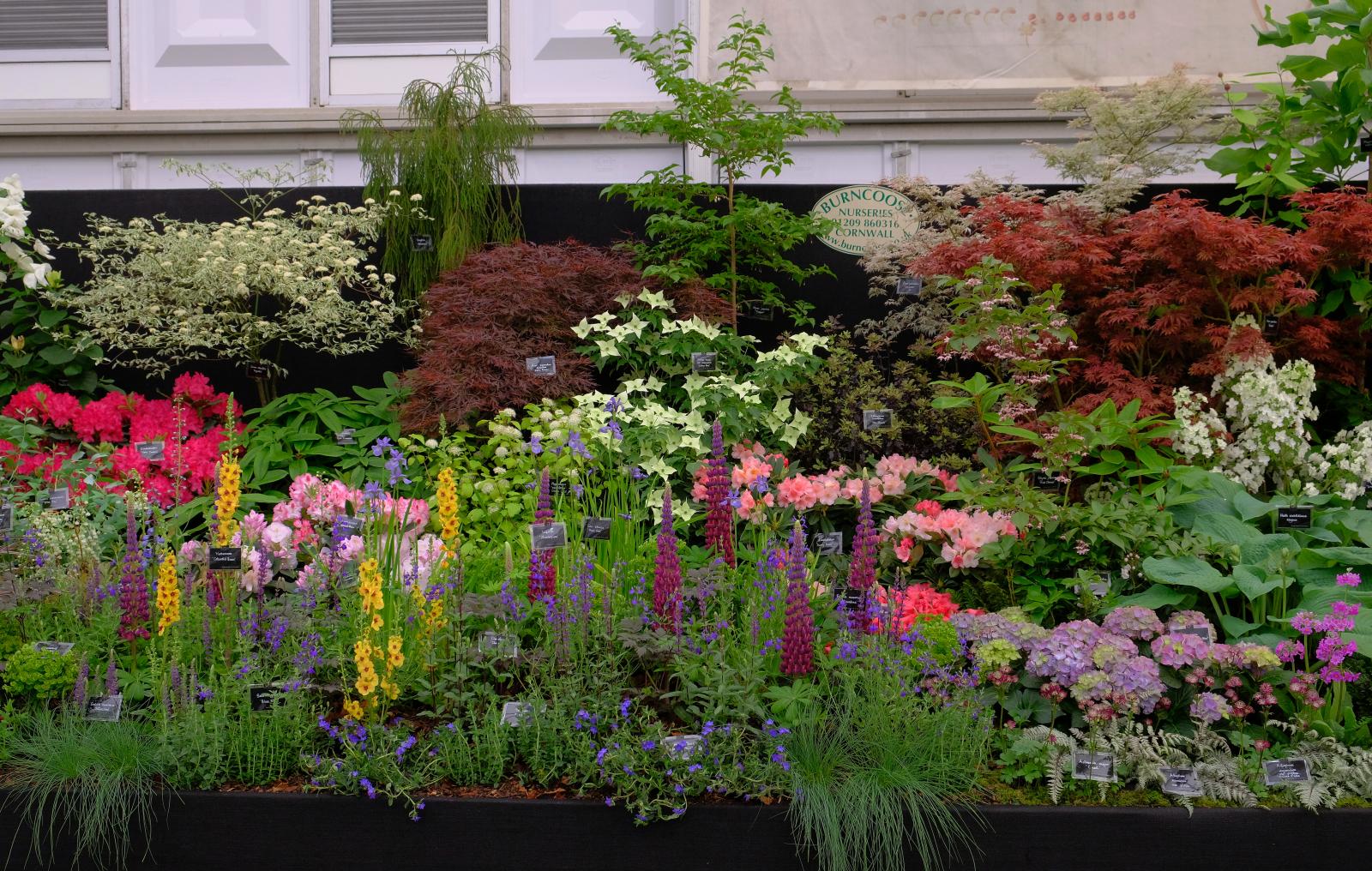
Many more dead flowers to pick off on the iris which is looking worse than ever today. The good news is that we present to the judges (up to 150 and 200 RHS committee members and plant trials judges) with pictures of the plant rather than the plant itself tomorrow. The pictures are better than the reality in the pot. We are allowed to swop the chosen plant for a better one but think we will do this tomorrow first thing when it goes on public display with the 20 other finalists (thankfully) next door to the Burncoose stand.
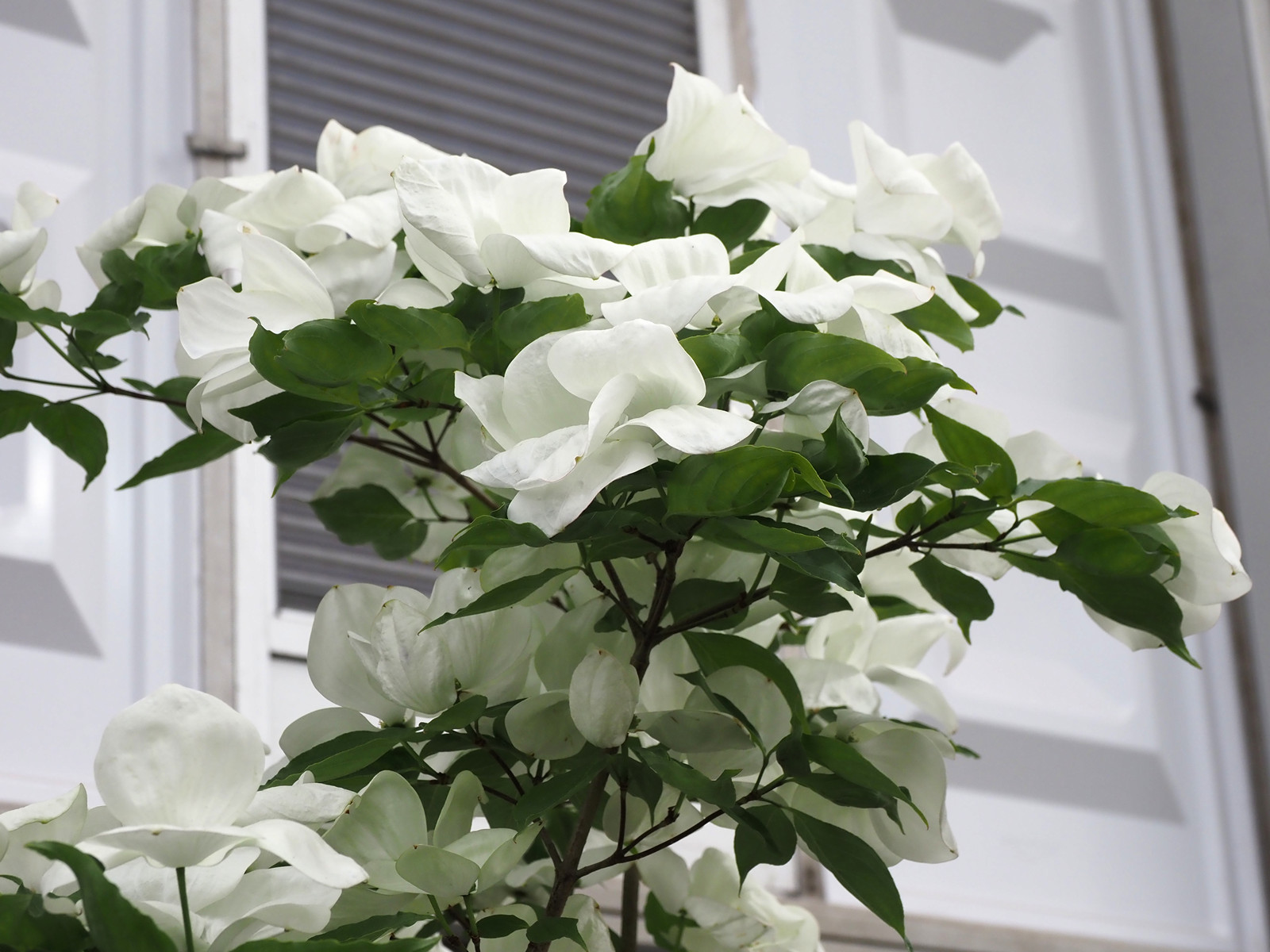
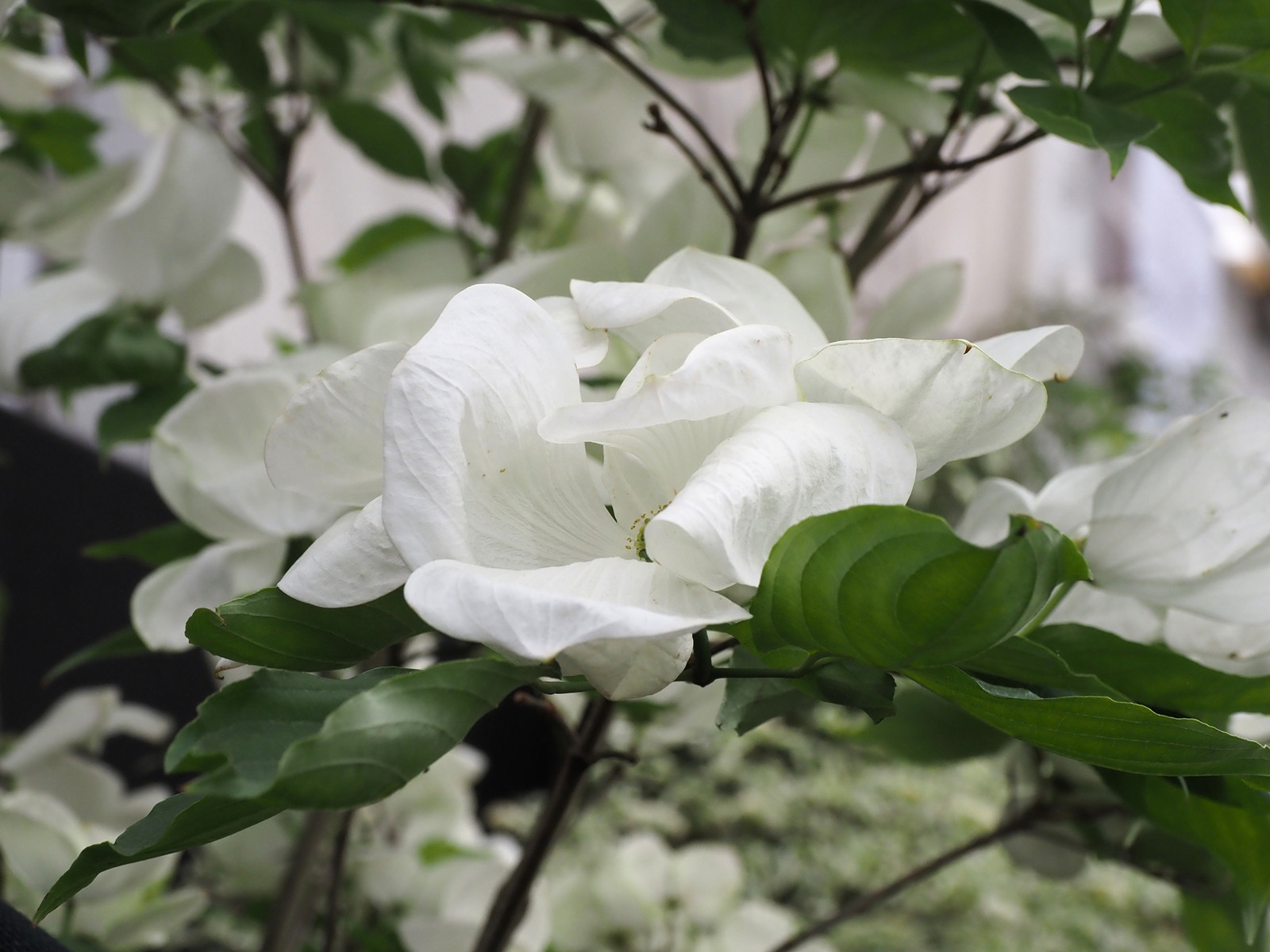
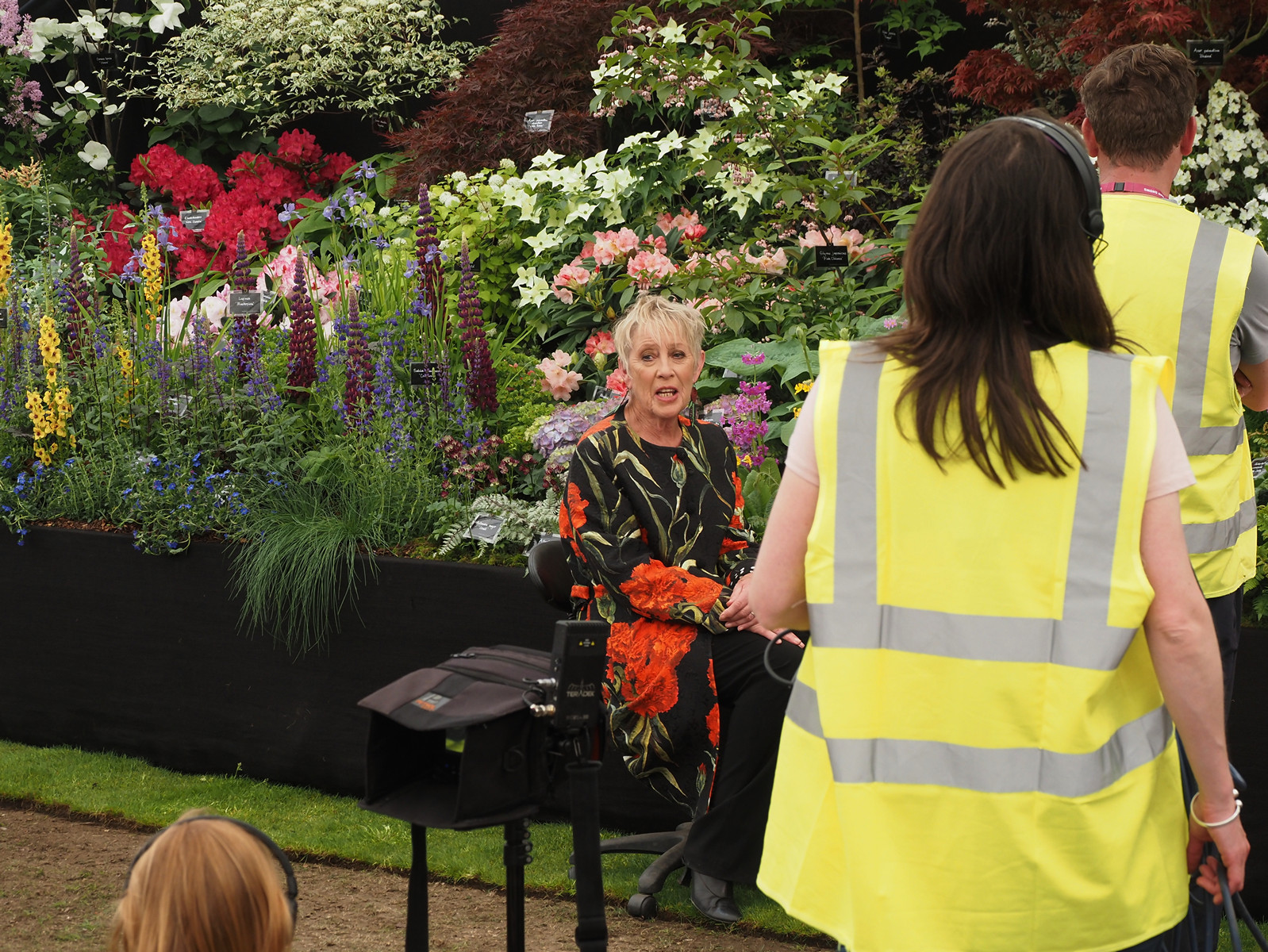
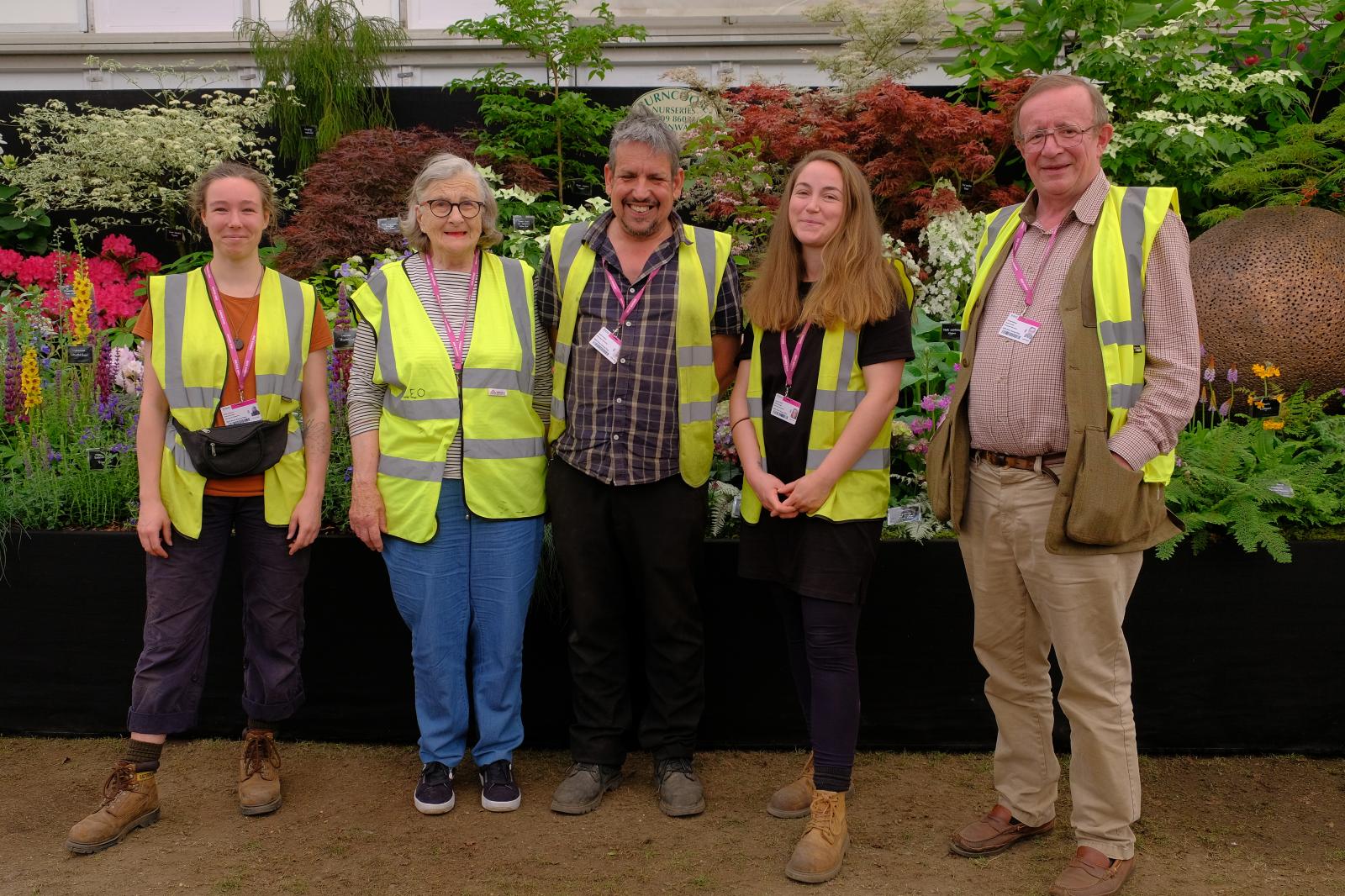
The best plant on our stand is Cornus ‘Venus’ with gigantic bracts. Can we get enough plants to supply the impending rush of orders? Only by the autumn.
2021 – CHW
Susyn Andrews and Brian Schrire are finally able to get here to sort out the final identification of the holly collection. In a long but happy afternoon we catalogue every holly in the garden and await a few more formal confirmations of identity once Susyn gets back to her notes and files some of which may still be at Kew. Then my holly article will finally be ready for publication.
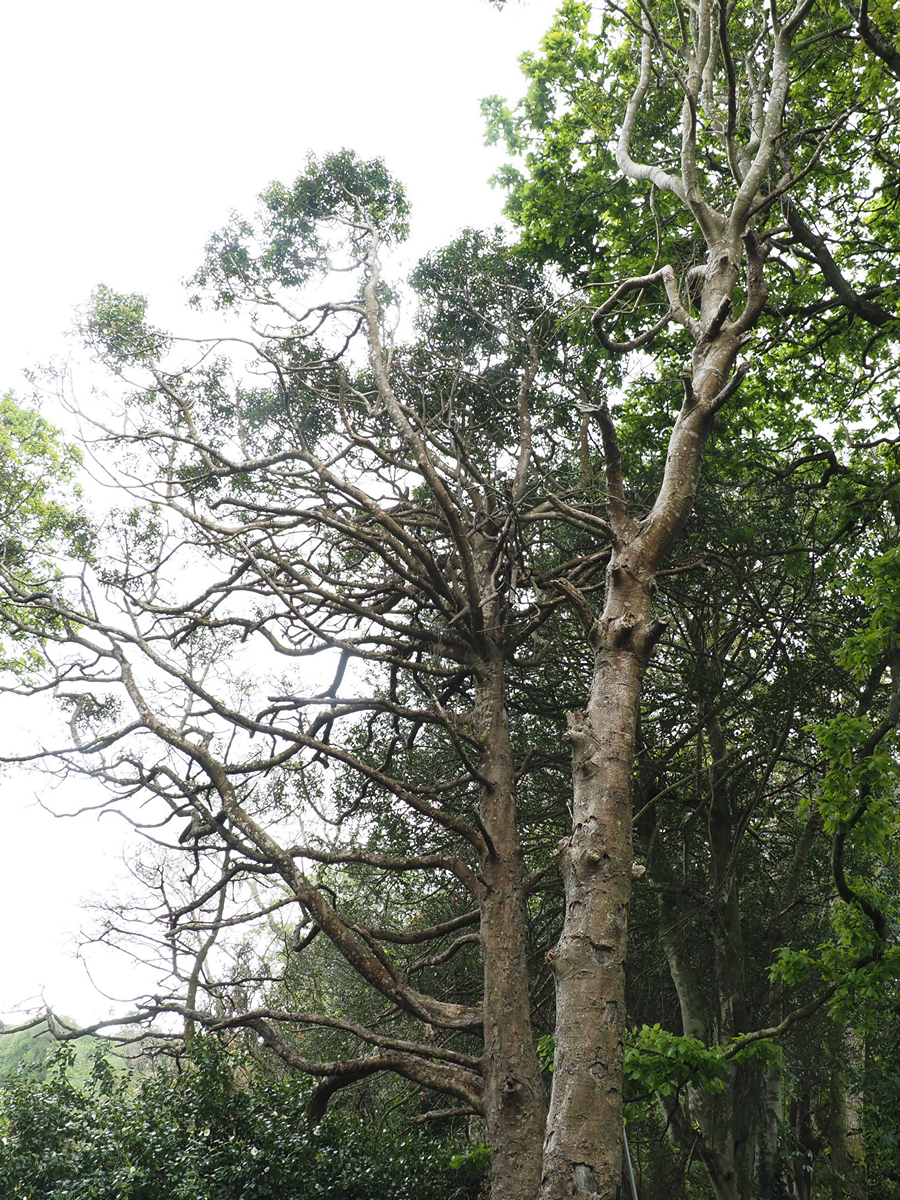
We start with the puzzle that has plagued us for decades and caused endless confusion. Four of the five ancient ilex are confirmed as Ilex dipyrena and the fifth as Ilex kingiana. Here is the trunk of one of the Ilex dipyrena.

We locate four other Ilex kingiana of varying ages, but mostly 60 to 80 years old, in Area 03 together with evidence of others on old plans which have since died.
These are pictures of the two elderly and gnarled Ilex dipyrena above the greenhouse which only have any leaves at great height.

We then move on to look at other plants and self-sown seedlings in the garden which turn out to have more or less characteristics of both I. dipyrena and I. kingiana to a greater or lesser extent. I. kingiana seeds heavily as here but we did find green berries under a younger plant of I. dipyrena thus demonstrating that cross pollination can and has taken place.This pictures shows Ilex kingiana in berry with a strong influence of I. dipyrena in the leaf shape.
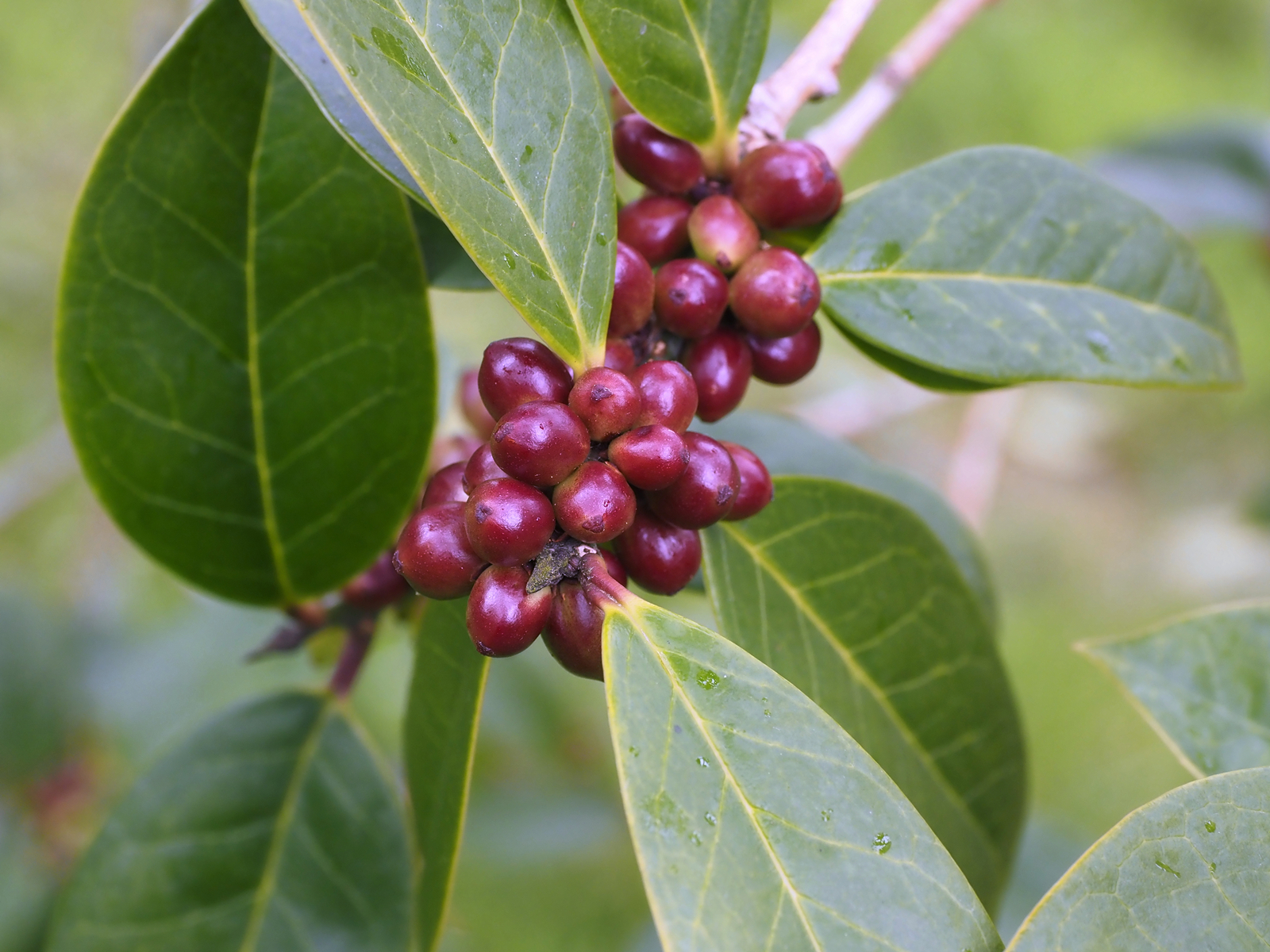


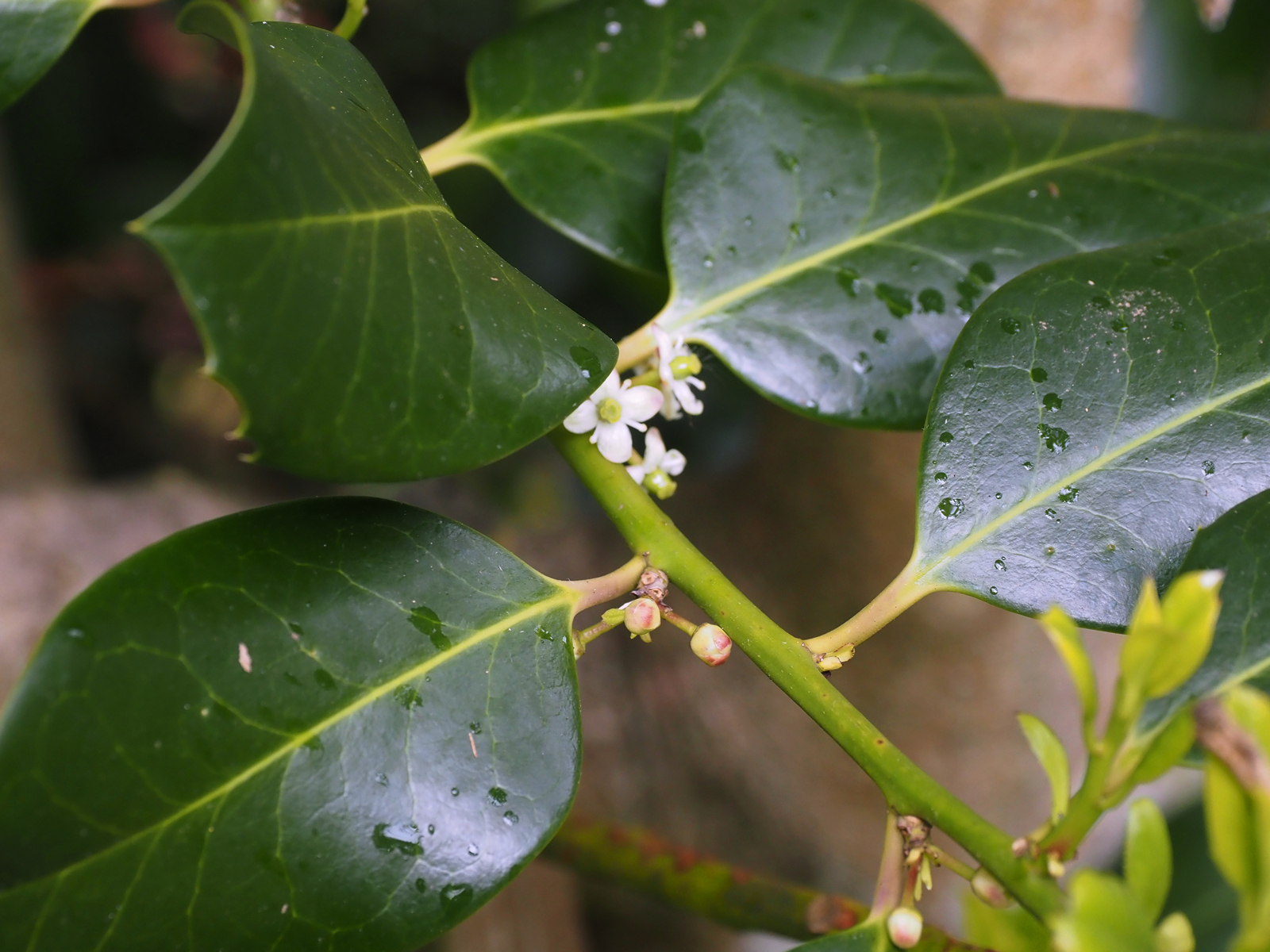
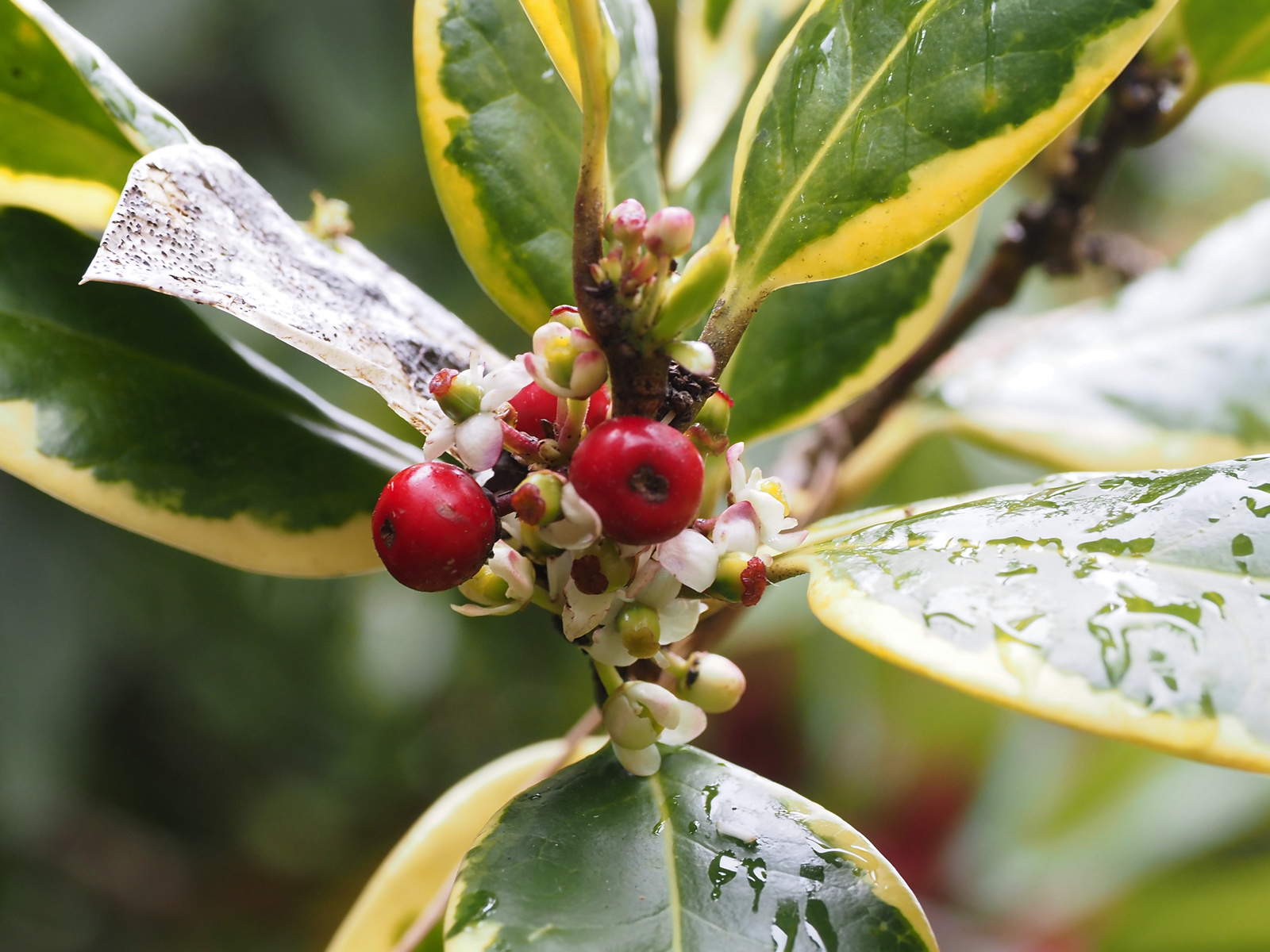
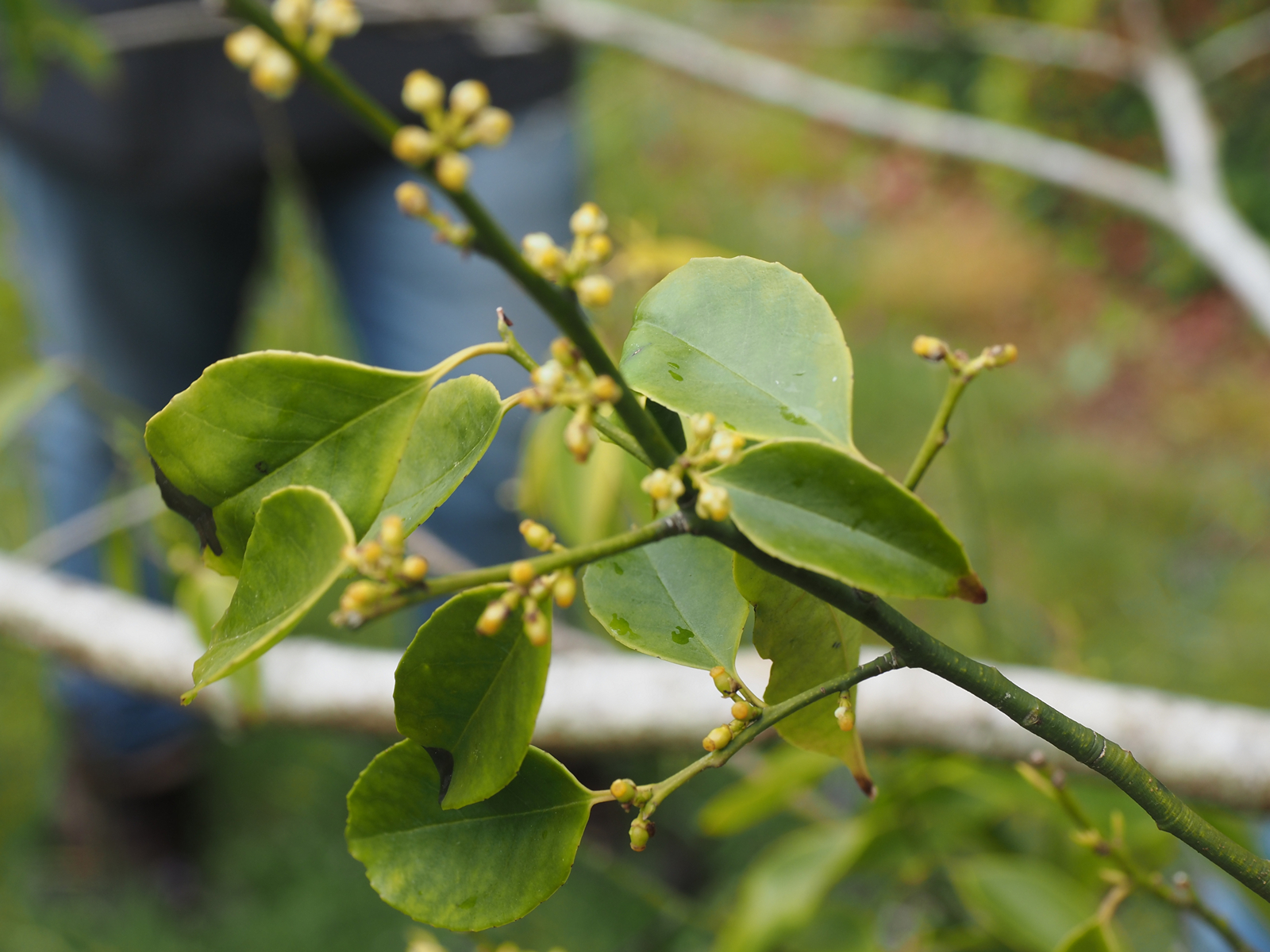
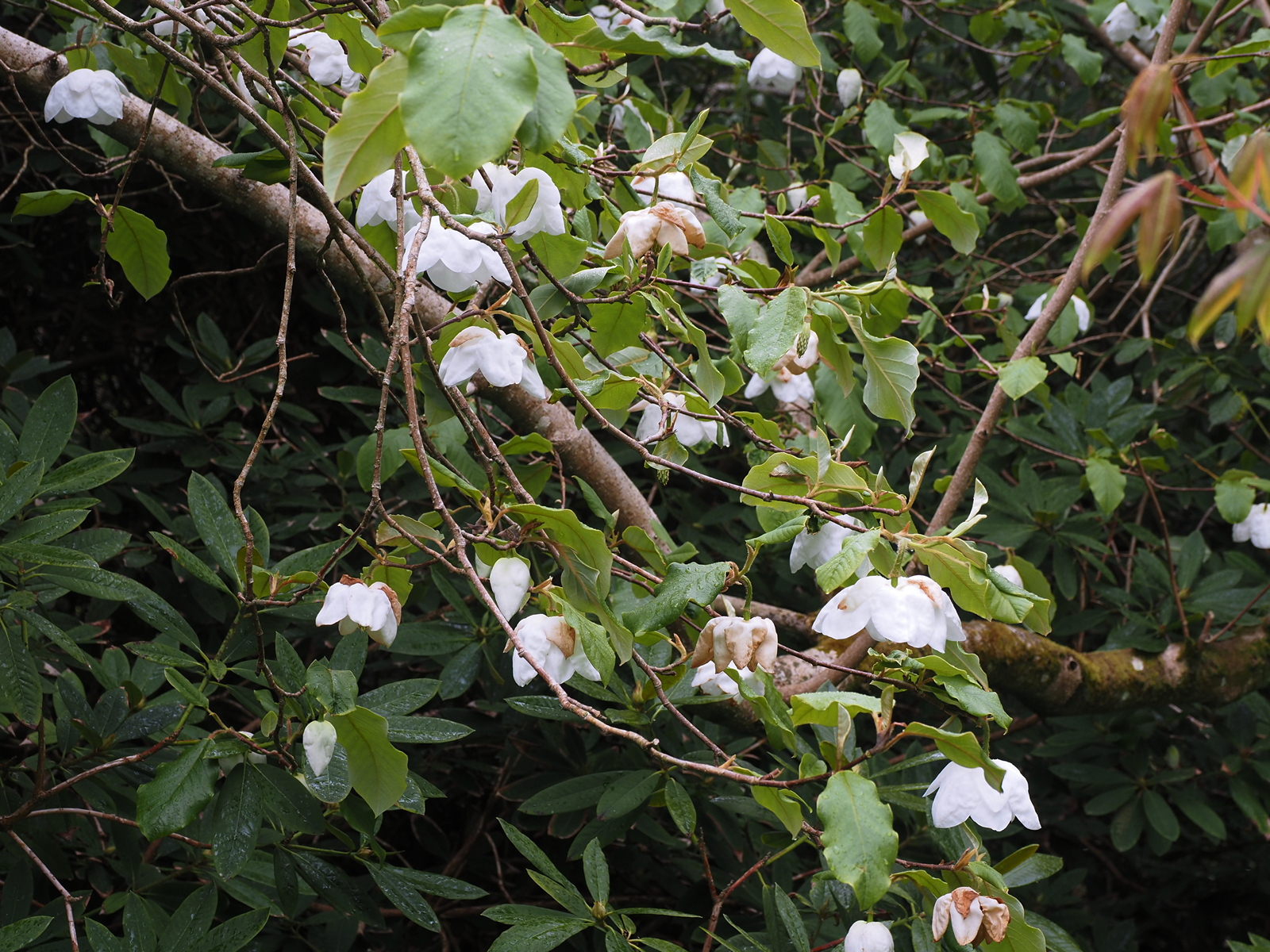
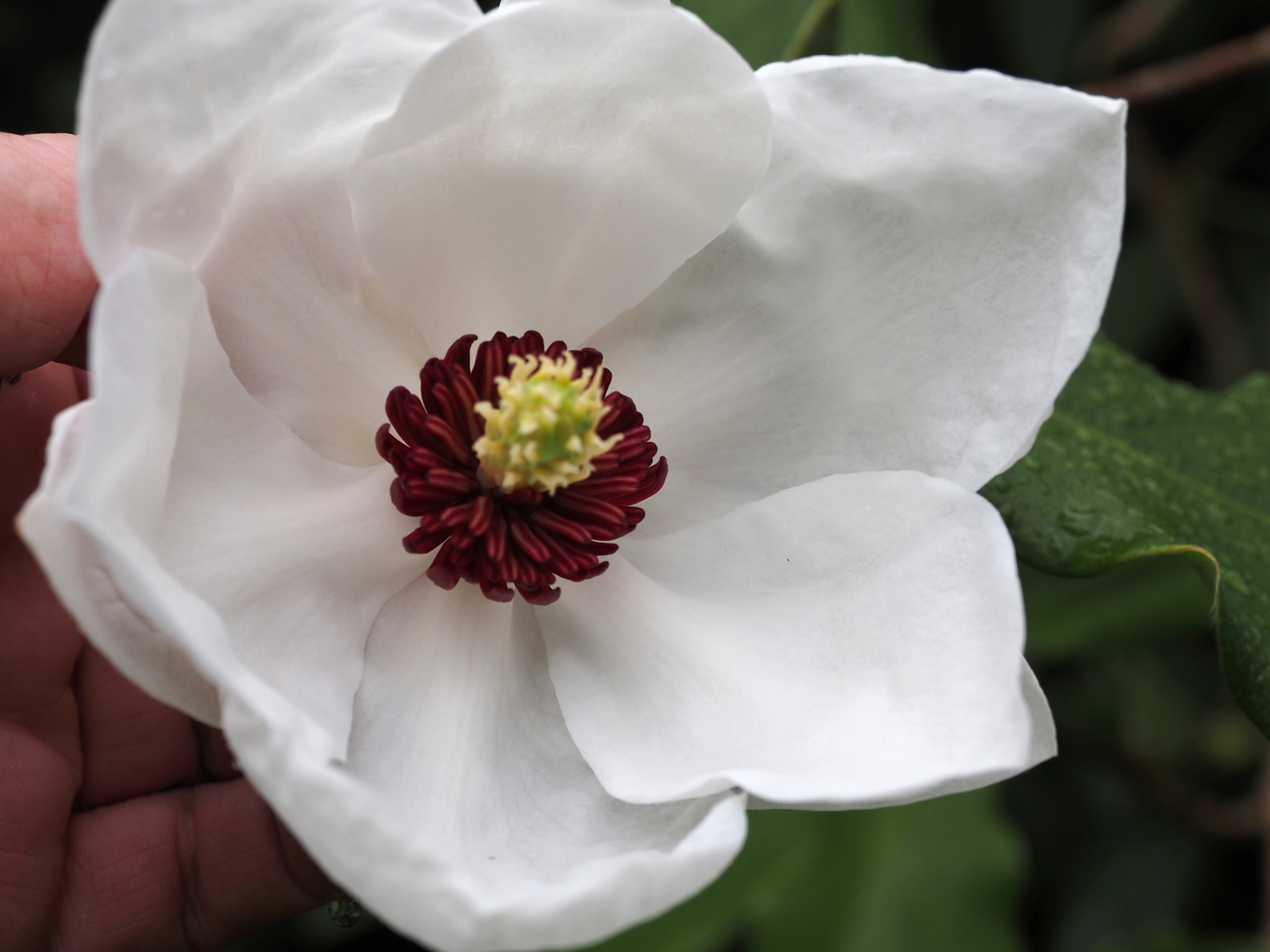

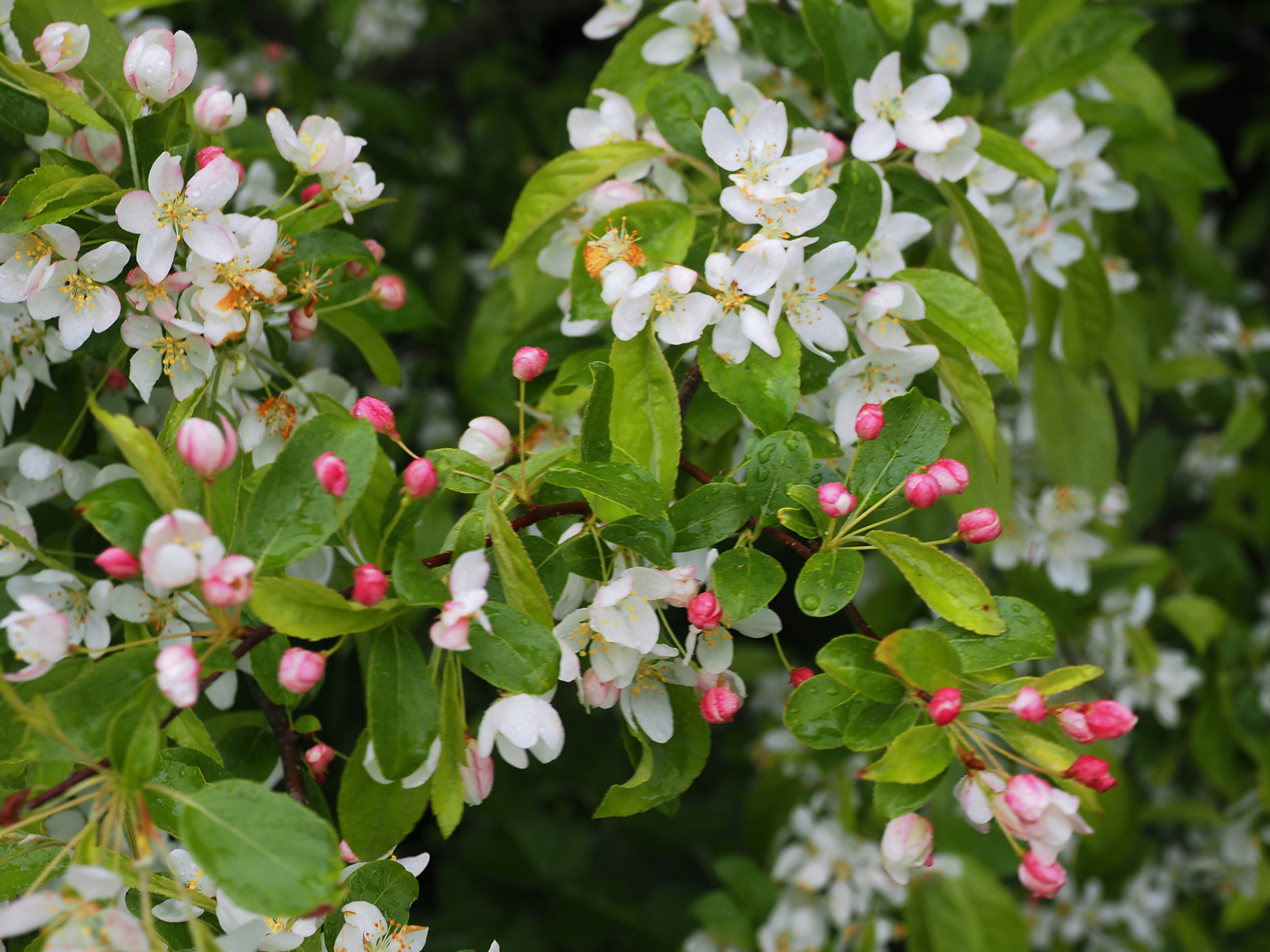
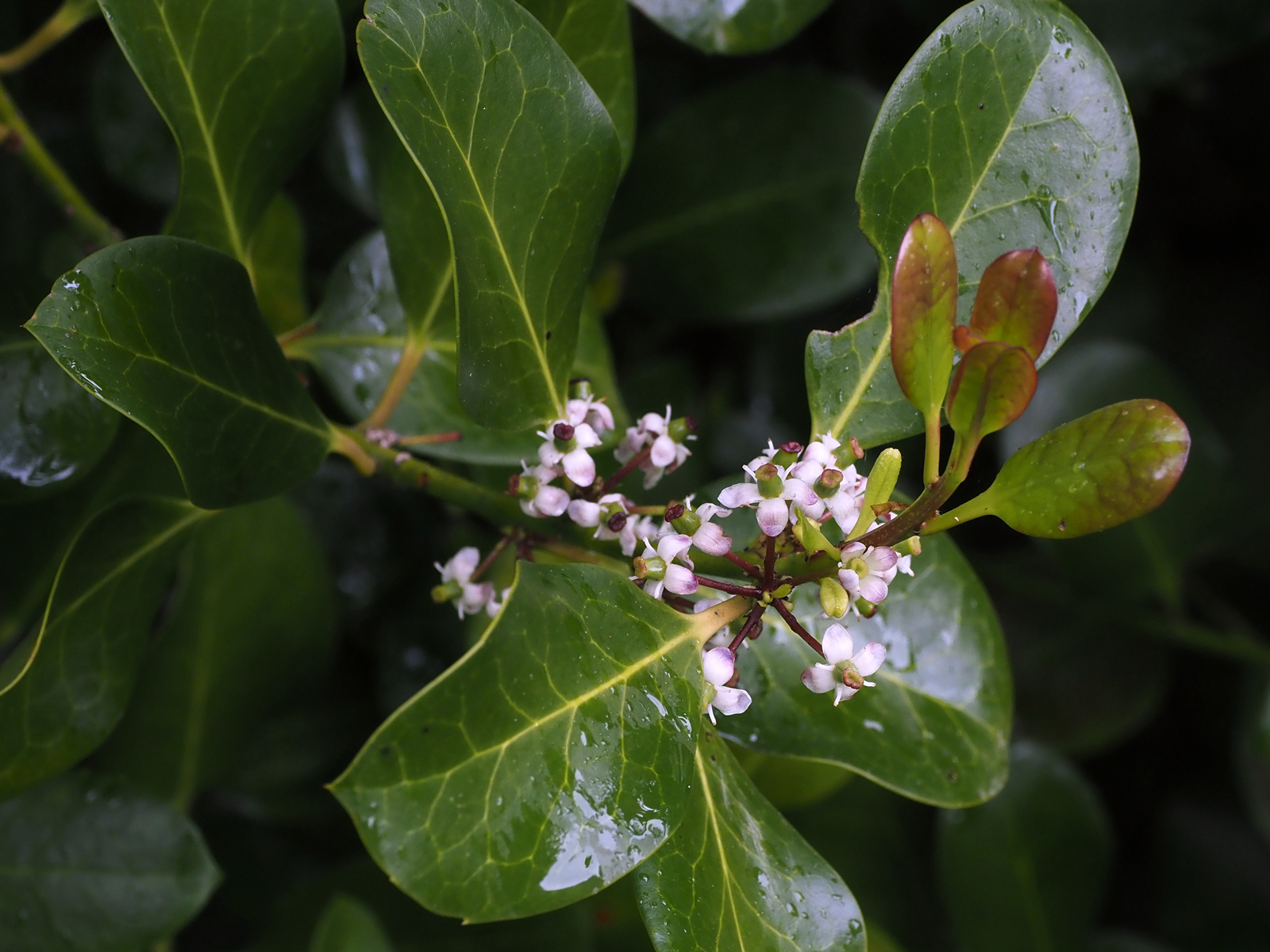
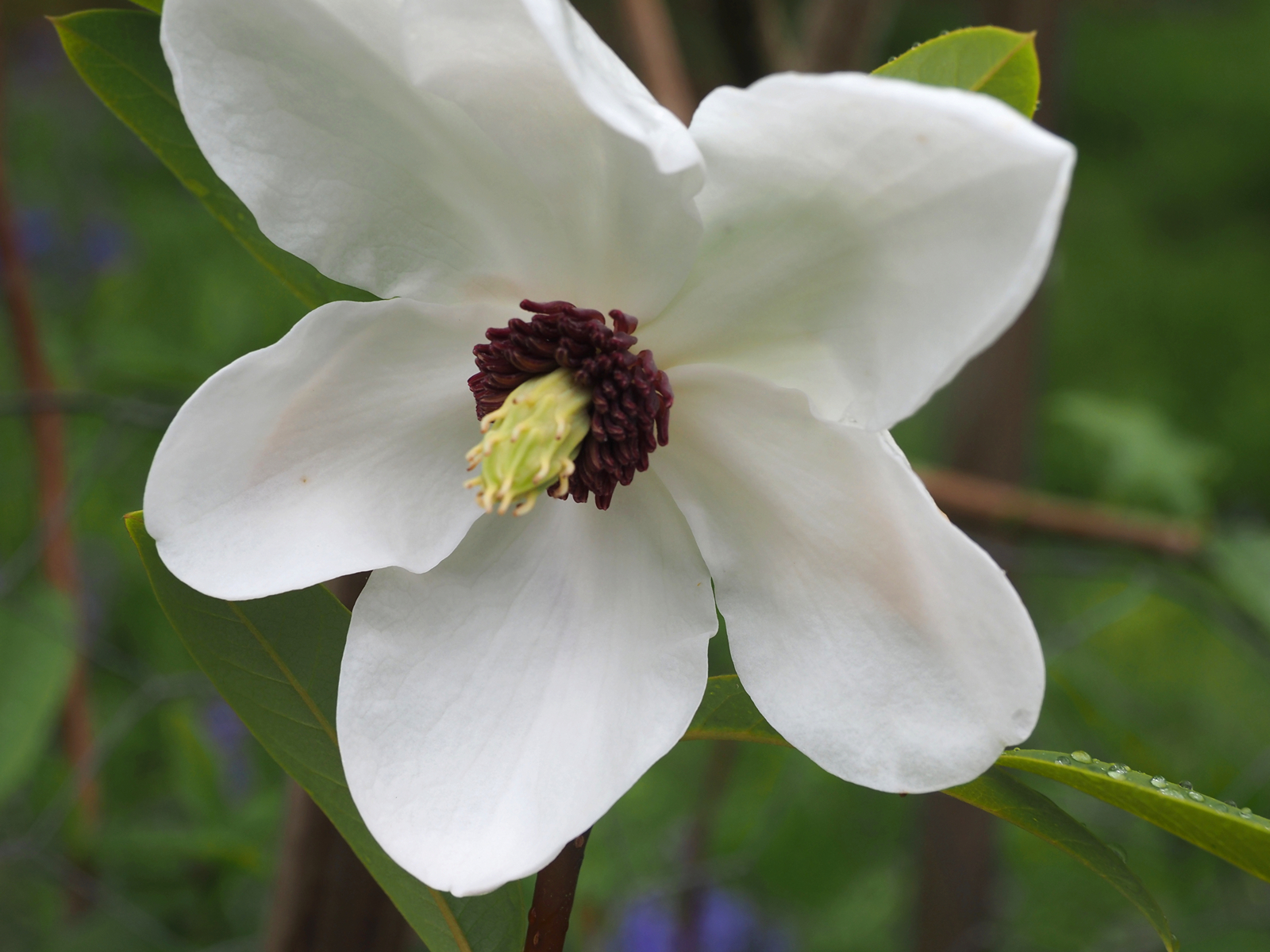


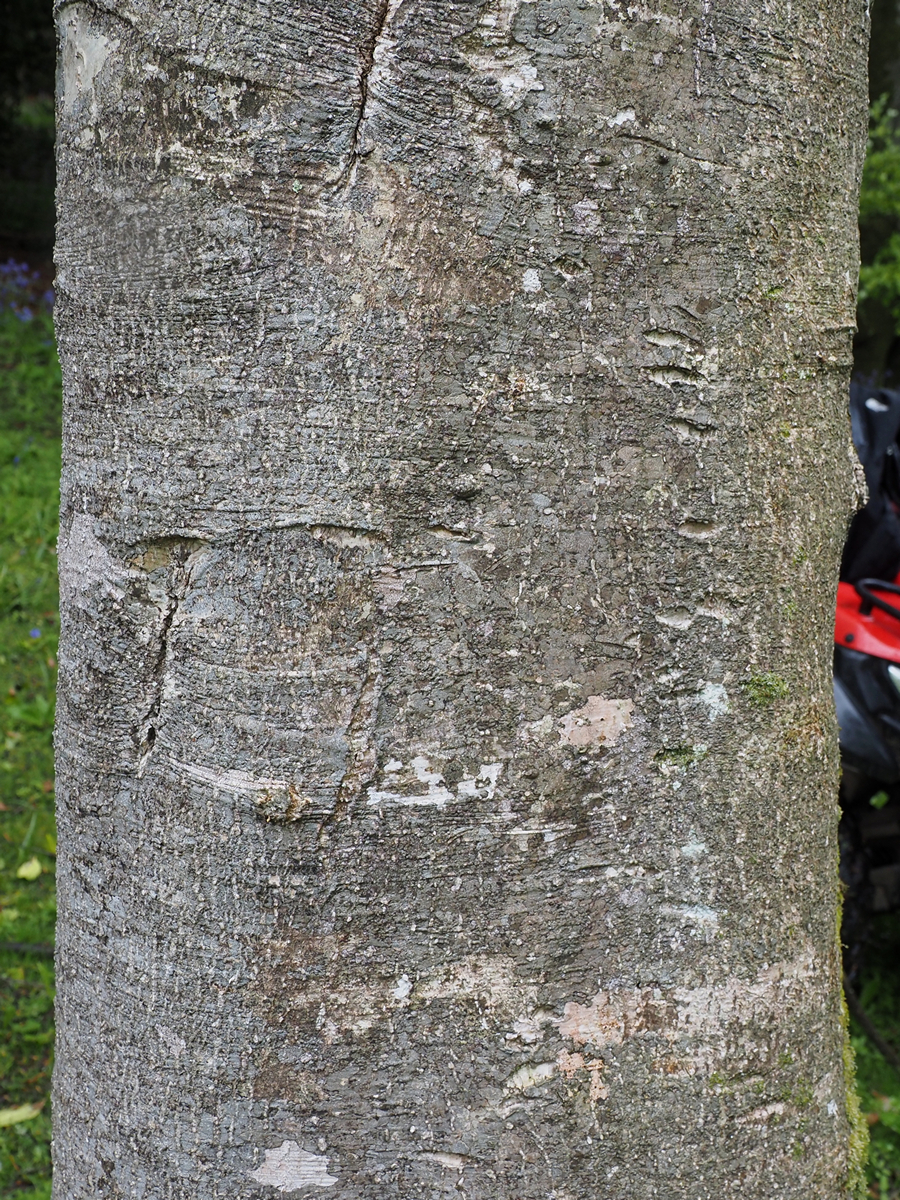
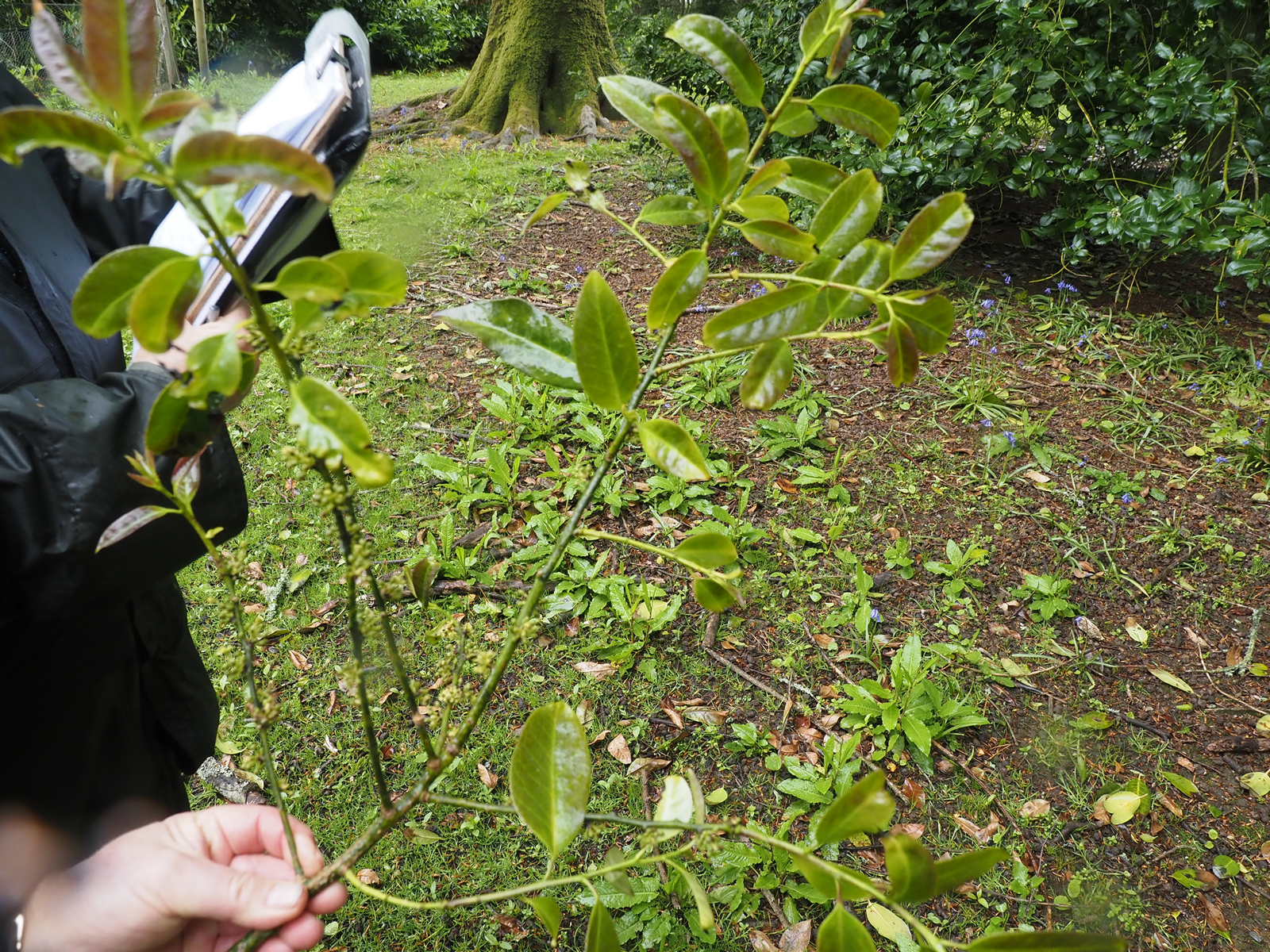
The other major name change is that our second supposed Ilex cornuta is in fact Ilex cornuta ‘Burfordii’.Ilex opaca (we have two upon finding a second one below Hovel Cart Road) had its identity confirmed.
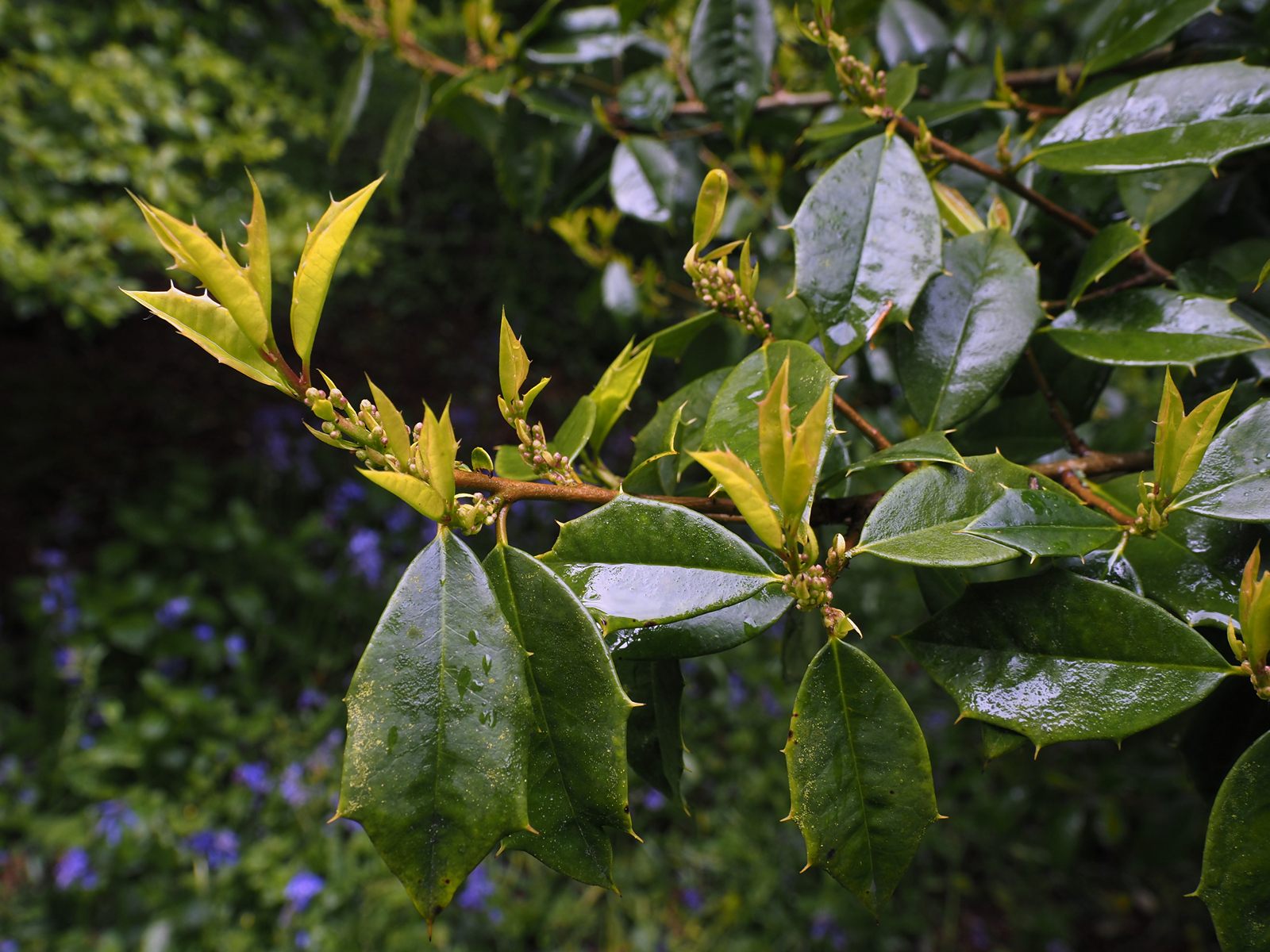
In the Rookery we find a variable big leafed ilex which is clearly a natural hybrid between Ilex perado subsp. platyphylla and an Ilex x altaclerensis variety. This needs further examination of the specimens collected.This is a homegrown seedling of Ilex kingiana in Penvergate which also has traces of Ilex dipyrena and merits further research.