A short visit from Julian Shaw, Senior Registrar for plant names at the RHS and also helping rewrite the Hilliers Manual.
He came to look at Parastyrax and Zanthoxylum. He is writing up the new classification for Zanthoxylum. A genus of 200 species if one includes tropical species. Some are trees, many are shrubs and even more resemble brambles. They sell well at Burncoose because of the culinary qualities of their fruits (peppers).
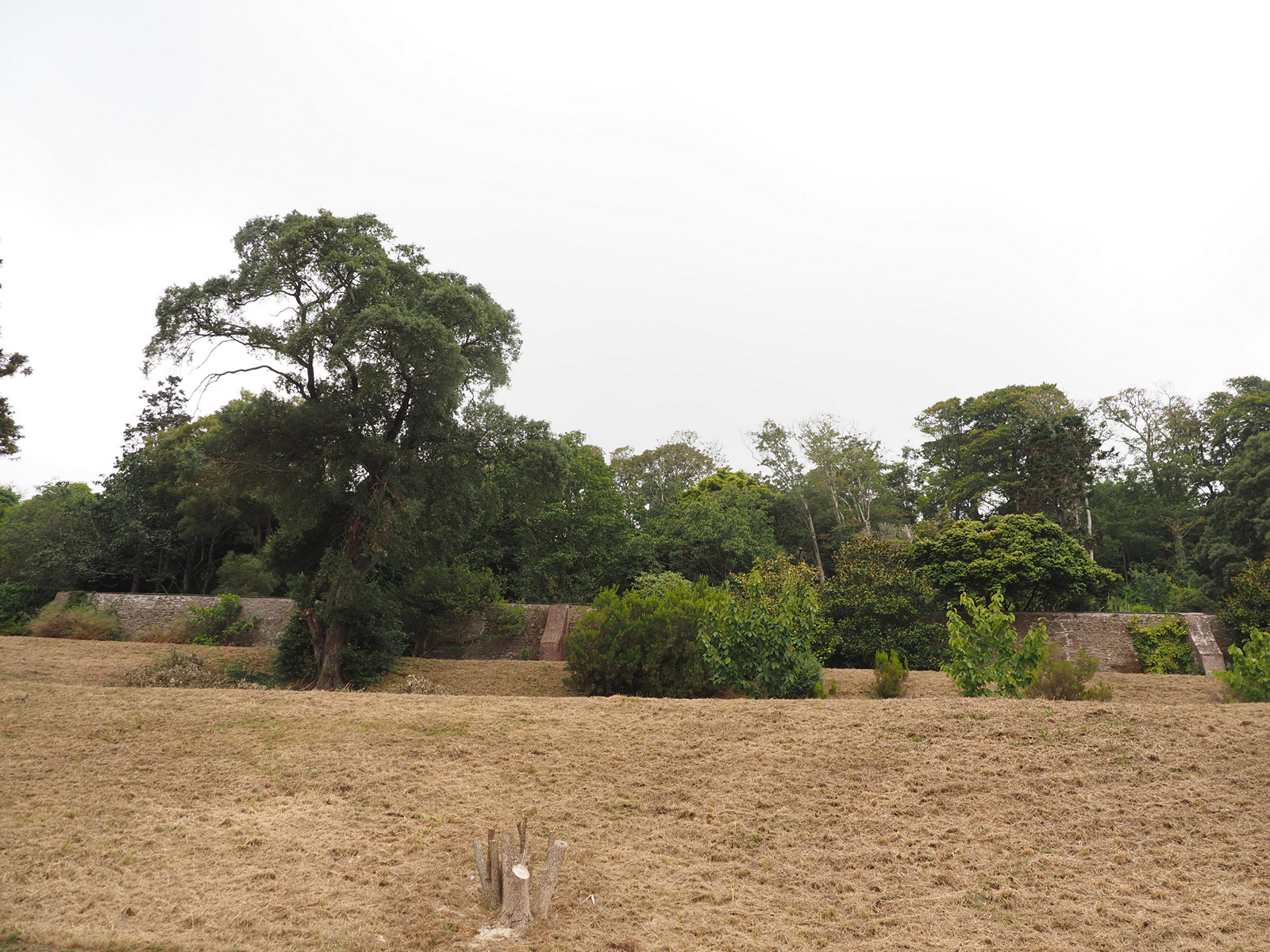
We have 5 or 6 species of Zanthoxylum. The two largest grow in 40 Acres Wood and were planted in 1993/4.
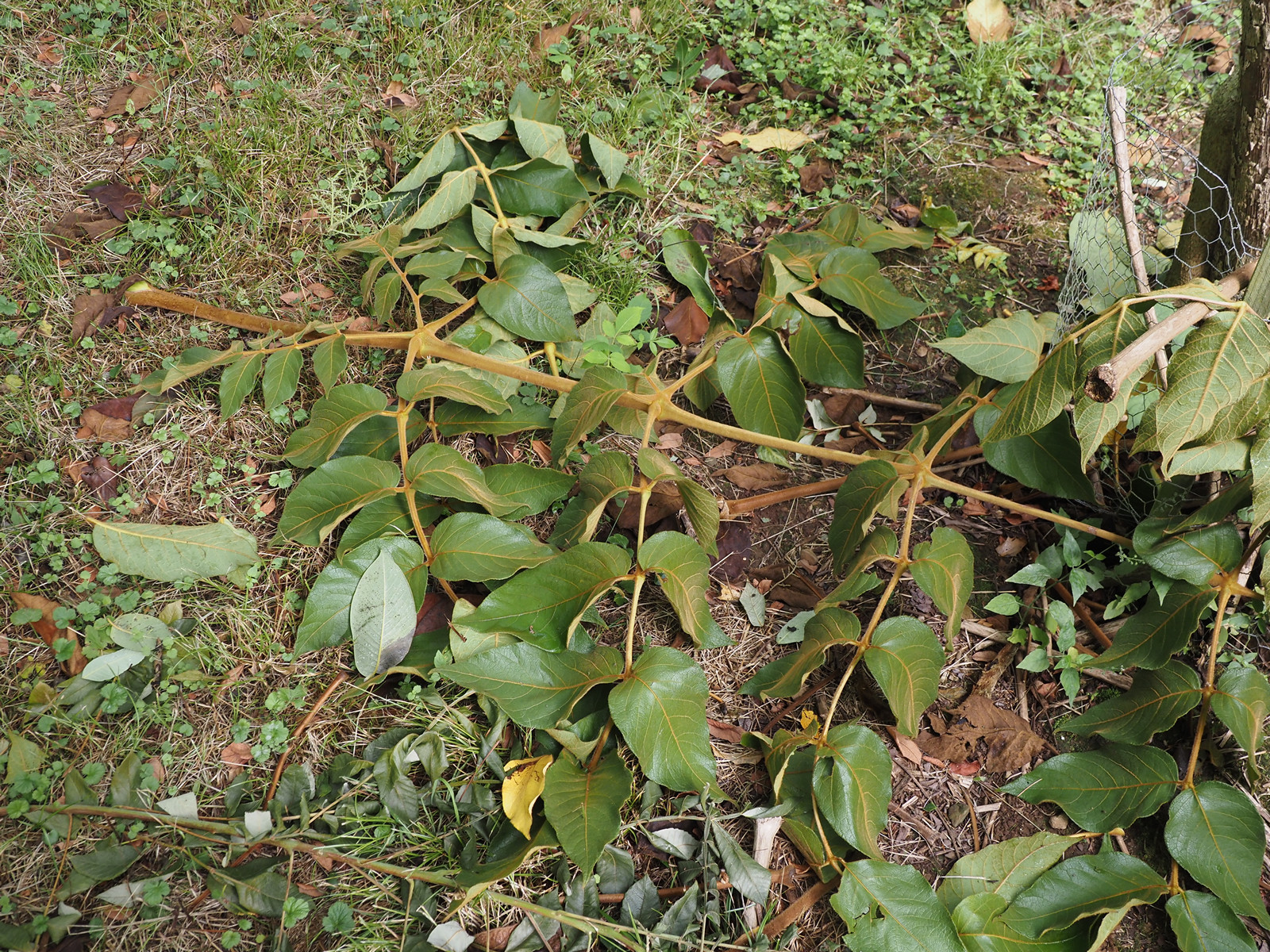
On arrival in 40 Acres we find the large Schefflera macrophylla (?) dead from drought. If we cut it down soon it might reshoot from the base?
Schefflera macrophylla
We thought this to be Zanthoxylum simulans (the larger of the two trees and nearer the middle bridge) but Julian believes it is actually Z. bungeanum which is a very common error apparently. Z. bungeanum is not described in the old Hilliers. He will confirm from samples taken. Z. simulans has individual fruits and Z. bungeanum has fruits in singles and clusters as on this plant.
Zanthoxylum bungeanumZanthoxylum bungeanum
Zanthoxylum bungeanumZanthoxylum bungeanum
A drought dead sweet chestnut beside the Zanthoxylum.
Sweet chestnut
This is indeed Z. piperitum (branch and twig thorns in pairs) as we thought.
The two trees together. Z. piperitum is on the right and the smaller of the two.
The two trees together
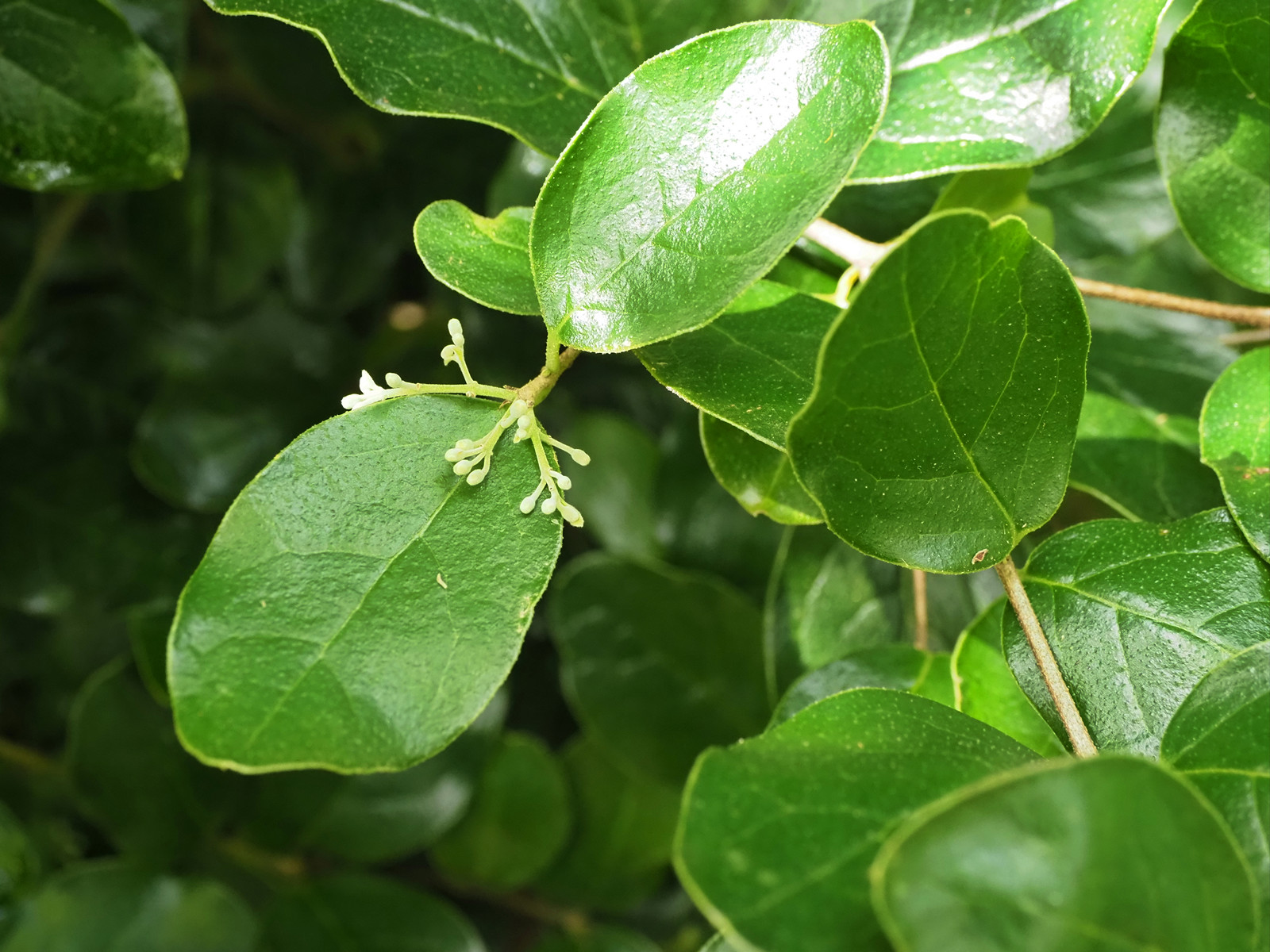
This is a Crug Farm collection labelled Z. coreanum (planted 2017) which Julian thinks may also actually be just another name or synonym for Z. bungeanum. On the face of it perhaps but we now need to check the original location of the Crug collection (Vietnam or China?)
Crug Farm collection labelled Z. coreanumCrug Farm collection labelled Z. coreanumCrug Farm collection labelled Z. coreanum
We also took samples from the Crug collected Z. piperitum var. inerme which had not enjoyed the drought and no fruits this year.
Zanthoxylum armatum is correctly named (also Crug). One of the few evergreen species which is enjoying growing in shade and fruiting prolifically. Julian believes that the huge stem spines or thorns may have been a prehistoric defence mechanism against beevers which were once rather larger than they are here today. The wide winged petioles on the leaves are the giveaway to this species identity.
Zanthoxylum armatumZanthoxylum armatum
Zanthoxylum armatumZanthoxylum armatum
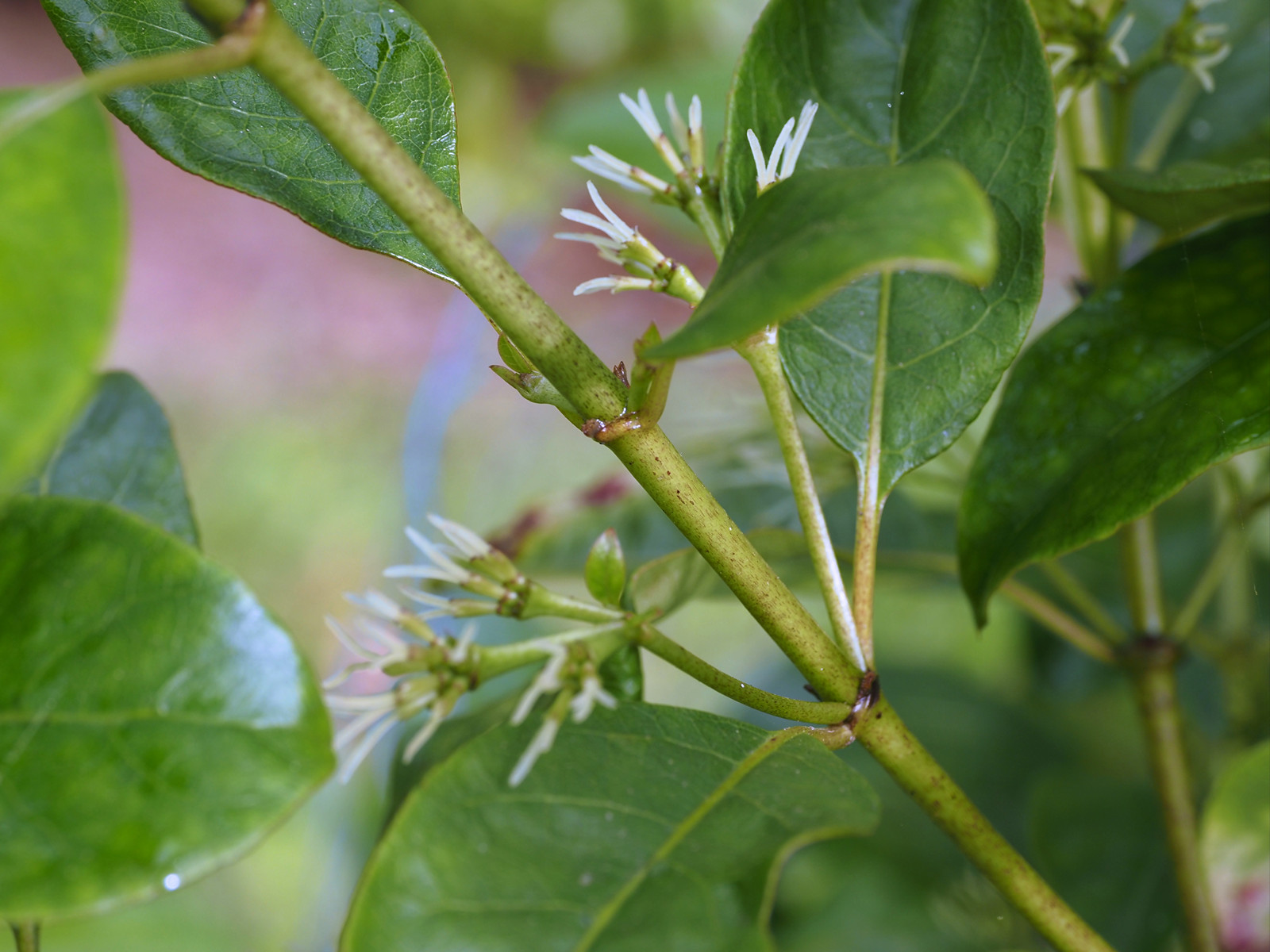
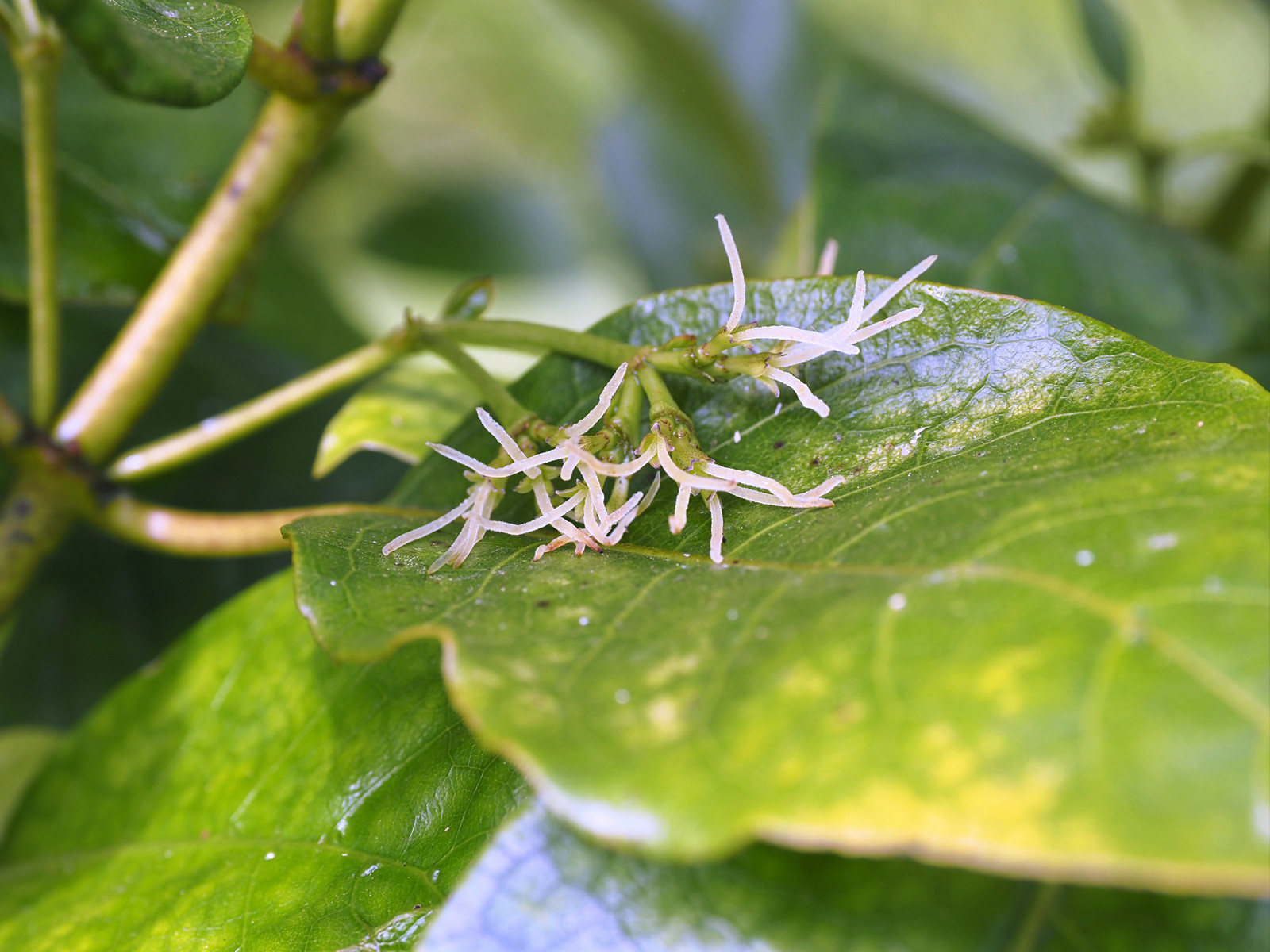
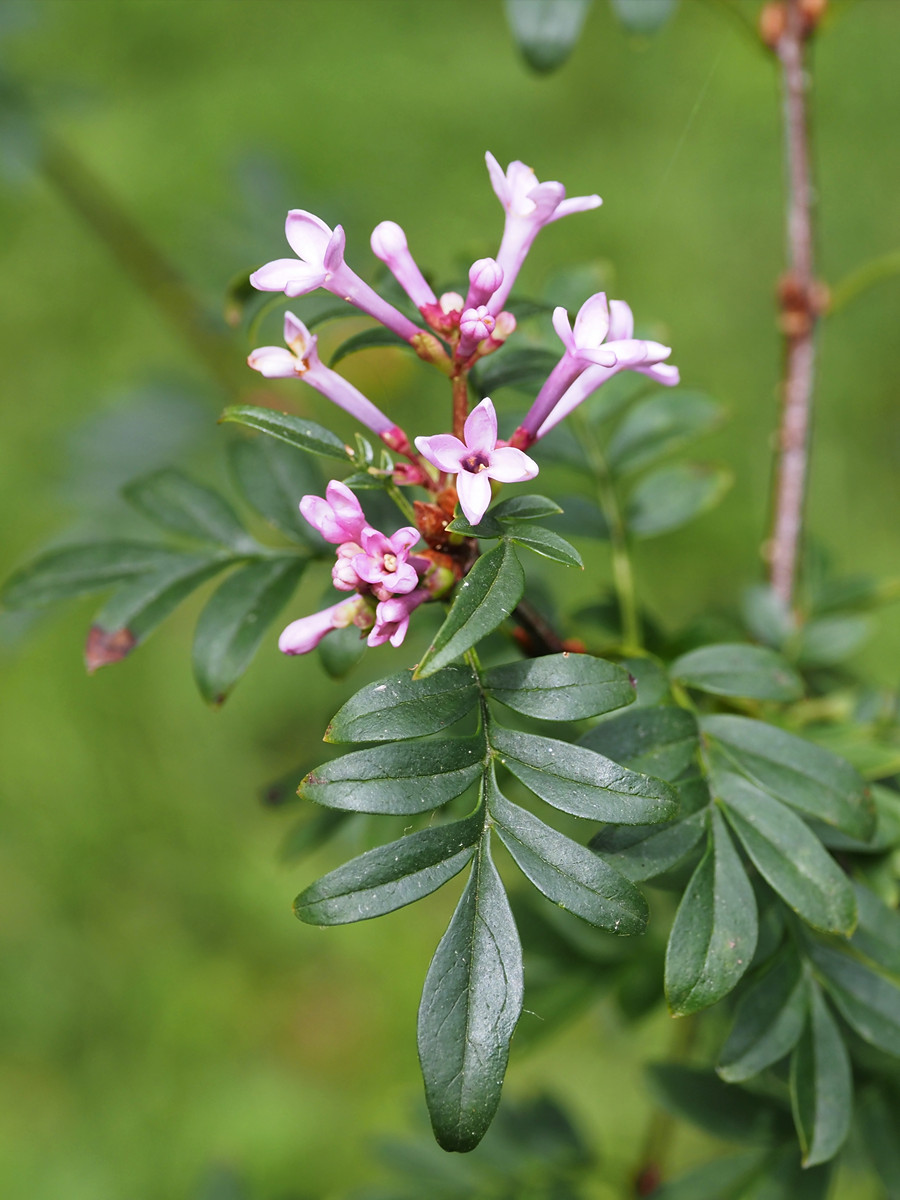
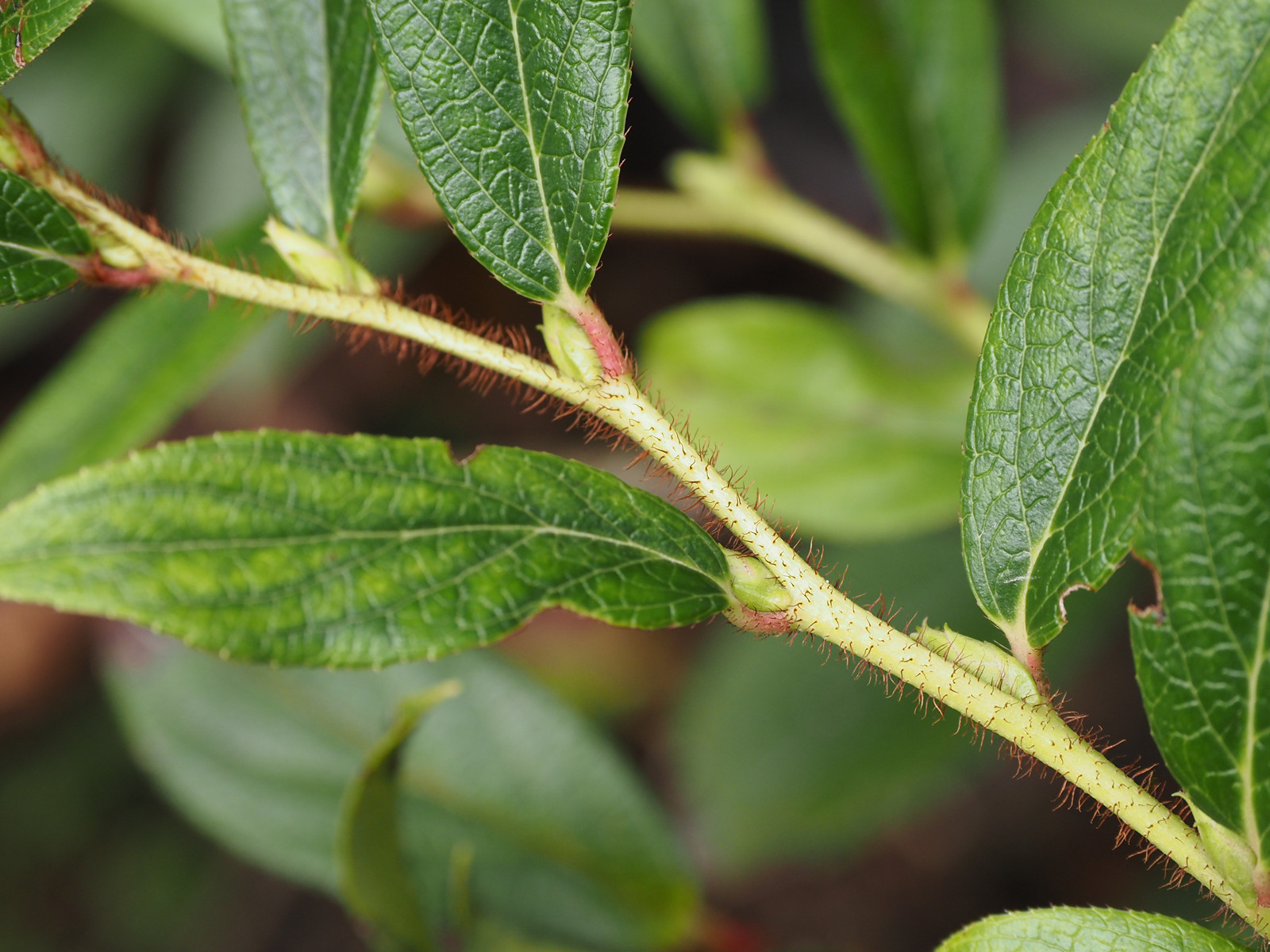
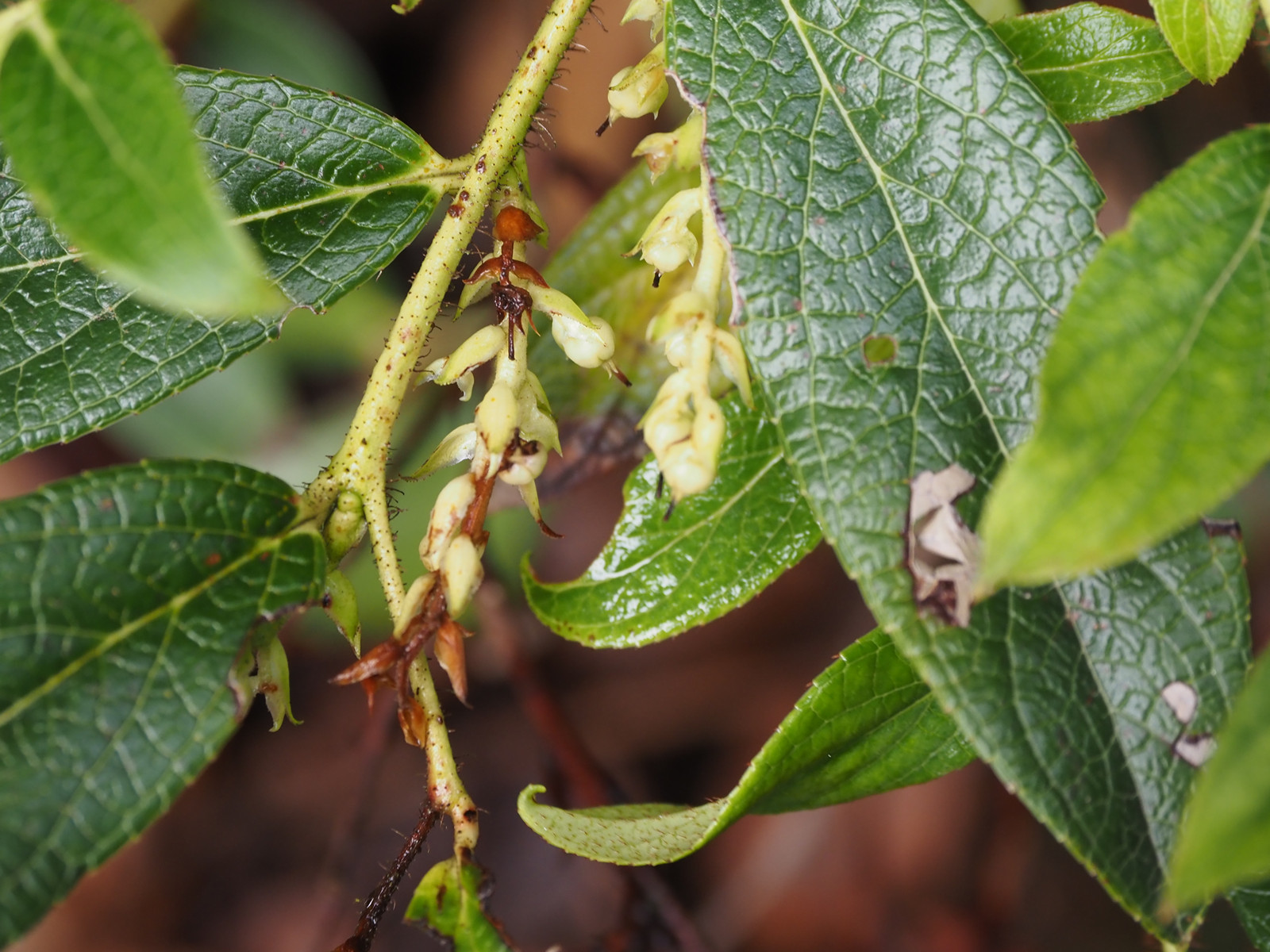
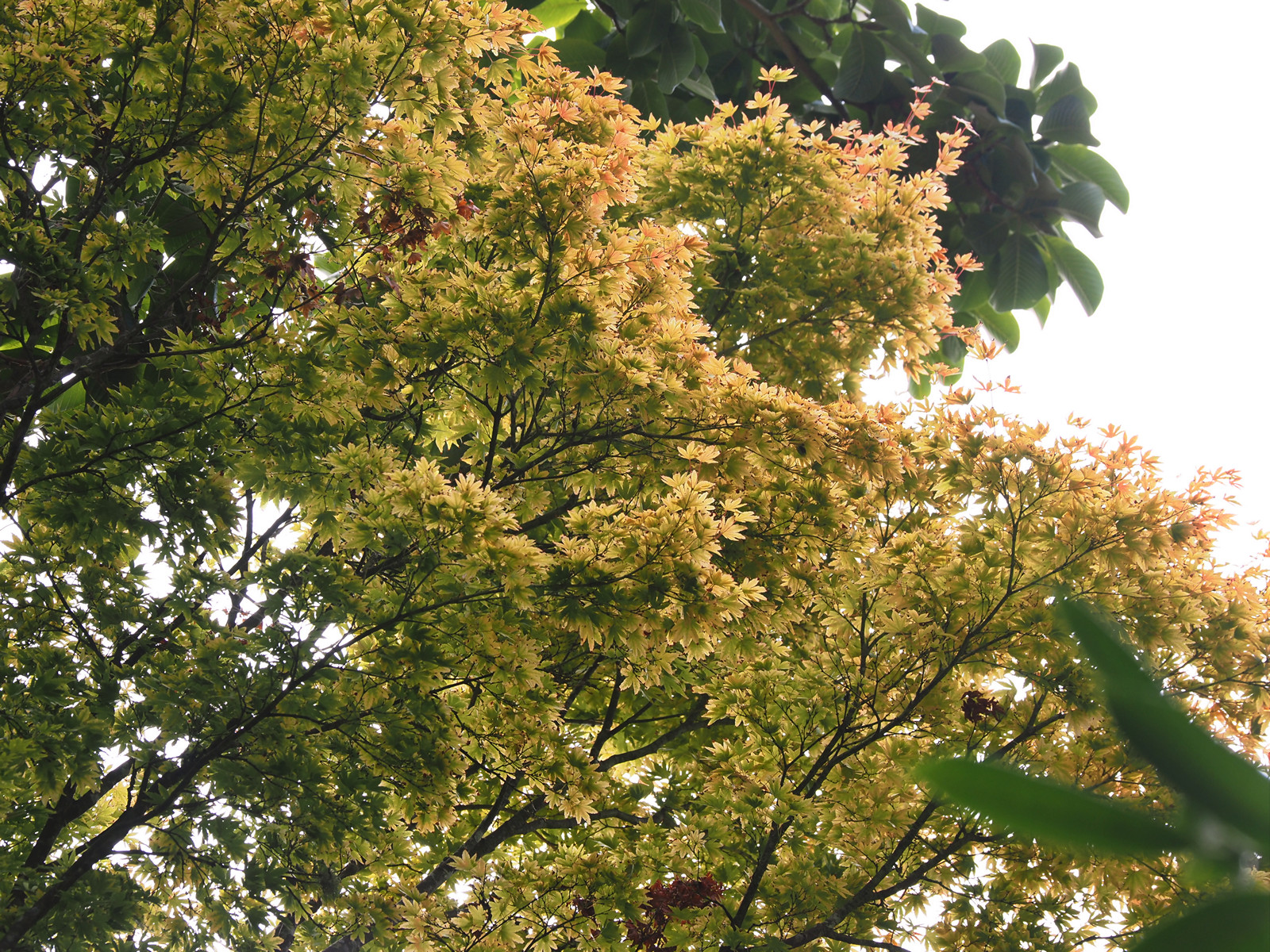
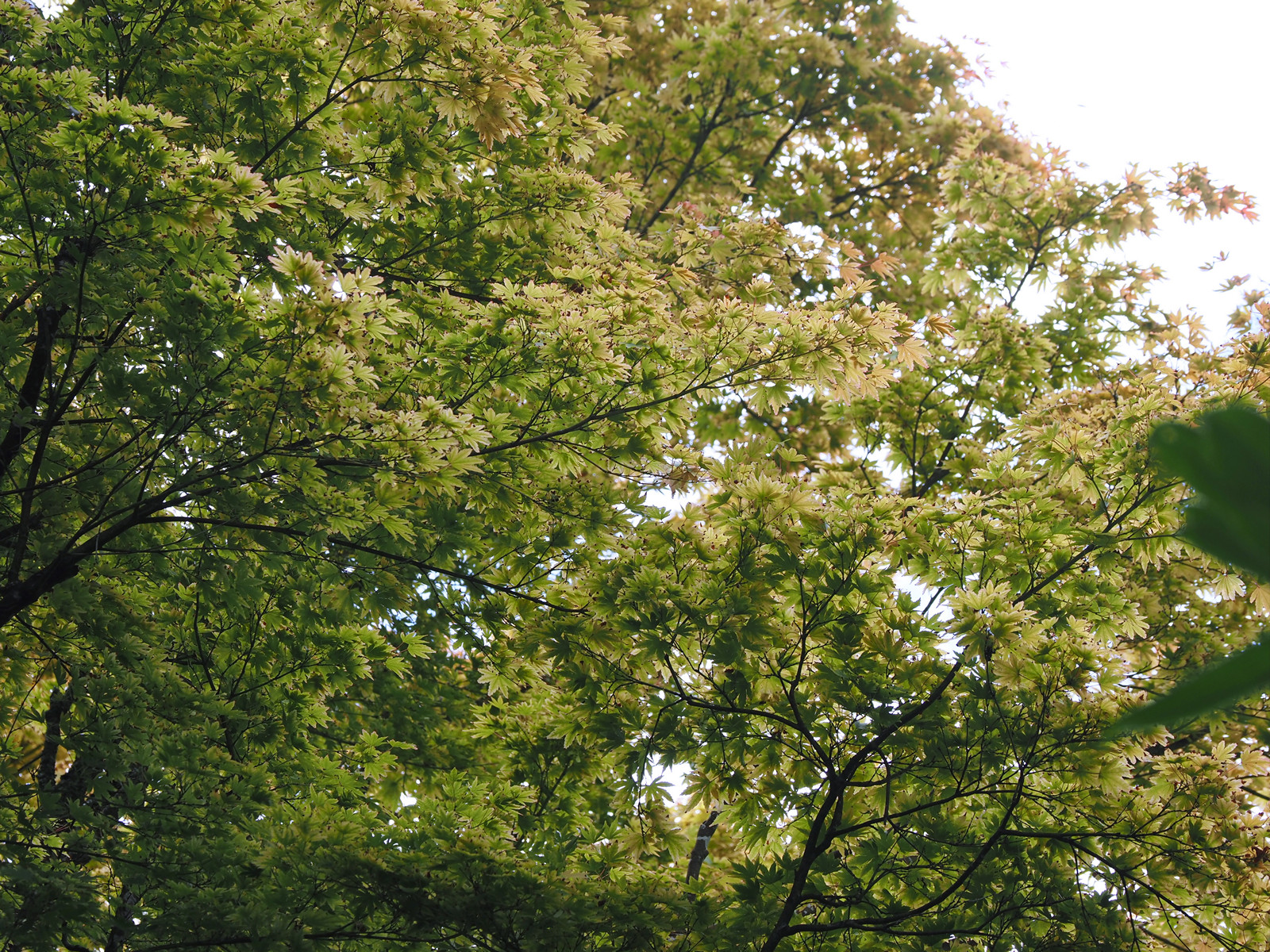
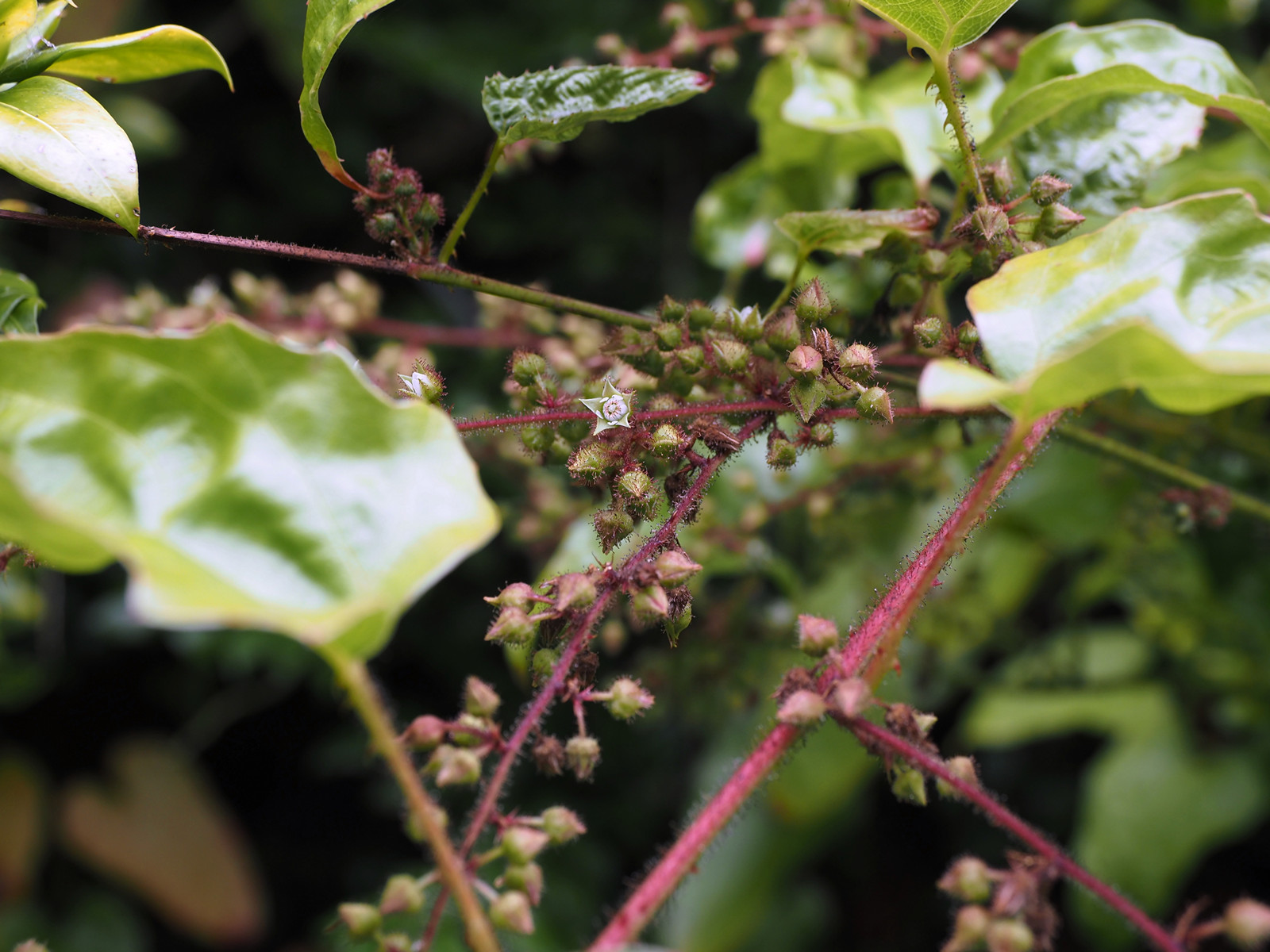
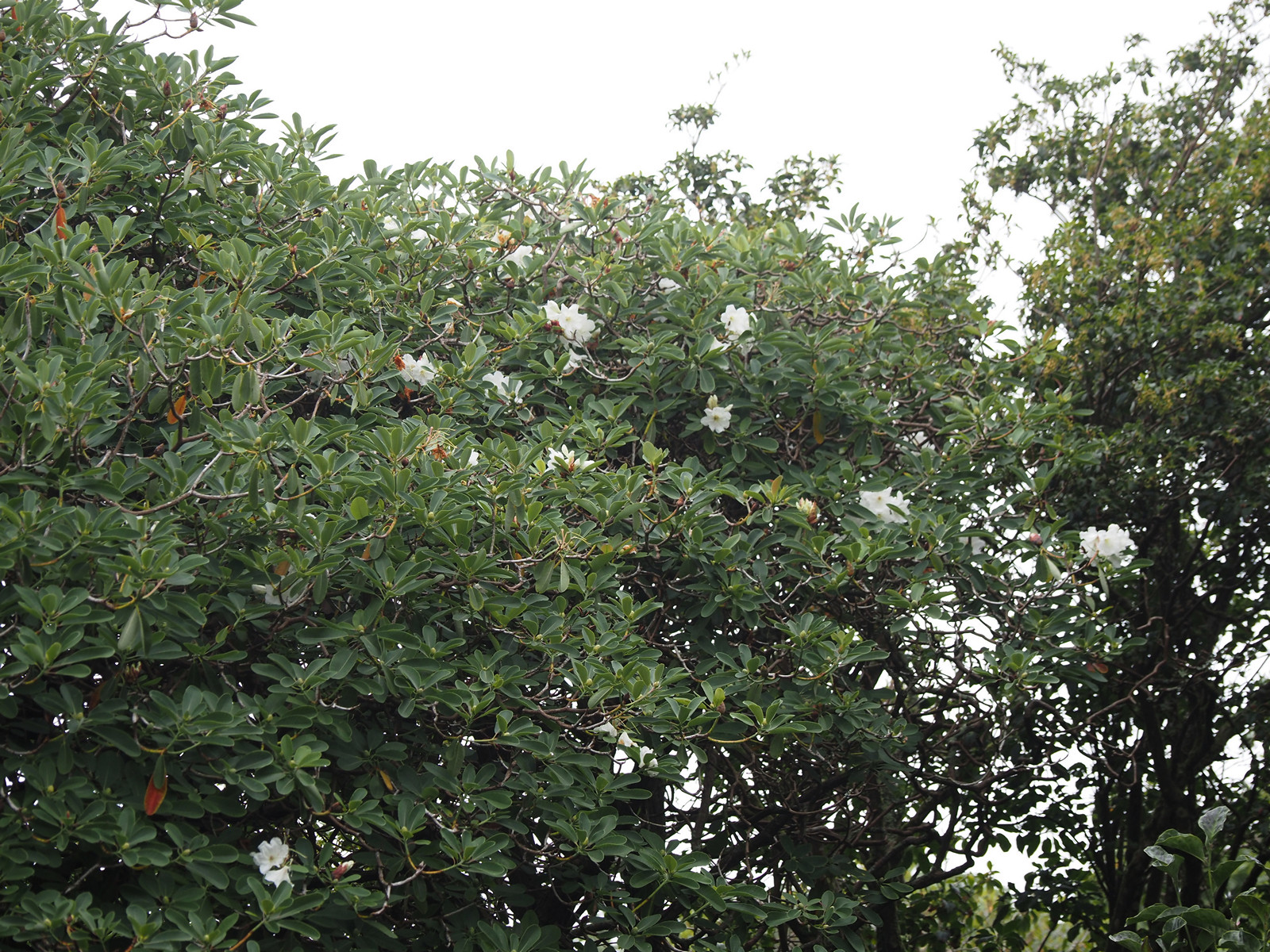
Then to the first fruits which may ever have been seen in the UK on what Crug Farm called Parastyrax species nova. Of our 3 seedlings purchased from Bleddyn only 2 have so far flowered and only the one growing in full sun has now begun to produce seeds. Planted in 2021 as BWJ 15185 it is now around 12 feet fall. Another plant with the same collection number was planted in 2020 in full shade and had one flower thus year but no seed has set. Styrax species have single seeds. When Julian cuts what appears to be a single seed in half it reveals that there are in fact several seeds forming in what is a seed pod rather than a single seed. This means that these new introductions from Crug are not Styrax or Parastyrax species at all. Quite what we should now call then Julian will reveal.
Parastyrax species novaParastyrax species novaParastyrax species nova
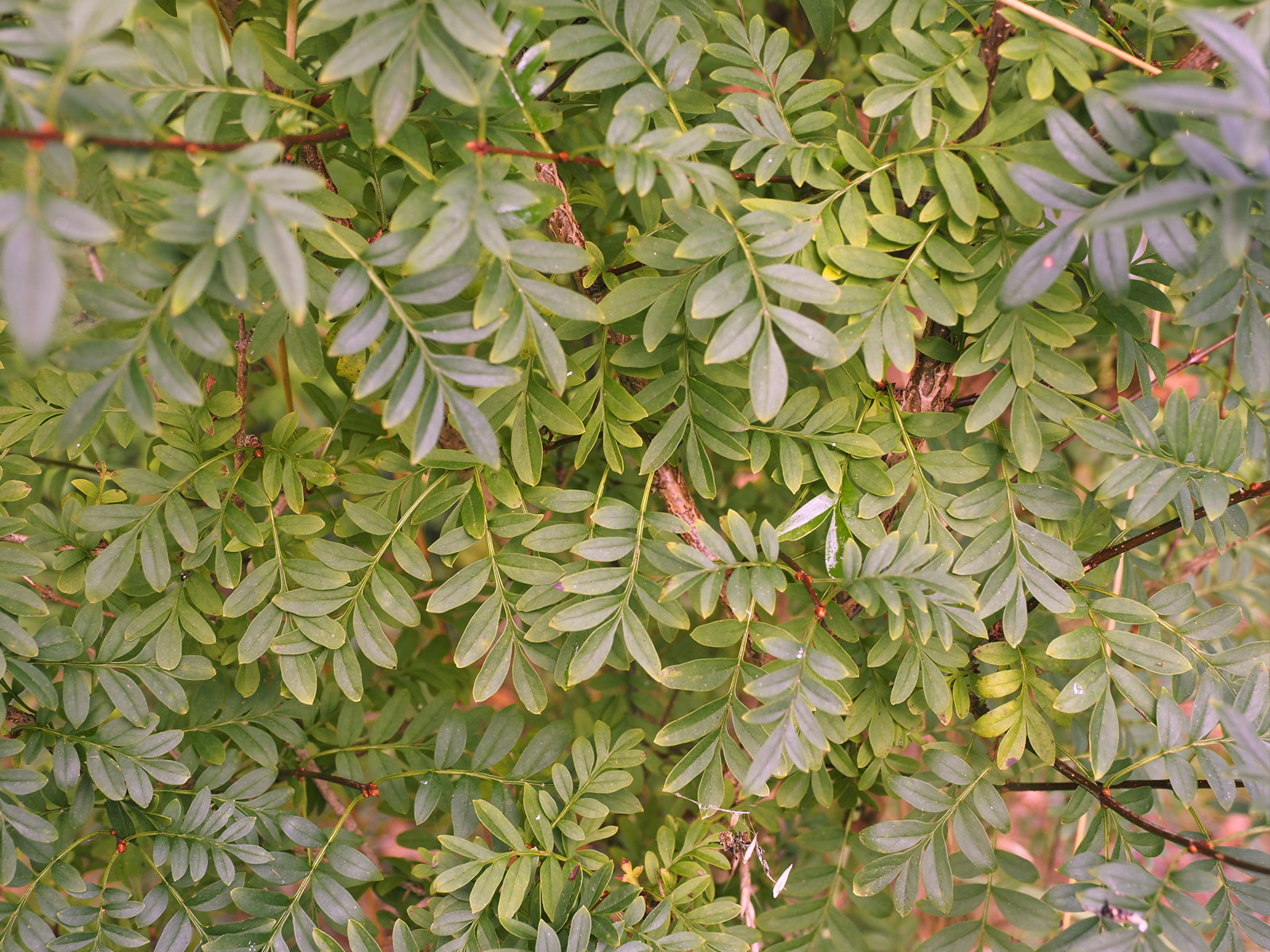
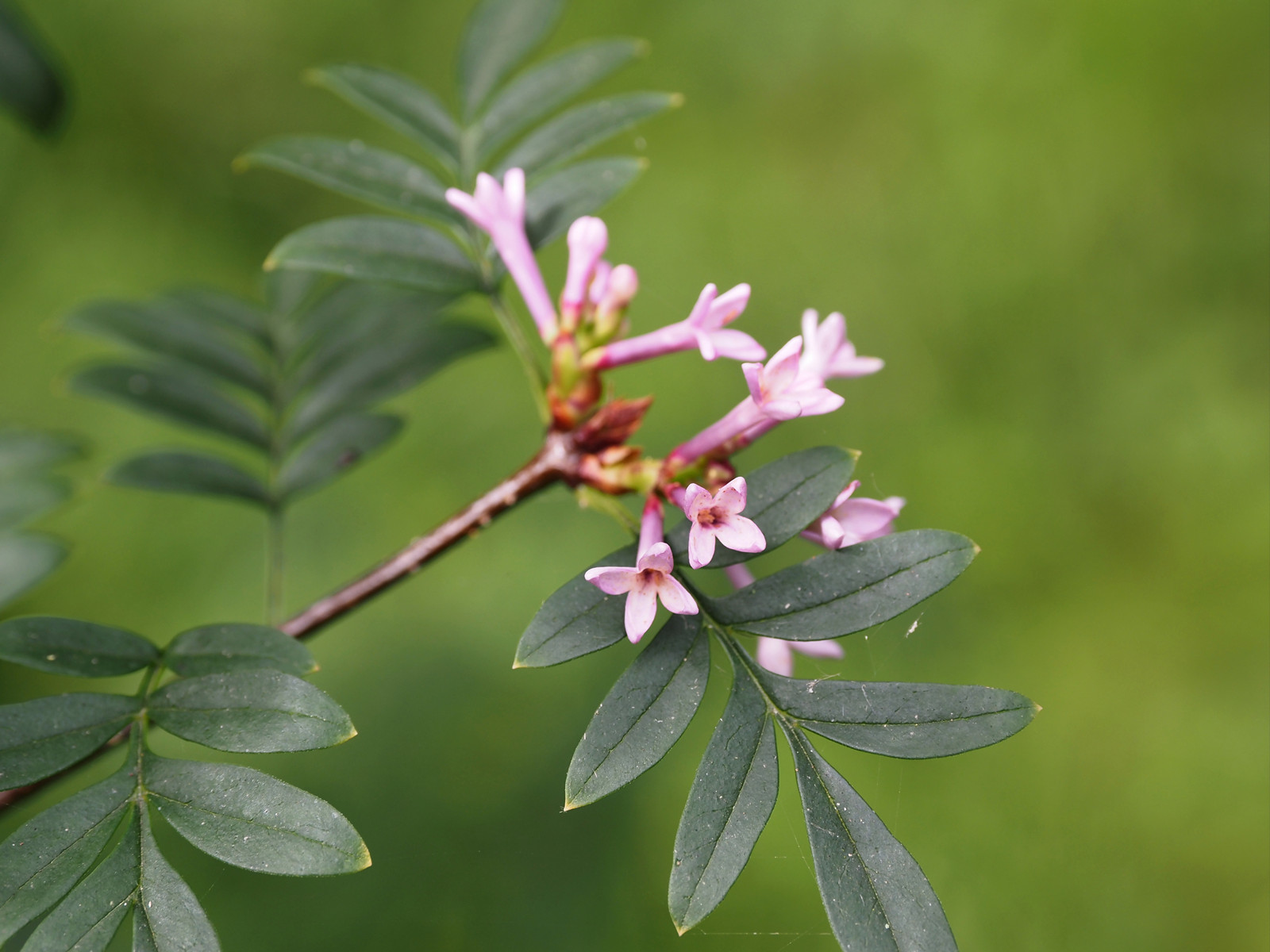
Excellent new growth on the ? Parastyrax despite the drought.
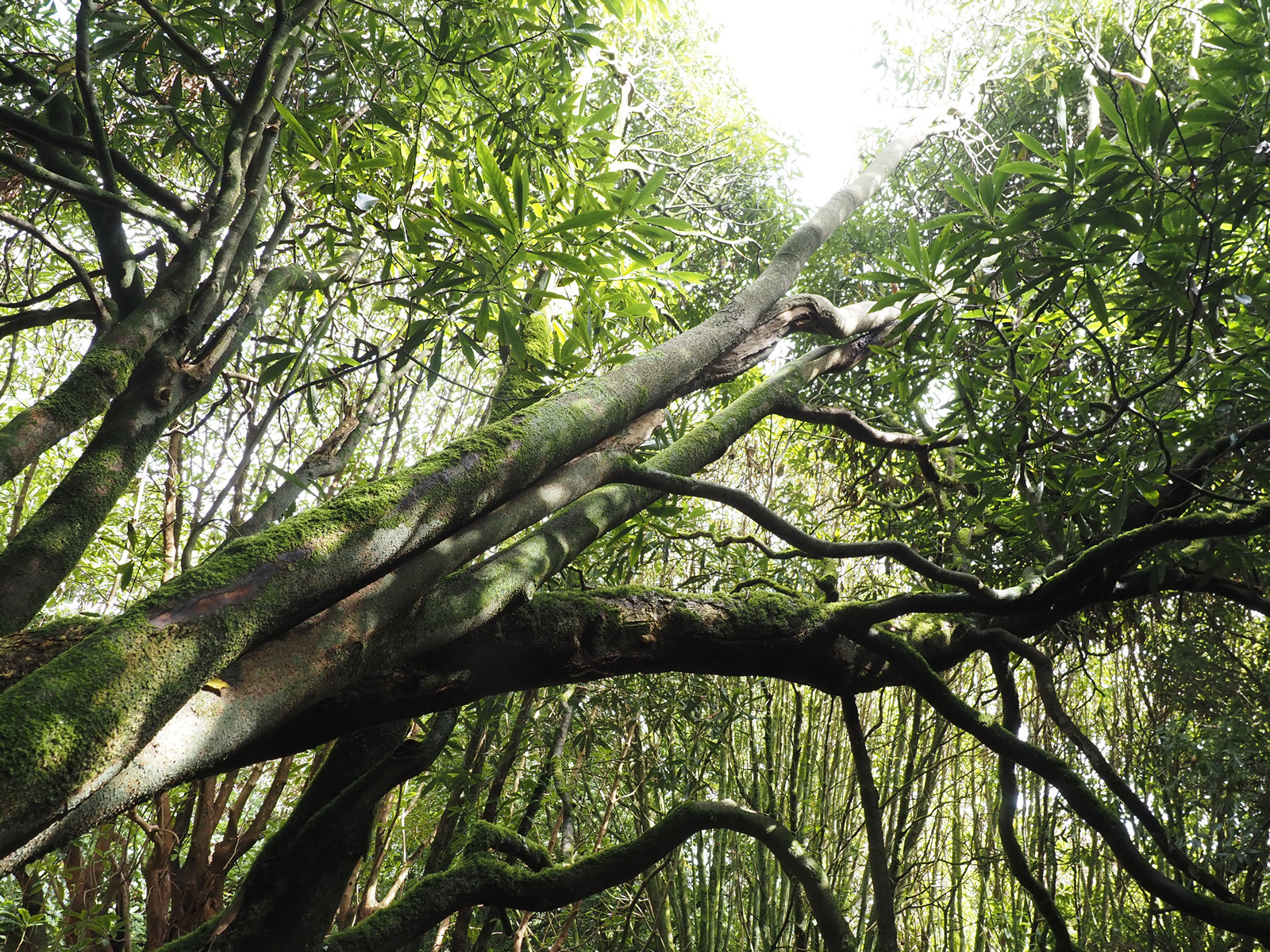
Parastyrax
2025 – CHW
Waiting for Lord Burnett a wander around outside the arch.
Hydrangea aspera ‘Robusta’ just coming out with bees a plenty.
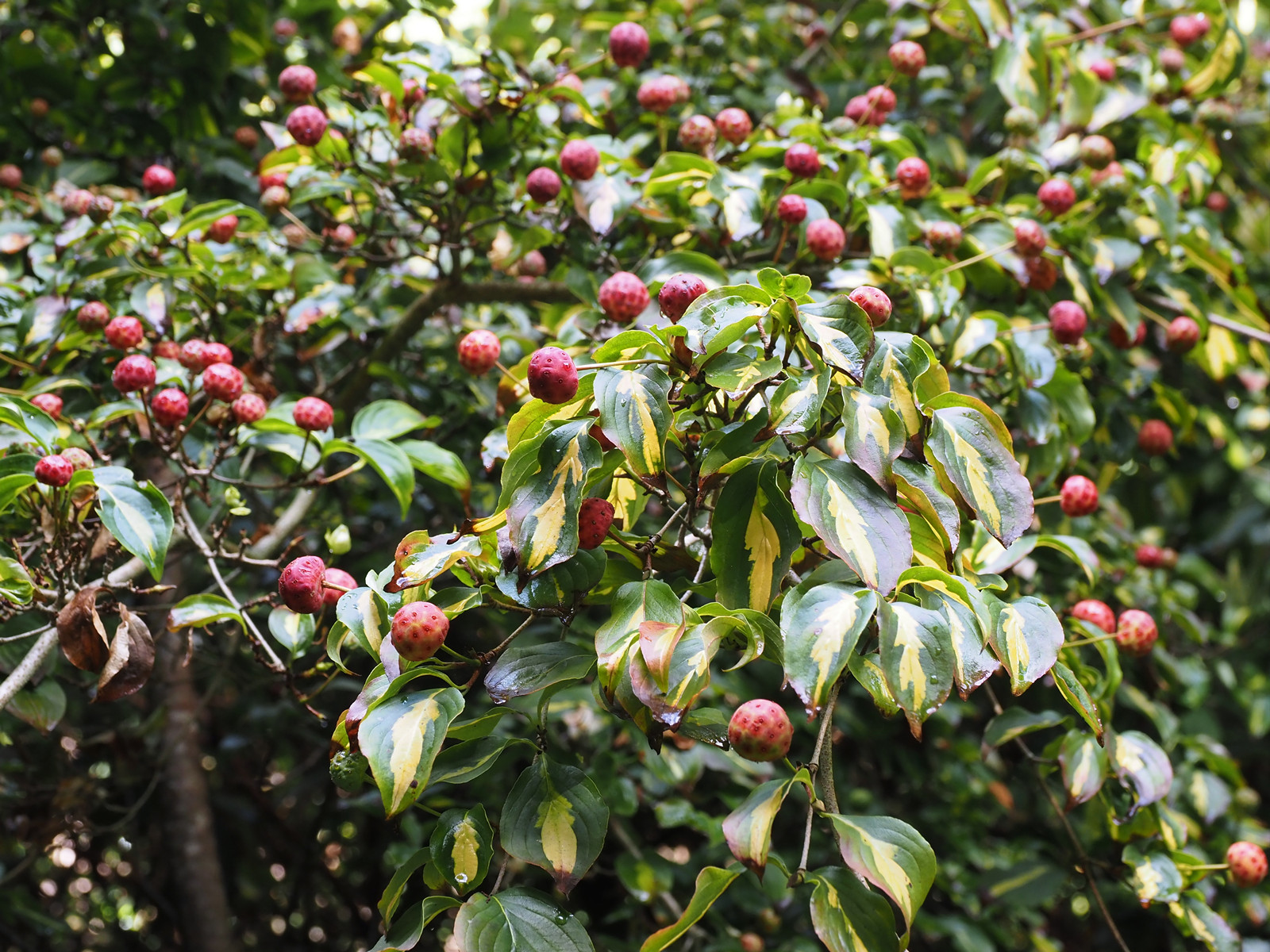
Cornus kousa ‘Doubloon’ with a good crop of fruit.
Cornus kousa ‘Doubloon’
Symplocos paniculata with ripening blue berries.
Symplocos paniculataSymplocos paniculata
Magnolia ‘Genie’ with secondary flowers which have largely gone over. The plant is in full sun on a dry bank and thriving with lush growth.
Magnolia ‘Genie’
The Rehderodendron macrocarpum that was stripped of bark by squirrels is, despite everything, covered in seeds to collect soon.
Rehderodendron macrocarpum
Magnolia dawsoniana are easily recognisable because they are multi-stemmed rather than single stemmed.
Magnolia dawsonianaMagnolia dawsoniana
Gorgeous peeling park on Hydrangea aspera ‘Robusta’.
Hydrangea aspera ‘Robusta’
Symphoricarpos albus was cut down a year ago and is fruiting much more abundantly with larger berries.
Symphoricarpos albus
2024 – CHW
Cotoneaster species today.Cotoneaster wilsonii is always one of the first to have ripe berries. Asia needs to collect them now before the pheasants find them.
Cotoneaster wilsoniiCotoneaster wilsonii
Cotoneaster thimphuensis just starting to turn yellow and far from ripe yet.
Cotoneaster thimphuensisCotoneaster thimphuensis
Cotoneaster hillieri with fewer fruits than usual.
Cotoneaster hillieri
Cotoneaster flinckii.
Cotoneaster flinckiiCotoneaster flinckii
Cotoneaster rubens with a trailing habit.
Cotoneaster rubensCotoneaster rubens
Minor progress with completion of the clearance work above the Old Dog Kennels. Looks like Ross’s machine has again broken down.
clearance work above the Old Dog Kennels
Cotoneaster ganghobaensis is not one I have seen fruiting properly before.
Cotoneaster sylvestrii is making good headway but not that many fruits as yet. Fryer and Hylmo’s book on Cotoneasters was published in 2009. This species was not then thought to be growing in cultivation in the West. If it is as rare as that Asia needs to grab these rounded red fruits.
Cotoneaster sylvestriiCotoneaster sylvestrii
2023 – CHW
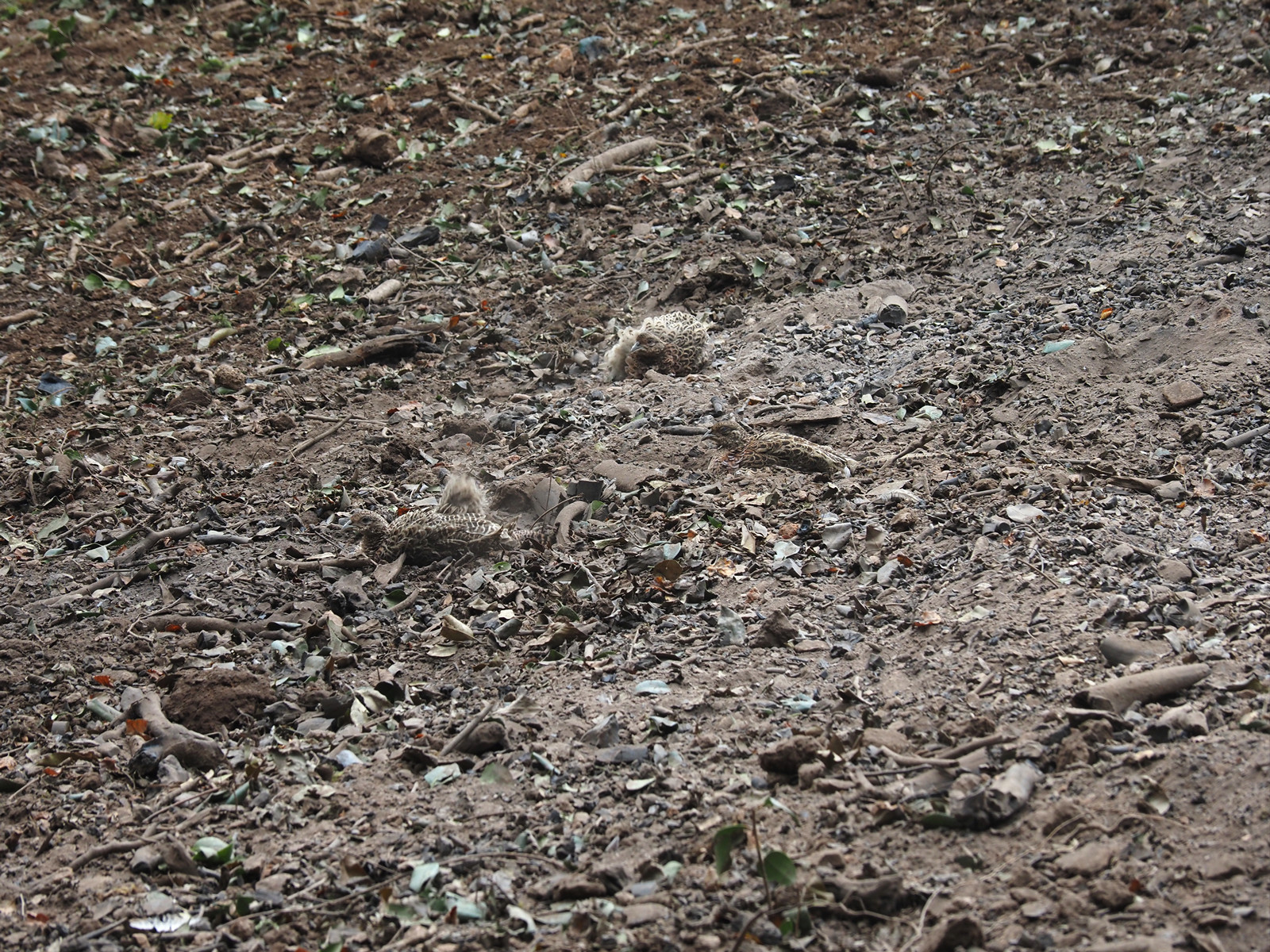
Final tidying in the new Rookery clearing has given the pheasants plenty of opportunity for dust baths. 28°c here yesterday afternoon.
Final tidying
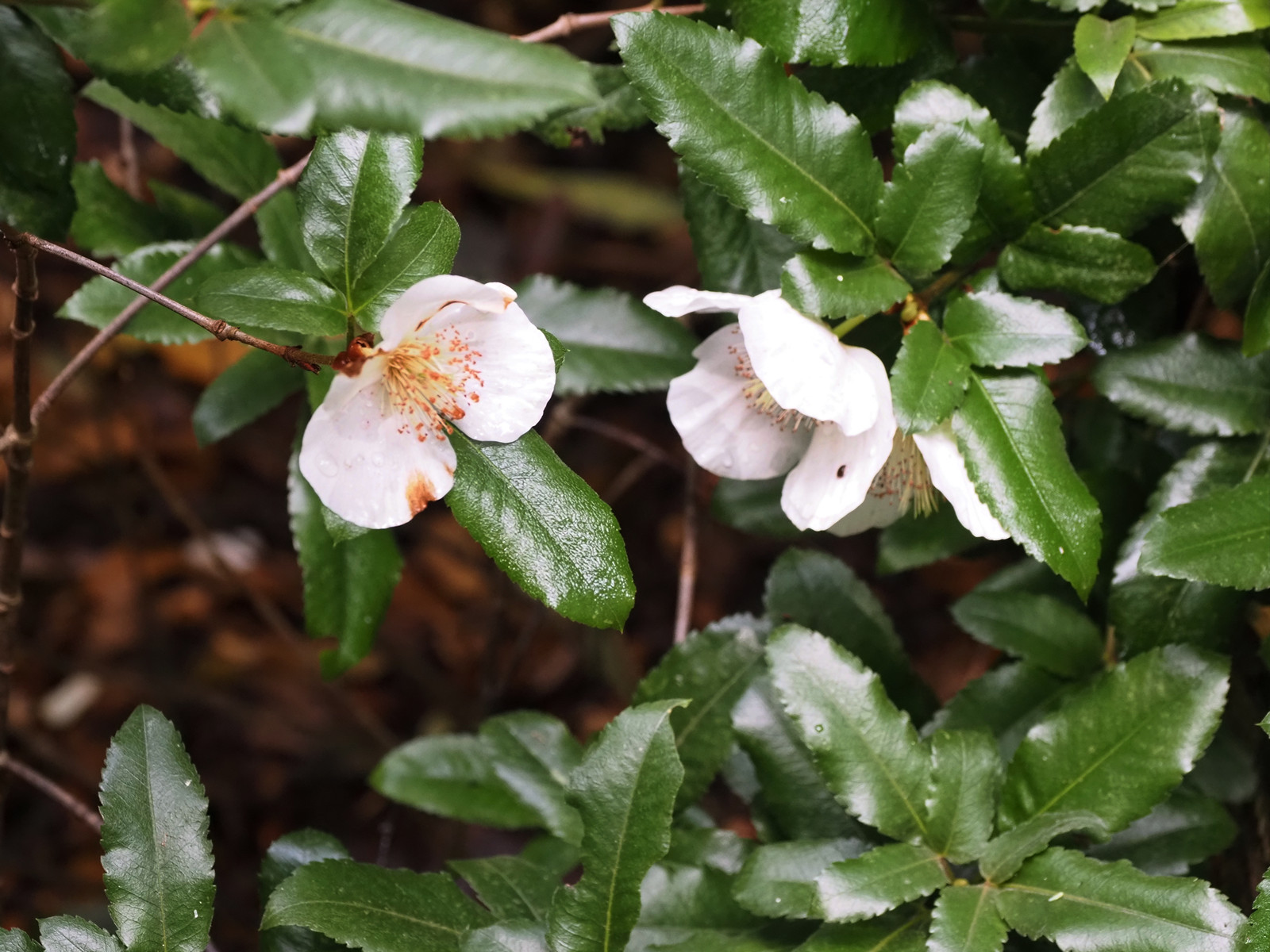
Ternstroemia aff. luteoflora (FMWJ 13360) has flowered and set seed but I have missed the flowers.
Ternstroemia aff. luteoflora (FMWJ 13360)
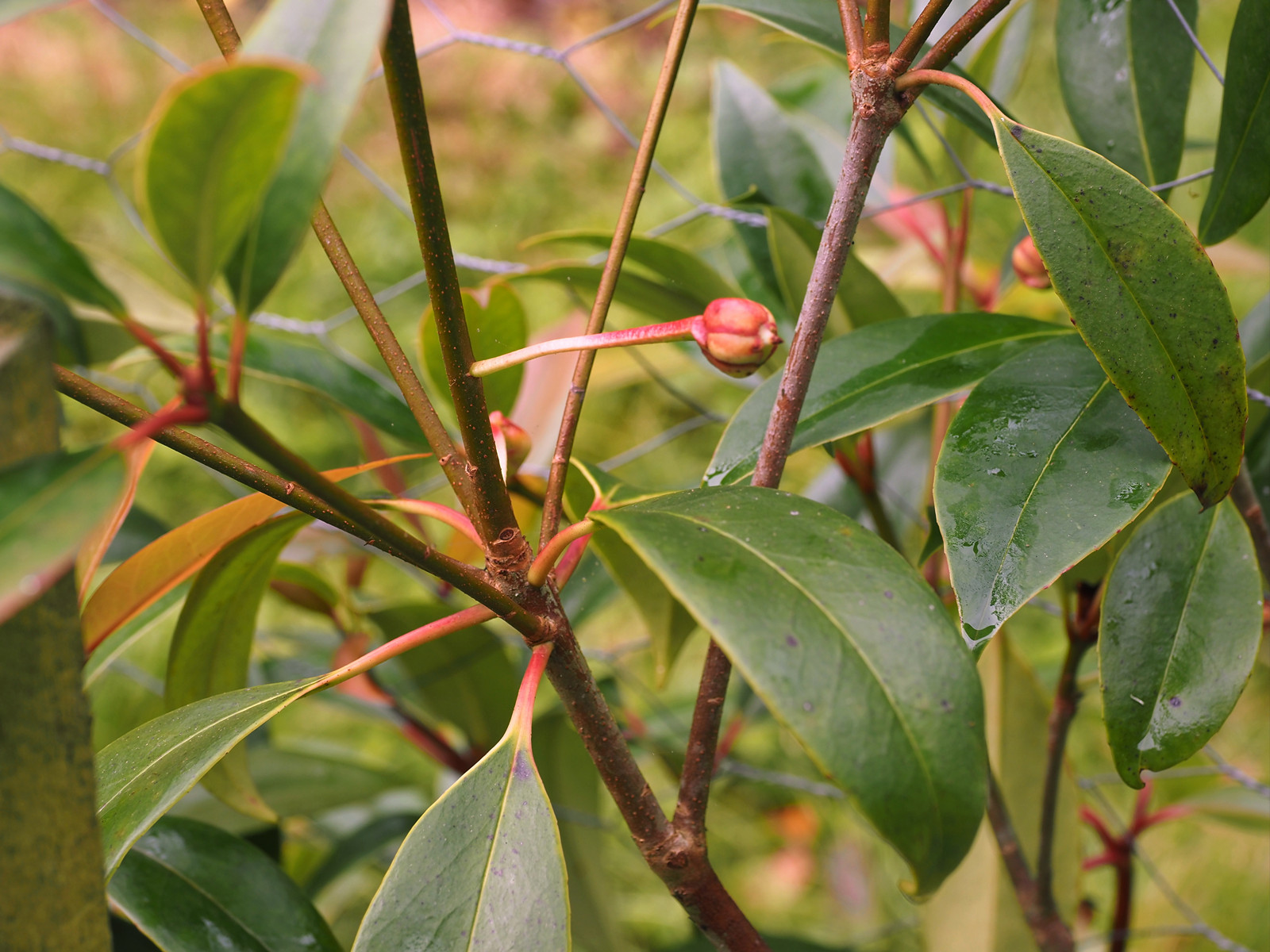
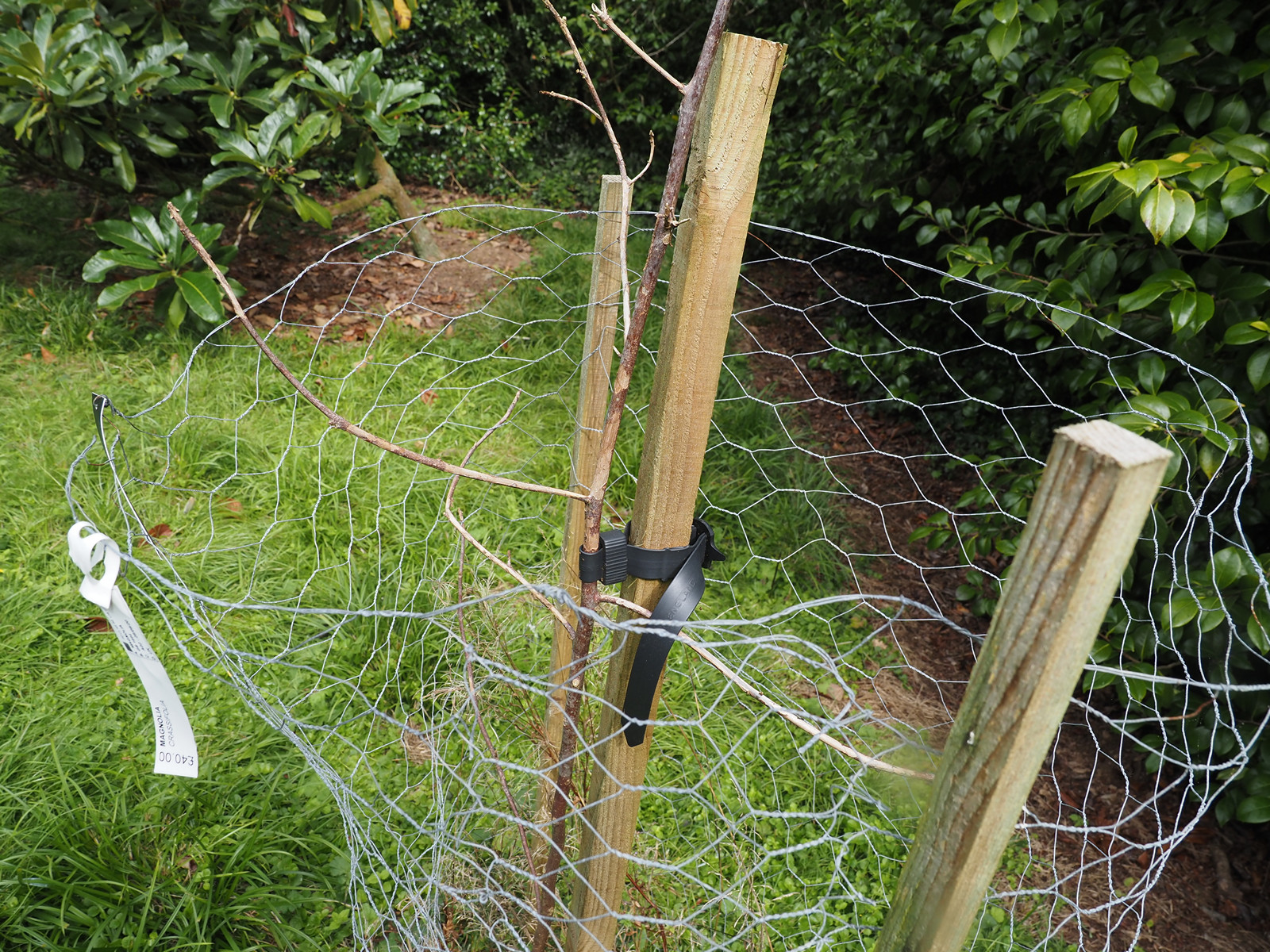
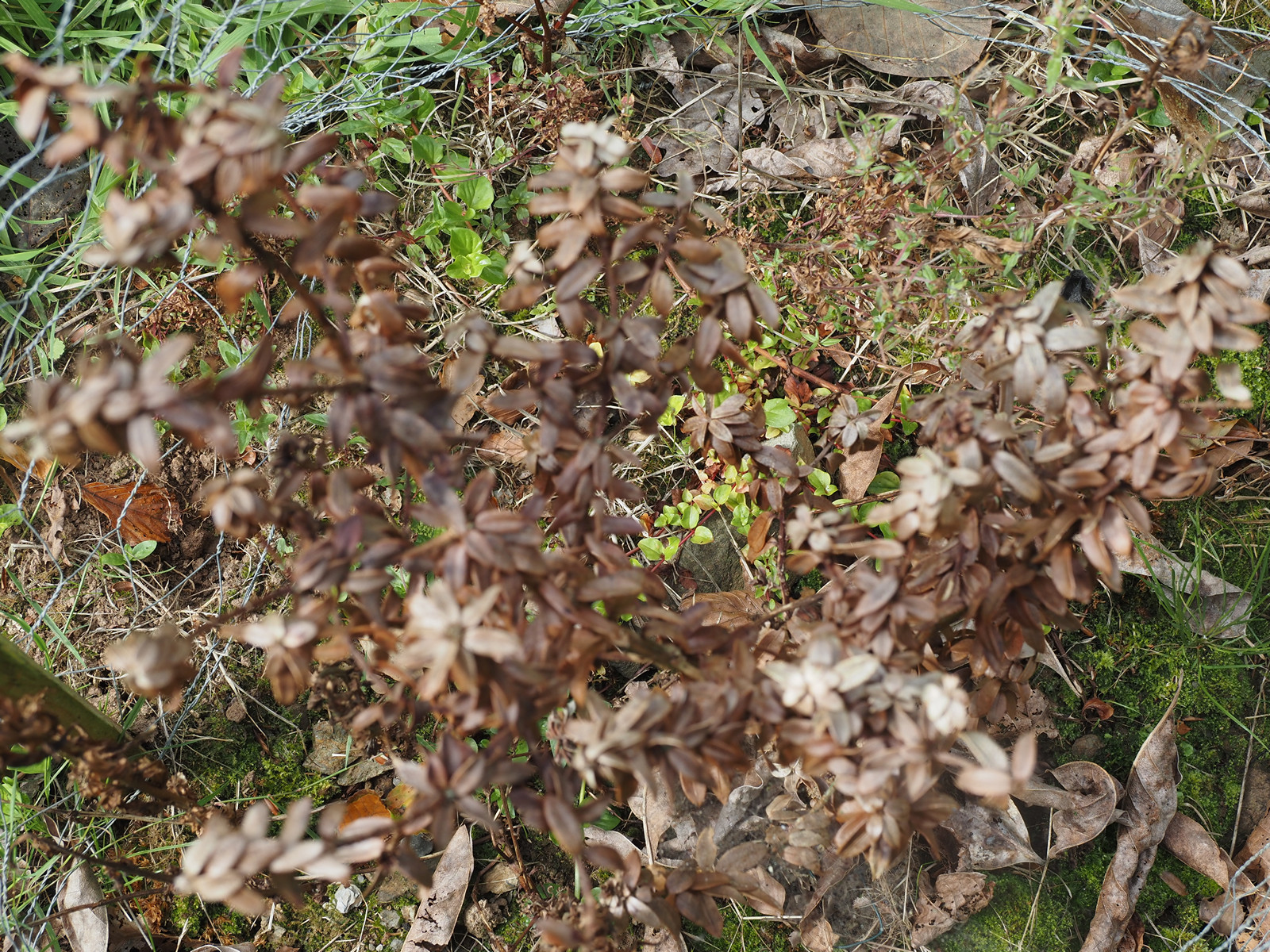
Deads from the earlier drought – Magnolia crassifolia.
Magnolia crassifolia
Nearby Podocarpus brassii which was a gift from Tom Hudson.
Podocarpus brassii
Coprosma grandifolia in flower may not set the world alight but is certainly unusual. I suspect this will propagate easily from cuttings. Originally from Nicholas Locke.
Coprosma grandifoliaCoprosma grandifolia
Syringa x diversifolia suddenly in flower. I assume secondary flowers as this would normally be out in May.
Syringa x diversifoliaSyringa x diversifolia
Syringa x diversifoliaSyringa x diversifolia
2022 – CHW
A stormy night with perhaps half an inch of rain to stabilise the deaths in the garden. Steady, showery rain is much better than a downpour which runs off and does not sink in. No great improvement in many struggling plants as yet but they now have a better chance.
Rainclouds
The dogs kill a polecat on their way to bed in the kennels in the inner backyard courtyard. All the fuss about reintroducing pine martens when polecats have done it all on their own. Until last year we never seen a pole cat here in my lifetime. Twice the size of a ferret. No wonder our rabbit population is so low with a brood of these in the garden. Mink have been eradicated for some time here, after many years of the escapees from the mink farm in St Austell. Now we have something even worse!
Susyn Andrews can now identify this ancient clump of Gaultheria hookeri or Vaccinium wardii with these pictures of the seed heads. Gaultheria I suspect. The ancient plant is half dead from the drought.
Gaultheria hookeriGaultheria hookeri
Acer palmatum ‘Senkaki’ ( ‘Sango-Kaku’ ) turning yellowish even earlier than usual.
Acer palmatum ‘Senkaki’Acer palmatum ‘Senkaki’
A huge leaf blown off Aralia vietnamensis overnight.
Aaralia vietnamensis
Flower buds forming on Peumus boldus earlier than usual.
Peumus boldus
The original Lindera megaphylla has lost a large branch in the gale.
Lindera megaphylla
Plenty of fruit on Cornus kousa ‘Gold Star’.
Cornus kousa ‘Gold Star’
Last few (large) flowers on a young Eucryphia x nymansensis ‘Nymansay’.
Eucryphia x nymansensis ‘Nymansay’
2021 – CHW
Rubus ichangensis just coming into flower. The fruits will be very late!
Rubus ichangensis
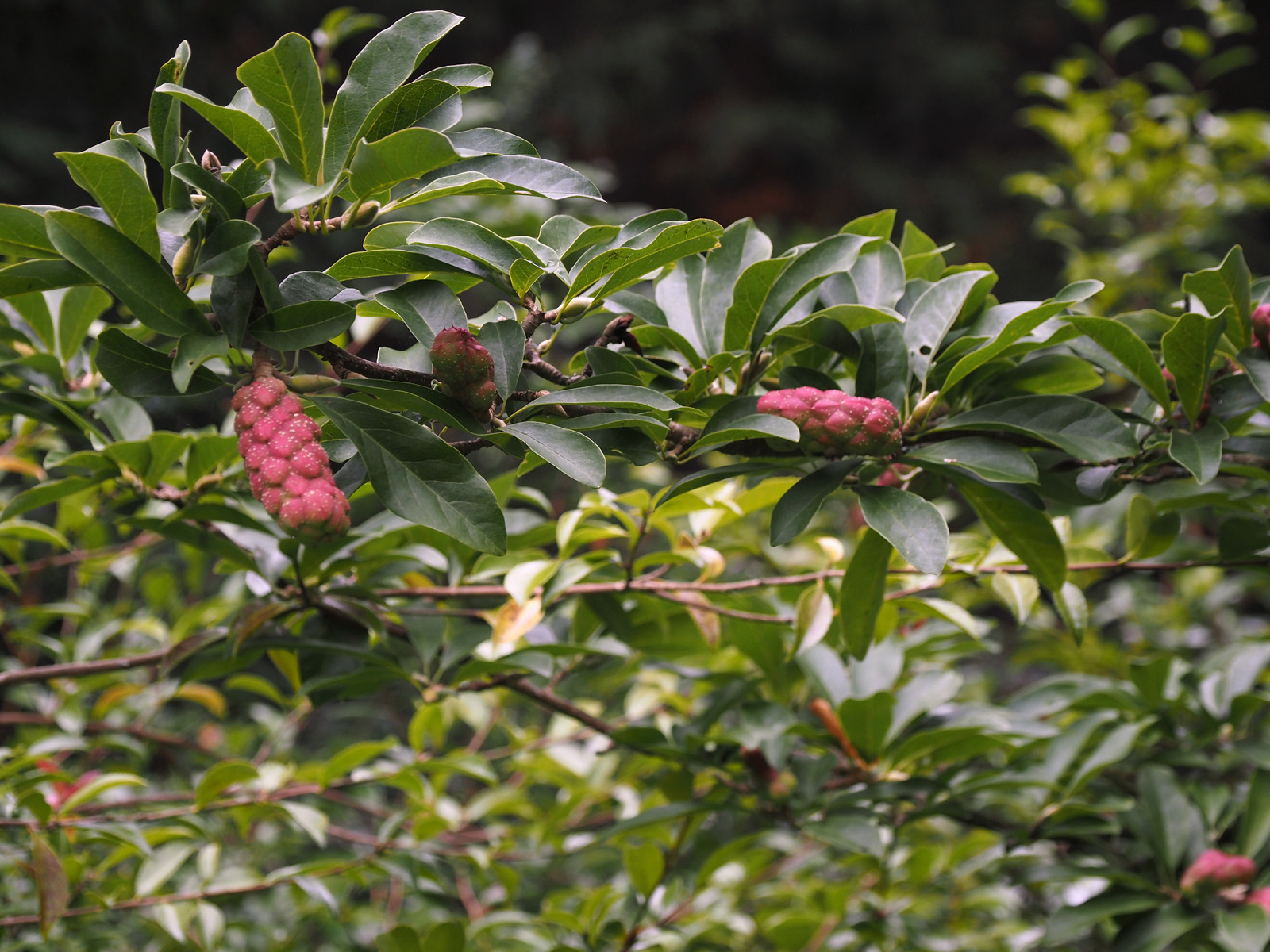
Seed heads on Magnolia cylindrica – not a common occurrence here.
Magnolia cylindrica
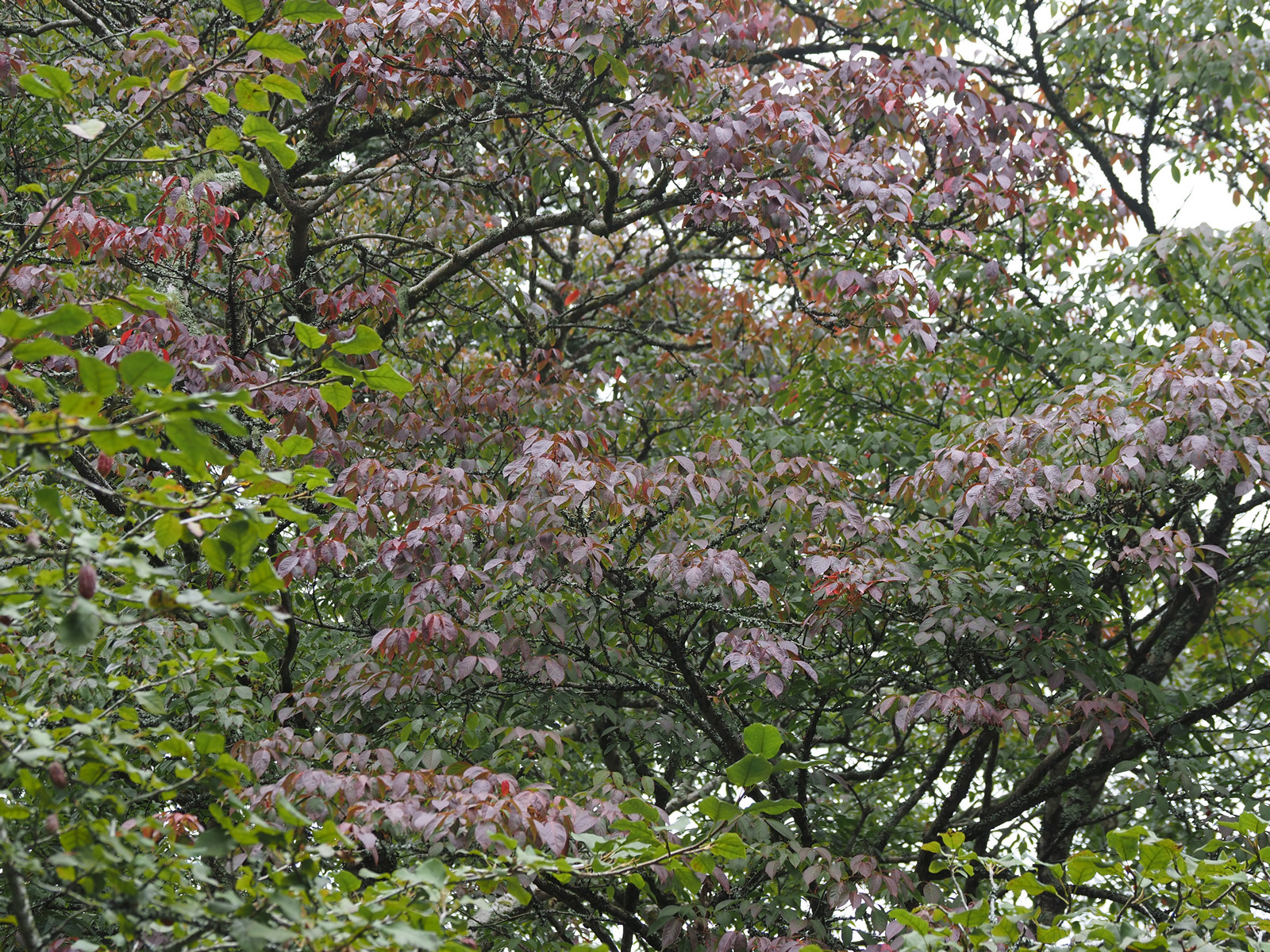
Autumn tints on Acer henryi.
Acer henryi
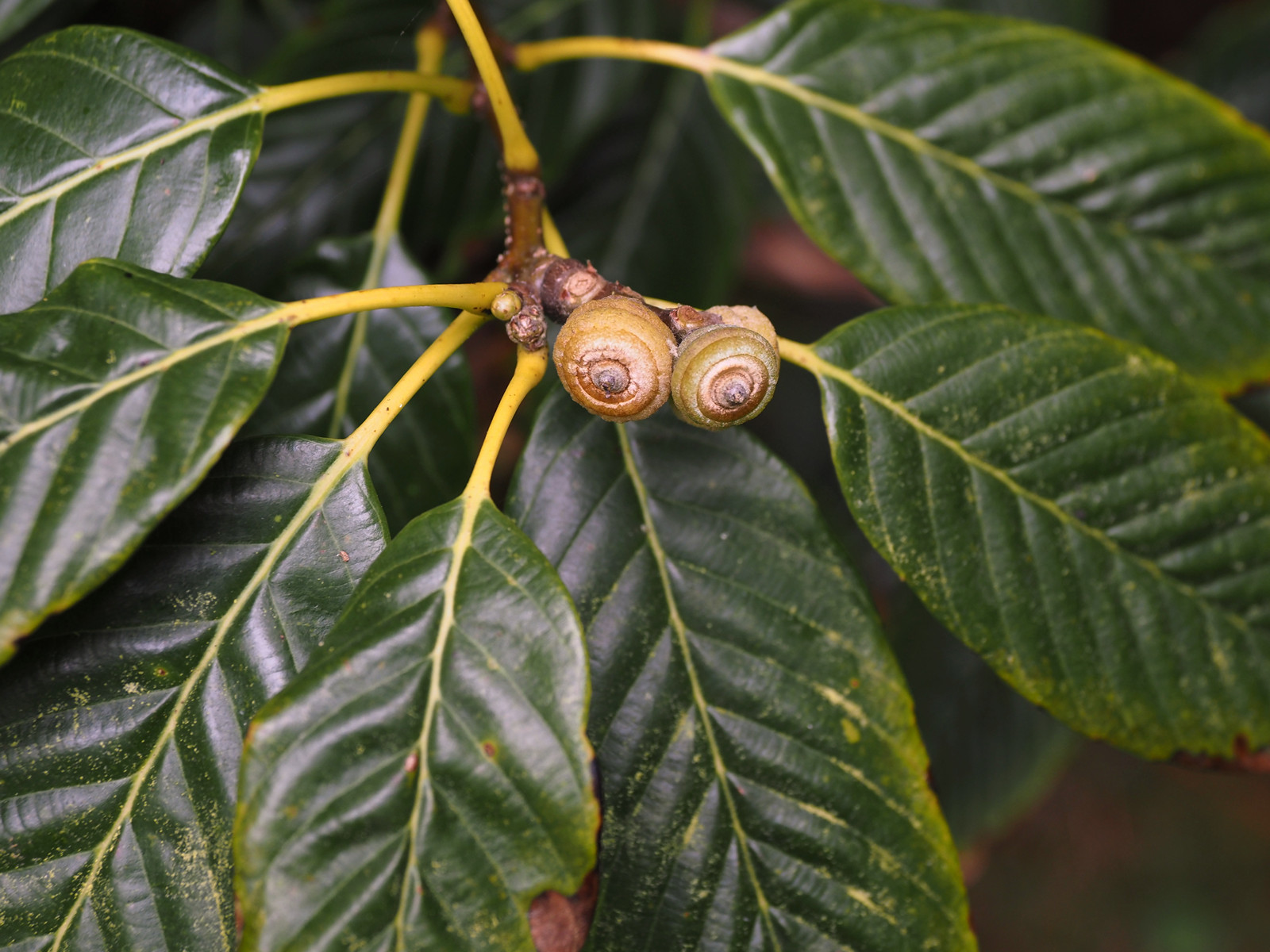
Most of the acorns have already dropped on Quercus lamellosa. These are still undersized and nowhere near ripe.
Quercus lamellosa
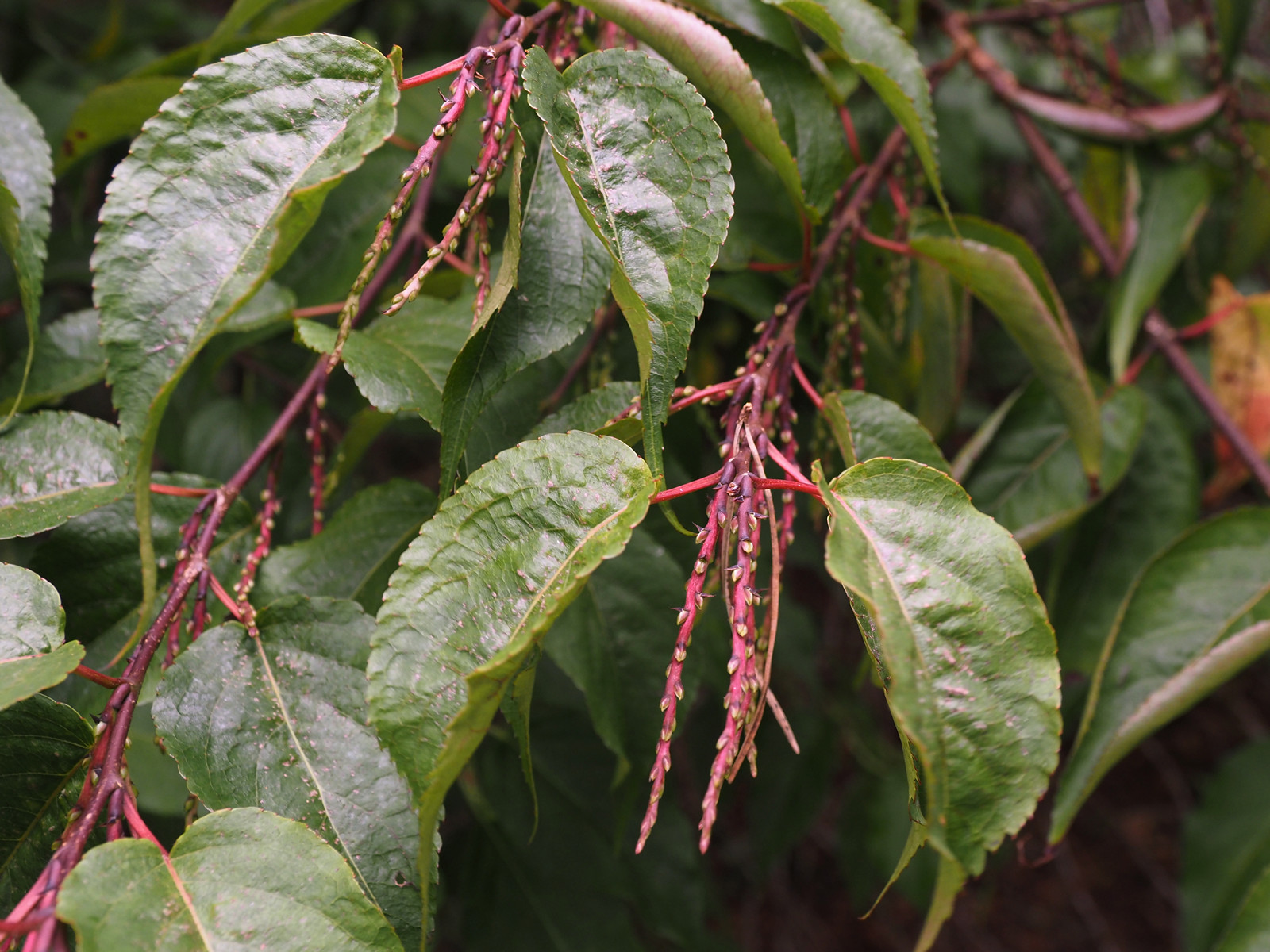
Flower tassels already visible on Stachyurus chinensis.
This website uses cookies to improve your experience. We'll assume you're ok with this, but you can opt-out if you wish.AcceptRead More
Privacy & Cookies Policy
Privacy Overview
This website uses cookies to improve your experience while you navigate through the website. Out of these, the cookies that are categorized as necessary are stored on your browser as they are essential for the working of basic functionalities of the website. We also use third-party cookies that help us analyze and understand how you use this website. These cookies will be stored in your browser only with your consent. You also have the option to opt-out of these cookies. But opting out of some of these cookies may affect your browsing experience.
Necessary cookies are absolutely essential for the website to function properly. This category only includes cookies that ensures basic functionalities and security features of the website. These cookies do not store any personal information.
Any cookies that may not be particularly necessary for the website to function and is used specifically to collect user personal data via analytics, ads, other embedded contents are termed as non-necessary cookies. It is mandatory to procure user consent prior to running these cookies on your website.